Montana Declaration of Living Will
Overview of this form
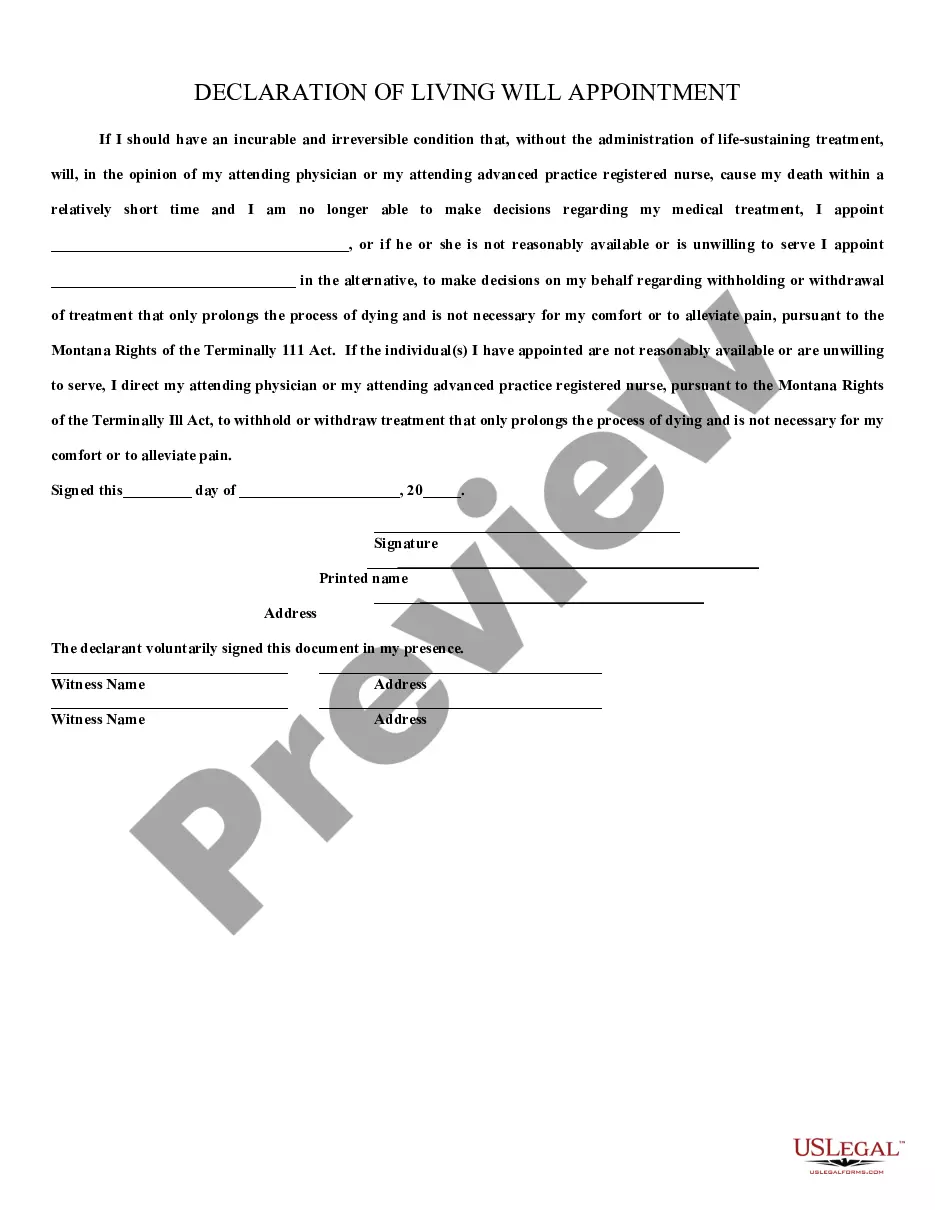
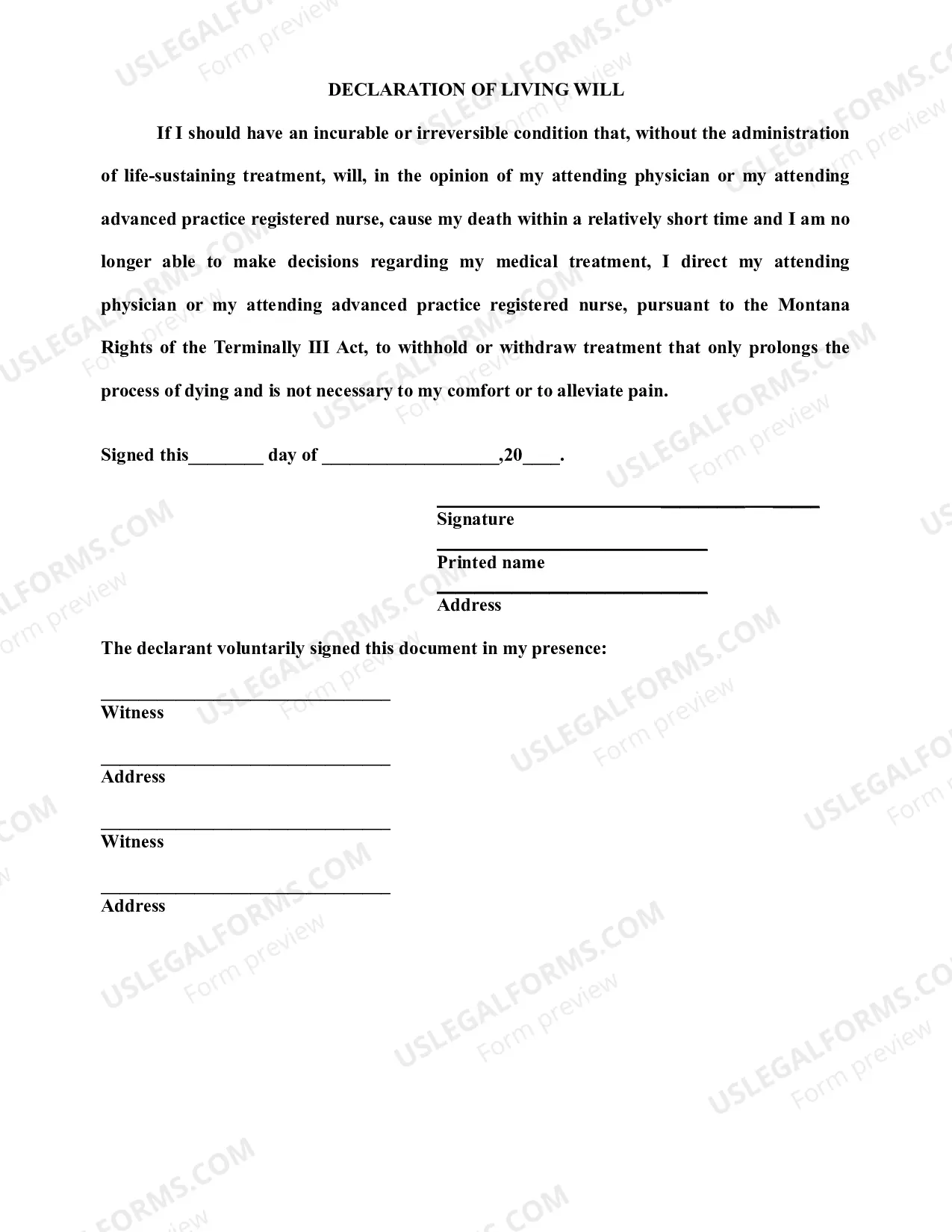
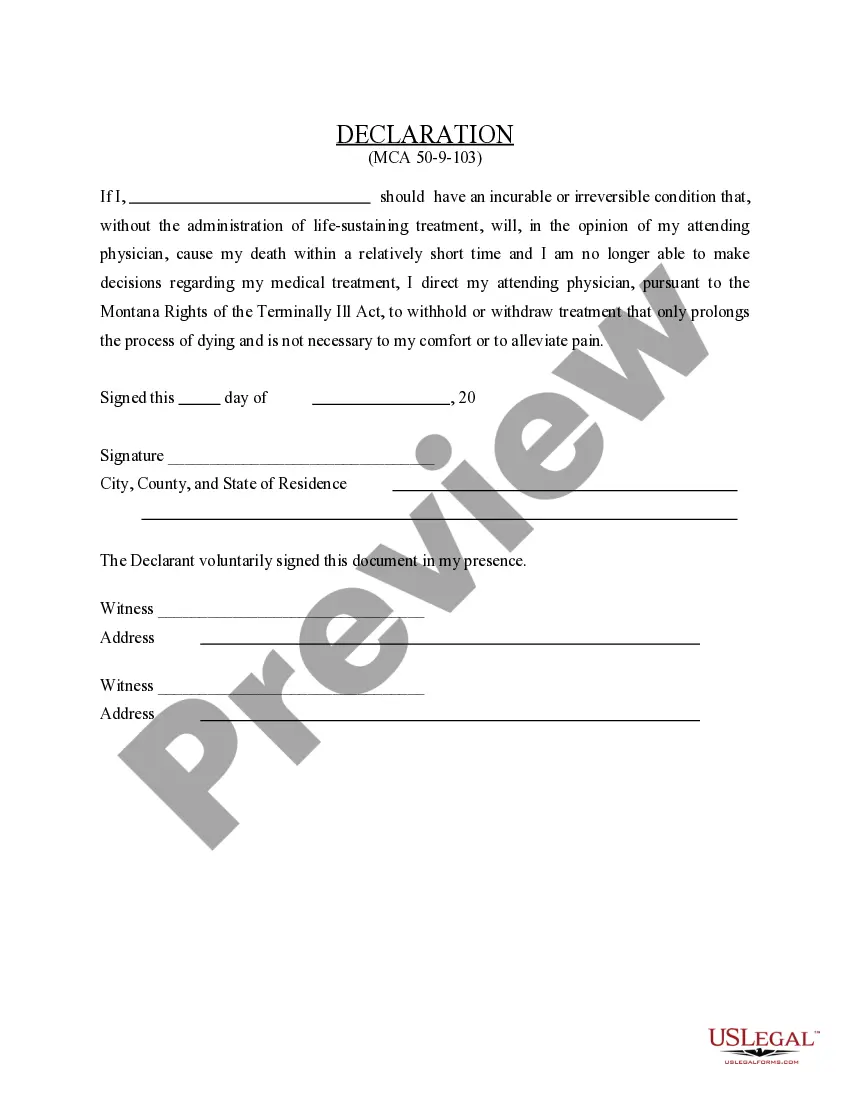
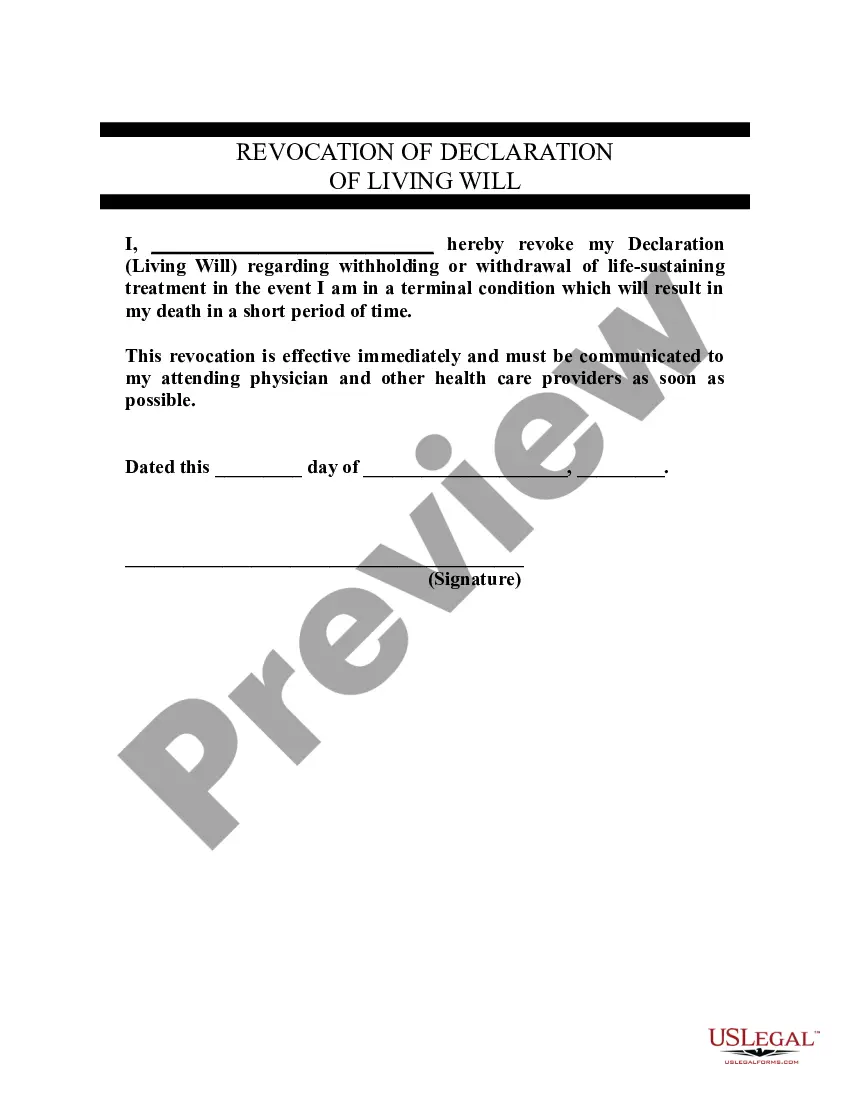
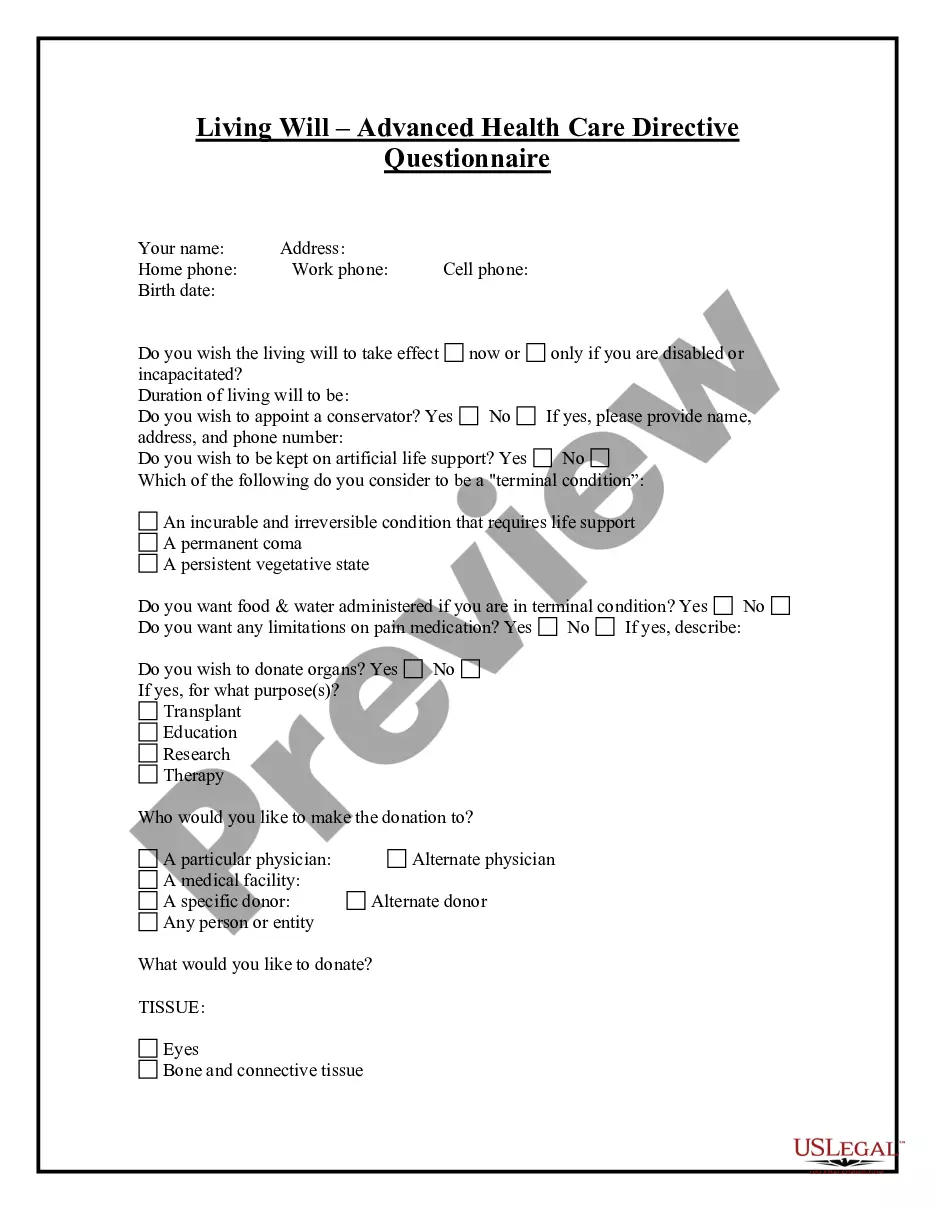
The Declaration of Living Will is an official document for residents of Montana that allows individuals to express their wishes regarding medical treatment in case they become unable to make decisions for themselves. This form specifically addresses the withholding or withdrawal of life-sustaining treatments when facing an incurable and irreversible condition. Unlike other advance directives, this document focuses on end-of-life care and is tailored to comply with Montana law.
Key components of this form
- Declaration of wishes for medical treatment in terminal conditions.
- Appointment of a decision-maker to act on behalf of the declarant.
- Specific instructions for withholding or withdrawing life-sustaining treatment.
- Signature of the declarant and witnesses to verify authenticity.
When to use this document
This form should be used when an individual desires to establish their preferences regarding medical treatment in situations where they may be terminally ill and unable to voice their decisions. It is especially important for those who wish to avoid unnecessary prolongation of life through medical interventions that do not contribute to their comfort or pain relief.
Who should use this form
This form is intended for:
- Individuals in Montana who want to create a living will.
- Those diagnosed with an incurable condition who may face end-of-life decisions.
- Anyone seeking to ensure that their healthcare preferences are respected when they cannot communicate their wishes.
Completing this form step by step
- Identify yourself in the declaration section, including your name and address.
- Appoint a primary decision-maker and an alternative decision-maker if necessary.
- Clearly state your wishes regarding the withholding or withdrawal of life-sustaining treatment.
- Sign and date the document in the presence of witnesses to validate your intent.
Is notarization required?
Notarization is not commonly needed for this form. However, certain documents or local rules may make it necessary. Our notarization service, powered by Notarize, allows you to finalize it securely online anytime, day or night.
Get your form ready online
Our built-in tools help you complete, sign, share, and store your documents in one place.
Make edits, fill in missing information, and update formatting in US Legal Forms—just like you would in MS Word.
Download a copy, print it, send it by email, or mail it via USPS—whatever works best for your next step.
Sign and collect signatures with our SignNow integration. Send to multiple recipients, set reminders, and more. Go Premium to unlock E-Sign.
If this form requires notarization, complete it online through a secure video call—no need to meet a notary in person or wait for an appointment.
We protect your documents and personal data by following strict security and privacy standards.

Make edits, fill in missing information, and update formatting in US Legal Forms—just like you would in MS Word.

Download a copy, print it, send it by email, or mail it via USPS—whatever works best for your next step.

Sign and collect signatures with our SignNow integration. Send to multiple recipients, set reminders, and more. Go Premium to unlock E-Sign.

If this form requires notarization, complete it online through a secure video call—no need to meet a notary in person or wait for an appointment.

We protect your documents and personal data by following strict security and privacy standards.
Common mistakes
- Failing to appoint a decision-maker or leaving the section blank.
- Not signing the form in the presence of witnesses.
- Overlooking the need for witnesses to also sign the form.
- Using outdated versions of the form that may not comply with current laws.
Why use this form online
- Convenience of downloading and completing the form from home.
- Guidance provided ensures all necessary sections are filled out correctly.
- Accessibility to legal forms drafted by licensed attorneys.
- Easy edits allow for adjustments to your directives as needed.
Looking for another form?


Form popularity
FAQ
A. You don't have to have a lawyer to create a basic will you can prepare one yourself. It must meet your state's legal requirements and should be notarized.A do-it-yourself will that's poorly drafted can save you money but create a mess for your heirs when you're gone.
A Living Will must be made in writing and witnessed by at least two adults. There are additional rules for witnessing and signing a Living Will. The witnesses must be adults who affirm that you are of sound mind and that signing the Living Will is your own choice. You cannot witness your own Living Will.
You can legally prepare your own will, it can even be handwritten. This type of will is known as a "holographic will." In Montana, your handwritten will must be signed by you. Your signature must also be located on any material provisions, and no witnesses will need to be present for the signing of your will.
You do not need a lawyer to make a living will, although you can get one from a lawyer if you prefer to. Every state has its own requirements for making a living will, so if you make one on your own, make sure you find a form that meets your state's requirements.
Living will. A living will is a written, legal document that spells out medical treatments you would and would not want to be used to keep you alive, as well as your preferences for other medical decisions, such as pain management or organ donation. In determining your wishes, think about your values.
Step 1 Download Your Living Will. Download in Adobe PDF, Microsoft Word (. Step 2 Health Care Directive. Step 3 Life Support. Step 4 Life-Sustaining Treatment. Step 5 End of Life Wishes. Step 6 Medical Power of Attorney. Step 7 Witness Acknowledgment. Step 8 Notary Acknowledgment.
The will of a decedent must be filed with the Clerk of Court so the personal representative may proceed with the administration of the estate. Montana has both formal (court-directed) and informal probate as well as a simplified probate process for small estates.
You can legally prepare your own will, it can even be handwritten. This type of will is known as a "holographic will." In Montana, your handwritten will must be signed by you. Your signature must also be located on any material provisions, and no witnesses will need to be present for the signing of your will.
No, in Montana, you do not need to notarize your will to make it legal. However, Montana allows you to make your will "self-proving" and you'll need to go to a notary if you want to do that. A self-proving will speeds up probate because the court can accept the will without contacting the witnesses who signed it.