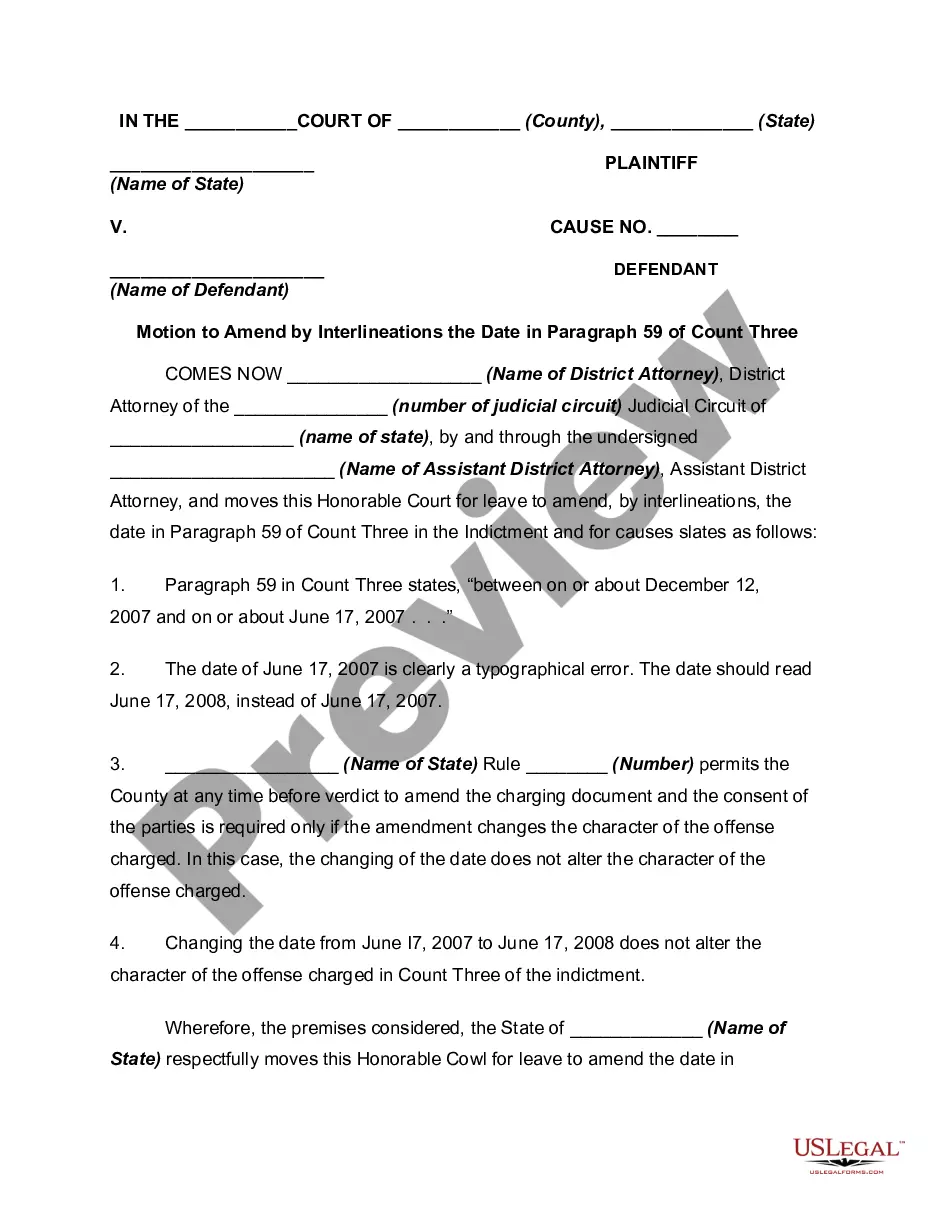
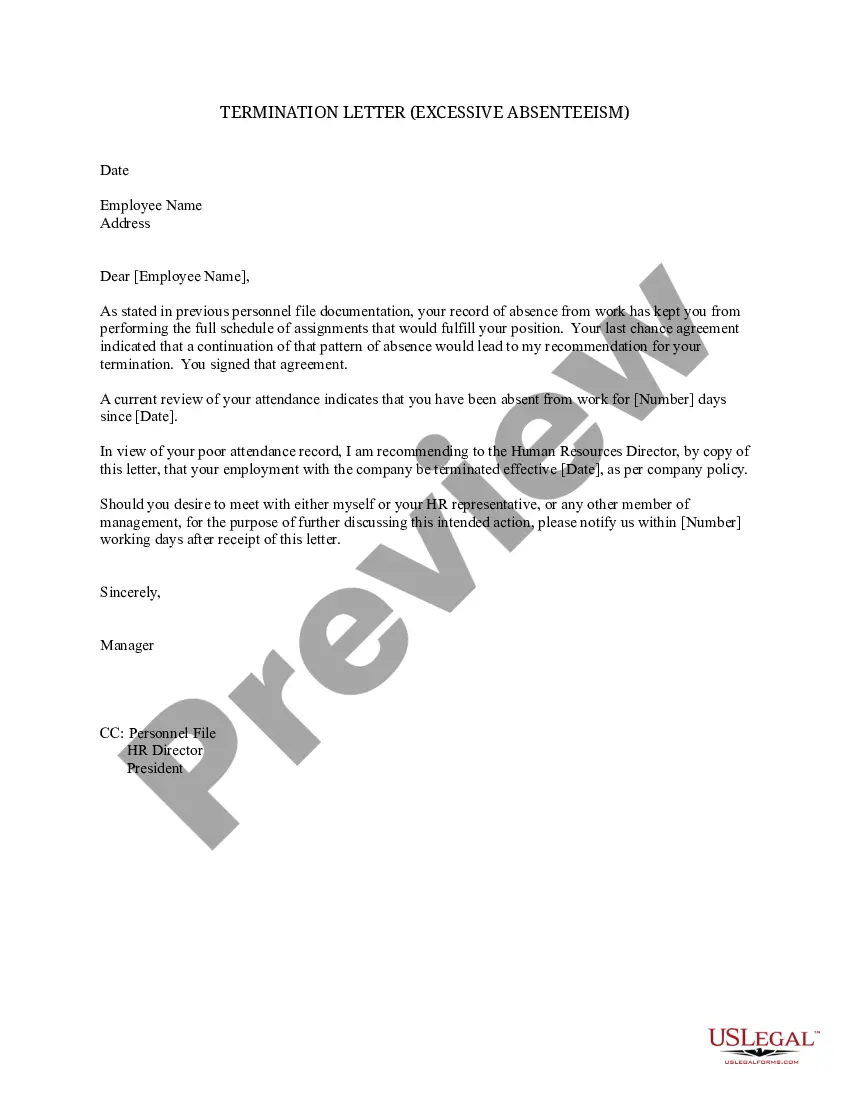
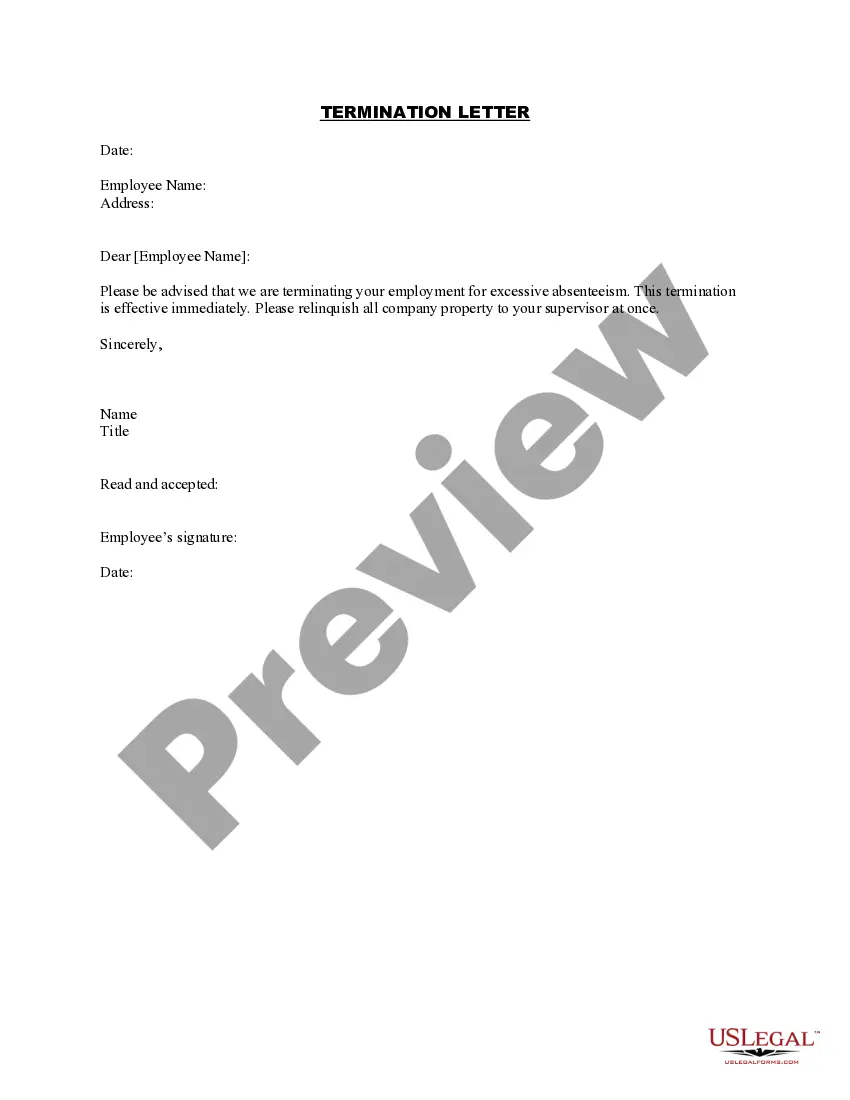
Montana Termination Letter (Excessive Absenteeism)
Description
Get your form ready online
Our built-in tools help you complete, sign, share, and store your documents in one place.
Make edits, fill in missing information, and update formatting in US Legal Forms—just like you would in MS Word.
Download a copy, print it, send it by email, or mail it via USPS—whatever works best for your next step.
Sign and collect signatures with our SignNow integration. Send to multiple recipients, set reminders, and more. Go Premium to unlock E-Sign.
If this form requires notarization, complete it online through a secure video call—no need to meet a notary in person or wait for an appointment.
We protect your documents and personal data by following strict security and privacy standards.

Make edits, fill in missing information, and update formatting in US Legal Forms—just like you would in MS Word.

Download a copy, print it, send it by email, or mail it via USPS—whatever works best for your next step.

Sign and collect signatures with our SignNow integration. Send to multiple recipients, set reminders, and more. Go Premium to unlock E-Sign.

If this form requires notarization, complete it online through a secure video call—no need to meet a notary in person or wait for an appointment.

We protect your documents and personal data by following strict security and privacy standards.
Looking for another form?



How to fill out Termination Letter (Excessive Absenteeism)?
Selecting the optimal legal document web template can be quite a challenge.
Of course, there are numerous templates accessible online, but how will you locate the legal form you need.
Utilize the US Legal Forms website. The platform offers thousands of templates, including the Montana Termination Letter (Excessive Absenteeism), suitable for business and personal uses.
First, confirm that you have selected the correct form for your locality. You can review the document using the Review button and read the description to ensure it meets your needs.
- All forms are reviewed by experts and conform to federal and state regulations.
- If you are currently registered, sign in to your account and click the Download button to obtain the Montana Termination Letter (Excessive Absenteeism).
- Use your account to browse the legal forms you have acquired previously.
- Visit the My documents section of your account to download another copy of the document you need.
- If you are a new user of US Legal Forms, here are simple steps to follow.
Form popularity
FAQ
Good cause is generally defined, in Montana, as reasonable job related grounds for dismissal based upon (1) a failure to satisfactorily perform job duties, (2) disruption of the employer's operation, or (3) other legitimate business reasons.
You can send a termination letter to the employee following the termination meeting with return receipt requested, or you can hand the letter to the employee at the end of the meeting. It should be printed on company stationery with the official signature of the employee's manager.
Federally, and in most states, a termination letter is not legally required. In some states, currently including Arizona, California, Illinois and New Jersey, written termination notices are required by law. Some of these states have specific templates employers must use for the letter.
Dear Sir/Madam, This letter is to inform you that your employment as (position) at (company's name) is terminated with immediate effect. You have violated the attendance policy of the company. You have continued being absent from the last (duration) days.
The Montana Wrongful Discharge Act preempts common law remedies. In Montana, an employee can be discharged for any reason, as long as it is not an unlawful reason, during the probationary period. The default probationary period in Montana, is 6 months. However, an employer can extend or shorten that period.
In Montana it is unlawful for an employer to fire you in certain circumstances, such as: You were fired because you refused to violate public policy, or reported a violation of public policy, You had finished your probationary period and your employer did not have good cause to fire you.
No. Montana is not an at will state. In some instances, the Wrongful Discharge From Employment Act does not apply, but generally, once an employee has completed the established probationary period, the employer needs to have good cause for termination.
California law requires employers to provide employees certain documents at the end of their employment. When going through the termination process with an employee, make sure they are given these required documents: Final paycheck acknowledgment- Signed by the employee. For your benefit (Form 2320)
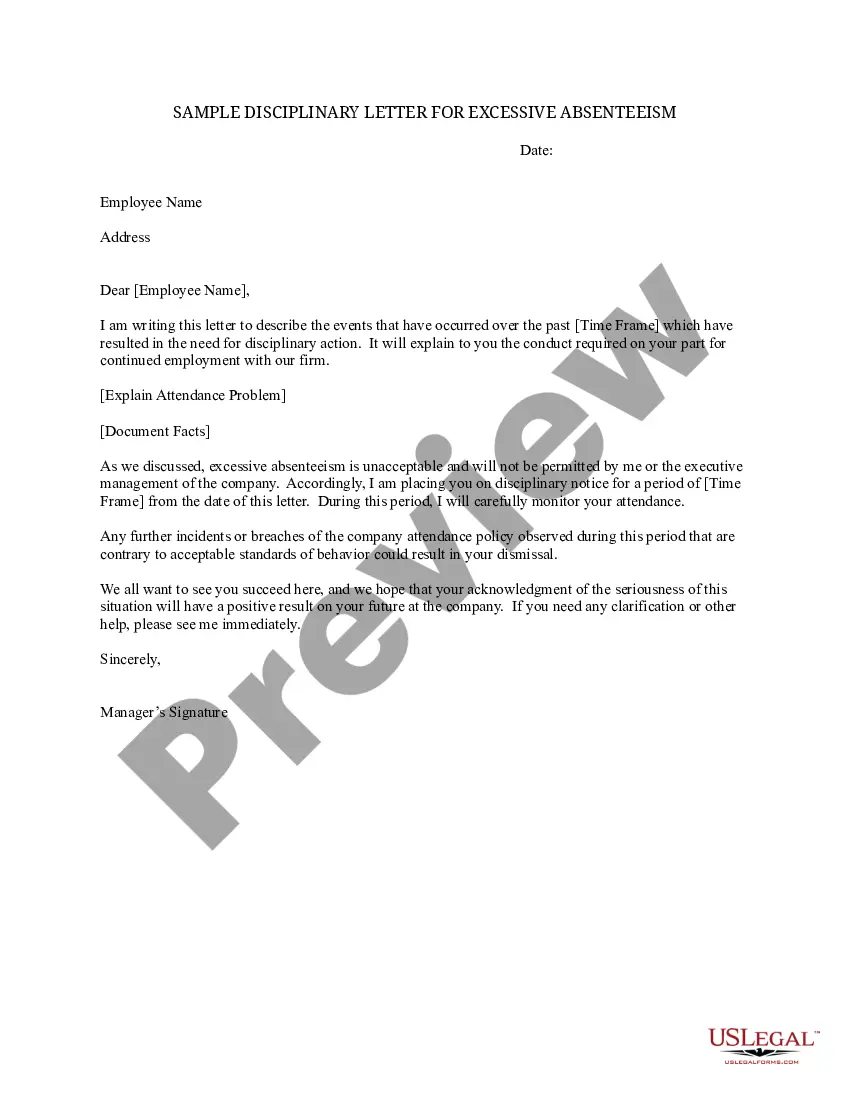
If you plan to terminate an employee, consider sending him or her a written notice and explanation beforehand. Usually, you cannot terminate an employee on grounds of absenteeism if you only expect that the employee will miss excessive amounts of work; instead, there must be an actual record of absenteeism.
While an employer's reason for firing an employee, such as absenteeism, may appear to be a legitimate, nondiscriminatory reason, it may amount to a pretext for discrimination or retaliation if it conflicts with an employer's internal policy, the 1st U.S. Circuit Court of Appeals held.