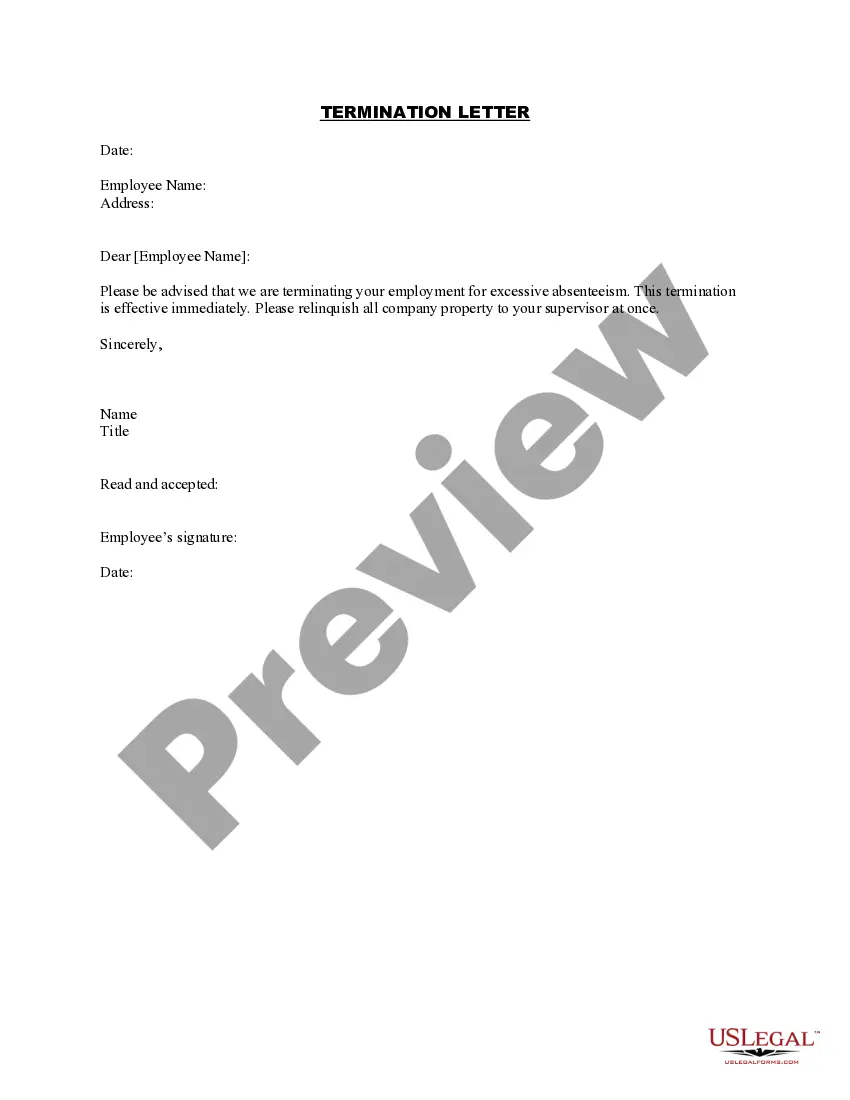
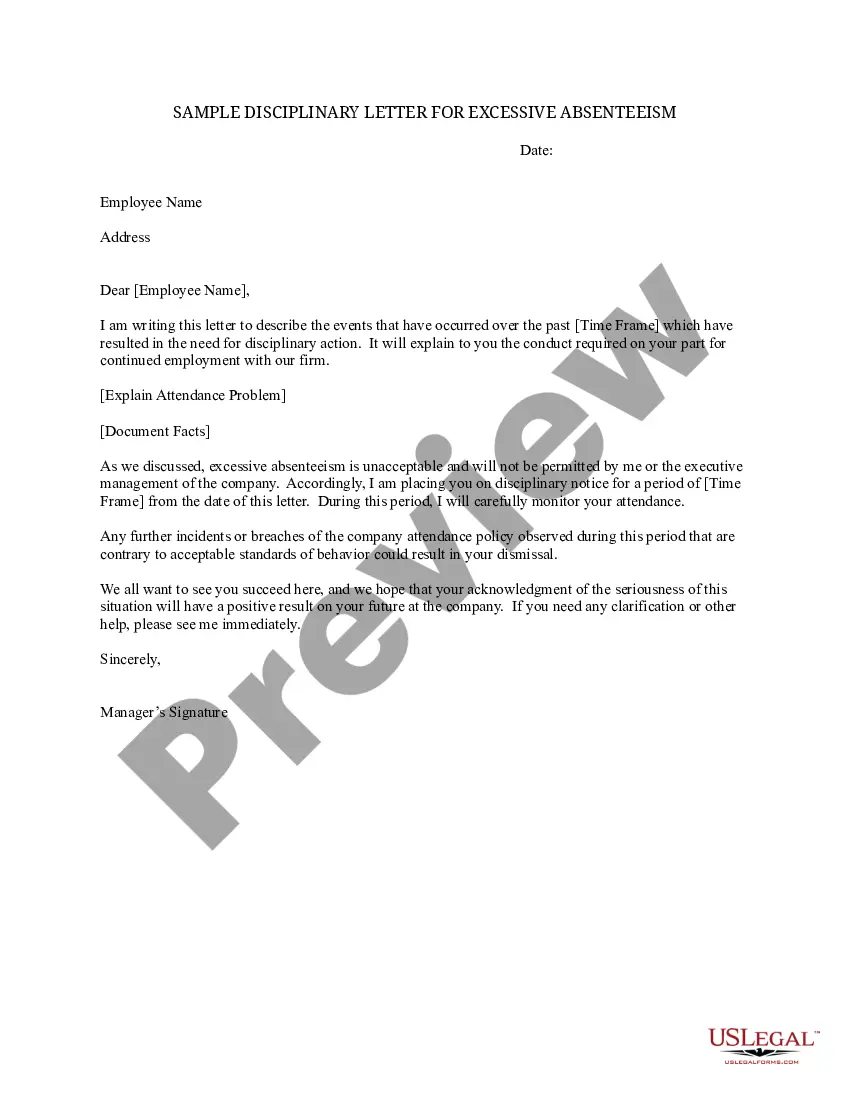
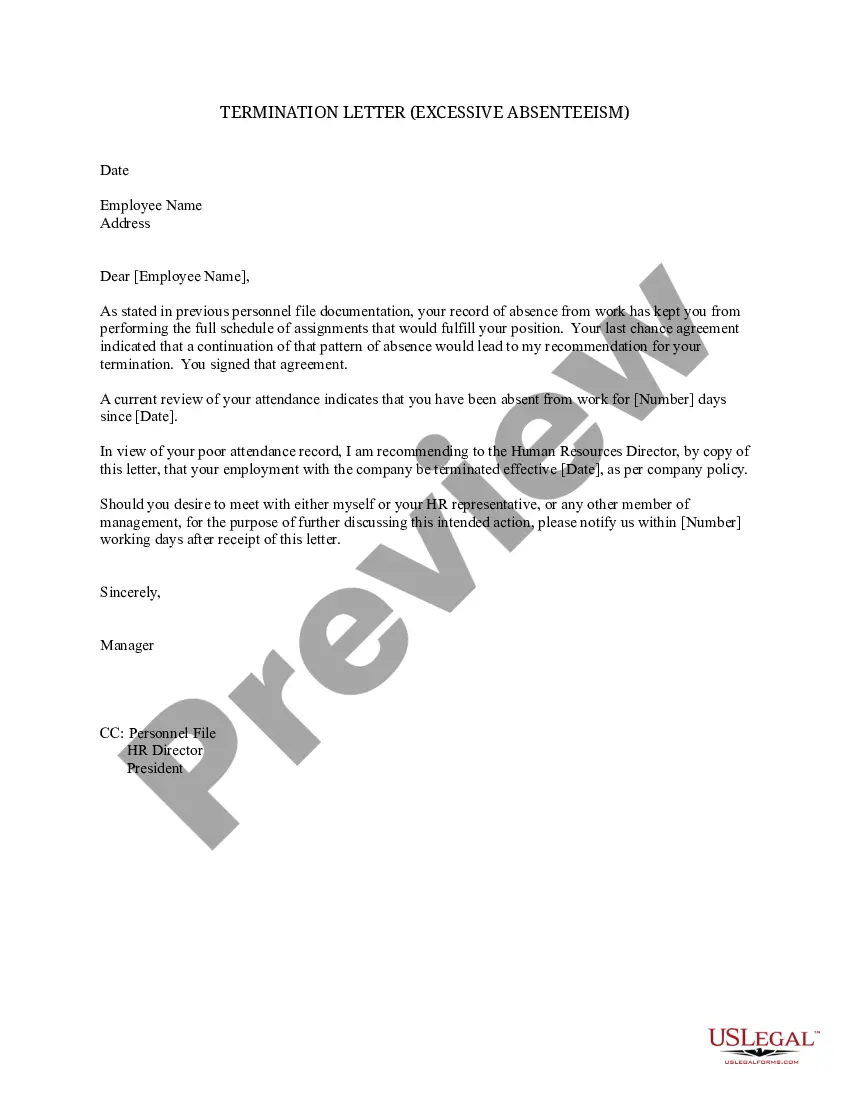
Montana Termination Letter - Excessive Absenteeism
Description
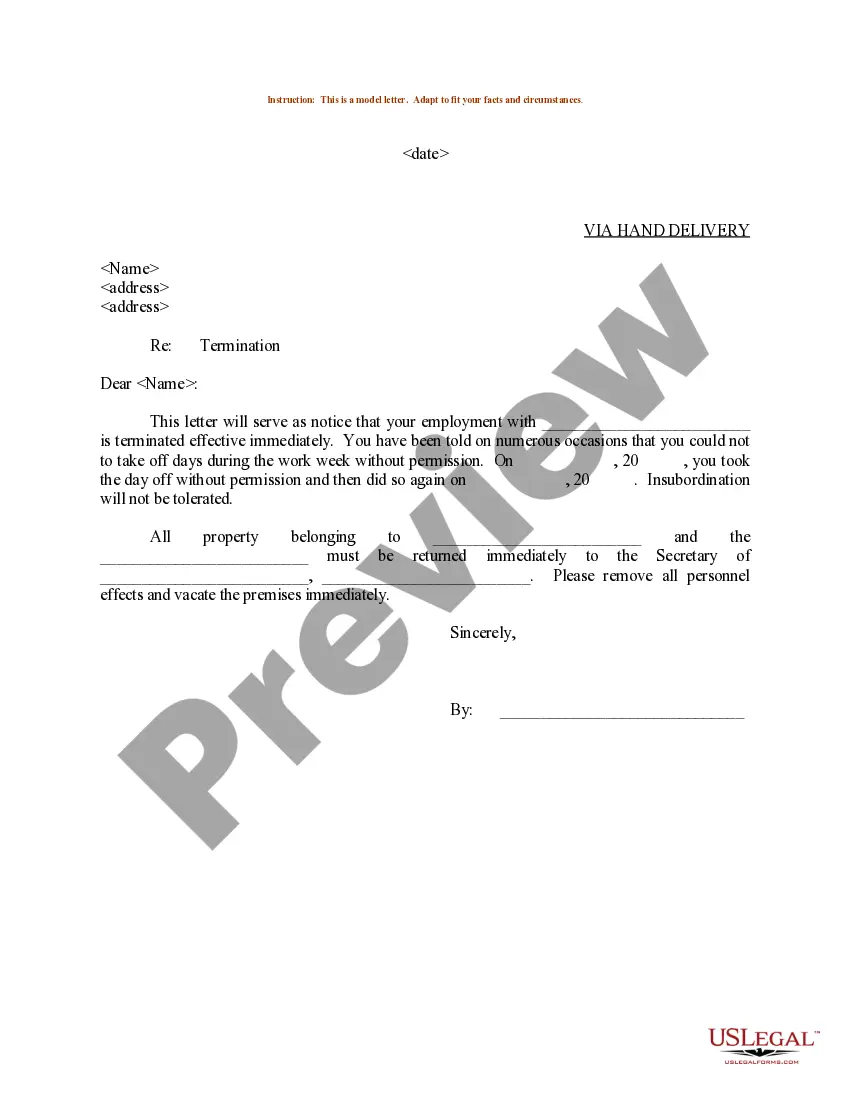
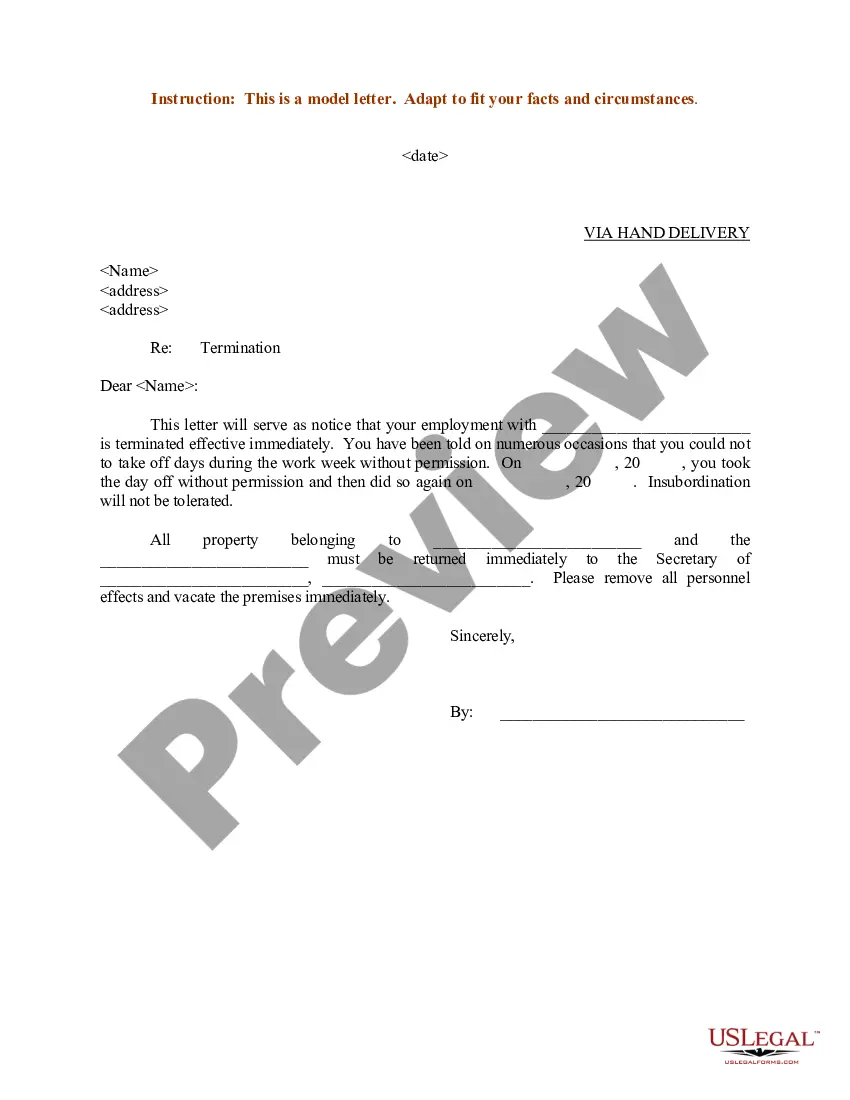
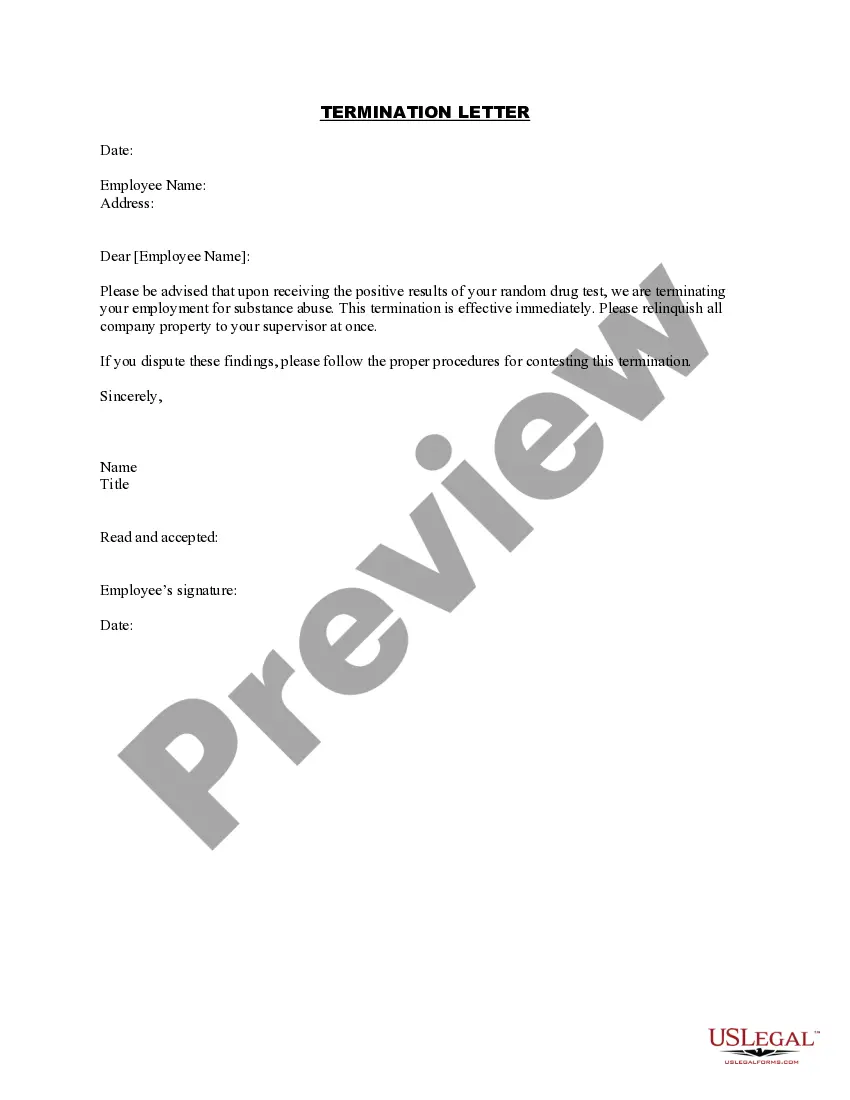
Get your form ready online
Our built-in tools help you complete, sign, share, and store your documents in one place.
Make edits, fill in missing information, and update formatting in US Legal Forms—just like you would in MS Word.
Download a copy, print it, send it by email, or mail it via USPS—whatever works best for your next step.
Sign and collect signatures with our SignNow integration. Send to multiple recipients, set reminders, and more. Go Premium to unlock E-Sign.
If this form requires notarization, complete it online through a secure video call—no need to meet a notary in person or wait for an appointment.
We protect your documents and personal data by following strict security and privacy standards.

Make edits, fill in missing information, and update formatting in US Legal Forms—just like you would in MS Word.

Download a copy, print it, send it by email, or mail it via USPS—whatever works best for your next step.

Sign and collect signatures with our SignNow integration. Send to multiple recipients, set reminders, and more. Go Premium to unlock E-Sign.

If this form requires notarization, complete it online through a secure video call—no need to meet a notary in person or wait for an appointment.

We protect your documents and personal data by following strict security and privacy standards.
Looking for another form?






How to fill out Termination Letter - Excessive Absenteeism?
If you wish to be thorough, acquire, or create lawful document templates, use US Legal Forms, the largest assortment of legal forms available online.
Utilize the site's user-friendly and convenient search feature to locate the documents you need.
A range of templates for business and personal applications are organized by categories, states, or keywords.
Step 4. Once you have found the form you need, click the Buy now button. Select the pricing plan you prefer and enter your information to register for an account.
Step 5. Process the payment. You may use your Visa or MasterCard or PayPal account to complete the transaction.
- Utilize US Legal Forms to discover the Montana Termination Letter - Excessive Absenteeism with just a few clicks.
- If you are already a US Legal Forms user, Log In to your account and click the Obtain option to retrieve the Montana Termination Letter - Excessive Absenteeism.
- You can also access forms you previously saved in the My documents tab of your account.
- If you are using US Legal Forms for the first time, follow the instructions below.
- Step 1. Ensure you have selected the form for the correct city/state.
- Step 2. Use the Preview option to review the contents of the form. Don't forget to read the instructions.
- Step 3. If you are not satisfied with the form, use the Search area at the top of the page to find other versions of the legal form template.
Form popularity
FAQ
You can send a termination letter to the employee following the termination meeting with return receipt requested, or you can hand the letter to the employee at the end of the meeting. It should be printed on company stationery with the official signature of the employee's manager.
It is possible to terminate the employment of a staff member who has been absent on extended sick leave exceeding a period of 3 months, in other specific circumstances.
Excessive absenteeism is defined as two or more occurrences of unexcused absence in a 30-day period and will result in disciplinary action. Eight occurrences of unexcused absence in a 12-month period are considered grounds for termination.
Yes. If your employer has written procedures that allow you to file a grievance after being fired you must use those procedures. You can find the law on this at § 39-2-911 MCA. If you don't follow the entire grievance procedure any lawsuit you file could be dismissed.
Legally, this is described as firing for cause. In general, there are a half-dozen categories of acceptable reasons for termination: Incompetence, including lack of productivity or poor quality of work. Insubordination and related issues such as dishonesty or breaking company rules.
In Montana it is unlawful for an employer to fire you in certain circumstances, such as: You were fired because you refused to violate public policy, or reported a violation of public policy, You had finished your probationary period and your employer did not have good cause to fire you.
So, if you're an at-will employee and your boss decides you've called in sick too much, they have every right to fire youand they also don't have to tell you that your illness (or excessive absences because of that illness) had anything to do with it.
No. Montana is not an at will state. In some instances, the Wrongful Discharge From Employment Act does not apply, but generally, once an employee has completed the established probationary period, the employer needs to have good cause for termination.
Federally, and in most states, a termination letter is not legally required. In some states, currently including Arizona, California, Illinois and New Jersey, written termination notices are required by law. Some of these states have specific templates employers must use for the letter.
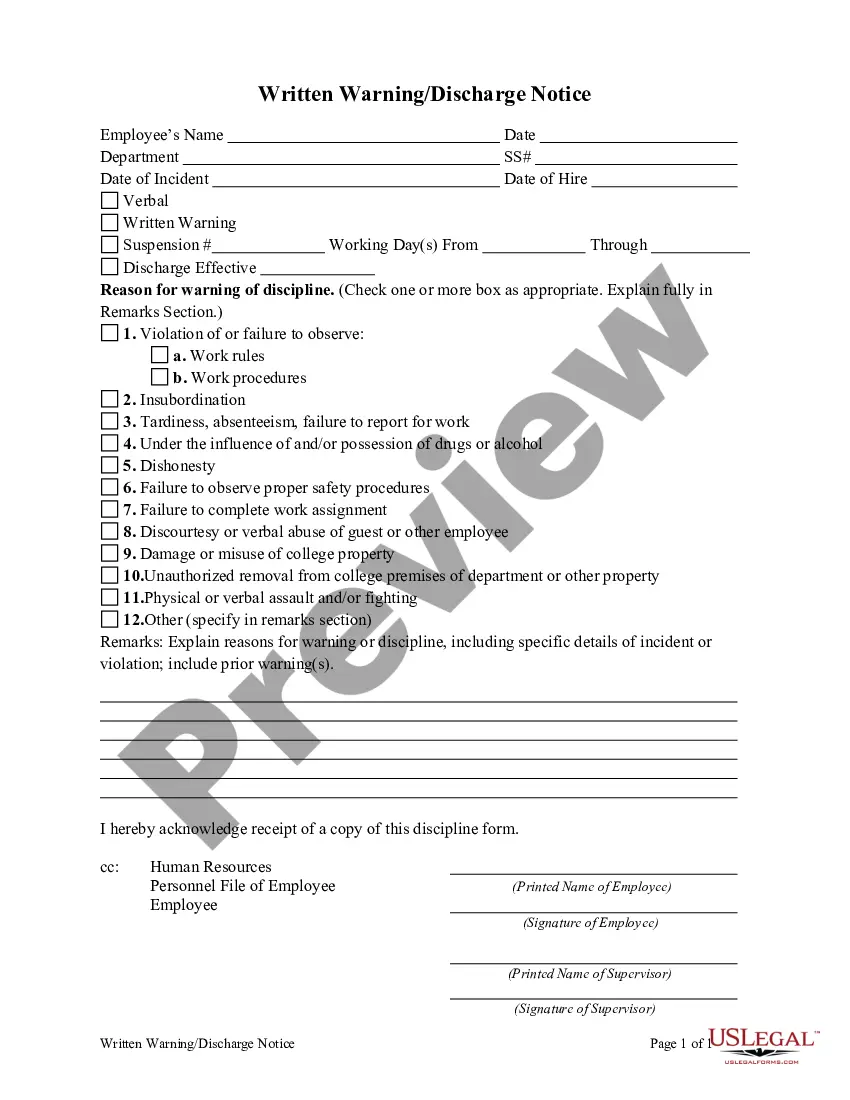
A standardized form for writing up employees for absenteeism ensures that you cover all of your bases and stick to the essential information. Create a form that includes spots for the employee's name, description of the offense, dates of absenteeism and the actions you've taken so far to reduce the absenteeism.