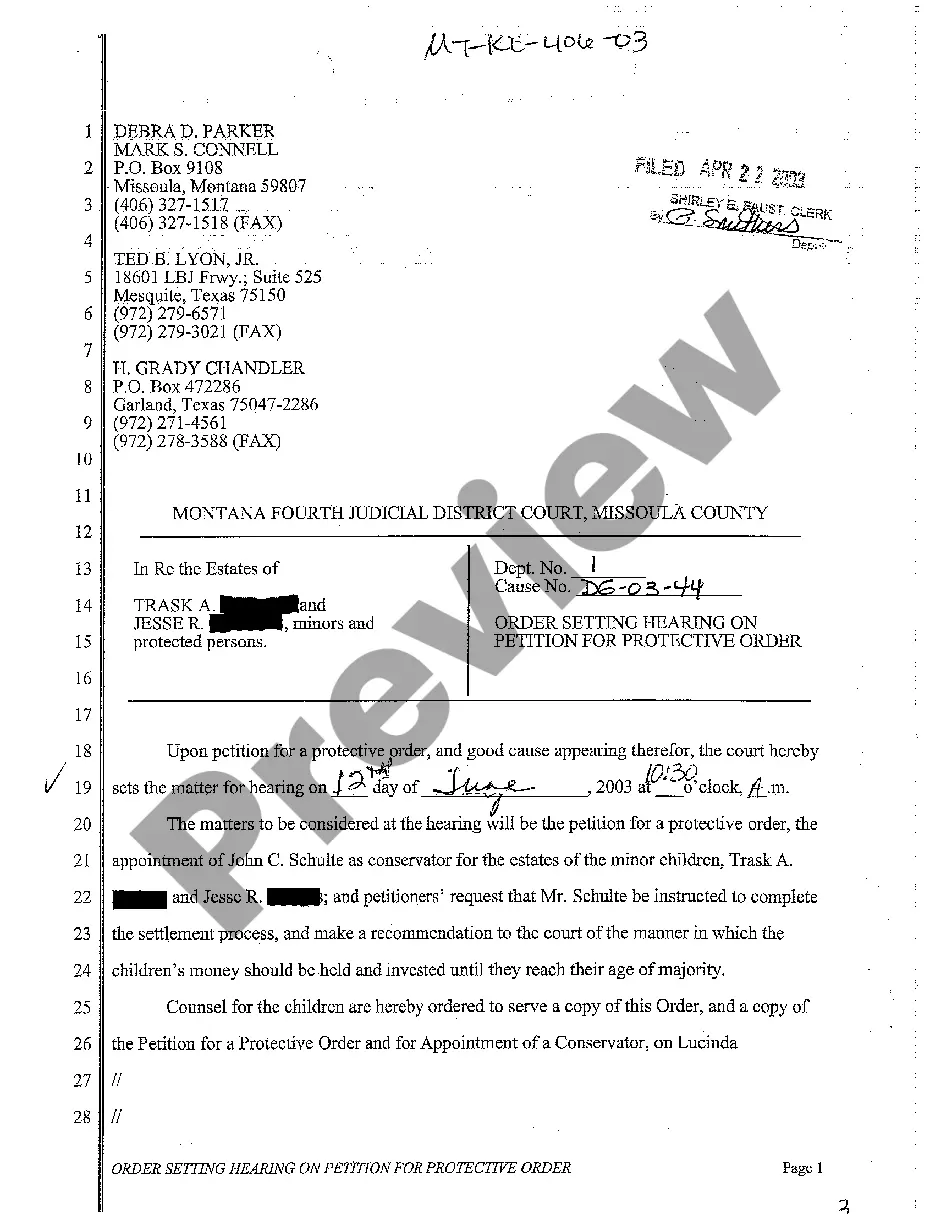
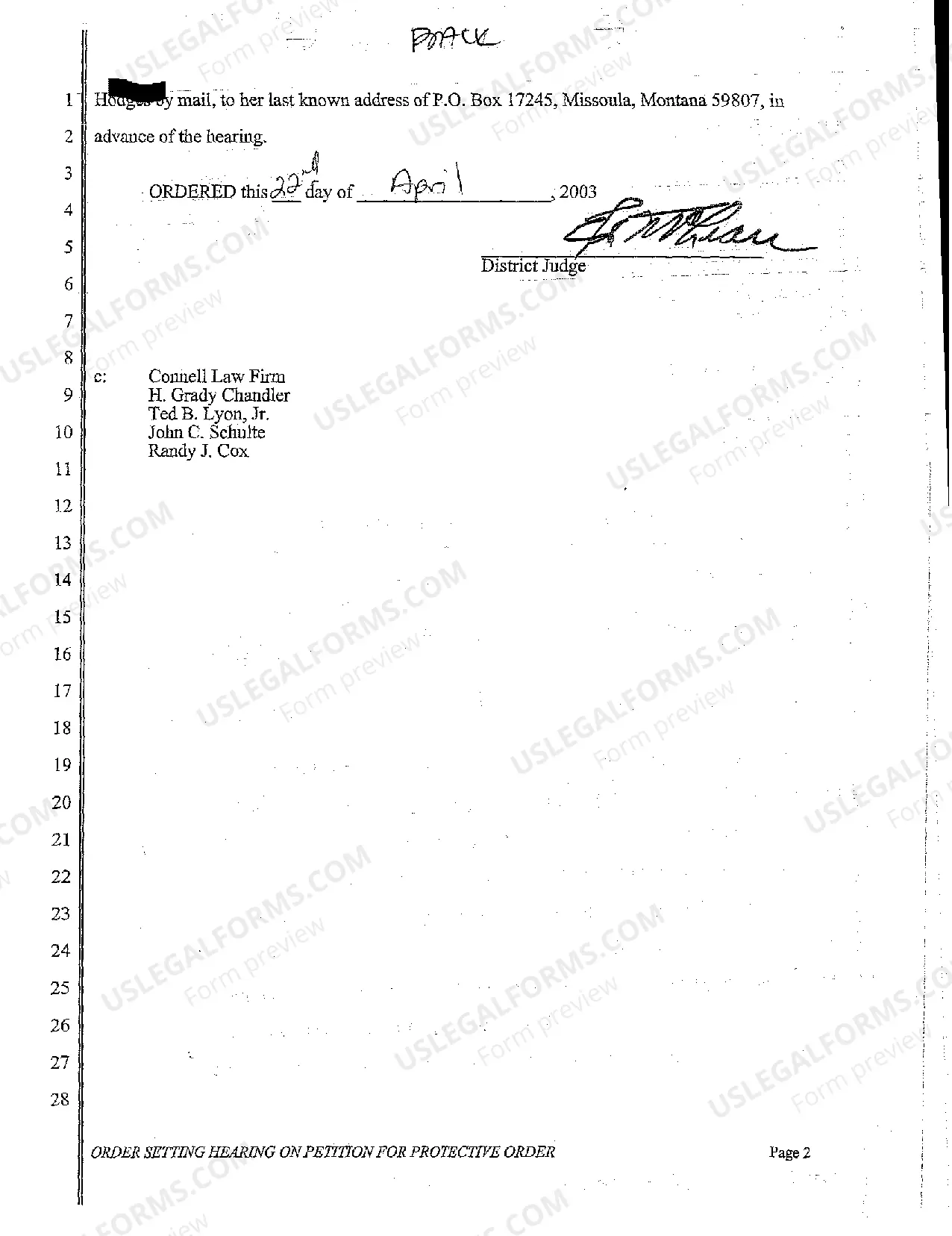
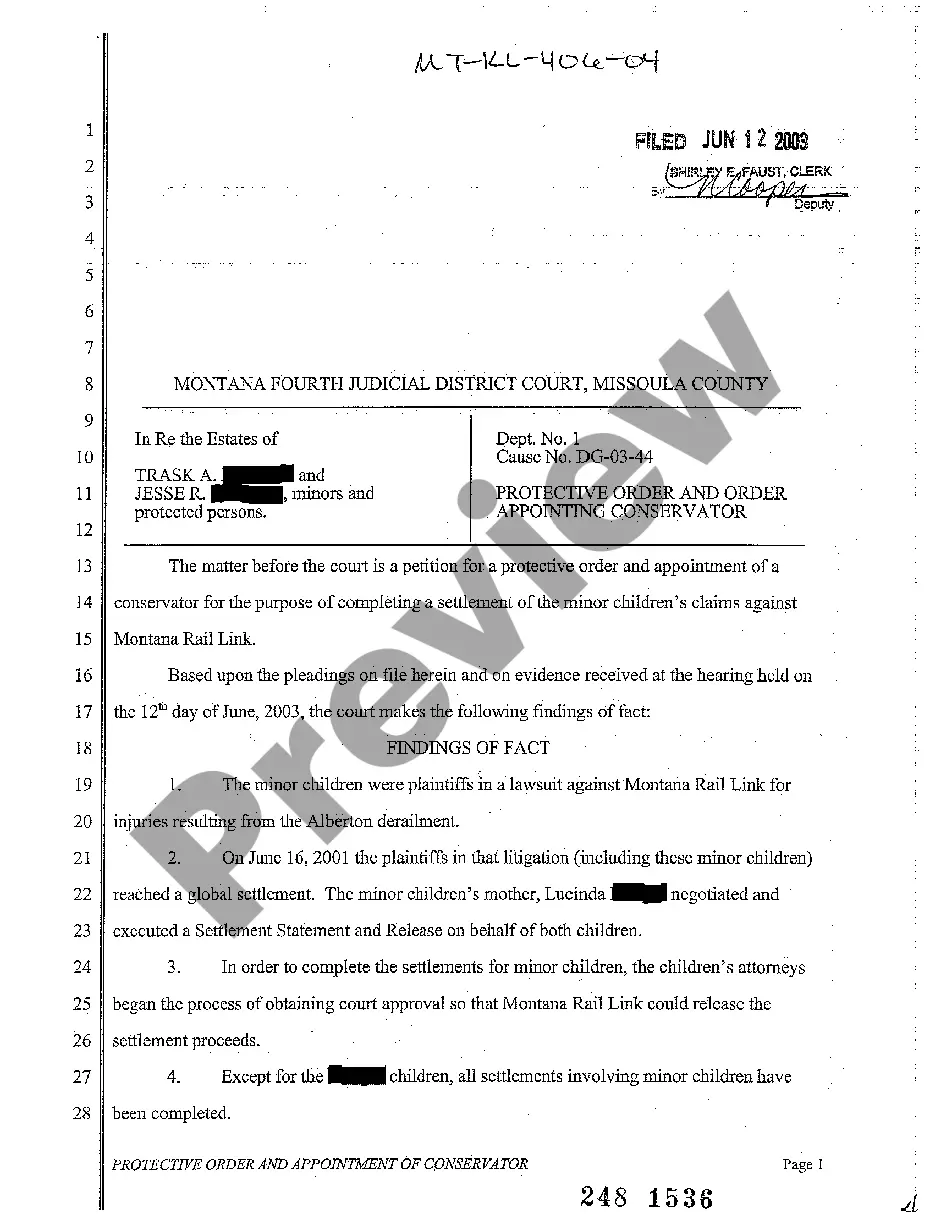
Montana Order Setting Hearing on Petition for Protective Order
Description
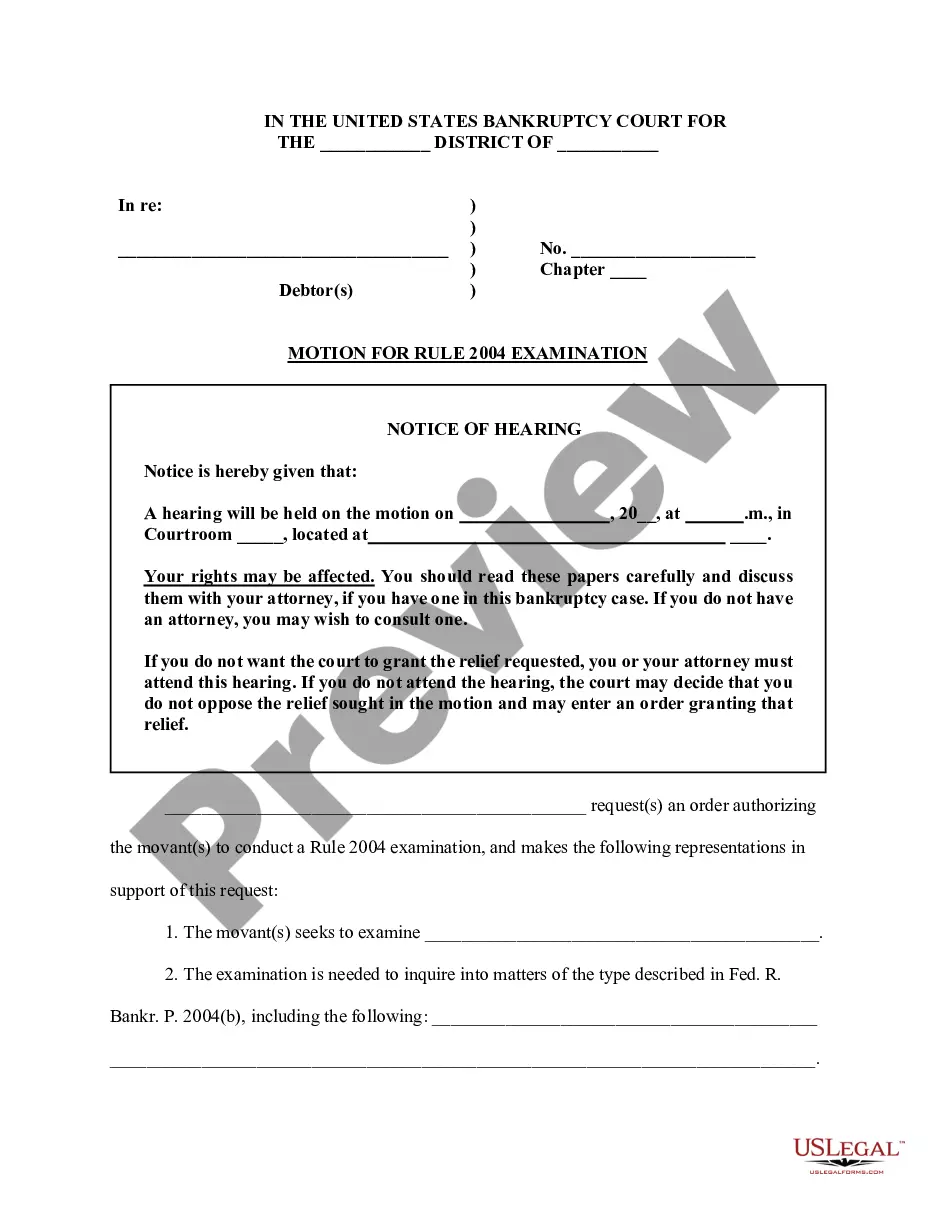
How to fill out Montana Order Setting Hearing On Petition For Protective Order?
Acquire a printable Montana Order Establishing Hearing on Request for Protective Order in just a few clicks in the most extensive collection of legal electronic forms.
Discover, download, and print professionally crafted and verified samples on the US Legal Forms website. US Legal Forms is the leading provider of economical legal and tax templates for US citizens and residents online since 1997.
After downloading your Montana Order Establishing Hearing on Request for Protective Order, you can fill it out in any online editor or print it and complete it by hand. Utilize US Legal Forms to access 85,000 professionally drafted, state-specific documents.
- Users who already have a subscription must sign in directly into their US Legal Forms account, retrieve the Montana Order Establishing Hearing on Request for Protective Order and find it stored in the My documents section.
- Clients who do not hold a subscription should follow the instructions given below.
- Ensure your form aligns with your state’s stipulations.
- If available, read the form’s overview to gain more information.
- If presented, preview the form to see additional content.
- Once you are confident the template fits your needs, click Buy Now.
- Create a personal account.
- Select a plan.
- Pay via PayPal or credit card.
- Download the template in Word or PDF format.
Form popularity
FAQ
A petition is a request, usually written, that a person files asking the court to do something. A decree is an order from the court detailing the rights and obligations of the person.
The court decides what will constitute the evidence for the case. They will send directions to the applicant, their representative and anyone else identified as a party, setting out: the issues of the case that will require evidence. what evidence is needed to decide those issues.
The protected person is called the Petitioner. The Petitioner must file a Petition in a court of record, against the other person, called the Respondent. This Instruction booklet explains how to fill out forms for a case in which the Petitioner is seeking protection for himself or herself, not on behalf of a child.
If someone has filed a restraining order against you, you will be served by the police or by mail.If you are served with a restraining order, you should appear at the hearing if you want to contest the order. The judge and the court staff pay close attention to the behavior of everyone in the courtroom.
Find Childcare. Children are usually not allowed in the courtroom. Make a Safety Plan. Call the courthouse ahead a time to find out about the court's check-in process for domestic violence protection order hearings. Organize Your Paperwork. You should bring: Read Your Paperwork.
"Petitioner" refers to the party who petitioned the Supreme Court to review the case. This party is variously known as the petitioner or the appellant. "Respondent" refers to the party being sued or tried and is also known as the appellee.
It's much like a mini-trial. Your attorney would have the right to cross examine those witnesses, and then put you or other witnesses on to combat it. Then those people can be cross examined, and then at the end, arguments are made for or against the order, and the judge makes a decision.