Montana Landlord Tenant Closing Statement to Reconcile Security Deposit
About this form
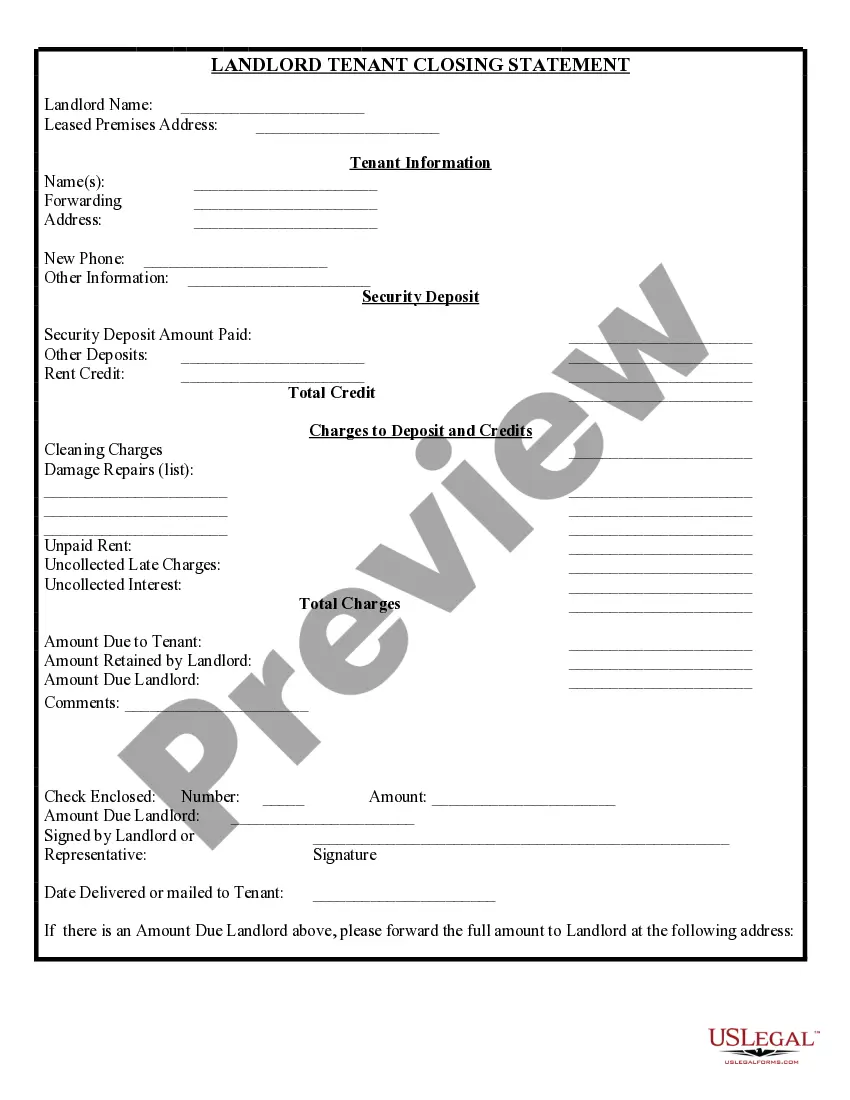
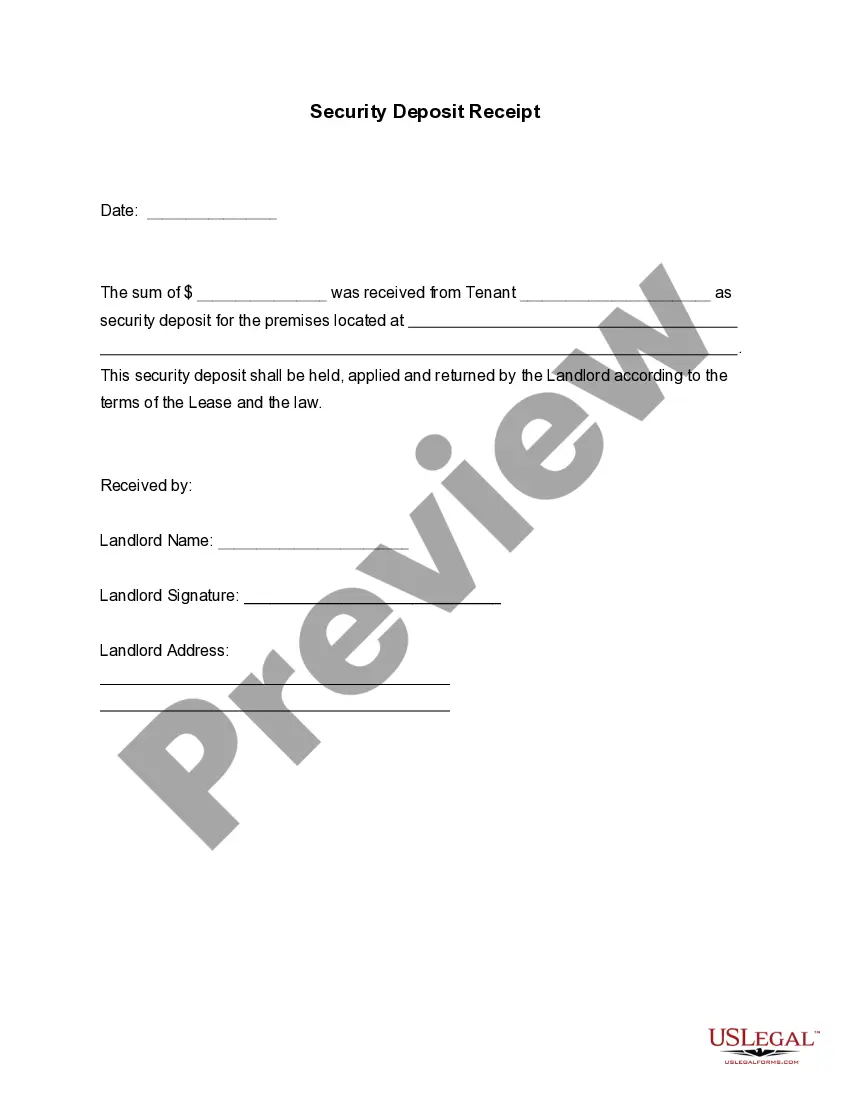
The Landlord Tenant Closing Statement to Reconcile Security Deposit is a legal document used by landlords to itemize and clarify the deductions made from a tenant's security deposit. This closing statement ensures both parties have a mutual understanding of the amounts held by the landlord and any credits or deductions applied. This form is essential for maintaining transparency and protecting the rights of both the landlord and the tenant during the reconciliation process.
Form components explained
- Identification of the landlord and tenant.
- Details of the security deposit amount held.
- Line items for any deductions, including repairs and cleaning fees.
- Credits applied to the tenant for items not deducted.
- Total amount returned to the tenant after deductions.
- Signature lines for both parties to confirm the statement.
When this form is needed
This form should be used at the end of a tenancy to reconcile the security deposit before returning it to the tenant. It is particularly necessary when there are deductions made for damages beyond normal wear and tear, or when the landlord must itemize charges for repairs, cleaning, or unpaid rent. Using this form helps avoid misunderstandings and disputes about the security deposit.
Who should use this form
- Landlords managing rental properties who need to reconcile security deposits.
- Tenants who wish to understand the details of their security deposits and any deductions.
- Real estate agents and property managers overseeing rental agreements.
How to prepare this document
- Identify the parties by filling in the names and contact information of the landlord and tenant.
- Specify the total security deposit amount initially collected.
- Detail the deductions by listing out any repairs or services performed at the property.
- Apply any credits to the tenant for items not deducted.
- Calculate and enter the total amount to be returned to the tenant.
- Have both parties sign and date the form to acknowledge agreement.
Notarization requirements for this form
This form does not typically require notarization unless specified by local law. However, it is advisable to check specific jurisdictional requirements to ensure compliance.
Get your form ready online
Our built-in tools help you complete, sign, share, and store your documents in one place.
Make edits, fill in missing information, and update formatting in US Legal Forms—just like you would in MS Word.
Download a copy, print it, send it by email, or mail it via USPS—whatever works best for your next step.
Sign and collect signatures with our SignNow integration. Send to multiple recipients, set reminders, and more. Go Premium to unlock E-Sign.
If this form requires notarization, complete it online through a secure video call—no need to meet a notary in person or wait for an appointment.
We protect your documents and personal data by following strict security and privacy standards.

Make edits, fill in missing information, and update formatting in US Legal Forms—just like you would in MS Word.

Download a copy, print it, send it by email, or mail it via USPS—whatever works best for your next step.

Sign and collect signatures with our SignNow integration. Send to multiple recipients, set reminders, and more. Go Premium to unlock E-Sign.

If this form requires notarization, complete it online through a secure video call—no need to meet a notary in person or wait for an appointment.

We protect your documents and personal data by following strict security and privacy standards.
Mistakes to watch out for
- Failing to document deductions properly, leading to disputes.
- Not providing enough detail about repairs or services billed against the security deposit.
- Neglecting to obtain signatures from both parties.
- Incorrectly calculating the final amount to be returned.
Benefits of using this form online
- Convenient access to the form from any device.
- Editability allows for customization to meet specific needs.
- Secure storage and easy sharing options for both parties.
- Drafted by licensed attorneys to ensure legal compliance and reliability.
Legal use & context
- This form is legally binding and may be used in court to resolve disputes over the security deposit.
- Proper completion and retention of this form can protect the landlord's rights while ensuring fairness to the tenant.
Key takeaways
- The Closing Statement provides essential documentation regarding security deposits.
- It's important for both landlords and tenants to understand the deductions and final amount due.
- Always check your local regulations regarding security deposit laws and requirements.
Looking for another form?
Form popularity
FAQ
If the tenant intends to occupy the rental unit for more than one year, the security deposit should be reported as a long-term asset (or noncurrent asset) under the balance sheet classification "Other assets". The landlord that receives and holds the security deposit should report the amount as a liability.
Mail your landlord a letter requesting that she return your deposit. Be polite and simply inform the landlord that you have vacated the property and would appreciate the return of your deposit once she has had a chance to complete any checks and paperwork.
Date. Date format is month/day/year. Payee. Write the name of the person or company to whom you are paying money with the check. Amount in numbers. Write the amount in numbers e.g. $375.00. Amount in words. This will be the same amount that you wrote in the numbers area. Memo. Signature.
The Security Deposit Accounting Statement includes the necessary information to properly understand the form like the start and end dates, date notice was given, and date of the move out inspection.The landlord will use this form if there is still money owed after repairs, court costs, fees, or other charges.
A landlord should keep accurate accounting records related to a rental business, including the tenant security deposit. Again, many states have rules about how to handle the money. Some of them require the landlord to keep the tenant security deposit with a local bank in an interest-bearing account.
Dear Name: I am writing to provide notice of my request that you refund the security deposit paid in the amount of $1500.00 for the rental of Address, City, State Zip Code. I vacated the residence on 00/00/00 without any damages beyond oridnary wear and tear.
The date of the letter and the landlord's full name and address. The address of the residence you rented and the date you moved in. A statement that you've been paying your rent timely and that you are current with your payments.
The cost of fixing any damages to the property caused by the tenant or the tenant's guests. The cost of cleaning the unit when the tenant moves out, but only to make the unit as clean as it was when the tenant first moved in (less reasonable wear and tear).
Tenant's name and new address, or address he gave for return of the security deposit. Commencement date of the lease and date it ended. Amount of the security deposit when the tenant moved in. Amount of interest accrued.