Lab Worker Employment Contract - Self-Employed
Understanding this form
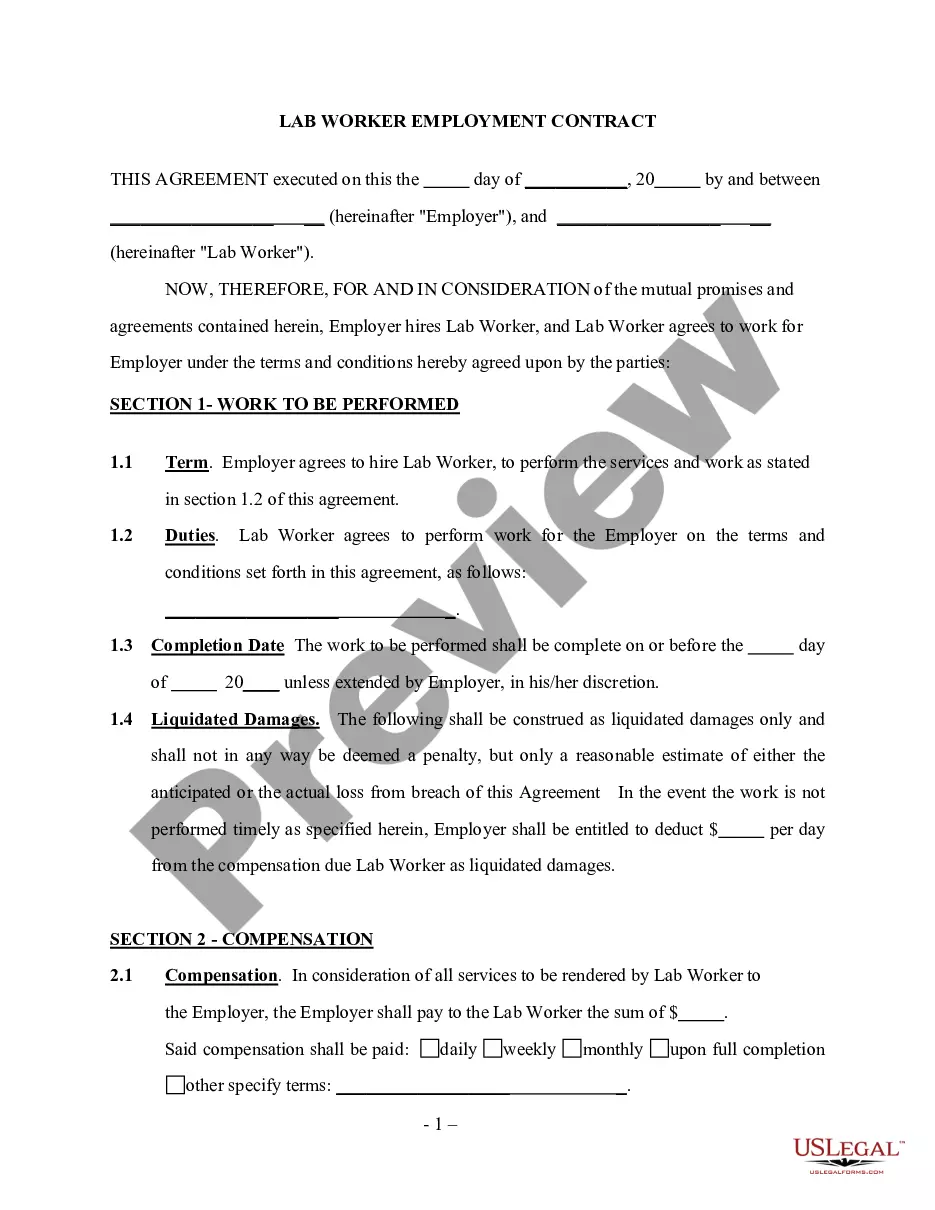
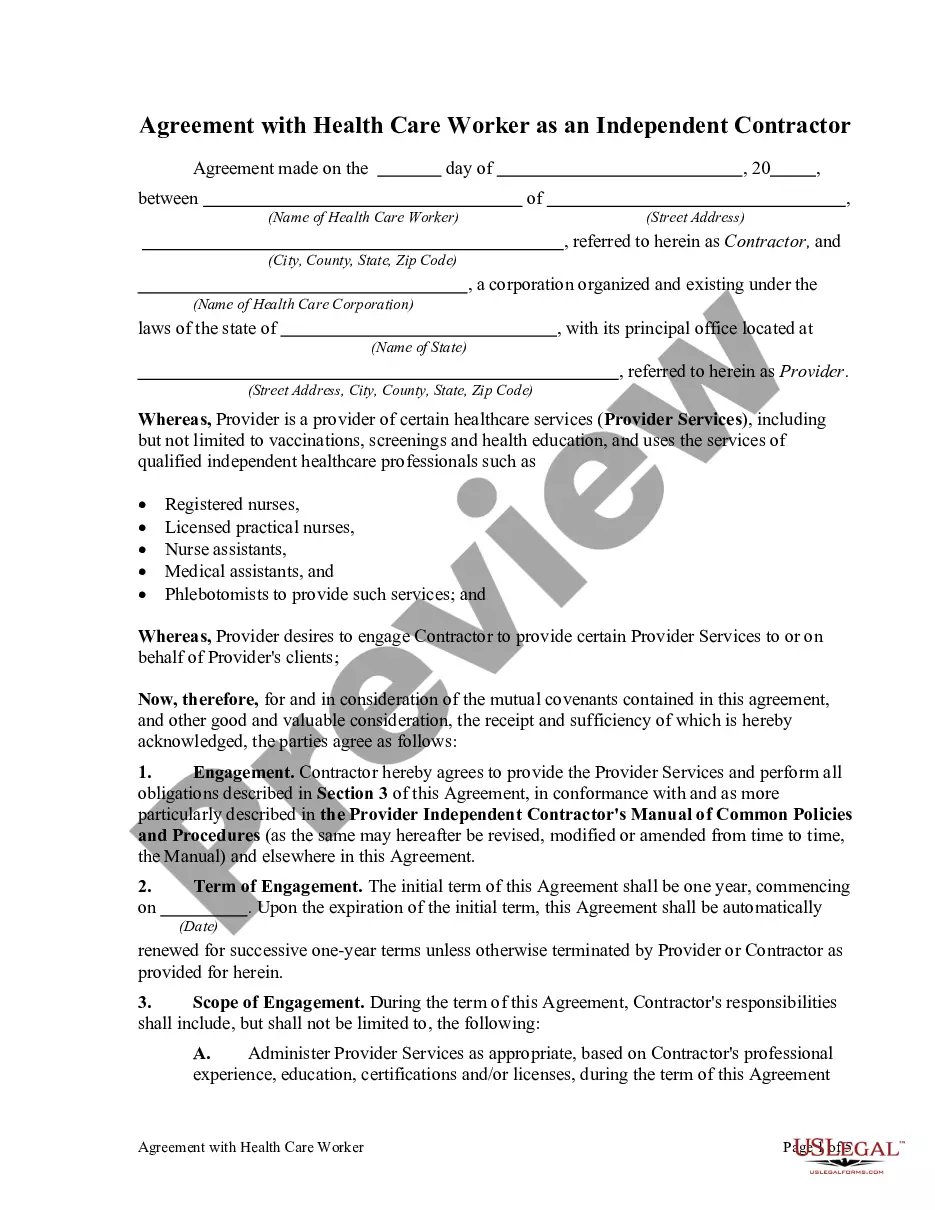
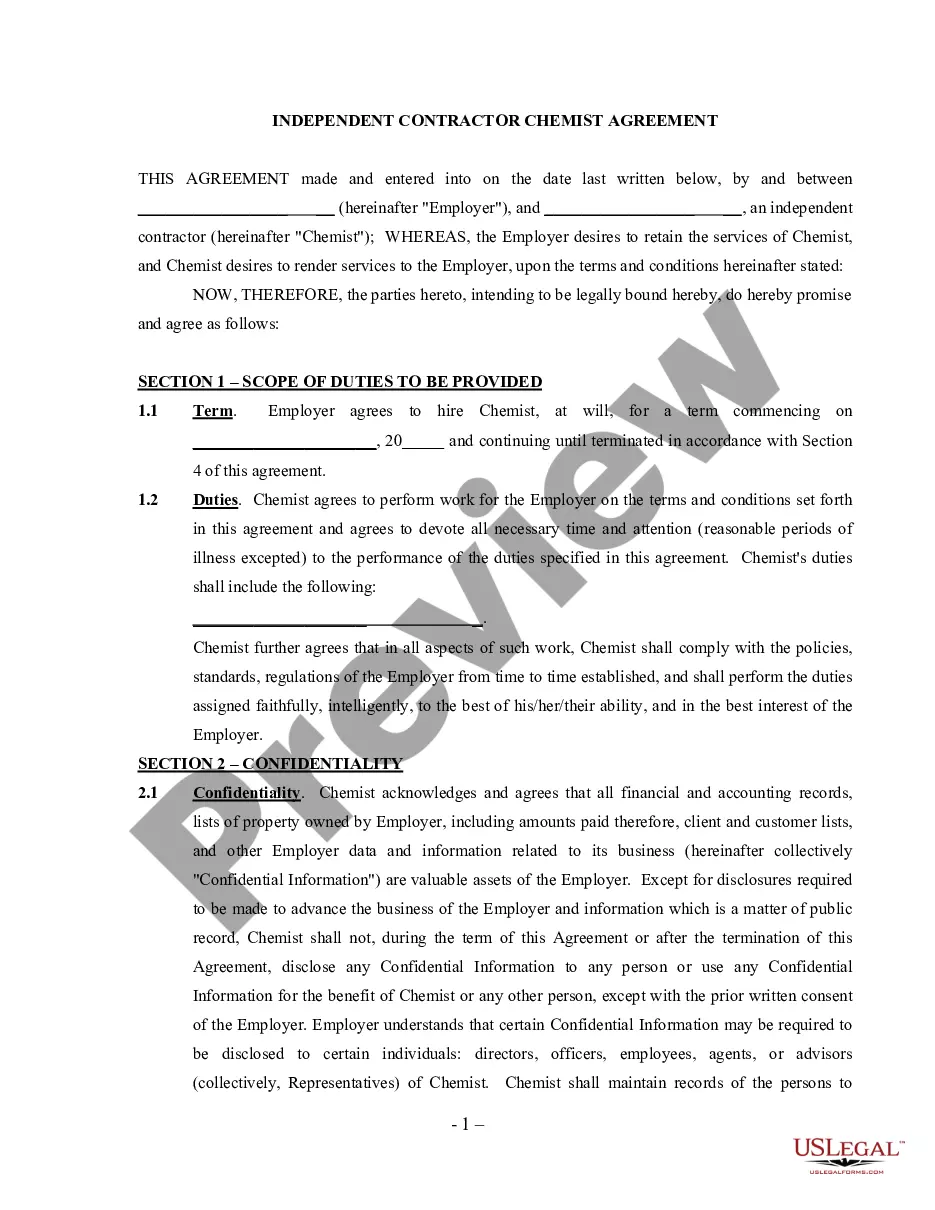
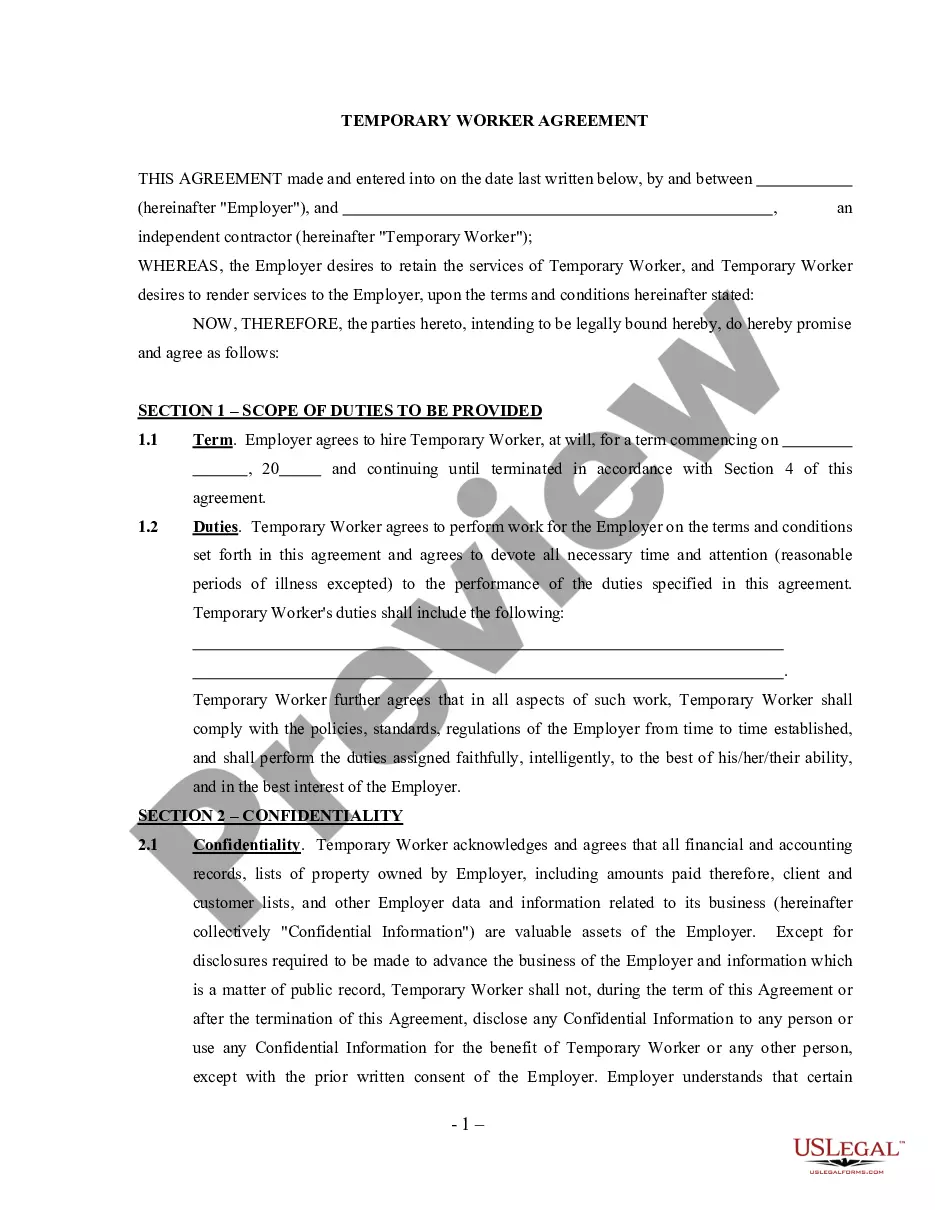
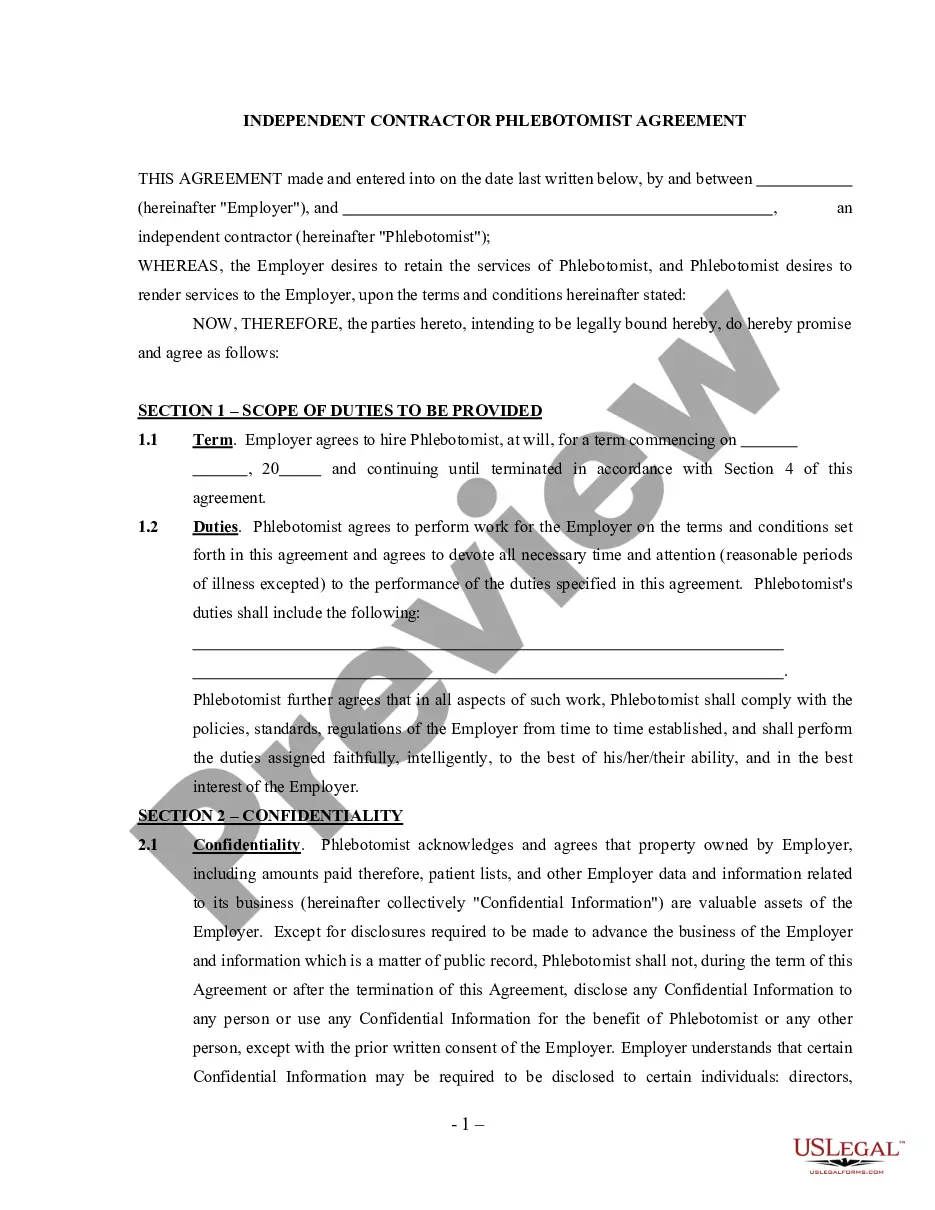
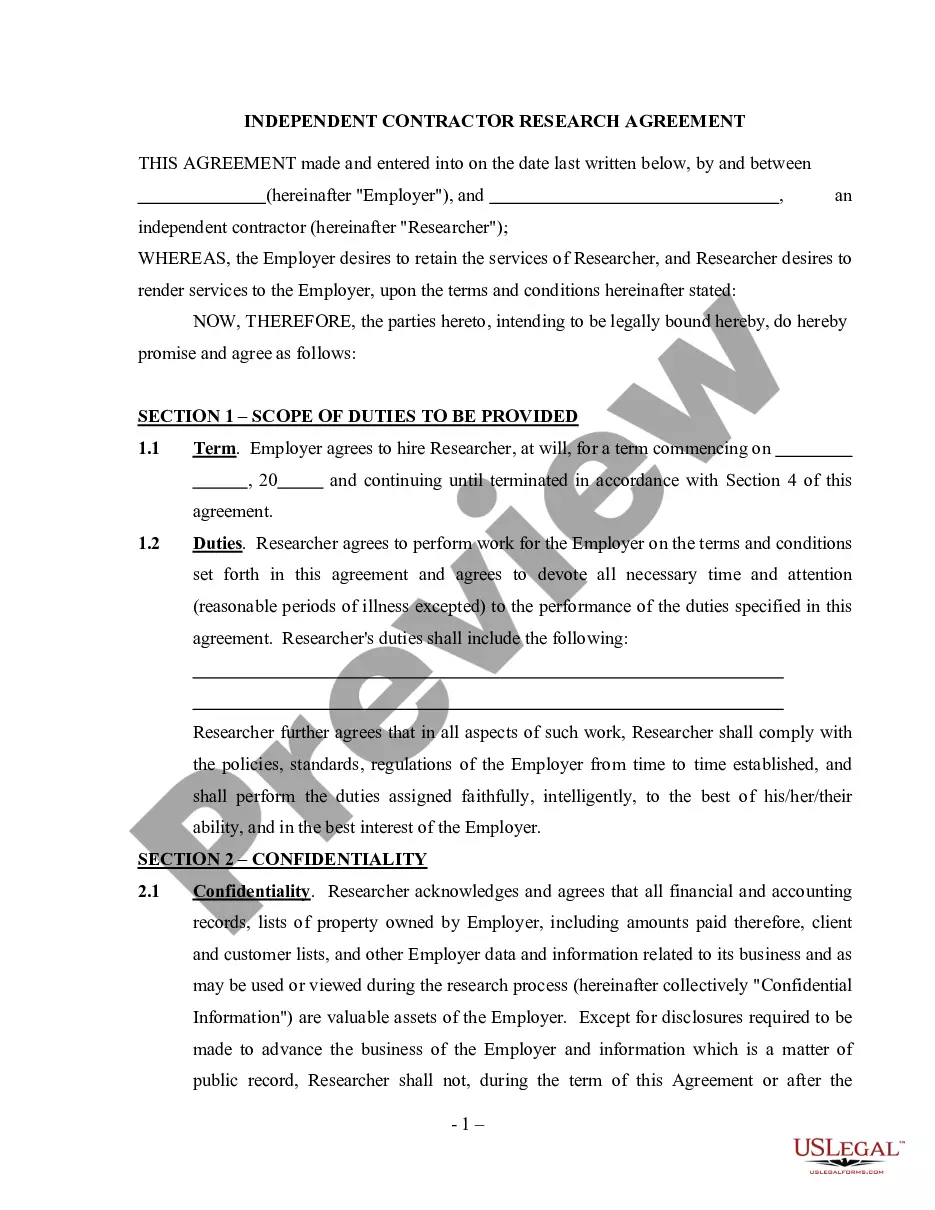
The Lab Worker Employment Contract for Self-Employed individuals is a legal document that outlines the agreement between an employer and a lab worker who is providing laboratory services as an independent contractor. This contract includes key details such as the scope of work, independent contractor status, and a confidentiality clause, distinguishing it from traditional employment agreements where the worker is classified as an employee. This form is essential for establishing clear expectations and legal protections for both parties involved in the lab work arrangement.
Form components explained
- Section 1: Work to be performed - outlines the nature of the services and the agreed-upon term.
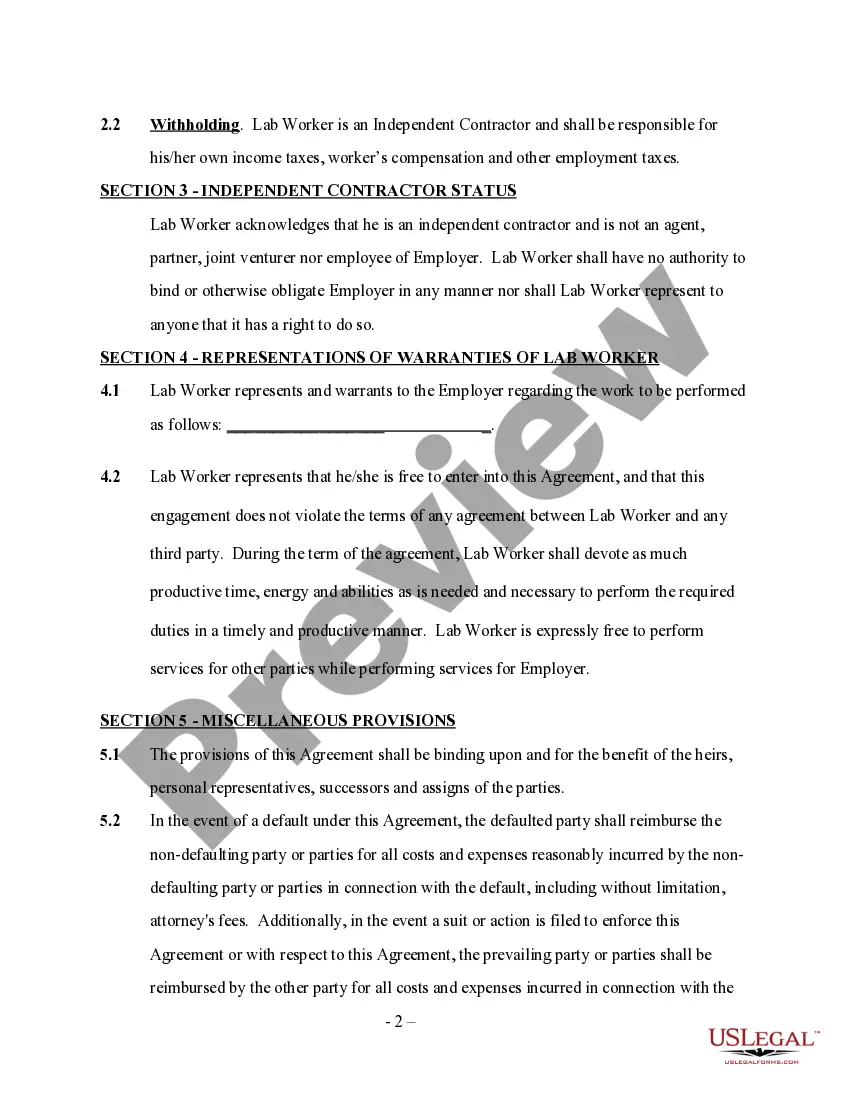
- Section 3: Independent contractor status - clarifies the relationship between the lab worker and the employer.
- Section 4: Representations and warranties of the lab worker - includes assurances about the worker's ability to enter into the agreement.
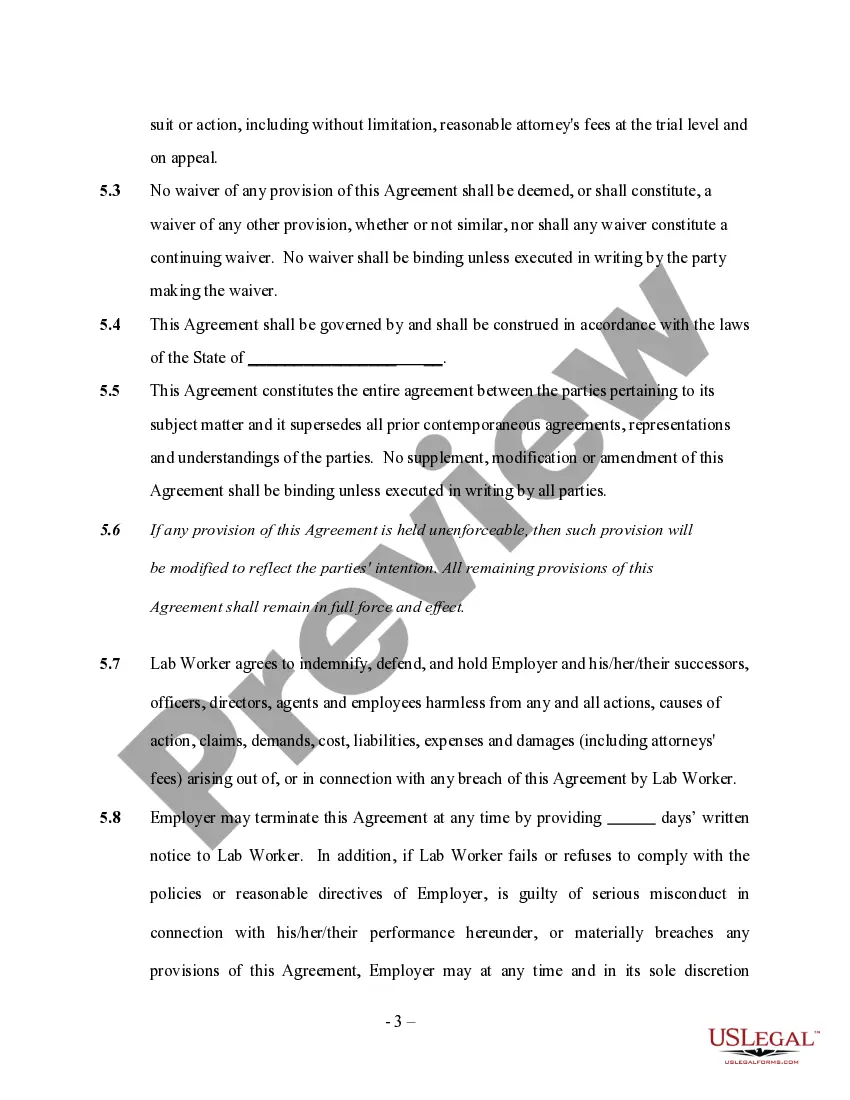
- Section 5: Miscellaneous provisions - covers additional legal terms, including indemnification, waivers, and governing law.
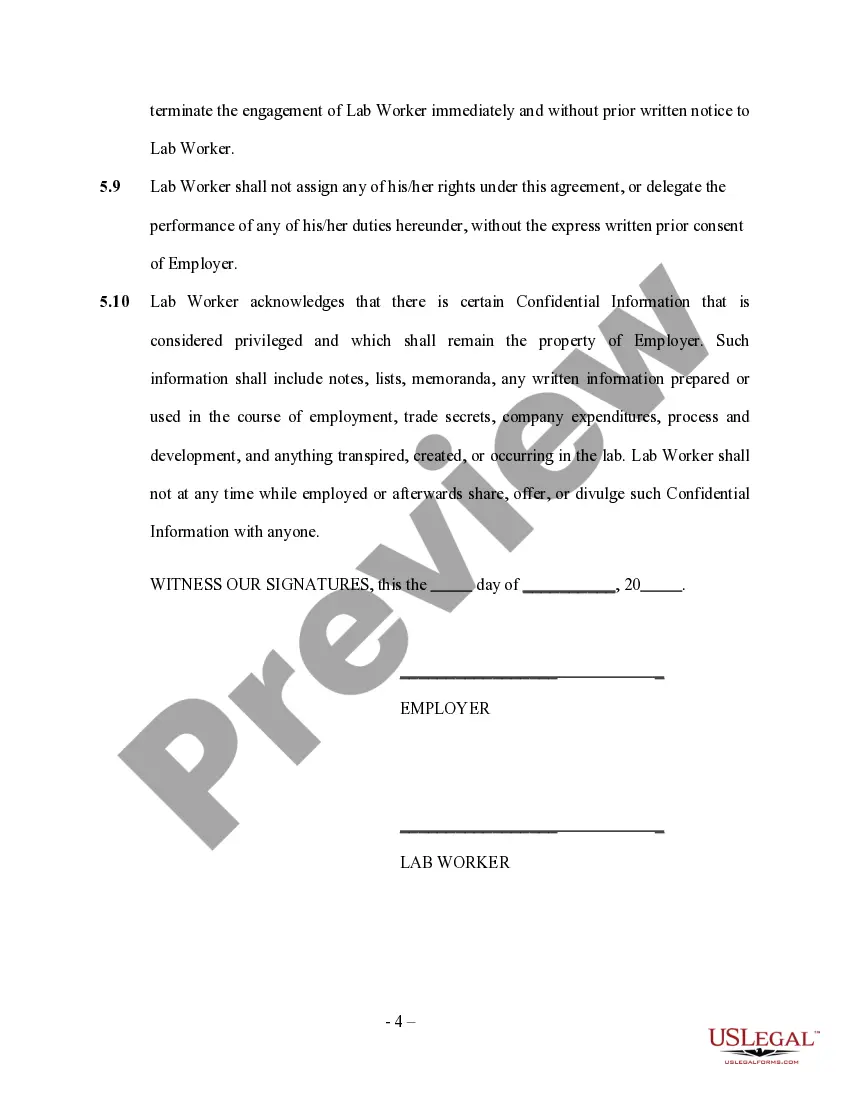
- Confidentiality clause - ensures the protection of sensitive information related to the employer and the lab work.
When to use this form
This form should be used when an employer hires a lab worker as an independent contractor. Scenarios include laboratory services in research facilities, medical laboratories, or any situation where specialized lab work is needed without creating an employer-employee relationship. This contract is beneficial when the work is project-based or temporary, helping both parties clearly define their roles and responsibilities.
Who should use this form
This form is intended for:
- Employers who require laboratory services without hiring employees.
- Independent contractors with laboratory skills looking to formalize their working relationship with an employer.
- Laboratory professionals seeking clear contractual terms to protect their rights and obligations.
How to complete this form
- Identify the parties involved: Enter the names and contact information for the employer and the lab worker.
- Specify the work: Clearly define the laboratory services to be performed in Section 1.2.
- Determine the contract term: Fill in the duration for which the services will be provided.
- Review independent contractor status: Ensure that both parties agree to the independent contractor relationship as stated in Section 3.
- Include confidentiality terms: Make sure the confidentiality clause is understood and agreed upon to protect sensitive information.
- Sign and date the contract: Both the employer and the lab worker must sign the agreement to make it legally binding.
Does this document require notarization?
Notarization is generally not required for this form. However, certain states or situations might demand it. You can complete notarization online through US Legal Forms, powered by Notarize, using a verified video call available anytime.
Get your form ready online
Our built-in tools help you complete, sign, share, and store your documents in one place.
Make edits, fill in missing information, and update formatting in US Legal Forms—just like you would in MS Word.
Download a copy, print it, send it by email, or mail it via USPS—whatever works best for your next step.
Sign and collect signatures with our SignNow integration. Send to multiple recipients, set reminders, and more. Go Premium to unlock E-Sign.
If this form requires notarization, complete it online through a secure video call—no need to meet a notary in person or wait for an appointment.
We protect your documents and personal data by following strict security and privacy standards.

Make edits, fill in missing information, and update formatting in US Legal Forms—just like you would in MS Word.

Download a copy, print it, send it by email, or mail it via USPS—whatever works best for your next step.

Sign and collect signatures with our SignNow integration. Send to multiple recipients, set reminders, and more. Go Premium to unlock E-Sign.

If this form requires notarization, complete it online through a secure video call—no need to meet a notary in person or wait for an appointment.

We protect your documents and personal data by following strict security and privacy standards.
Common mistakes to avoid
- Failing to clearly define the scope of work in the contract.
- Not indicating the term of the agreement, leading to confusion about the duration of services.
- Misunderstanding the implications of independent contractor status, which can affect liability and taxes.
- Overlooking the confidentiality clause, risking unauthorized sharing of sensitive information.
- Neglecting to include signatures, making the contract unenforceable.
Why complete this form online
- Convenient access: Download and customize the form whenever needed.
- Editable format: Easily adjust the content to suit specific requirements.
- Compliance assurance: Forms are prepared by licensed attorneys to ensure legal soundness.
- Time-saving: Quickly complete your form without needing to start from scratch.
Looking for another form?


Form popularity
FAQ
According to IRS guidelines, it is possible to have a W-2 employee who also performs work as a 1099 independent contractor so long as the individual is performing completely different duties that would qualify them as an independent contractor.
If you're self-employed, you do not have a contract of employment with an employer.You don't have employment rights as such if you're self-employed as you are your own boss and can therefore decide how much to charge for your work and how much holiday to give yourself. You do have some legal protection.
There may be some factors suggesting a California worker is an employee and others suggesting he or she is an independent contractor. It is even possible that a worker can be considered an independent contractor for purposes of IRS tax filing, but they are considered an employee under California's wage and hours laws.
There is no such thing as a 1099 employee. The 1099 part of the name refers to the fact that independent contractors receive a form 1099 at the end of the year, which reports to the IRS how much money was paid to the contractor.In contrast, employees receive a W-2.
Your employer cannot simply switch you from W2 to 1099 at his or her discretion. There are a lot of rules and requirements for switching a W2 employee to a 1099 independent contractor; those rules tend to favor treating somebody as a W2...
Simply put, being an independent contractor is one way to be self-employed. Being self-employed means that you earn money but don't work as an employee for someone else. An independent contractor is someone who provides a service on a contractual basis.
People who work for themselves or who own their own company are sometimes alternately referred to as self-employed or independent contractors, though there is a difference between the two. In general, all independent contractors are self-employed, but not all self-employed people are independent contractors.
A self employed person will not usually have a contract of employment; they will usually be hired for a certain amount of time. The contract that exists between the self employed person and the person or company supplying the work will have a number of rules or conditions set down within it.
A: It is possible to transition an employee to a contactor if the worker truly meets the legal tests for independent contractor status.If the work is a core service of the nonprofit, it is less likely that the worker would have sufficient control over the work product to establish independent contractor status.