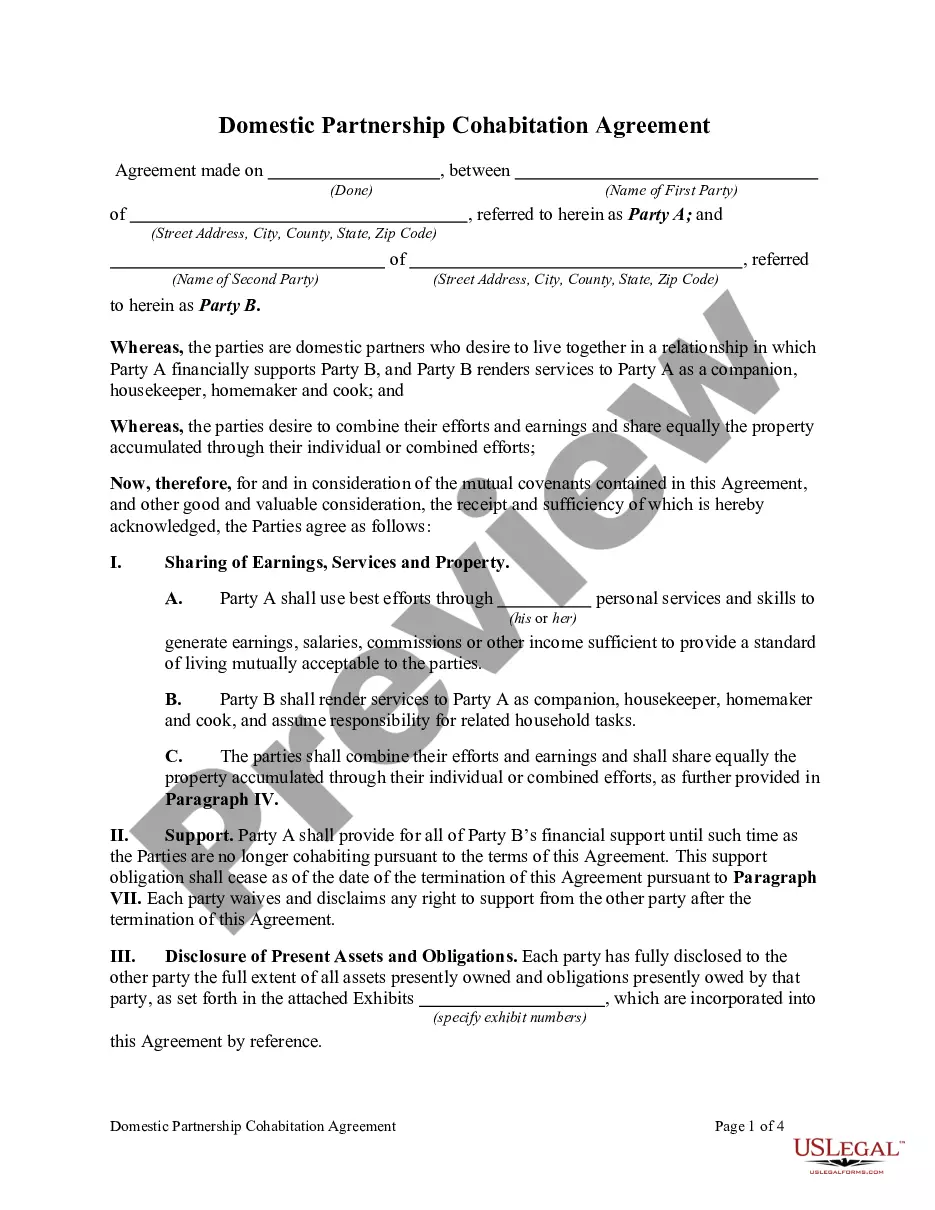
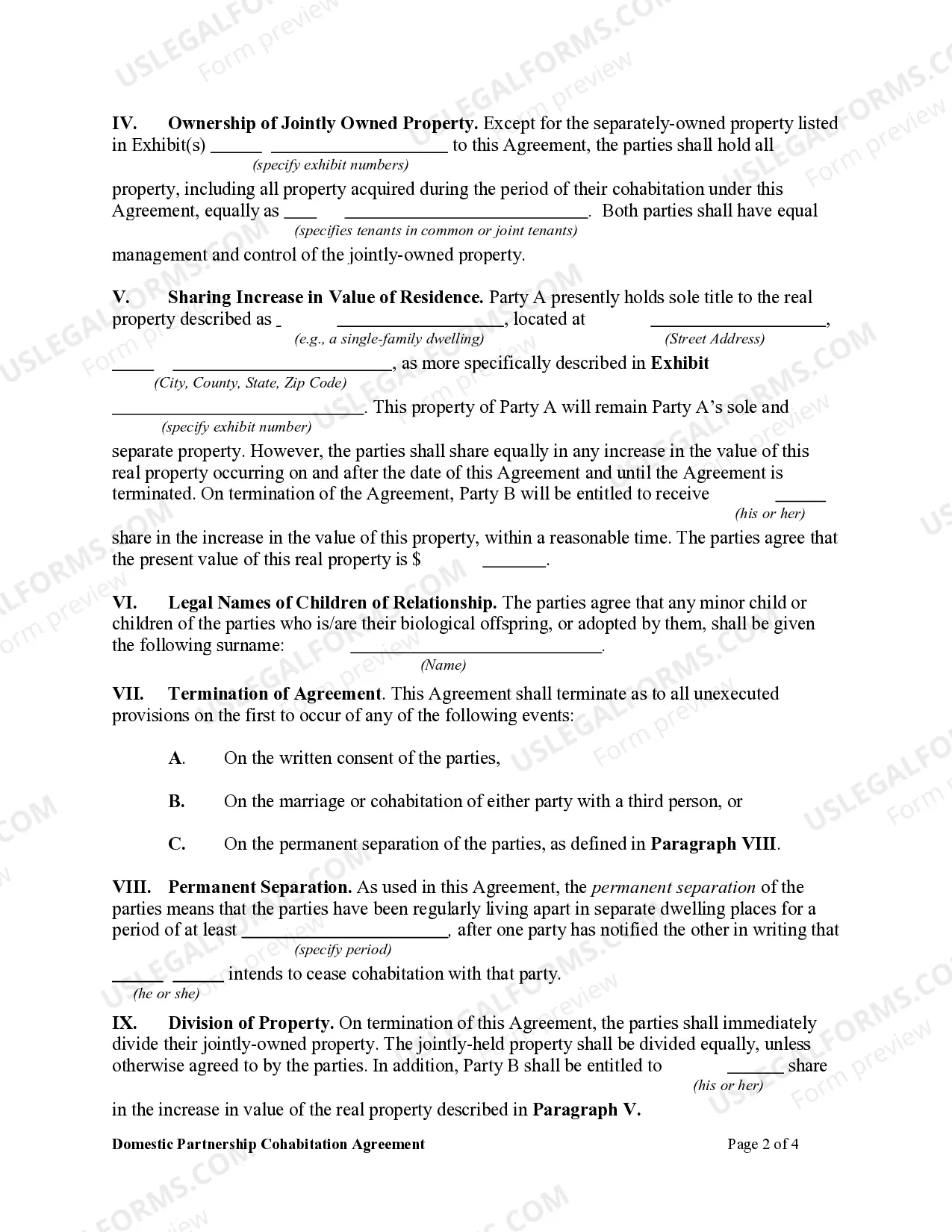
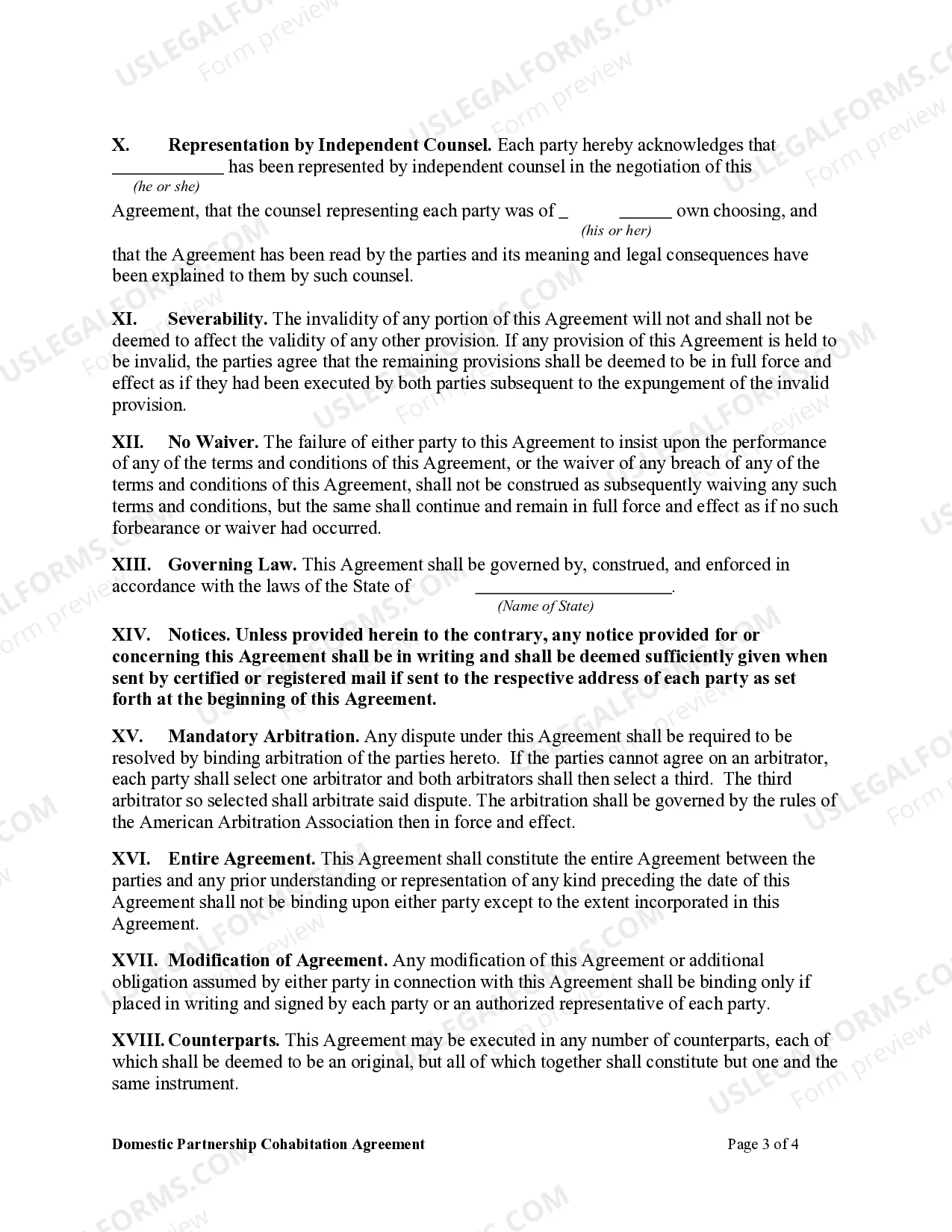
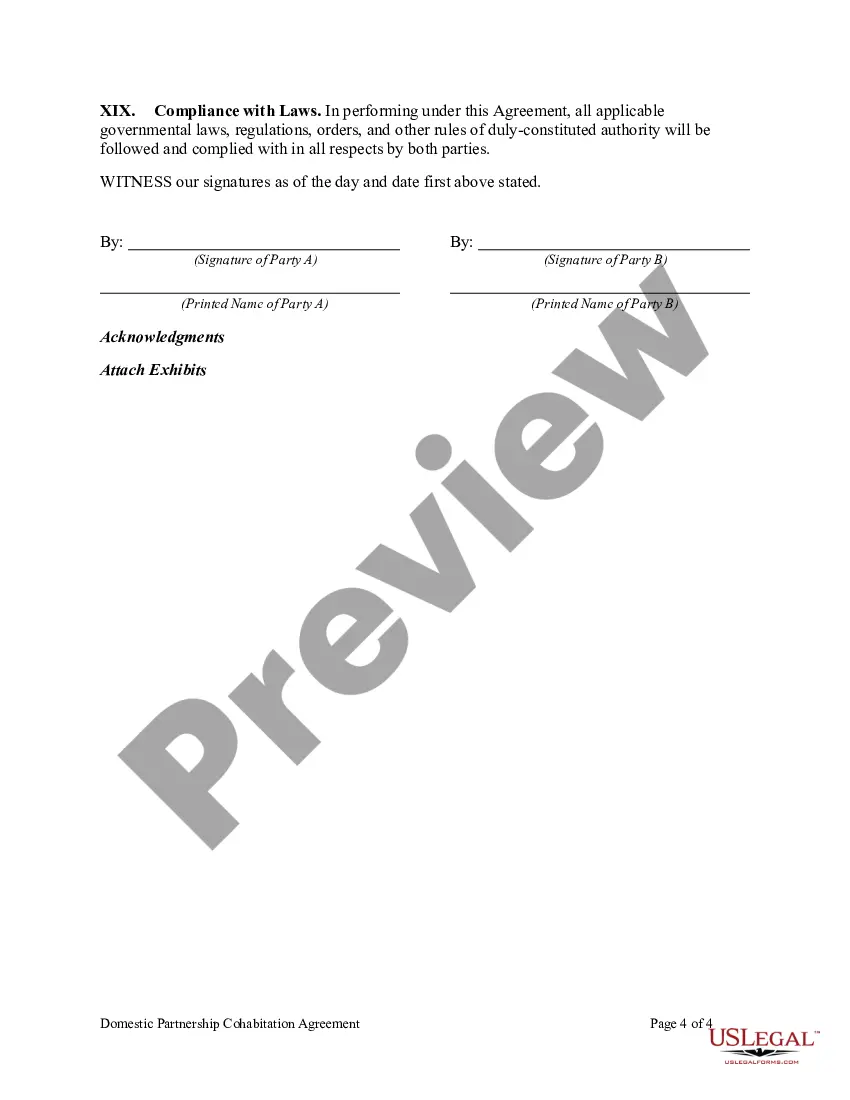
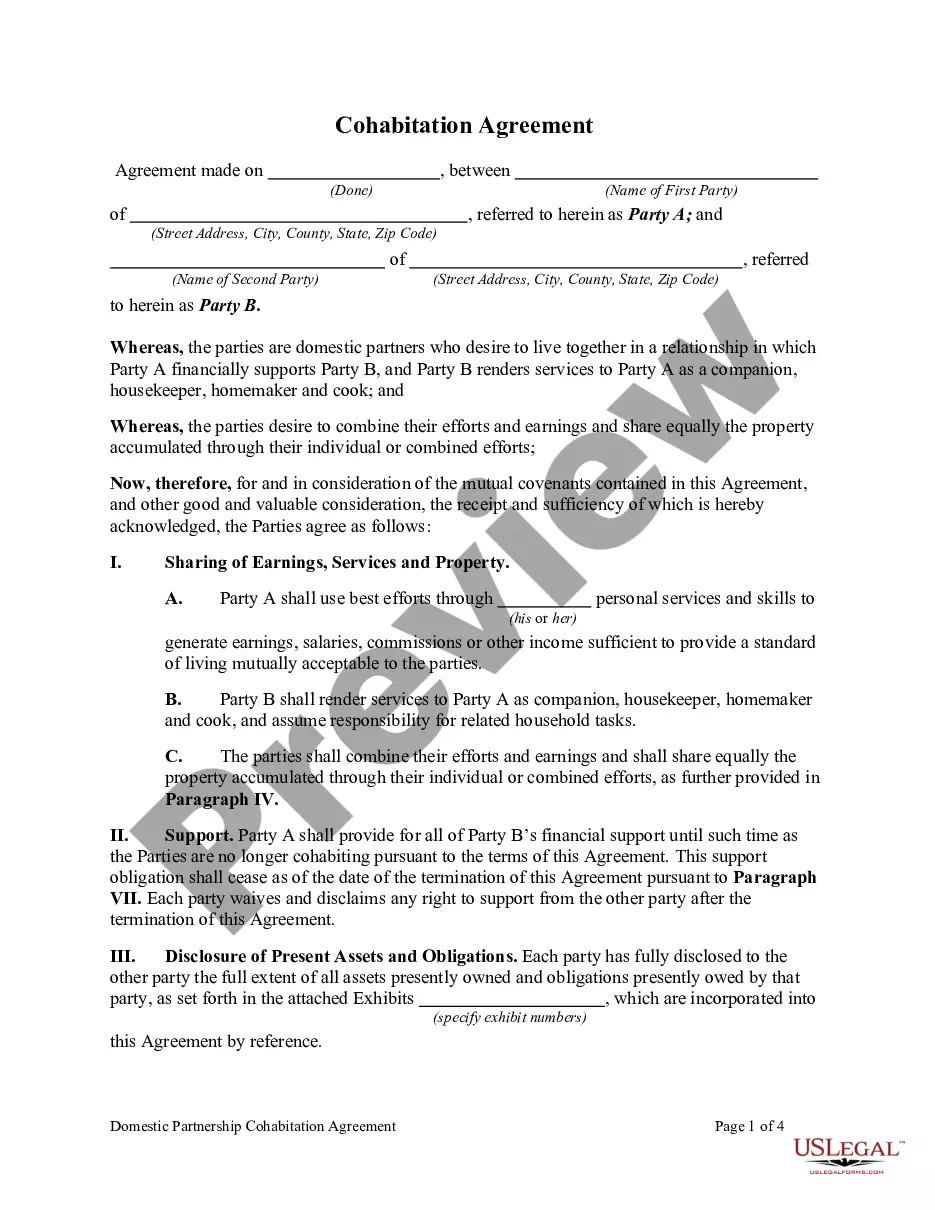
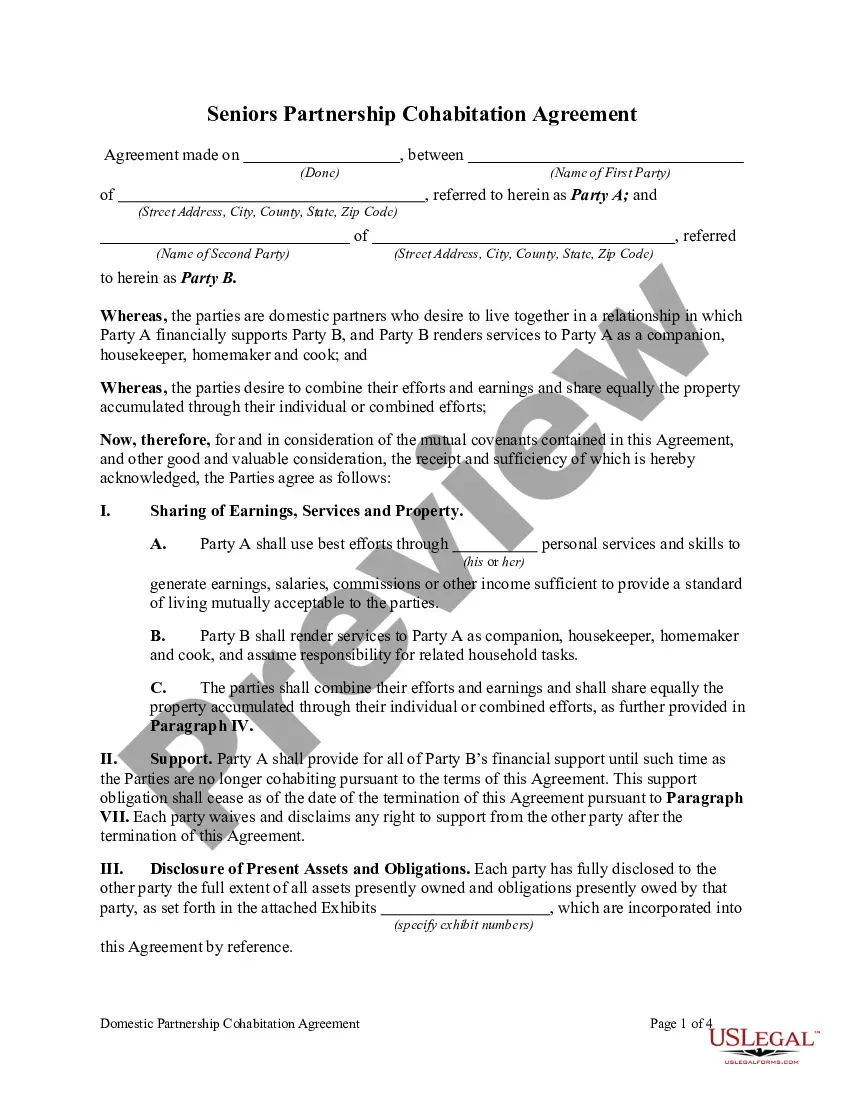
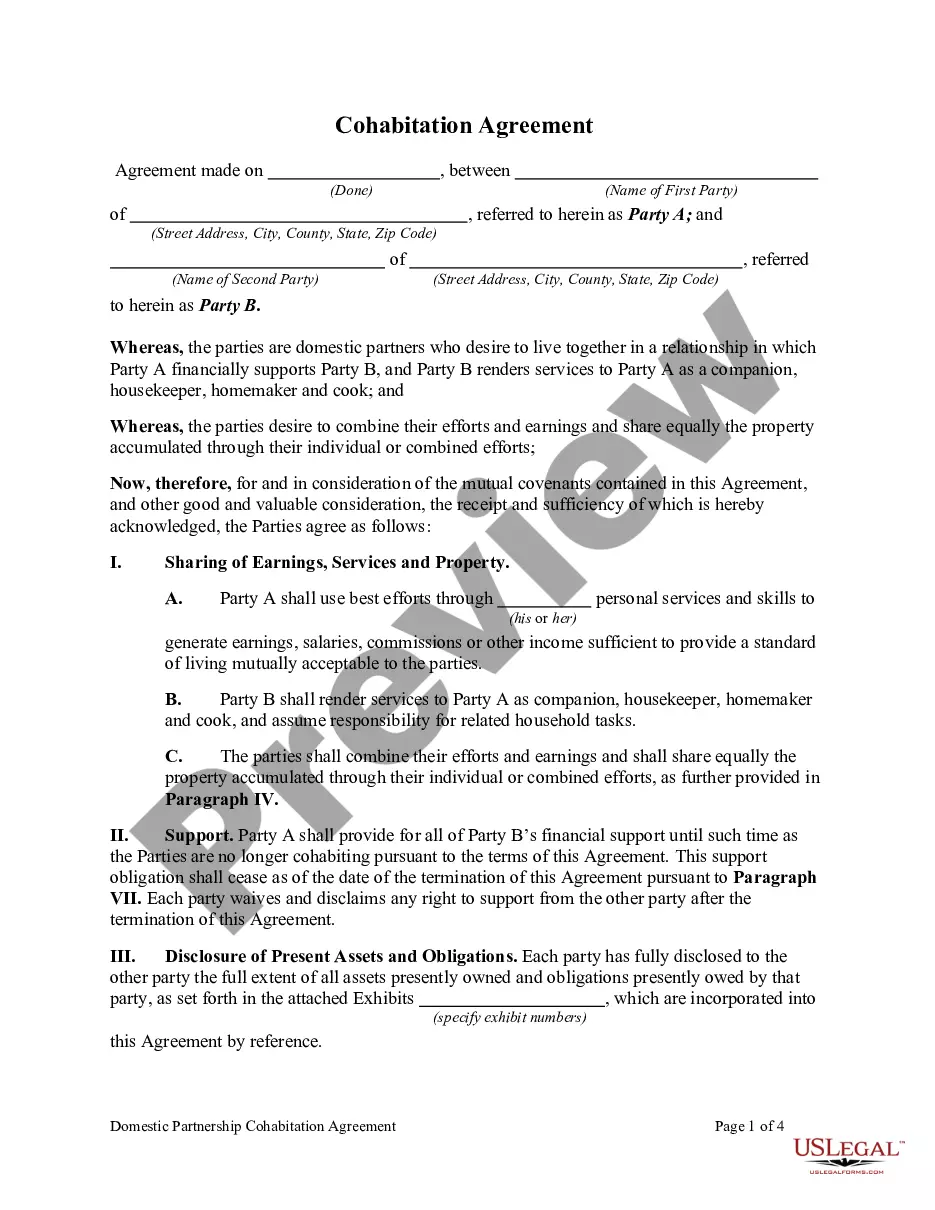
Mississippi Domestic Partnership Cohabitation Agreement
Description
Get your form ready online
Our built-in tools help you complete, sign, share, and store your documents in one place.
Make edits, fill in missing information, and update formatting in US Legal Forms—just like you would in MS Word.
Download a copy, print it, send it by email, or mail it via USPS—whatever works best for your next step.
Sign and collect signatures with our SignNow integration. Send to multiple recipients, set reminders, and more. Go Premium to unlock E-Sign.
If this form requires notarization, complete it online through a secure video call—no need to meet a notary in person or wait for an appointment.
We protect your documents and personal data by following strict security and privacy standards.

Make edits, fill in missing information, and update formatting in US Legal Forms—just like you would in MS Word.

Download a copy, print it, send it by email, or mail it via USPS—whatever works best for your next step.

Sign and collect signatures with our SignNow integration. Send to multiple recipients, set reminders, and more. Go Premium to unlock E-Sign.

If this form requires notarization, complete it online through a secure video call—no need to meet a notary in person or wait for an appointment.

We protect your documents and personal data by following strict security and privacy standards.
Looking for another form?
How to fill out Domestic Partnership Cohabitation Agreement?
You can invest multiple hours online searching for the legal document template that fulfills the state and federal criteria you need.
US Legal Forms offers a vast array of legal documents which are evaluated by specialists.
You can obtain or print the Mississippi Domestic Partnership Cohabitation Agreement from this service.
Once you have found the template you want, click on Purchase now to proceed.
- If you already have a US Legal Forms account, you can Log In and then click on the Download button.
- Afterwards, you can fill out, modify, print, or sign the Mississippi Domestic Partnership Cohabitation Agreement.
- Every legal document template you acquire is yours indefinitely.
- To get another copy of a purchased form, go to the My documents tab and click the corresponding button.
- If you are using the US Legal Forms site for the first time, follow these simple instructions.
- First, ensure you have selected the correct document template for your county or city of choice.
- Read the form description to confirm you have selected the accurate template.
- If available, use the Review button to examine the document template as well.
- To find another version of the form, utilize the Search section to locate the template that suits your needs and preferences.
Form popularity
FAQ
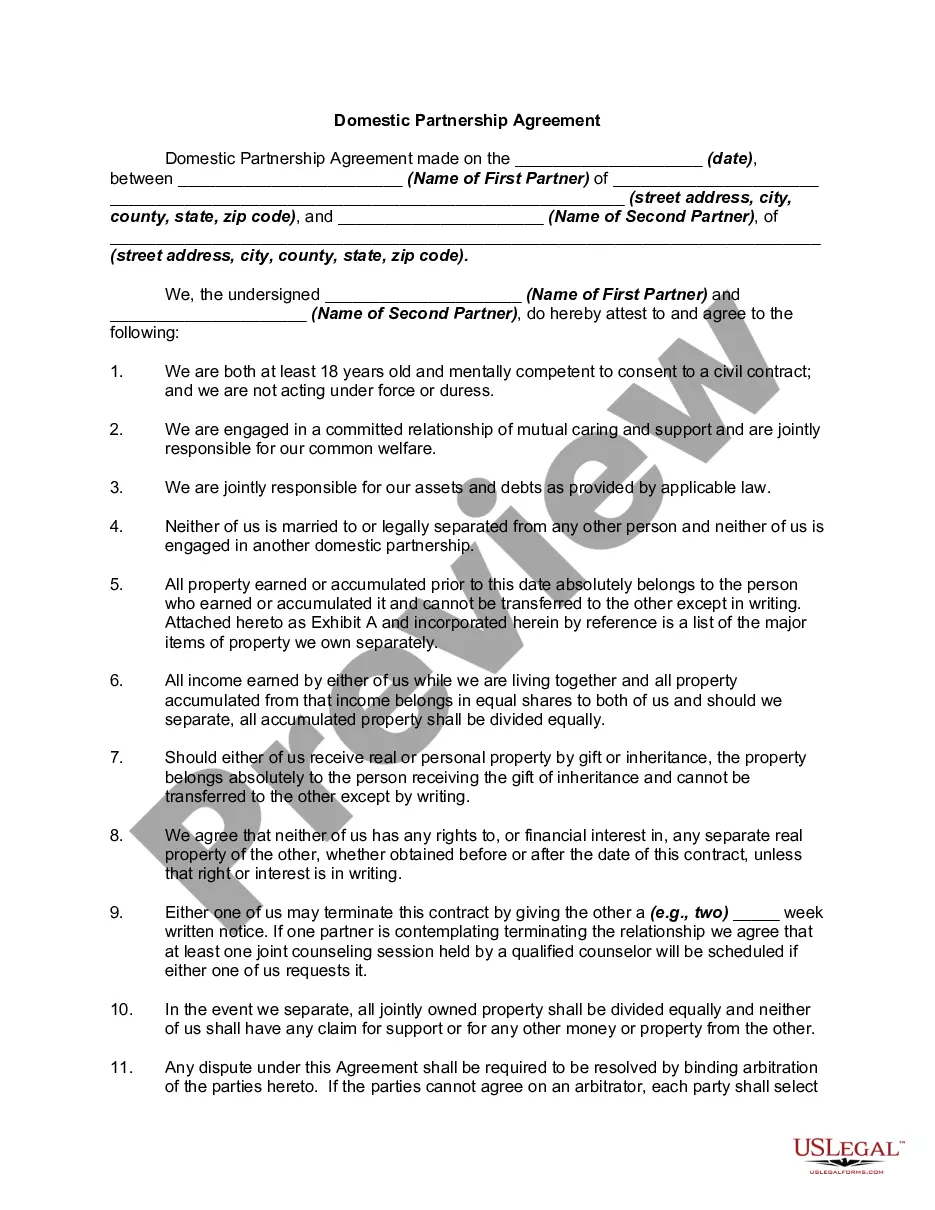
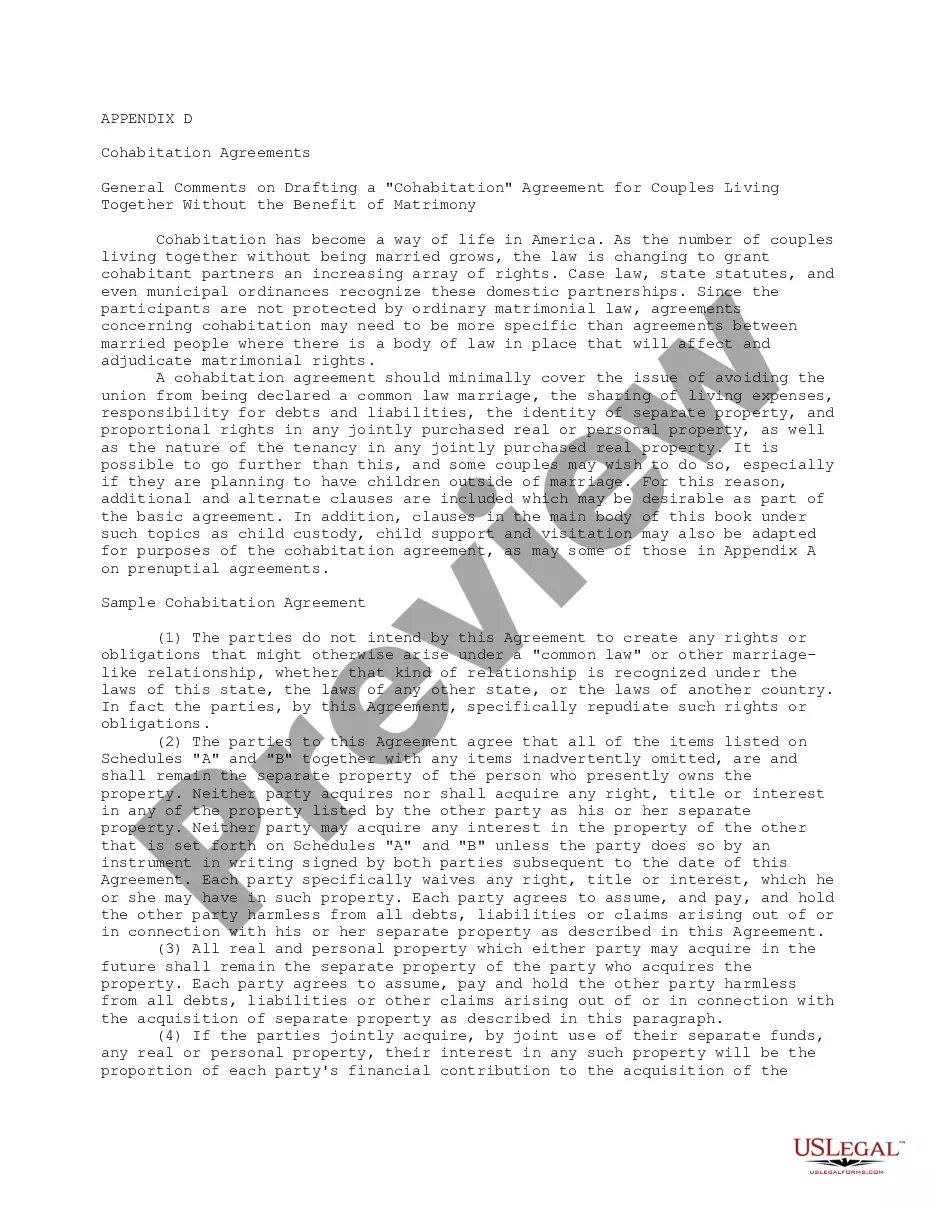
A domestic partnership agreement (also called a cohabitation agreement) is a legally binding contract that outlines the rights and obligations of two individuals who intend to live together but either do not wish to or are legally prohibited from marrying each other.
In states that recognize them, domestic partnerships can help unmarried couples obtain some of the legal benefits of marriage. Mississippi, however, is not one of those states. The state does not provide any legal rights or benefits for domestic partnerships, and neither does any municipality within the state.
A domestic partnership agreement (also called a cohabitation agreement) is a legally binding contract that outlines the rights and obligations of two individuals who intend to live together but either do not wish to or are legally prohibited from marrying each other.
A living arrangement in which an unmarried couple lives together in a long-term relationship that resembles a marriage. Couples cohabit, rather than marry, for a variety of reasons. They may want to test their compatibility before they commit to a legal union.
When couples live together and their finances, social, and sexual lives are intertwined, they are living in circumstances similar to a marriage, and are considered to be cohabitating.
In Mississippi, the law prohibits unlawful cohabitation in which a man and woman live together and it can be proven that they had habitual sexual intercourse. People convicted of it can be fined up to $500 and sentenced to as much as six months in jail.
A domestic partner can be broadly defined as an unrelated and unmarried person who shares common living quarters with an employee and lives in a committed, intimate relationship that is not legally defined as marriage by the state in which the partners reside.
Since common law marriage is no longer recognized in Mississippi, issues may arise when a couple has lived together without the benefit of marriage and then decide to go their separate ways. Such issues may include division of property or the award of child custody.