Guaranty of Payment for Goods and Future Goods
Understanding this form
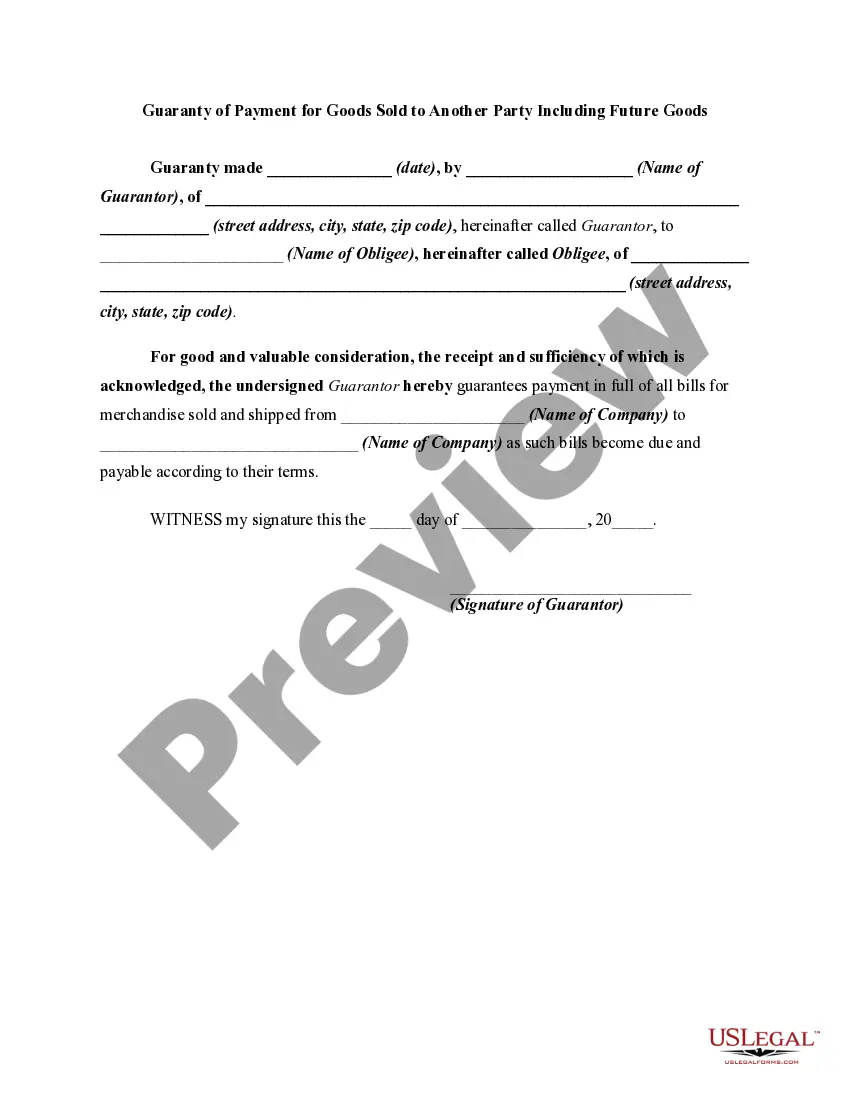
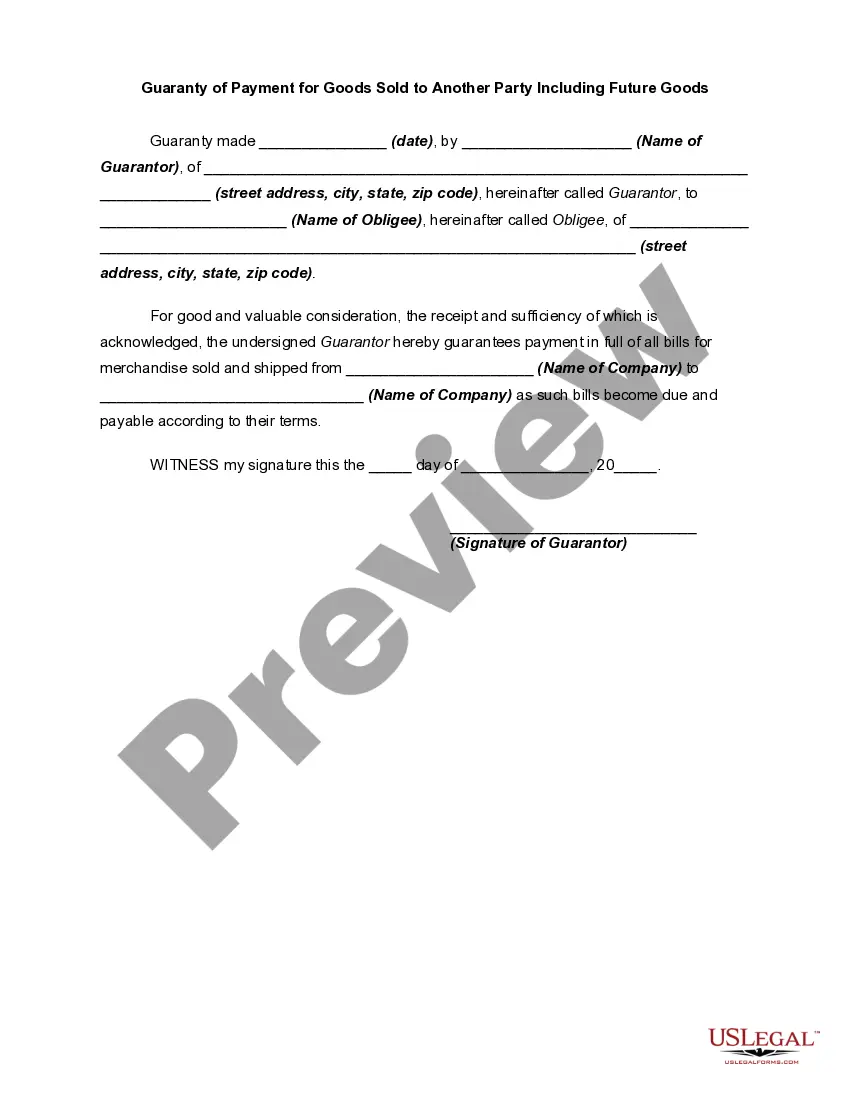
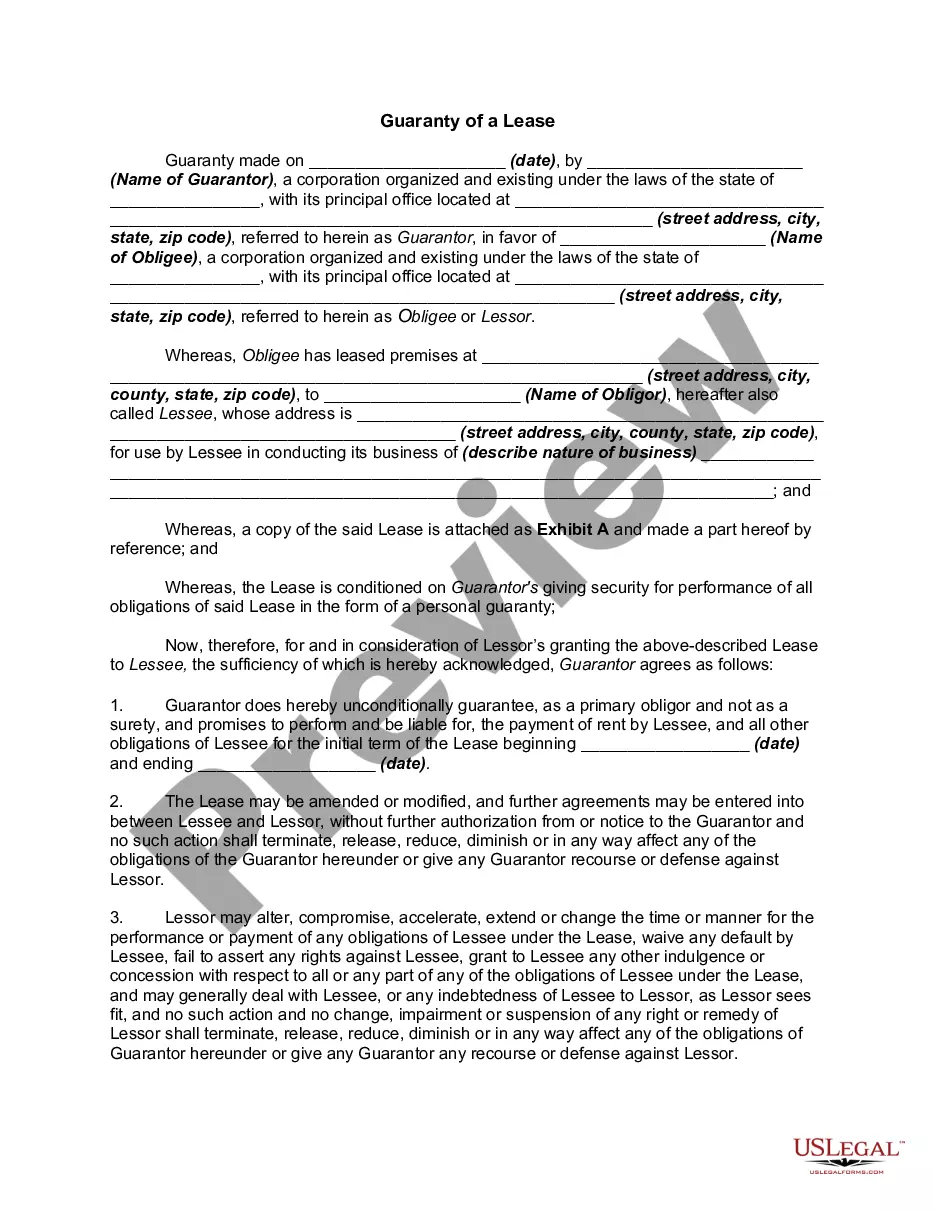
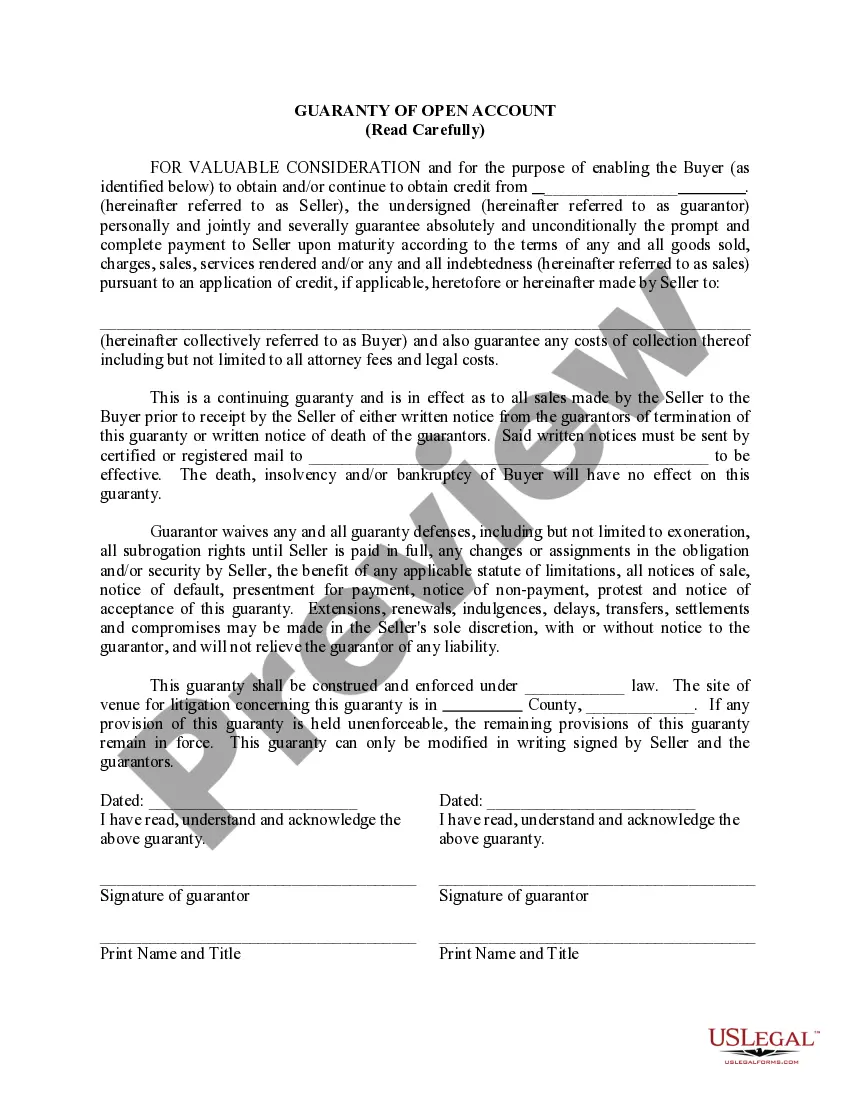
The Guaranty of Payment for Goods and Future Goods is a legal document in which a guarantor agrees to pay for goods sold to a third party. This form ensures that the seller receives payment for merchandise, including any future goods. Unlike other payment agreements, this guaranty specifically covers goods sold and shipped, providing a layer of security for sellers who may be concerned about a buyer's ability to pay.
What’s included in this form
- Date of the guaranty agreement.
- Name and address of the guarantor.
- Name and address of the obligee (the party owed the payment).
- Name of the company selling the goods.
- Details of the goods for which payment is being guaranteed.
- Signature of the guarantor.
When to use this document
This form is needed when a business requires assurance that payment will be made for goods sold to another party. It is particularly useful in situations where the buyer has a limited credit history or if the seller is extending credit for the goods. Any business transaction involving merchandise sales that may require a guaranty for payment can benefit from using this form.
Who needs this form
This form is suitable for:
- Businesses selling goods on credit.
- Individuals who want to guarantee payment for a friend or family member's purchases.
- Companies providing goods on consignment.
- Creditors seeking additional security for payment.
Completing this form step by step
- Identify the date of the agreement and fill it in accurately.
- Enter the name and address of the guarantor along with contact information.
- Specify the name and address of the obligee to ensure proper identification.
- Insert the name of the company selling the goods.
- Detail the goods being guaranteed and any future goods anticipated.
- Have the guarantor sign and date the document for validity.
Does this document require notarization?
This form does not typically require notarization unless specified by local law. However, having it notarized can add an additional layer of authenticity and security to the agreement.
Get your form ready online
Our built-in tools help you complete, sign, share, and store your documents in one place.
Make edits, fill in missing information, and update formatting in US Legal Forms—just like you would in MS Word.
Download a copy, print it, send it by email, or mail it via USPS—whatever works best for your next step.
Sign and collect signatures with our SignNow integration. Send to multiple recipients, set reminders, and more. Go Premium to unlock E-Sign.
If this form requires notarization, complete it online through a secure video call—no need to meet a notary in person or wait for an appointment.
We protect your documents and personal data by following strict security and privacy standards.

Make edits, fill in missing information, and update formatting in US Legal Forms—just like you would in MS Word.

Download a copy, print it, send it by email, or mail it via USPS—whatever works best for your next step.

Sign and collect signatures with our SignNow integration. Send to multiple recipients, set reminders, and more. Go Premium to unlock E-Sign.

If this form requires notarization, complete it online through a secure video call—no need to meet a notary in person or wait for an appointment.

We protect your documents and personal data by following strict security and privacy standards.
Common mistakes
- Failing to include the correct names and addresses of all parties.
- Not specifying the goods or leaving out future goods.
- Overlooking signature and date from the guarantor.
- Using outdated or incorrect forms that do not meet current laws.
Why use this form online
- Convenience of completing the form from anywhere, at any time.
- Editability allows for tailored agreements to suit specific transactions.
- Reliability, knowing that the forms are created by licensed attorneys.
- Quick access to necessary legal documentation without lengthy delays.
Main things to remember
- The Guaranty of Payment secures payment for goods sold.
- It is essential for businesses extending credit to buyers.
- Completing the form correctly is crucial to enforceability.
Looking for another form?


Form popularity
FAQ
The guarantor unconditionally guarantees the payment obligations of the obligor (the borrower or debtor) for the benefit of the beneficiary (the lender or creditor). This Standard Clause has integrated notes with important explanations and drafting and negotiating tips.
Retrospective guarantee ? It is a guarantee issued when the debt is already outstanding. Prospective guarantee ? Given in regard to a future debt. Specific guarantee ? Also known as a simple guarantee, it's a type that is used when dealing with a single transaction, and therefore a single debt.
The guarantor unconditionally guarantees the payment obligations of the obligor (the borrower or debtor) for the benefit of the beneficiary (the lender or creditor). This Standard Clause has integrated notes with important explanations and drafting and negotiating tips.
Guaranty of Collection. Guaranty agreements commonly provide that the guaranty is for "payment" and not simply a guaranty of "collection." If the agreement states that it is a "guaranty of payment," then the lender can seek recovery of the debt directly from the guarantor without first pursuing the borrower.
Guarantee of collection means a loan guarantee under which the authority agrees to pay ing to the terms of the guarantee agreement if the instrument is not paid when due and the participating lender has pursued all reasonable efforts relative to collection.
Financial commitments. Payment guarantees are financial commitments that require the debtor to make a repayment based on the terms outlined in the original debt agreement. Sometimes, the payment guarantee is backed with some form of collateral, such as property.
Put another way, a guaranty of collection requires that the debtor must exhaust certain remedies against the debtor before proceeding against the guarantor, while a guaranty of payment means that the lender can proceed directly against the guarantor even if the debtor is solvent and otherwise able to pay.
What is a Guaranty Of Payment? A guaranty of payment is a document that guarantees the person who signs it will pay any debts or liabilities incurred by another party. For example, this agreement can be helpful when a seller needs financial assurance from a buyer.