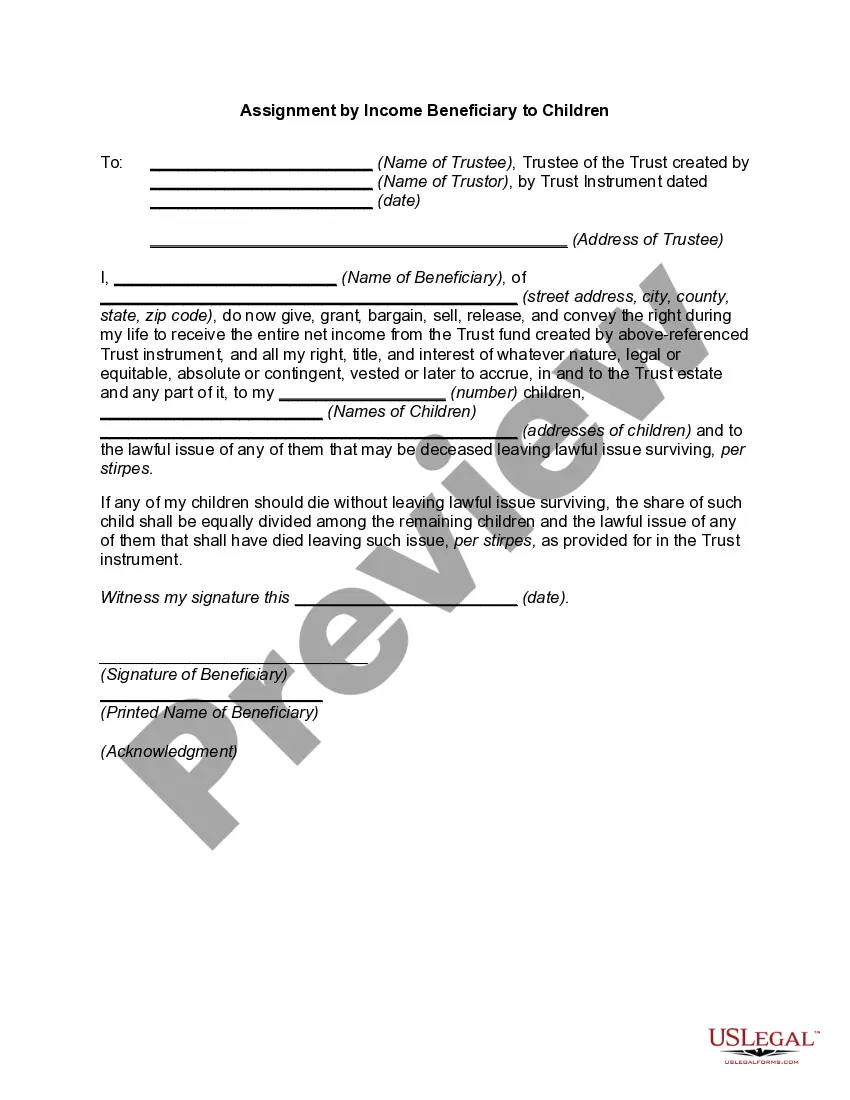
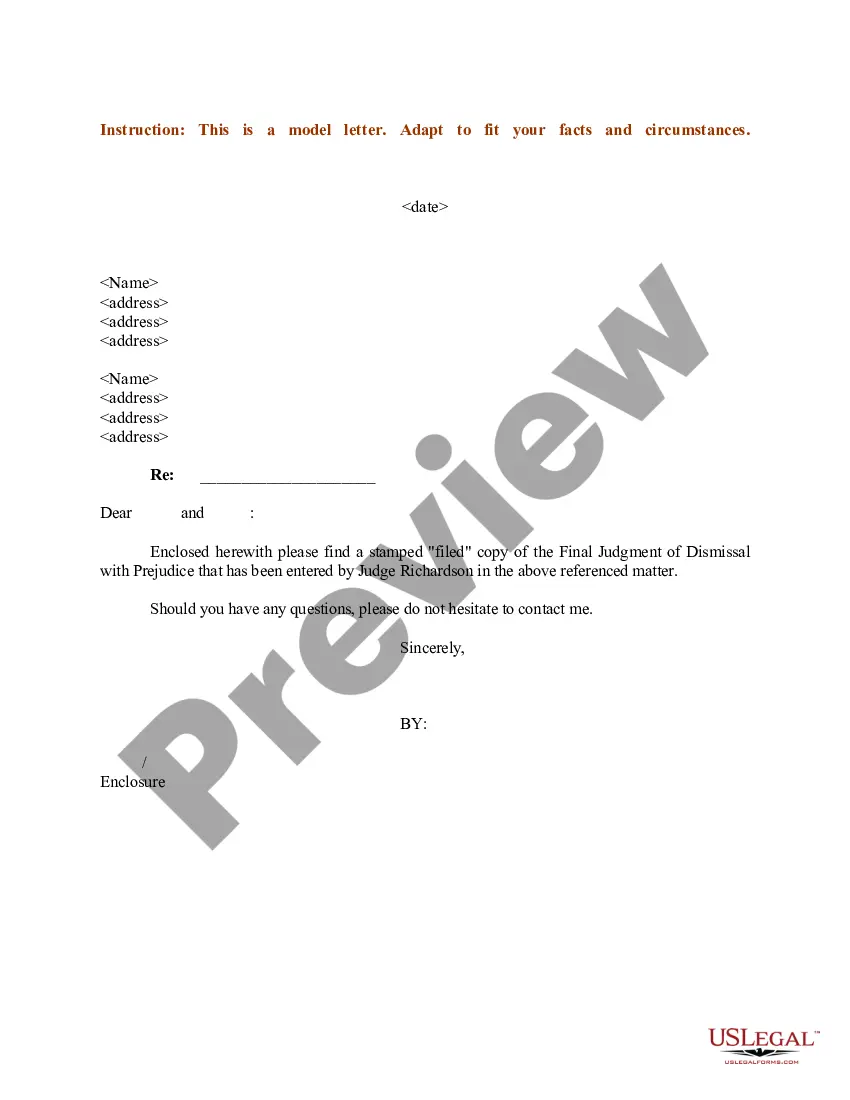
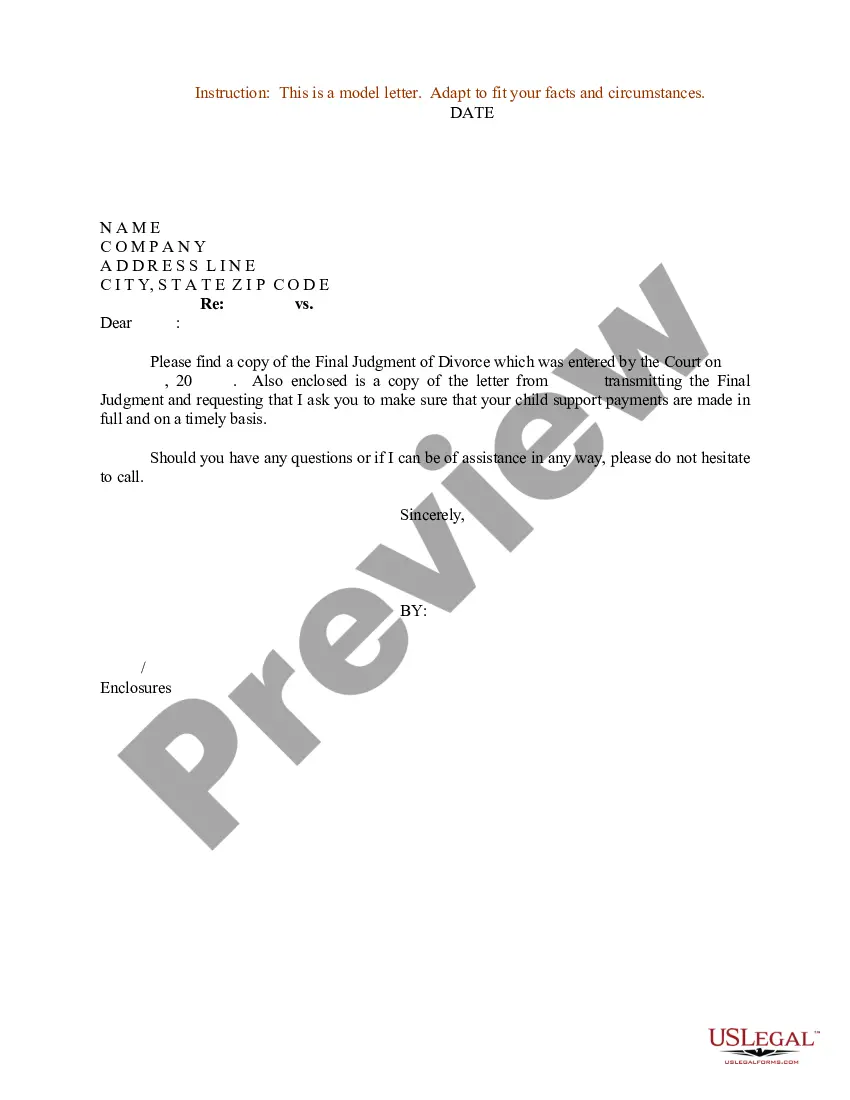
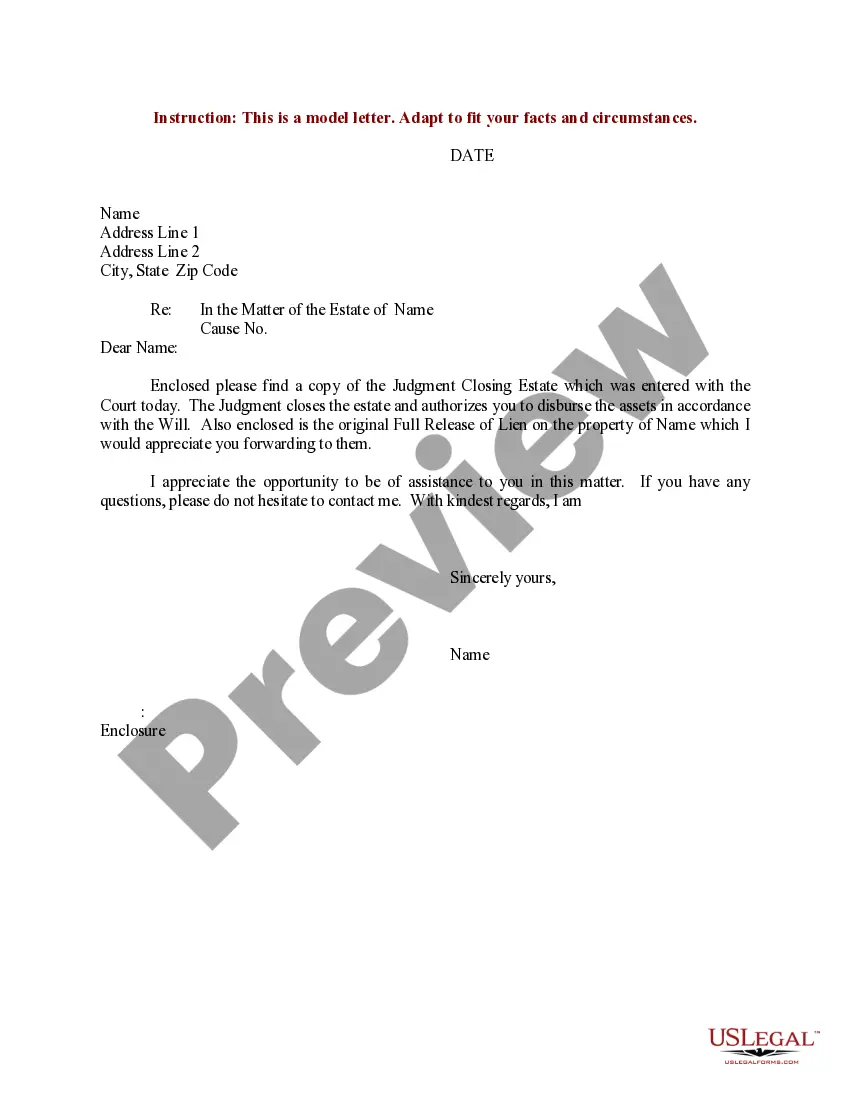
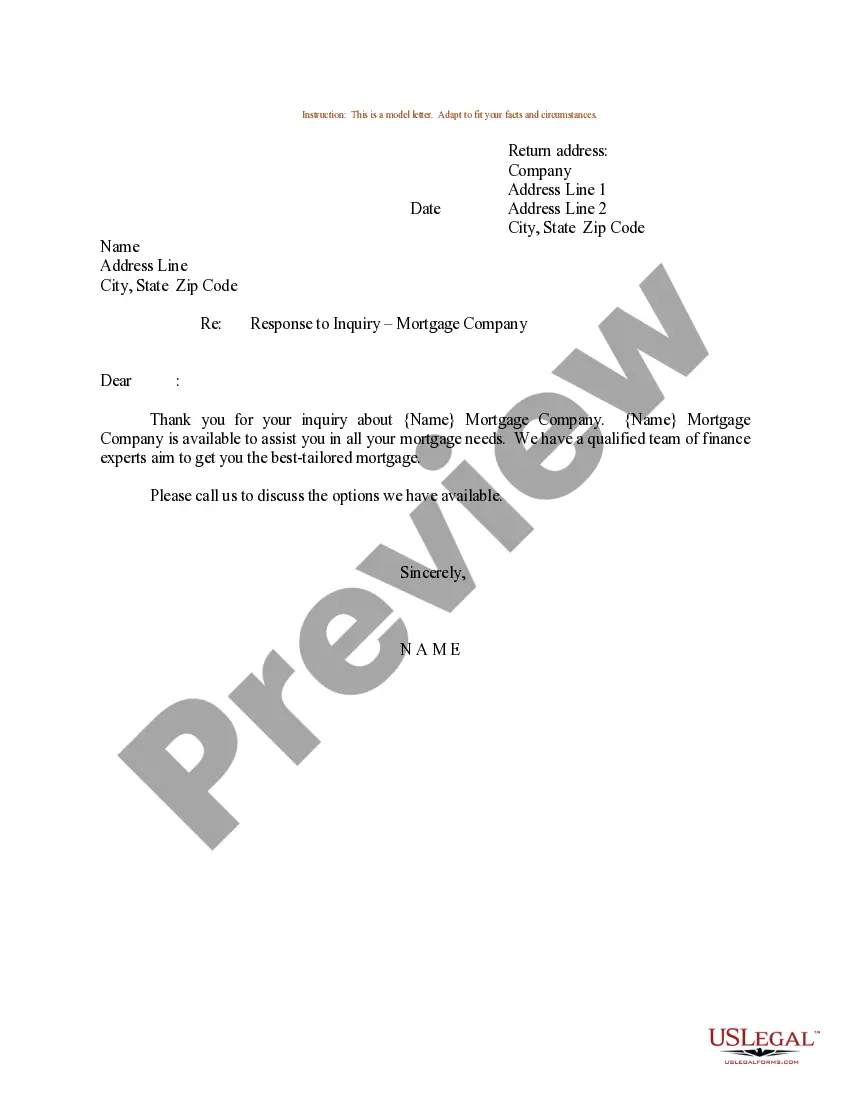
This form is a sample letter in Word format covering the subject matter of the title of the form.
Mississippi Sample Letter to Attorneys transmitting copy of Final Judgment of Dismissal with Prejudice
Category:
State:
Multi-State
Control #:
US-0012LTR
Format:
Word;
Rich Text
Instant download
Description

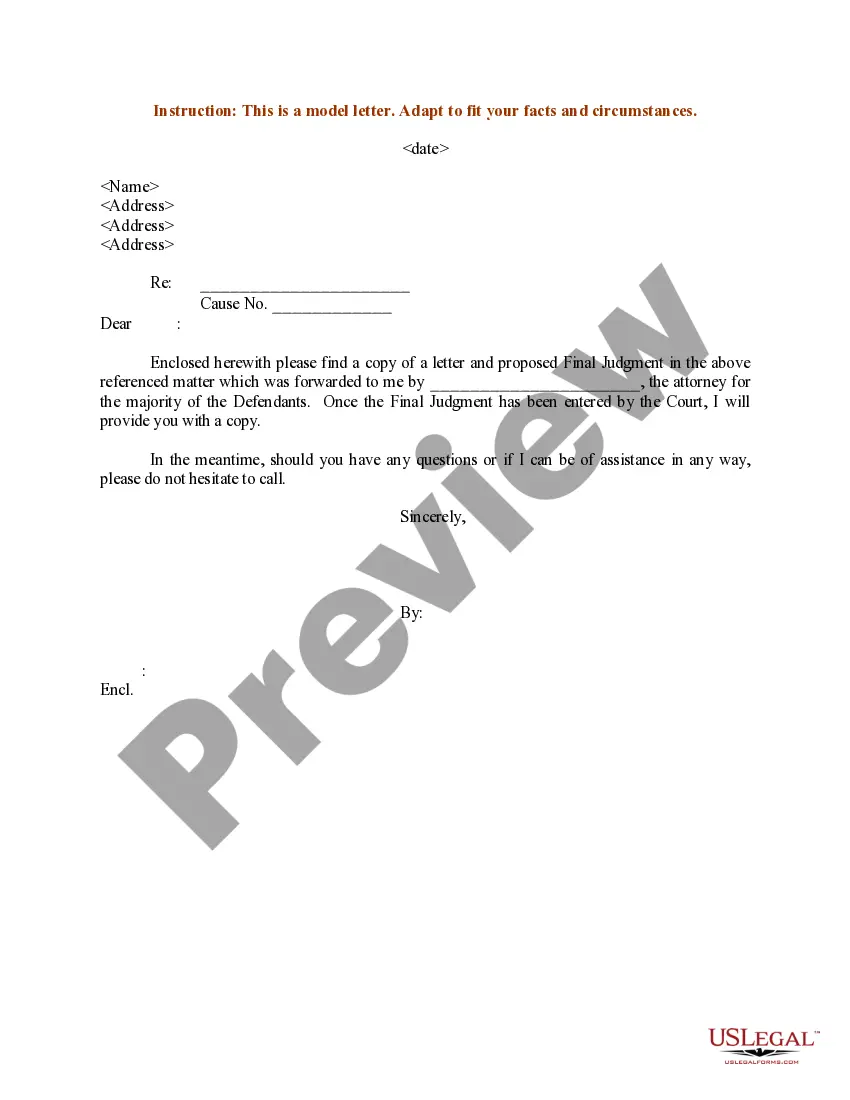
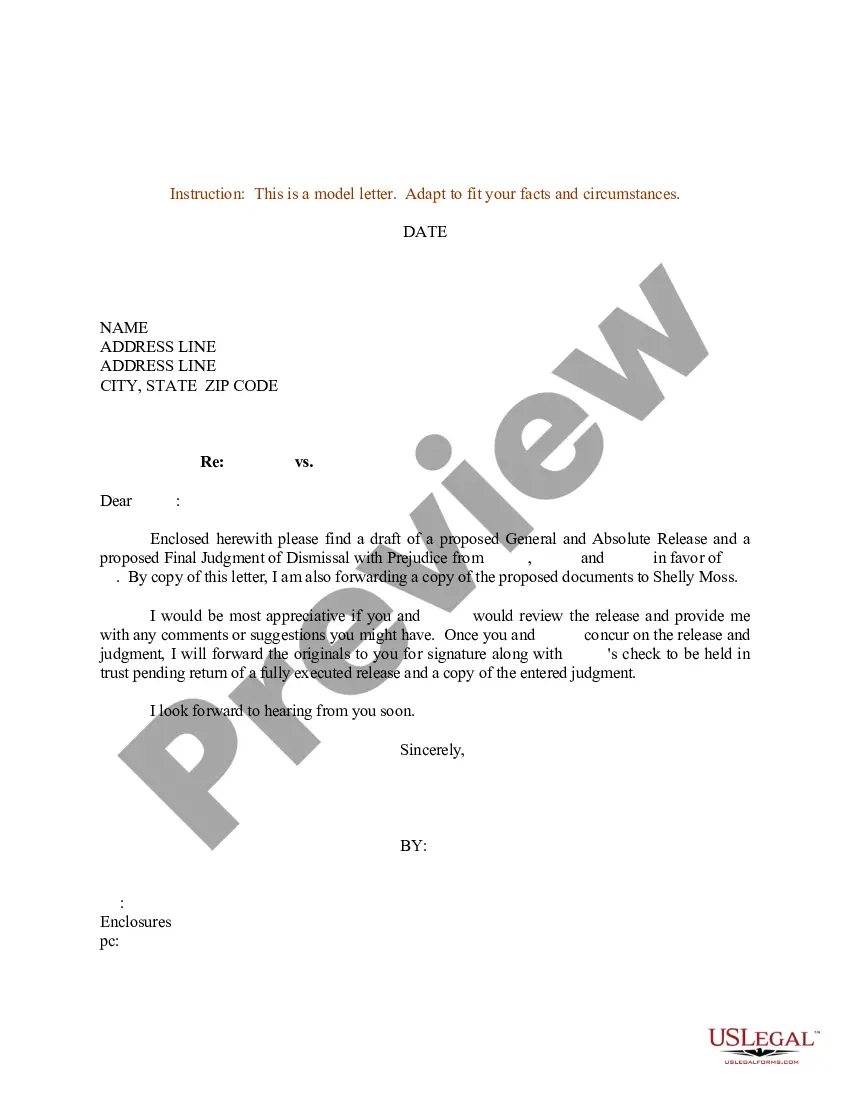

How to fill out Sample Letter To Attorneys Transmitting Copy Of Final Judgment Of Dismissal With Prejudice?
Have you ever been in a situation where you require documents for both business or personal purposes nearly every workday? There are numerous authentic document templates accessible online, but finding versions you can rely on is challenging.
US Legal Forms offers thousands of document templates, including the Mississippi Sample Letter to Attorneys forwarding a copy of Final Judgment of Dismissal with Prejudice, that are designed to comply with state and federal regulations.
If you are already familiar with the US Legal Forms website and possess an account, simply Log In. Subsequently, you can download the Mississippi Sample Letter to Attorneys forwarding a copy of Final Judgment of Dismissal with Prejudice template.
Access all the document templates you have purchased in the My documents menu. You can obtain another copy of the Mississippi Sample Letter to Attorneys forwarding a copy of Final Judgment of Dismissal with Prejudice at any time, if needed. Click the required document to download or print the template.
Utilize US Legal Forms, the most extensive collection of legal documents, to save time and prevent errors. The service provides accurately crafted legal document templates that you can use for a variety of purposes. Create an account on US Legal Forms and start simplifying your life.
- Obtain the document you require and ensure it is for the correct city/state.
- Use the Review button to inspect the form.
- Read the description to confirm that you have chosen the right document.
- If the document is not what you're looking for, utilize the Search area to find the document that fits your needs.
- Once you find the correct document, click Get now.
- Choose the pricing plan you prefer, enter the necessary details to create your account, and pay for the order using your PayPal or credit card.
- Select a convenient file format and download your copy.
Form popularity
FAQ
In a divorce in Mississippi, a wife is entitled to a fair division of marital property, which may include assets and debts accumulated during the marriage. Additionally, she may seek alimony depending on the circumstances of the marriage and her financial situation. To navigate these complexities effectively, using a Mississippi Sample Letter to Attorneys transmitting copy of Final Judgment of Dismissal with Prejudice can facilitate communication and ensure clarity in the legal process.
Rule 81 in Mississippi governs the process for initiating lawsuits, particularly in domestic matters. It specifies how legal documents should be served, ensuring that all parties receive proper notice. When drafting your Mississippi Sample Letter to Attorneys transmitting copy of Final Judgment of Dismissal with Prejudice, being aware of Rule 81 helps maintain adherence to legal protocols and protects your rights.
Rule 81 in Mississippi pertains to the procedures for civil actions. It outlines the requirements for serving process on defendants in specific types of cases, such as domestic relations and certain other civil matters. Understanding this rule is essential when preparing your Mississippi Sample Letter to Attorneys transmitting copy of Final Judgment of Dismissal with Prejudice, as it ensures compliance with legal standards.
Lead with the main purpose of your letter and then explain the reasons for your question or request. Be specific when referencing relevant information including names, dates and places. The more information you include, the better your attorney will be able to assist you.
When you correspond with a lawyer, you have two choices: Write the person using a standard courtesy title (?Mr. Robert Jones? or ?Ms. Cynthia Adams?) Skip the courtesy title and put ?Esquire? after the name, using its abbreviated form, ?Esq.? (?Robert Jones, Esq.? or ?Cynthia Adams, Esq.?)
Address an attorney as "Mr." or "Ms." in most contexts. In the salutation for a letter or email, address an attorney the same way you would any other respected professional- using "Mr." or "Ms." followed by their surname. Generally, this is the best way to address an attorney if you've never spoken to them before.
Your letter, whether on behalf of an individual or organization, should include general information, the type of legal assistance needed, the reason for seeking pro bono help, the temporal sensitivity of your case, and budget information to justify the free service.
A letter of request must specify: the authority requesting the letter and the authority to whom the letter is directed, the names and addresses of the parties, the necessary information regarding the proceedings, the evidence required, the names and addresses of the persons to be examined if applicable, questions to be ...