Mississippi Amendment of Lease Package
What is this form package?
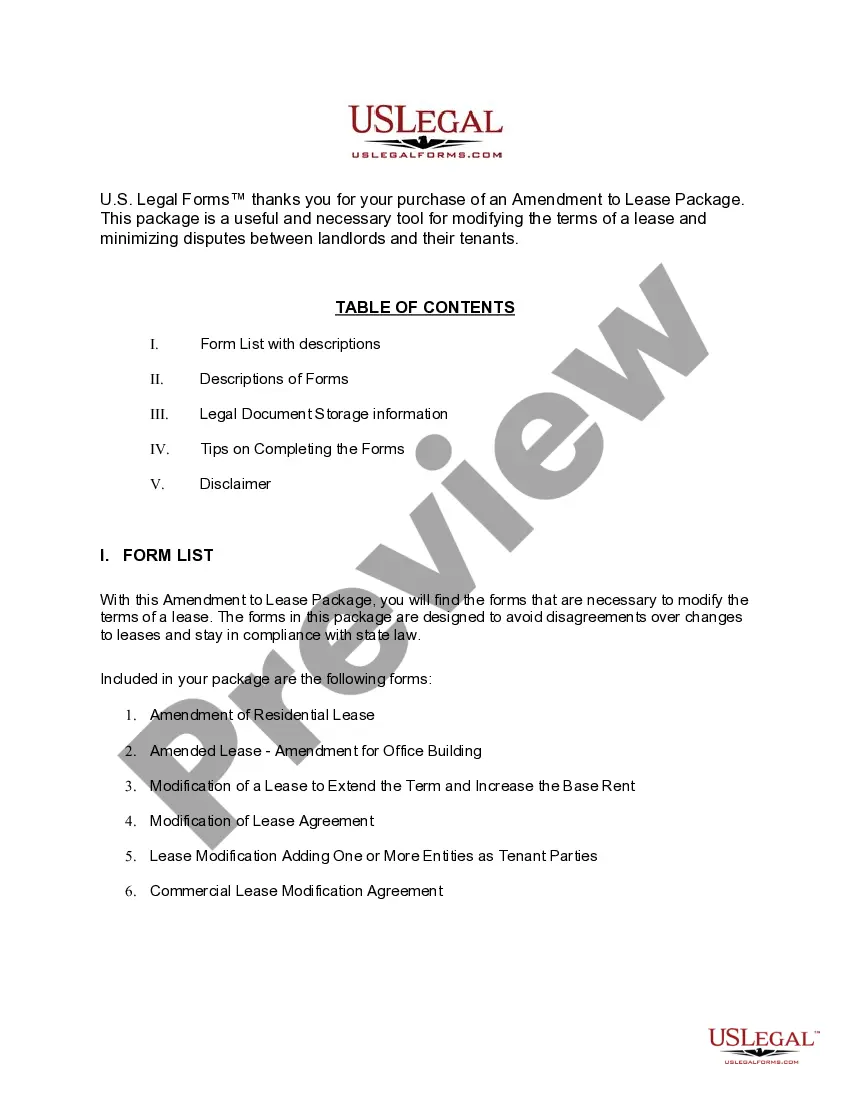
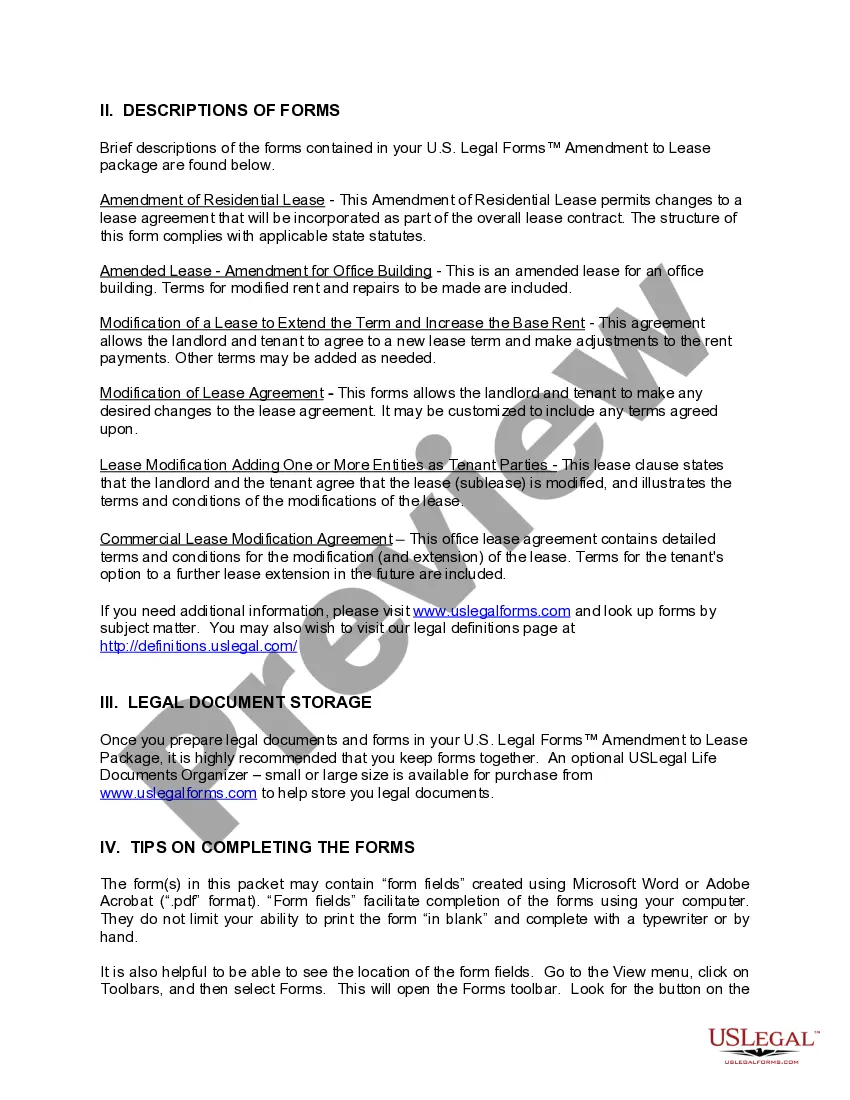
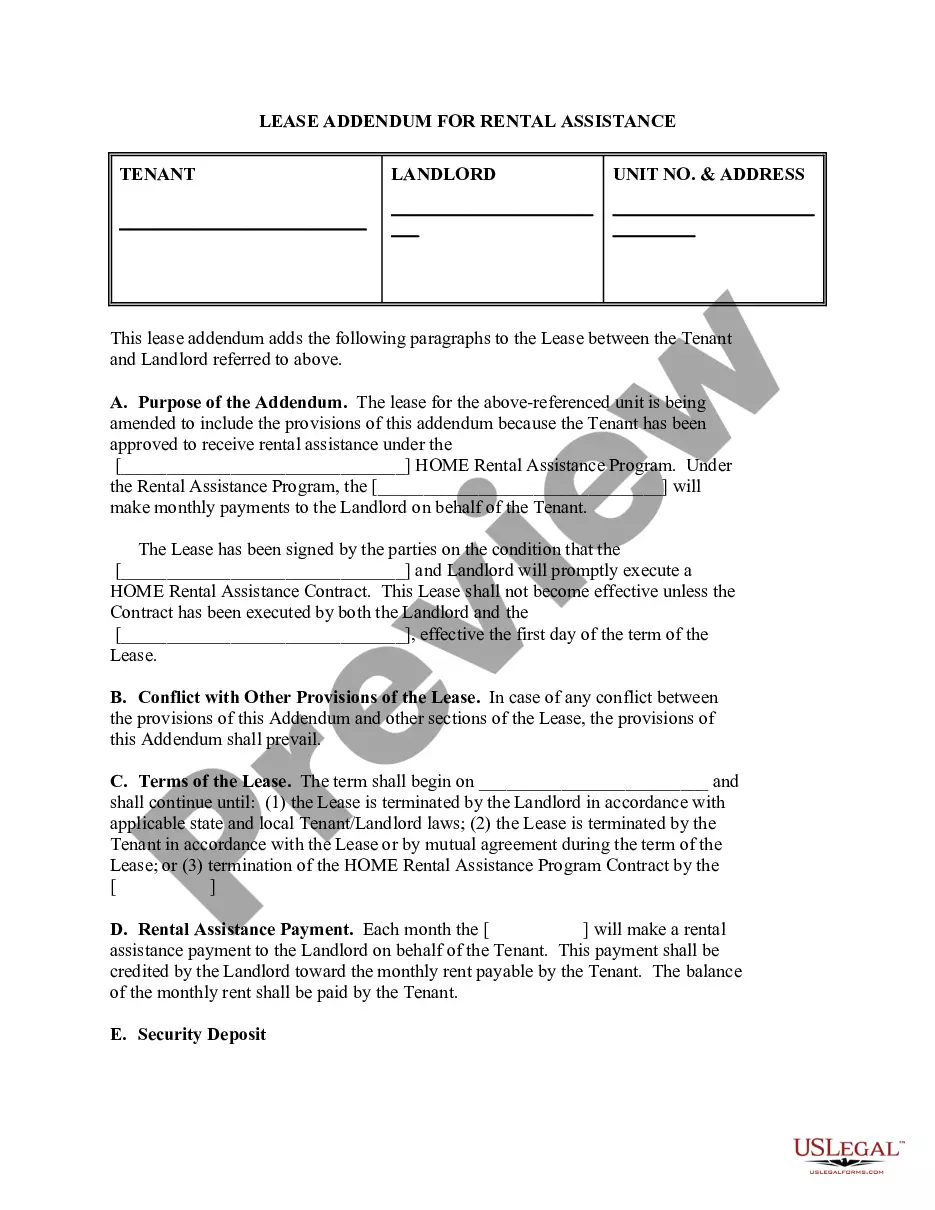
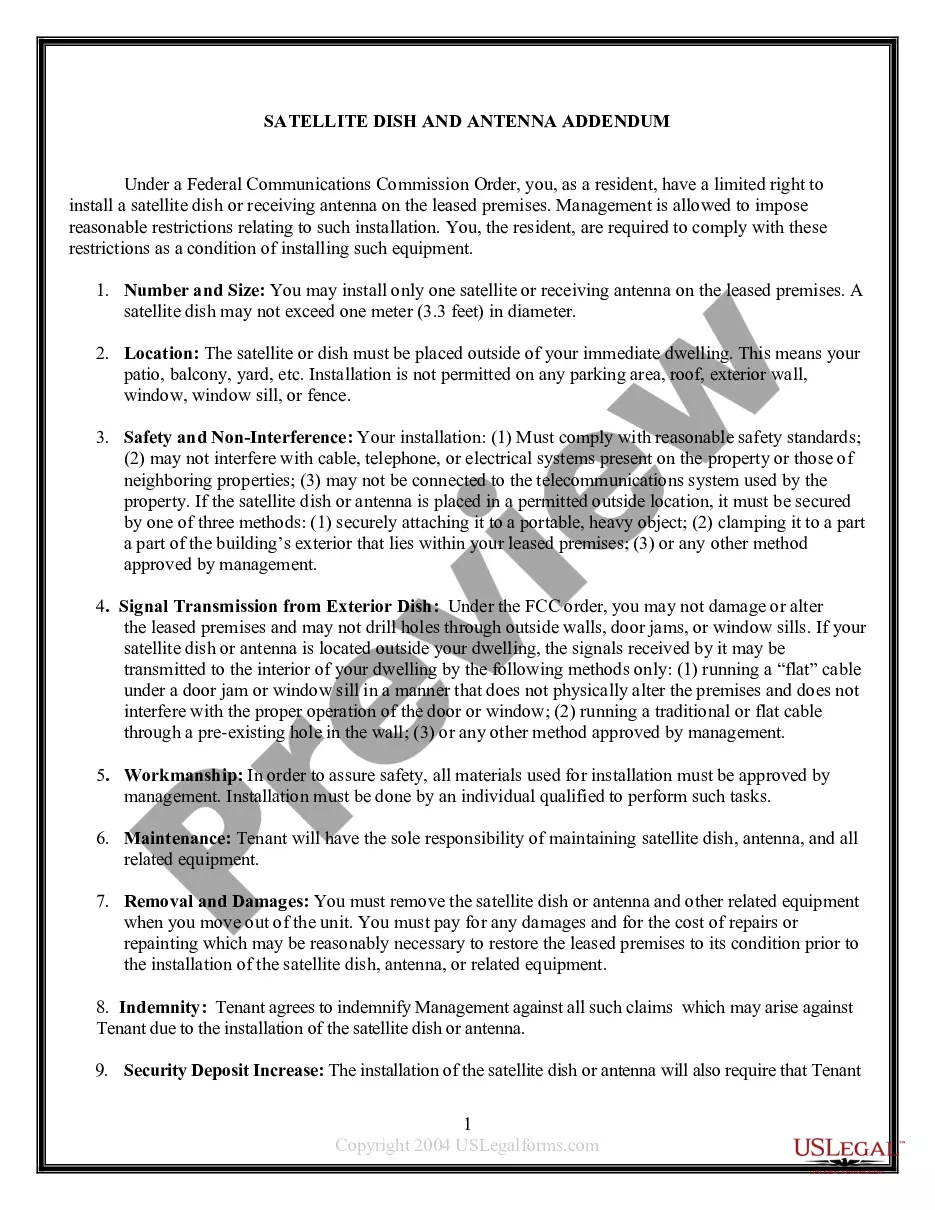
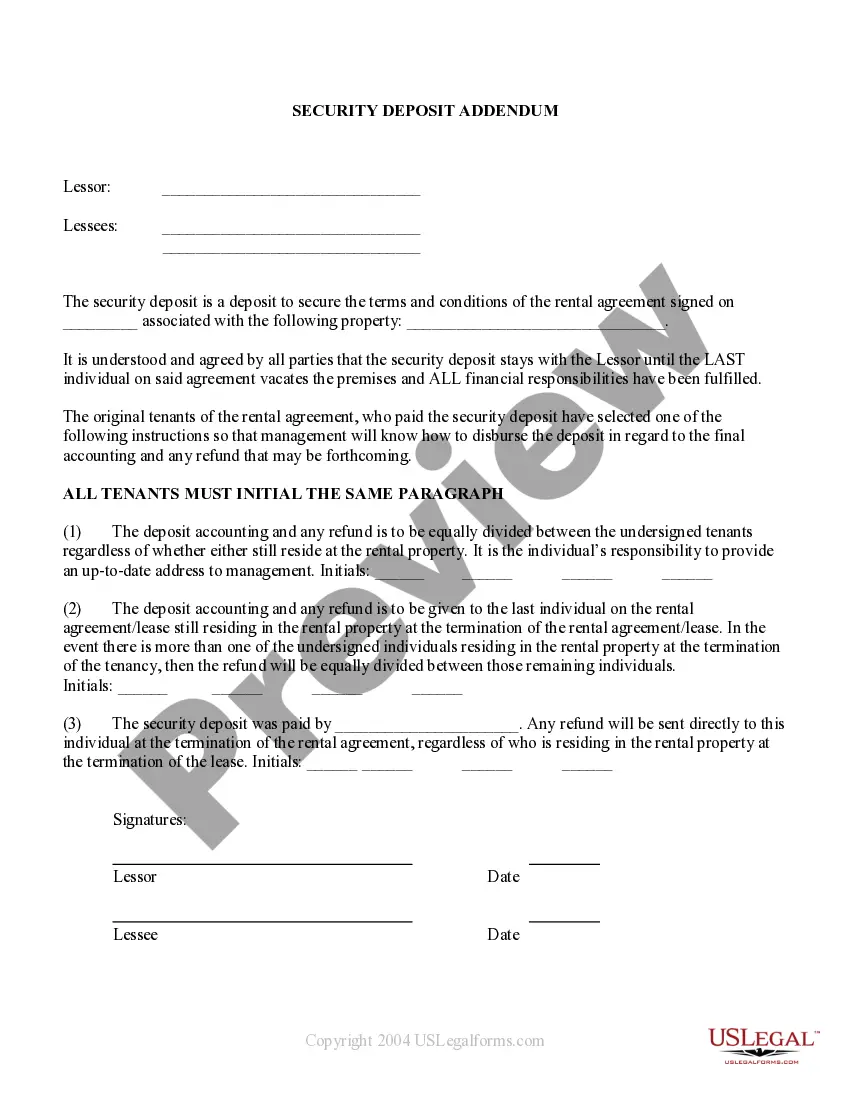
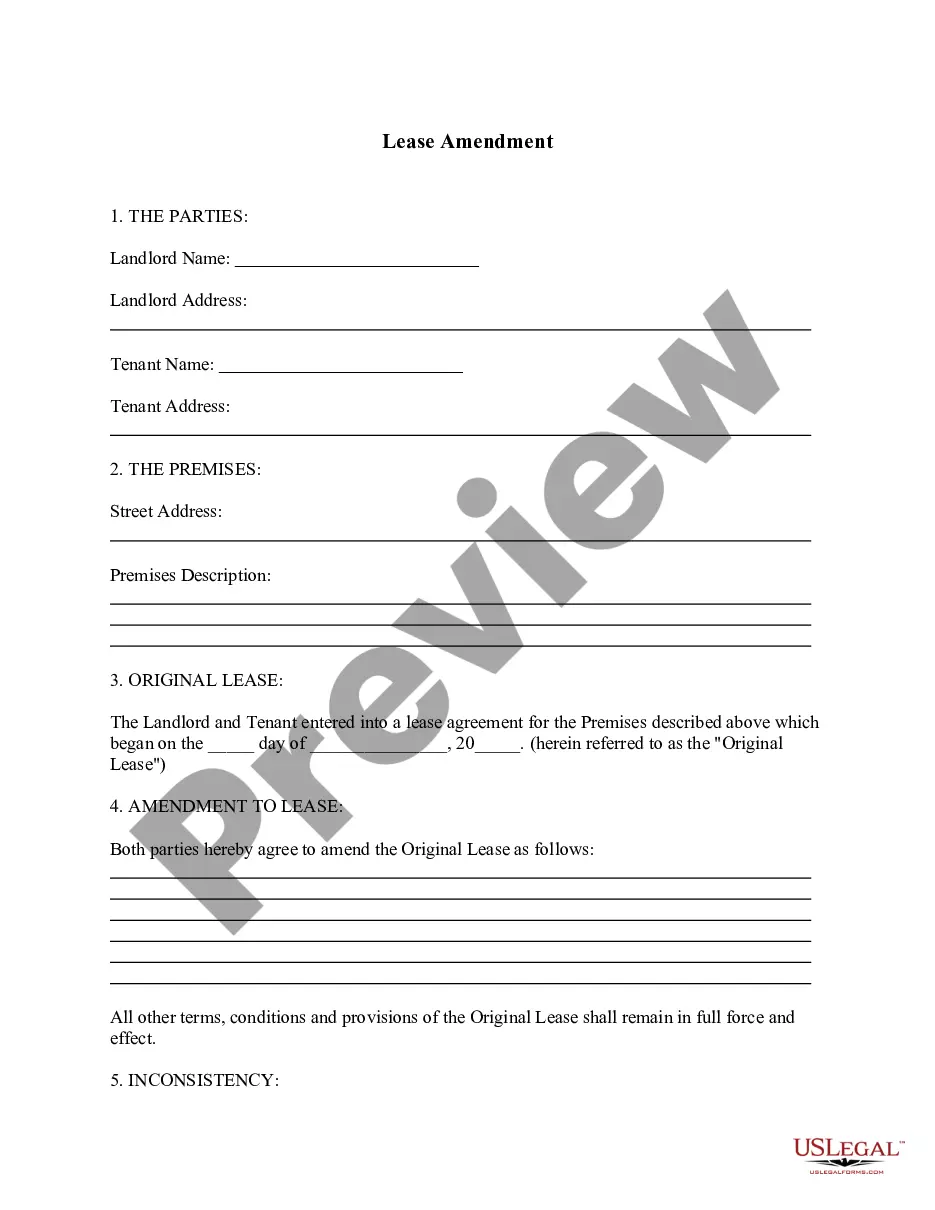
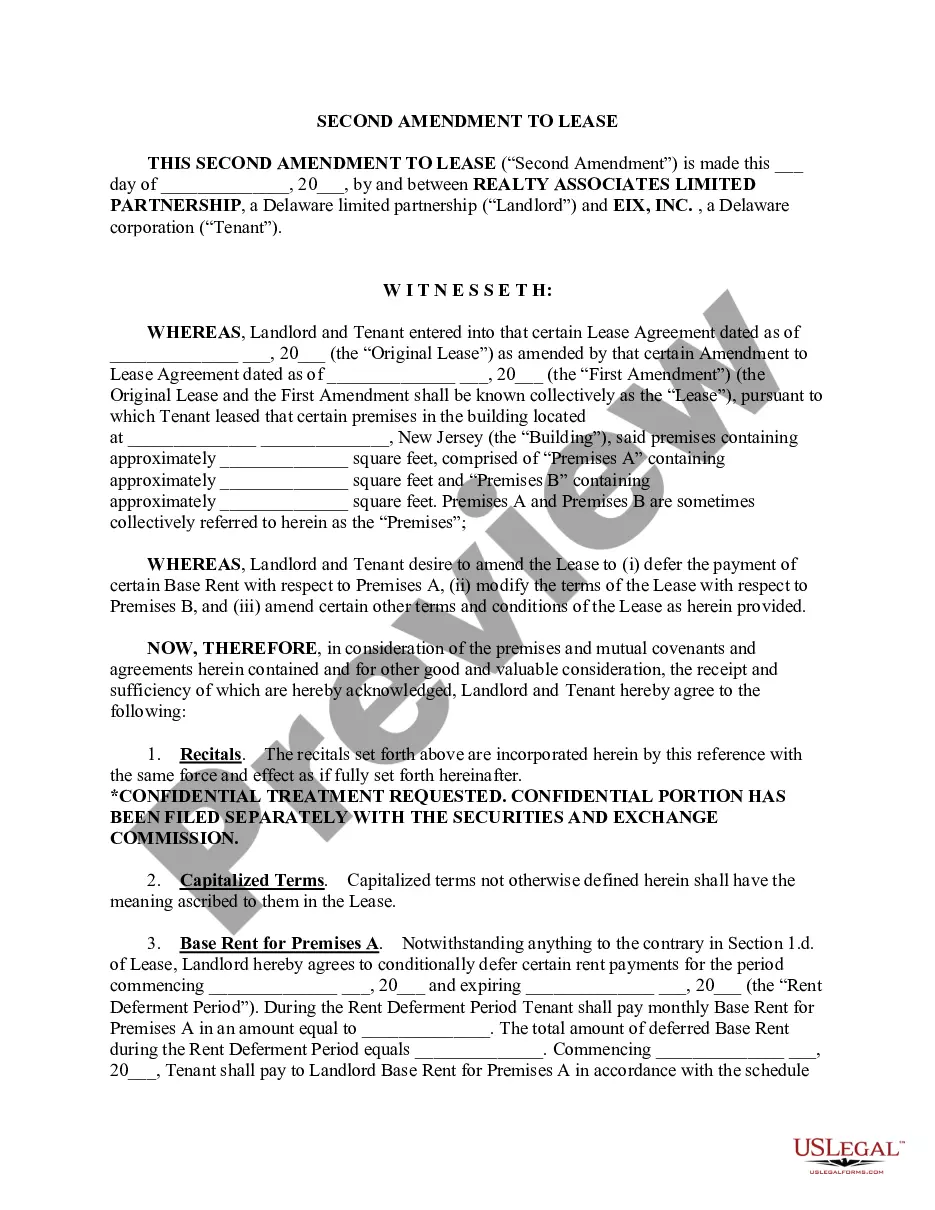
The Mississippi Amendment of Lease Package provides essential forms for modifying existing lease agreements. This package is specifically designed to facilitate changes to lease terms while ensuring compliance with Mississippi state laws. Unlike other lease modification packages, this one offers forms tailored to both residential and commercial use, ensuring users can easily address their specific needs.
What’s included in this form package
When to use this form package
This form package is useful in various scenarios, including:
- When a landlord and tenant agree to change the lease terms.
- When a tenant needs to defer rent due to financial hardship.
- When preparing to notify tenants of any amendments prior to lease expiration.
- When a lease needs to be modified to include additional parties as tenants.
Who needs this form package
- Landlords looking to modify existing lease agreements.
- Tenants needing to negotiate changes to their lease terms.
- Property managers managing multiple lease agreements.
- Real estate professionals assisting clients with lease modifications.
Steps to complete these forms
- Review all included forms to understand necessary modifications.
- Identify the parties involved in the lease agreement.
- Fill out the relevant sections of each form with accurate information.
- Sign the amendment forms as required by all parties.
- Provide notice to the tenant as outlined in the provided letter regarding the amendment.
Notarization guidance for this package
Forms in this package typically do not require notarization. However, certain states or document types may still need it. US Legal Forms provides online notarization powered by Notarize, available 24/7 for your convenience.
Get your form ready online
Our built-in tools help you complete, sign, share, and store your documents in one place.
Make edits, fill in missing information, and update formatting in US Legal Forms—just like you would in MS Word.
Download a copy, print it, send it by email, or mail it via USPS—whatever works best for your next step.
Sign and collect signatures with our SignNow integration. Send to multiple recipients, set reminders, and more. Go Premium to unlock E-Sign.
If this form requires notarization, complete it online through a secure video call—no need to meet a notary in person or wait for an appointment.
We protect your documents and personal data by following strict security and privacy standards.

Make edits, fill in missing information, and update formatting in US Legal Forms—just like you would in MS Word.

Download a copy, print it, send it by email, or mail it via USPS—whatever works best for your next step.

Sign and collect signatures with our SignNow integration. Send to multiple recipients, set reminders, and more. Go Premium to unlock E-Sign.

If this form requires notarization, complete it online through a secure video call—no need to meet a notary in person or wait for an appointment.

We protect your documents and personal data by following strict security and privacy standards.
Avoid these common issues
- Failing to notify the tenant of the changes in a timely manner.
- Not including all relevant parties' signatures on the amendment.
- Neglecting to comply with local laws regarding lease modifications.
- Overlooking necessary details when stating new lease terms.
Benefits of completing this package online
- Convenience of downloading and completing forms at your own pace.
- Editability allows for easy customization of lease terms.
- Access to professionally drafted materials, ensuring legal compliance.
- Immediate availability, saving time compared to traditional legal methods.
Looking for another form?


Form popularity
FAQ
When creating your Lease Amendment, you'll want to include information such as: the names of the landlord(s) and the tenant(s); the effective date of the original lease; the date of the lease amendment; the address and nature of the leased property; whether the original lease was recorded with the county; which
Lease addenda are separate documents that landlords add to an original lease agreement. Landlords use them to provide additional information that the original lease doesn't cover. Be sure not to confuse addenda with lease amendments, which are changes made directly to the existing lease itself.
Create Document. A lease extension addendum is a contract that further extends the term of an existing lease agreement. The addendum will establish a new lease termination date that both the landlord and tenant agree to.
A lease and addendum are esentially the same thing, 'the lease'. The addendum is part of the lease, it does not stand on it's own. If the lease and addendum say different things, but one does not supercede the other, it's ambigious, and the least restrictive clause stands.
A lease addendum allows a landlord or tenant to make changes to a current residential or commercial lease agreement.Once both parties agree and sign, the addendum should be added to the original lease.
The Lease Must be in Writing It does not matter if the lease is handwritten or typed. If the lease is for more than one year, it must be in written form and contain the following terms.
An amendment is typically used to change something that's part of an original contract. Think of amendments as modifications to the earliest agreement (for example, altering an agreed-upon deadline). An addendum is used to clarify and add things that were not initially part of the original contract or agreement.
If the tenancy is month to month, without a set ending date to the lease, either the landlord or tenant may terminate the lease by giving 30 days written notice. No reason is required for the termination.
Changing the lease You can negotiate certain changes to the lease, sometimes known as 'varying the lease'. Speak to your landlord first. If you can't agree, you may be able to apply to a tribunal - contact Leasehold Advisory Service for advice.