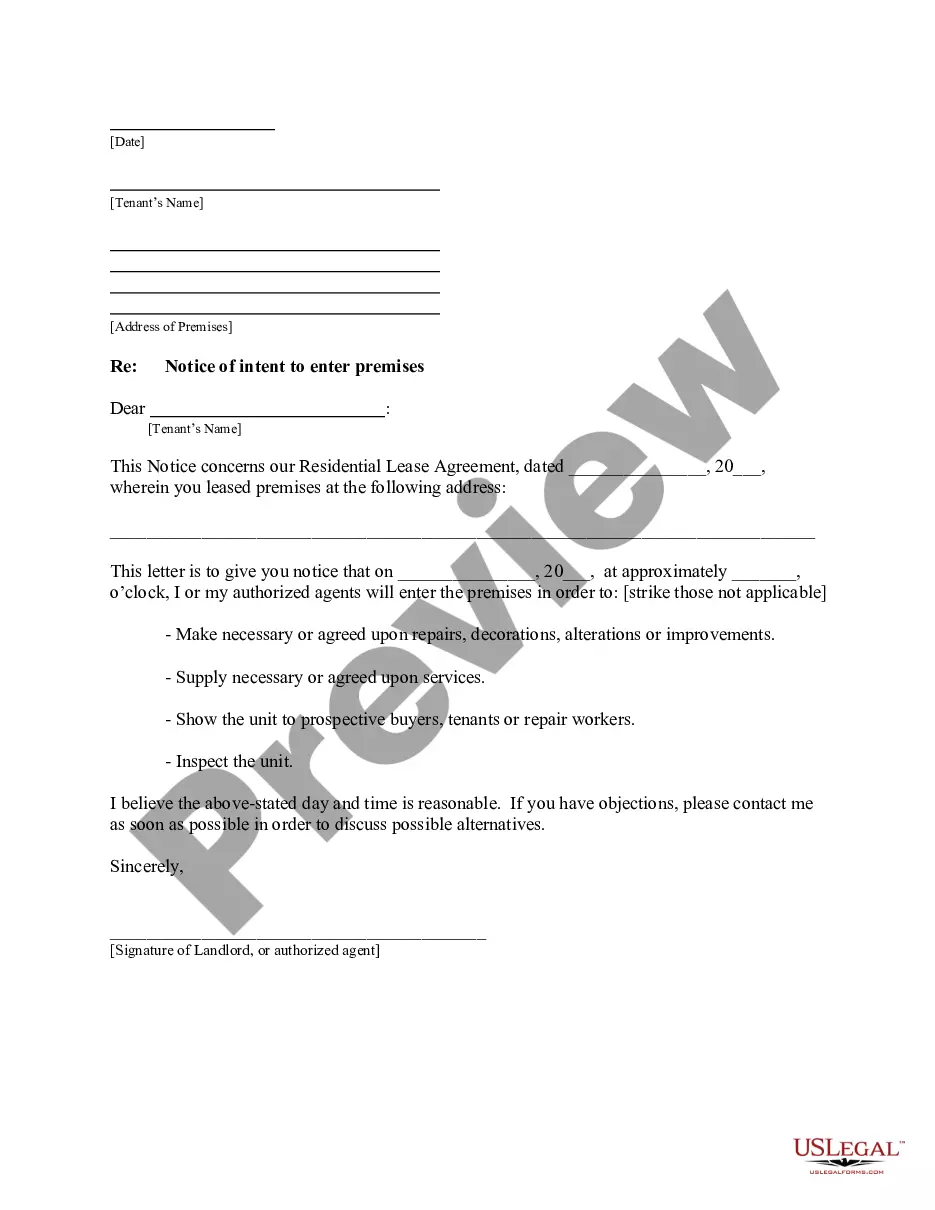
Mississippi Ex Parte Temporary Domestic Abuse Protective Order
Overview of this form
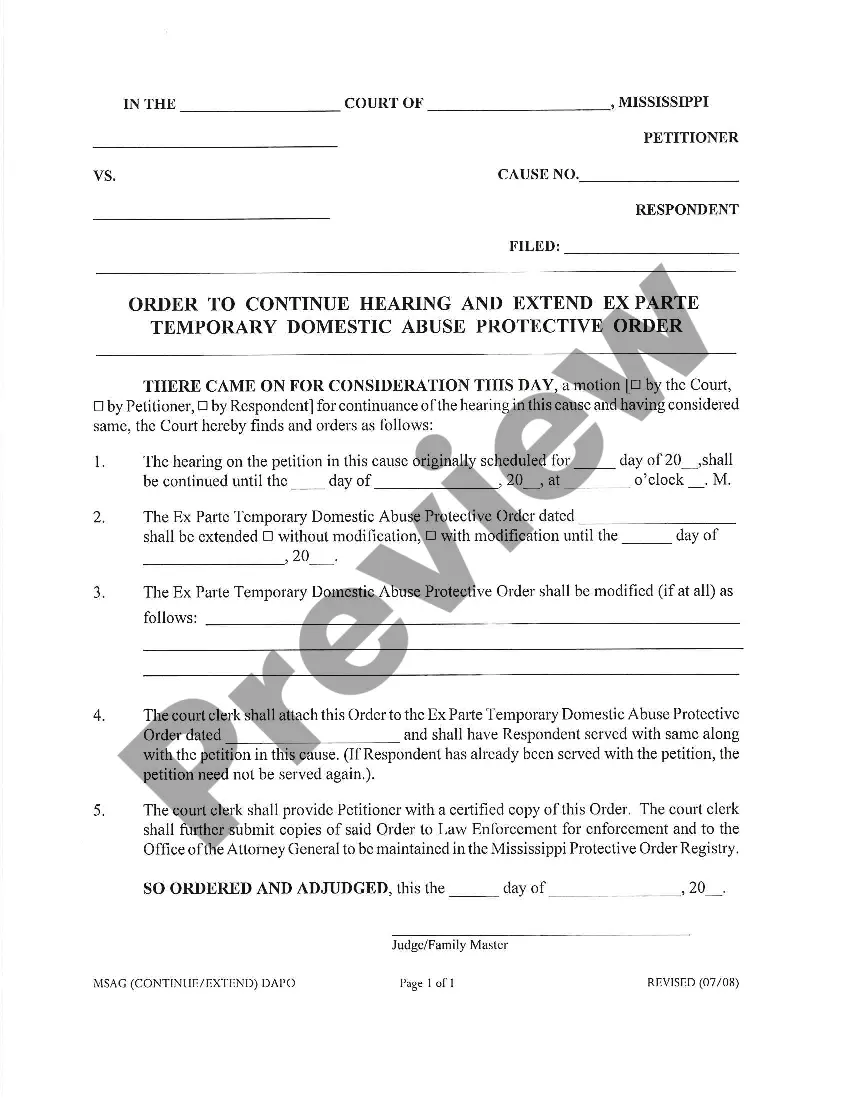
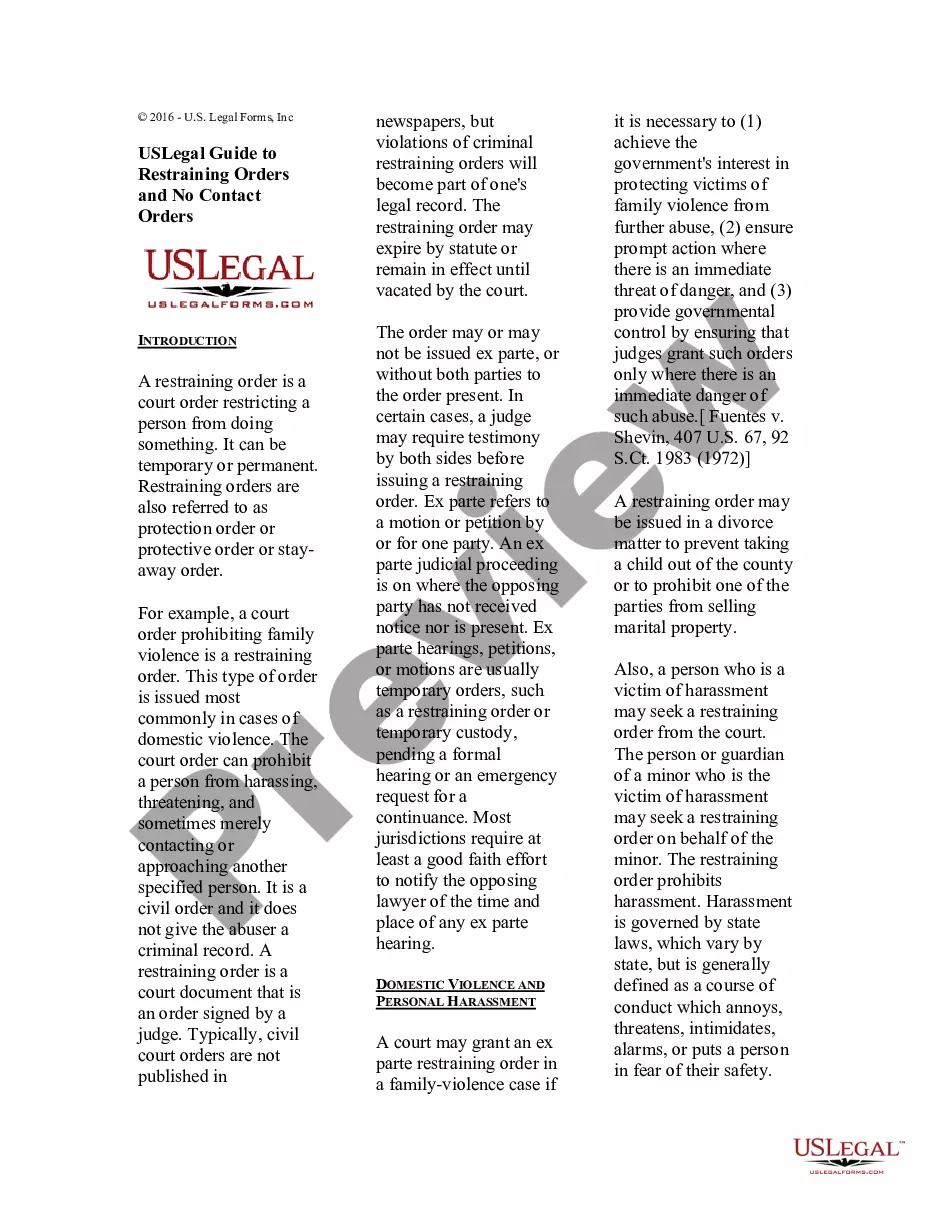
The Ex Parte Temporary Domestic Abuse Protective Order is a legal document designed to provide immediate protection to individuals experiencing domestic abuse. This order allows a person to seek relief without providing prior notice to the accused party, ensuring their safety in urgent situations. Unlike standard protective orders, which require a hearing before issuance, this emergency order is intended for cases where immediate action is necessary to prevent harm.
Main sections of this form
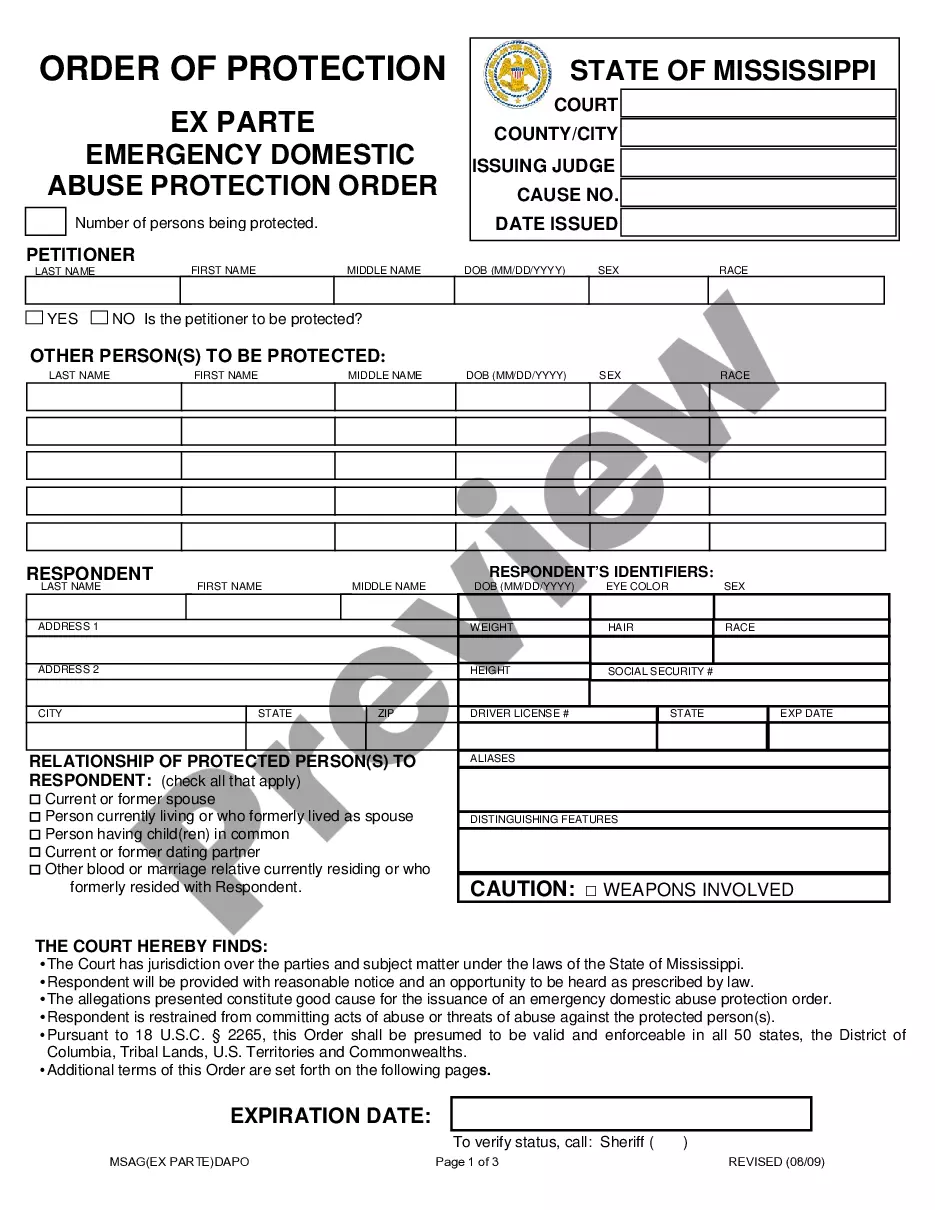
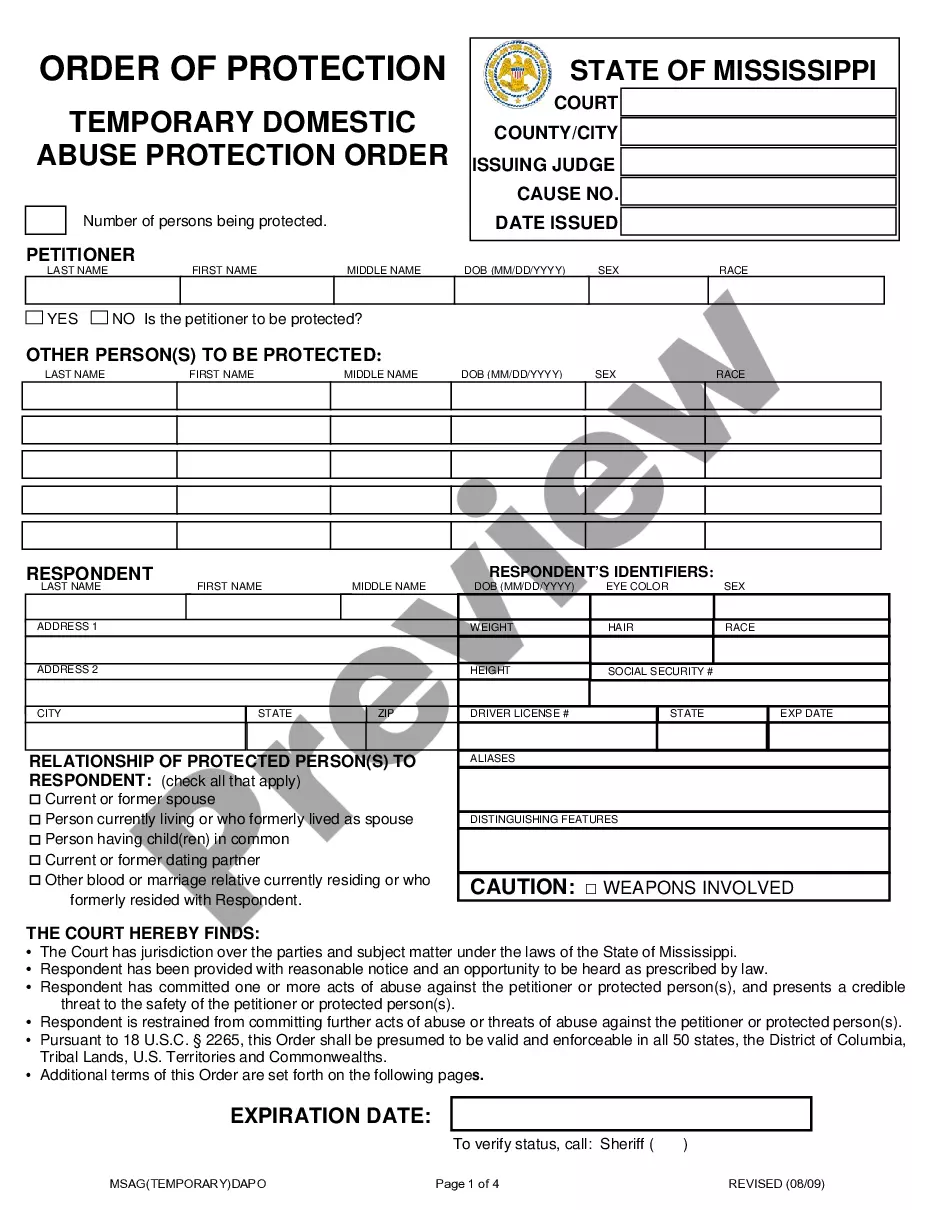
- Identification of the protected person(s) and relationship to the respondent.
- Findings of the court, confirming jurisdiction and good cause for the order.
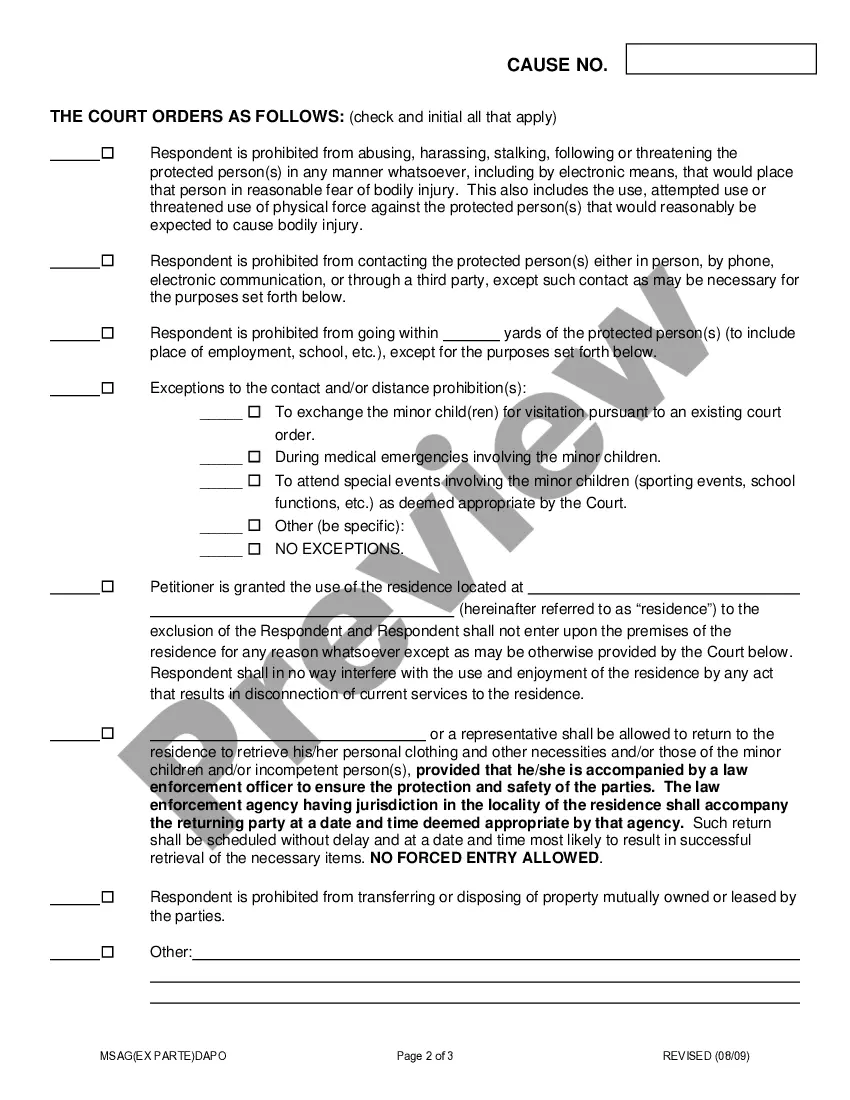
- Specific restrictions imposed on the respondent, including acts of abuse or threats.
- Details regarding the court issuing the order, including jurisdiction and contact information.
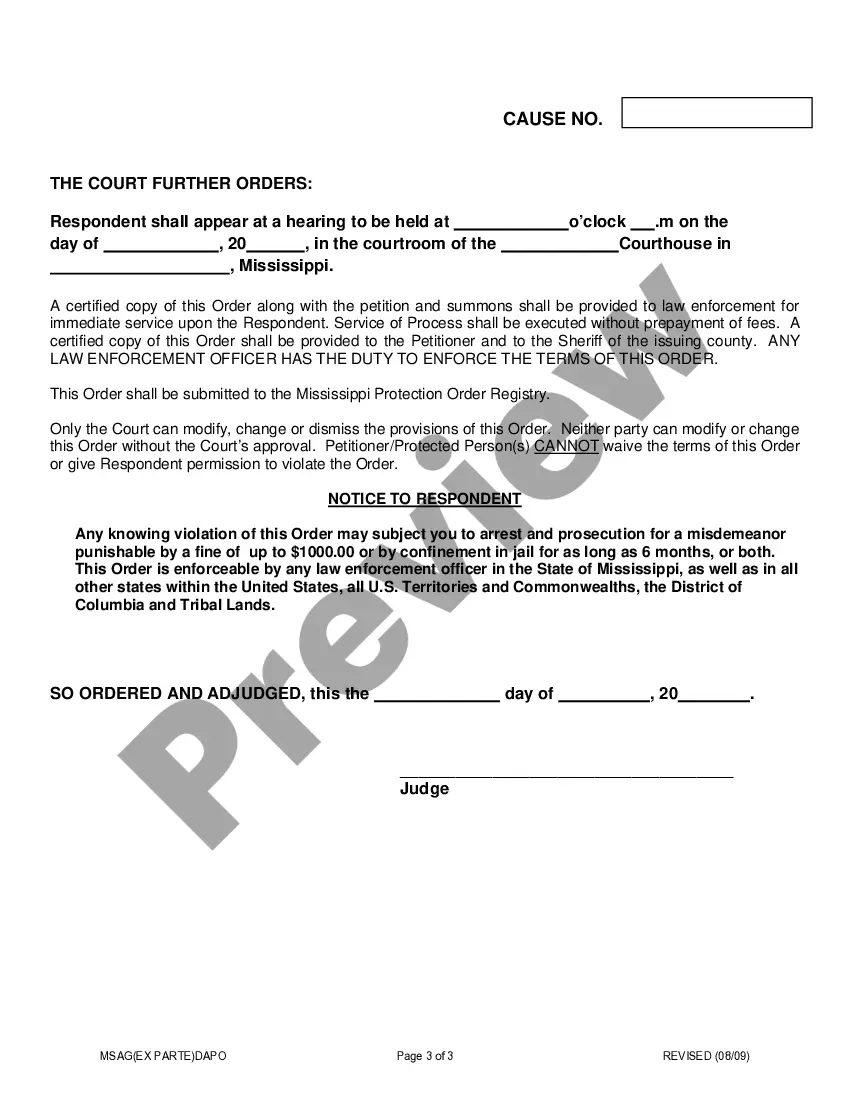
- Provisions related to the enforceability of the order across multiple jurisdictions.
Situations where this form applies
This form should be used in situations where an individual is facing immediate threats of domestic abuse. Common scenarios include instances of harassment, physical violence, or threats from a current or former partner, spouse, or a person with whom the individual shares children. It is particularly relevant in cases where the individual feels unsafe to notify the other party before seeking legal protection.
Intended users of this form
- Individuals who are current or former spouses of the respondent.
- People who share children with the respondent.
- Individuals who have lived or are living with the respondent as a spouse or intimate partner.
- Any person residing with a relative of the respondent who has experienced abuse.
Steps to complete this form
- Identify the parties involved: Clearly list the protected person(s) and the respondent, including any necessary identifiers.
- Mark the applicable relationship boxes to clarify the connection between the protected person(s) and the respondent.
- Complete the court information section, including county/city, cause number, and issuing judge's name.
- Clearly indicate any involvement of weapons by checking the appropriate box.
- Sign and date the form in accordance with local requirements for legal documents.
Does this document require notarization?
This form does not typically require notarization unless specified by local law. However, ensure all signatures are completed as per the instructions on the form to maintain its validity.
Get your form ready online
Our built-in tools help you complete, sign, share, and store your documents in one place.
Make edits, fill in missing information, and update formatting in US Legal Forms—just like you would in MS Word.
Download a copy, print it, send it by email, or mail it via USPS—whatever works best for your next step.
Sign and collect signatures with our SignNow integration. Send to multiple recipients, set reminders, and more. Go Premium to unlock E-Sign.
If this form requires notarization, complete it online through a secure video call—no need to meet a notary in person or wait for an appointment.
We protect your documents and personal data by following strict security and privacy standards.

Make edits, fill in missing information, and update formatting in US Legal Forms—just like you would in MS Word.

Download a copy, print it, send it by email, or mail it via USPS—whatever works best for your next step.

Sign and collect signatures with our SignNow integration. Send to multiple recipients, set reminders, and more. Go Premium to unlock E-Sign.

If this form requires notarization, complete it online through a secure video call—no need to meet a notary in person or wait for an appointment.

We protect your documents and personal data by following strict security and privacy standards.
Common mistakes to avoid
- Failing to accurately identify the relationship between the protected person(s) and the respondent.
- Leaving sections of the form blank, which could lead to delays in processing.
- Neglecting to check the weapons involvement box if applicable.
- Not providing complete and accurate identifying information for all parties involved.
Advantages of online completion
- Convenient access to the form from anywhere, allowing for immediate action in urgent situations.
- Editable templates that can be customized to meet individual needs without needing legal expertise.
- Reliable legal formats that comply with state regulations, ensuring proper usage.
Legal use & context
- This order is a legally binding document, authorized under Mississippi law, to protect individuals from domestic abuse.
- It provides immediate relief and is enforceable in other jurisdictions in accordance with federal law.
- After issuance, the protected person should follow up with local law enforcement and court systems to ensure enforcement and further legal protection.
Main things to remember
- The Ex Parte Temporary Domestic Abuse Protective Order offers immediate protective relief.
- This order is essential in urgent situations where safety is at risk.
- The form provides clarity on who qualifies for protection and how to complete it properly.
Looking for another form?

Form popularity
FAQ
In civil procedure, ex parte is used to refer to motions for orders that can be granted without waiting for a response from the other side. Generally, these are orders that are only in place until further hearings can be held, such as a temporary restraining order.
Temporary restraining orders usually last between 20 and 25 days, until the court hearing date. When you go to court for the hearing that was scheduled for your TRO, the judge may issue a permanent restraining order. They are not really permanent because they usually last up to 5 years.
A temporary restraining order (TRO) is an emergency (ex parte) court order prohibiting the defendant from taking some action. An ex parte order is only granted when: 1. Irreparable harm or immediate danger will occur before a.
The court is looking for a description of your relationship to the respondent, when, where, what happened, and who did what to whom. Using the facts of the incident only, keep your statement brief and to the point. Briefly describe the most recent incident of abuse and/or threats of abuse or other behaviors.
An ex parte order of protection is a temporary measure that can be filed quickly. A full protection order, or restraining order, is granted after a court hearing and lasts for a longer period of time than the ex parte order.
An order that is issued ex parte means that it is issued without prior notice to the other parent, based only on your affidavit/testimony. If the judge issues an emergency ex parte order, the judge will schedule a hearing within 14 days2 and the respondent but be served at least 5 days before that hearing.
A civil harassment restraining order is a court order that helps protect people from violence, stalking, serious harassment, or threats of violence. You can ask for a civil harassment restraining order if: A person has abused (or threatened to abuse), sexually assaulted, stalked, or seriously harassed you, and.
Under section 93-21-7(2) of the Mississippi Code, there is no cost to file for a protection order. . temporary restraining order. the clerk will fill out the information for you.