Mississippi Tax Allocation and Indemnity Agreement
Overview of this form
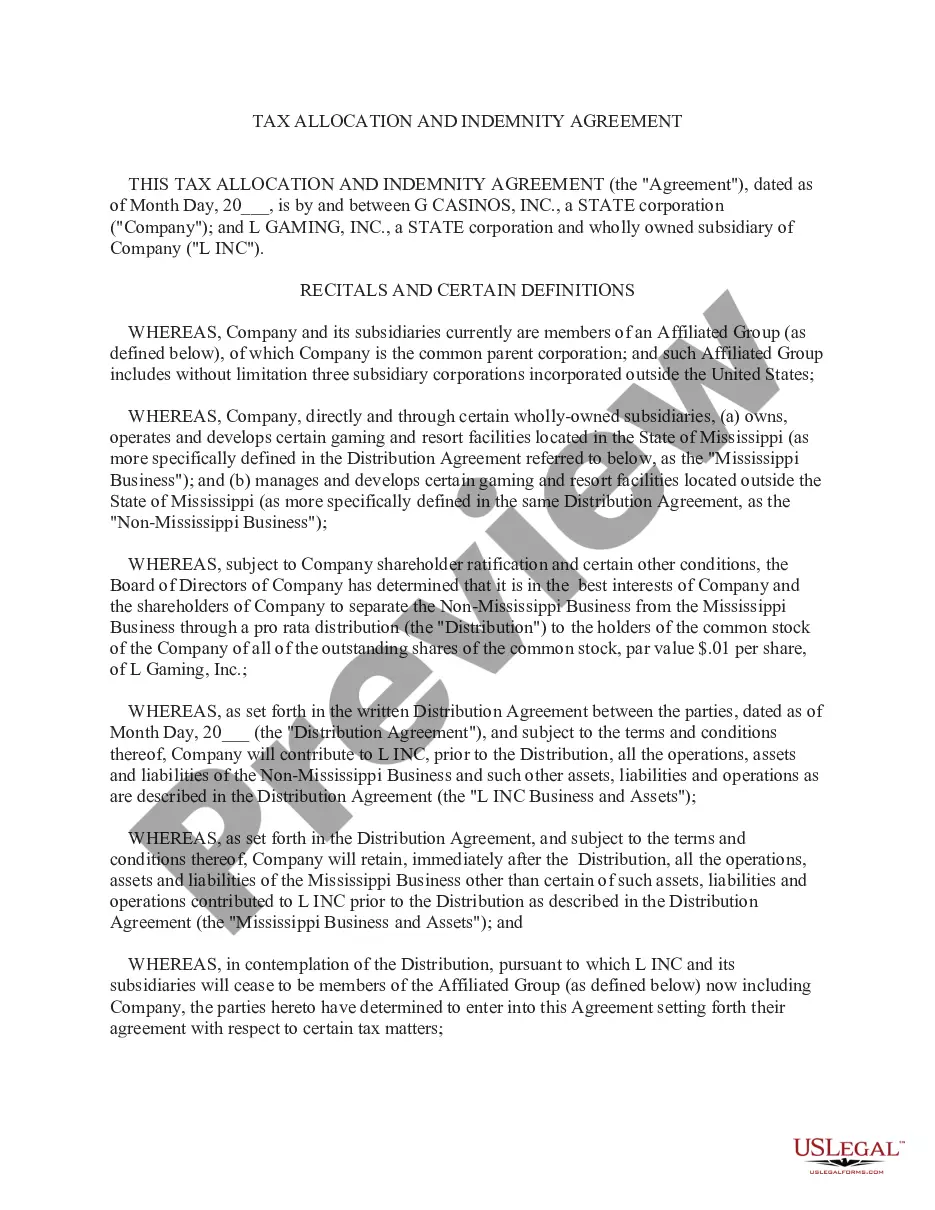
The Tax Allocation and Indemnity Agreement is a legal document used between companies in an affiliated group to address tax liabilities and responsibilities related to their actions, particularly during restructuring or corporate transactions. This agreement outlines how tax obligations and benefits are allocated between the parties involved, providing clarity on how to handle tax-related issues to prevent disputes and ensure compliance with tax laws. It simplifies complex tax matters that arise in such situations, differentiating it from standard tax filings or agreements.
Main sections of this form
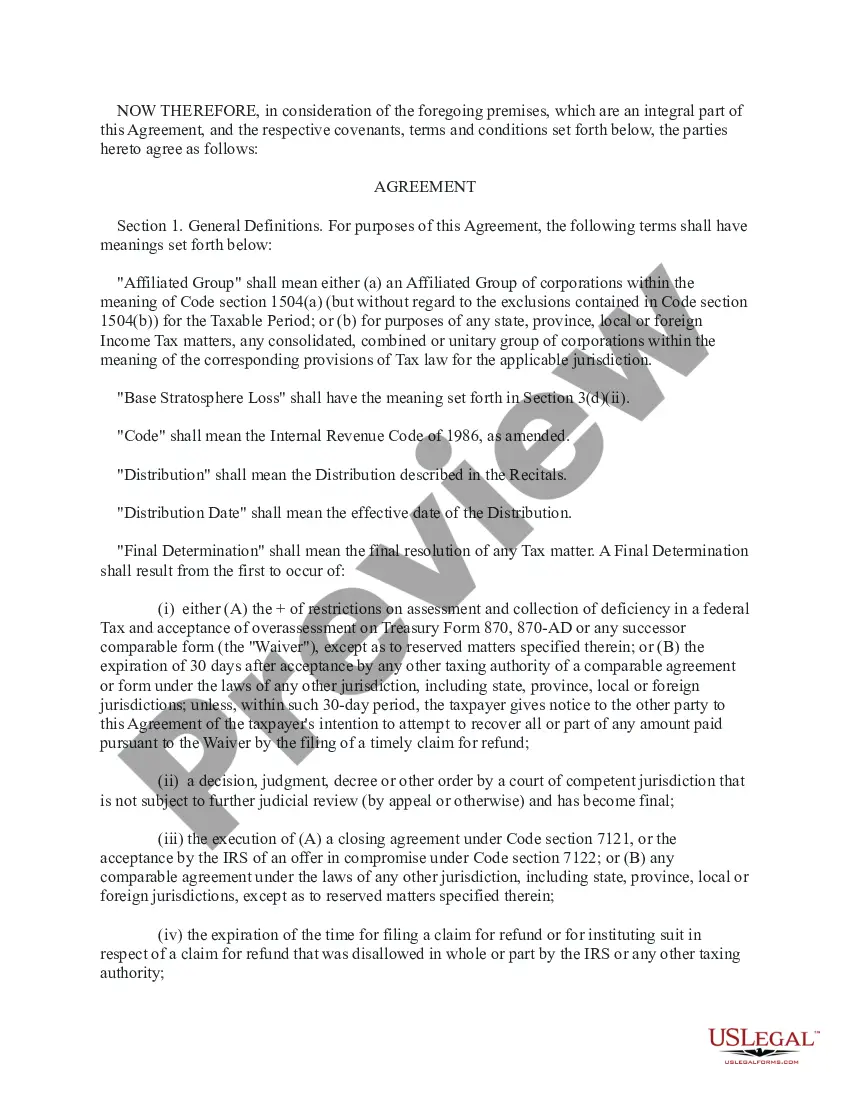
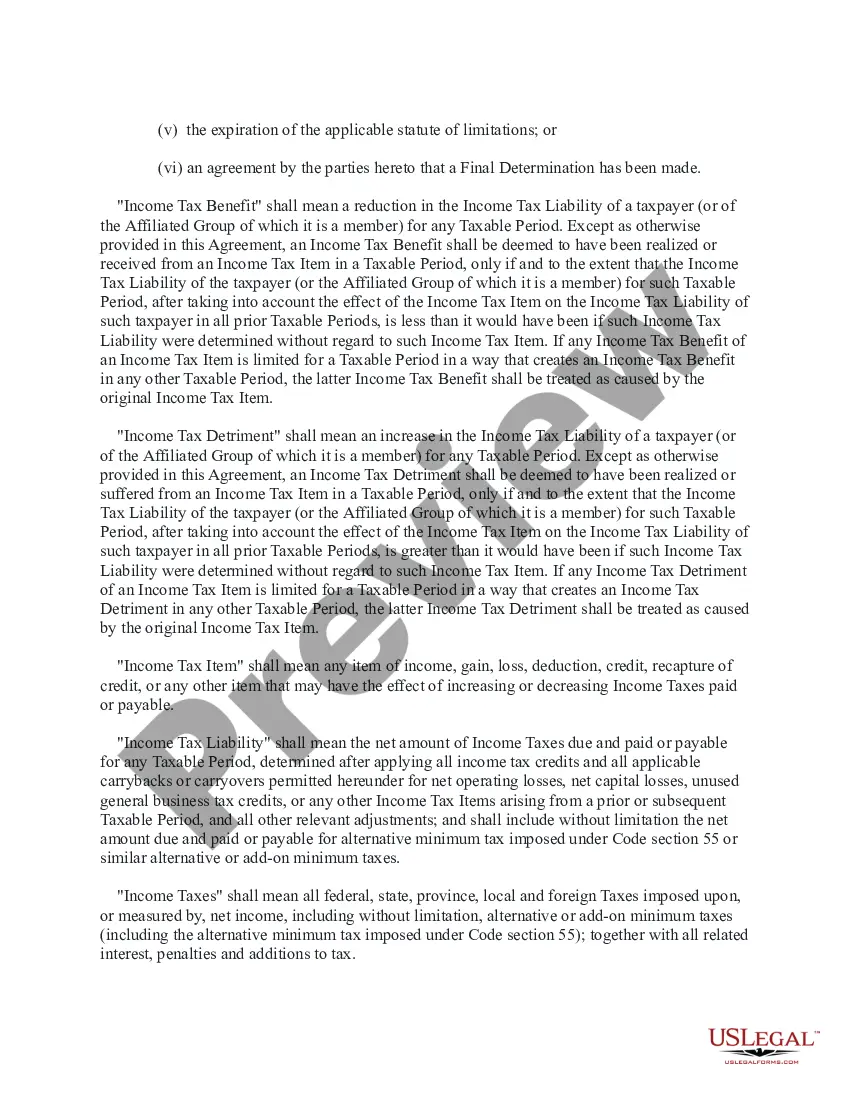
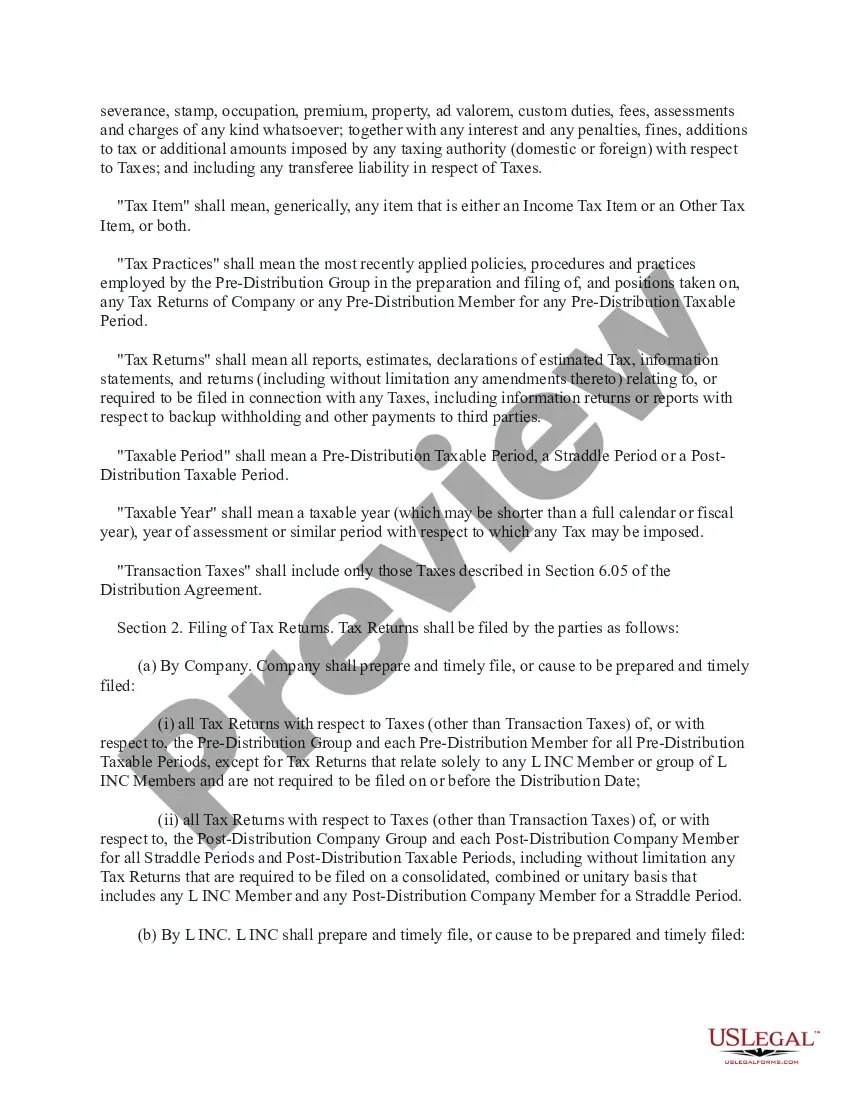
- Definition of terms related to the tax agreement, such as "Income Tax Benefit" and "Indemnifying Party."
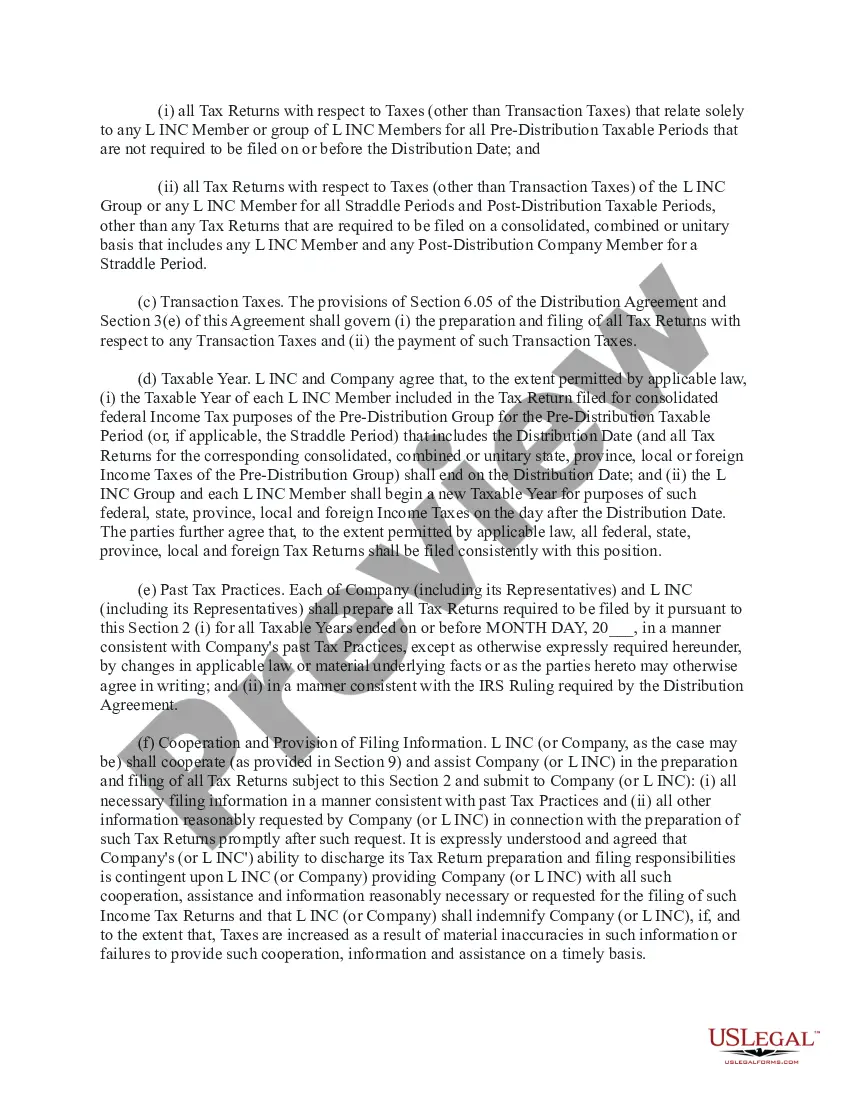
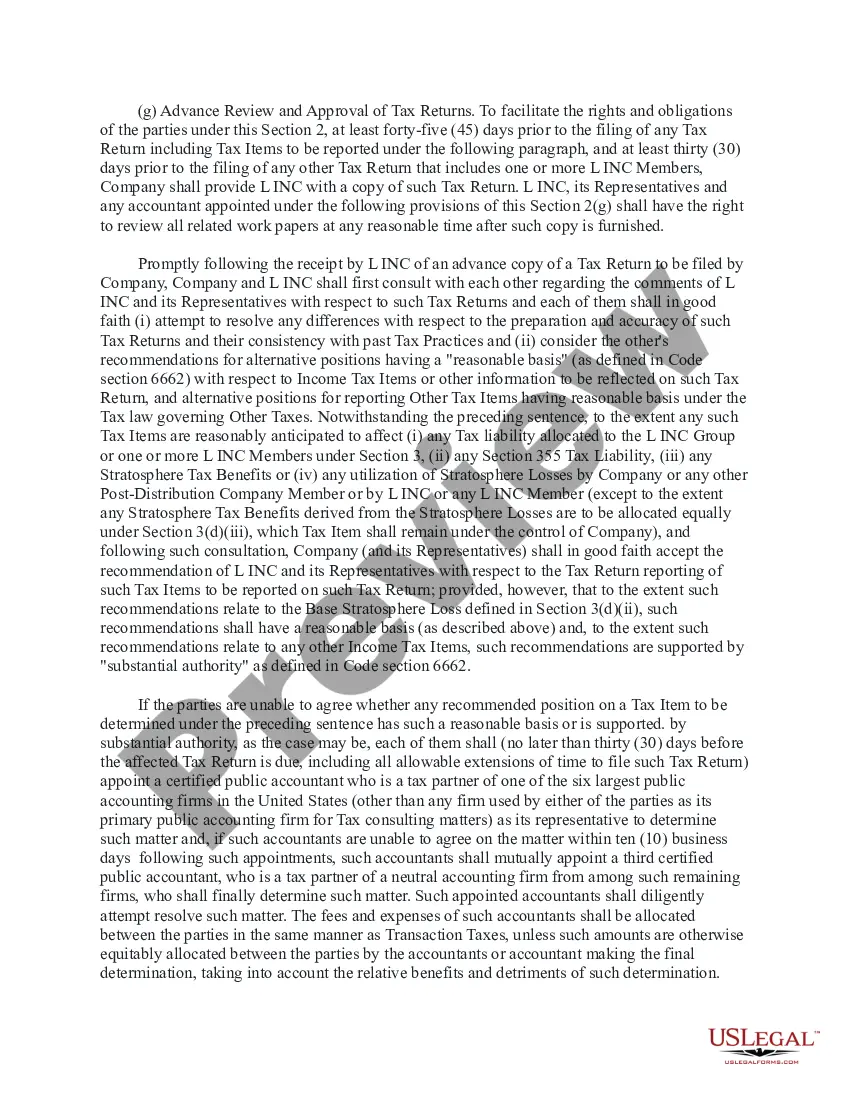
- Procedures for the filing of tax returns by involved parties.
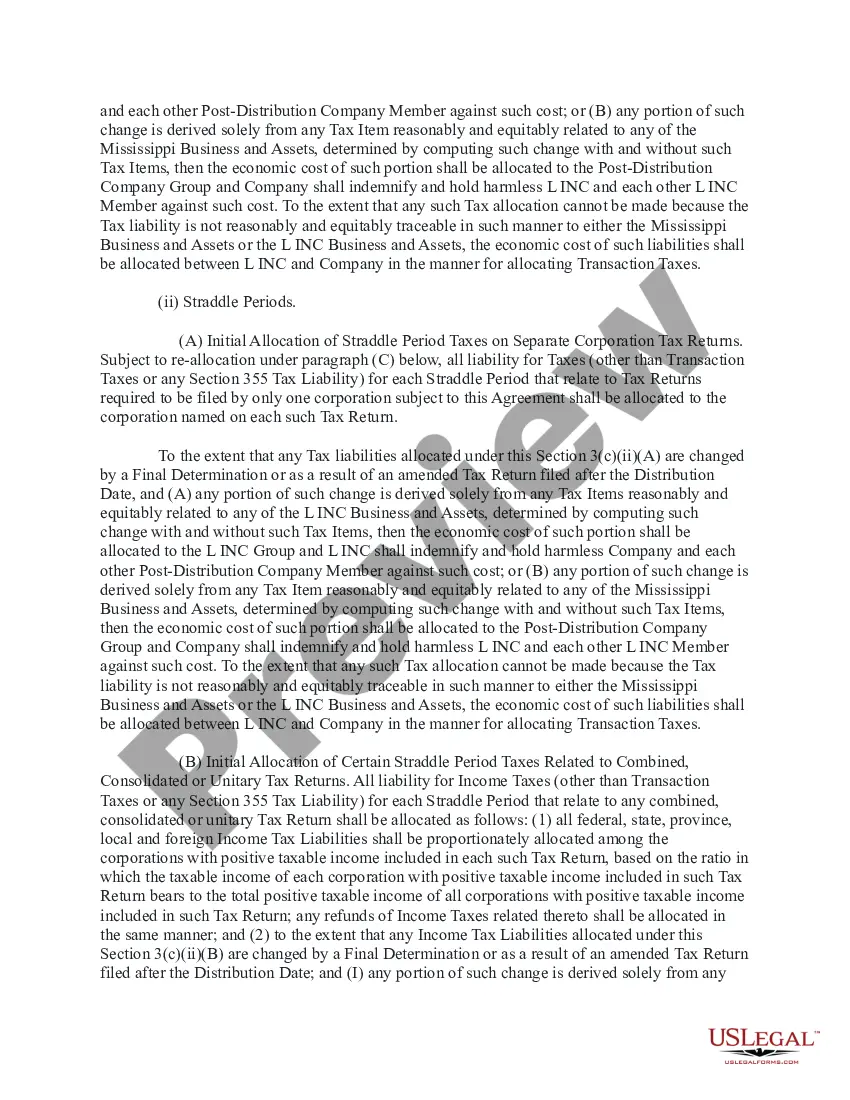
- Allocation and payment of tax liabilities, specifying which party is responsible for certain taxes.
- Indemnification procedures, detailing how parties can claim reimbursement for tax-related expenses.
- Creation and management of an escrow account for any potential tax benefits.
- Terminology related to tax practices, such as "Carryback Item" and "Taxable Period."





When this form is needed
This form is essential when two or more corporations within a consolidated group are undergoing a significant transaction, such as a merger or distribution of assets. It is particularly relevant when these corporations need to determine tax liabilities and allocate any tax benefits or obligations that arise from the transaction, ensuring all parties understand their responsibilities and liabilities concerning tax issues.
Who can use this document
- Corporations engaged in a merger or distribution involving affiliated entities.
- Legal and tax professionals managing corporate restructuring.
- Companies needing to clarify tax liabilities and responsibilities between affiliated groups.
- Shareholders or investors involved in corporate governance and finance activities.
How to prepare this document
- Identify and list all parties involved in the agreement, including their full legal names and states of incorporation.
- Define key terms clearly in the agreement, ensuring that all parties understand their meanings.
- Outline the procedures for tax return filing, detailing which party is responsible for each type of tax return.
- Specify the allocation of tax liabilities and indemnification provisions, addressing how reimbursement will be handled.
- Include any necessary provisions for managing escrow accounts related to tax benefits.
Does this document require notarization?
Notarization is not commonly needed for this form. However, certain documents or local rules may make it necessary. Our notarization service, powered by Notarize, allows you to finalize it securely online anytime, day or night.
Get your form ready online
Our built-in tools help you complete, sign, share, and store your documents in one place.
Make edits, fill in missing information, and update formatting in US Legal Forms—just like you would in MS Word.
Download a copy, print it, send it by email, or mail it via USPS—whatever works best for your next step.
Sign and collect signatures with our SignNow integration. Send to multiple recipients, set reminders, and more. Go Premium to unlock E-Sign.
If this form requires notarization, complete it online through a secure video call—no need to meet a notary in person or wait for an appointment.
We protect your documents and personal data by following strict security and privacy standards.

Make edits, fill in missing information, and update formatting in US Legal Forms—just like you would in MS Word.

Download a copy, print it, send it by email, or mail it via USPS—whatever works best for your next step.

Sign and collect signatures with our SignNow integration. Send to multiple recipients, set reminders, and more. Go Premium to unlock E-Sign.

If this form requires notarization, complete it online through a secure video call—no need to meet a notary in person or wait for an appointment.

We protect your documents and personal data by following strict security and privacy standards.
Typical mistakes to avoid
- Failing to clearly define key terms, which may lead to misunderstandings.
- Not specifying which party is responsible for which taxes, potentially resulting in disputes.
- Neglecting to comply with local state requirements or tax laws during completion.
- Forgetting to account for changes in tax law that may affect the agreement over time.
Why complete this form online
- Convenience of accessing the form from anywhere, allowing for quick and easy completion.
- Editability to tailor the agreement to the specific needs of the parties involved.
- Reliability of using professionally drafted templates that have been reviewed by licensed attorneys.
- Streamlined process that minimizes the need for in-person consultations, saving time and resources.
Looking for another form?







Form popularity
FAQ
(The rate is 7% for boats and 3% for airplanes.) The use tax may be paid at your county Tax Collector's office or at one of the Mississippi Department of Revenue District offices.
There are generally two ways reciprocal agreements work: Income not taxed at source: both states tax the income, but the state of residence offers the credit. Reverse credit states: both states tax the income, but the nonresident state offers the credit.
If you are a resident of Mississippi who earns income in another state and are required to pay an income tax to that other state, you are allowed to take a credit against your Mississippi income tax due in the same year for the total income tax due to the other state (subject to certain limitations).
How do I report Gambling Winnings? Gambling winnings reported on a W-2G, 1099, or other informational return from Mississippi s are subject to a three percent (3%) non-refundable income tax. The s withhold the tax at the time of payout. The amount withheld is non-refundable to the taxpayer.
What are transferable credits? Many states offer credits that can be transferred or sold to other taxpayers. These credits can then be used by the purchasing taxpayer ("transferee") to offset its current or future tax liability.
Usually, if you are required to file taxes in multiple states, you might be eligible for a credit for taxes paid to another state. Various state laws provide these credits so that you don't pay taxes to multiple states on the same income.
You can deduct any estimated taxes paid to state or local governments and any prior year's state or local income tax as long as they were paid during the tax year. Generally, you can take either a deduction or a tax credit for foreign income taxes, but not for taxes paid on income that is excluded from U.S. tax.
"This session I hope that's not the case.? Mississippi's Republican-controlled legislature passed legislation in 2022 that will eliminate the state's 4% income tax bracket starting in 2023. In the following three years, the 5% bracket will be reduced to 4%.