Mississippi Commercial Sublease
What this document covers
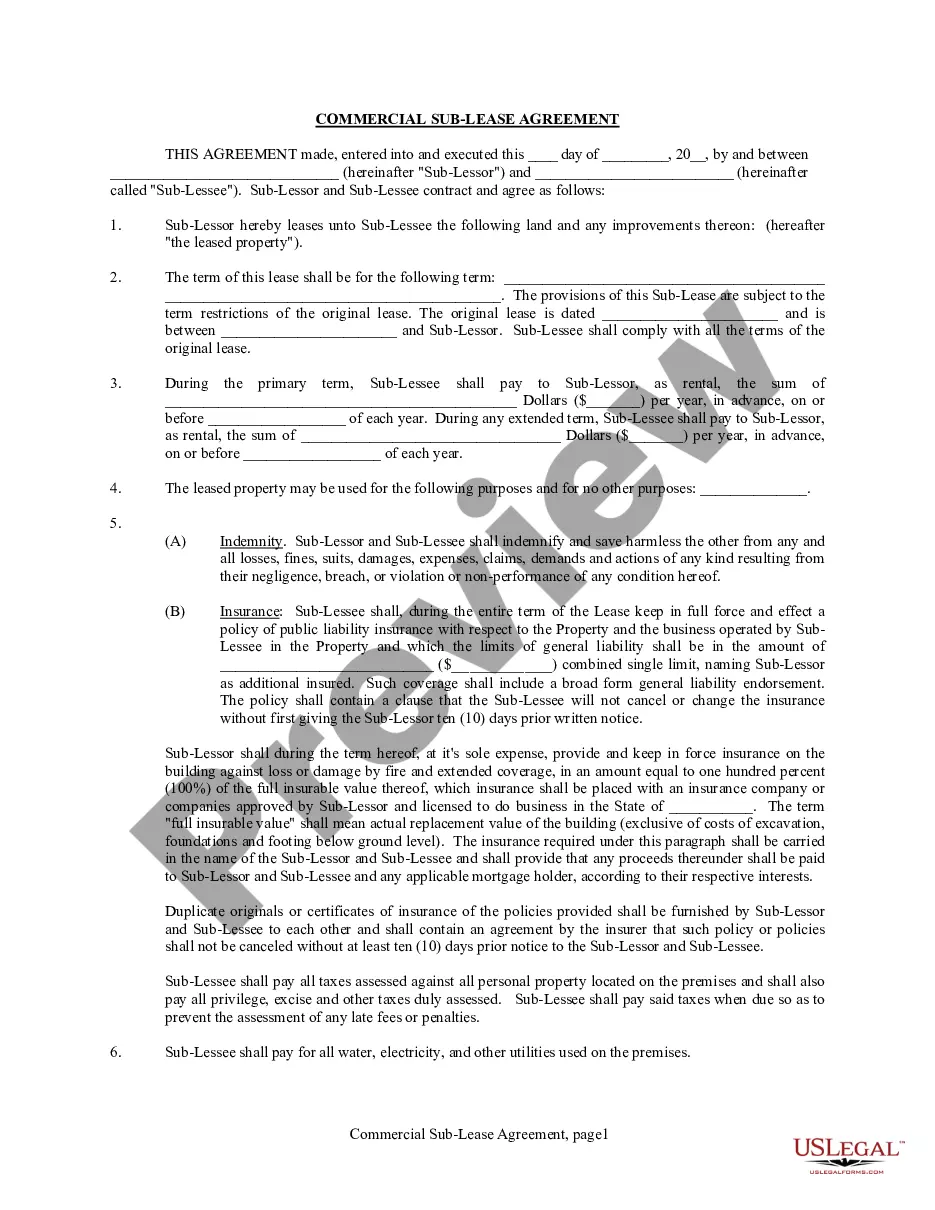
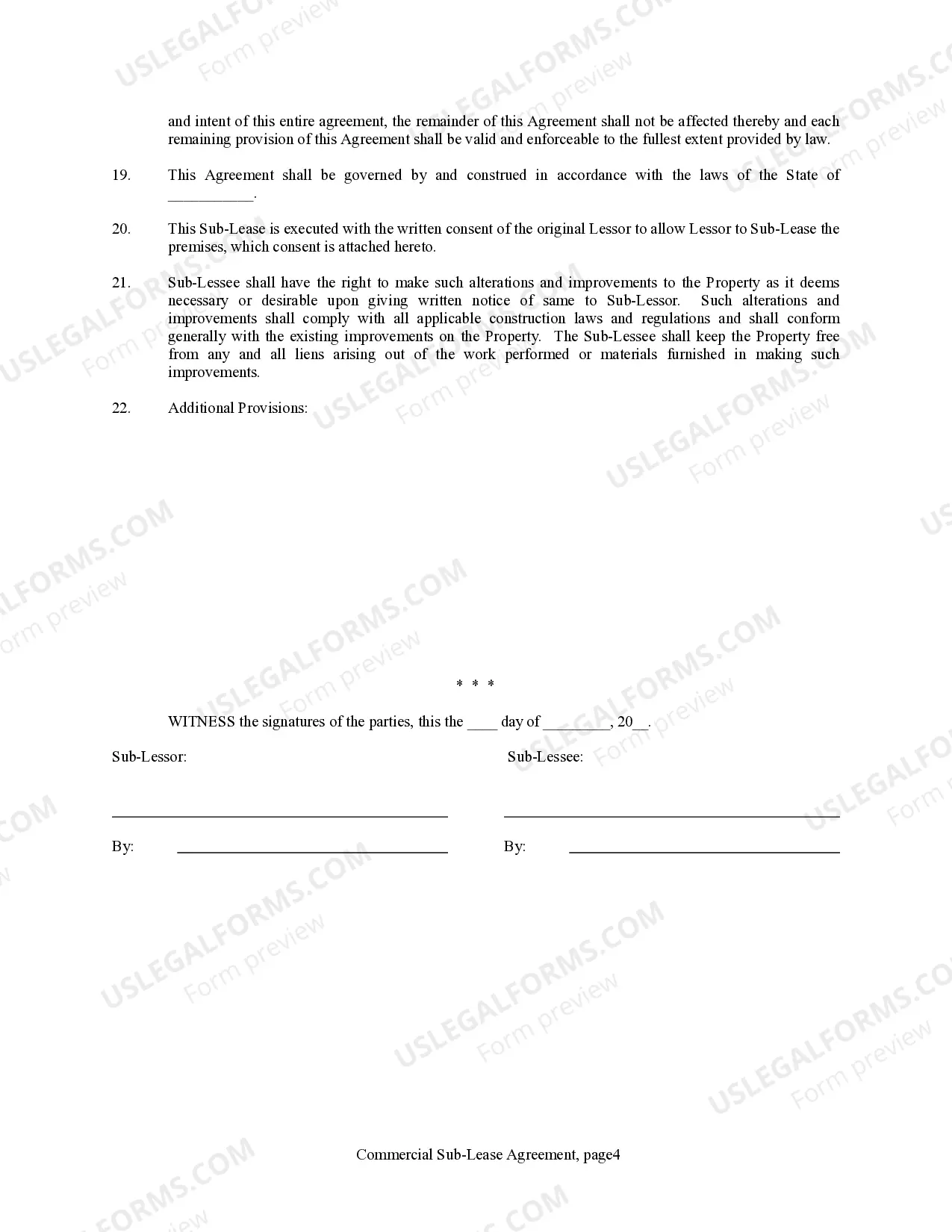
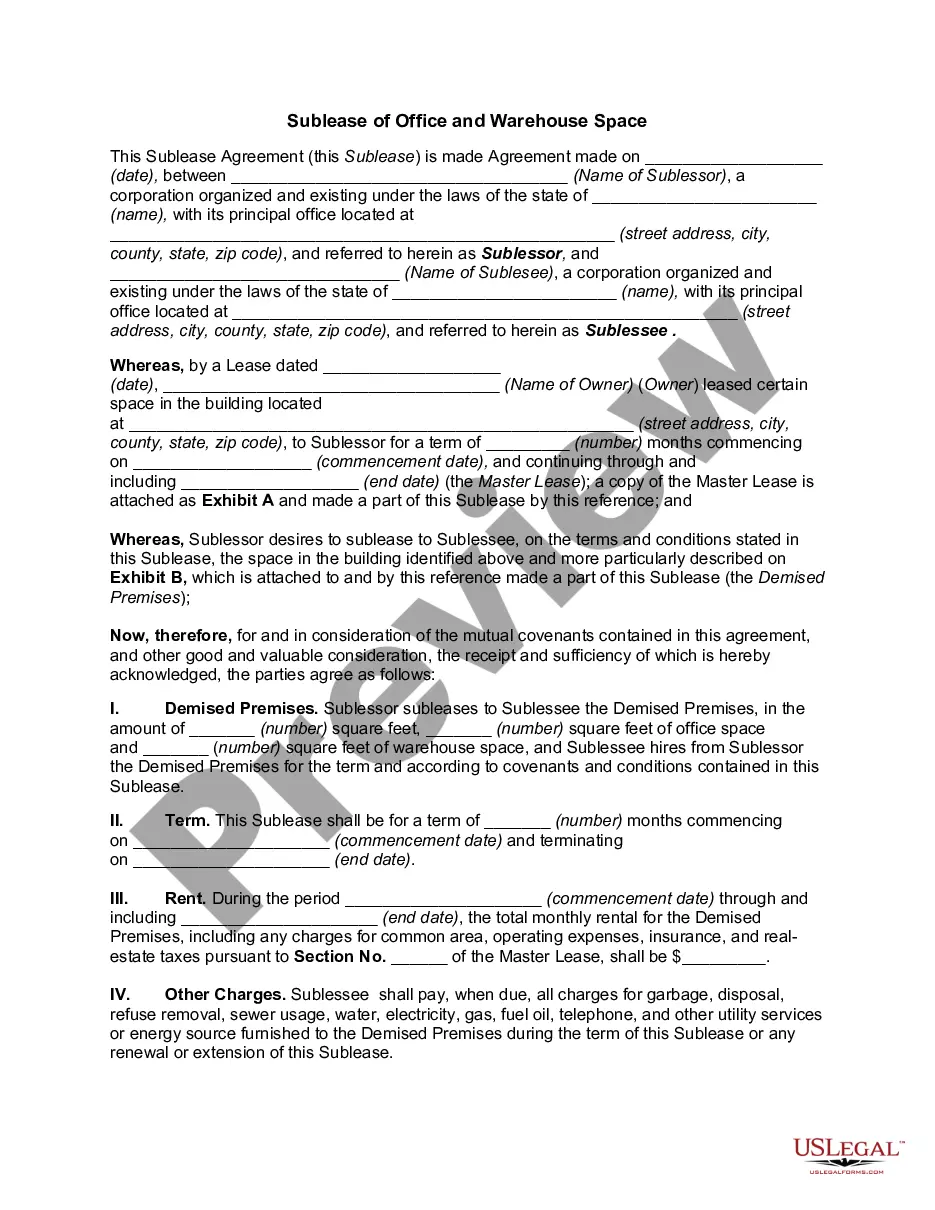
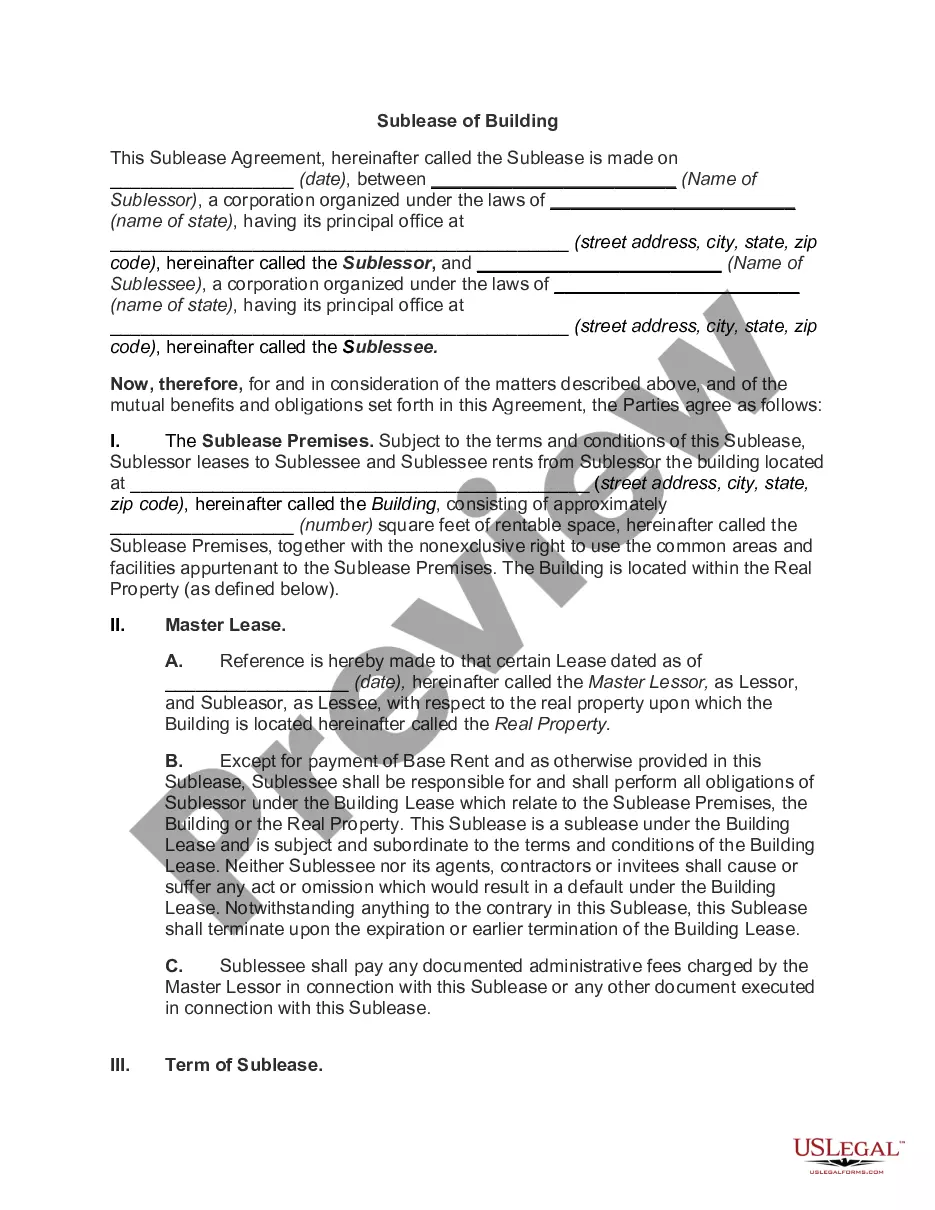
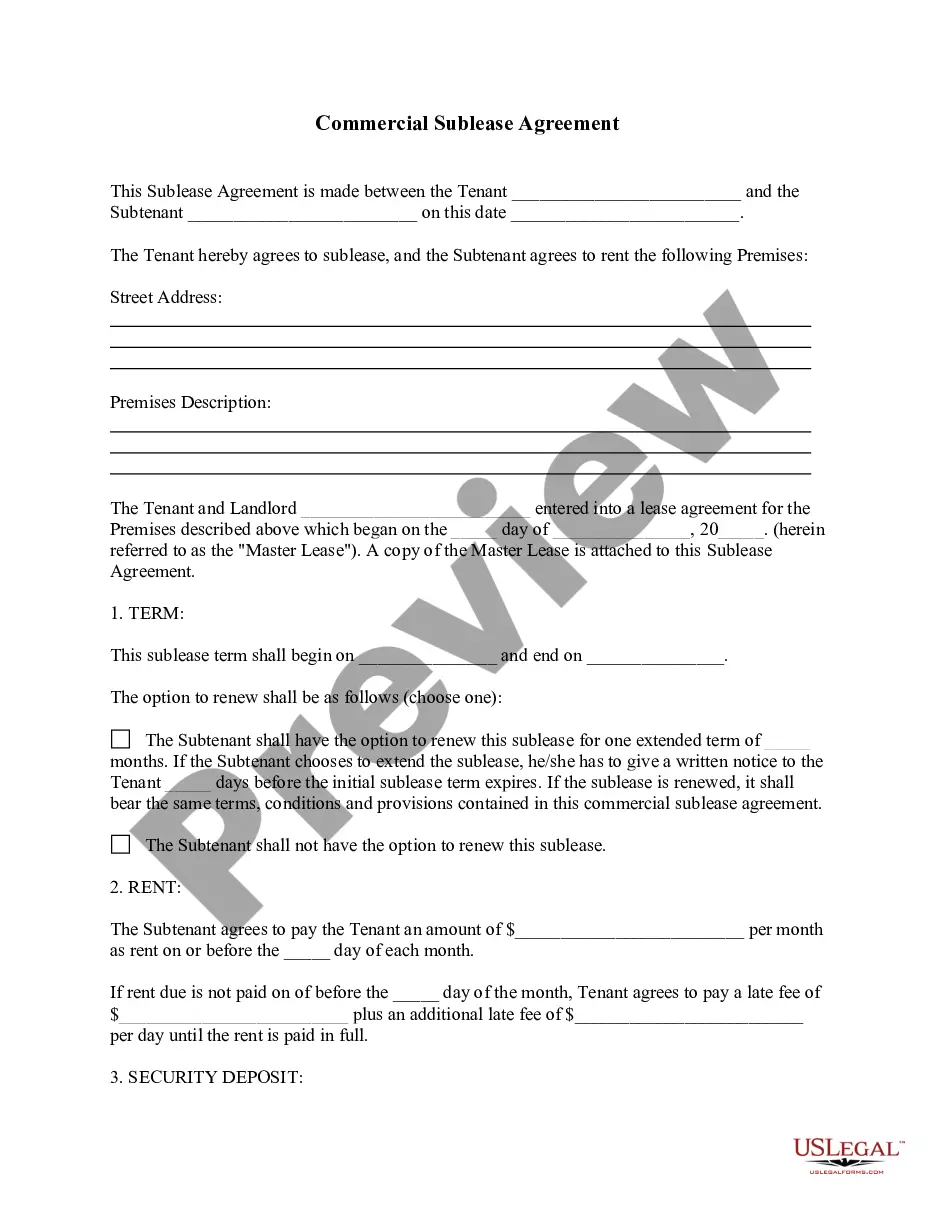
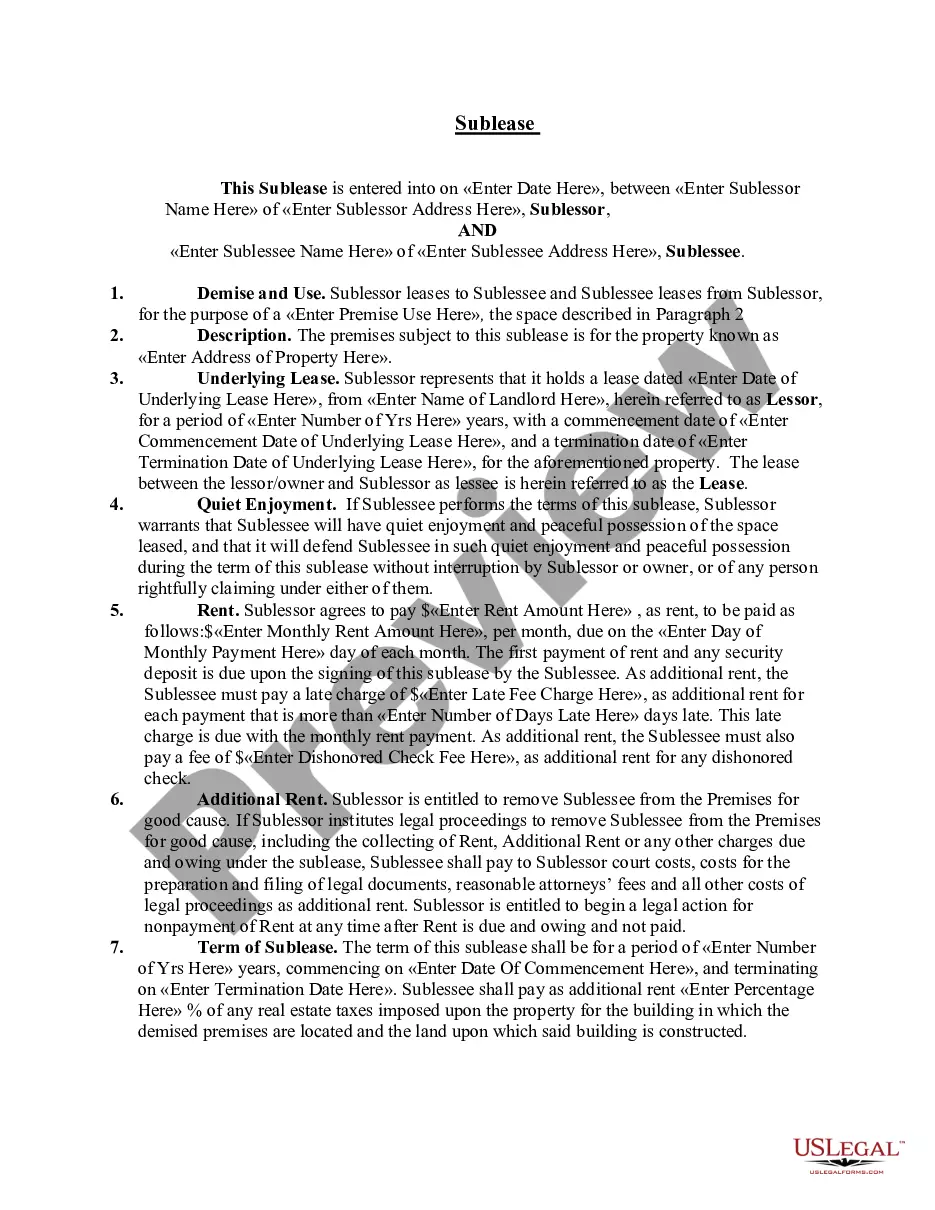
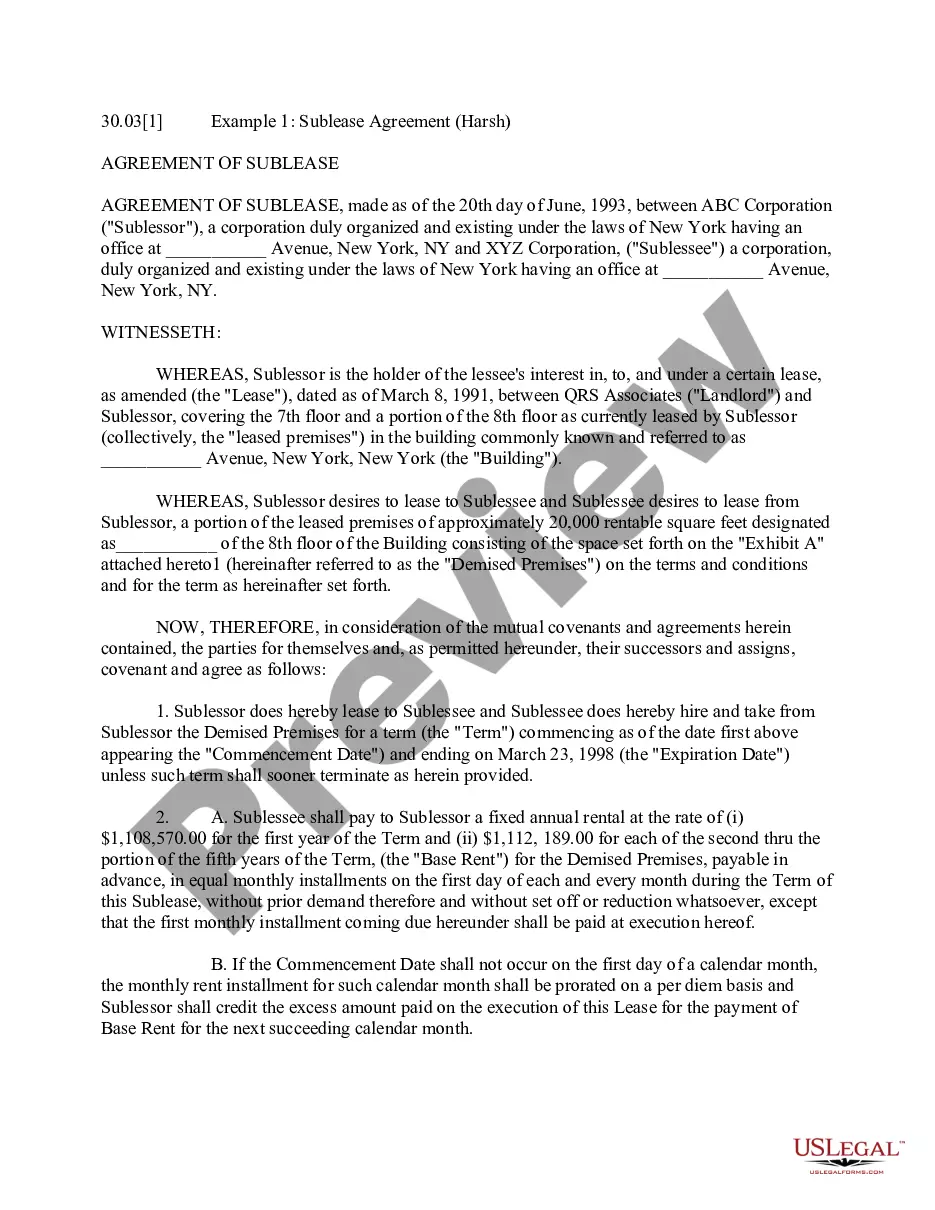
The Commercial Sublease is a legal document that allows a current tenant (Sub-Lessor) to lease out premises to a new tenant (Sub-Lessee). This agreement outlines the terms under which the Sub-Lessee can occupy the property, including payment, duration, and restrictions based on the original lease. Unlike a standard lease, a sublease transfers part of the tenant's leasehold interest to another party, thus creating a unique contractual relationship governed by both the original lease and the sublease terms.
Main sections of this form
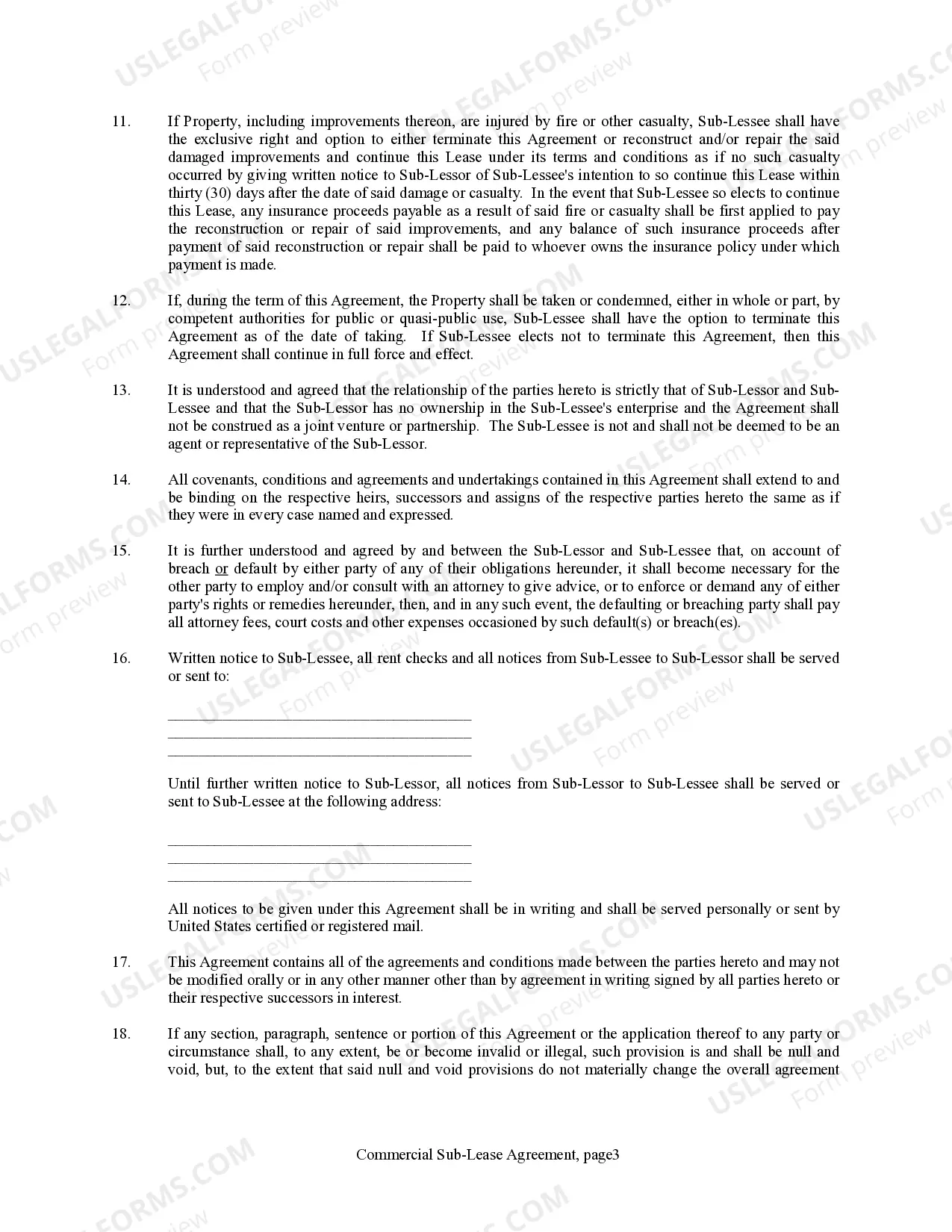
- Identification of parties: Names and addresses of Sub-Lessor and Sub-Lessee.
- Description of leased property: Specification of the land and any improvements included.
- Lease term: Dates indicating the beginning and end of the sublease period.
- Rental payment details: Amounts and due dates for rent payments.
- Insurance requirements: Obligation for Sub-Lessee to maintain liability insurance.
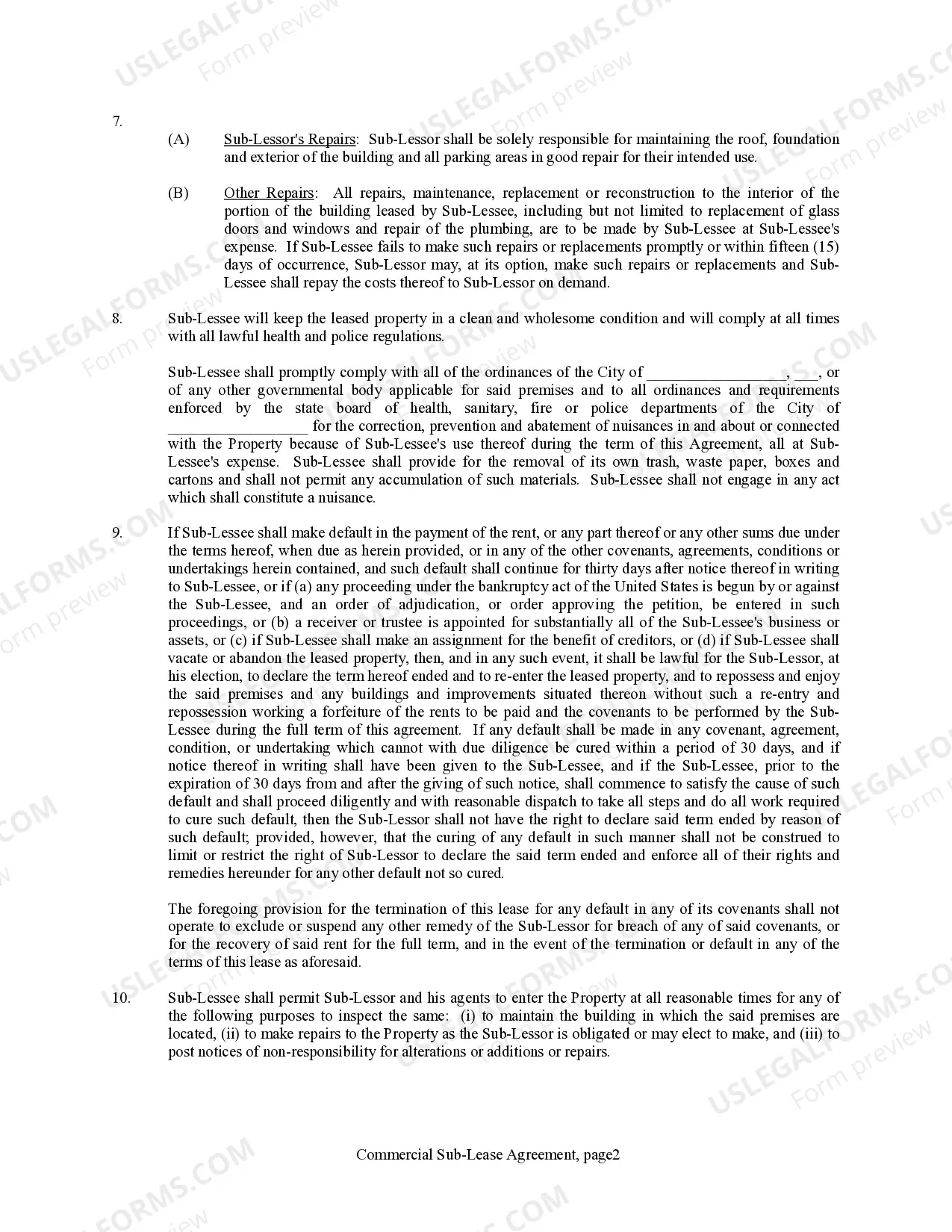
- Indemnity and repairs: Responsibilities for maintenance and damages during the lease.
When to use this form
This form should be used when an existing tenant wishes to rent out their leased commercial property to another party while still maintaining their original lease agreement. It is commonly used in situations where the original tenant cannot occupy the property for a period of time but wants to avoid unnecessary financial losses. The Commercial Sublease is essential in establishing rules and responsibilities for both the Sub-Lessor and Sub-Lessee during the subleasing arrangement.
Who this form is for
The following individuals or entities may find this form useful:
- Current tenants seeking to sublease their commercial property.
- Business owners wanting to share or transfer their leased space to another business.
- Landlords allowing tenants to sublet as part of their original lease agreement.
Steps to complete this form
Follow these steps to complete the Commercial Sublease:
- Identify the parties involved: Fill in the names and addresses of the Sub-Lessor and Sub-Lessee.
- Specify the property: Clearly describe the leased property including any relevant details.
- Enter the lease term: Provide the start and end dates of the sublease period.
- Fill in rental payment details: Indicate the amount of rent, payment frequency, and due date.
- List intended use: Specify what the property will be used for during the sublease term.
- Review legal requirements: Ensure that all terms comply with the original lease agreement and state laws.
Does this form need to be notarized?
This form does not typically require notarization unless specified by local law. Ensure all parties understand their responsibilities under the terms of the sublease prior to signing.
Get your form ready online
Our built-in tools help you complete, sign, share, and store your documents in one place.
Make edits, fill in missing information, and update formatting in US Legal Forms—just like you would in MS Word.
Download a copy, print it, send it by email, or mail it via USPS—whatever works best for your next step.
Sign and collect signatures with our SignNow integration. Send to multiple recipients, set reminders, and more. Go Premium to unlock E-Sign.
If this form requires notarization, complete it online through a secure video call—no need to meet a notary in person or wait for an appointment.
We protect your documents and personal data by following strict security and privacy standards.

Make edits, fill in missing information, and update formatting in US Legal Forms—just like you would in MS Word.

Download a copy, print it, send it by email, or mail it via USPS—whatever works best for your next step.

Sign and collect signatures with our SignNow integration. Send to multiple recipients, set reminders, and more. Go Premium to unlock E-Sign.

If this form requires notarization, complete it online through a secure video call—no need to meet a notary in person or wait for an appointment.

We protect your documents and personal data by following strict security and privacy standards.
Common mistakes to avoid
- Failing to get written consent from the original Lessor.
- Neglecting to specify rental payment amounts or dates.
- Not including conditions regarding property maintenance or insurance coverage.
Benefits of using this form online
- Easy access and download of the form tailored to your needs.
- Ability to modify the document before finalizing details.
- Comprehensive legal templates created by licensed attorneys ensure adherence to legal standards.
Legal use & context
- The sublease agreement allows the original tenant to transfer responsibilities while retaining lease obligations with the landlord.
- Understanding local laws regarding subleasing is crucial to ensure the agreement is enforceable.
- This form provides a framework for the relationship between the Sub-Lessor and Sub-Lessee, outlining rights and responsibilities.
Summary of main points
- A Commercial Sublease allows a tenant to lease a commercial space to another party.
- All terms must align with the original lease agreement.
- Proper documentation is essential to avoid disputes and ensure legality.
Looking for another form?
Form popularity
FAQ
Anyone renting a building, whether for commercial or personal use, has the right to privacy. You are entitled to do anything on the property that you wish, so long as whatever you are doing is legal. The landlord cannot prevent you from operating your business nor from allowing guests or patrons on the property.
A Triple Net Lease (NNN Lease) is the most common type of lease in commercial buildings. In a NNN lease, the rent does not include operating expenses. Operating expenses include utilities, maintenance, property taxes, insurance and property management.
Single net lease. A single net lease, or net lease, is an arrangement where the tenant pay for utilities and property taxes. Double net or NN lease. A double net or NN lease is similar. Triple net or NNN lease. Full-service gross or modified lease.
Recording a lease means that it (or a Notice of Lease) is submitted to the public record, usually at the local Registry of Deeds following the signing of it by both parties. Generally, recording of the lease protects the tenant against subsequent claims to the property.
Can the landlord refuse consent to an Assignment? Most leases will say that the Landlord cannot unreasonably withhold consent. According to section 19 (1A) of the Landlord and Tenant Act 1927 the landlord can insert conditions in the lease, which need to be met in the case of an assignment.
A typical commercial lease is a 5 and 5, meaning a 5 year lease, with an option to renew for another 5 years. Options usually must be exercised by writing a letter to the landlord some months before the initial lease term expires, expressly exercising the option.
Commercial landlords with multiple properties, or developments with more than one tenant, are generally loath to disclose to potential tenants the terms of leases into which they have previously entered.
Triple Net Lease Arguably the favorite among commercial landlords, the triple net lease, or NNN lease makes the tenant responsible for the majority of costs, including the base rent, property taxes, insurance, utilities and maintenance.
Summary. There are different types of leases, but the most common types are absolute net lease, triple net lease, modified gross lease, and full-service lease. Tenants and proprietors need to understand them fully before signing a lease agreement.