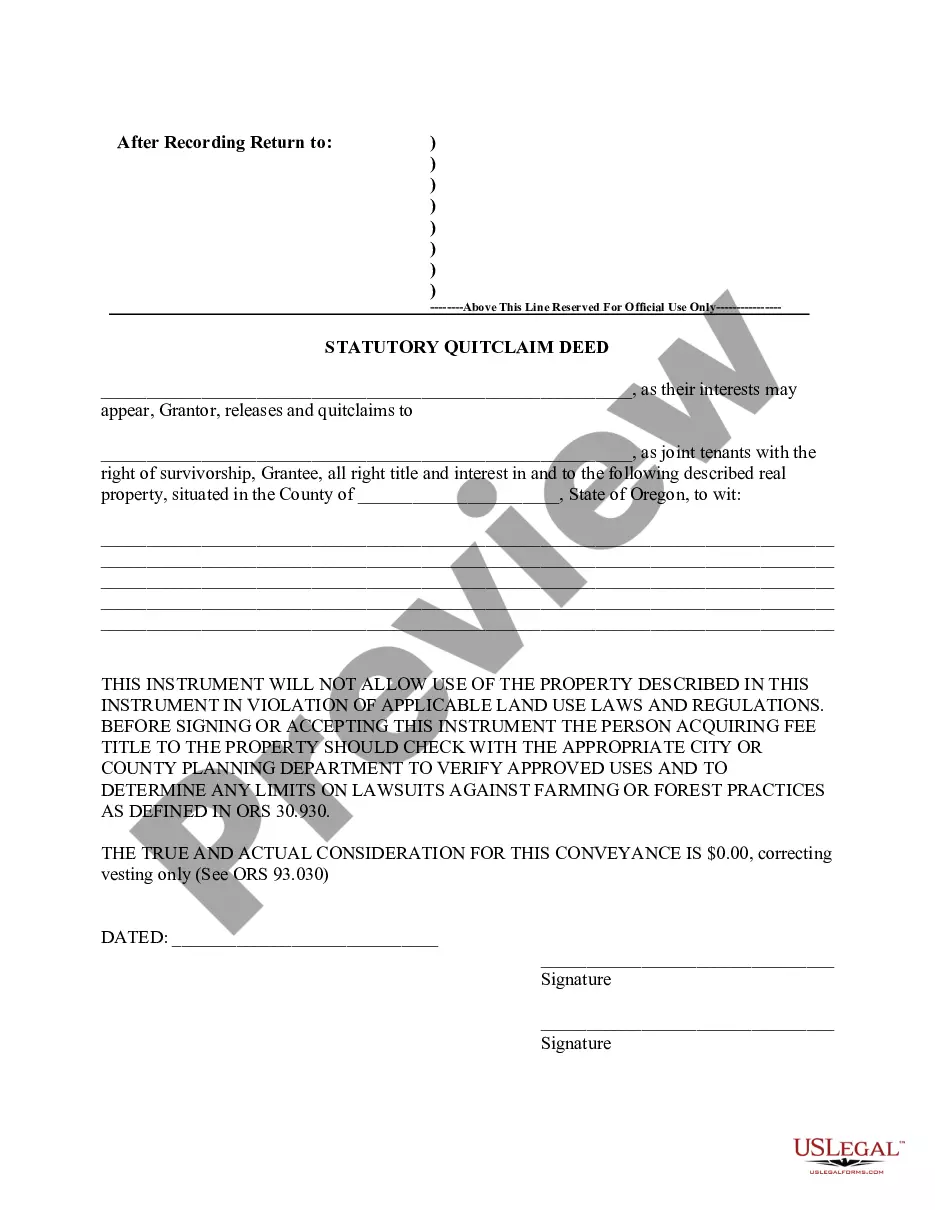
Oregon Statutory Quitclaim Deed
What is this form?
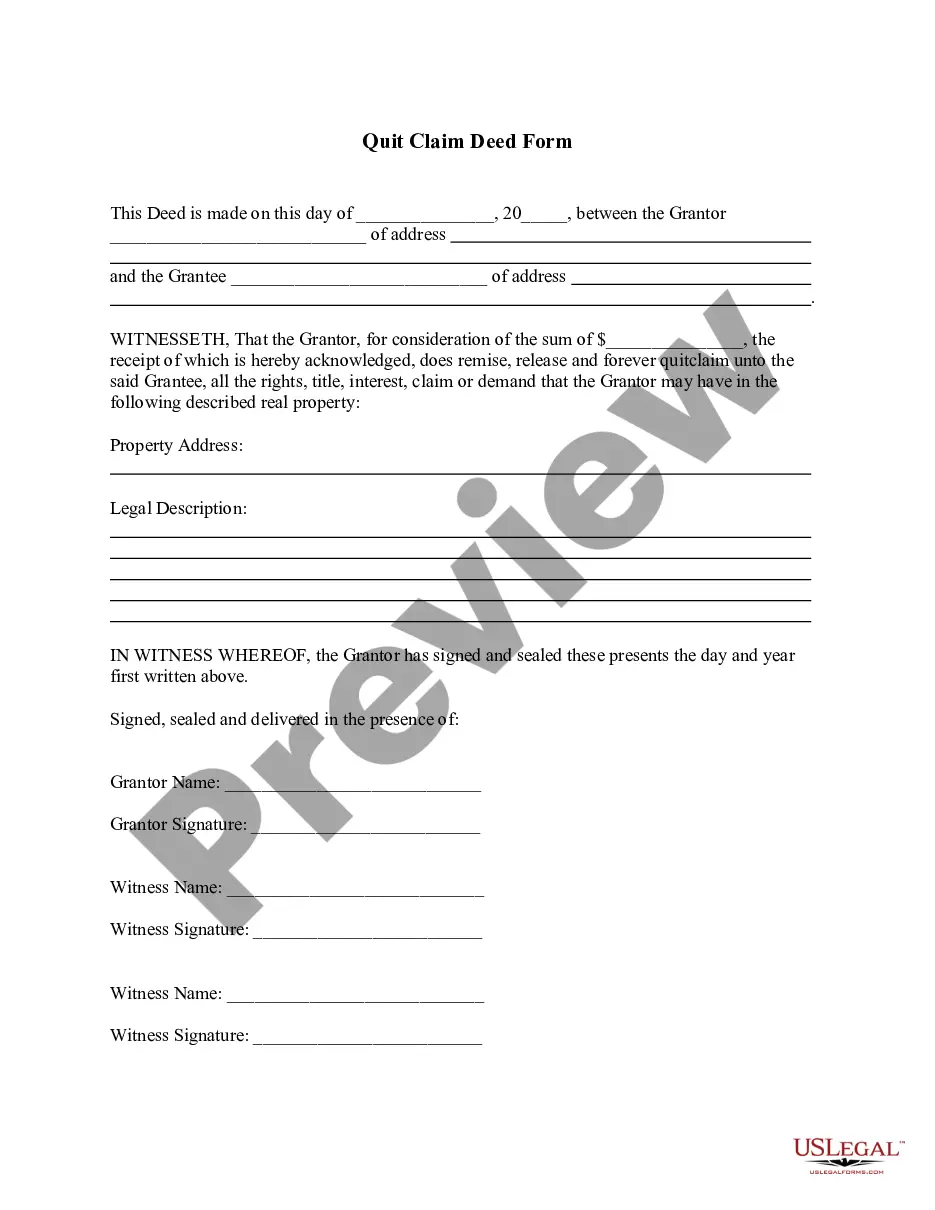
A statutory quitclaim deed is a legal document used in property transactions to transfer ownership of real estate from one party to another. Unlike a warranty deed, a quitclaim deed does not guarantee that the title is clear or free of claims. It simply conveys whatever interest the grantor has in the property without making any promises about the quality of that interest. This form is particularly useful for transferring property between family members or in situations where the specific rights being transferred are clear and acknowledged by all parties involved.
Key parts of this document
- Grantor and grantee names and addresses
- Legal description of the property
- Statement of the grantor's intent to release and quitclaim their interest
- Consideration (value) for the deed
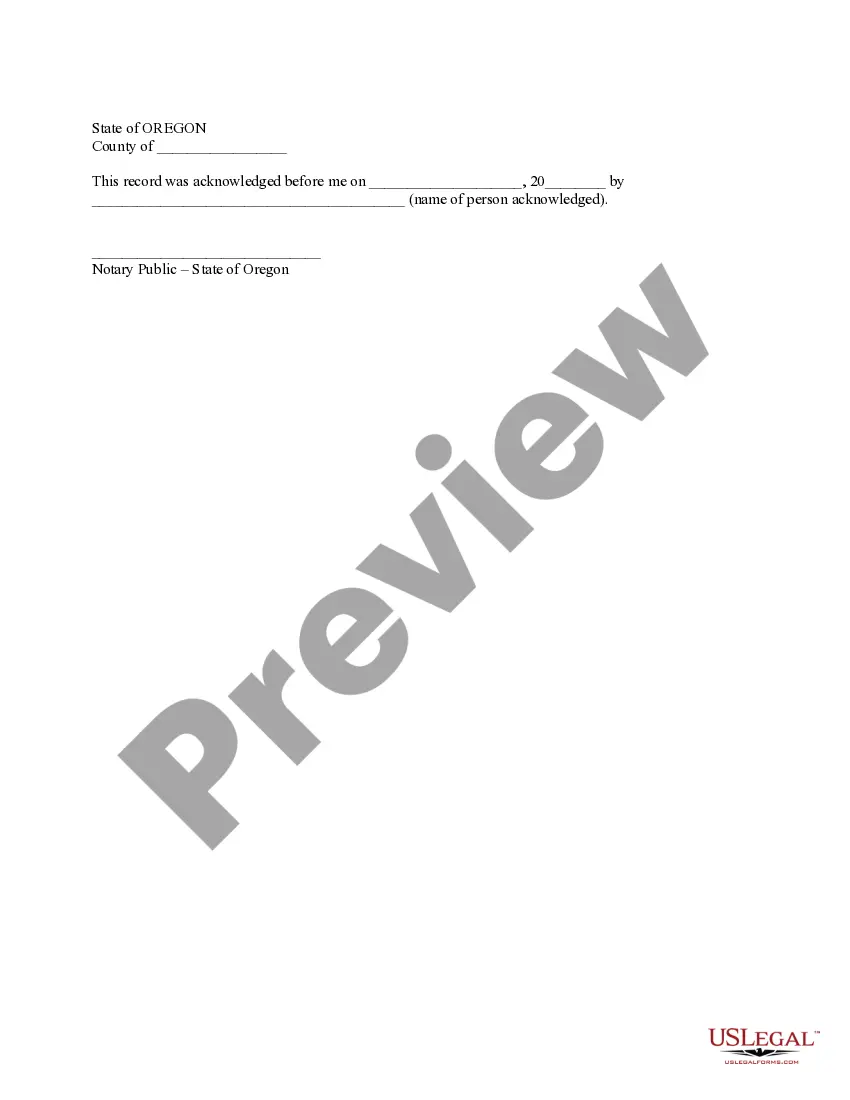
- Signatures of the grantor(s) and acknowledgment by a notary public




When to use this form
This form should be used when an individual, such as a family member or business partner, wants to transfer their interest in real property without making claims about the title. Common scenarios include transferring property between family members, clearing up title issues, or granting ownership to someone as part of an estate settlement. It is essential when the nature of ownership is straightforward and understood by all parties involved.
Intended users of this form
This form is intended for:
- Property owners seeking to transfer ownership to another person
- Individuals involved in family property settlements
- Co-owners wishing to change how they hold the property, such as adding a spouse
- Anyone looking to simplify the transfer of real estate without a warranty
Steps to complete this form
- Identify the names and addresses of the grantor and grantee.
- Provide a detailed legal description of the property being transferred.
- State the grantor's intent to release and quitclaim the property.
- Include the consideration value, which can be zero for correcting vesting.
- Have the grantor sign and date the document in the presence of a notary public.
Notarization requirements for this form
Yes, this form must be notarized to be legally valid. Notarization ensures that the signatures are authentic and the document can be enforceable in court. US Legal Forms offers integrated online notarization services, providing 24/7 availability through secure video calls, ensuring you can get your documents notarized without the need to travel.
Get your form ready online
Our built-in tools help you complete, sign, share, and store your documents in one place.
Make edits, fill in missing information, and update formatting in US Legal Forms—just like you would in MS Word.
Download a copy, print it, send it by email, or mail it via USPS—whatever works best for your next step.
Sign and collect signatures with our SignNow integration. Send to multiple recipients, set reminders, and more. Go Premium to unlock E-Sign.
If this form requires notarization, complete it online through a secure video call—no need to meet a notary in person or wait for an appointment.
We protect your documents and personal data by following strict security and privacy standards.

Make edits, fill in missing information, and update formatting in US Legal Forms—just like you would in MS Word.

Download a copy, print it, send it by email, or mail it via USPS—whatever works best for your next step.

Sign and collect signatures with our SignNow integration. Send to multiple recipients, set reminders, and more. Go Premium to unlock E-Sign.

If this form requires notarization, complete it online through a secure video call—no need to meet a notary in person or wait for an appointment.

We protect your documents and personal data by following strict security and privacy standards.
Typical mistakes to avoid
- Failing to provide a complete legal description of the property.
- Not having the deed notarized, which may invalidate the transfer.
- Omitting the consideration, leading to confusion about the terms of the transfer.
- Ignoring state-specific requirements that apply to the deed.
Benefits of completing this form online
- Convenient access to carefully drafted legal documents anytime.
- Easy to customize the form per your specific situation.
- Cost-effective compared to hiring an attorney for simple property transfers.
- Immediate downloads mean you can complete your transfer without delay.
Quick recap
- The Statutory Quitclaim Deed is a simple form for transferring property without warranties.
- It is crucial to include accurate property descriptions and obtain notarization.
- This form is commonly used in family transactions and property ownership corrections.
Looking for another form?

Form popularity
FAQ
A warranty deed conveys an interest in real property to the named grantee with full warranties of title. Warranty deeds are statutory in Oregon under ORS 93.850, and they convey real property in fee simple with the most assurance of title.Generally, real property is owned in either sole ownership or in co-ownership.
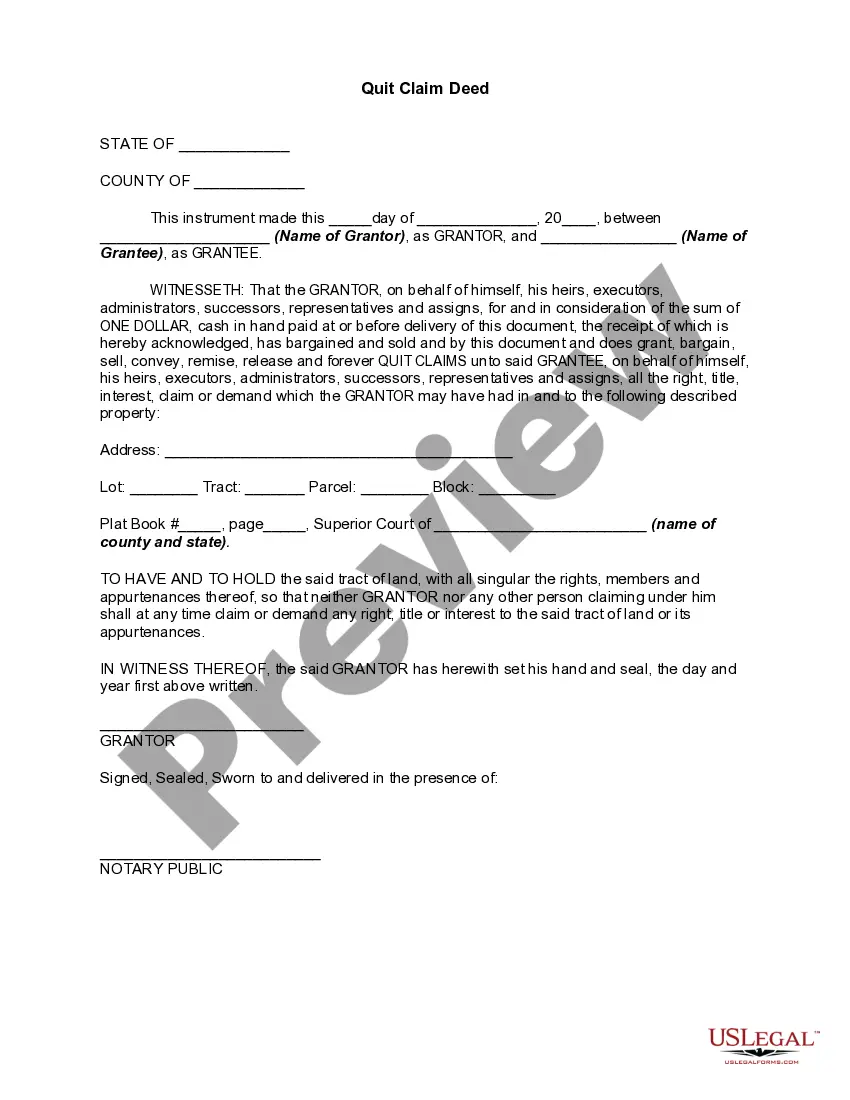
Fill out the quit claim deed form, which can be obtained online, or write your own using the form as a guide. The person giving up the interest in the property is the grantor, and the person receiving the interest is the grantee.
Quitclaim deeds are most often used to transfer property between family members. Examples include when an owner gets married and wants to add a spouse's name to the title or deed, or when the owners get divorced and one spouse's name is removed from the title or deed.
The drawback, quite simply, is that quitclaim deeds offer the grantee/recipient no protection or guarantees whatsoever about the property or their ownership of it. Maybe the grantor did not own the property at all, or maybe they only had partial ownership.
Quitclaim deeds are most often used to transfer property between family members.Examples include when an owner gets married and wants to add a spouse's name to the title or deed, or when the owners divorce and one spouse's name is removed from the title or deed.
Quitclaim deeds (sometimes erroneously called "quit claim deeds" or "quick claim deeds") are legally binding documents that do not require a lawyer's time to fill out and file.
But you might be wondering if an owner can transfer a deed to another person without a real estate lawyer. The answer is yes. Parties to a transaction are always free to prepare their own deeds.A quitclaim deed, for example, is far simpler than a warranty deed.
They are commonly used to add/remove someone to/from real estate title or deed (divorce, name changes, family and trust transfers). The quitclaim deed is a legal document (deed) used to transfer interest in real estate from one person or entity (grantor) to another (grantee).
A Quitclaim Deed must be notarized by a notary public or attorney in order to be valid.Consideration in a Quitclaim Deed is what the Grantee will pay to the Grantor for the interest in the property.