Mississippi Joint Complaint for Divorce - Adult Children
Understanding this form
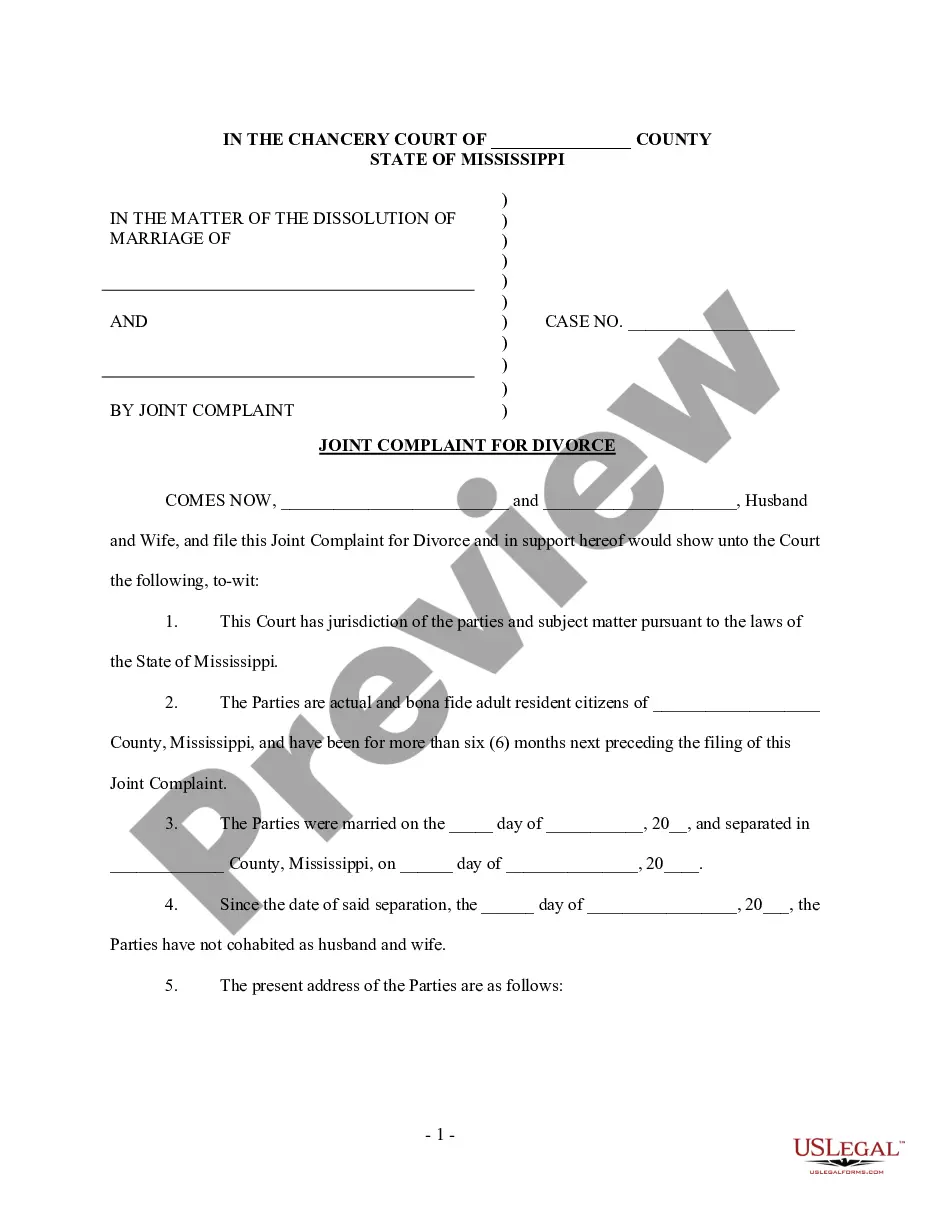
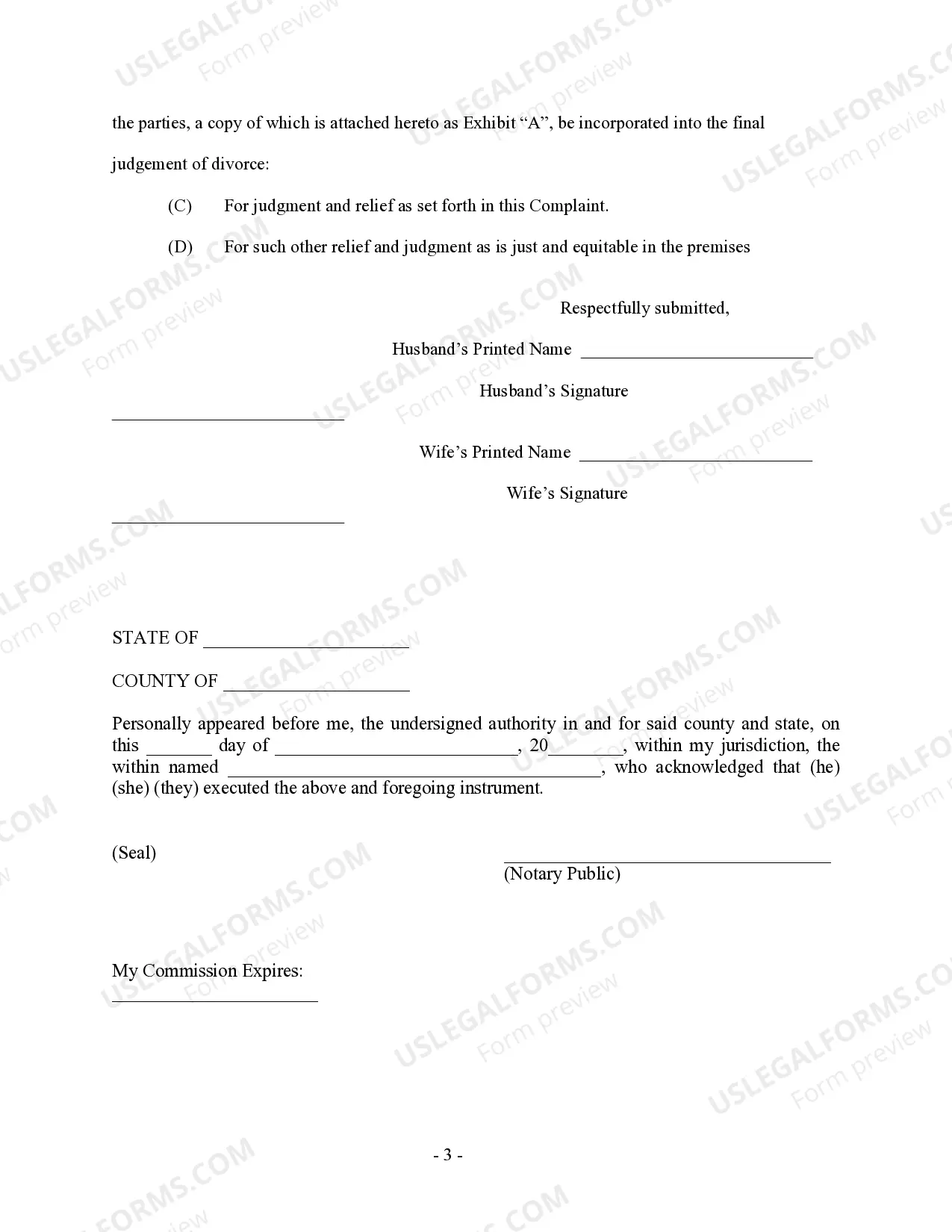
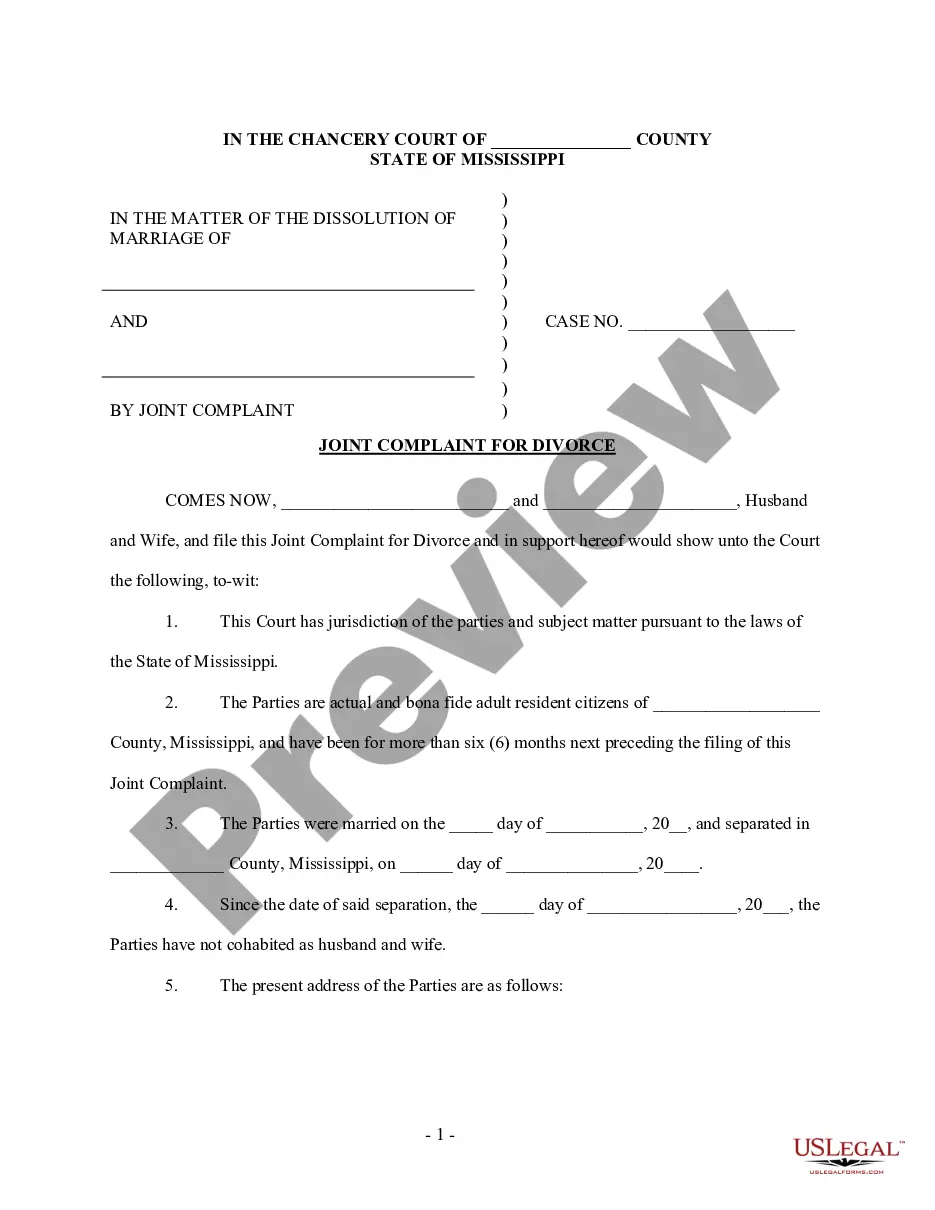
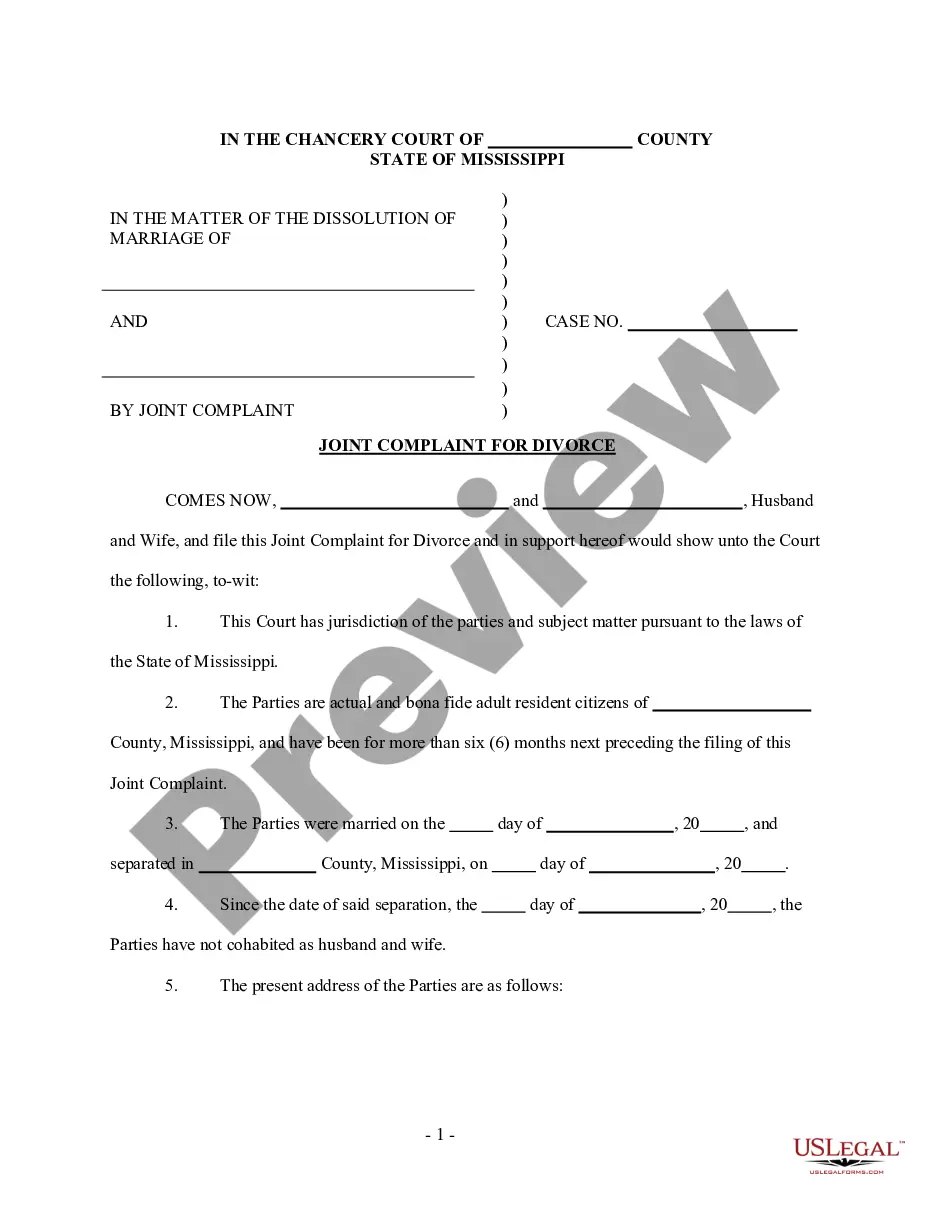
The Joint Complaint for Divorce - Adult Children is a legal document filed by both spouses, requesting the dissolution of their marriage. This form is specifically designed for couples who have only adult children, thereby streamlining the divorce process without the complexities that arise with custody arrangements. It allows both parties to present their case and seek relief, including restoration of a former name and division of property and debts, as previously agreed upon.
What’s included in this form
- Parties' Information: Names and details of both spouses filing the complaint.
- Date of Marriage: The official date when the marriage took place.
- Date of Separation: The date the spouses separated.
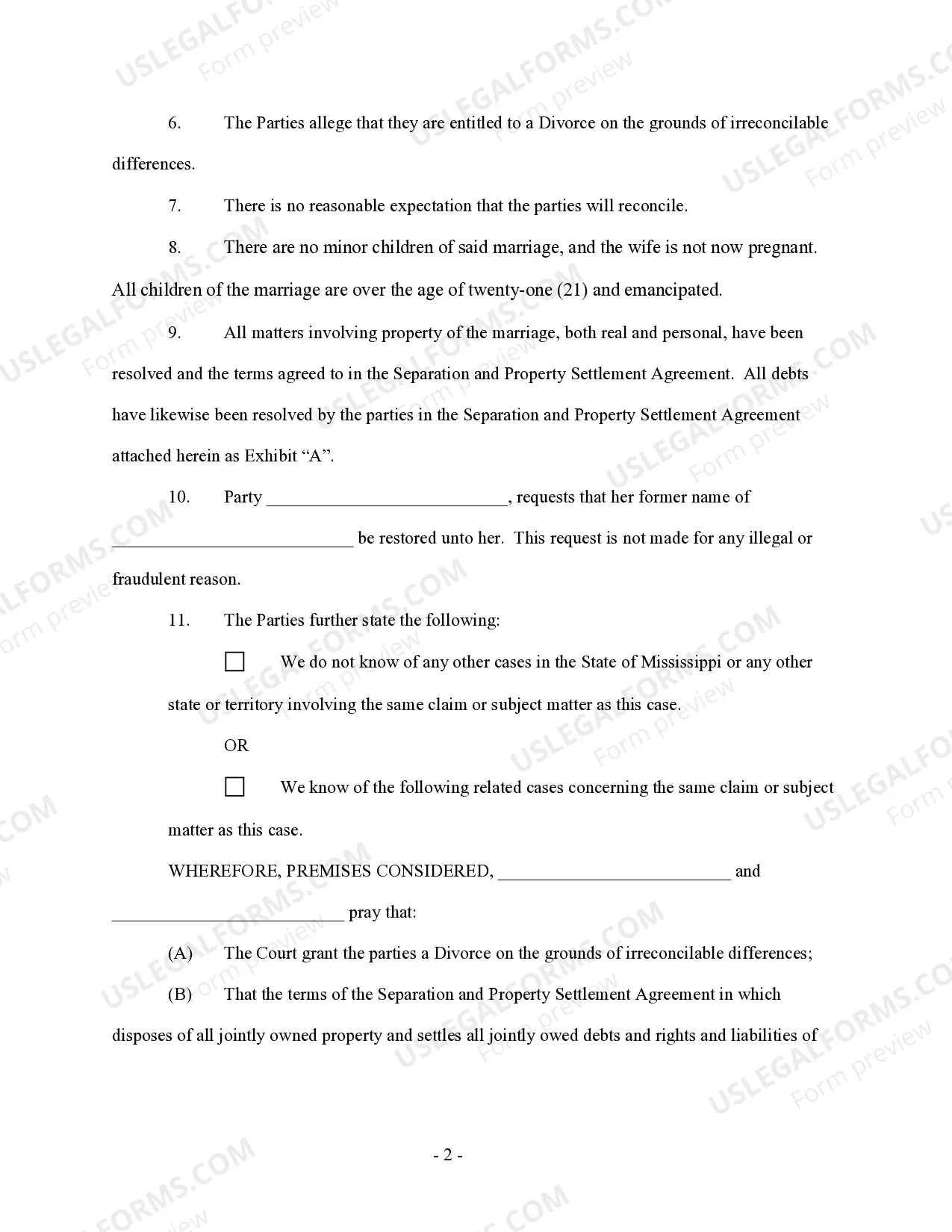
- Adult Children Statement: Confirmation that all children are over the age of twenty-one and emancipated.
- Separation and Property Settlement Agreement: Acknowledgment that all property and debt matters have been settled in a separate agreement.
- Request for Restoration of Name: One spouse may request to restore their former name.
- Judicial Relief: The request to grant a divorce and incorporate the agreed terms into the final judgment.

When to use this document
This form is appropriate when both spouses have mutually agreed to divorce and have no minor children involved. It is useful in cases where they have reached agreements regarding property and debts, making the process smoother and less contentious. Use this form if both parties are ready to proceed with the divorce without further litigation.
Who this form is for
- Couples who have no children under the age of twenty-one.
- Married couples residing in Mississippi who agree on the terms of their divorce.
- Individuals seeking to restore a former name as part of the divorce process.
Steps to complete this form
- Identify the parties by entering the names of both spouses.
- Specify the date of marriage and date of separation in the appropriate fields.
- Confirm that all children are emancipated by stating their ages.
- Attach the Separation and Property Settlement Agreement as Exhibit A.
- If applicable, fill out the request for the restoration of a former name.
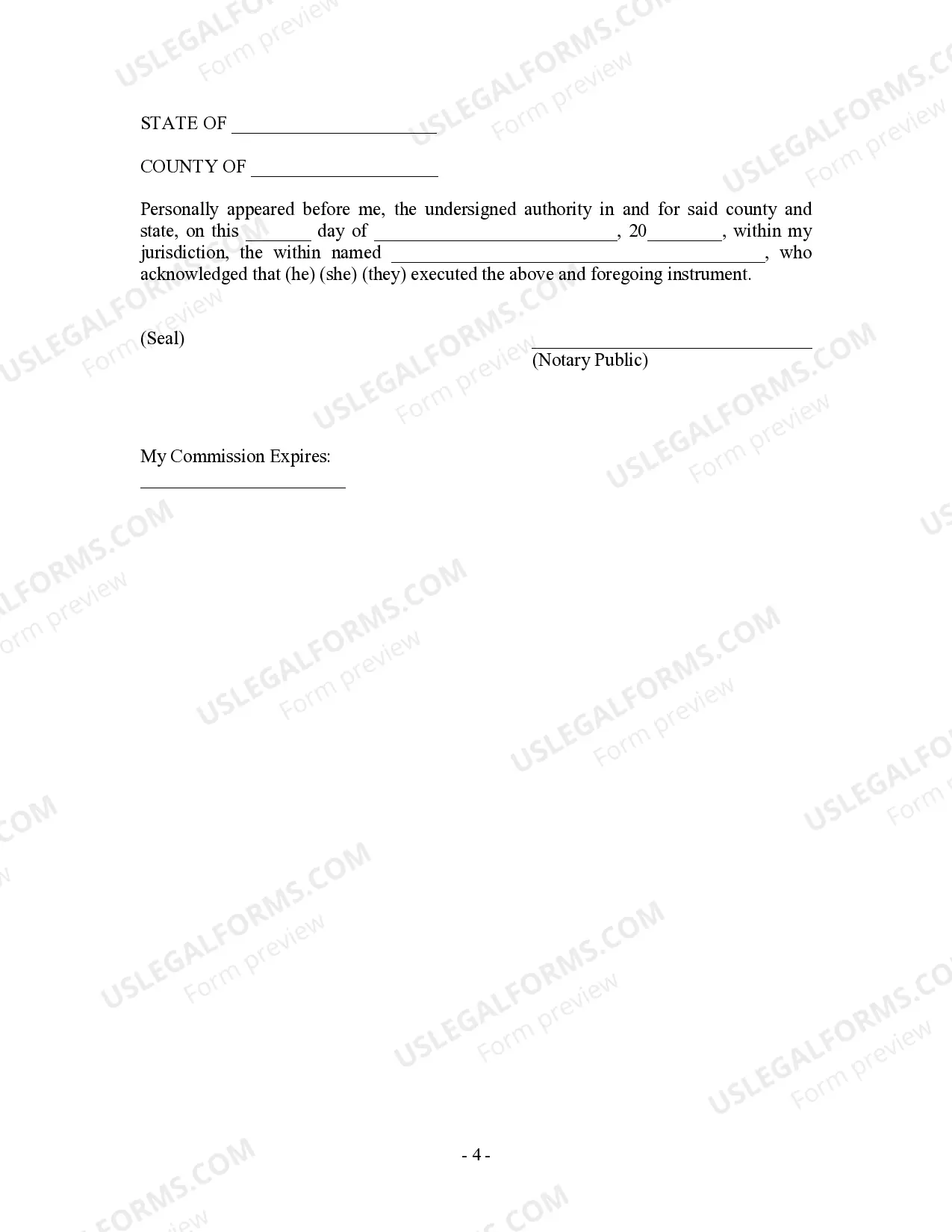
- Both parties should sign and have the document notarized.
Notarization requirements for this form
To make this form legally binding, it must be notarized. Our online notarization service, powered by Notarize, lets you verify and sign documents remotely through an encrypted video session.
Get your form ready online
Our built-in tools help you complete, sign, share, and store your documents in one place.
Make edits, fill in missing information, and update formatting in US Legal Forms—just like you would in MS Word.
Download a copy, print it, send it by email, or mail it via USPS—whatever works best for your next step.
Sign and collect signatures with our SignNow integration. Send to multiple recipients, set reminders, and more. Go Premium to unlock E-Sign.
If this form requires notarization, complete it online through a secure video call—no need to meet a notary in person or wait for an appointment.
We protect your documents and personal data by following strict security and privacy standards.

Make edits, fill in missing information, and update formatting in US Legal Forms—just like you would in MS Word.

Download a copy, print it, send it by email, or mail it via USPS—whatever works best for your next step.

Sign and collect signatures with our SignNow integration. Send to multiple recipients, set reminders, and more. Go Premium to unlock E-Sign.

If this form requires notarization, complete it online through a secure video call—no need to meet a notary in person or wait for an appointment.

We protect your documents and personal data by following strict security and privacy standards.
Common mistakes
- Failing to confirm that all children are over twenty-one.
- Neglecting to attach the Separation and Property Settlement Agreement.
- Not obtaining notarization for the signatures.
- Leaving dates of marriage or separation blank.
Advantages of online completion
- Easy access: Download the form immediately and start filling it out.
- Editable format: Customize sections to reflect specific marital arrangements.
- Legal reliability: Ensure you are using a form drafted by licensed attorneys.
Looking for another form?
Form popularity
FAQ
Mississippi is the only state that awards property to the person whose name is on the title. If only one person's name is on the title to a car or the house, it goes to that person. However, the court does have the flexibility to divide assets fairly and equitably.
Each parent can receive joint legal and physical custody. Both parents might receive joint legal custody, but one parent will have physical custody. Both parents might receive joint physical custody, but one parent will have legal custody. One parent could be given both legal and physical custody.
To file for divorce in Mississippi, you must be a resident of the state for at least six months. An irreconcilable differences divorce requires a 60-day waiting period, assuming the spouses resolve all issues within that time and the court has approved the property settlement agreement.
If any man and woman shall unlawfully cohabit, whether in adultery or fornication, they shall be fined in any sum not more than five hundred dollars each, and imprisoned in the county jail not more than six months; and it shall not be necessary, to constitute the offense, that the parties shall dwell together publicly
Adultery and other forms of spousal misconduct can affect alimony decisions in Mississippi divorce cases. Alimony is intended to protect either spouse from impoverishment after divorce; it is not meant to be a punishment for bad behavior.Adultery is also a factor in child custody cases.
The Mississippi Supreme Court has said that to prove adultery, a plaintiff-spouse must show by clear and convincing evidence that the other spouse exhibited both an (1) adulterous inclination and a (2) reasonable opportunity to satisfy that inclination.
In a purely no-fault divorce state, like California, the court will not consider evidence of adultery, or any other kind of fault, when deciding whether to grant a divorce.However, if your spouse was unfaithful in your marriage, the court may consider the misconduct in other aspects of the divorce.
It is commonly asked by clients, Can I date others? The short answer is NO. In Mississippi divorce there is no such thing as legal separation. You are married until you are divorced. That means either party could get fault grounds against the other at any time prior to the divorce being granted.
Impact on Your Divorce While some spouses may get some personal satisfaction out of filing a divorce decree stating their spouse has had an affair, it generally does not influence factors like alimony, division of property, or child custody issues.