Mississippi Request for Production of Documents to Carrier
What this document covers
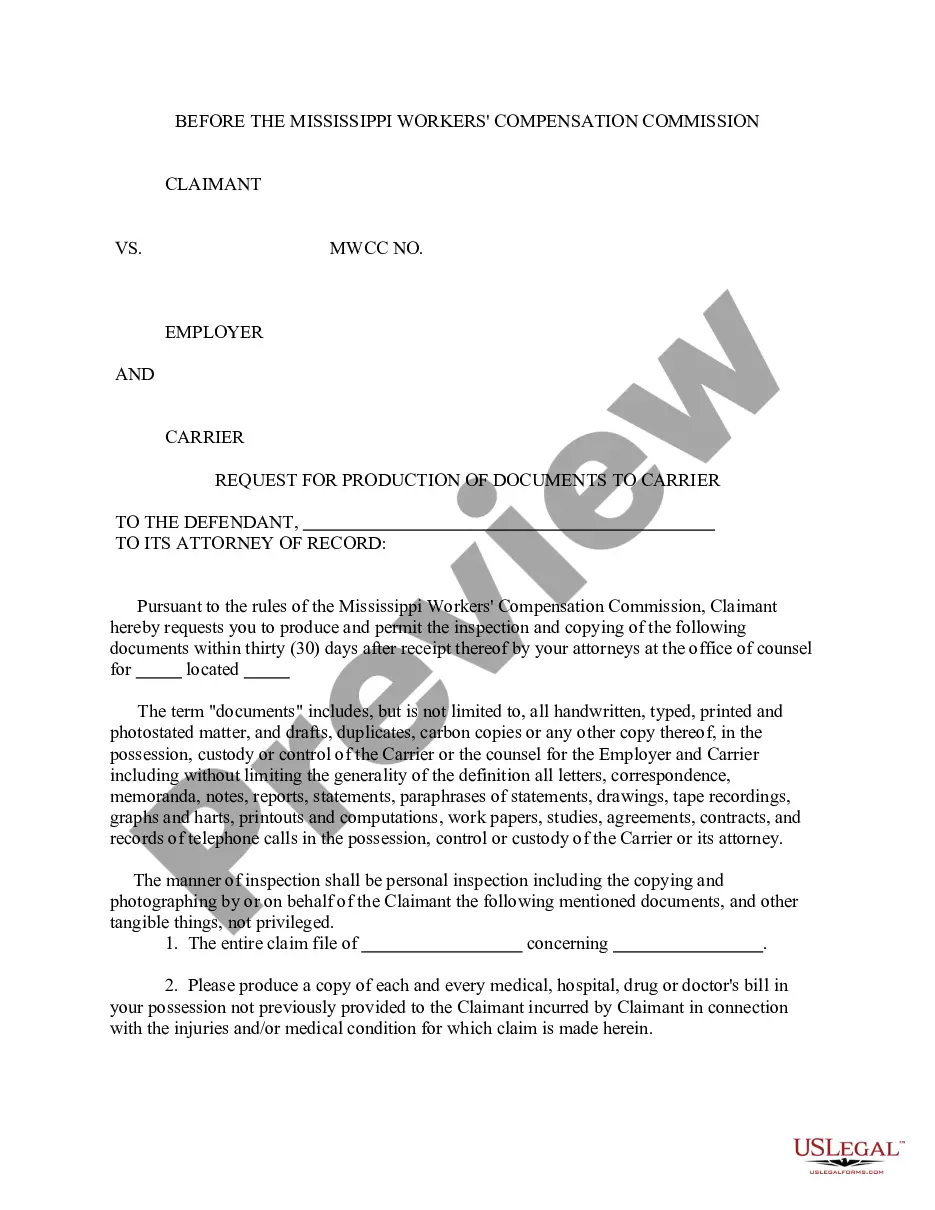
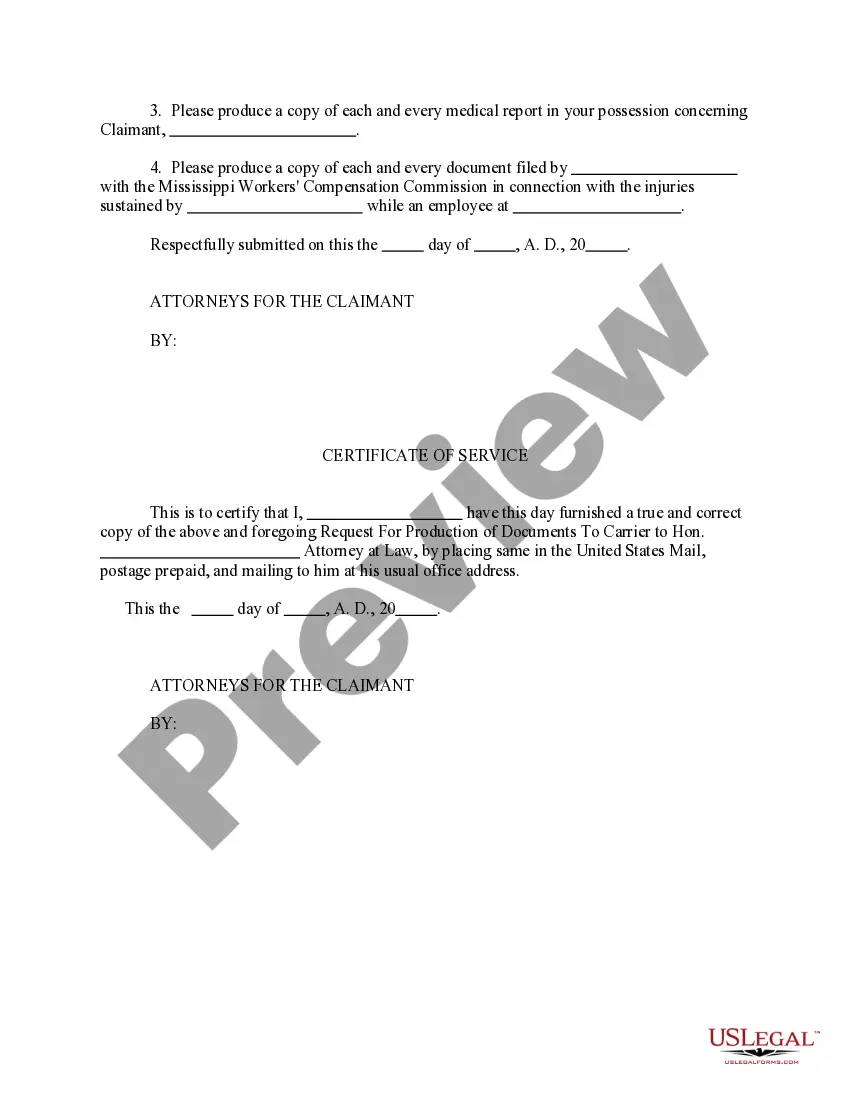
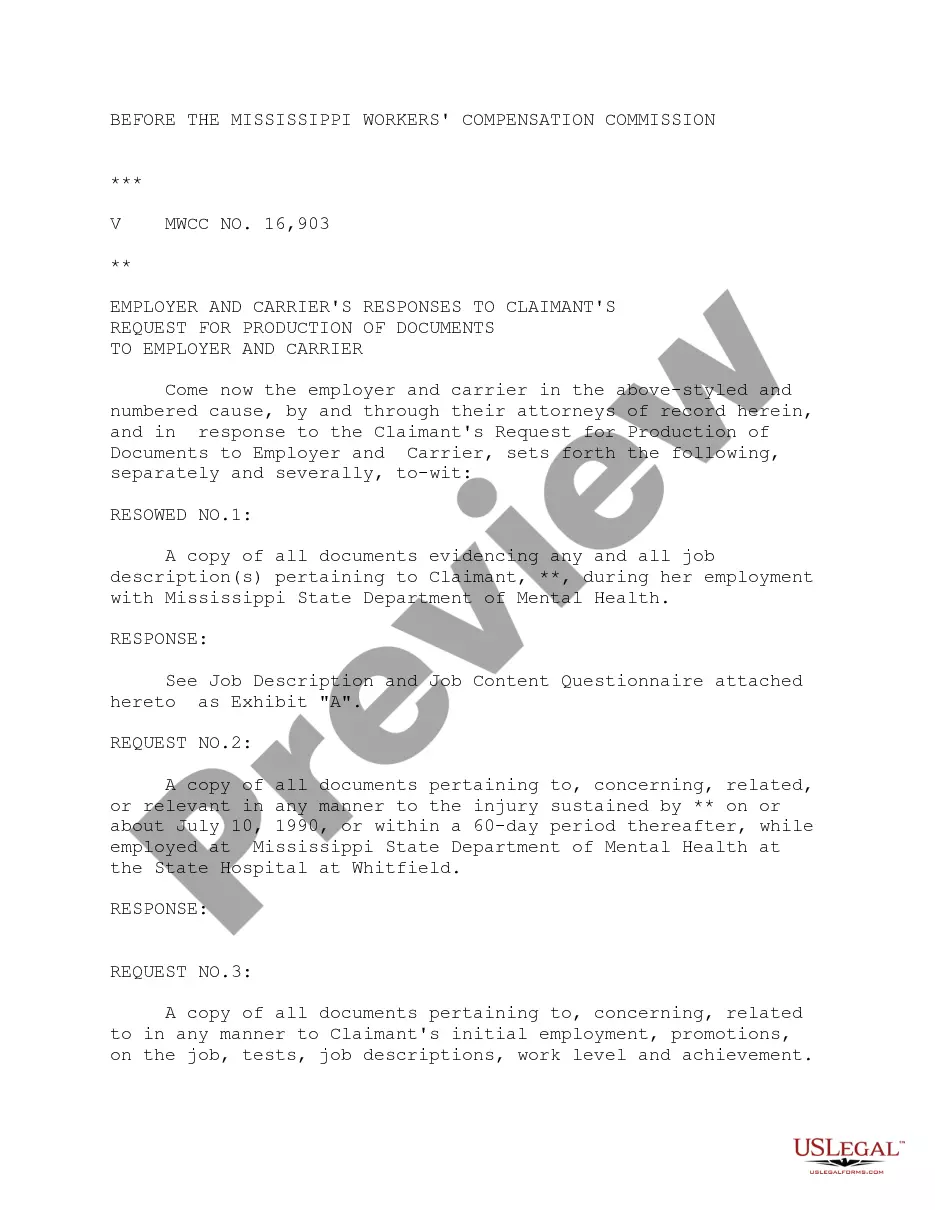
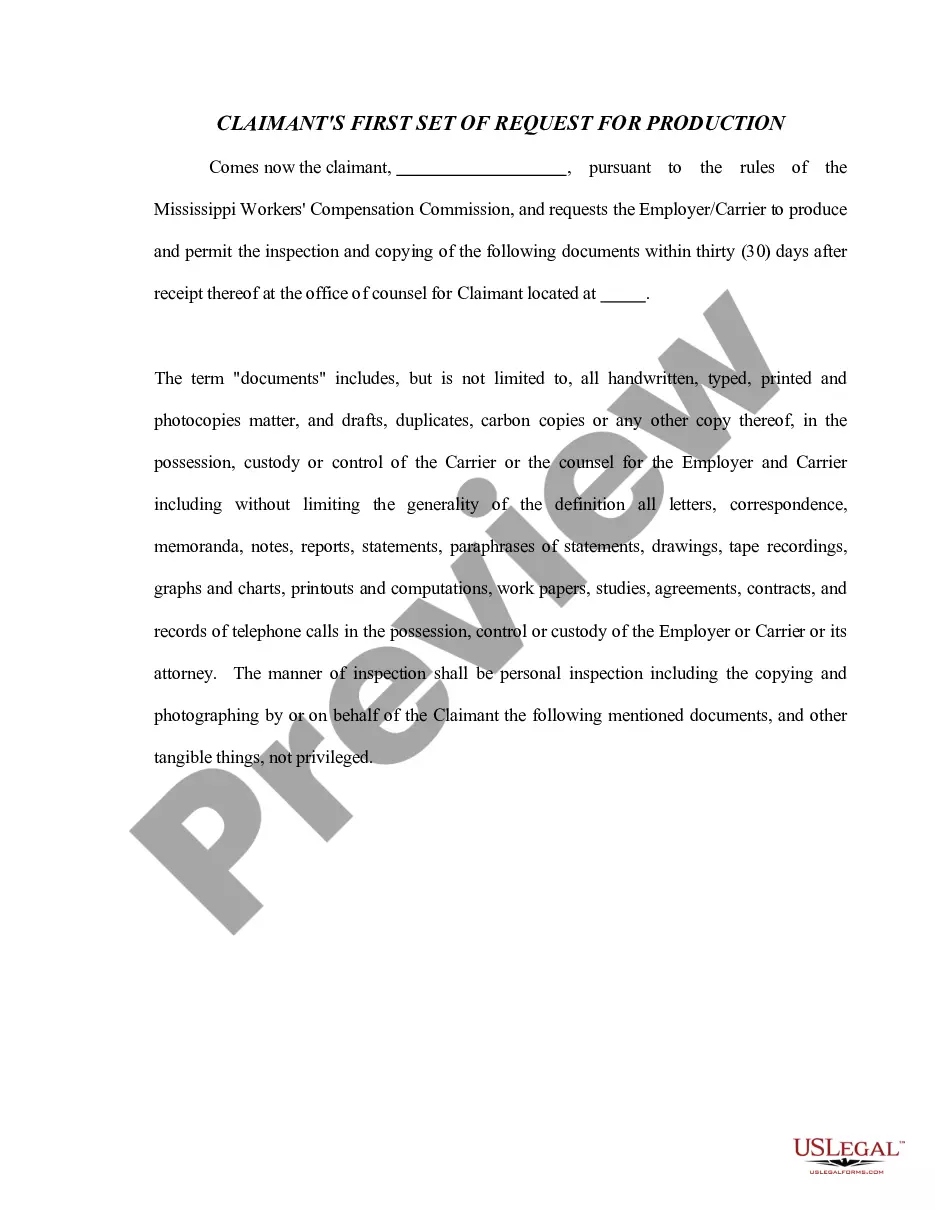
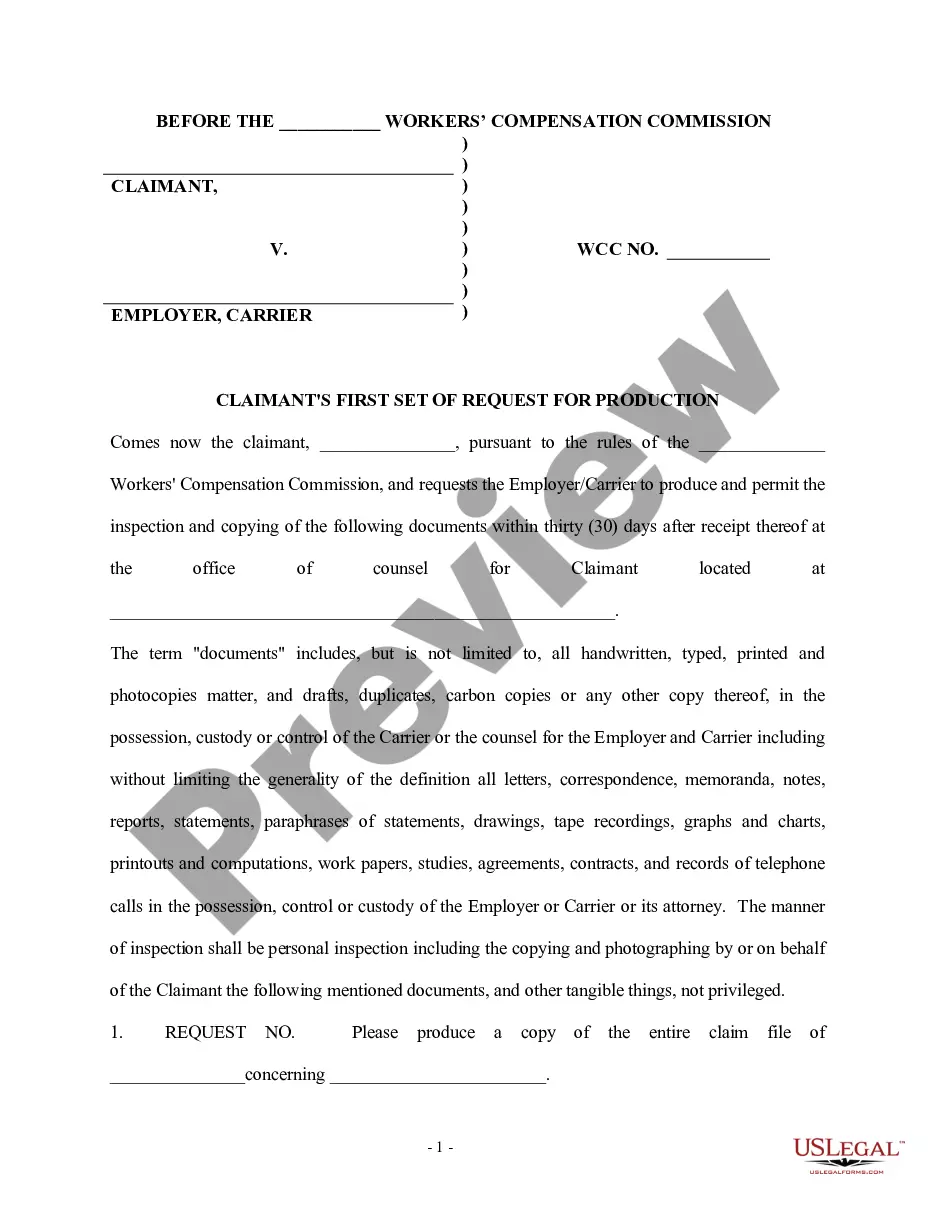
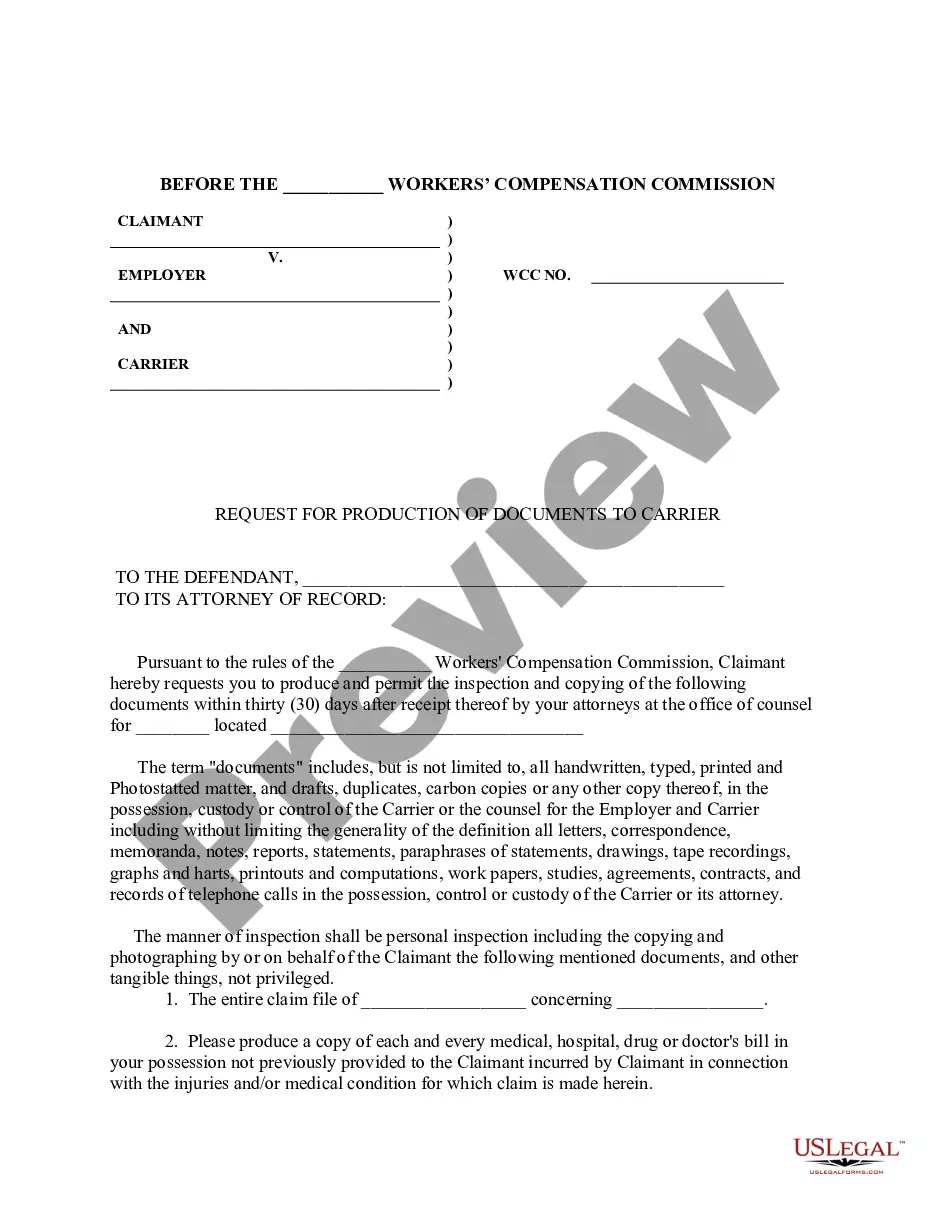
The Request for Production of Documents to Carrier is a legal form used in Mississippi to formally request that a carrier provide specific documents and tangible items relevant to a claim. This form helps ensure that the claimant can gather necessary evidence to support their case without reinventing the wheel in legal drafting.
Key components of this form
- Identification of the claimant and carrier involved in the document request.
- Specific documents being requested for inspection, copying, or photographing.
- Clarification that the documents requested must not be privileged or protected.
- Details regarding the manner of inspection by the claimant or their representative.
Situations where this form applies
This form is typically used when a claimant needs to obtain evidence from a carrier in order to support a claim. It is essential when there are critical documents that may assist in proving the validity or details of a claim, such as contracts, correspondence, or transaction records.
Who needs this form
This form is ideal for:
- Claimants involved in disputes with their insurance carrier.
- Attorneys representing clients against a carrier in legal proceedings.
- Individuals seeking documentation to substantiate claims for damages or losses.
Completing this form step by step
To complete the Request for Production of Documents to Carrier, follow these steps:
- Identify the parties involved, including the claimant's full name and the carrierâs name.
- List the specific documents you are requesting from the carrier.
- Specify how the documents will be inspected, noting if copying or photographing is required.
- Ensure to check that none of the requested documents are protected or privileged.
- Sign and date the form to confirm its accuracy and validity.
Is notarization required?
This form does not typically require notarization unless specified by local law. However, ensure to check if any additional documentation needs to be notarized to support your request.
Get your form ready online
Our built-in tools help you complete, sign, share, and store your documents in one place.
Make edits, fill in missing information, and update formatting in US Legal Forms—just like you would in MS Word.
Download a copy, print it, send it by email, or mail it via USPS—whatever works best for your next step.
Sign and collect signatures with our SignNow integration. Send to multiple recipients, set reminders, and more. Go Premium to unlock E-Sign.
If this form requires notarization, complete it online through a secure video call—no need to meet a notary in person or wait for an appointment.
We protect your documents and personal data by following strict security and privacy standards.

Make edits, fill in missing information, and update formatting in US Legal Forms—just like you would in MS Word.

Download a copy, print it, send it by email, or mail it via USPS—whatever works best for your next step.

Sign and collect signatures with our SignNow integration. Send to multiple recipients, set reminders, and more. Go Premium to unlock E-Sign.

If this form requires notarization, complete it online through a secure video call—no need to meet a notary in person or wait for an appointment.

We protect your documents and personal data by following strict security and privacy standards.
Typical mistakes to avoid
- Failing to specify all relevant documents in the request.
- Omitting signature or date, rendering the request invalid.
- Requesting documents that may be protected by privilege.
Why use this form online
- Conveniently downloadable for immediate use without the need for legal counsel.
- Easily editable to fit the specific circumstances of your case.
- Reliably drafted by licensed attorneys to ensure compliance with legal standards.
Legal use & context
- This form is enforceable in court as part of the discovery process.
- It helps establish an evidentiary foundation for claims made against a carrier.
- Failure to comply with a legitimate request may lead to legal repercussions for the carrier.
Key takeaways
- The Request for Production of Documents to Carrier is vital for accessing crucial evidence in legal claims against carriers.
- Ensure that all necessary documents and procedures are clearly outlined to avoid issues.
- This form is specific to Mississippi law and should be adapted accordingly for other jurisdictions.
Looking for another form?
Form popularity
FAQ
Each request must be numbered consecutively. The first paragraph immediately shall state he identity of the party requesting the admissions, the set number, and the identity of the responding party. Each request shall be separately set forth and identified by letter or number. C.C.P.
Update: The Amendments to the Federal Rules of Civil Procedure are now in effect.At the same time, unlike the new limits to Rule 33 interrogatories and Rule 36 requests for admission, the amendments do not limit the number of Rule 34 requests for production.
A request for production is a legal request for documents, electronically stored information, or other tangible items made in the course of litigation.The responding party is required to furnish copies of any documents that are responsive to the request, except for those that are legally privileged.
Subparts are prohibited, as are compound, conjunctive, or disjunctive questions.
It means there is more than one question to the question. For instance, "Do you own a blue or black car?" is compound because it asks both whether you own a blue car or whether you own a black car.
In certain cases, you might be able to write a letter to the other side and request the documents that you need. However, in more formal cases, you will likely have to draft more formal discovery demands. There are usually forms available for this in local law libraries, from the court clerk's office, or online.
What Is a Request for Production of Documents? A request for production is a discovery device used to gain access to documents, electronic data, and physical items held by an opposing party in a legal matter. The aim is to gain insight into any relevant evidence that the opposing party holds.
A request for admission cannot contain subparts, or a compound, conjunctive, or disjunctive request.
A request for production is a discovery device used to gain access to documents, electronic data, and physical items held by an opposing party in a legal matter. The aim is to gain insight into any relevant evidence that the opposing party holds.