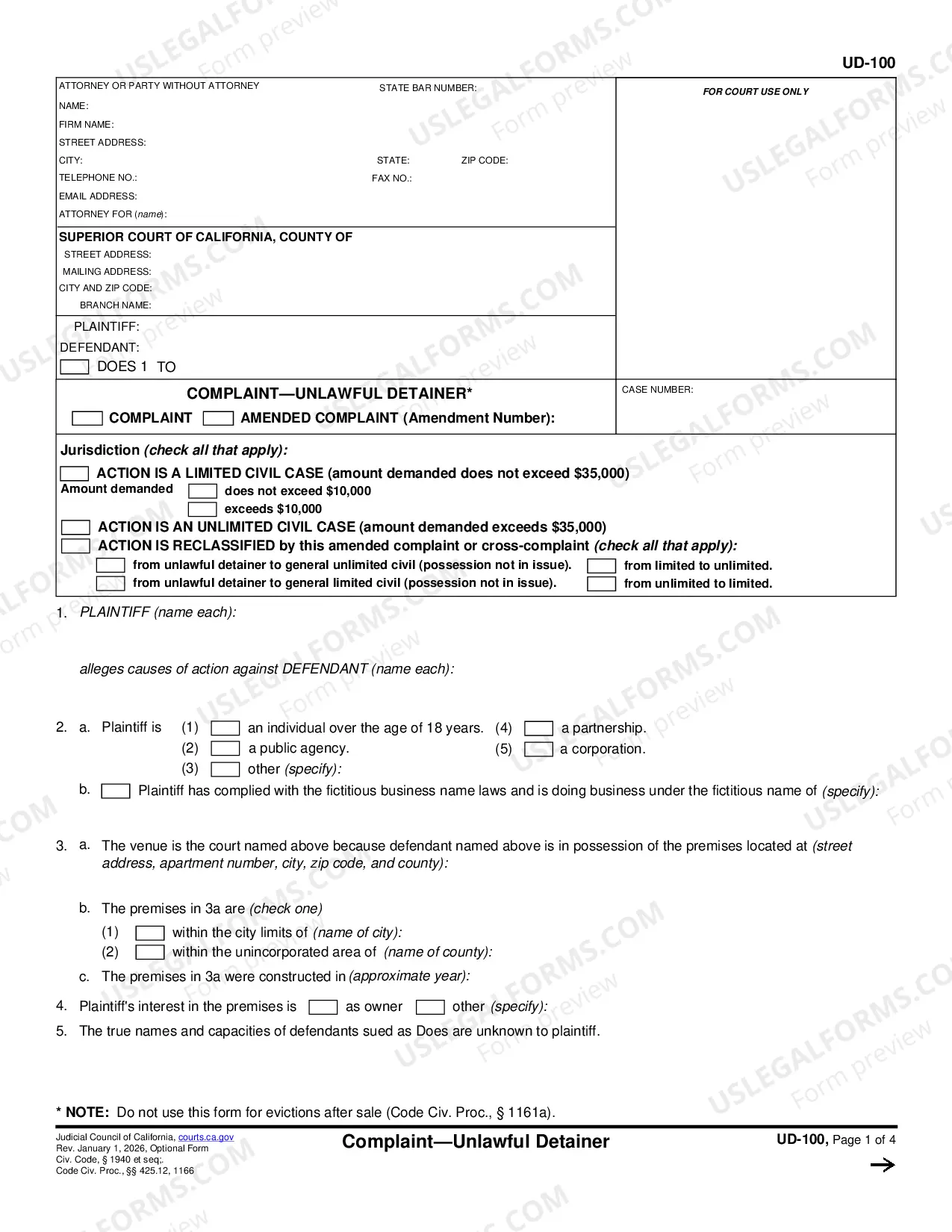
Mississippi Final Judgment of Divorce - No Answer - ID Divorce
About this form
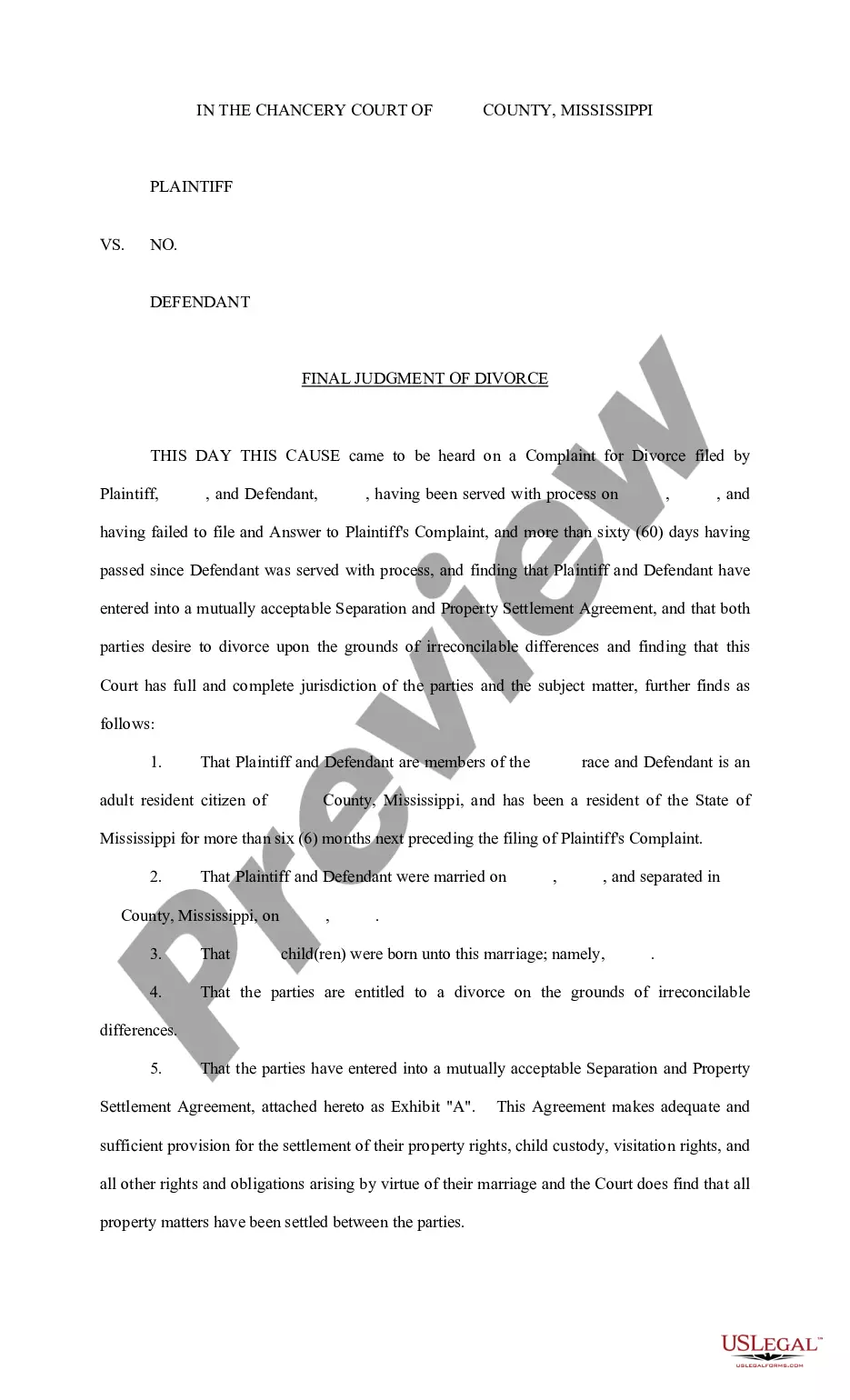
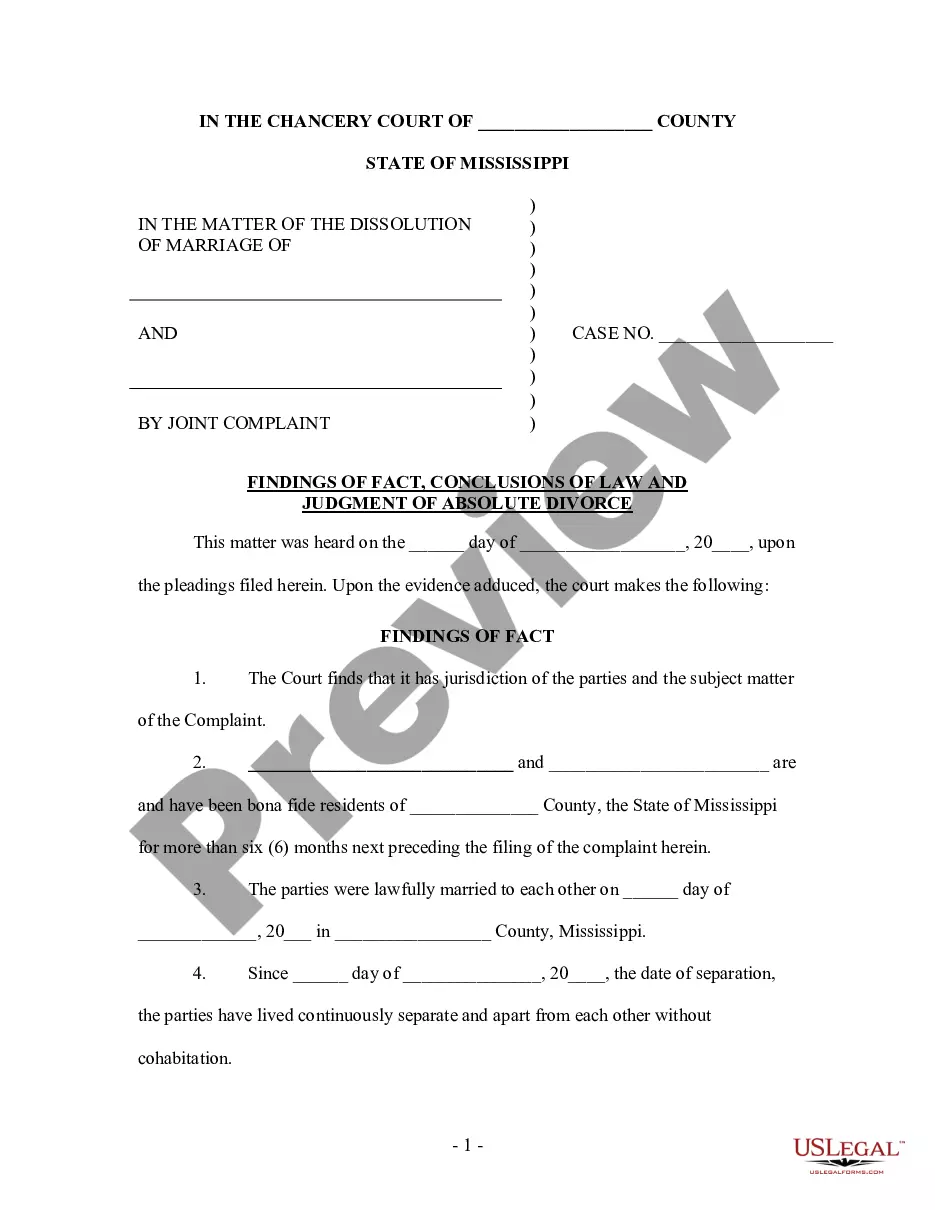
The Final Judgment of Divorce - No Answer is a legal document that concludes your marriage. This form is specifically designed for cases where the divorce is based on irreconcilable differences, commonly referred to as a no-fault divorce, and where the opposing party has not filed a response to the divorce complaint. This judgment will outline the details of the Property Settlement Agreement that both spouses have already agreed upon, making it a crucial step in the divorce process.
What’s included in this form
- Identification of the parties involved in the divorce.
- Details regarding property division as outlined in the Property Settlement Agreement.
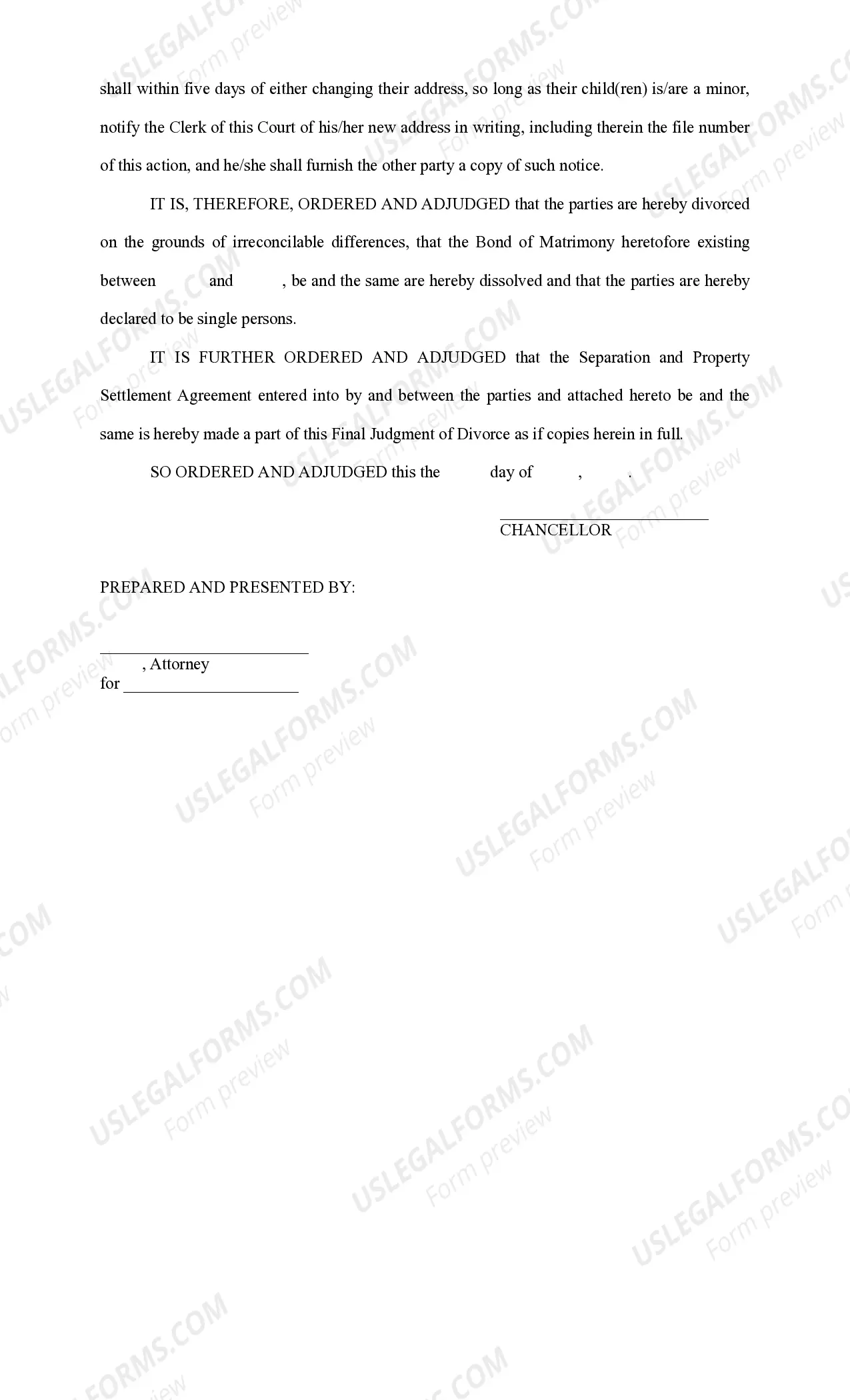
- Provisions related to notifications of address changes for minor children.
- Legal declaration that the marriage has ended based on agreed conditions.
Common use cases
This form should be used in situations where one spouse is seeking a divorce without the other spouse responding to the divorce complaint. It is applicable in no-fault divorce cases where both parties have previously reached an agreement on the distribution of property and any other relevant issues. If you believe that your spouse will not contest the divorce, this form is suitable for finalizing your legal separation.
Intended users of this form
- Individuals in a divorce process where the other party has not answered the complaint.
- Couples who have reached a mutual agreement on property and asset division.
- Anyone seeking to finalize their divorce with minimal contention.
How to complete this form
- Identify the full names and addresses of both parties.
- Specify the details of the Property Settlement Agreement.
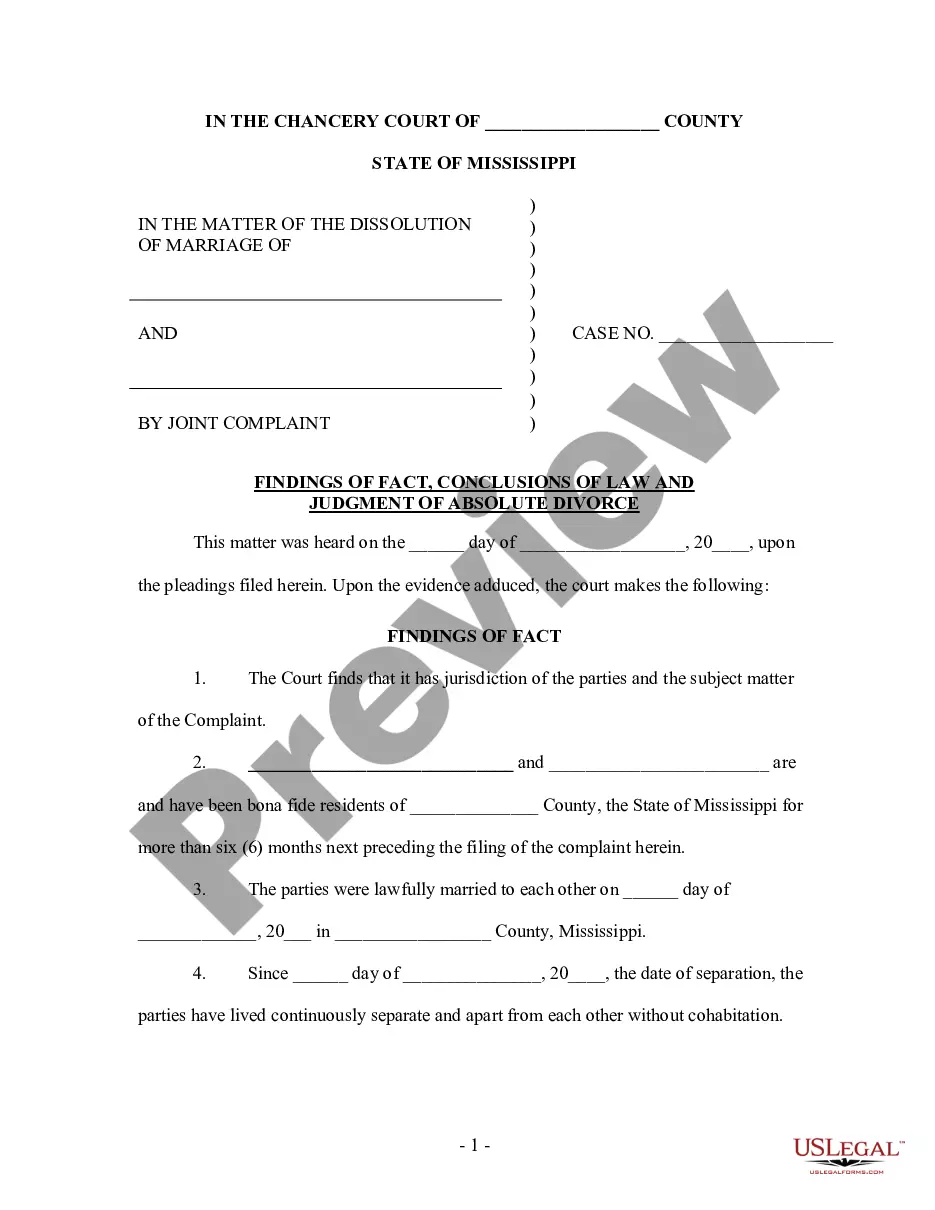
- Include the date of marriage and date of separation.
- Indicate whether any minor children are involved.
- Provide your contact information for future correspondence.
- Sign and date the form in the presence of an authorized witness if required.
Is notarization required?
Notarization is generally not required for this form. However, certain states or situations might demand it. You can complete notarization online through US Legal Forms, powered by Notarize, using a verified video call available anytime.
Get your form ready online
Our built-in tools help you complete, sign, share, and store your documents in one place.
Make edits, fill in missing information, and update formatting in US Legal Forms—just like you would in MS Word.
Download a copy, print it, send it by email, or mail it via USPS—whatever works best for your next step.
Sign and collect signatures with our SignNow integration. Send to multiple recipients, set reminders, and more. Go Premium to unlock E-Sign.
If this form requires notarization, complete it online through a secure video call—no need to meet a notary in person or wait for an appointment.
We protect your documents and personal data by following strict security and privacy standards.

Make edits, fill in missing information, and update formatting in US Legal Forms—just like you would in MS Word.

Download a copy, print it, send it by email, or mail it via USPS—whatever works best for your next step.

Sign and collect signatures with our SignNow integration. Send to multiple recipients, set reminders, and more. Go Premium to unlock E-Sign.

If this form requires notarization, complete it online through a secure video call—no need to meet a notary in person or wait for an appointment.

We protect your documents and personal data by following strict security and privacy standards.
Typical mistakes to avoid
- Failing to complete all sections of the form accurately.
- Overlooking the notification of address changes, particularly if minor children are involved.
- Not having an agreed Property Settlement Agreement before filing.
Benefits of using this form online
- Easy access to legal documents in a downloadable format.
- Convenient editing options to personalize the document as needed.
- Reliability of forms created by licensed attorneys.
Looking for another form?


Form popularity
FAQ
Once the divorce is finalized and the court has entered the judgment, your single status is restored and you are free to remarry.
The date of filing can either be the day that you serve your spouse with the divorce papers, he or she files a response, or if you or your spouse file an Appearance, Stipulation, and Waiver.The court will give you a proof of written judgement that lets you know that your divorce is final.
When one spouse in California files a petition for divorce, the other spouse must be formally served with papers.When a spouse doesn't respond to a divorce petition, the person who failed to file the answer to the court will lose his or her rights to make arguments about property division, support, and child custody.
Call 613-957-4519; or. for the hearing impaired only 1-800-267-7676; or. complete a Search Request Form (HTML) (PDF) and send it to the address provided on the form.
You can't take back or rescind the divorce once the courts have finalized it, even if the defendant never received the petition and did not know a spouse filed for divorce.
Final Judgment: You are divorced as the date indicated and free to marry again once that date passes. Interlocutory Judgment: You are still married. This may have the information about which person gets custody, property, support, etc.
During the court hearing, if everything is in order, the court will grant your divorce on the day. The divorce becomes final one month and one day after the date was granted. You will receive a divorce order (formerly known as a certificate of divorce) and will be able to remarry.
The last decision from a court that resolves all issues in dispute and settles the parties' rights with respect to those issues. A final judgment leaves nothing except decisions on how to enforce the judgment, whether to award costs, and whether to file an appeal.
The court will give you a proof of written judgement that lets you know that your divorce is final. You can request a copy of this judgement from the court in your jurisdiction contact the courthouse or visit its website to see what its specific procedures are.