Mississippi Complaint
About this form
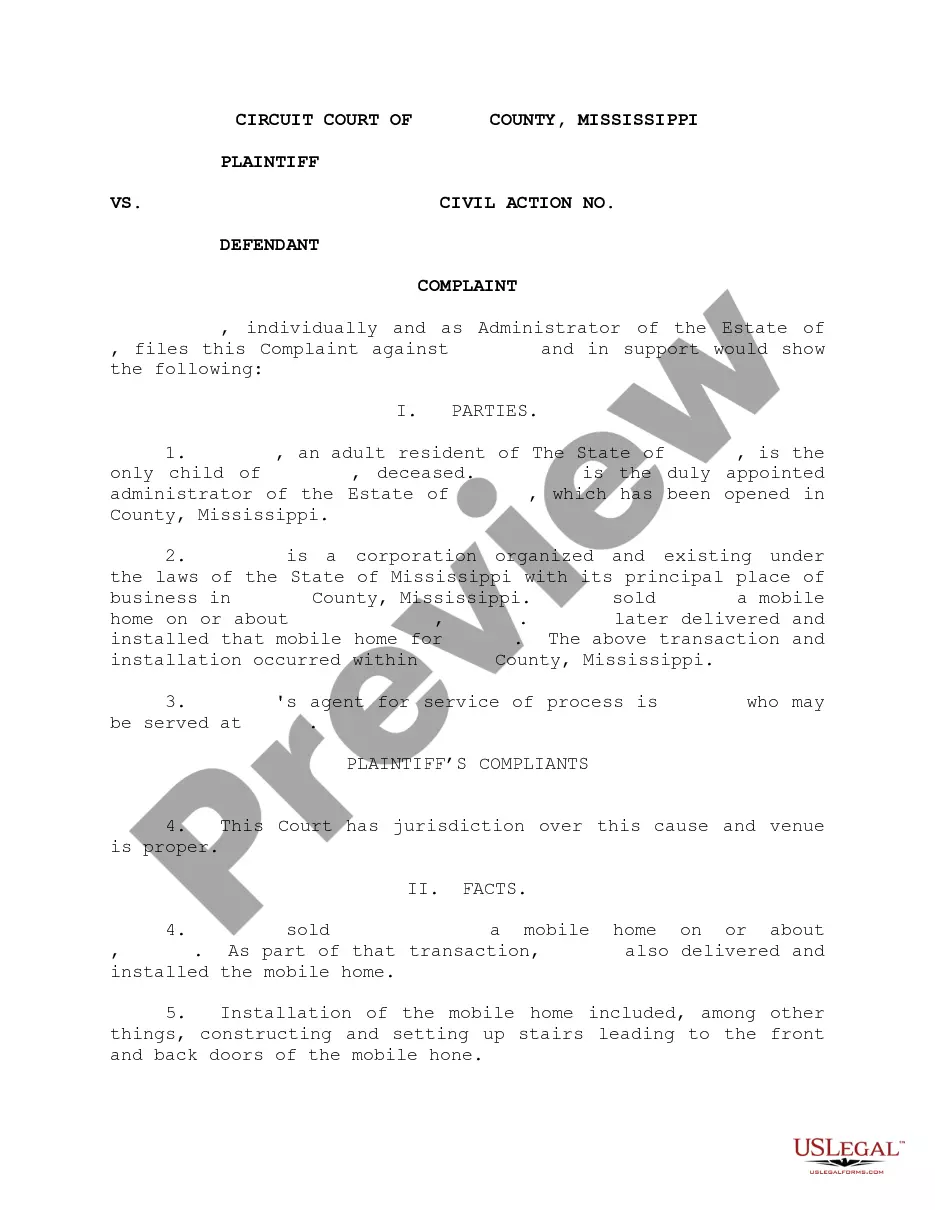
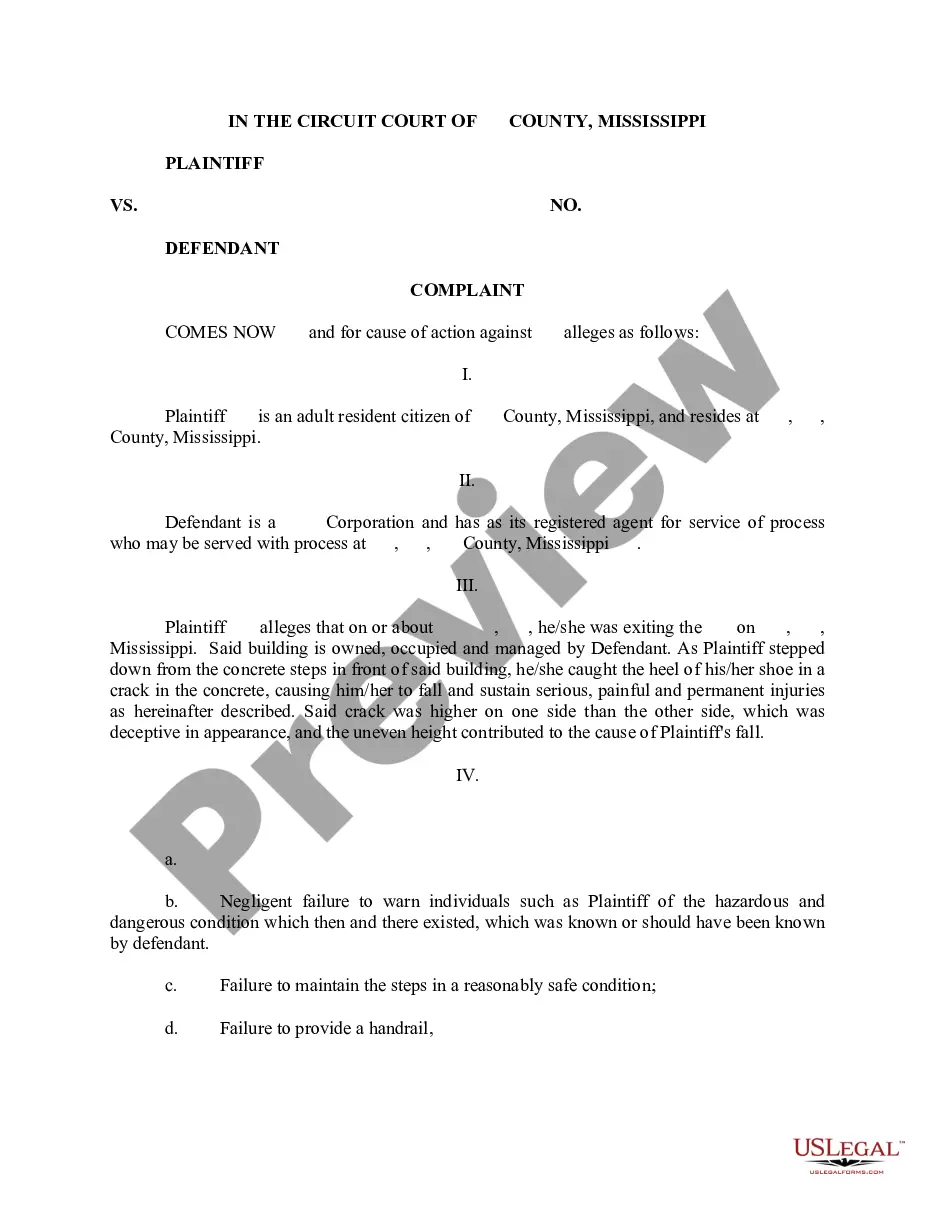
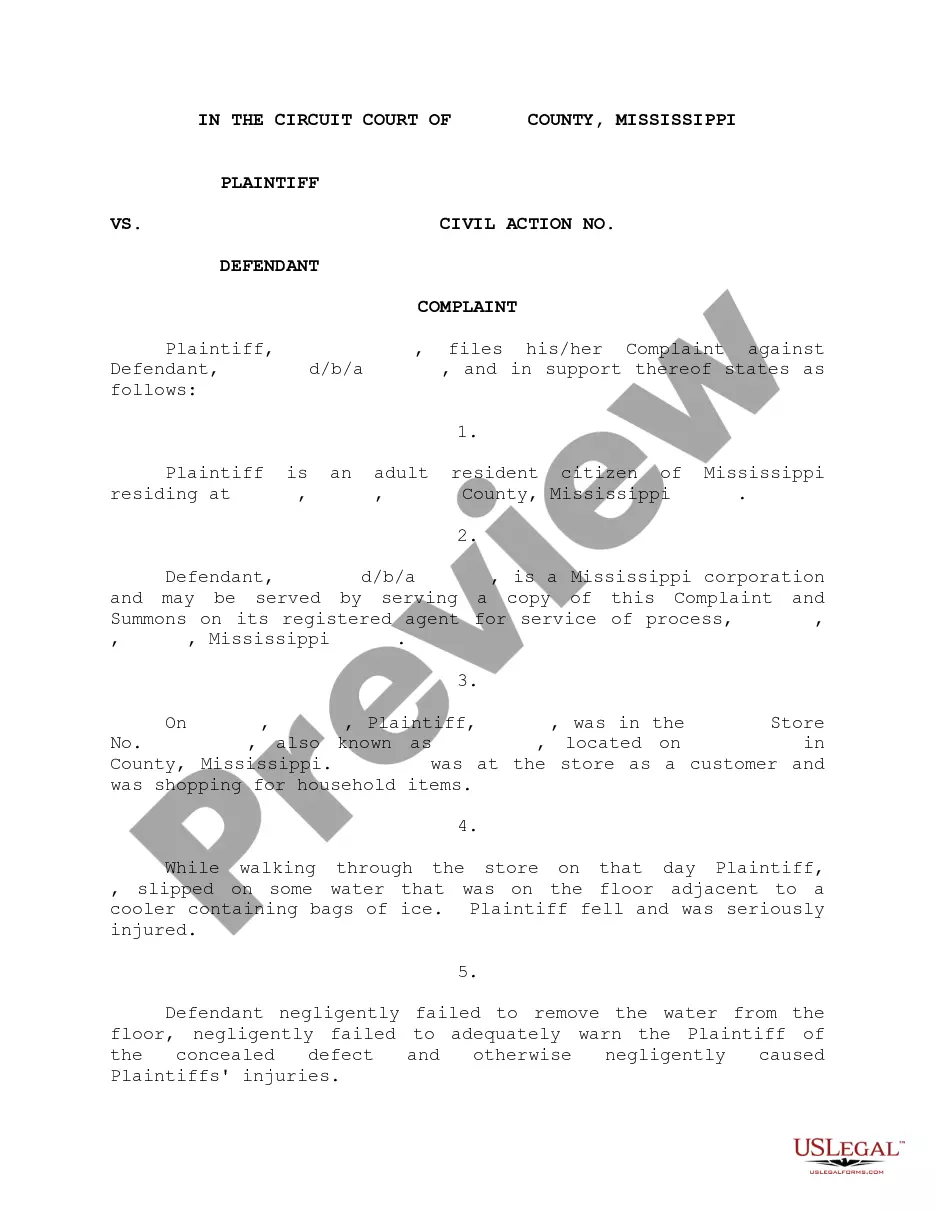
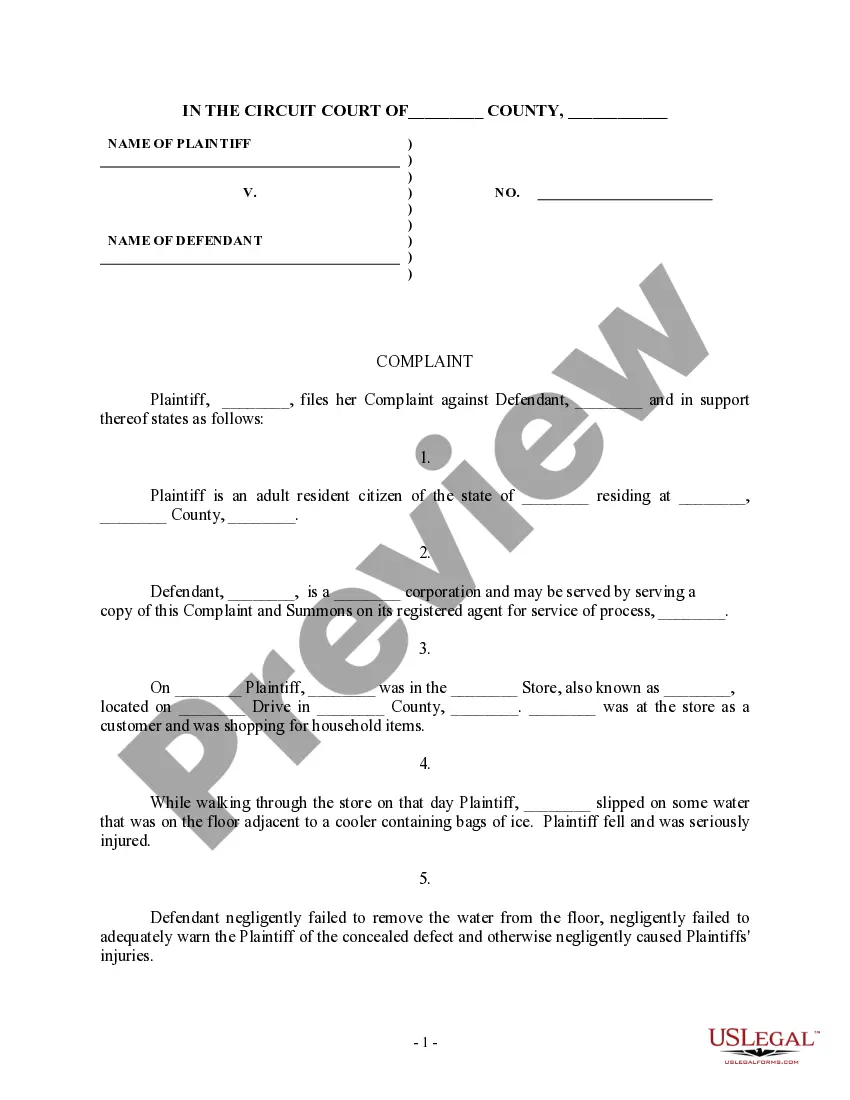
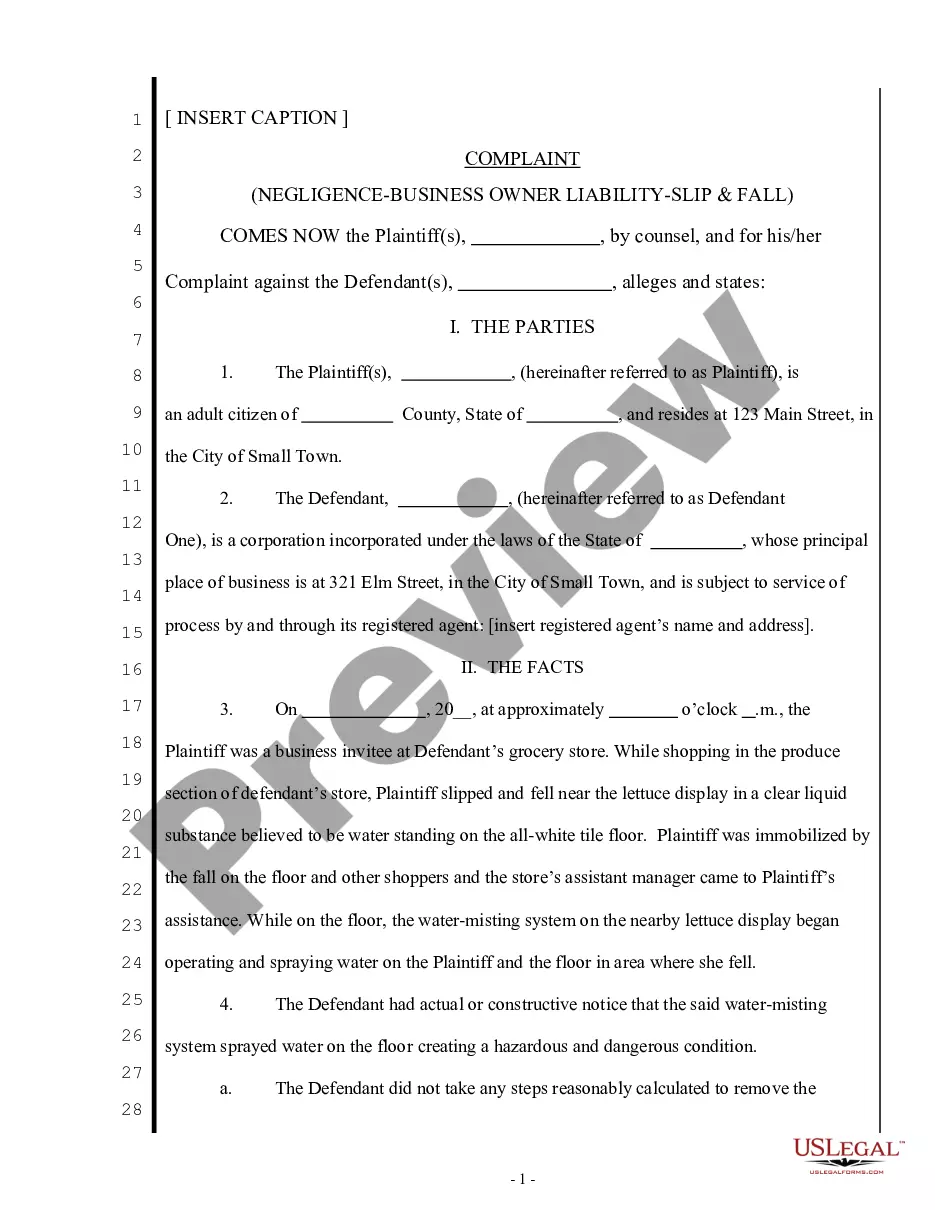
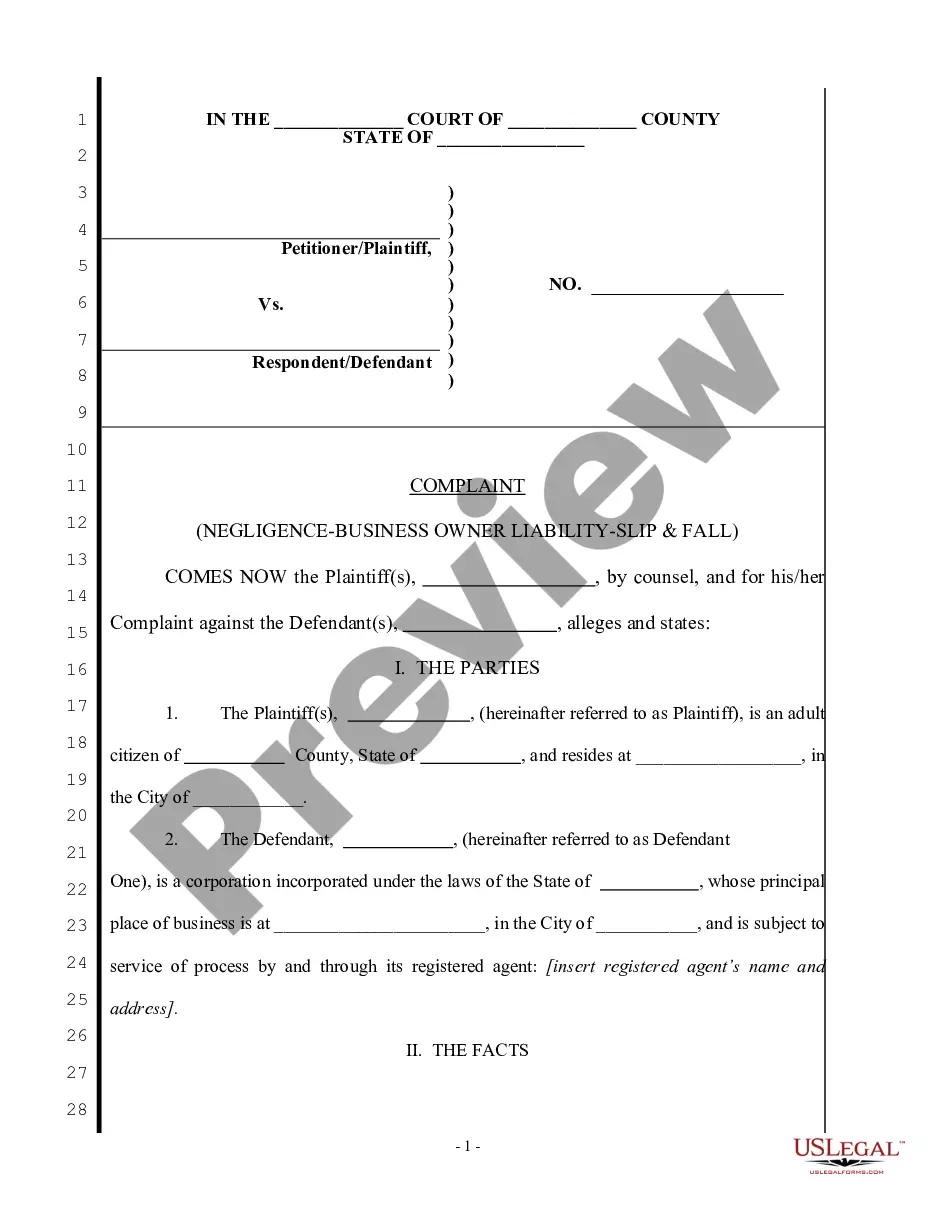
A Complaint is a legal document that initiates a lawsuit by outlining the allegations of the Plaintiff against the Defendant. This specific Complaint is intended for cases involving negligence related to the manufacturer of property owned by a Deceasedâs estate, as well as wrongful death claims. It is a crucial first step in seeking legal remedies in court and differs from other legal forms by focusing on these particular claims.
Key parts of this document
- Parties: Identification of the Plaintiff and Defendant, including their roles and legal standing.
- Facts: A detailed account of the events leading to the legal claim.
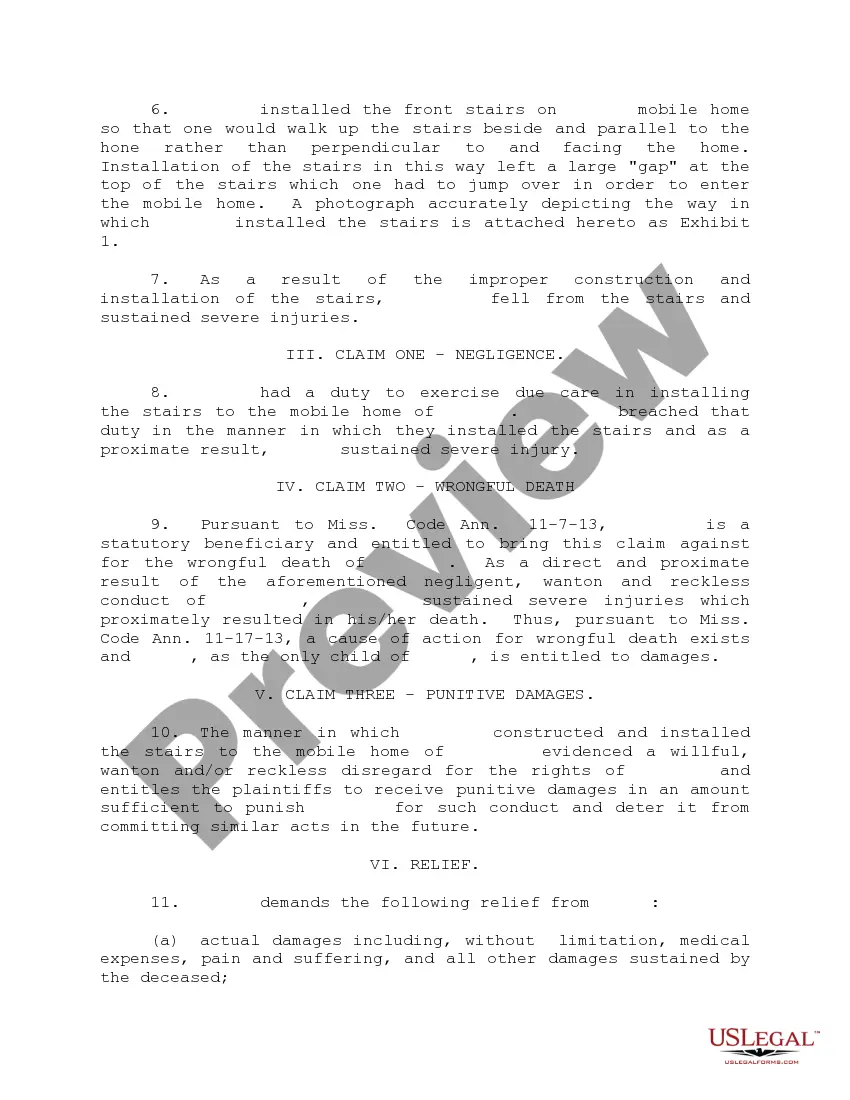
- Negligence Claim: The basis for the claim highlighting the Defendant's duty of care.
- Wrongful Death Claim: Justification for the Plaintiff's entitlement to damages due to the death of the Deceased.
- Punitive Damages: A request for additional damages due to the Defendant's wrongful conduct.
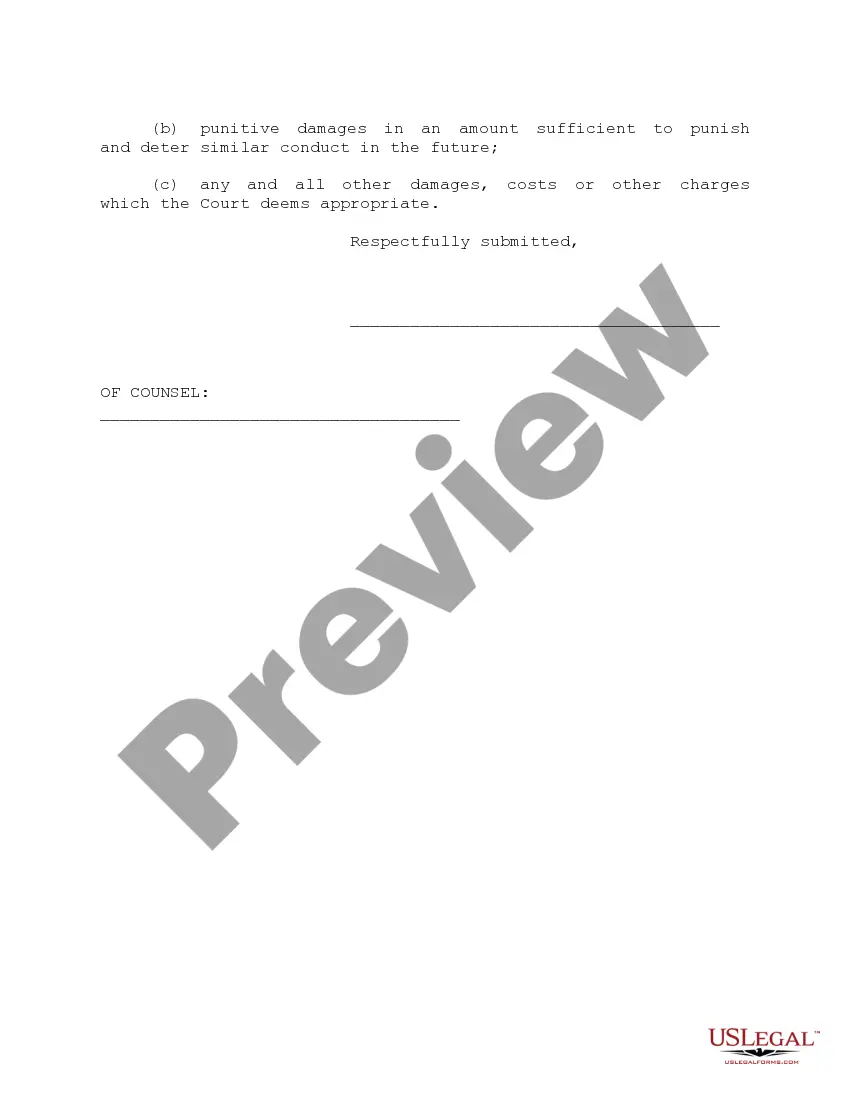
- Relief: Specific demands for damages and legal relief sought by the Plaintiff.
When to use this form
This Complaint should be used when a Plaintiff believes that negligence by a product manufacturer or service provider has caused significant harm, resulting in the death of a loved one or injuries to the estate of a deceased individual. It is essential in legal proceedings to seek damages and accountability for wrongful actions.
Who should use this form
- Individuals or family members of a deceased person seeking legal recourse for wrongful death.
- Estate administrators who need to file a lawsuit on behalf of a deceased individual.
- Anyone involved in a dispute about product negligence resulting in injury or death.
Steps to complete this form
- Identify the parties involved, including the Plaintiff and Defendant, and their legal capacities.
- Describe the facts surrounding the negligence incident leading to injuries or wrongful death.
- Clearly state the claims of negligence, wrongful death, and punitive damages.
- Specify the relief sought, detailing all forms of damages requested from the court.
- Sign and date the Complaint, ensuring all necessary parties have provided their information.
Notarization guidance
This form does not typically require notarization unless specified by local law. However, it's advisable to check local jurisdiction requirements to ensure compliance.
Get your form ready online
Our built-in tools help you complete, sign, share, and store your documents in one place.
Make edits, fill in missing information, and update formatting in US Legal Forms—just like you would in MS Word.
Download a copy, print it, send it by email, or mail it via USPS—whatever works best for your next step.
Sign and collect signatures with our SignNow integration. Send to multiple recipients, set reminders, and more. Go Premium to unlock E-Sign.
If this form requires notarization, complete it online through a secure video call—no need to meet a notary in person or wait for an appointment.
We protect your documents and personal data by following strict security and privacy standards.

Make edits, fill in missing information, and update formatting in US Legal Forms—just like you would in MS Word.

Download a copy, print it, send it by email, or mail it via USPS—whatever works best for your next step.

Sign and collect signatures with our SignNow integration. Send to multiple recipients, set reminders, and more. Go Premium to unlock E-Sign.

If this form requires notarization, complete it online through a secure video call—no need to meet a notary in person or wait for an appointment.

We protect your documents and personal data by following strict security and privacy standards.
Mistakes to watch out for
- Failing to include all relevant parties, which can invalidate the Complaint.
- Not providing sufficient details in the facts section, risking dismissal.
- Omitting specific laws relevant to the claims made.
Advantages of online completion
- Convenience of downloading the form directly from home at any time.
- Editability allows you to customize it according to your case specifics.
- Reliability, with forms drafted by licensed attorneys to ensure legal compliance.
Looking for another form?
Form popularity
FAQ
The plaintiff is asking the court to make a judgment in the plaintiff's favor, and if such a judgment is made it is usually accompanied by a court order entitling the plaintiff to a certain amount of money (called a damages award) to be paid by the defendant.
There is a $30 filing fee for a case asking for up to $1500. To claim over $1500, and up to $5,000, there is a filing fee of $50. If your claim is above $5,000, the filing fee is $75.
It's difficult to come up with an average number for how much suing someone costs, but you should expect to pay somewhere around $10,000 for a simple lawsuit. If your lawsuit is complicated and requires a lot of expert witnesses, the cost will be much, much higher.
A court of law that deals with disagreements between individual people or private companies, rather than with criminal activity:What is the pronunciation of civil court?
As to the cost of taking someone to small claims court, you'll generally pay a filing fee of less than $100 that is recoverable if you win. Meanwhile, each state will cap the amount you are allowed to sue for. It typically ranges anywhere from $2,000 to $10,000, according to .
A civil case is a lawsuit that usually deals with contracts and/or torts. Torts, generally speaking, are wrongful (negligent) acts that result in damage or injury. Civil cases can occur by way of action or application.
Examples are murder, assault, theft,and drunken driving. Civil law deals with behavior that constitutes an injury to an individual or other private party, such as a corporation. Examples are defamation (including libel and slander), breach of contract, negligence resulting in injury or death, and property damage.
While a criminal case is filed by the state against the offender, a civil case is filed by a person or entity against another person or entity.
To begin a civil lawsuit in federal court, the plaintiff files a complaint with the court and serves a copy of the complaint on the defendant.