Mississippi Consent Order of Dismissal With Prejudice
Understanding this form
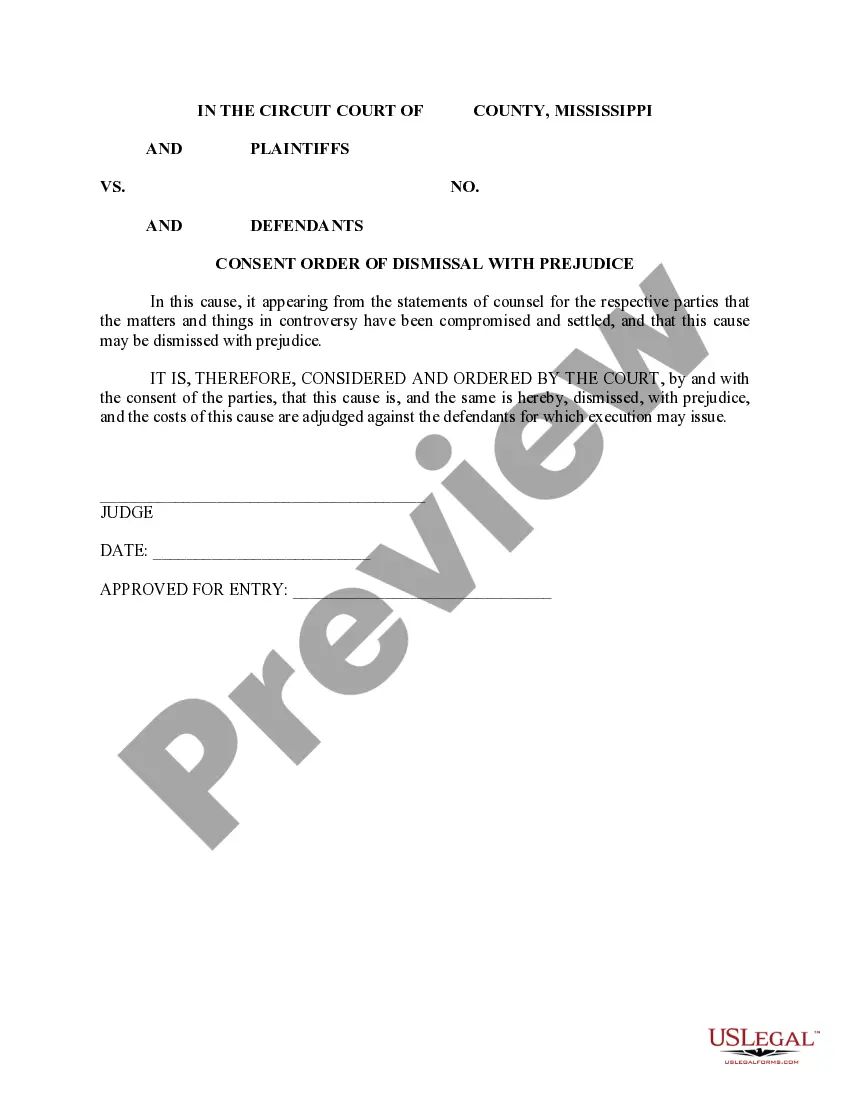
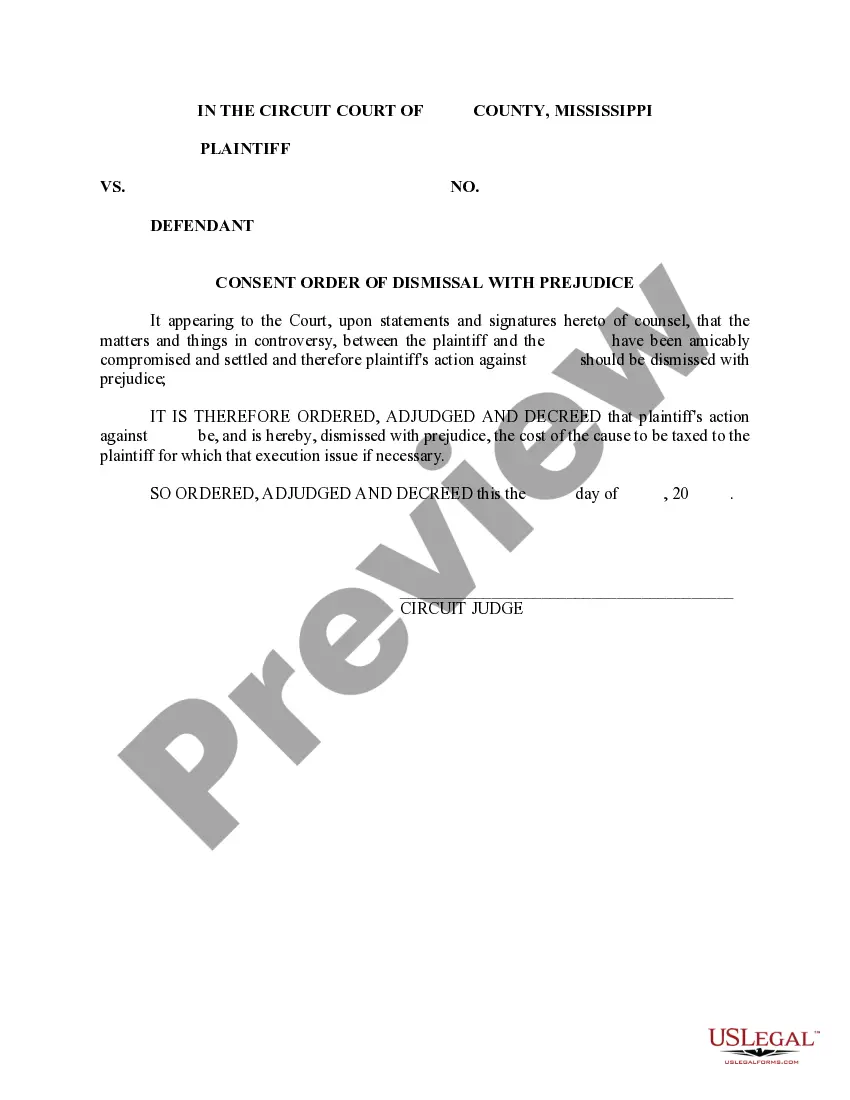
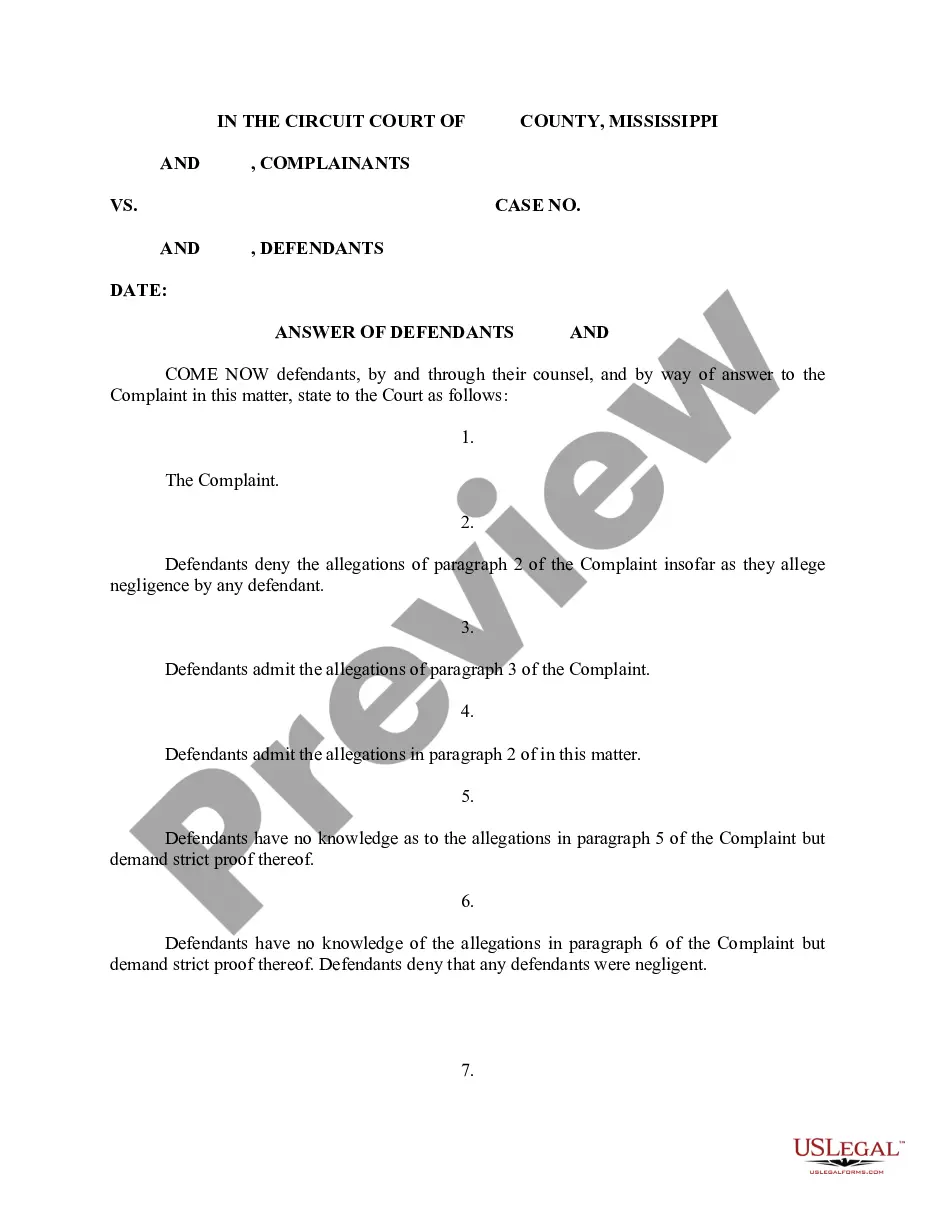
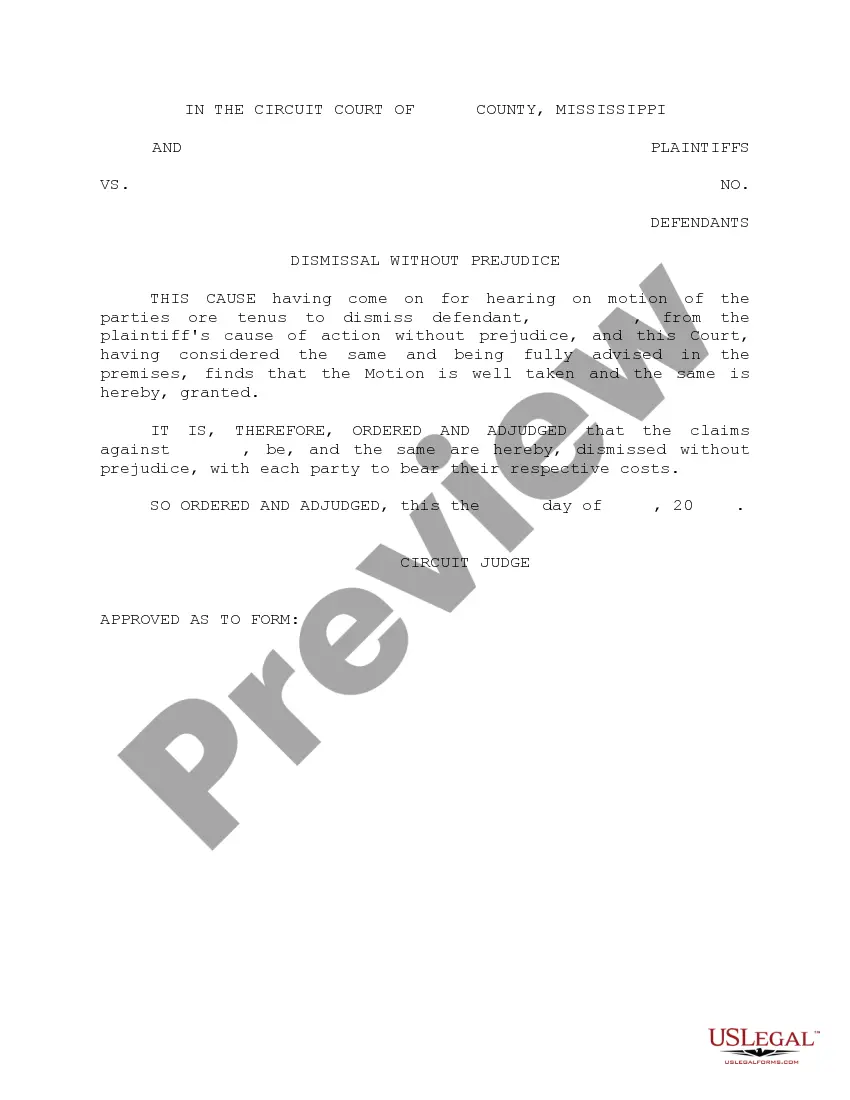
The Consent Order of Dismissal With Prejudice is a legal document used to formally agree to dismiss a court case where the parties have reached a settlement. This consent order differentiates itself from other dismissal forms by ensuring that the case cannot be reopened in the future, thus providing finality to the involved parties. It is suitable for situations where all issues have been resolved and both parties wish to conclude the matter legally without further litigation.
Main sections of this form
- Declaration of the court's observation regarding settlement.
- Consent by both parties to dismiss the case with prejudice.
- Order of the court to dismiss and adjudge costs.
- Signature line for the judge approving the order.
- Field for the date of the order's approval.
Common use cases
This form is used when both parties in a legal dispute have come to an agreement regarding the issues at hand and wish to dismiss the lawsuit permanently. It is commonly applied in personal injury cases, contract disputes, or other civil matters where the parties have negotiated a resolution outside of court. By using this form, the parties ensure that they avoid the costs and time associated with further litigation.
Intended users of this form
- Individuals or entities involved in a civil lawsuit.
- Parties who have reached a settlement agreement.
- Legal representatives or attorneys acting on behalf of clients.
- Anyone seeking to formally conclude a case without further action.
Steps to complete this form
- Identify and list the names of the parties involved in the case.
- State the case number and relevant court information.
- Clearly declare that the parties have settled the issues in controversy.
- Include a statement consenting to the dismissal of the case with prejudice.
- Enter the judge's name and leave space for the judgeâs signature and date.
Does this document require notarization?
This form does not typically require notarization unless specified by local law. However, it is always recommended to check local filing requirements to ensure compliance.
Get your form ready online
Our built-in tools help you complete, sign, share, and store your documents in one place.
Make edits, fill in missing information, and update formatting in US Legal Forms—just like you would in MS Word.
Download a copy, print it, send it by email, or mail it via USPS—whatever works best for your next step.
Sign and collect signatures with our SignNow integration. Send to multiple recipients, set reminders, and more. Go Premium to unlock E-Sign.
If this form requires notarization, complete it online through a secure video call—no need to meet a notary in person or wait for an appointment.
We protect your documents and personal data by following strict security and privacy standards.

Make edits, fill in missing information, and update formatting in US Legal Forms—just like you would in MS Word.

Download a copy, print it, send it by email, or mail it via USPS—whatever works best for your next step.

Sign and collect signatures with our SignNow integration. Send to multiple recipients, set reminders, and more. Go Premium to unlock E-Sign.

If this form requires notarization, complete it online through a secure video call—no need to meet a notary in person or wait for an appointment.

We protect your documents and personal data by following strict security and privacy standards.
Common mistakes to avoid
- Failing to include the case number or party names.
- Not specifying that the dismissal is "with prejudice."
- Neglecting to obtain the necessary signatures from all parties.
- Forgetting to check state-specific requirements before filing.
Why complete this form online
- Instant access to a professionally drafted template.
- Convenient download option for immediate use.
- Adaptable language to fit individual needs and circumstances.
- Assured legal compliance by using a form created by licensed attorneys.
Legal use & context
- This form is enforceable once signed by all parties and approved by the court.
- Using this form helps to clearly document the resolution of the case, protecting against future claims on the same issue.
- It is essential to ensure that all agreed terms are included to avoid disputes later.
Key takeaways
- The Consent Order of Dismissal With Prejudice permanently concludes a legal case.
- It requires agreement and signatures from all parties, followed by a judgeâs approval.
- Understanding the implications of using this form is crucial to avoid future legal complications.
Looking for another form?
Form popularity
FAQ
Dismissal with Prejudice A dismissal with prejudice is a judgment rendered in a lawsuit on its merits that prevents the plaintiff from bringing the same lawsuit against the same defendant in the future. It is a harsh remedy that has the effect of canceling the action so that it can never again be commenced.
In the formal legal world, a court case that is dismissed with prejudice means that it is dismissed permanently. A case dismissed with prejudice is over and done with, once and for all, and can't be brought back to court. A case dismissed without prejudice means the opposite.
A stipulation is an agreement between two parties that is submitted to the judge for approval.A written Stipulation and Order includes the parties' agreement, both of their notarized signatures, and the judge's signature. Once signed by the judge, the agreement becomes a legally binding order.
A case will be dismissed with prejudice if there is reason for the case not to be brought back to court; for example, if the judge deems the lawsuit frivolous or the the matter under consideration is resolved outside of court.
If a case is dismissed with prejudice, then the charges are dropped completely. A dismissal with prejudice is a final decision on your criminal case. Once dismissed, the case will have no effect on your criminal record.
The last decision from a court that resolves all issues in dispute and settles the parties' rights with respect to those issues. A final judgment leaves nothing except decisions on how to enforce the judgment, whether to award costs, and whether to file an appeal.
Dismissal with prejudice is a final judgment and the case becomes res judicata on the claims that were or could have been brought in it; dismissal without prejudice is not.
A stipulated (agreed) dismissal (see s. 799.24(3) of the Wisconsin Statutes) happens when the plaintiff and the defendant agree to have the judge dismiss the action and not enter a judgment against the defendant only if the defendant pays the plaintiff an agreed upon amount by a certain date.
When a lawsuit is dismissed with prejudice, the court is saying that it has made a final determination on the merits of the case, and that the plaintiff is therefore forbidden from filing another lawsuit based on the same grounds. See also: dismiss, dismissal without prejudice. courts.