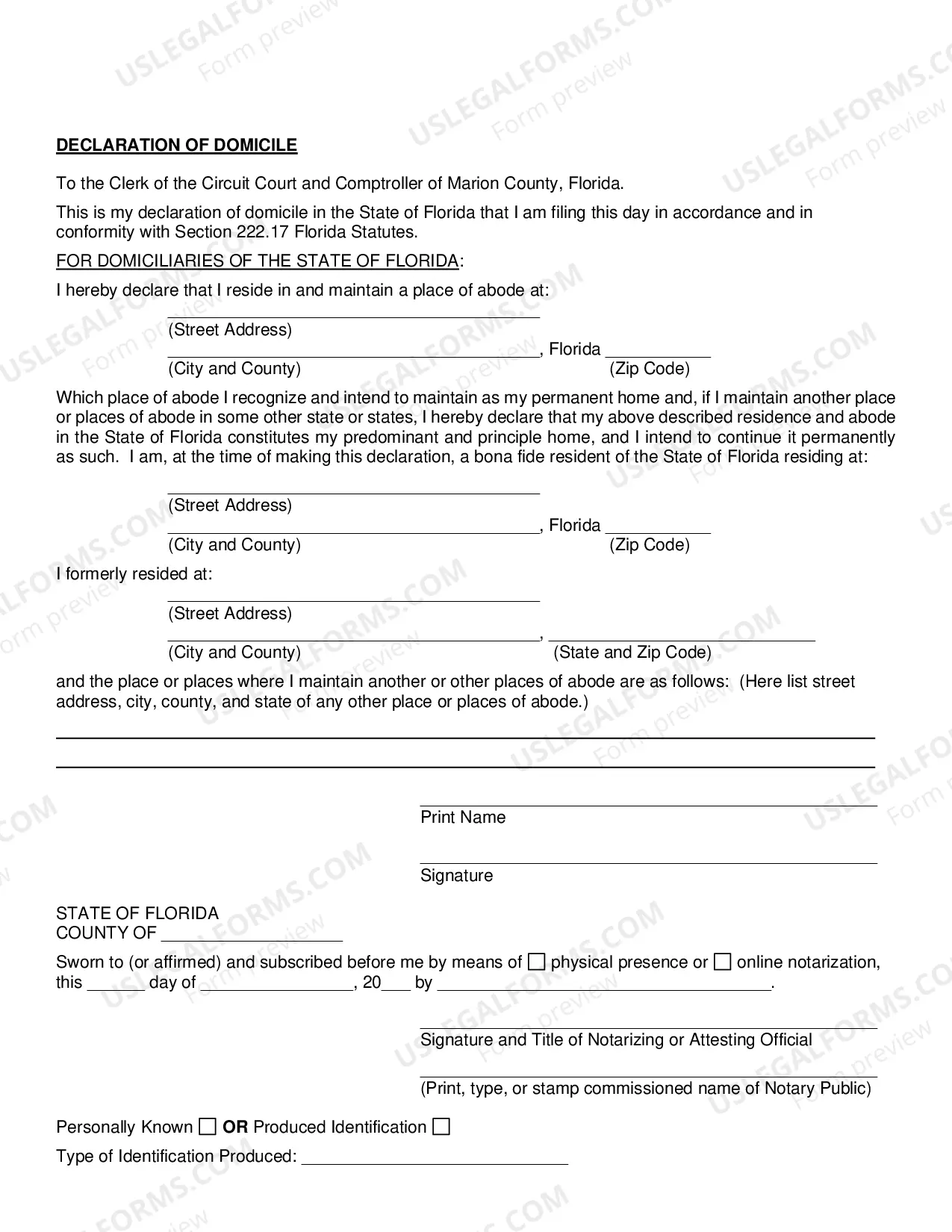
Warehouse Record of Receipt
Overview of this form
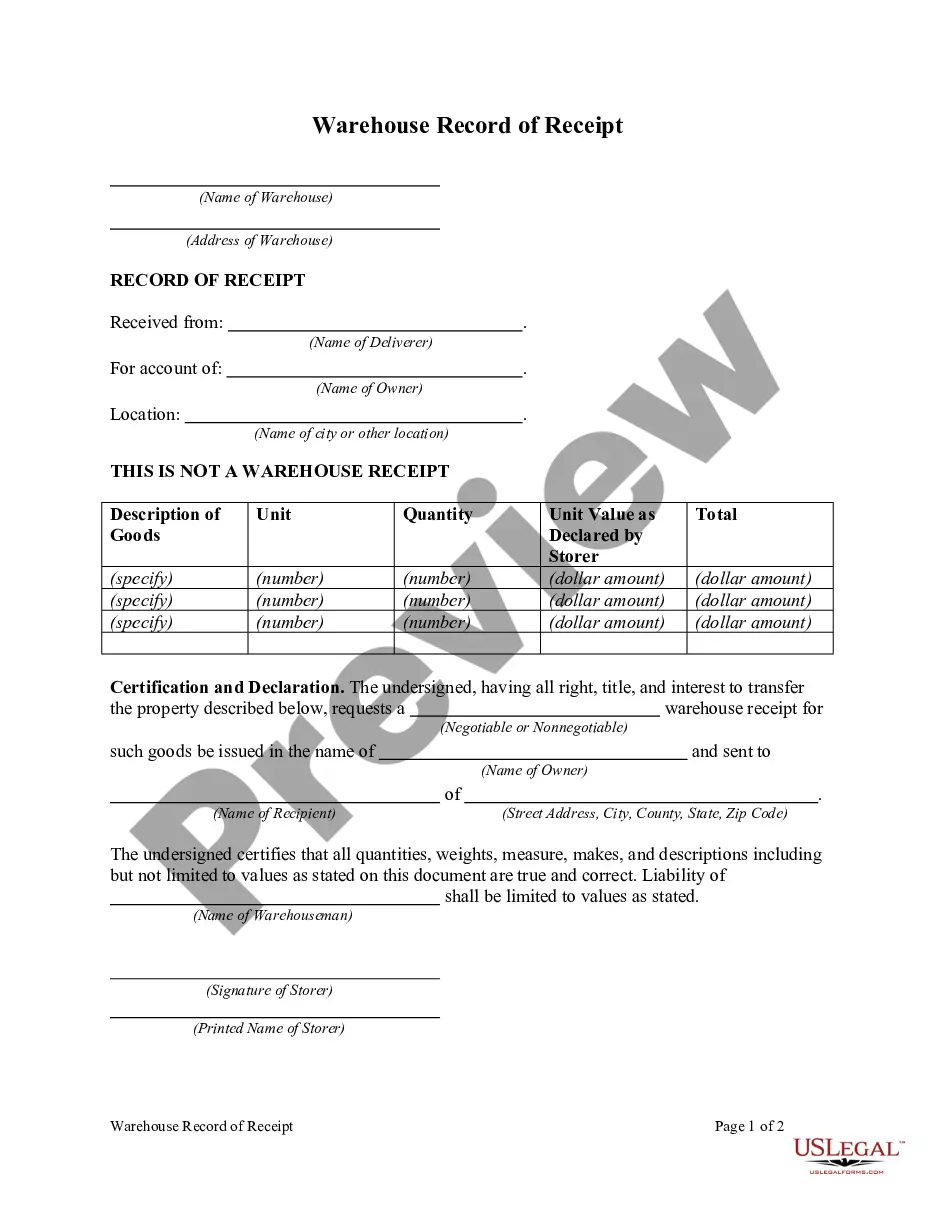
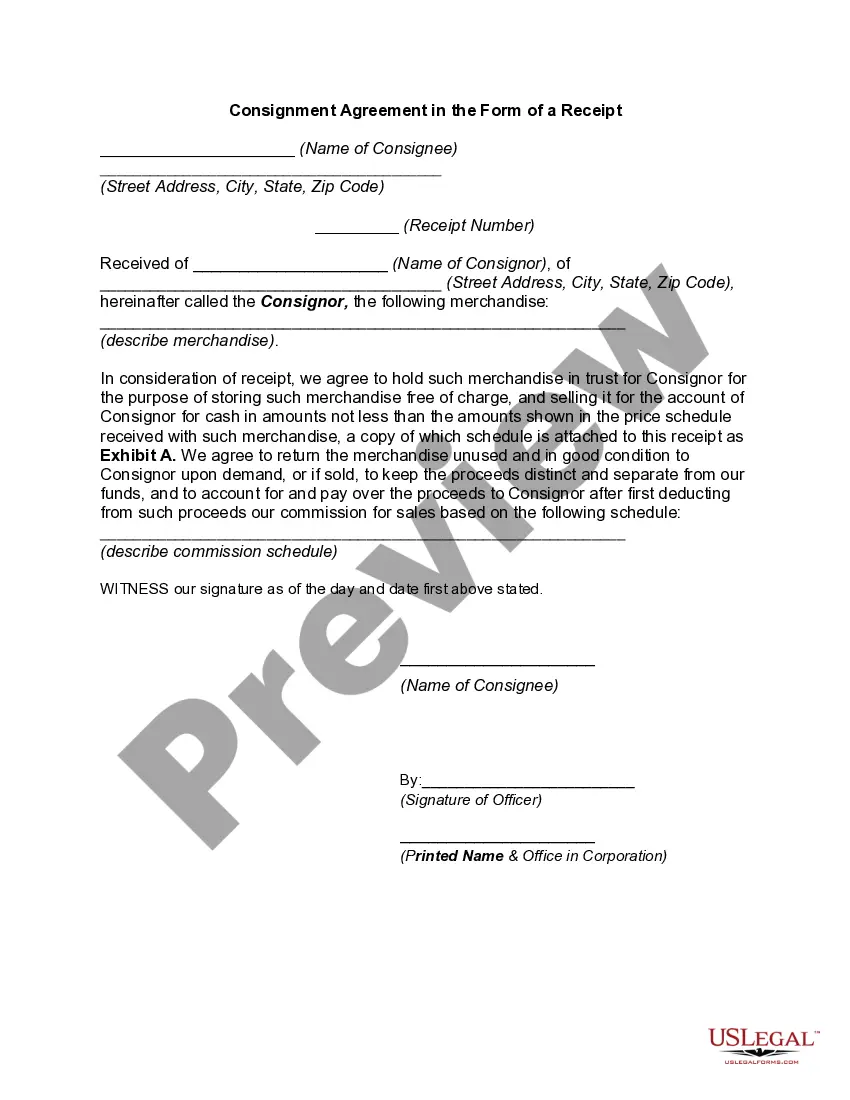
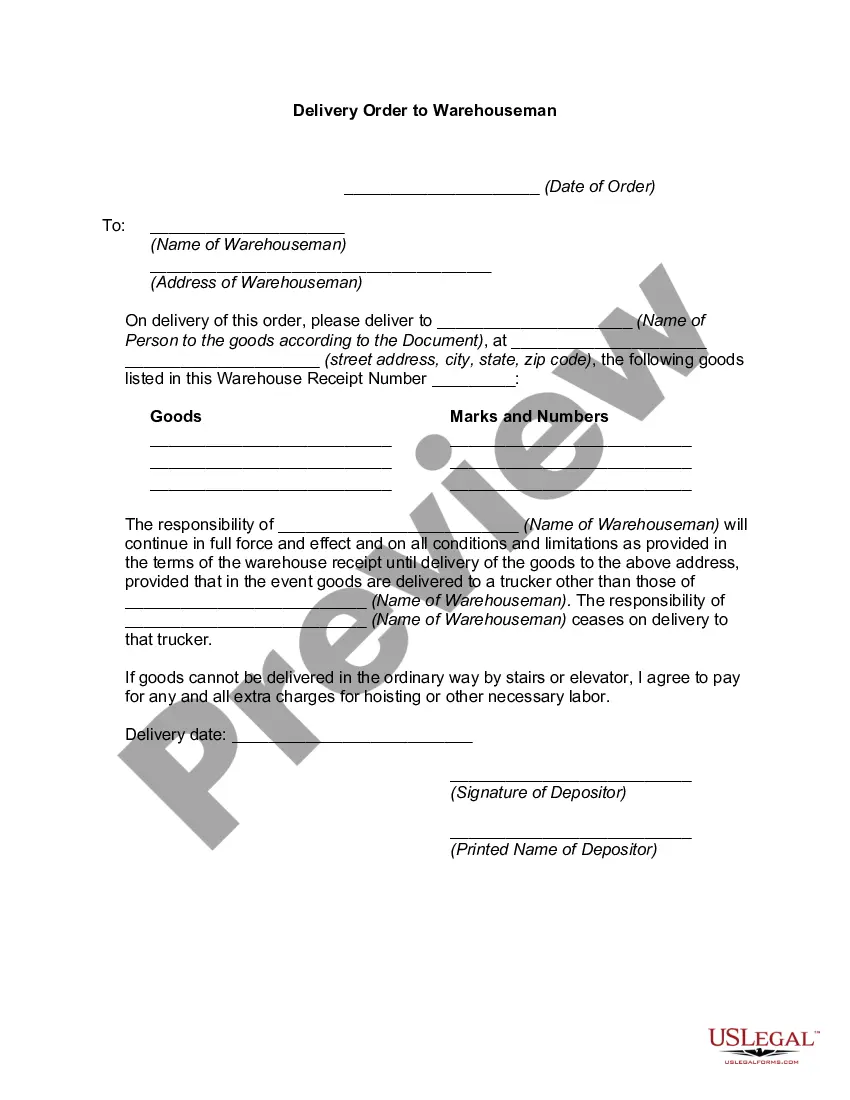
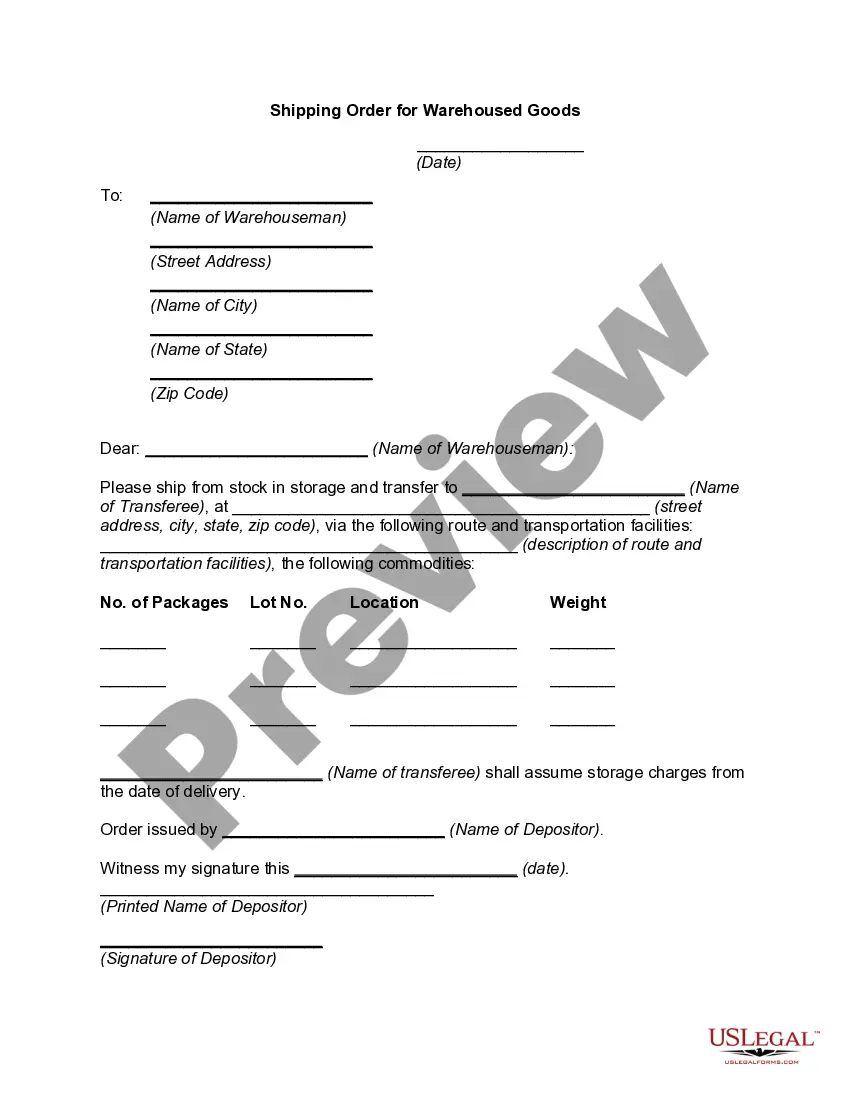
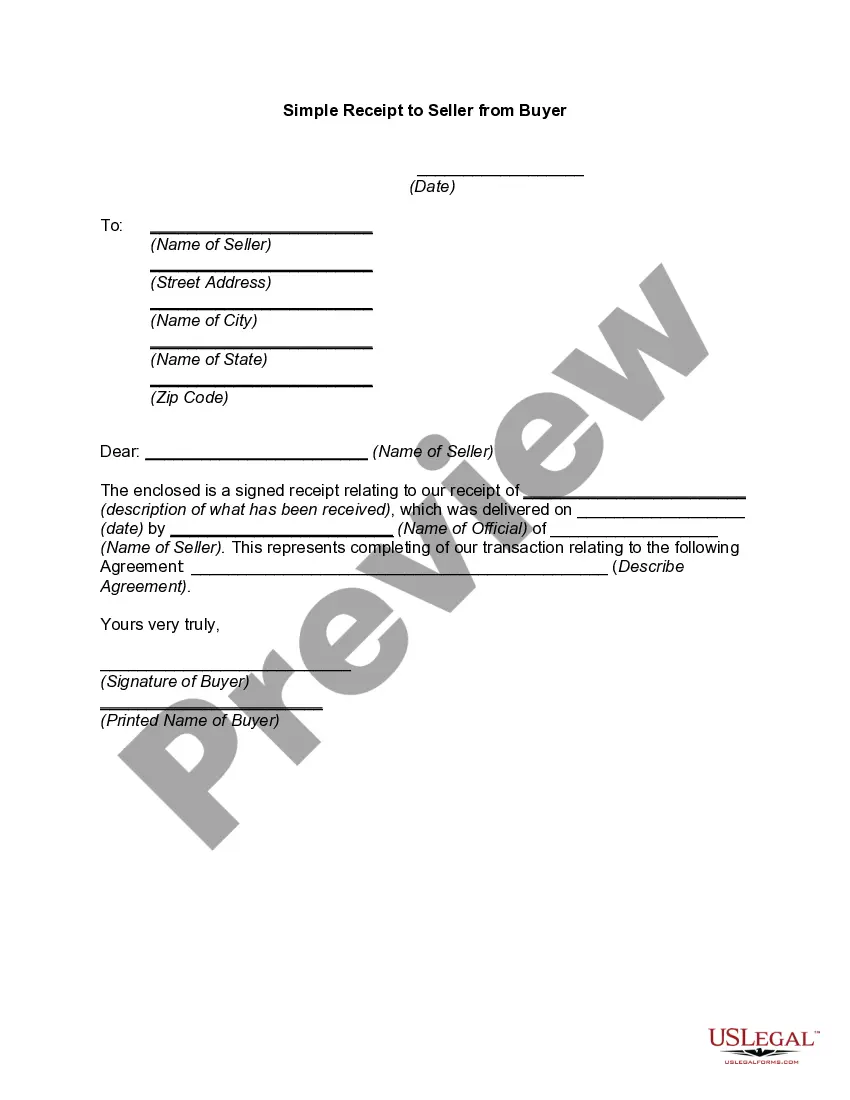
A warehouse record of receipt serves as a legal document that confirms the storage of goods by a warehouse operator for a fee. It acts as a proof of title and ownership for the goods stored, distinguishing it from simple receipts. This document is essential in transactions involving stored goods as it is recognized as a document of title, enabling easier transfer of possession or ownership of the goods.
Key components of this form
- Warehouse operator's information: Name and address of the facility storing the goods.
- Goods description: Details about the items stored, including quantity and type.
- Date of receipt: The date when the goods were received by the warehouse.
- Storage fees: Information regarding any fees owed for the storage of goods.
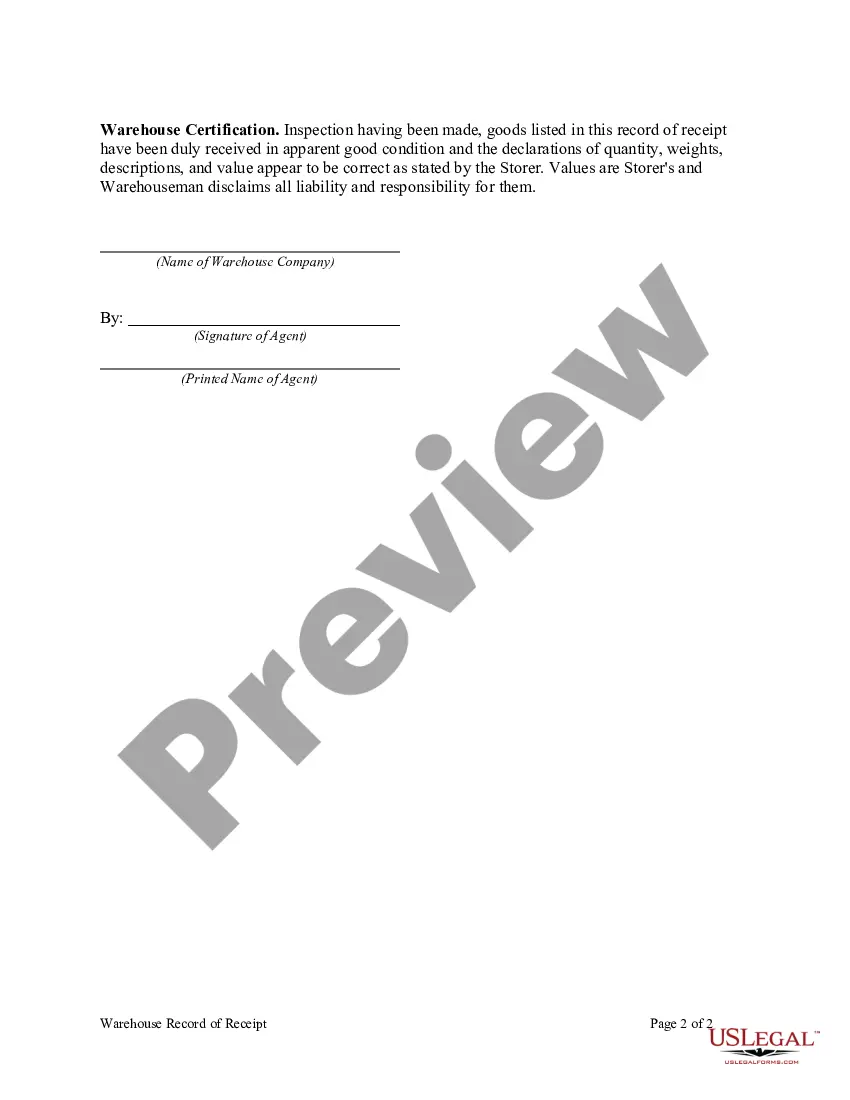
- Signatures: Required signatures from the warehouse operator and the person depositing the goods.
When this form is needed
This form is necessary when goods are stored in a warehouse, especially when a receipt is needed to confirm their title. Use this document when transferring ownership of stored goods, seeking financing against these goods, or when proving ownership for legal purposes. It is also useful in disputes relating to storage fees or claims to the goods stored.
Who this form is for
This form is intended for:
- Warehouse owners and operators ensuring proper documentation of stored goods.
- Individuals or businesses storing items in a warehouse seeking to prove ownership or rights to those items.
- Legal professionals requiring documented evidence for disputes related to storage agreements.
Steps to complete this form
- Identify the warehouse operator: Fill in the name and address of the warehouse facility.
- Describe the goods: Provide detailed information about the items being stored.
- Enter the date of receipt: Specify the date when the goods arrived at the warehouse.
- Specify storage fees: Include the cost associated with storing the goods, if applicable.
- Obtain signatures: Ensure that both the warehouse operator and the depositor sign the receipt.
Does this form need to be notarized?
Notarization is not commonly needed for this form. However, certain documents or local rules may make it necessary. Our notarization service, powered by Notarize, allows you to finalize it securely online anytime, day or night.
Get your form ready online
Our built-in tools help you complete, sign, share, and store your documents in one place.
Make edits, fill in missing information, and update formatting in US Legal Forms—just like you would in MS Word.
Download a copy, print it, send it by email, or mail it via USPS—whatever works best for your next step.
Sign and collect signatures with our SignNow integration. Send to multiple recipients, set reminders, and more. Go Premium to unlock E-Sign.
If this form requires notarization, complete it online through a secure video call—no need to meet a notary in person or wait for an appointment.
We protect your documents and personal data by following strict security and privacy standards.

Make edits, fill in missing information, and update formatting in US Legal Forms—just like you would in MS Word.

Download a copy, print it, send it by email, or mail it via USPS—whatever works best for your next step.

Sign and collect signatures with our SignNow integration. Send to multiple recipients, set reminders, and more. Go Premium to unlock E-Sign.

If this form requires notarization, complete it online through a secure video call—no need to meet a notary in person or wait for an appointment.

We protect your documents and personal data by following strict security and privacy standards.
Common mistakes
- Failing to accurately describe the goods being stored.
- Not including the date of receipt or incorrect dates.
- Omitting signatures, leading to disputes over ownership.
- Neglecting to document storage fees clearly, which can cause misunderstandings.
Why use this form online
- Convenience: Downloadable forms allow for immediate access and use without visiting a legal office.
- Editability: Easily fill in and adjust information as necessary before finalizing.
- Reliability: Forms are drafted by licensed attorneys, ensuring compliance with legal standards.
Looking for another form?

Form popularity
FAQ
A Warehouse Record of Receipt is a legal document that confirms the storage of goods by a warehouse operator for a fee and serves as a proof of title and ownership for the stored goods. It distinguishes a title document from a simple receipt and is used to transfer possession or ownership, document storage charges, and support financing or disputes related to the stored items.
A warehouse receipt system is the framework warehouses use to document and transfer title for stored goods. In this form, the Warehouse Record of Receipt acts as the title-bearing document within that system, recording the facility, the goods stored, the date of receipt, any storage fees, and the required signatures to validate the custody arrangement.
In the context of a Warehouse Record of Receipt, the goods receipt is the acknowledgment that the warehouse has received the items and recorded details such as the description, quantity, and date of receipt. The document also functions as evidence of ownership and may be used for financing or resolving disputes involving the stored goods.
The Warehouse Record of Receipt confirms receipt of goods by recording the warehouse operator's information, a description of the goods (quantity and type), the date of receipt, storage fee details, and the required signatures. This document also serves as a document of title for the stored goods.
The form requires the warehouse operator's information, a goods description (quantity and type), the date of receipt, any storage fees owed, and signatures from both the warehouse operator and the depositor. These details ensure clear ownership, accountability, and enforceable storage terms.
This form functions as a document of title and proof of ownership for stored goods, enabling transfer of possession or ownership, not just acknowledgment of storage. It includes specific components (operator information, goods description, date of receipt, storage fees, signatures) and supports financing or disputes, setting it apart from a plain warehouse receipt.