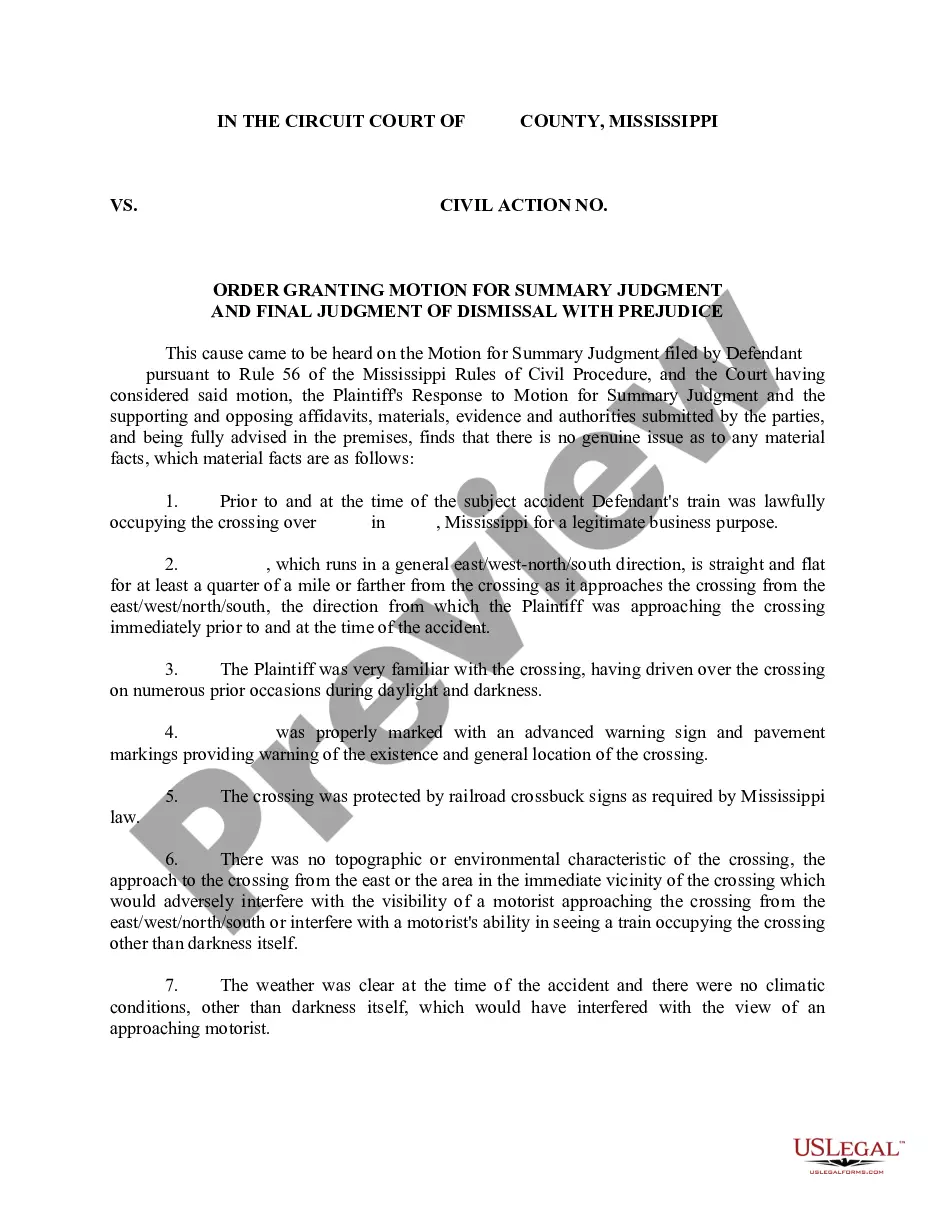
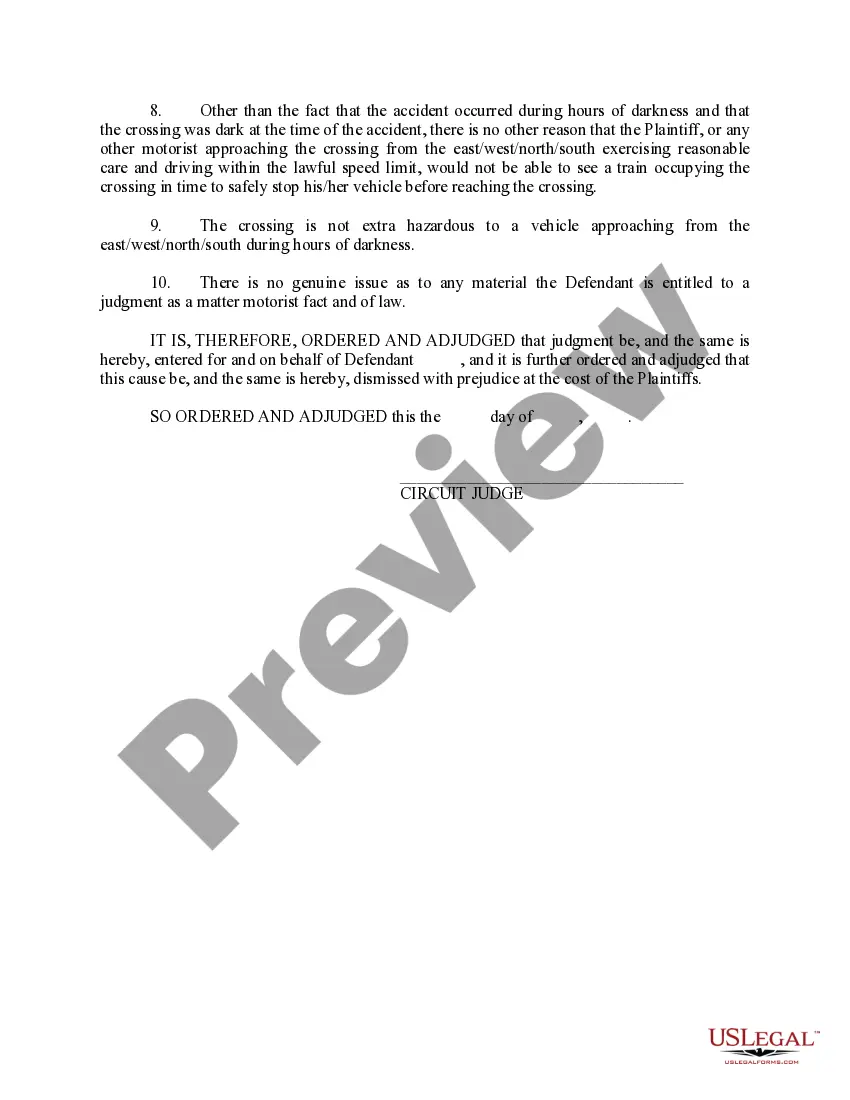
Mississippi Order Granting Motion for Summary Judgment
Understanding this form
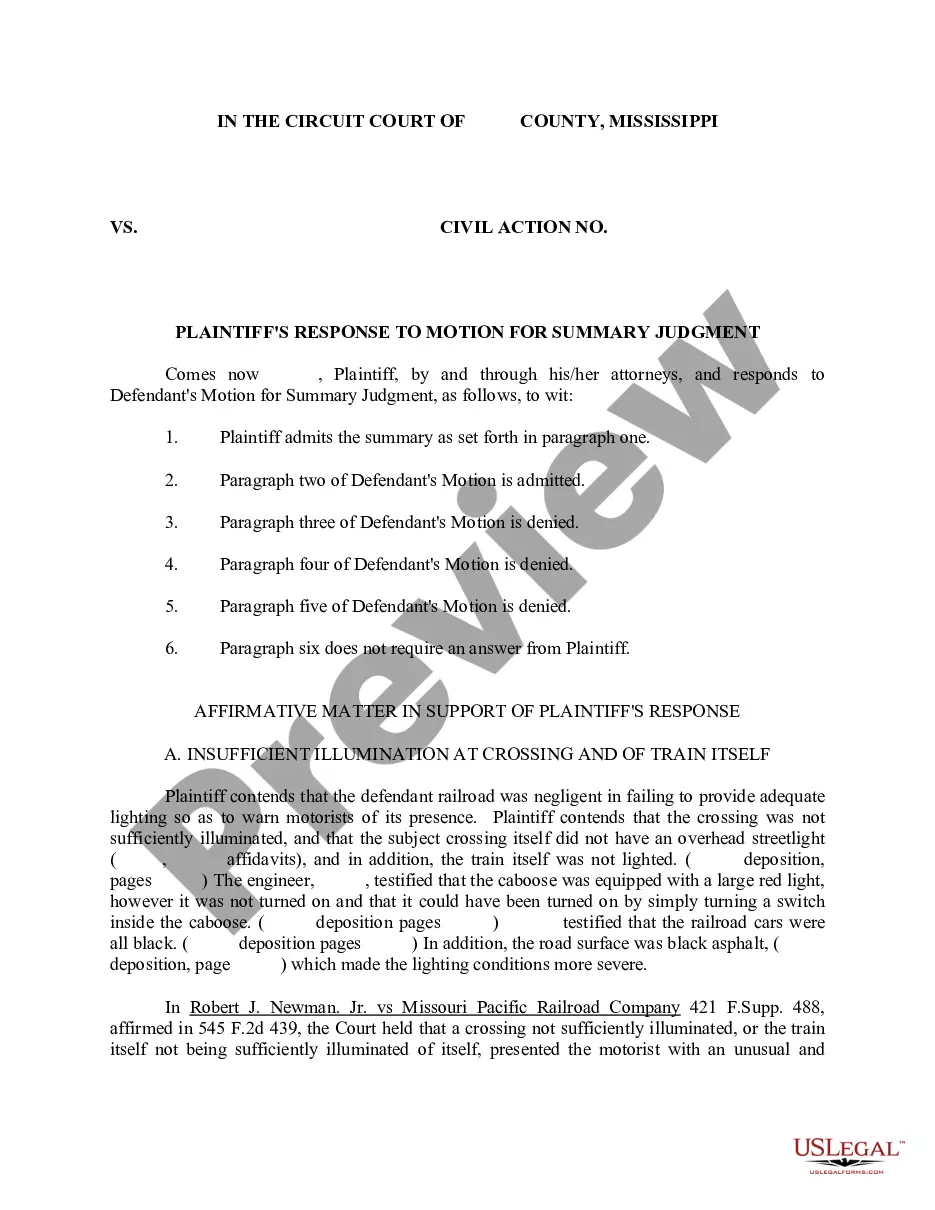
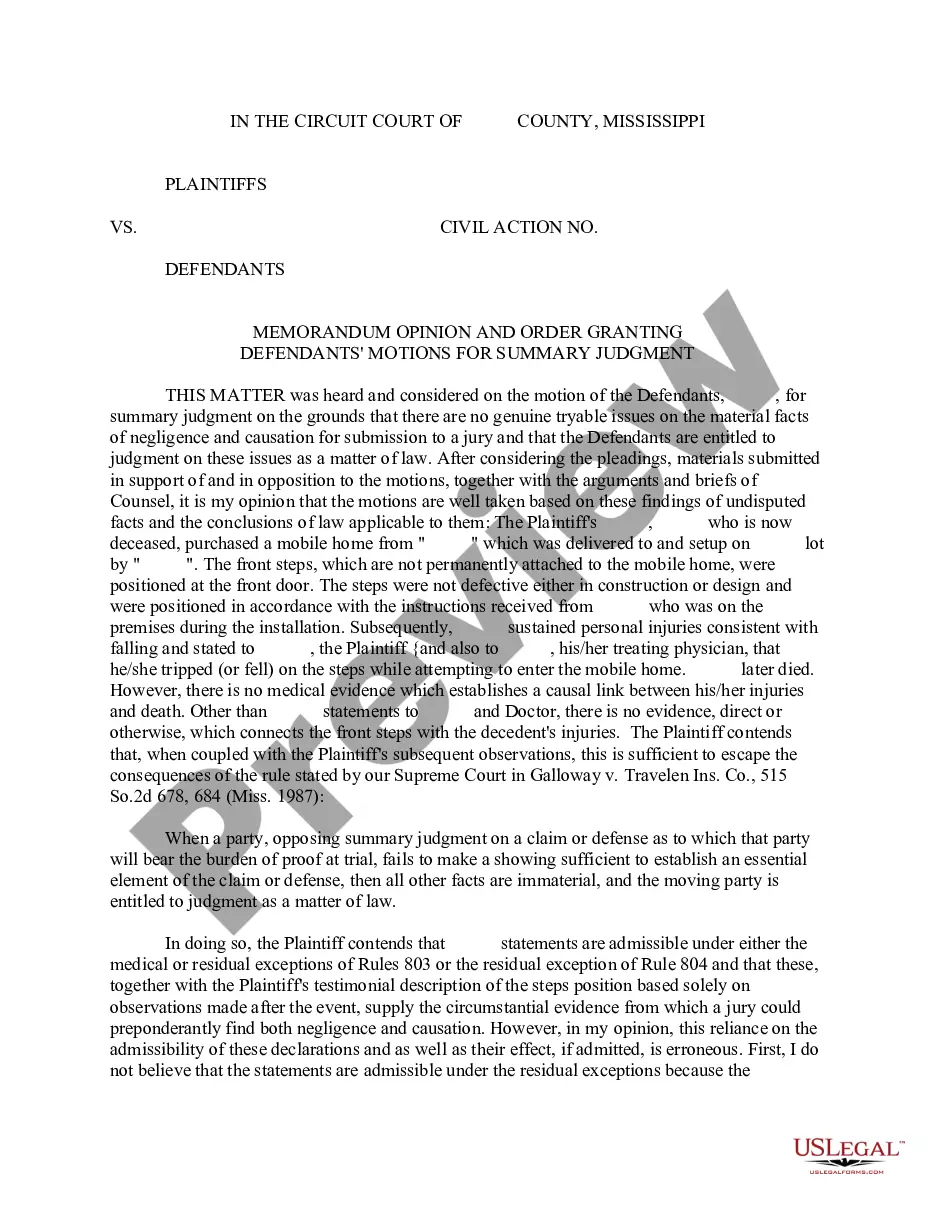
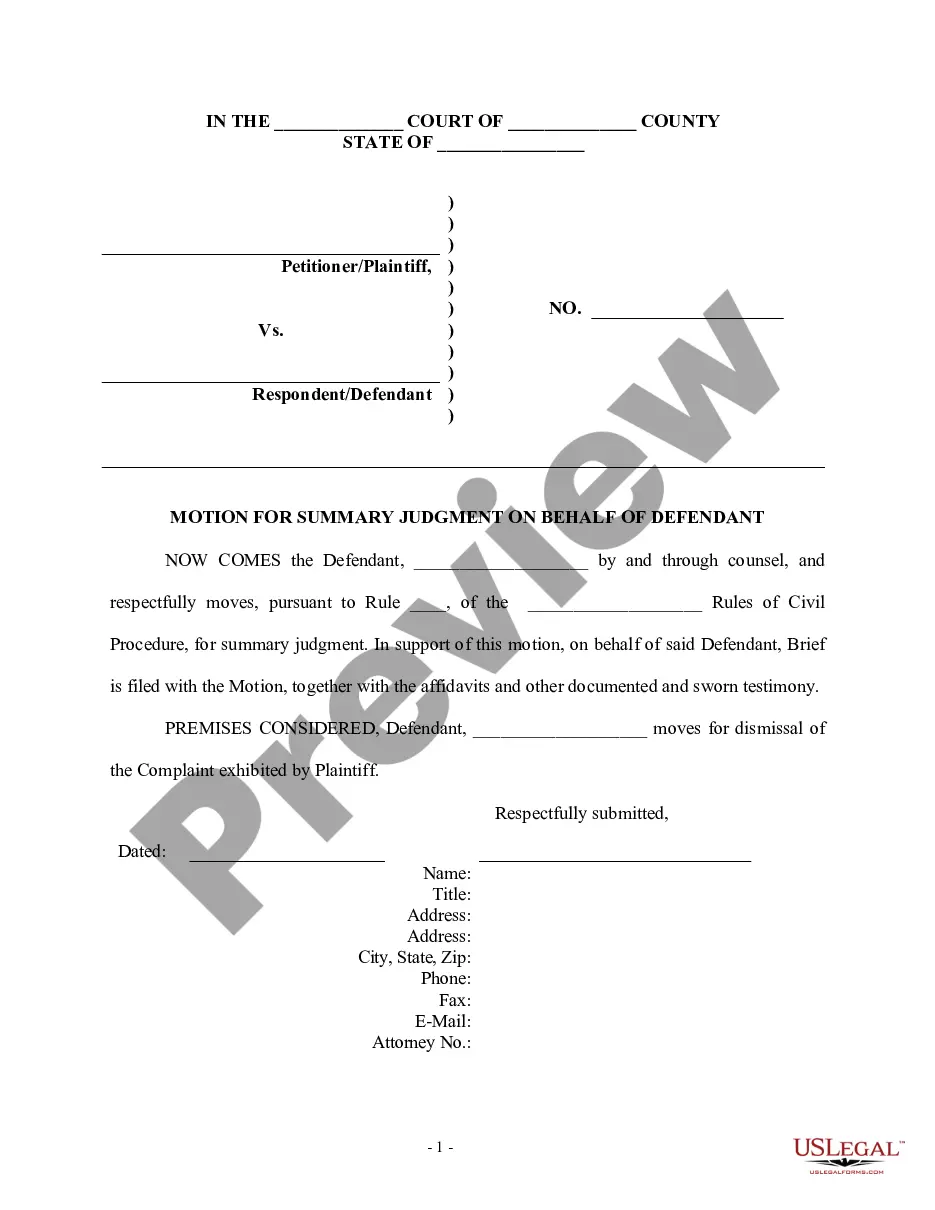
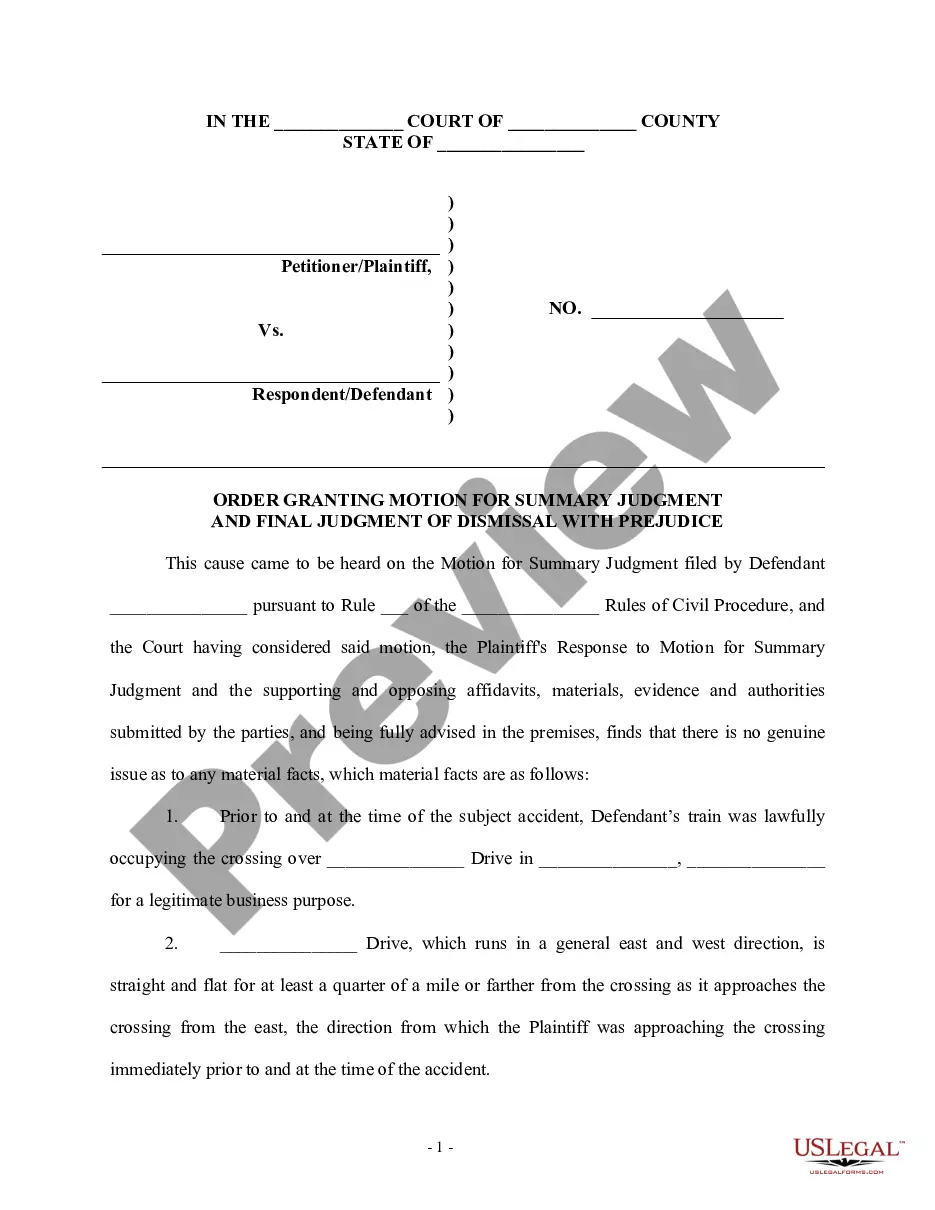
The Order Granting Motion for Summary Judgment is a legal document used to request that a court makes a decision in your favor without going to trial. This form is different from other motions as it specifically seeks a judgment based on the fact that there are no genuine disputes over material facts, allowing for a quicker resolution of the case. This document is particularly useful when there are clear, undisputed facts that justify a legal ruling.
Main sections of this form
- The introduction that states the motion's intent and the parties involved.
- Factual background detailing the circumstances surrounding the case.
- Legal arguments supporting the motion for summary judgment.
- Conclusion that requests the court grant the motion and issue a judgment.
Situations where this form applies
This form is used when a party believes that there are no material facts in dispute in a case, and they are entitled to judgment as a matter of law. Common scenarios include cases involving contract disputes, personal injury claims, or real estate matters where the facts are clear, allowing for a swift resolution. If a party has evidence that proves their case and there is no need for a trial, this form can accelerate the process.
Who should use this form
- Individuals or entities involved in a legal dispute seeking a summary judgment.
- Attorneys representing clients in cases where facts are not in dispute.
- Parties who wish to avoid unnecessary trials and expedite legal proceedings.
Completing this form step by step
- Identify the parties involved in the motion, including plaintiff and defendant.
- Detail the facts of the case that are undisputed and supportive of your legal position.
- Include specific legal arguments that justify the request for summary judgment.
- Conclude with a clear request for the court to grant the motion.
- Ensure all necessary signatures are included before submitting the motion to the court.
Notarization requirements for this form
In most cases, this form does not require notarization. However, some jurisdictions or signing circumstances might. US Legal Forms offers online notarization powered by Notarize, accessible 24/7 for a quick, remote process.
Get your form ready online
Our built-in tools help you complete, sign, share, and store your documents in one place.
Make edits, fill in missing information, and update formatting in US Legal Forms—just like you would in MS Word.
Download a copy, print it, send it by email, or mail it via USPS—whatever works best for your next step.
Sign and collect signatures with our SignNow integration. Send to multiple recipients, set reminders, and more. Go Premium to unlock E-Sign.
If this form requires notarization, complete it online through a secure video call—no need to meet a notary in person or wait for an appointment.
We protect your documents and personal data by following strict security and privacy standards.

Make edits, fill in missing information, and update formatting in US Legal Forms—just like you would in MS Word.

Download a copy, print it, send it by email, or mail it via USPS—whatever works best for your next step.

Sign and collect signatures with our SignNow integration. Send to multiple recipients, set reminders, and more. Go Premium to unlock E-Sign.

If this form requires notarization, complete it online through a secure video call—no need to meet a notary in person or wait for an appointment.

We protect your documents and personal data by following strict security and privacy standards.
Common mistakes
- Failing to provide sufficient undisputed facts to support the motion.
- Omitting legal citations or relevant case law to strengthen the argument.
- Not clearly stating the relief being sought from the court.
- Submitting without appropriate signatures or verification.
Advantages of online completion
- Convenience of immediate download and access at any time.
- Editable templates ensure the form can be customized to fit specific circumstances.
- Trustworthiness as the forms are drafted by licensed attorneys.
Legal use & context
- The form is enforceable under civil procedural rules governing summary judgment.
- It is designed to expedite legal proceedings in cases with clear-cut facts.
- Not suitable for cases where material facts are in dispute, as they require a trial.
Key takeaways
- The Order Granting Motion for Summary Judgment is crucial for seeking a quick resolution in a lawsuit.
- Understanding the requirements and components of the form can improve your chances of success.
- Make sure to follow local rules and procedures for filing and serving the motion.
Looking for another form?
Form popularity
FAQ
A summary judgement occurs when, in a civil case, one party wants to move to a court decision without a trial.When a motion for summary judgement is granted, it indicates there is sufficient evidence to declare one party the clear winner.
How Is Summary Judgment Granted? Summary judgment is granted when there are no other facts to be tried.Summary judgment is granted when the facts can be decided upon without needing to go to trial, where the opposing party would lose due to a lack of evidence.
What happens during a motion for summary judgment hearing? Once the motion and response has been filed, the judge will read both and then preside over a hearing. At the hearing, each party will be given a certain amount of time to reiterate their argument in front of the judge.
If the motion is granted, the judgment on the issue or case is deemed to be a final judgment from which a party may seek an appeal. The court of appeal can reverse the grant of summary judgment and reinstate the claim in the lower court. However, this is rarely done and most summary judgments are upheld on appeal.
A motion for summary judgment filed by an opposing party claims that you cannot prevail in the case because there is no legal dispute or your claim is without merit or a defense. Failure to respond to a motion for summary judgment can result in your case being dismissed or a judgment being rendered against you.
Motions filed, the percent of cases with motions granted in whole or in part, and the percent of cases terminated by summary judgment. The percentage of cases with summary judgment motions, averaged across the six courts in the study, has increased from approximately 12% in 1975, to 17% in 1985, to 19% in 1988.
A motion for summary judgment asks the court to decide the case or specific claims in the case in the moving party's favor.The main difference between a motion to dismiss and a motion for summary judgment is that the court actually gets to evaluate the meat of the claims on a motion for summary judgment.
What happens if I don't file an opposition to the motion? If a motion is filed against you and you do not file a written opposition with the court, the judge could grant the other side's motion automatically.It also might mean you lose the case, depending on the motion that was filed.
Attack the Legal Argument. The first place to look for a weakness in your opponent's motion is at their legal argument. Attack the Evidence. Attack the Separate Statement. Consider Whether Your Opponent's Motion Meets its Burden. Consider Seeking a Continuance to Conduct More Discovery. Conclusion.