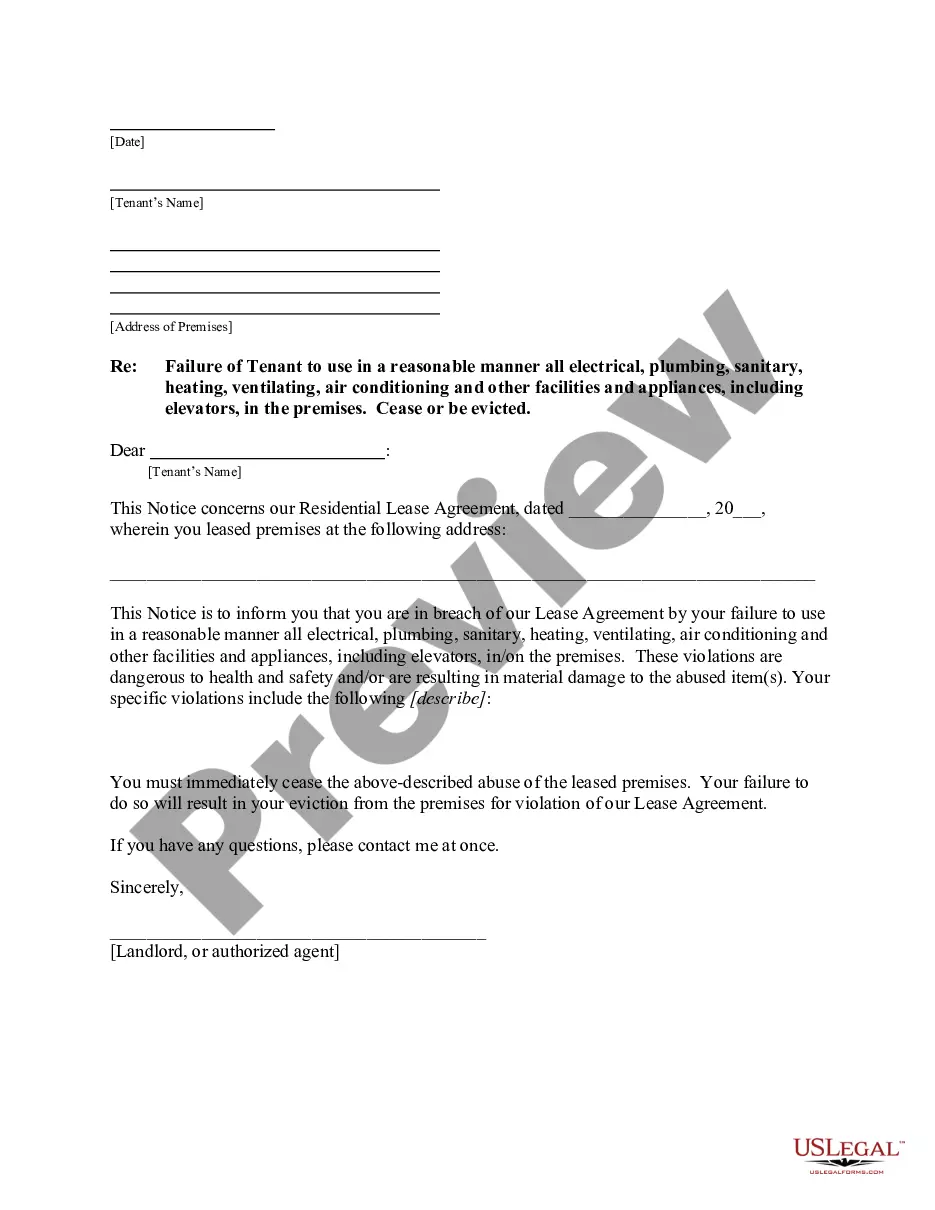
Mississippi Rebuttal and Support of Motion for Summary Judgment
About this form
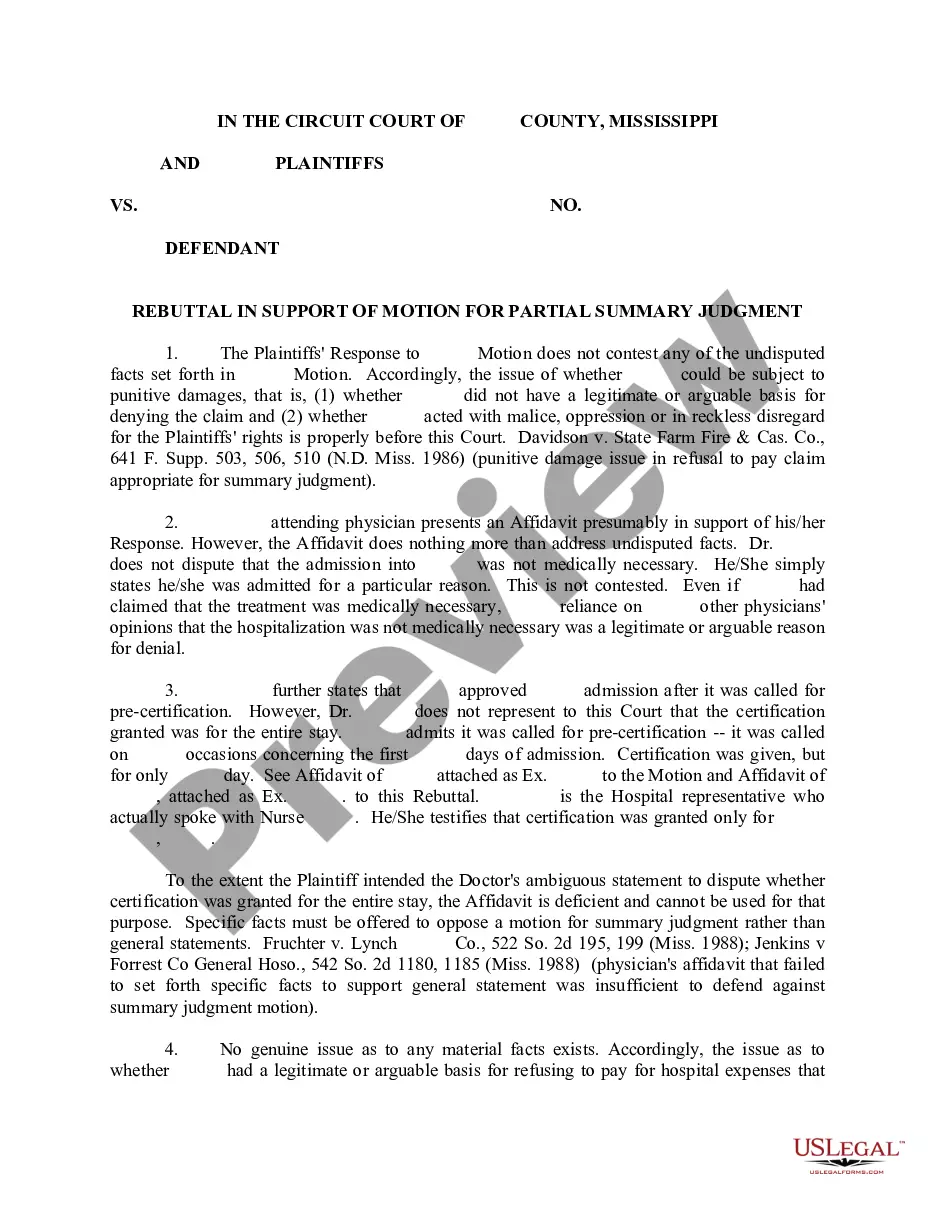
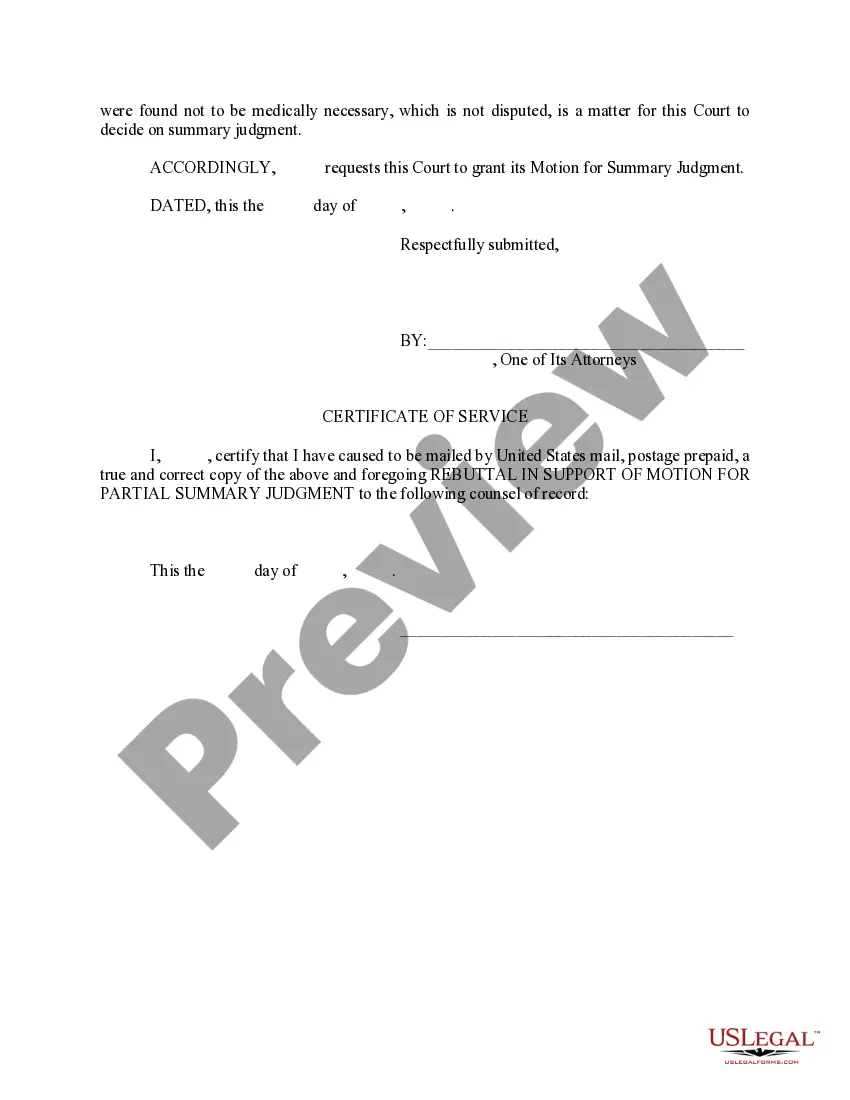
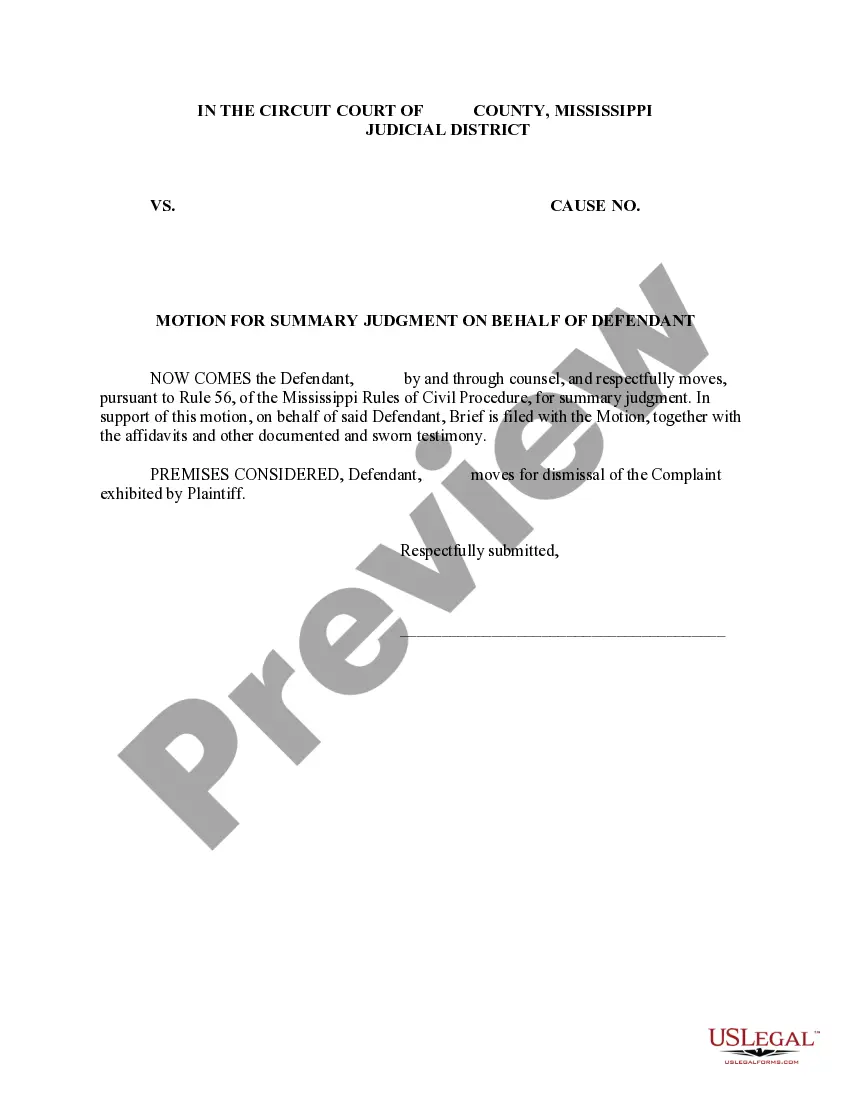
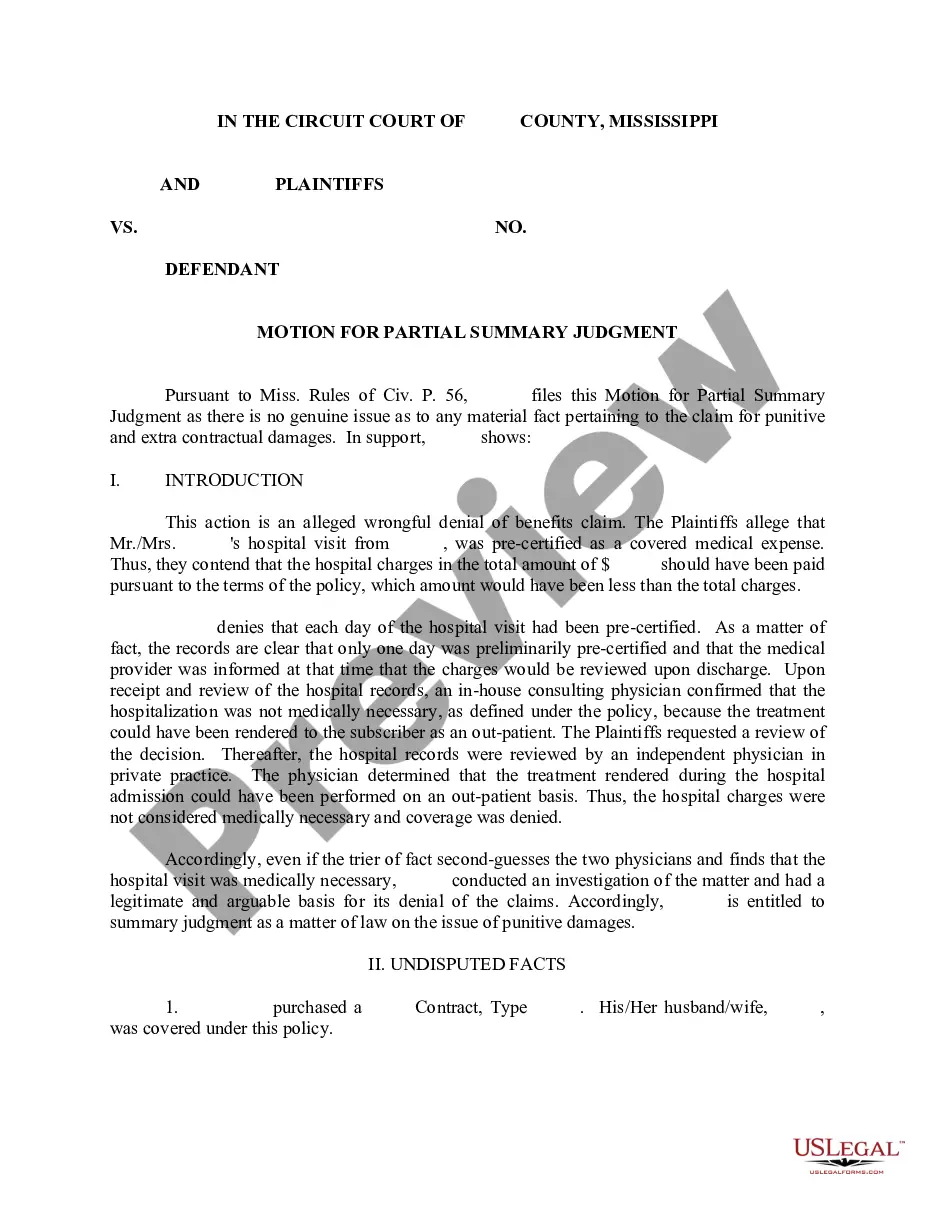
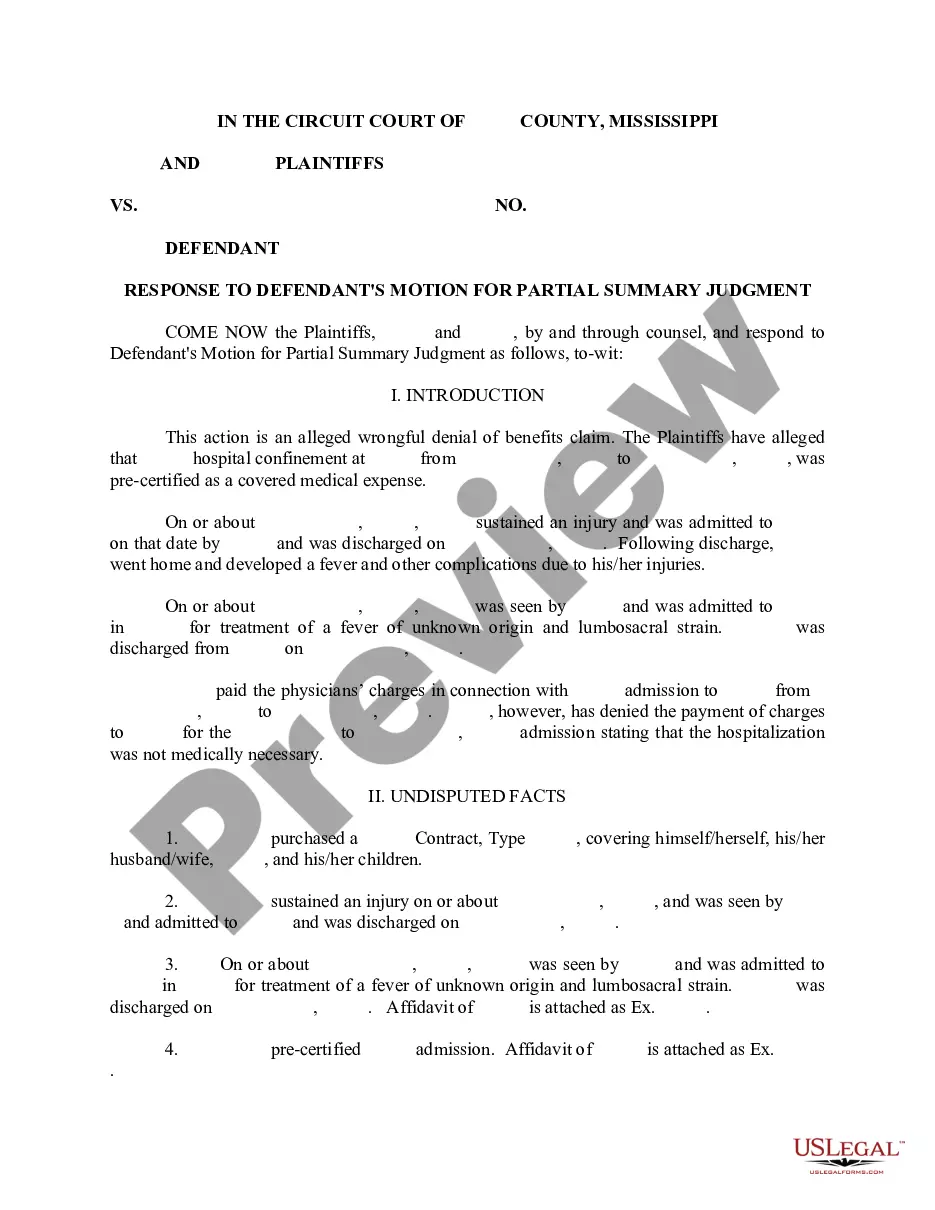
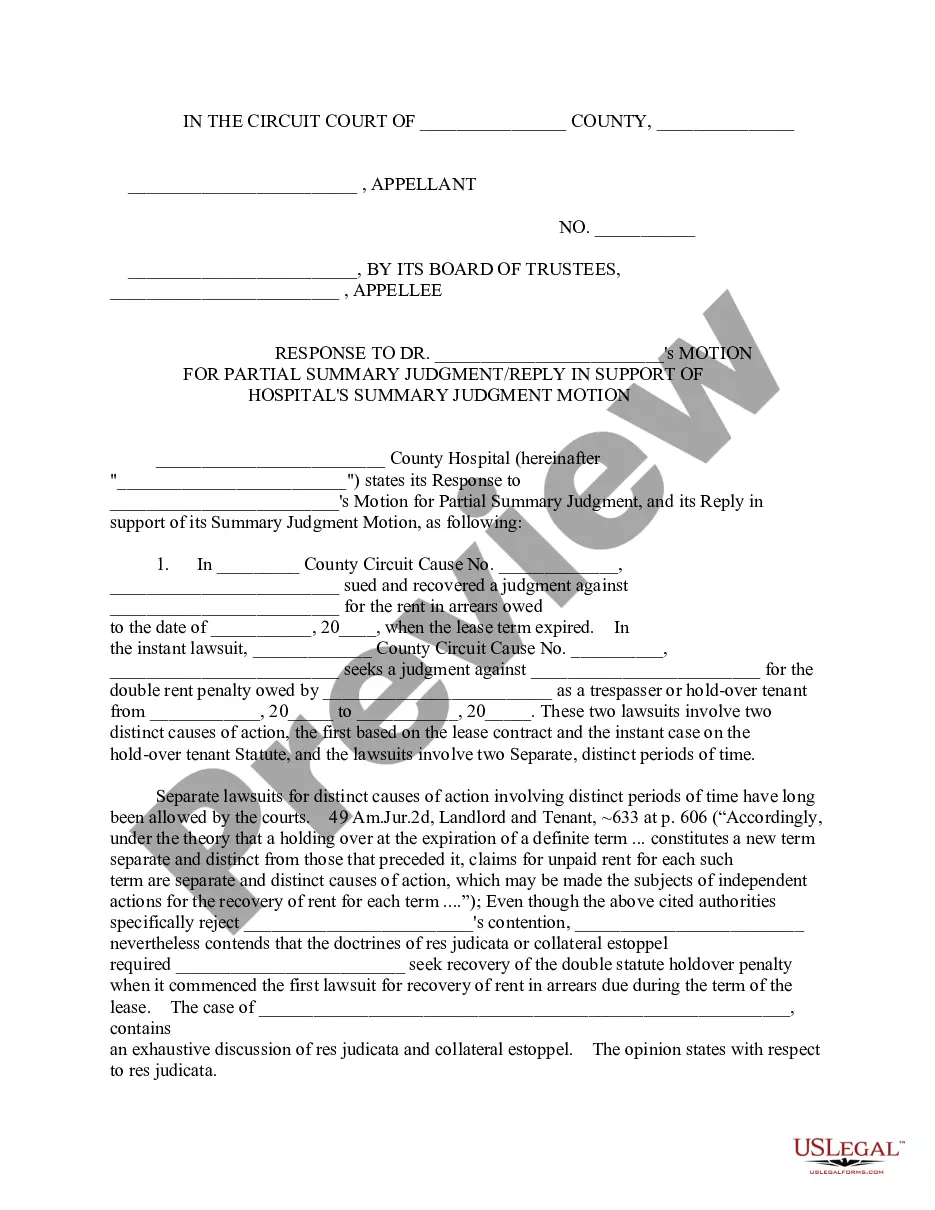
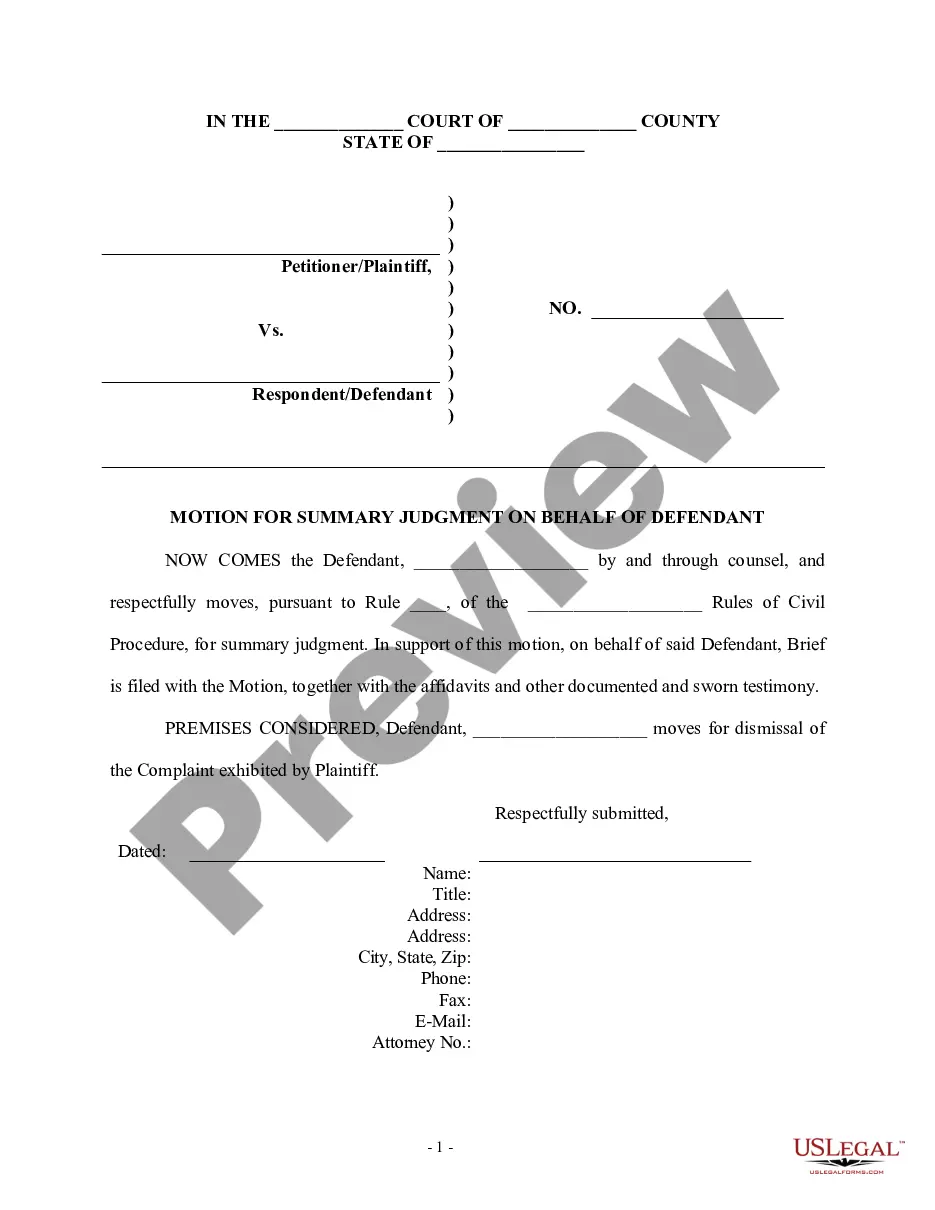
The Rebuttal and Support of Motion for Summary Judgment is a legal document used to formally respond to a motion for summary judgment submitted by the opposing party in a lawsuit. This form allows you to argue against the motion while concurrently supporting your position for summary judgment. Understanding the purpose of this form is essential for effectively addressing opposing claims and strengthening your case in court.
What’s included in this form
- Title and case number: Identifies the case and the parties involved.
- Statement of facts: Outlines the relevant facts that support your stance.
- Legal arguments: Provides the legal basis for opposing the summary judgment.
- Supporting evidence: Details any evidence that supports your rebuttal.
- Conclusion: Summarizes your arguments and requests the court to deny the opposing motion or grant your motion for summary judgment.
Situations where this form applies
This form should be used when you are involved in a civil lawsuit where the opposing party has filed a motion for summary judgment. You would typically need this document if you believe there are genuine disputes of material fact that necessitate a trial, or if you seek to argue in favor of your own motion for summary judgment. It is essential for presenting your rebuttal at a crucial stage of litigation.
Who should use this form
- Parties involved in a civil lawsuit facing a motion for summary judgment.
- Individuals or entities seeking to rebut an opposing party's legal claims.
- Legal professionals representing clients in litigation.
Instructions for completing this form
- Identify the case title and docket number at the top of the document.
- Clearly state your rebuttal against the motion for summary judgment with factual and legal arguments.
- Reference any exhibits or evidence that supports your claims.
- Provide a conclusion that summarizes your arguments and states the relief you are seeking.
- Sign and date the document before submitting it to the court.
Notarization requirements for this form
This form does not typically require notarization unless specified by local law. Always verify your jurisdictionâs requirements to ensure compliance.
Get your form ready online
Our built-in tools help you complete, sign, share, and store your documents in one place.
Make edits, fill in missing information, and update formatting in US Legal Forms—just like you would in MS Word.
Download a copy, print it, send it by email, or mail it via USPS—whatever works best for your next step.
Sign and collect signatures with our SignNow integration. Send to multiple recipients, set reminders, and more. Go Premium to unlock E-Sign.
If this form requires notarization, complete it online through a secure video call—no need to meet a notary in person or wait for an appointment.
We protect your documents and personal data by following strict security and privacy standards.

Make edits, fill in missing information, and update formatting in US Legal Forms—just like you would in MS Word.

Download a copy, print it, send it by email, or mail it via USPS—whatever works best for your next step.

Sign and collect signatures with our SignNow integration. Send to multiple recipients, set reminders, and more. Go Premium to unlock E-Sign.

If this form requires notarization, complete it online through a secure video call—no need to meet a notary in person or wait for an appointment.

We protect your documents and personal data by following strict security and privacy standards.
Avoid these common issues
- Failing to properly cite legal authorities or precedents.
- Neglecting to include supporting evidence or exhibits.
- Missing deadlines for filing the rebuttal.
- Using overly complex language that may confuse the court.
Benefits of using this form online
- Convenience: Download and complete the form at your convenience.
- Editability: Easily make necessary changes to meet your specific case needs.
- Reliability: Ensure access to professionally drafted legal documents.
Legal use & context
- The rebuttal must be filed with the court according to deadlines set by local rules.
- Failure to properly address the opposing party's arguments may weaken your position.
- The form assists in maintaining an organized and professional approach to legal disputes.
Summary of main points
- Use this form to effectively rebut arguments against your motion for summary judgment.
- Ensure you provide comprehensive facts and legal support in your rebuttal.
- Understand your local courtâs rules to complete and submit the form correctly.
Looking for another form?
Form popularity
FAQ
19, 2008) (motions to dismiss or for summary judgment are not responsive pleadings, and therefore do not cut off a plaintiff's right to amend his pleadings once at any time).
Unless the requirements of Code of Civil Procedure 437c, subdivision (f)(2), are met a party may not file a second summary judgment motion. The pertinent provision provides: However, a party may not move for summary judgment...
What happens during a motion for summary judgment hearing? Once the motion and response has been filed, the judge will read both and then preside over a hearing. At the hearing, each party will be given a certain amount of time to reiterate their argument in front of the judge.
The motion must include a separate "Notice of Motion" which includes a brief summary of the nature of the motion, the deadline for filing a response, and if there is a hearing, the date, time, and location of the hearing.
A summary judgement occurs when, in a civil case, one party wants to move to a court decision without a trial. That only happens however, when the two parties agree to the critical facts of the issue, and the law allows summary judgement based on the undisputed facts at hand.
Rule 56 of the Federal Rules of Civil Procedure governs summary judgment for federal courts. Under Rule 56, in order to succeed in a motion for summary judgment, a movant must show 1) that there is no genuine dispute as to any material fact, and 2) that the movant is entitled to judgment as a matter of law.
A summary judgement occurs when, in a civil case, one party wants to move to a court decision without a trial.When a motion for summary judgement is granted, it indicates there is sufficient evidence to declare one party the clear winner.
Completely resolve a case (e.g., entry of judgment for plaintiff or defendants) Completely resolve a claim. Completely determine the status of a particular party. Resolve a particular claim's application to a particular party. Establish a fact or ruling applicable to the case as it is further adjudicated.
How Is Summary Judgment Granted? Summary judgment is granted when there are no other facts to be tried.Summary judgment is granted when the facts can be decided upon without needing to go to trial, where the opposing party would lose due to a lack of evidence.