Mississippi Motion to Consolidate
What this document covers
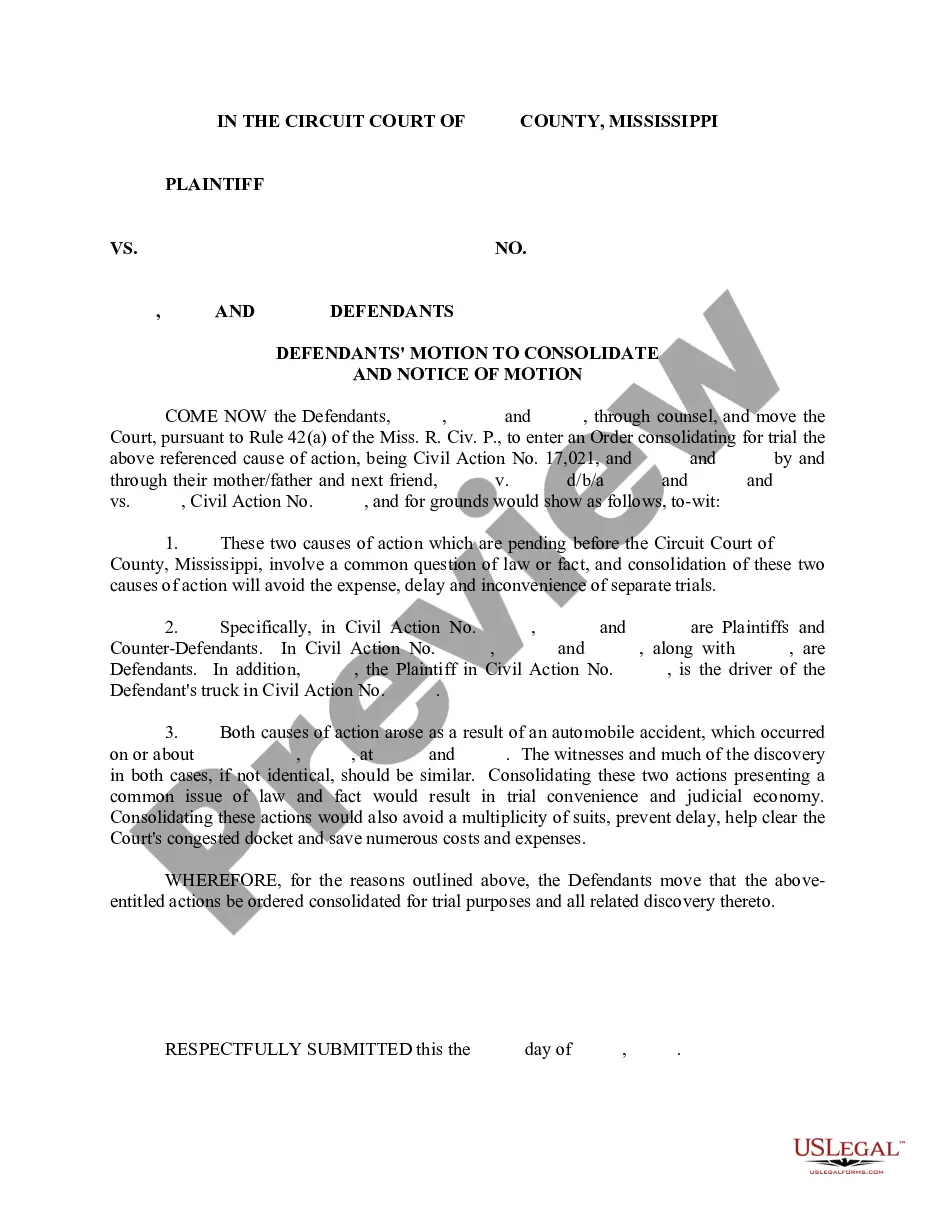
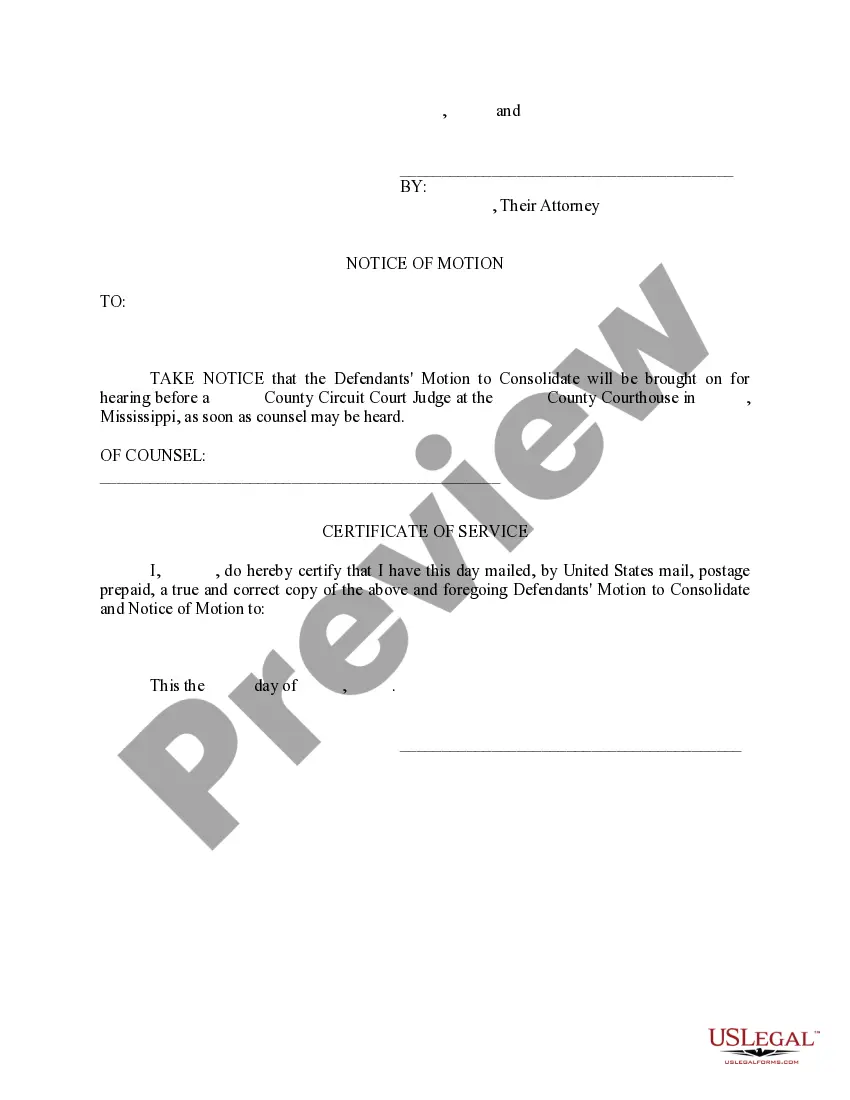
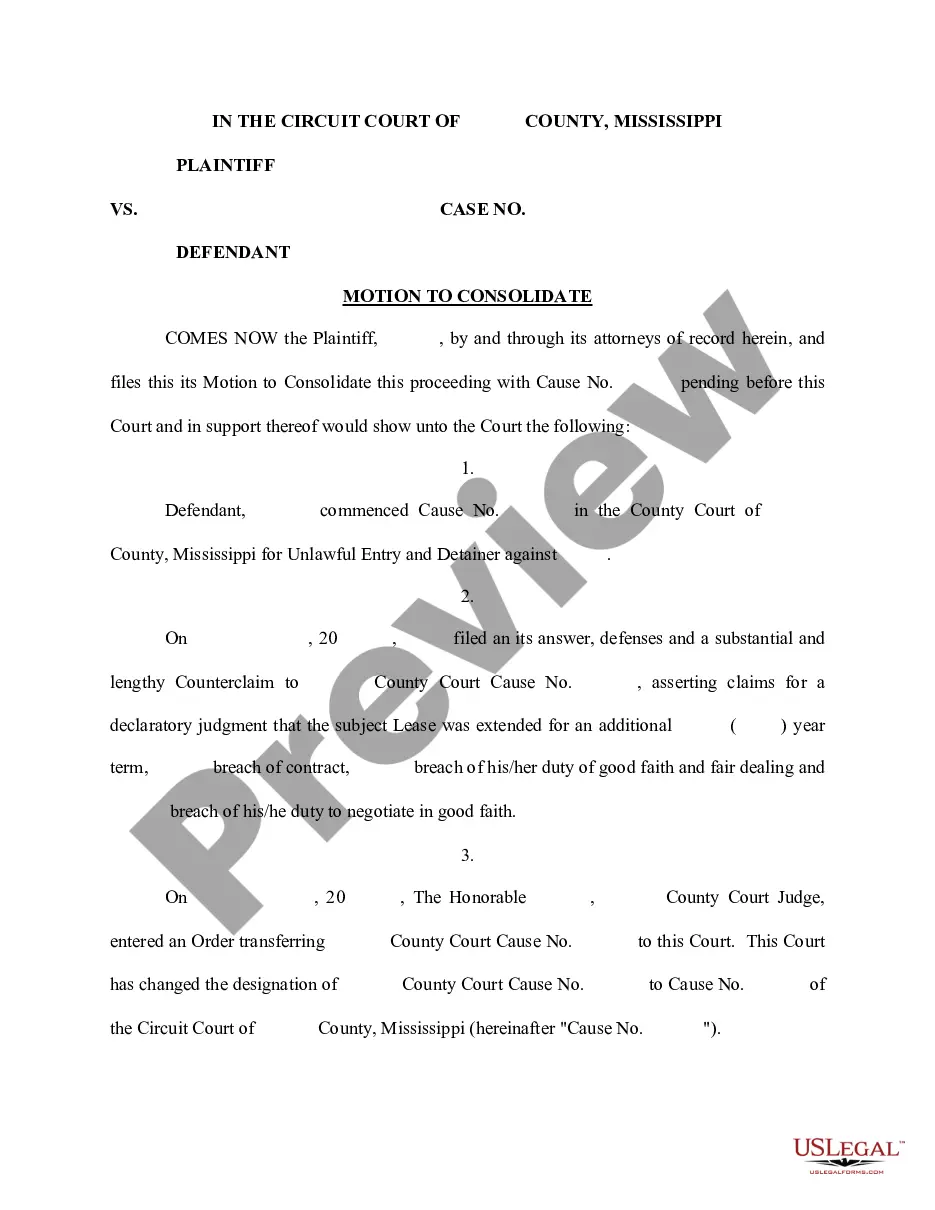
A Motion to Consolidate is a legal document that requests the court to combine two or more related legal actions into one case. This motion is essential when two or more cases share common issues of law or fact, allowing for more efficient handling of the cases. Unlike other motions that may focus on a specific action, this motion specifically addresses the need to consolidate multiple cases for judicial economy and clarity.
Key parts of this document
- Heading: Includes the title of the motion and the parties involved.
- Body: A detailed explanation of the reasons for requesting consolidation.
- WHEREFORE clause: The specific request to the court for consolidation.
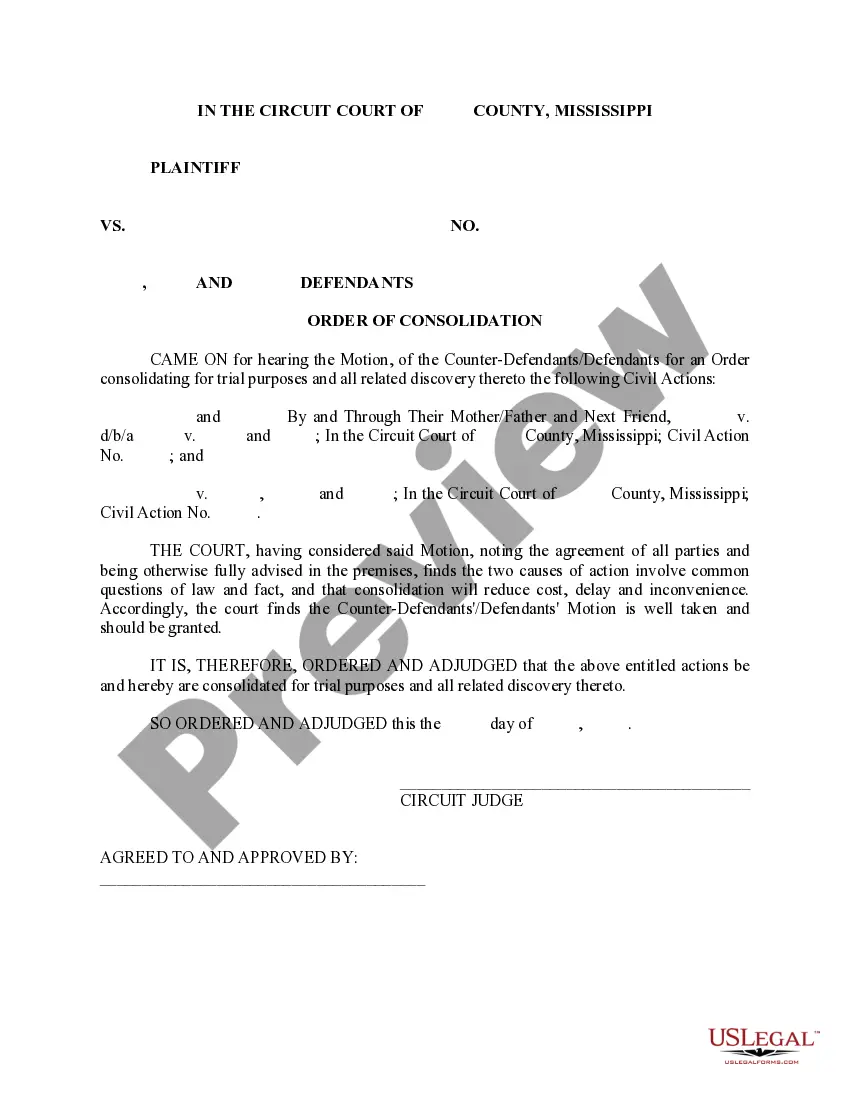
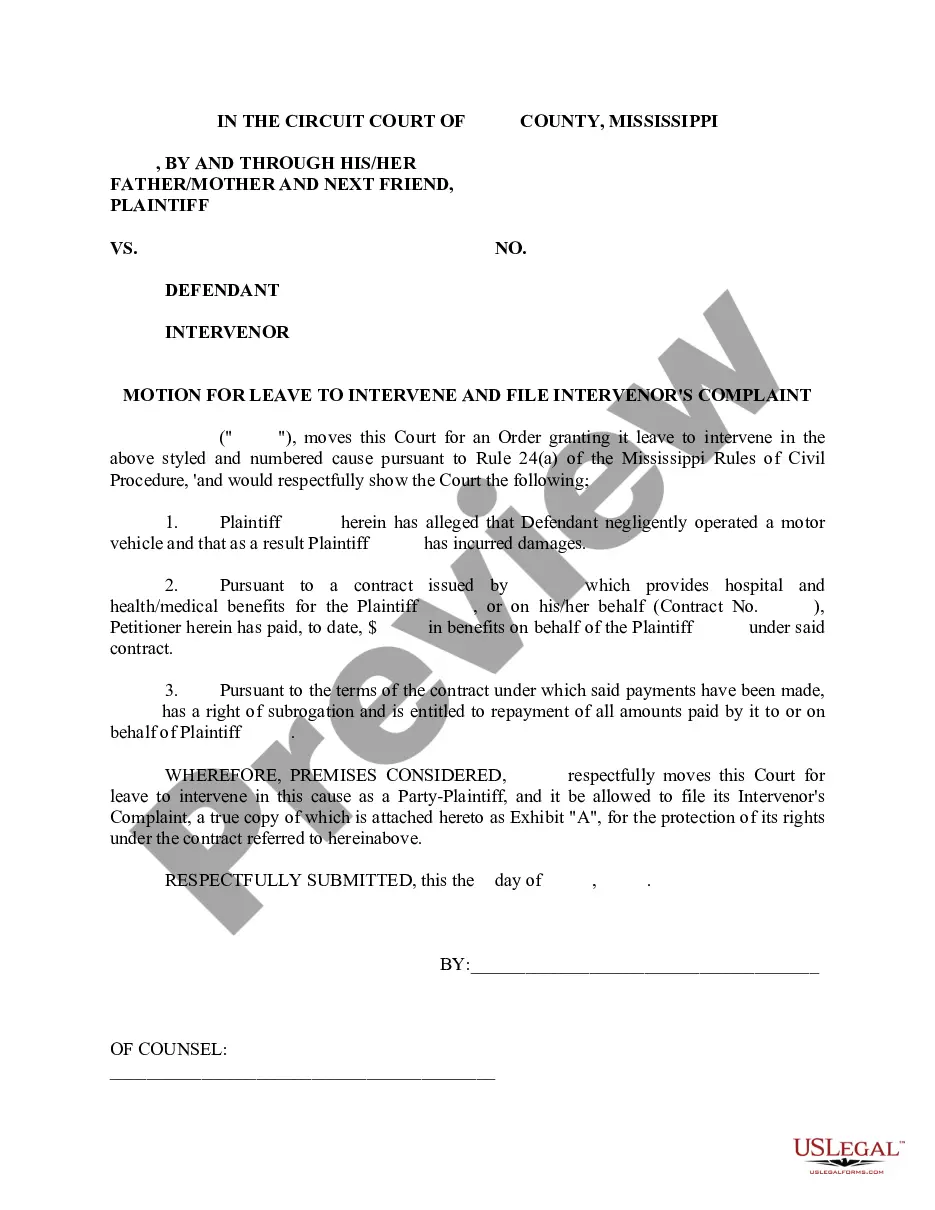
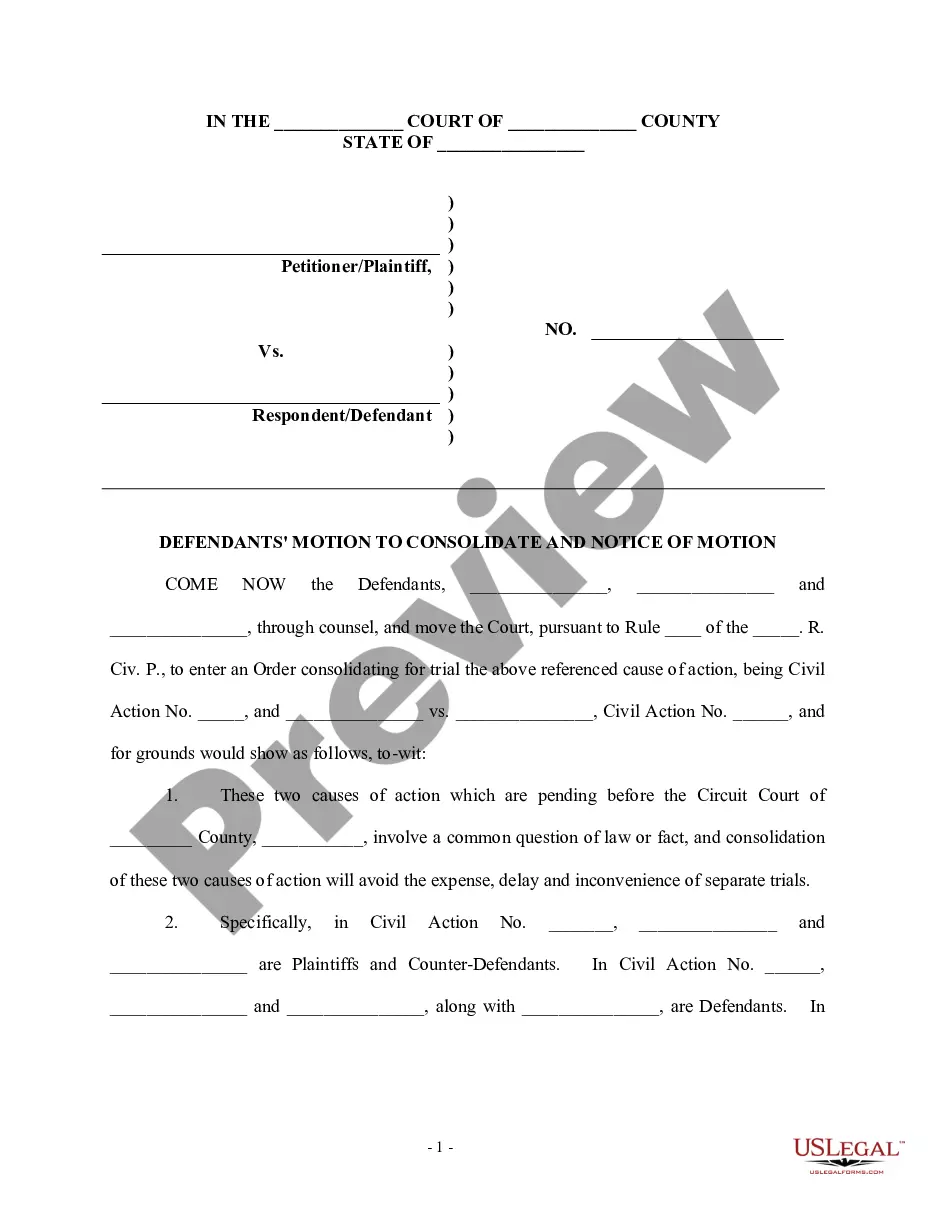
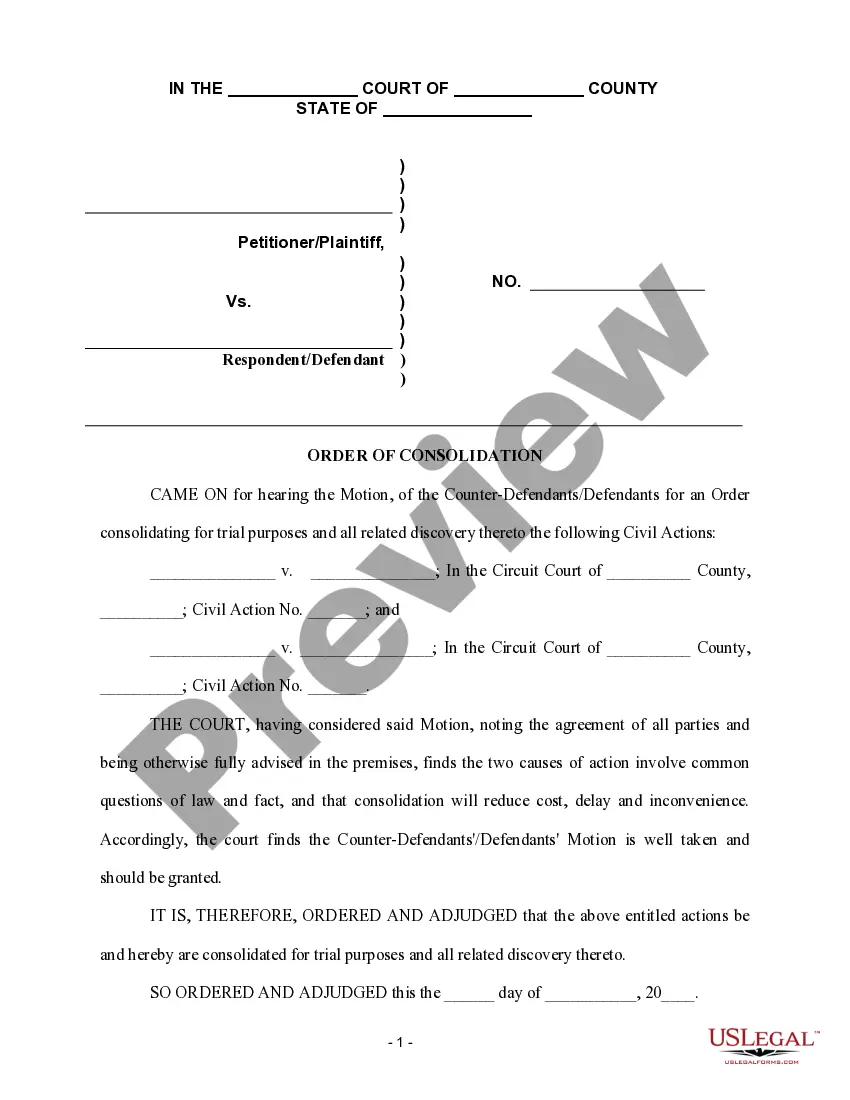
Situations where this form applies
This form is used when you have multiple legal actions pending that involve the same parties, facts, or legal issues. Typical scenarios include cases of shared liability or overlapping claims, such as in personal injury or contract disputes where plaintiffs are seeking similar remedies. By consolidating cases, you can streamline the legal process and reduce the burden on the court system.
Who can use this document
- Litigants involved in multiple related legal cases.
- Attorneys representing clients in overlapping legal actions.
- Defendants seeking to consolidate their defenses or claims against multiple plaintiffs.
Completing this form step by step
- Identify and list all actions to be consolidated in the motion's heading.
- Provide a clear explanation of why consolidation is appropriate in the body of the document.
- Complete the WHEREFORE clause, stating your request for consolidation.
- Sign and date the motion.
- File the completed motion with the appropriate court and serve copies to all parties involved.
Does this form need to be notarized?
Notarization is generally not required for this form. However, certain states or situations might demand it. You can complete notarization online through US Legal Forms, powered by Notarize, using a verified video call available anytime.
Get your form ready online
Our built-in tools help you complete, sign, share, and store your documents in one place.
Make edits, fill in missing information, and update formatting in US Legal Forms—just like you would in MS Word.
Download a copy, print it, send it by email, or mail it via USPS—whatever works best for your next step.
Sign and collect signatures with our SignNow integration. Send to multiple recipients, set reminders, and more. Go Premium to unlock E-Sign.
If this form requires notarization, complete it online through a secure video call—no need to meet a notary in person or wait for an appointment.
We protect your documents and personal data by following strict security and privacy standards.

Make edits, fill in missing information, and update formatting in US Legal Forms—just like you would in MS Word.

Download a copy, print it, send it by email, or mail it via USPS—whatever works best for your next step.

Sign and collect signatures with our SignNow integration. Send to multiple recipients, set reminders, and more. Go Premium to unlock E-Sign.

If this form requires notarization, complete it online through a secure video call—no need to meet a notary in person or wait for an appointment.

We protect your documents and personal data by following strict security and privacy standards.
Common mistakes
- Failing to cite relevant legal grounds for consolidation.
- Omitting necessary parties from the motion.
- Not properly formatting the motion according to local court rules.
Why use this form online
- Convenient access to downloadable templates tailored for your jurisdiction.
- Editability allows you to customize the form to fit your specific case needs.
- Reliable templates drafted by licensed attorneys, ensuring legal compliance.
Legal use & context
- Motions to consolidate are generally enforceable if filed correctly and granted by the court.
- There may be limitations based on jurisdiction regarding what cases can be consolidated.
Main things to remember
- A Motion to Consolidate is essential for combining related legal actions for efficiency.
- Understanding the specific components of this form is crucial for effective use.
- Adhering to state-specific rules can enhance the chances of approval by the court.
Looking for another form?


Form popularity
FAQ
In Civil law, it refers to combining of two or more actions involving the same parties or issues into a single action through court order. When the cases involve similar or related questions to be decided, the court may consolidate the cases in order to promote the efficient use of judicial resources.
A motion to consolidate is a motion to join two or more cases together into one action, where the issues are basically the same. Code of Civil Procedure Section 1048 states: "When actions involving a common question of law or fact are...
Consolidation Order means an order by an arbitral tribunal that a First-filed Dispute and a Later Dispute or Disputes be resolved in the same arbitral proceedings.
Consolidation of suits is ordered for meeting the ends of justice as it saves the parties from multiplicity of proceedings, delay and expenses. Complete or even substantially and sufficient similarity of the issues arising for decision in two suits enables the two suits being consolidated for trial and decision.
Consolidation of suits is ordered for meeting the ends of justice as it saves the parties from multiplicity of proceedings, delay and expenses. Complete or even substantially and sufficient similarity of the issues arising for decision in two suits enables the two suits being consolidated for trial and decision.
Courts have the power to consolidate cases that raise common questions of fact or issues of law for many purposes, including to hold a single trial. But consolidating cases, no matter the purpose, does not destroy the independent cases for appeal, according to a decision by the U.S. Supreme Court.