Mississippi Motion for Change of Venue - Sovereign Immunity
About this form
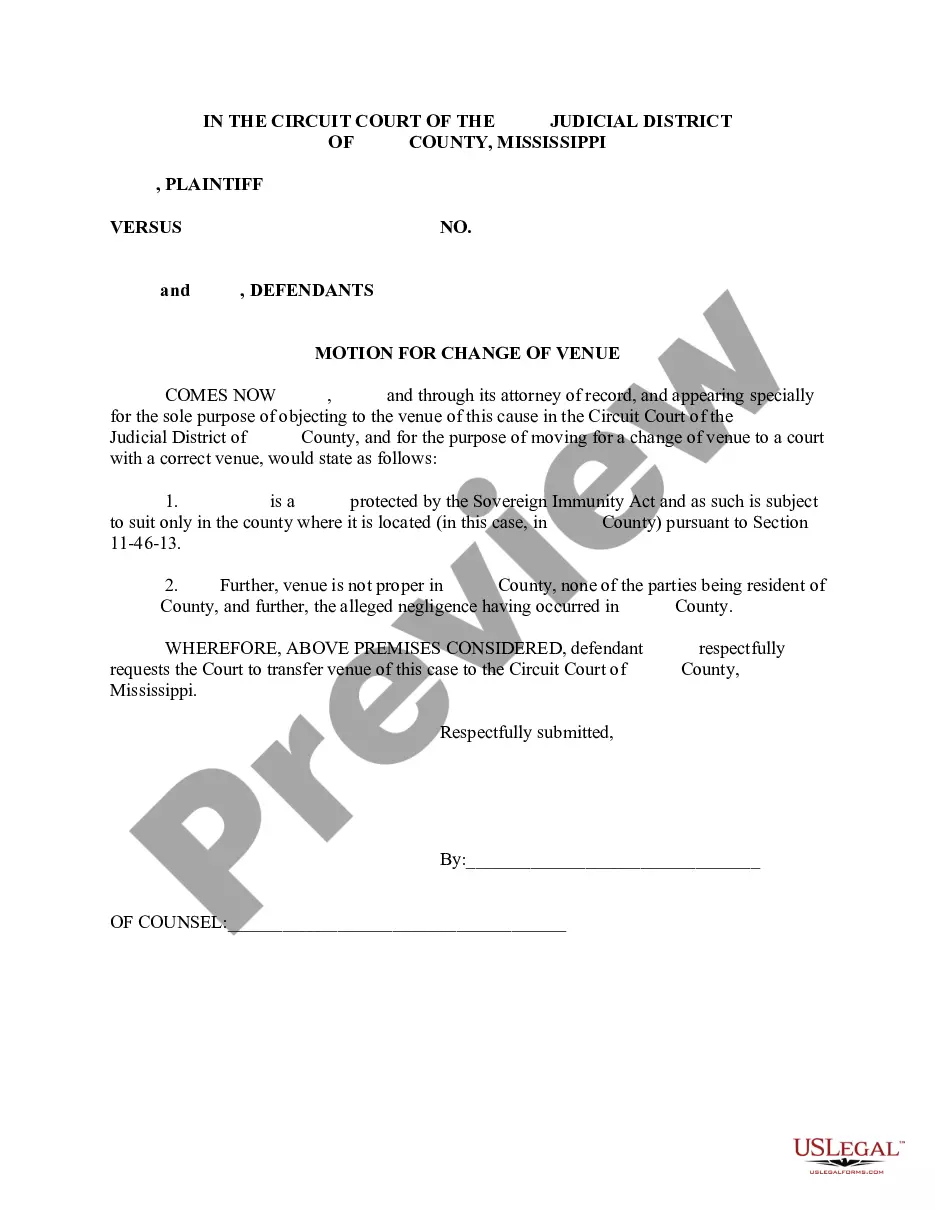
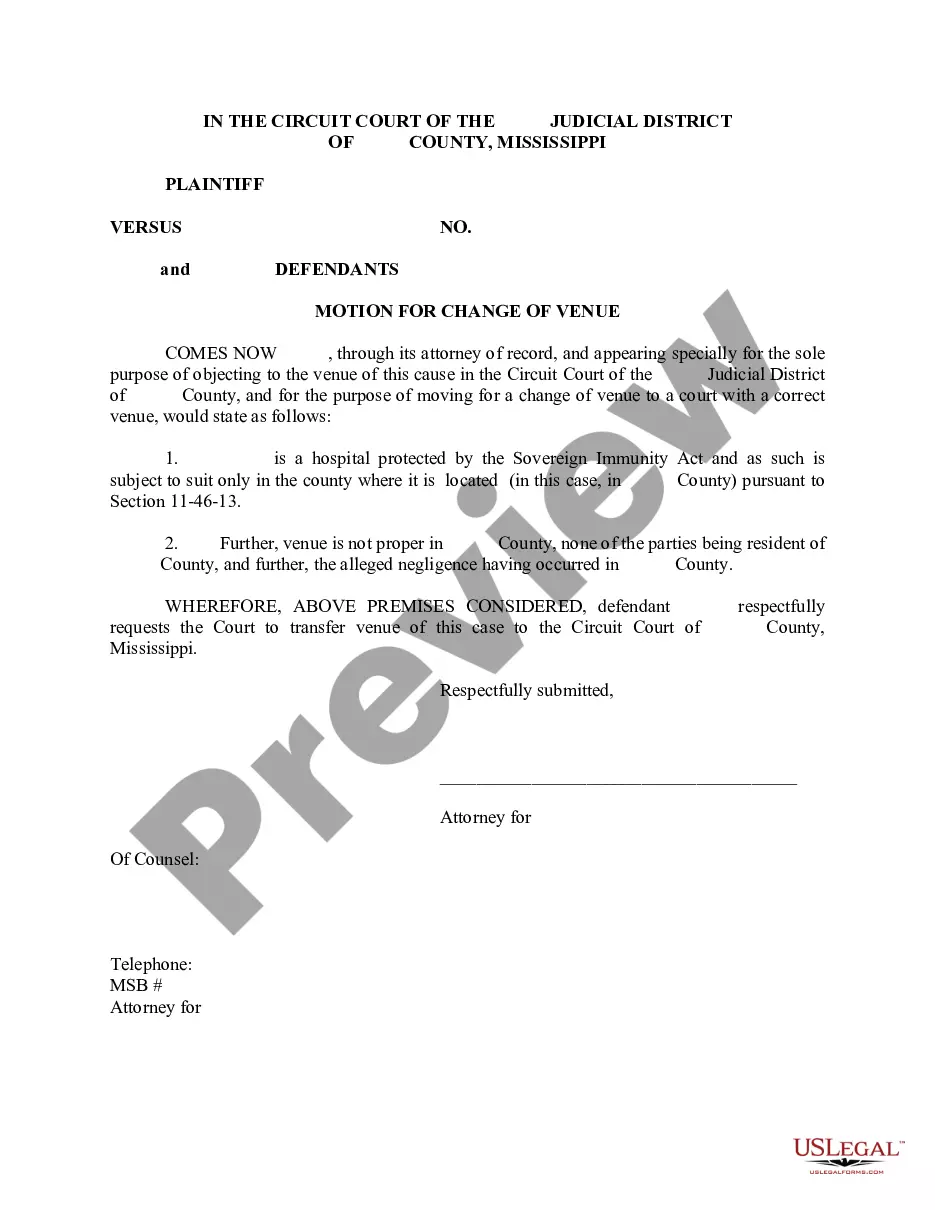
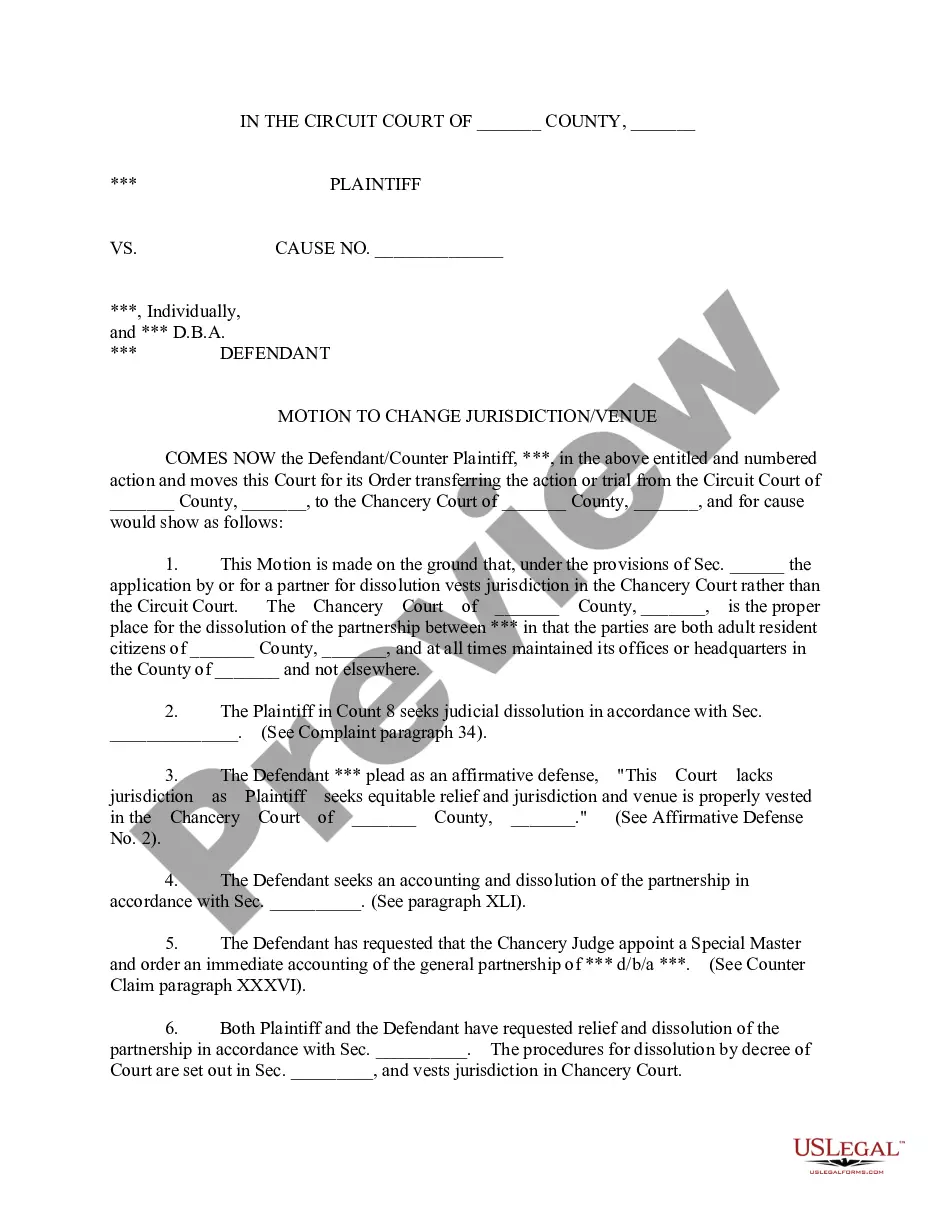
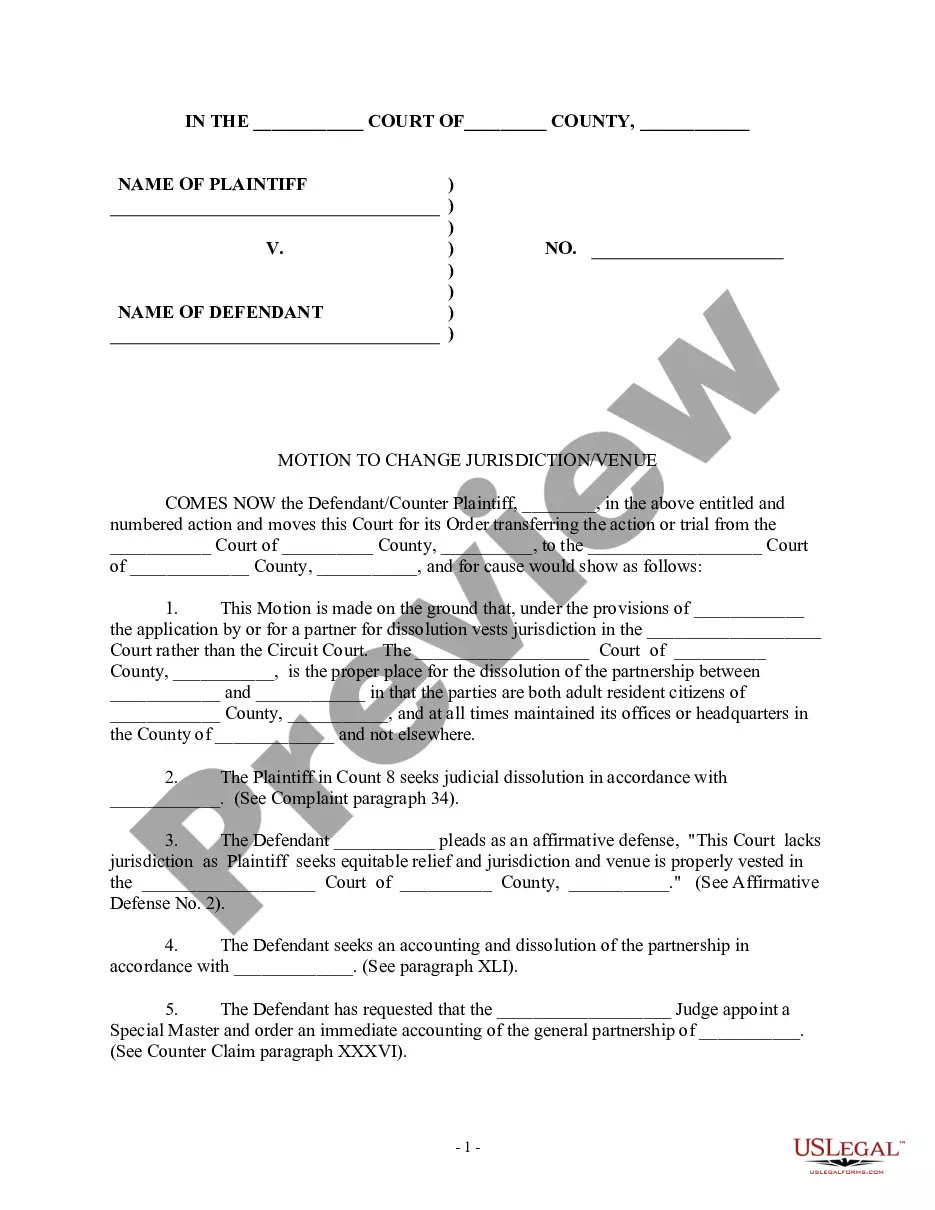
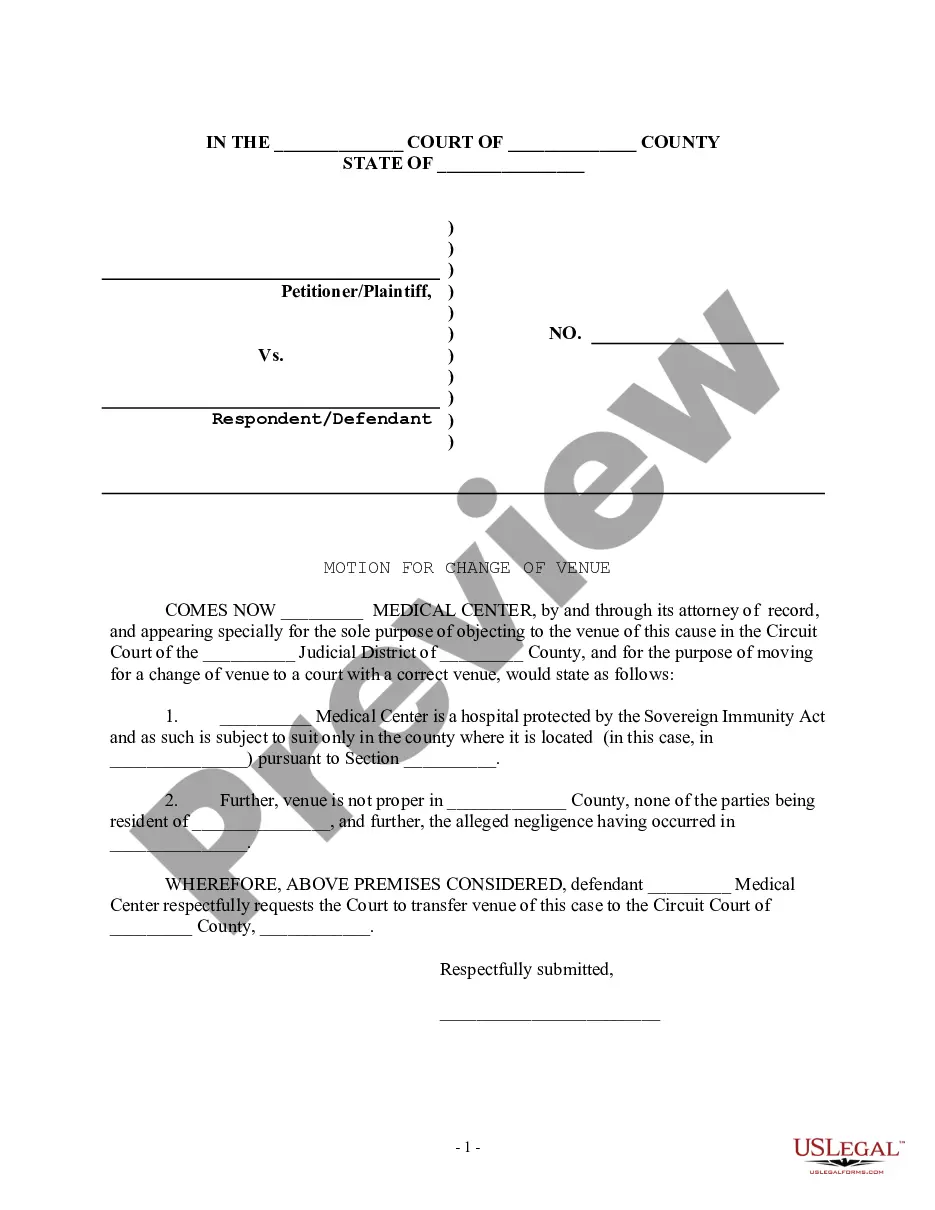
The Motion for Change of Venue - Sovereign Immunity is a legal document that requests a court to transfer a case to a different location. This form is specifically designed to address issues of sovereign immunity, which protects government entities from being sued in certain jurisdictions. Unlike general motion forms, this document is tailored to include unique considerations related to sovereign immunity claims, making it crucial for cases where such protections are asserted.
Key components of this form
- Case caption: Includes the names of the parties involved and the court where the motion is filed.
- Statement of facts: A section detailing the circumstances and reasons for the change of venue.
- Legal grounds: A reference to laws or precedents supporting the request for a venue change.
- Relief sought: Clearly outlines what the requesting party is asking the court to do.
- Signature line: Where the requesting party signs the motion.
Common use cases
This form should be used when a party in a legal case believes that a fair trial cannot be conducted in the current venue due to issues such as bias, potential prejudice, or legal protections provided to government entities based on sovereign immunity. It is essential for ensuring that the trial occurs in a more appropriate jurisdiction where the case can be properly adjudicated.
Who this form is for
- Individuals or entities seeking to change the venue of their ongoing legal case.
- Defendants in cases involving sovereign immunity claims.
- Legal practitioners representing clients in venues where sovereign immunity may affect trial fairness.
Instructions for completing this form
- Identify the parties: Fill in the names of all parties involved in the case at the top of the form.
- Provide the current venue: Specify the location of the court currently handling the case.
- Detail the reasons for the change: Clearly articulate the facts and legal grounds for requesting a change of venue.
- Request specific relief: Indicate what outcome you are seeking from the motion (e.g., transfer to a specific court).
- Sign and date the form: Include your signature along with the date to validate the motion.
Is notarization required?
Notarization is not commonly needed for this form. However, certain documents or local rules may make it necessary. Our notarization service, powered by Notarize, allows you to finalize it securely online anytime, day or night.
Get your form ready online
Our built-in tools help you complete, sign, share, and store your documents in one place.
Make edits, fill in missing information, and update formatting in US Legal Forms—just like you would in MS Word.
Download a copy, print it, send it by email, or mail it via USPS—whatever works best for your next step.
Sign and collect signatures with our SignNow integration. Send to multiple recipients, set reminders, and more. Go Premium to unlock E-Sign.
If this form requires notarization, complete it online through a secure video call—no need to meet a notary in person or wait for an appointment.
We protect your documents and personal data by following strict security and privacy standards.

Make edits, fill in missing information, and update formatting in US Legal Forms—just like you would in MS Word.

Download a copy, print it, send it by email, or mail it via USPS—whatever works best for your next step.

Sign and collect signatures with our SignNow integration. Send to multiple recipients, set reminders, and more. Go Premium to unlock E-Sign.

If this form requires notarization, complete it online through a secure video call—no need to meet a notary in person or wait for an appointment.

We protect your documents and personal data by following strict security and privacy standards.
Avoid these common issues
- Failing to provide adequate justification for the change of venue.
- Not citing relevant laws or precedents to support the motion.
- Neglecting to properly format the document according to court requirements.
- Omitting signatures or dates, which can render the motion invalid.
Benefits of completing this form online
- Convenient access: Download the form anytime from anywhere.
- Editability: Customize the form easily to fit your specific case details.
- Reliability: Forms are drafted by licensed attorneys to ensure compliance with legal standards.
Legal use & context
- This motion is vital in cases involving government defendants to ensure compliance with jurisdictional standards.
- Understanding the principles of sovereign immunity is essential when filing this motion.
Looking for another form?
Form popularity
FAQ
Immunity From Suit v.Sovereign immunity takes two forms: (1) immunity from suit (also known as immunity from jurisdiction or adjudication) and (2) immunity from enforcement.
Sovereign immunity is used as a means of protecting the government from having to alter its policies any time a person takes issue with them; however, it is important to note that state governments are not immune from lawsuits brought against them by other states or by the federal government.
This report provides a review of laws adopted in Cuba, Iran, Libya, Russia, Sudan, and Syria on lifting the sovereign immunity of foreign states. Individual lawsuits against the United States brought before national and international courts by these countries are also analyzed.
Sovereign immunity is used as a means of protecting the government from having to alter its policies any time a person takes issue with them; however, it is important to note that state governments are not immune from lawsuits brought against them by other states or by the federal government.
Federal sovereign immunity. In the United States, the federal government has sovereign immunity and may not be sued unless it has waived its immunity or consented to suit. The United States as a sovereign is immune from suit unless it unequivocally consents to being sued. The United States Supreme Court in Price v.
Immunity is a freedom from a legal duty, prosecution, or penalty, granted by government authority or statute. The main types of immunity are witness immunity, public officials immunity from liability, sovereign immunity, and diplomatic immunity.
The sovereign immunity refers to the fact that the government cannot be sued without its consent.