Mississippi Application for Release of Right to Redeem Property from IRS After Foreclosure
About this form
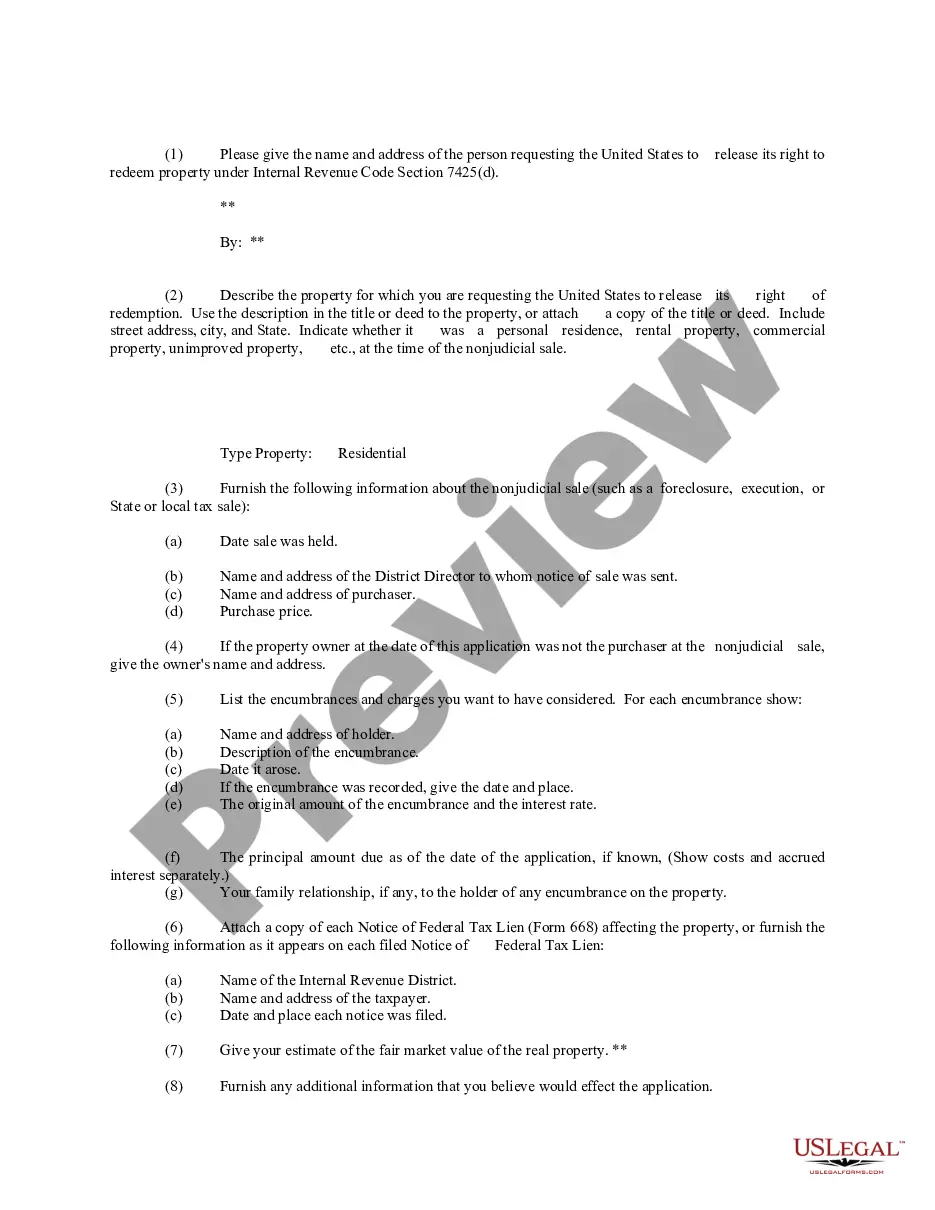
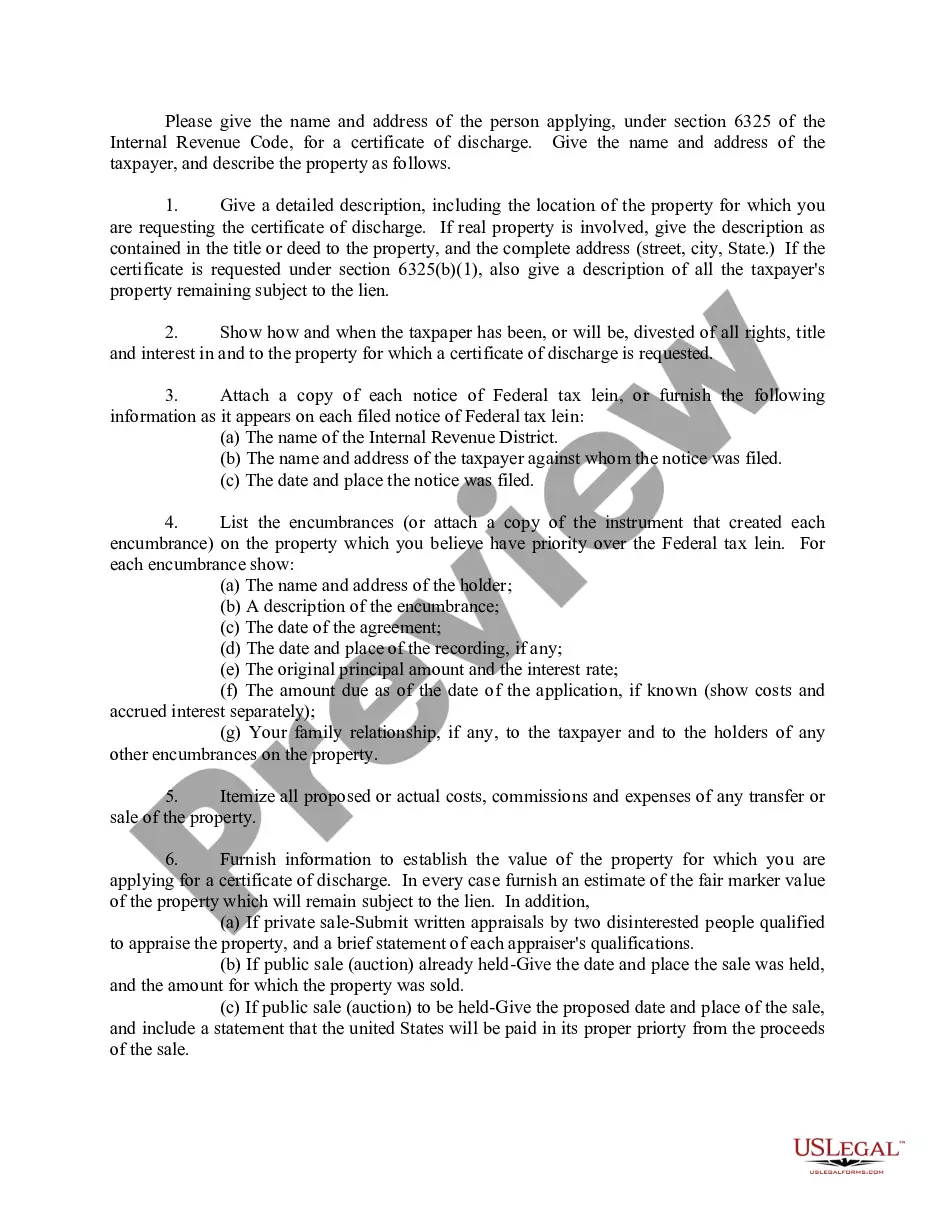
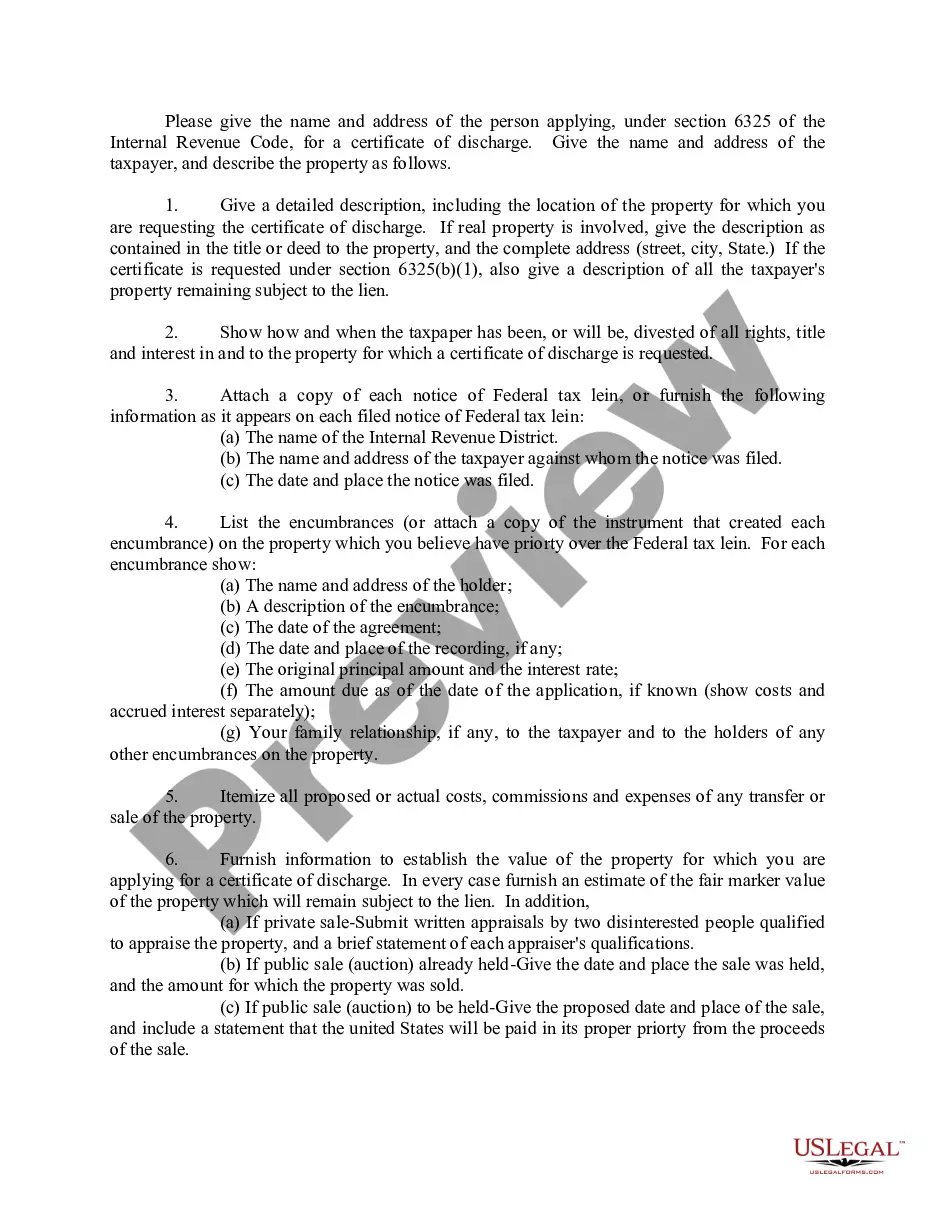
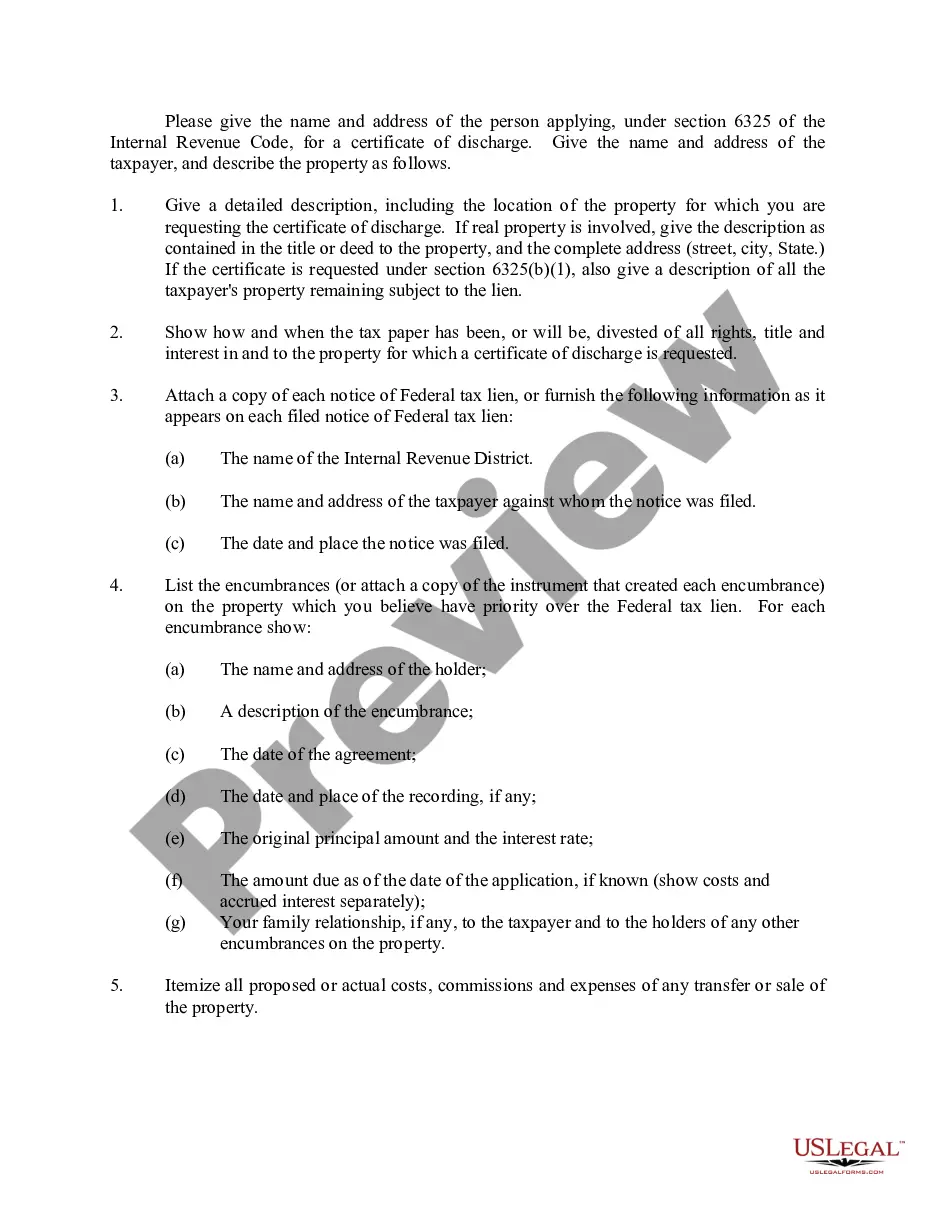
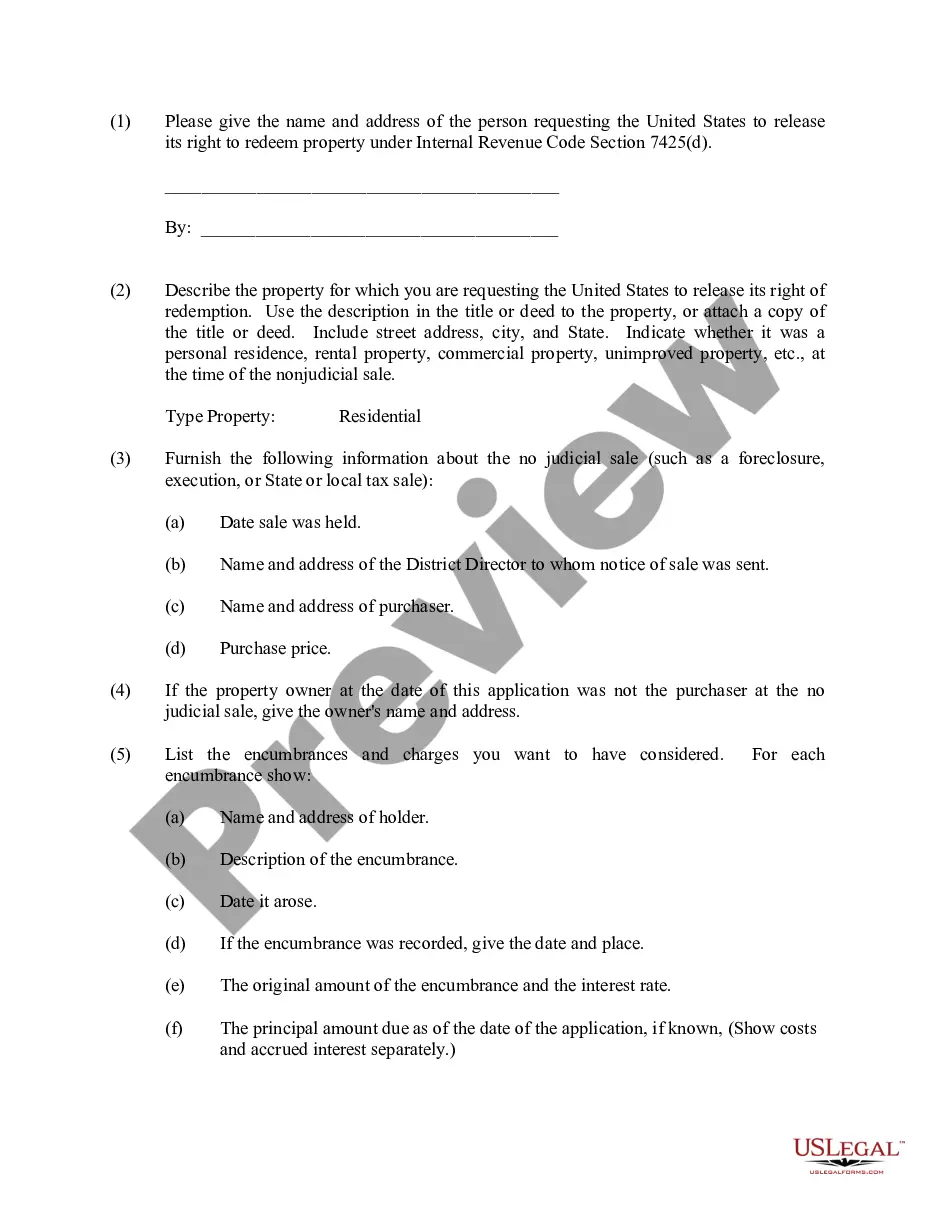
This is an Application for Release of Right to Redeem Property from IRS After Foreclosure, designed specifically for use in Mississippi. This form allows individuals to formally request the Internal Revenue Service (IRS) to release its right to redeem a property after a foreclosure event. It differs from other real estate forms in its focus on tax liens and the specific redemption rights associated with IRS foreclosures.
What’s included in this form
- Name and contact information of the applicant requesting the release.
- Description of the property, including its address and type (residential, commercial, etc.).
- Details about the nonjudicial sale, including date, purchaser information, and sale price.
- Information regarding any encumbrances on the property, including holders and amounts due.
- Attachments for Notices of Federal Tax Lien affecting the property.
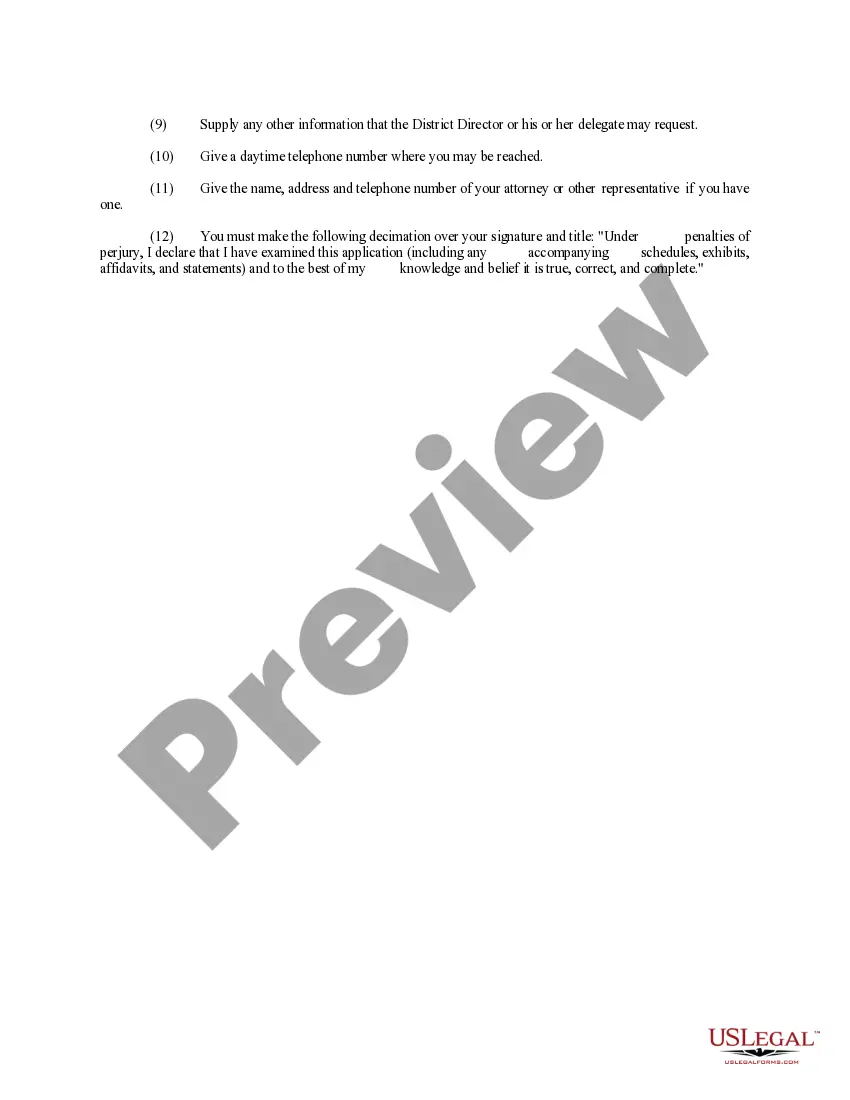
- Declaration statement affirming the accuracy of the application under penalty of perjury.
When to use this document
This form is necessary when a property owner wishes to relinquish the right of redemption to their property following a foreclosure due to an IRS tax lien. It is commonly used when a taxpayer has lost their home and seeks to clarify or settle any further claims from the IRS regarding the property.
Who needs this form
This application should be used by:
- Property owners in Mississippi who have undergone foreclosure by the IRS.
- Individuals seeking to request a release for properties burdened by federal tax liens.
- Legal representatives or attorneys assisting clients in the foreclosure process.
How to complete this form
To complete this application, follow these steps:
- Identify and provide your name and address at the beginning of the application.
- Clearly describe the property, including its physical address and type.
- Provide details regarding the nonjudicial sale, including the date and purchaser information.
- List all encumbrances affecting the property with necessary details.
- Attach any relevant Notices of Federal Tax Lien that affect the property.
- Sign the application, ensuring to declare the accuracy of the information provided.
Does this form need to be notarized?
This form does not typically require notarization unless specified by local law. However, it is essential to check local regulations to ensure compliance.
Get your form ready online
Our built-in tools help you complete, sign, share, and store your documents in one place.
Make edits, fill in missing information, and update formatting in US Legal Forms—just like you would in MS Word.
Download a copy, print it, send it by email, or mail it via USPS—whatever works best for your next step.
Sign and collect signatures with our SignNow integration. Send to multiple recipients, set reminders, and more. Go Premium to unlock E-Sign.
If this form requires notarization, complete it online through a secure video call—no need to meet a notary in person or wait for an appointment.
We protect your documents and personal data by following strict security and privacy standards.

Make edits, fill in missing information, and update formatting in US Legal Forms—just like you would in MS Word.

Download a copy, print it, send it by email, or mail it via USPS—whatever works best for your next step.

Sign and collect signatures with our SignNow integration. Send to multiple recipients, set reminders, and more. Go Premium to unlock E-Sign.

If this form requires notarization, complete it online through a secure video call—no need to meet a notary in person or wait for an appointment.

We protect your documents and personal data by following strict security and privacy standards.
Common mistakes
- Failing to include all required information about the property or sale.
- Not attaching necessary documentation, such as Notices of Federal Tax Lien.
- Inaccurate or incomplete details regarding encumbrances on the property.
- Missing the declaration signature that verifies the truthfulness of the application.
Why complete this form online
- Convenience of filling out the form online from anywhere.
- Editable templates allow for easy customization to fit individual circumstances.
- Access to legal forms drafted by licensed attorneys, ensuring reliability.
- Instant download for immediate use, saving time and effort.
Quick recap
- The application allows individuals to relinquish their right to redeem property after an IRS foreclosure.
- It is specifically meant for use in the state of Mississippi.
- Accurate completion is crucial to avoid delays or denials.
- Consulting a legal professional can provide additional support in the application process.
Looking for another form?
Form popularity
FAQ
What happens during the redemption period? During the redemption period, you or your tenant may continue to live in the property and are not required to make any mortgage payments. You also have the right to sell the property to another person or re-purchase the property.
Redemption is a period after your home has already been sold at a foreclosure sale when you can still reclaim your home. You will need to pay the outstanding mortgage balance and all costs incurred during the foreclosure process. Many states have some type of redemption period.
Redemption is a period after your home has already been sold at a foreclosure sale when you can still reclaim your home. You will need to pay the outstanding mortgage balance and all costs incurred during the foreclosure process. Many states have some type of redemption period.
In most states, you can get your home back after foreclosure within a certain period of time. This is called the right of redemption. In order to reedem your home, you usually must reimburse the person who bought the home at the foreclosure sale for the full purchase price, plus other costs.
Yes you can waive your right to redemption. Mortgage companies often will pay you for a waiver of your redemption rights in certain circumstances.
Which of these reasons for foreclosure would allow a former homeowner to access a two-year right of redemption period? Homeowners whose homes were foreclosed on for unpaid ad valorem taxes get a two-year right of redemption period in Texas. The Federal Reserve recently raised the discount rate.
The party who bought the home at the foreclosure sale and. the court or other party that held the foreclosure sale.
Right of redemption is a legal process that allows a delinquent mortgage borrower to reclaim their home or other property subject to foreclosure if they are able to repay their obligations in time.
The best way to qualify for a home loan with a foreclosure on your credit report is to immediately begin rebuilding your credit. Sub-prime lenders would approve mortgages for credit scores as low as 580 in this past, but this is no longer the case.