Mississippi Complaint - Jury Trial Demanded
What this document covers
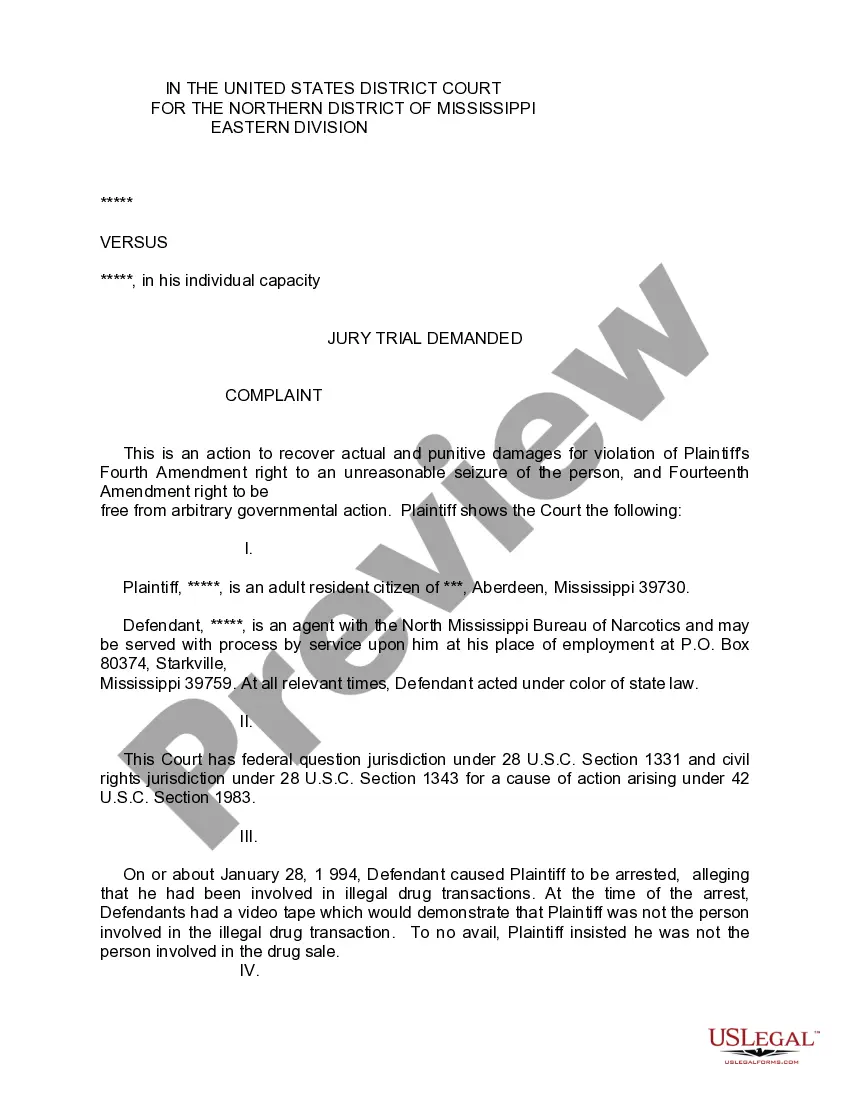
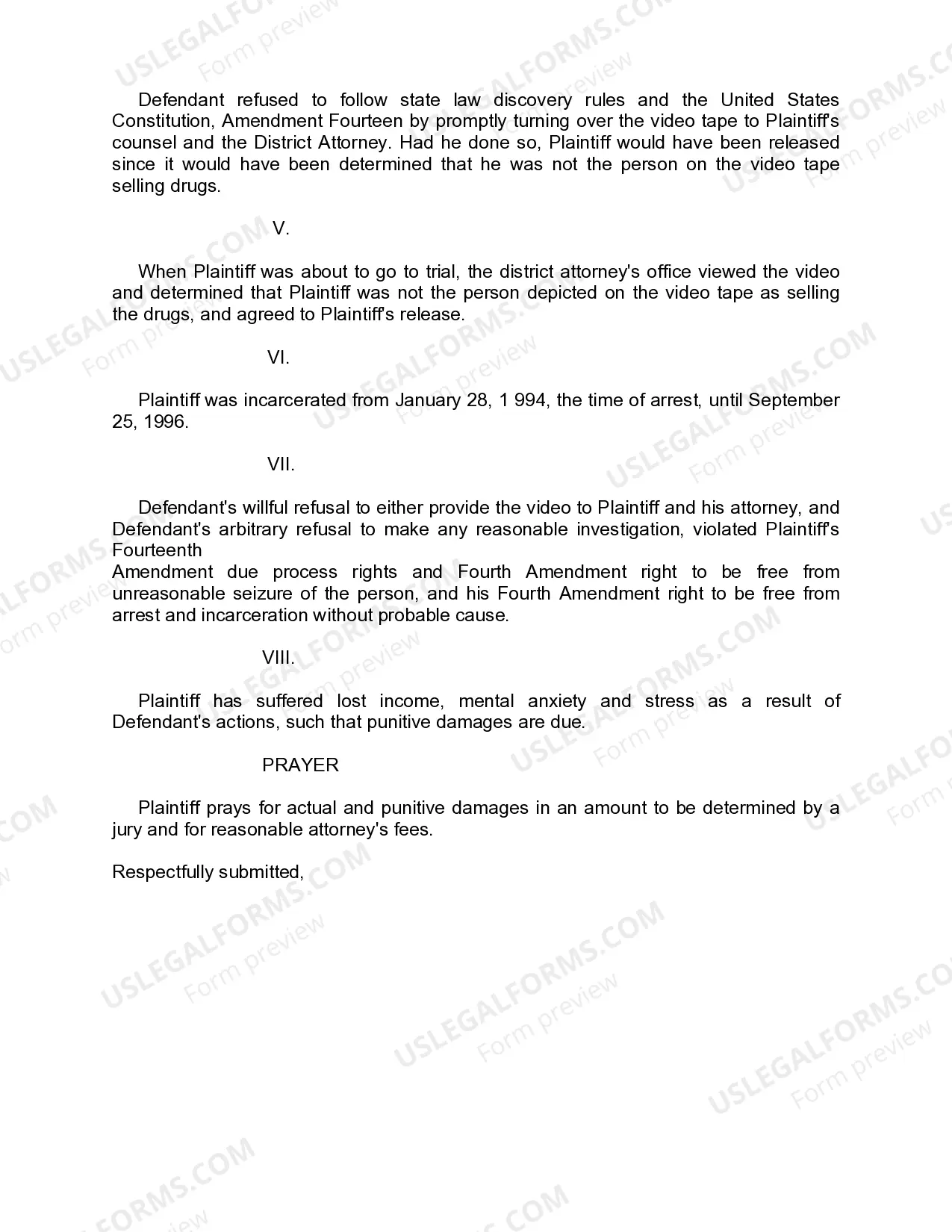
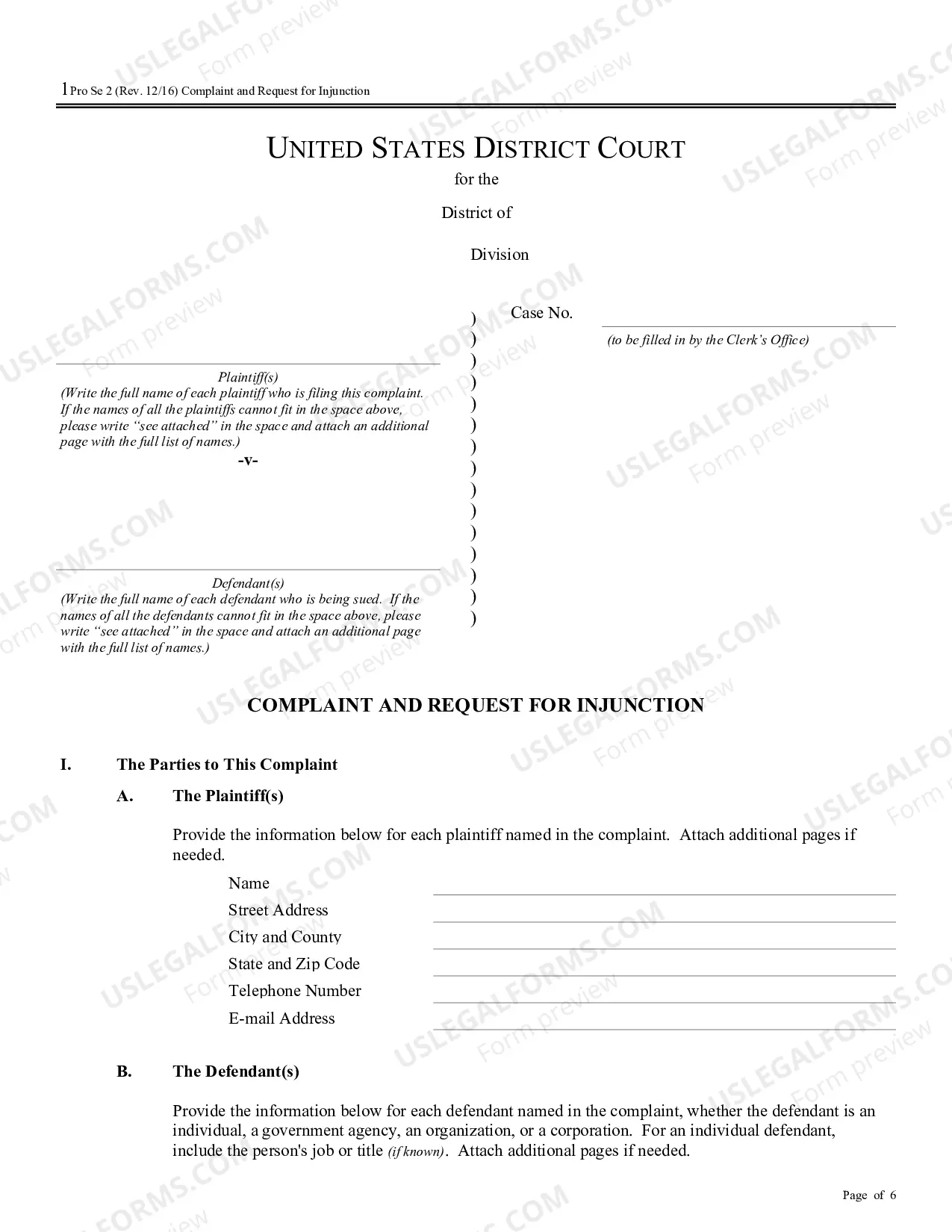
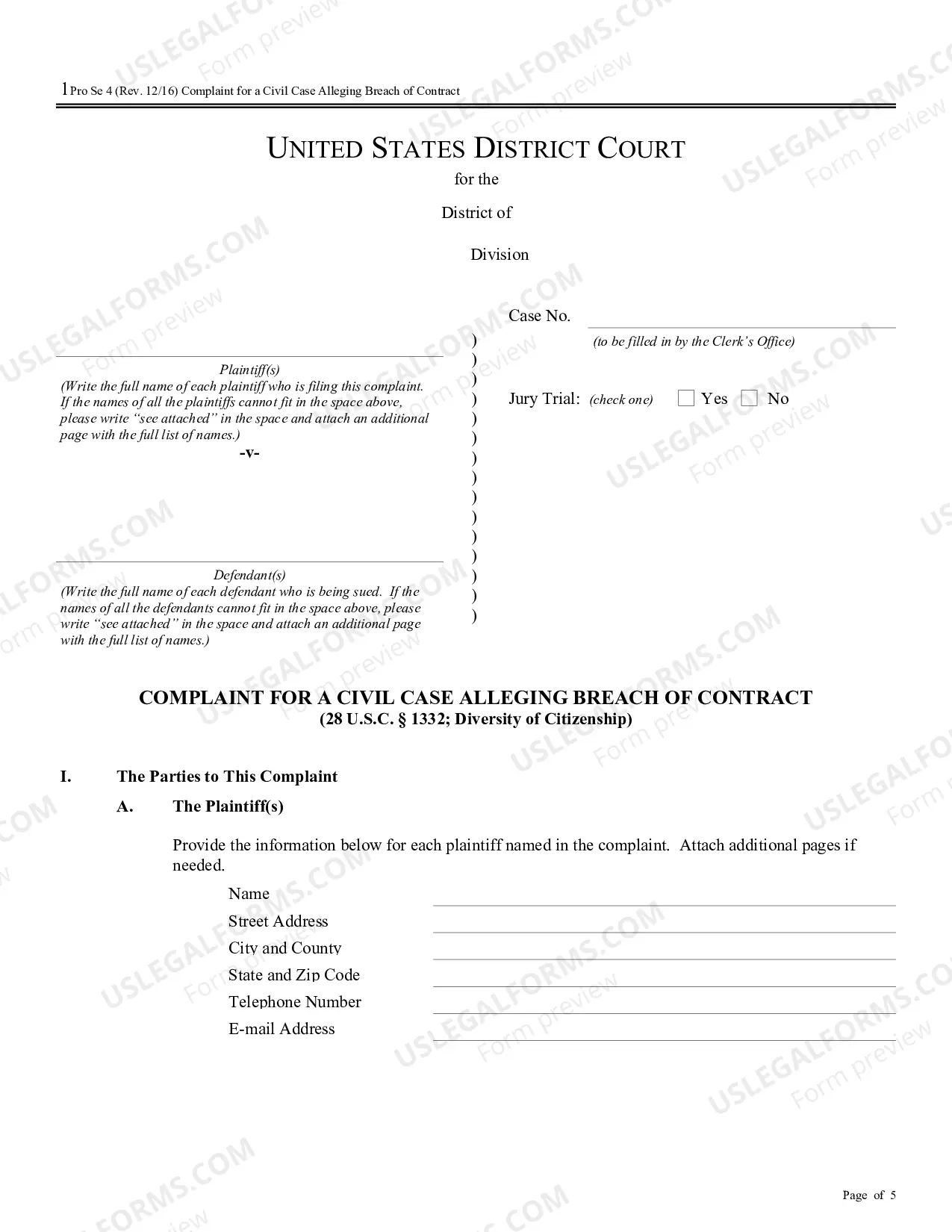
The Complaint - Jury Trial Demanded is a legal document that initiates a lawsuit. It conveys the allegations made by the Plaintiff against the Defendant, specifically regarding a violation of Fourth Amendment rights related to unreasonable search and seizure. This form is particularly designed for cases involving wrongful arrest and due process violations, which sets it apart from other complaint templates.
Main sections of this form
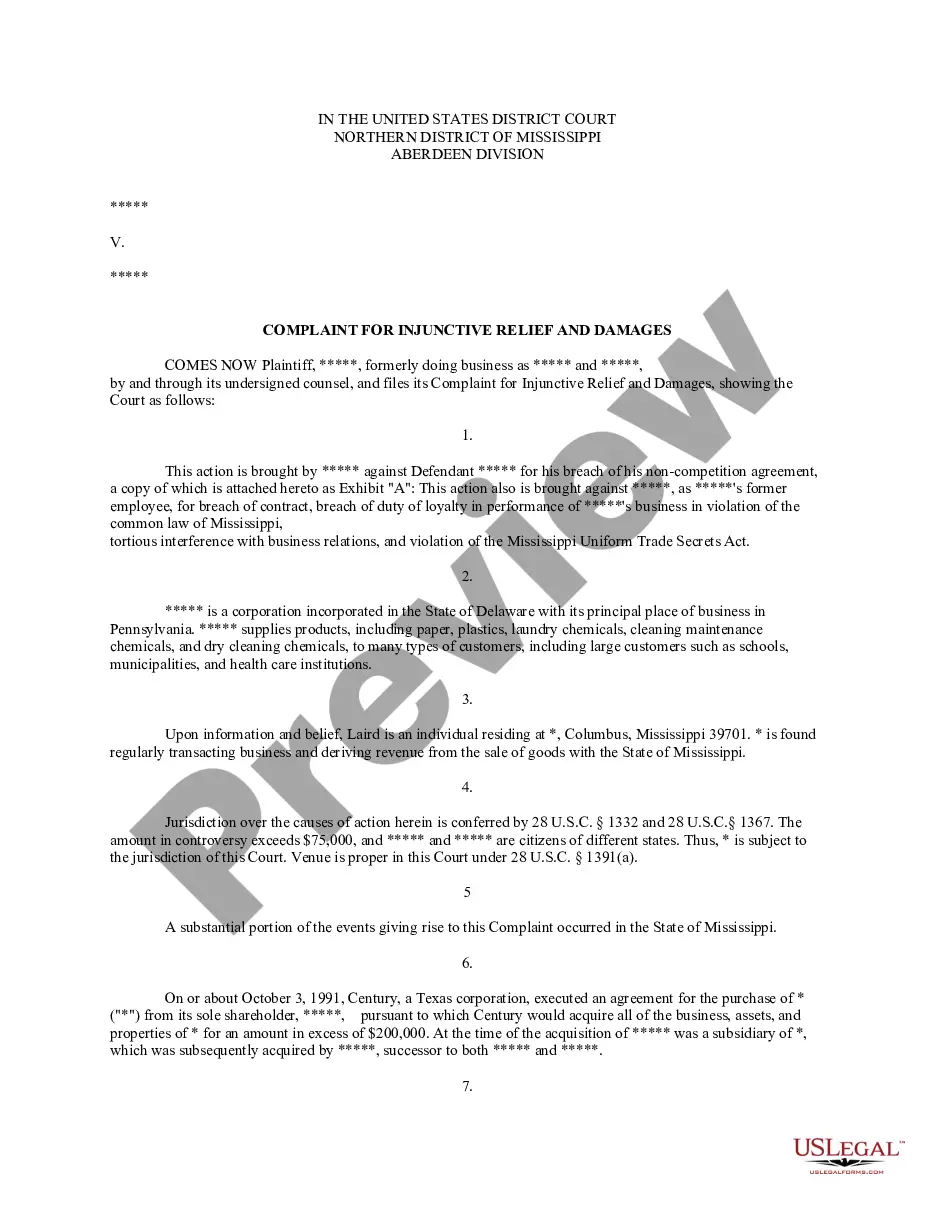
- Identification of the Plaintiff and Defendant, including relevant addresses.
- Jurisdictional statements establishing the court's authority over the case.
- Detailed allegations, including a timeline of events leading to the lawsuit.
- Claims for actual and punitive damages resulting from the Defendant's actions.
- A prayer for relief specifying the damages sought and legal fees.
When this form is needed
This form should be used when an individual believes their Fourth Amendment rights have been violated due to an unreasonable arrest or search. Scenarios may include wrongful imprisonment following an arrest based on mistaken identity or lack of evidence. It is also applicable when one has faced arbitrary governmental actions that infringe on personal liberties.
Who needs this form
- Individuals who have been wrongfully arrested based on insufficient evidence.
- Plaintiffs seeking to address violations of their constitutional rights.
- Those who wish to seek justice and claim damages for past wrongful governmental actions.
Steps to complete this form
- Identify the Plaintiff and Defendant, including their full names and addresses.
- State the basis for federal jurisdiction clearly and concisely.
- Detail the events leading to the complaint, including dates and actions taken by the Defendant.
- Clearly articulate the claims for damages, specifying how the Defendantâs actions resulted in harm.
- Sign and date the form, ensuring all required parties are acknowledged.
Is notarization required?
This form does not typically require notarization unless specified by local law. Always verify with the court or legal counsel for your jurisdictionâs requirements.
Get your form ready online
Our built-in tools help you complete, sign, share, and store your documents in one place.
Make edits, fill in missing information, and update formatting in US Legal Forms—just like you would in MS Word.
Download a copy, print it, send it by email, or mail it via USPS—whatever works best for your next step.
Sign and collect signatures with our SignNow integration. Send to multiple recipients, set reminders, and more. Go Premium to unlock E-Sign.
If this form requires notarization, complete it online through a secure video call—no need to meet a notary in person or wait for an appointment.
We protect your documents and personal data by following strict security and privacy standards.

Make edits, fill in missing information, and update formatting in US Legal Forms—just like you would in MS Word.

Download a copy, print it, send it by email, or mail it via USPS—whatever works best for your next step.

Sign and collect signatures with our SignNow integration. Send to multiple recipients, set reminders, and more. Go Premium to unlock E-Sign.

If this form requires notarization, complete it online through a secure video call—no need to meet a notary in person or wait for an appointment.

We protect your documents and personal data by following strict security and privacy standards.
Common mistakes
- Failing to provide accurate information about parties involved.
- Inefficiently articulating the claims and damages sought.
- Neglecting to check the jurisdictionâs specific requirements for filing.
- Omitting signatures or essential dates on the complaint.
Why use this form online
- Convenient access to legal forms at any time.
- Editable templates that allow customization to fit specific cases.
- Access to reliable documents drafted by licensed attorneys.
Key takeaways
- The Complaint - Jury Trial Demanded form is essential for pursuing claims of unreasonable searches.
- Accurate completion is crucial to effectively lodge a complaint in court.
- Understanding the legal implications can help protect individual rights against governmental abuse.
Looking for another form?

Form popularity
FAQ
Juan Mattos Jr. The United States District Court for the District of New Jersey (in case citations, D.N.J.) is a federal court in the Third Circuit (except for patent claims and claims against the U.S. government under the Tucker Act, which are appealed to the Federal Circuit).
The United States has 94 judicial circuits, above which there are 12 regional Courts of Appeals: District of Columbia Circuit, for Washington, D.C.; First Circuit, for Maine, New Hampshire, Massachusetts, Rhode Island, and Puerto Rico; Second Circuit, for Vermont, Connecticut, and New York; Third Circuit, for New
There are 94 federal judicial districts, including at least one district in each state, the District of Columbia and Puerto Rico. Three territories of the United States the Virgin Islands, Guam, and the Northern Mariana Islands have district courts that hear federal cases, including bankruptcy cases.
Any lands or premises held or acquired by or for the use of the U.S. or any department, establishment, or agency, of the U.S.; and any Federal area, or any part thereof, which is located within the exterior boundaries of any State.
Number of judgesThere are currently 870 authorized Article III judgeships: nine on the Supreme Court, 179 on the courts of appeals, 673 for the district courts and nine on the Court of International Trade.
The 94 federal judicial districts are organized into 12 regional circuits, each of which has a court of appeals.