Mississippi Complaint for Injunctive Relief and Damages
What this document covers
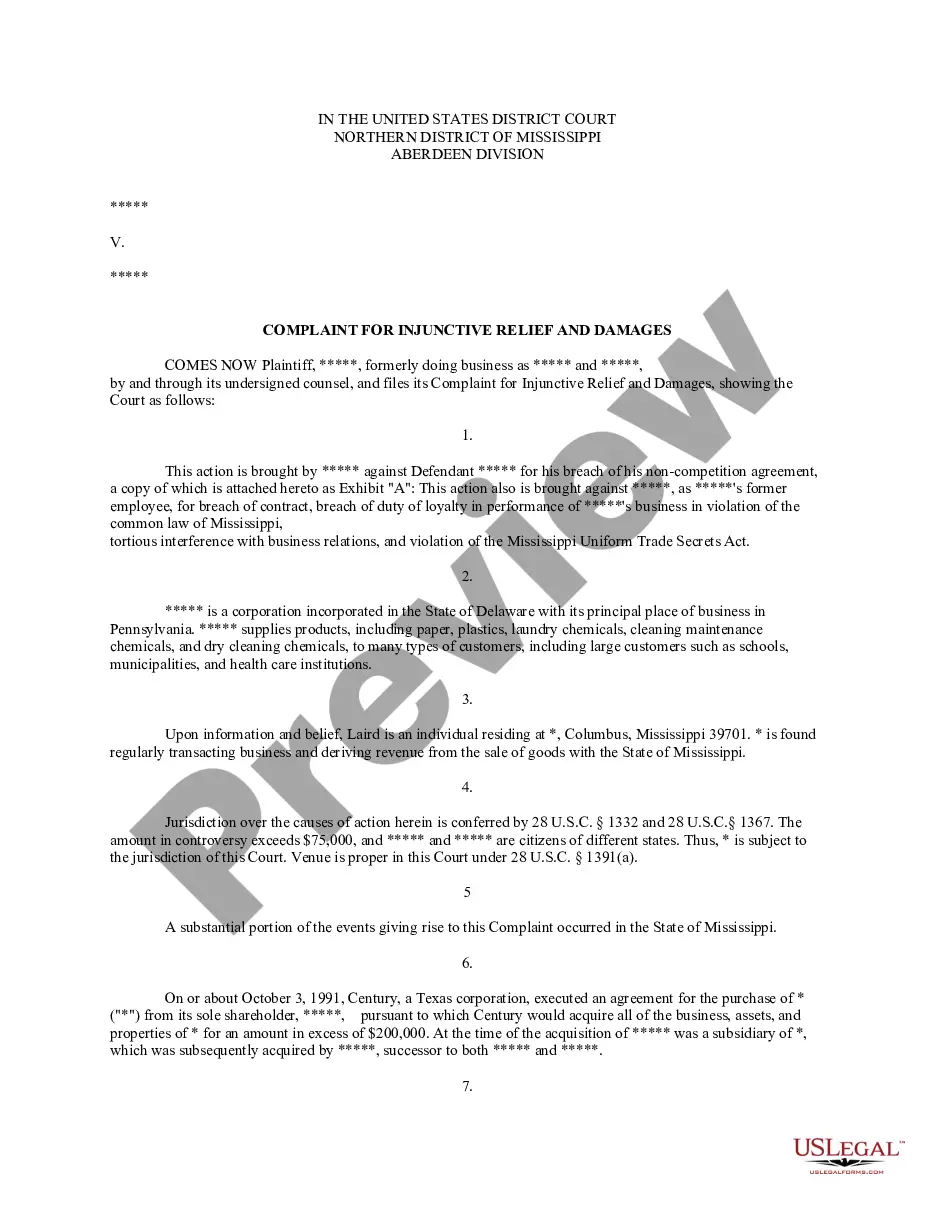
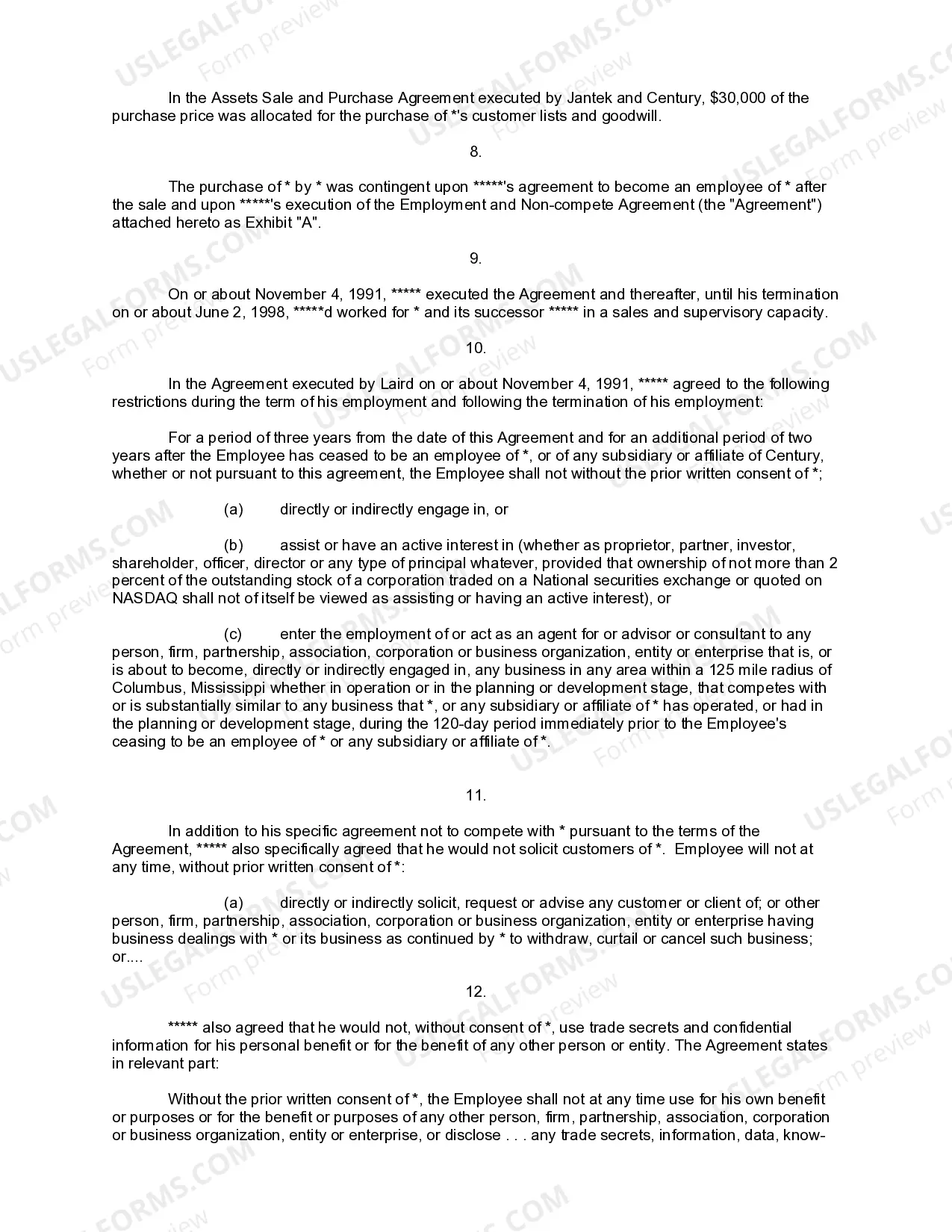
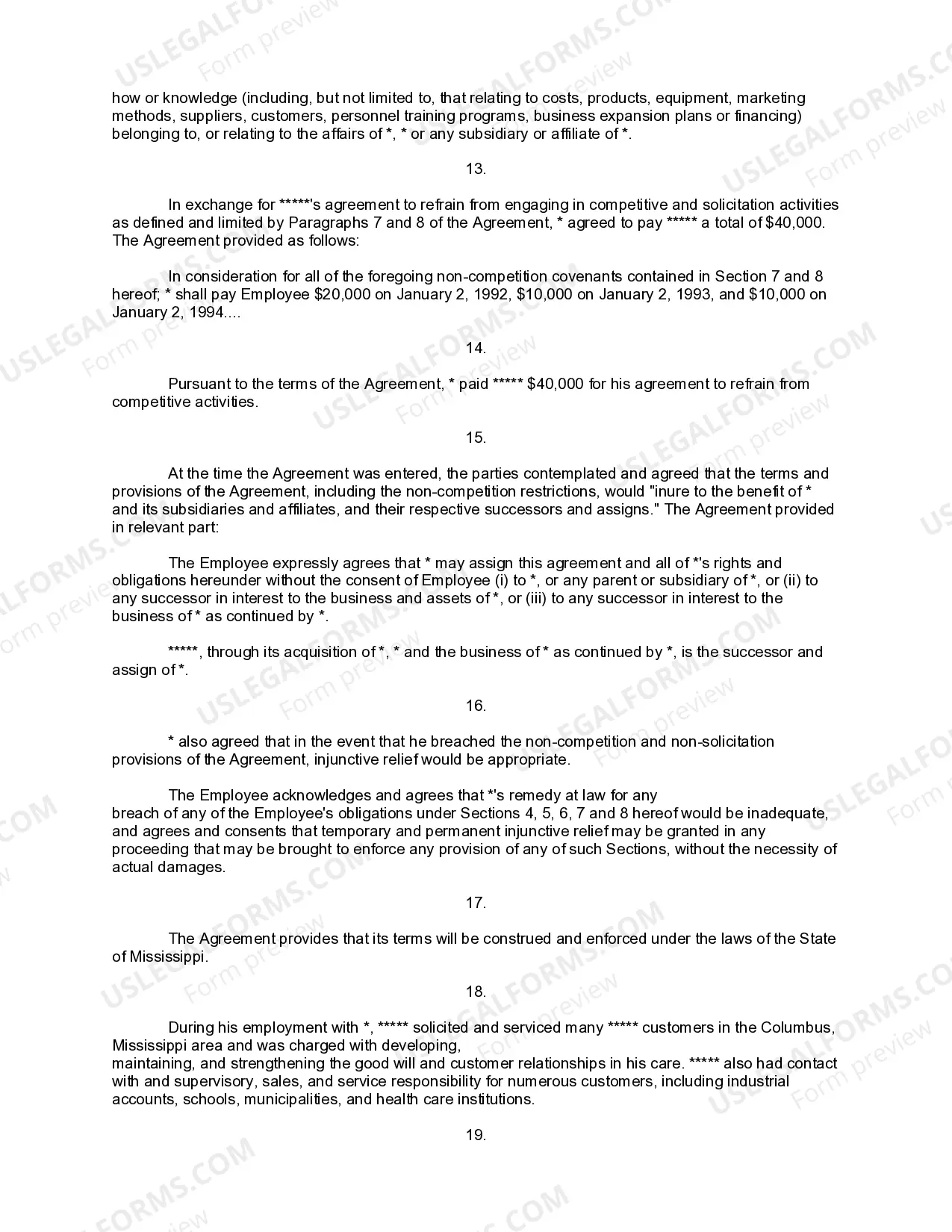
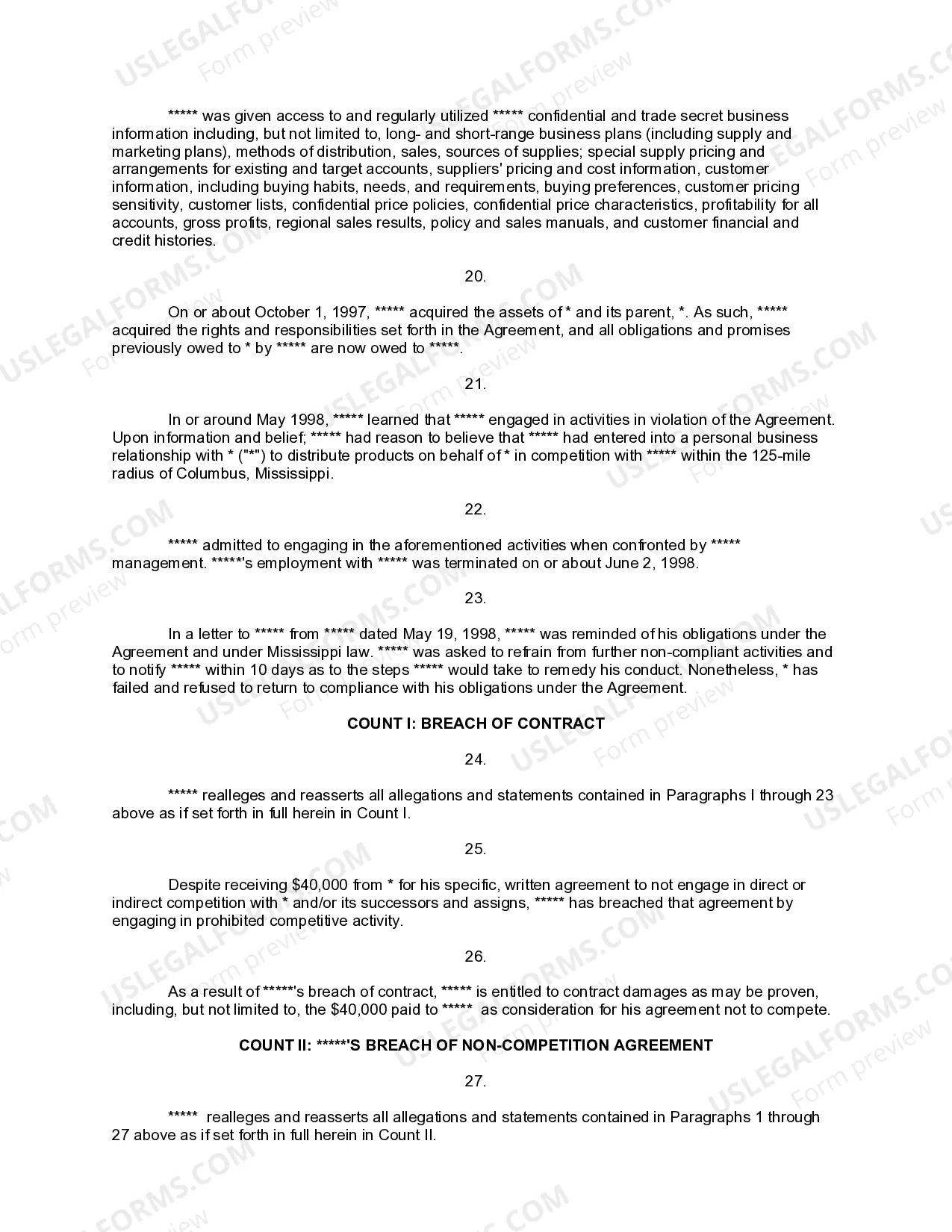
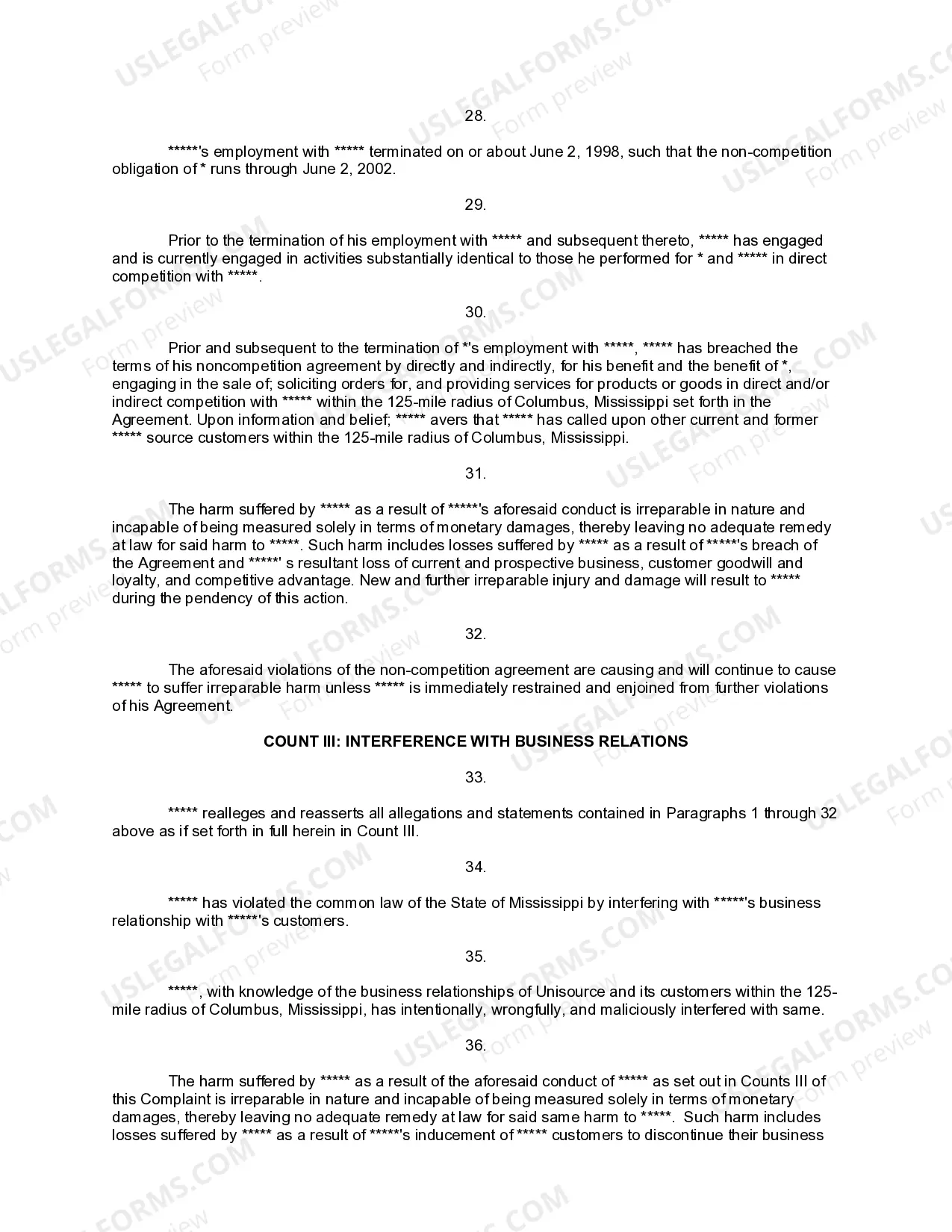
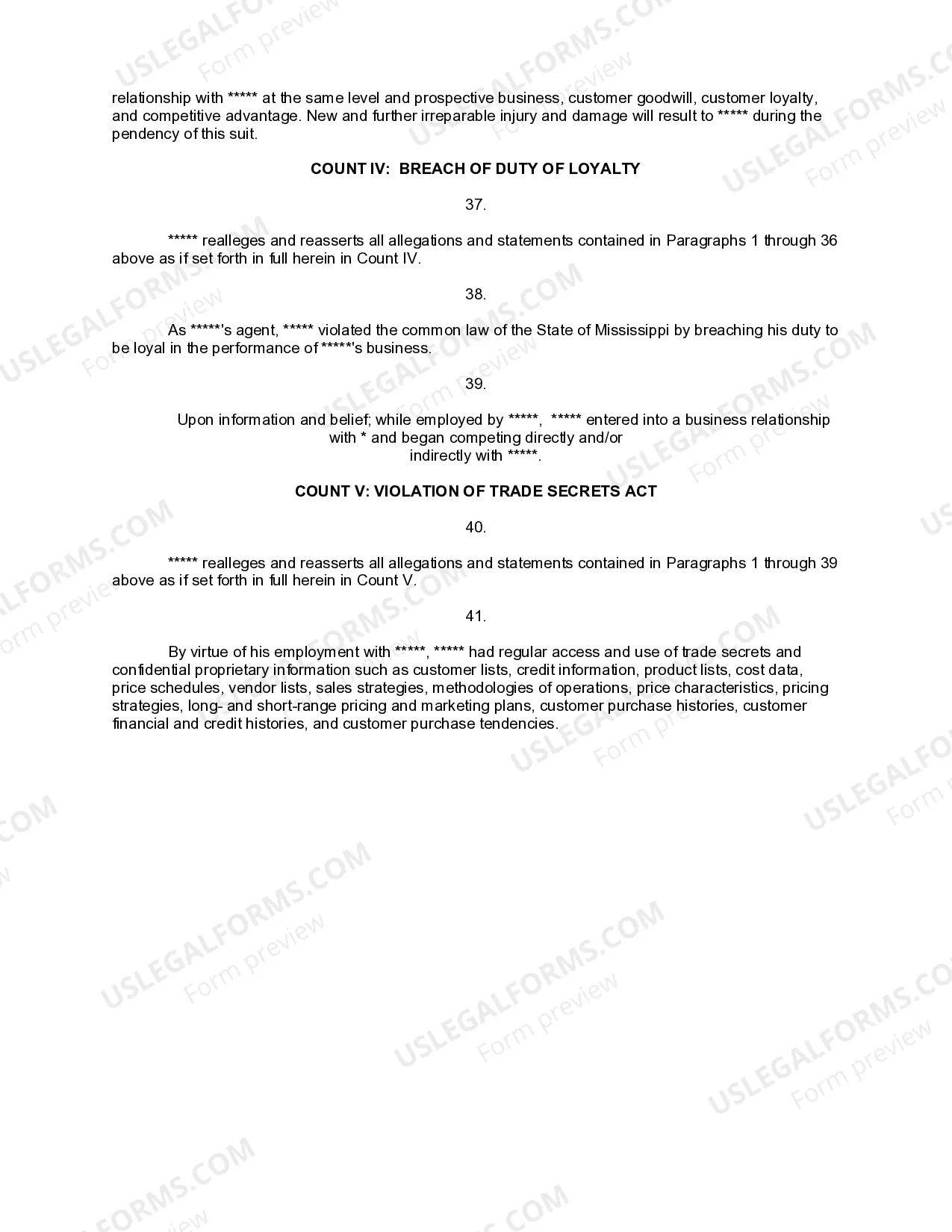
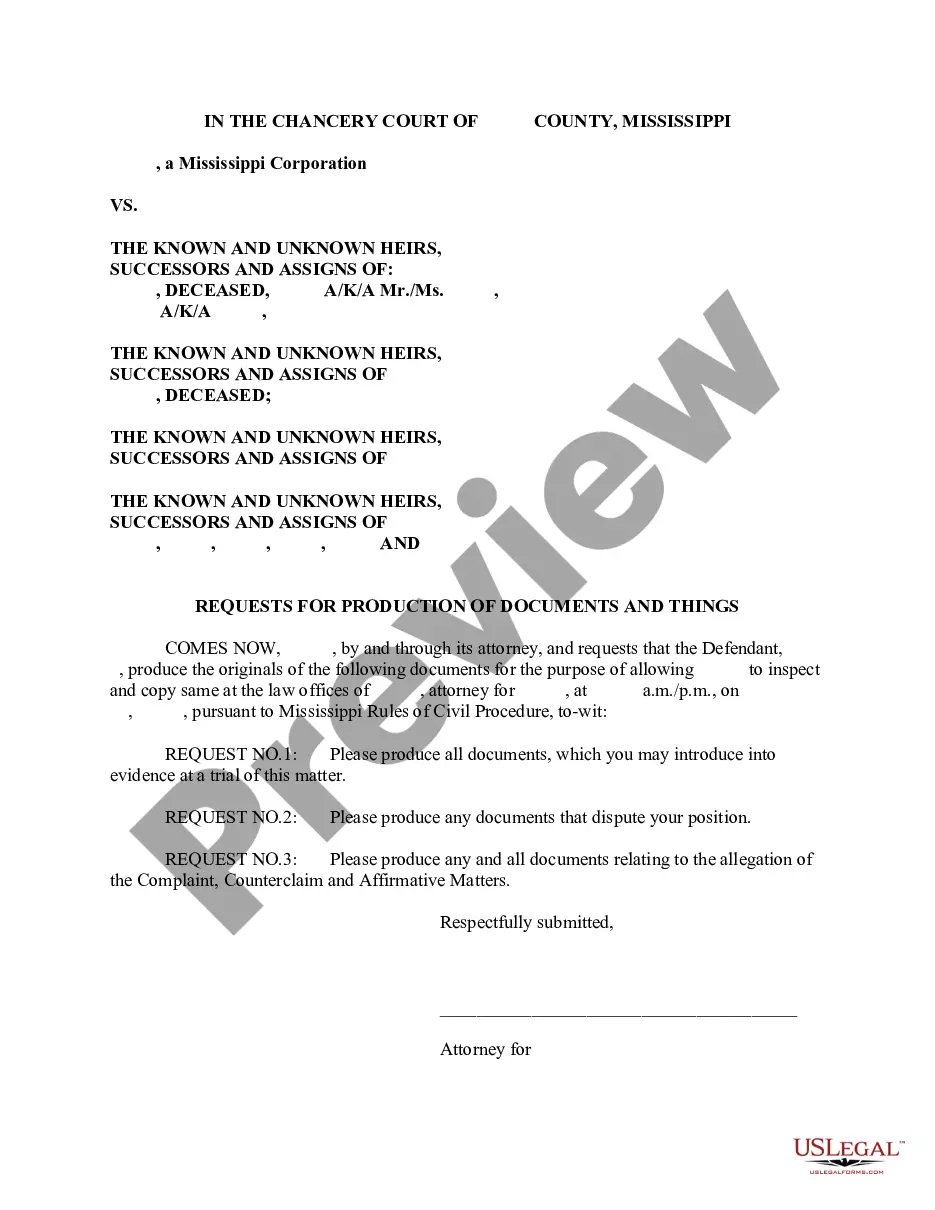
The Complaint for Injunctive Relief and Damages is a legal document that initiates a court action by outlining the grievances of the plaintiff against the defendant. This form is specifically designed to request both injunctive relief and damages as part of a lawsuit. It differs from other complaints by emphasizing the need for immediate court intervention to prevent further harm and to seek compensation for damages suffered. This form serves as a model to guide users in drafting their own complaint tailored to their specific legal situations.
Key components of this form
- Identification of the parties involved in the lawsuit.
- Details of the breach of contract, including the specific agreements violated.
- Claims for injunctive relief stating the necessity of immediate court intervention.
- Description of damages sought, including monetary compensation.
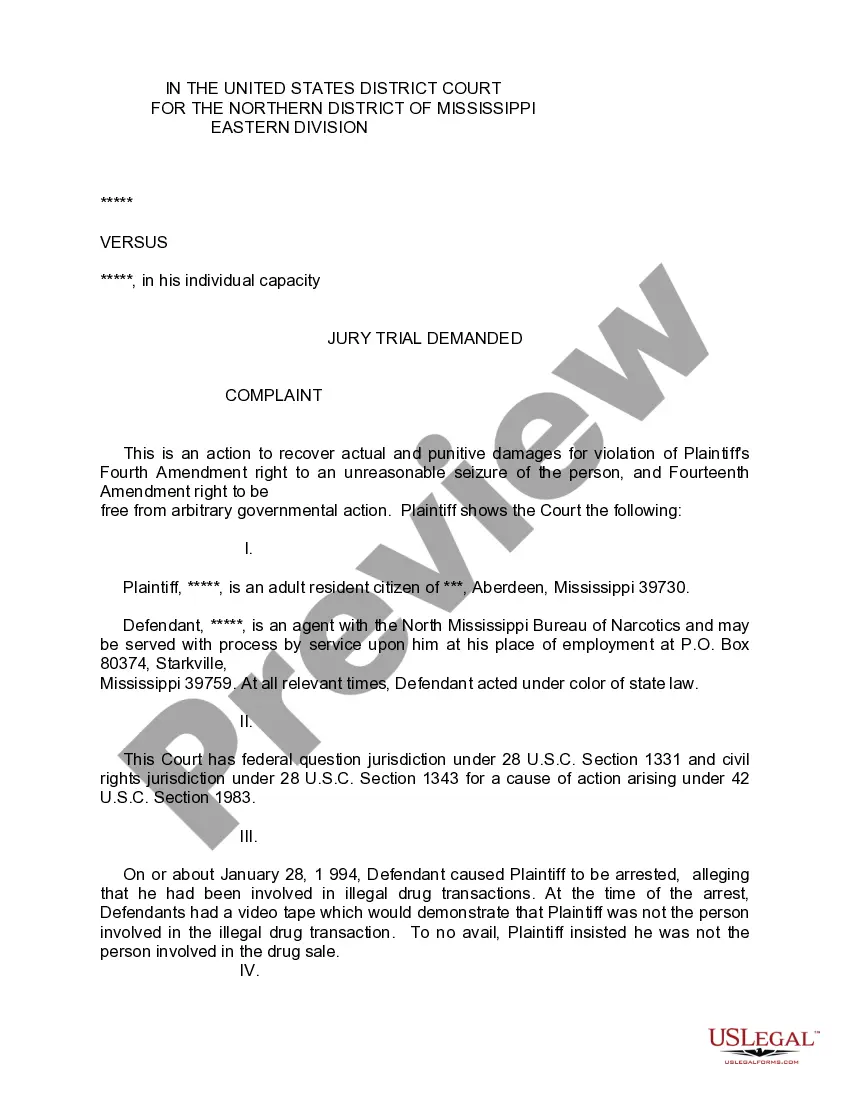
- Legal grounds for jurisdiction and venue in the specific court.
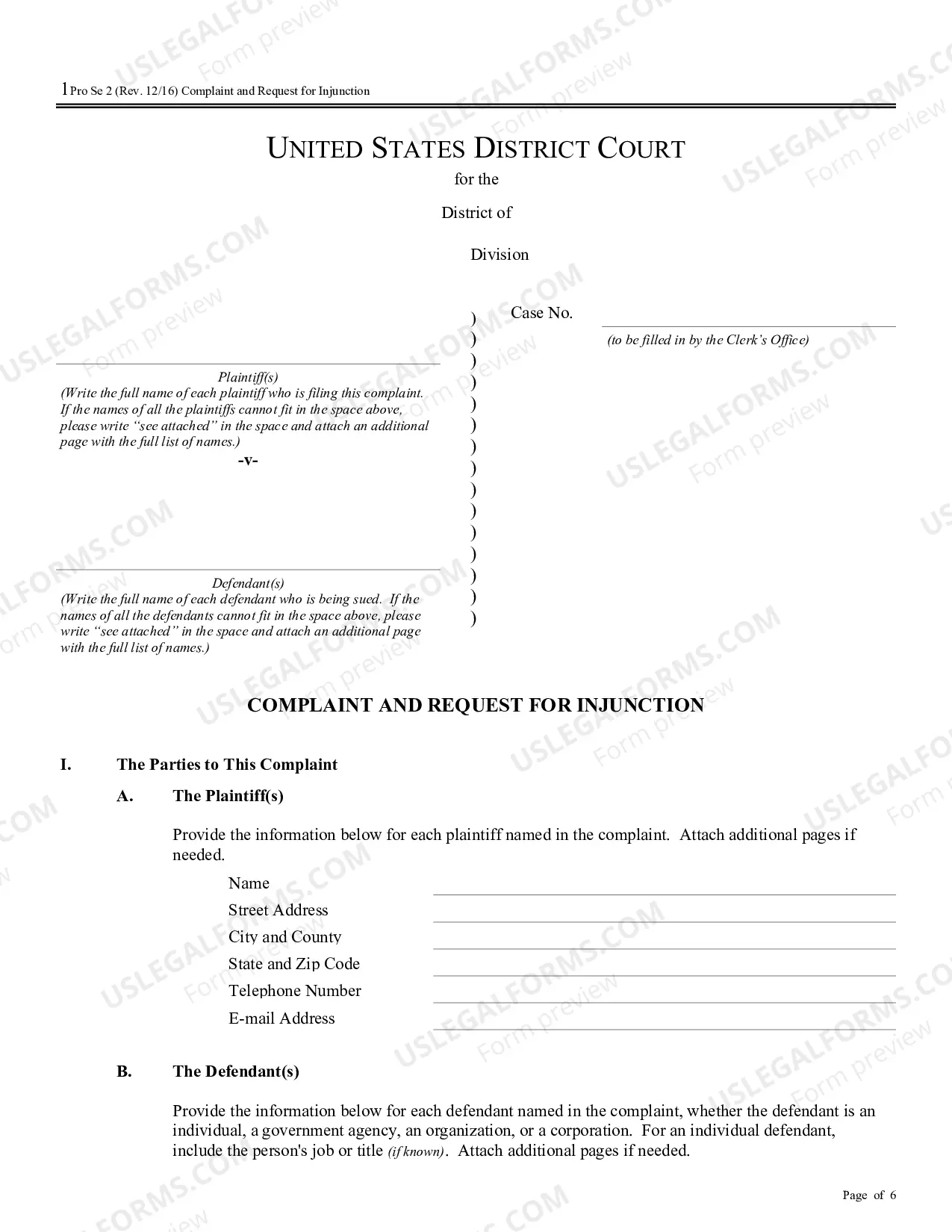
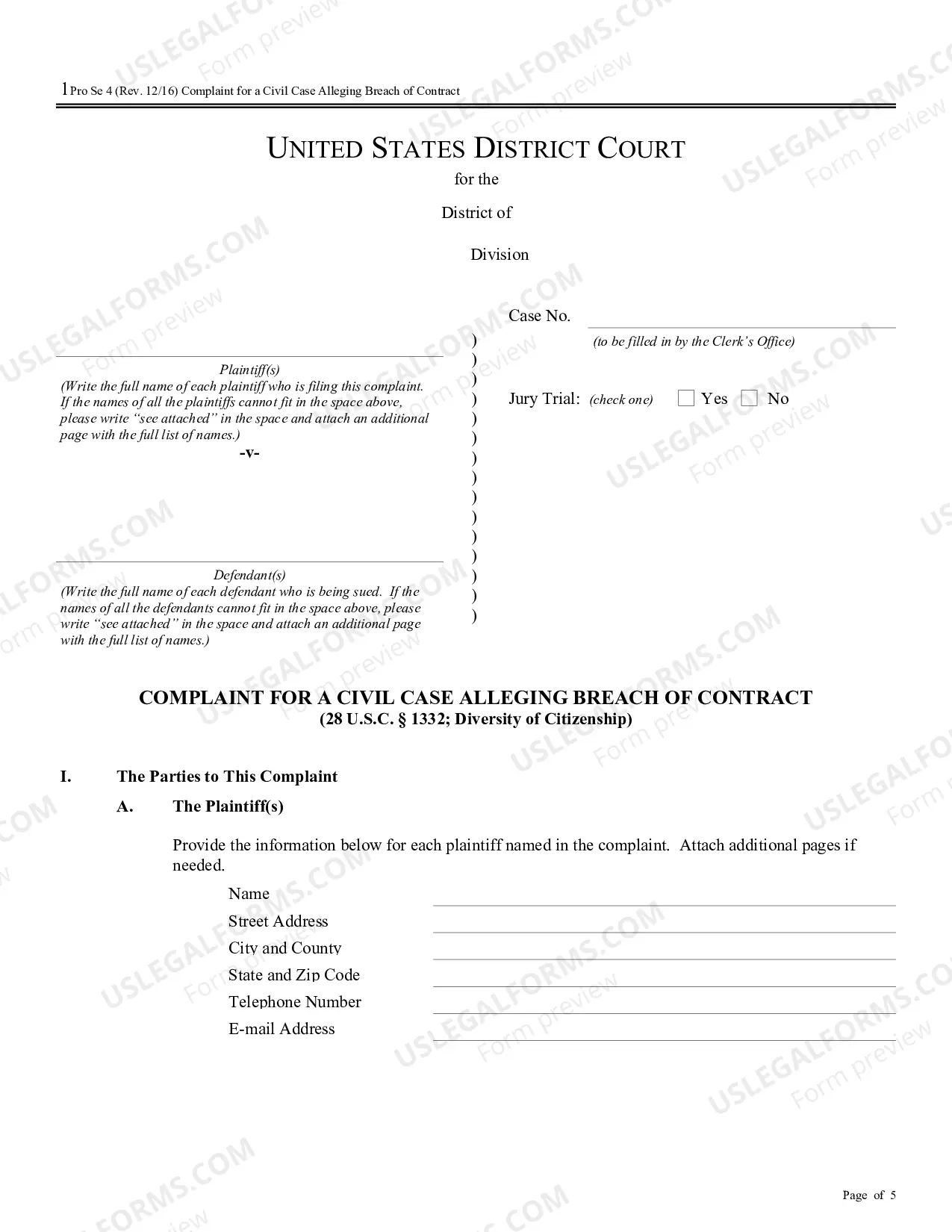
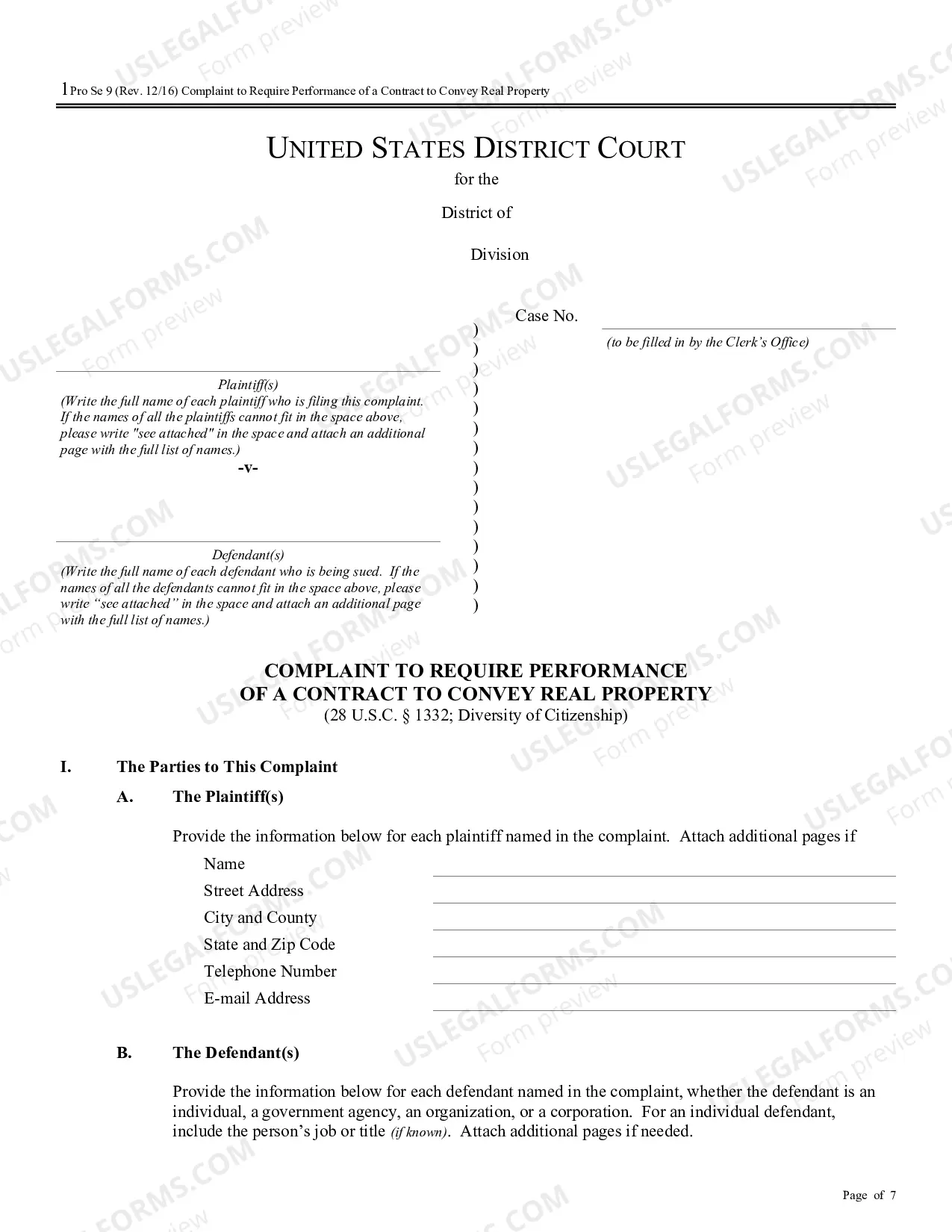
When to use this document
This form should be used when an individual or business needs to formally bring a lawsuit against another party for breaches of contracts, particularly in cases involving non-competition agreements or interference with business operations. It is also suitable when the complaining party seeks immediate court orders to prevent ongoing harm due to the other party's actions, as well as compensation for damages incurred.
Who this form is for
- Business owners who need to protect their company from unfair competition.
- Individuals seeking to enforce non-competition clauses against former employees.
- Companies aiming to recover damages for breach of contract or interference with business relationships.
- Legal representatives preparing to file a lawsuit on behalf of clients.
How to complete this form
- Identify and list the names of the plaintiff and defendant at the beginning of the complaint.
- Clearly outline the facts of the case, specifying the nature of the breach and the contractual obligations that were violated.
- Describe the type of injunctive relief being sought and explain why it is necessary to prevent further harm.
- Include a detailed account of the damages incurred and the monetary compensation being requested.
- Ensure to sign and date the form, along with any necessary attorney signatures.
Does this document require notarization?
In most cases, this form does not require notarization. However, some jurisdictions or signing circumstances might. US Legal Forms offers online notarization powered by Notarize, accessible 24/7 for a quick, remote process.
Get your form ready online
Our built-in tools help you complete, sign, share, and store your documents in one place.
Make edits, fill in missing information, and update formatting in US Legal Forms—just like you would in MS Word.
Download a copy, print it, send it by email, or mail it via USPS—whatever works best for your next step.
Sign and collect signatures with our SignNow integration. Send to multiple recipients, set reminders, and more. Go Premium to unlock E-Sign.
If this form requires notarization, complete it online through a secure video call—no need to meet a notary in person or wait for an appointment.
We protect your documents and personal data by following strict security and privacy standards.

Make edits, fill in missing information, and update formatting in US Legal Forms—just like you would in MS Word.

Download a copy, print it, send it by email, or mail it via USPS—whatever works best for your next step.

Sign and collect signatures with our SignNow integration. Send to multiple recipients, set reminders, and more. Go Premium to unlock E-Sign.

If this form requires notarization, complete it online through a secure video call—no need to meet a notary in person or wait for an appointment.

We protect your documents and personal data by following strict security and privacy standards.
Typical mistakes to avoid
- Failing to clearly identify all parties involved in the dispute.
- Not providing adequate details about the breach and its impact.
- Omitting the specific relief sought, leading to confusion about the intended outcome.
- Incorrectly citing jurisdiction or venue requirements.
- Neglecting to proofread for clarity and completeness before submission.
Benefits of using this form online
- Immediate access to a professionally drafted legal template, reducing the time spent on document preparation.
- Editability allows users to customize the form to their specific circumstances easily.
- Reliable format ensures compliance with legal standards in Mississippi.
- Convenient downloads available in standard formats for easy printing and use.
Looking for another form?


Form popularity
FAQ
(3) AN INJUNCTION IS NOT A CAUSE OF ACTION.12-248-Appeal at 23-24 (holding that the Superior Court justice properly dismissed the plaintiff's request for injunctive relief). In so holding, the Court recognized authority from other jurisdictions holding that injunctive relief is not a cause of action.
An injunction may be necessary to preserve or prevent the loss of an asset, protect against personal harm, prevent loss or damage to reputation and safeguard business or personal interests.
It is important to note that when you file a lawsuit you may request both money damages and injunctive relief if both are necessary for an appropriate legal remedy; you may have filed a lawsuit with a request for money damages, but because the defendant continued to act in bad form, the continued violation of your
Injunctive relief, also known as an injunction, is a remedy which restrains a party from doing certain acts or requires a party to act in a certain way. It is generally only available when there is no other remedy at law and irreparable harm will result if the relief is not granted.
Compensatory damages - the amount of money the plaintiff lost where the defendant's tort was the legal cause of the loss.Injunctive relief - a court order prohibiting the defendant from continuing or repeating the tortious behavior.
"When a court employs the extraordinary remedy of injunction, it directs the conduct of a party, and does so with the backing of its full coercive powers." A party that fails to comply with an injunction faces criminal or civil penalties, including possible monetary sanctions and even imprisonment.
Courts often issue preliminary injunctions for the purpose of stopping action until such time as a hearing can be held to determine what the course of action should be. For example: Mary and Tom have lived in their home for more than 40 years, and have cultivated a lovely property, filled with mature shade trees.