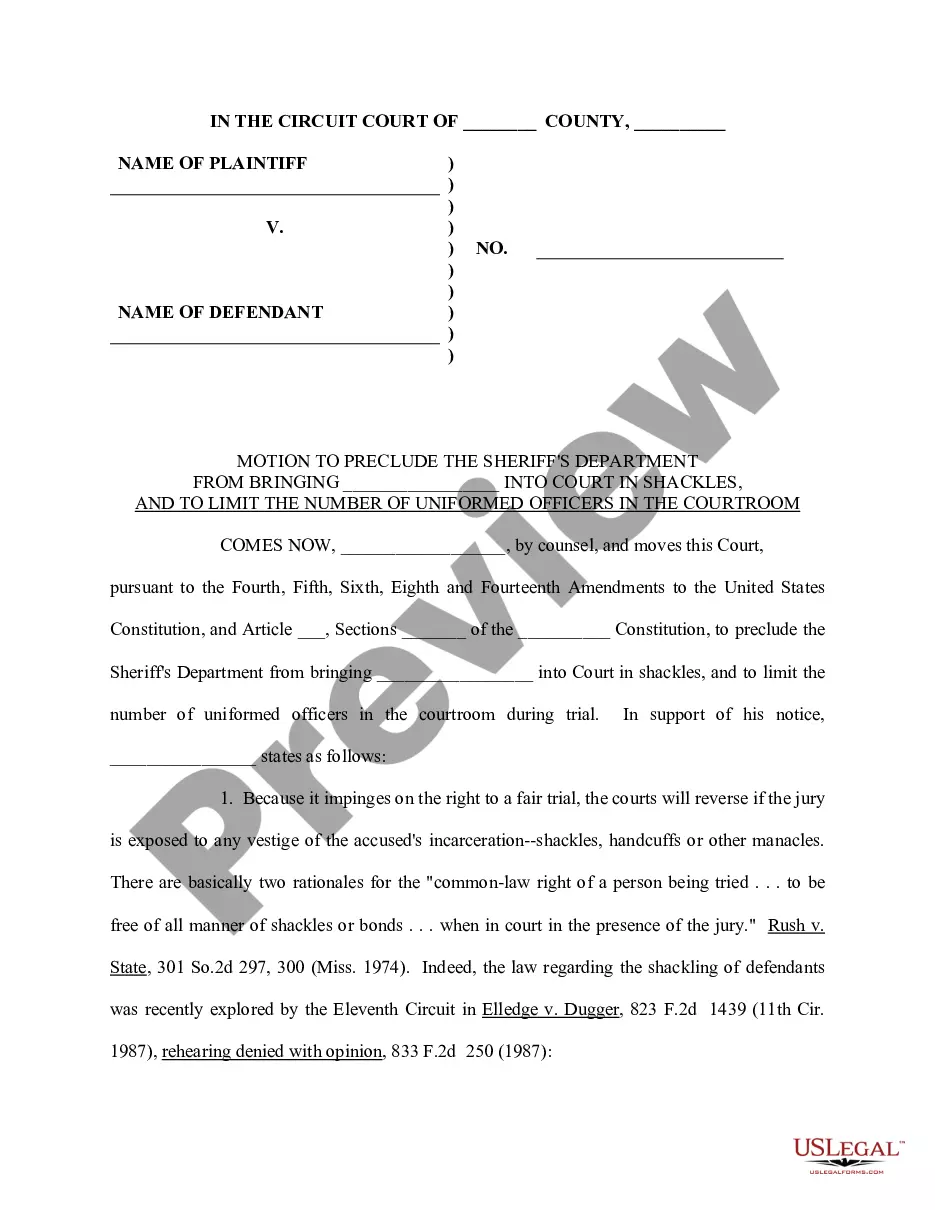
Mississippi Motion to Preclude the Sheriff's Department from Bringing Defendant Into Court in Shackles, and to Limit Number of Uniformed Officers in Courtroom
About this form
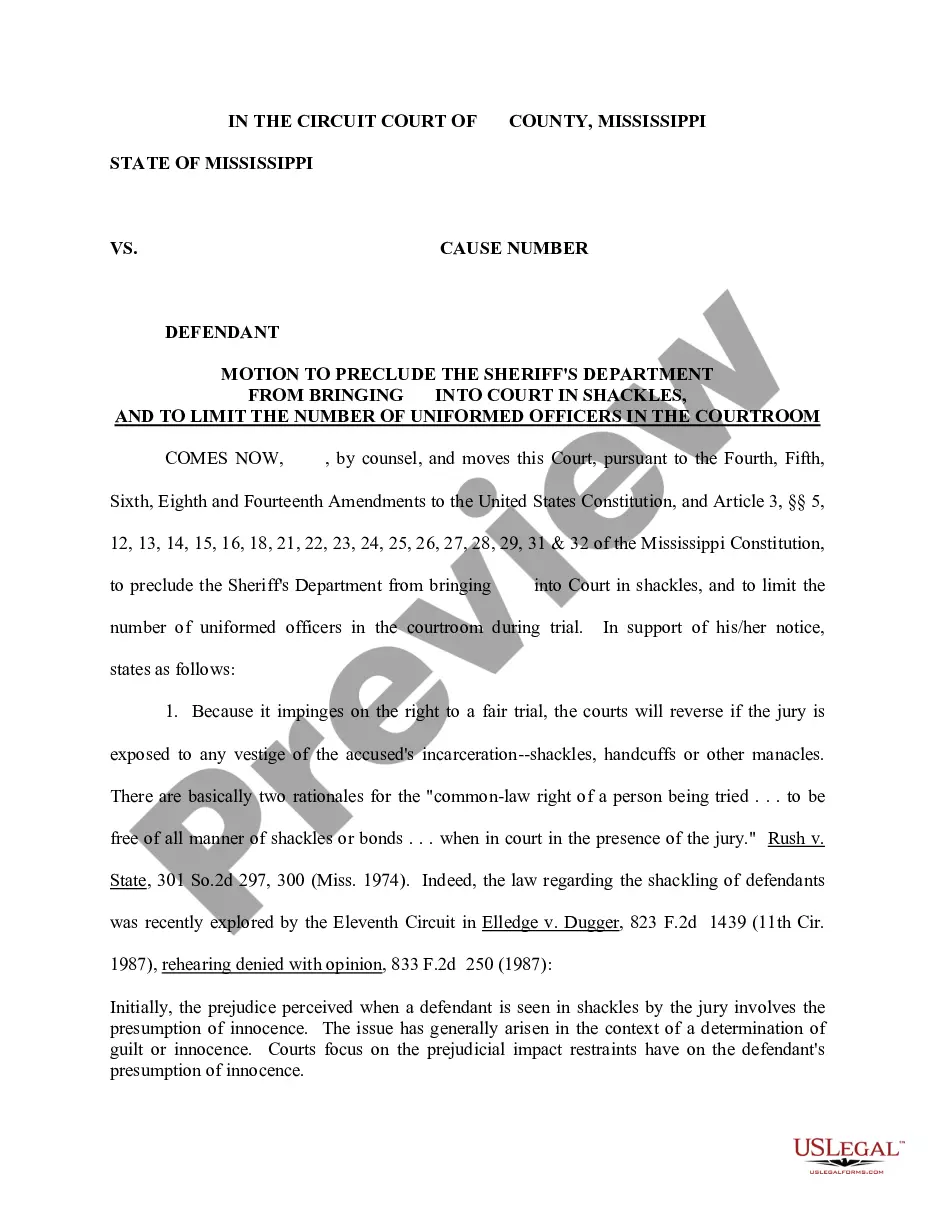
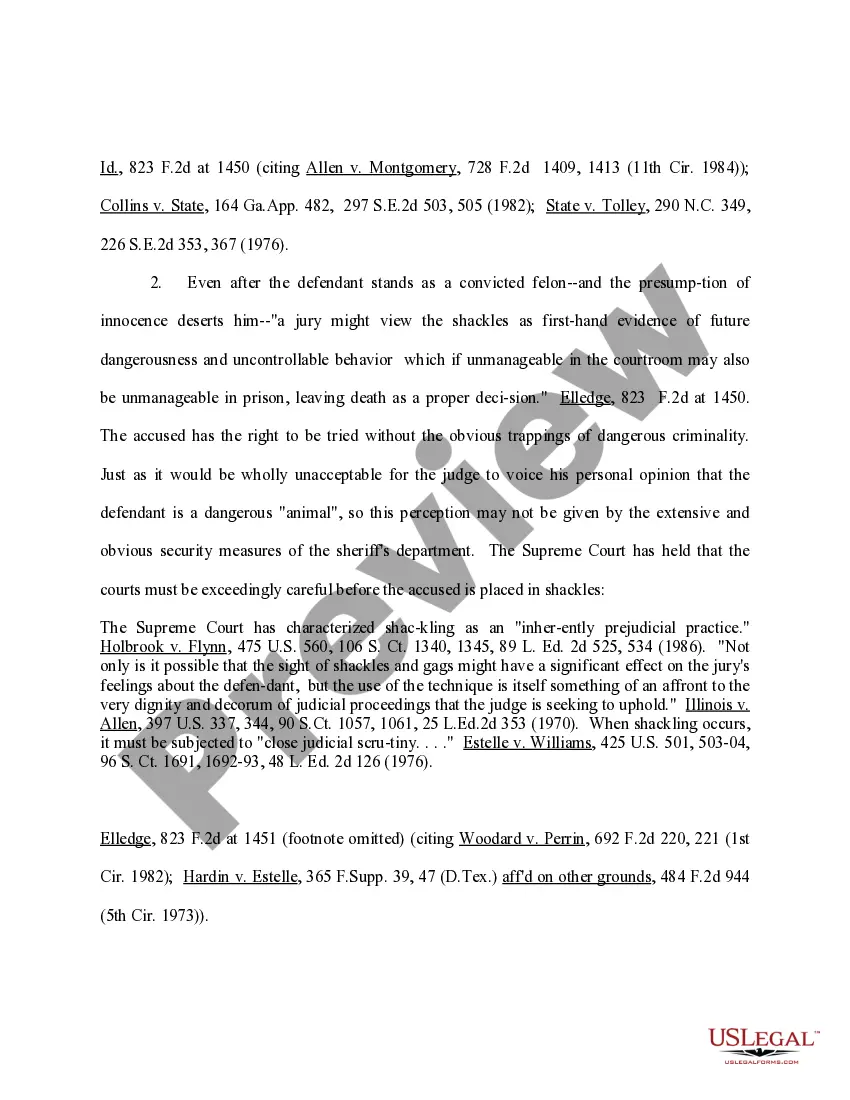
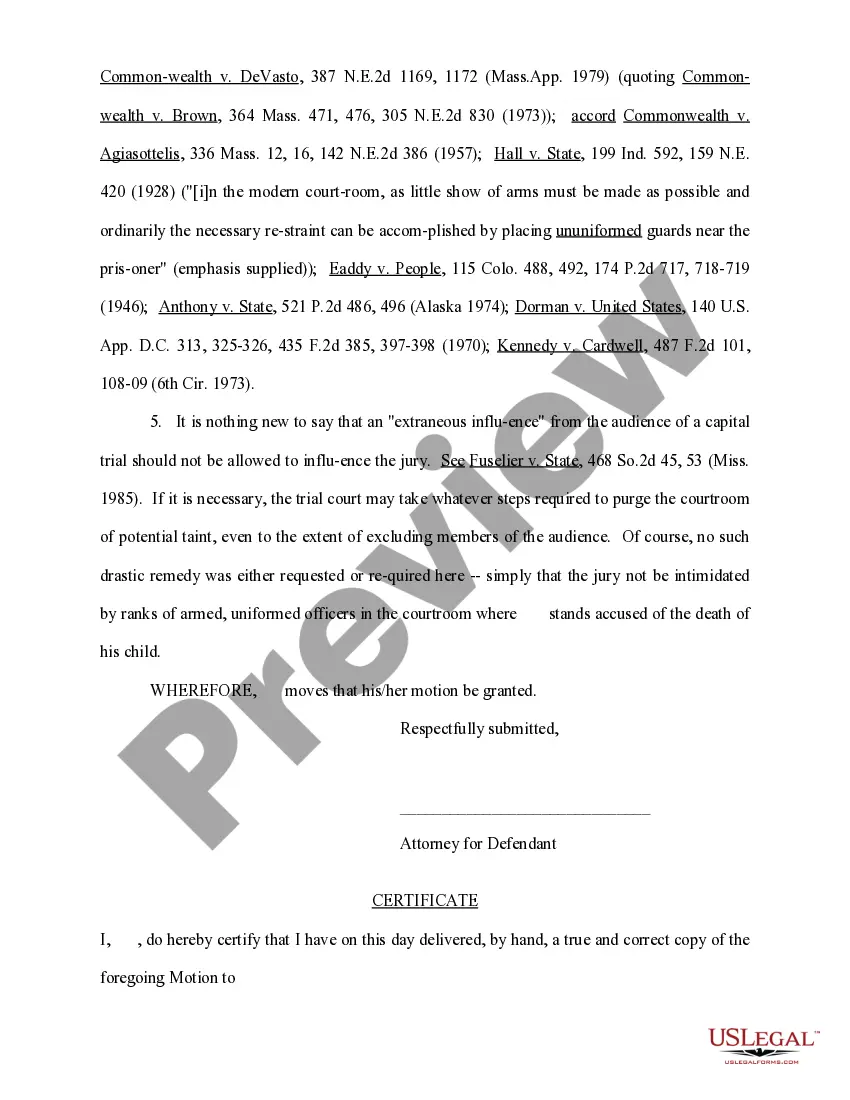
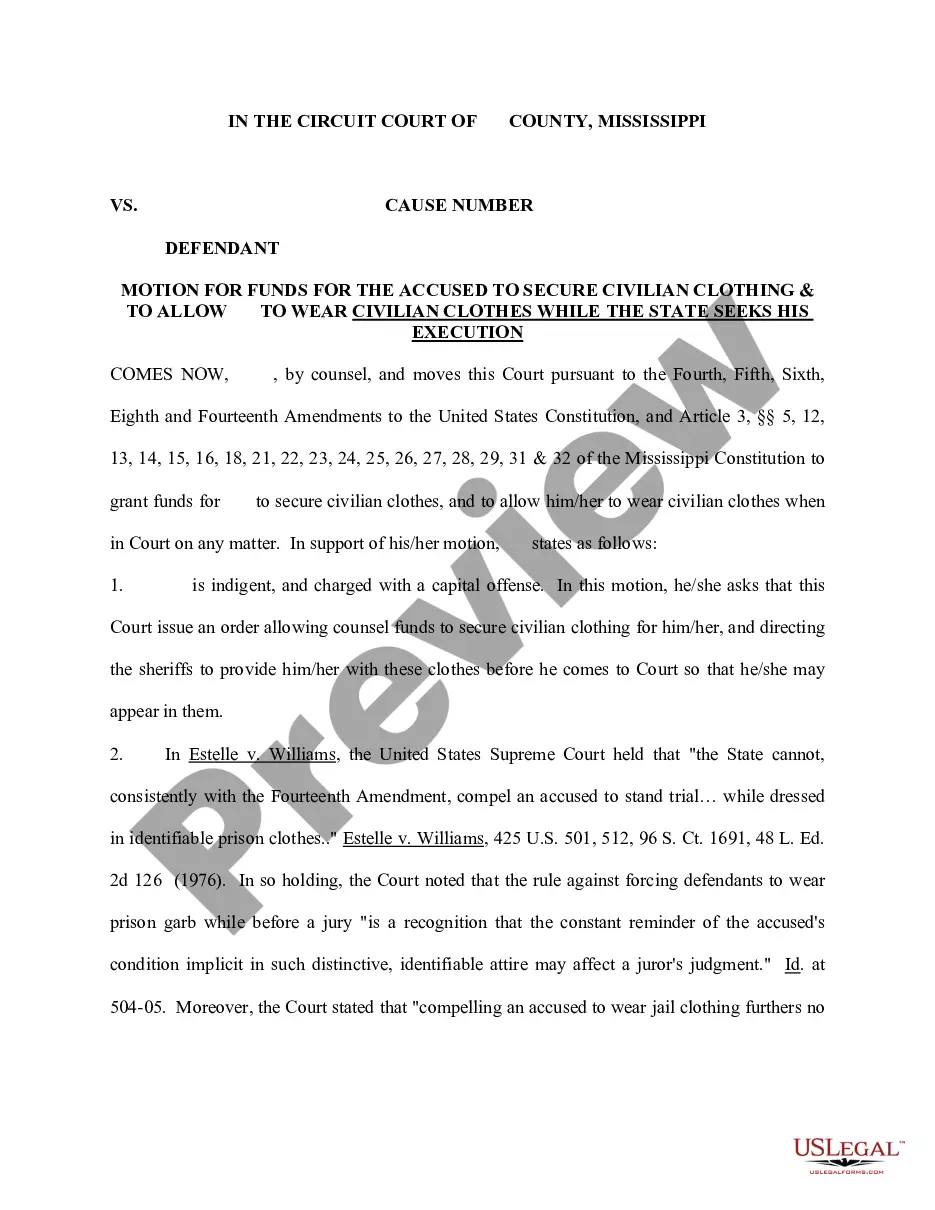
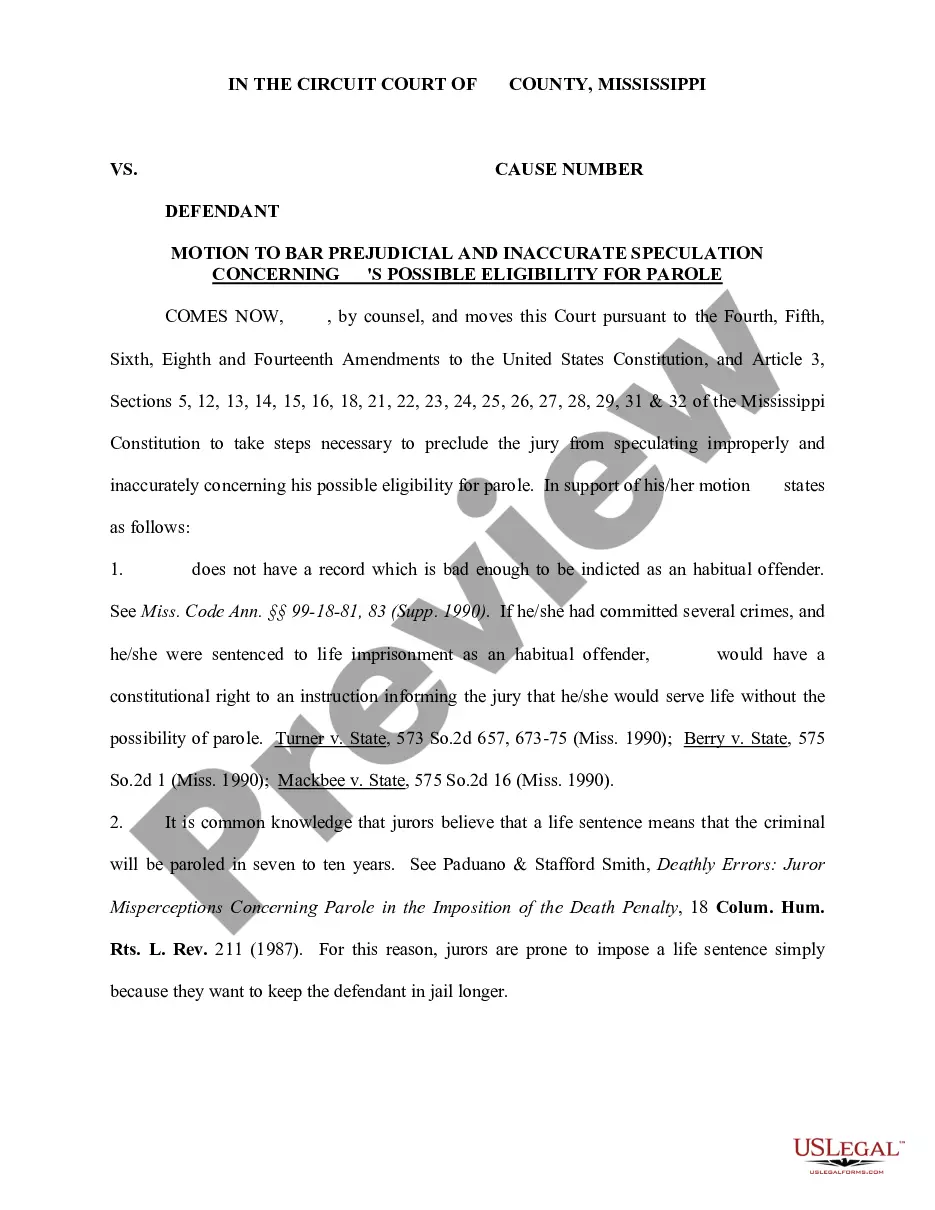
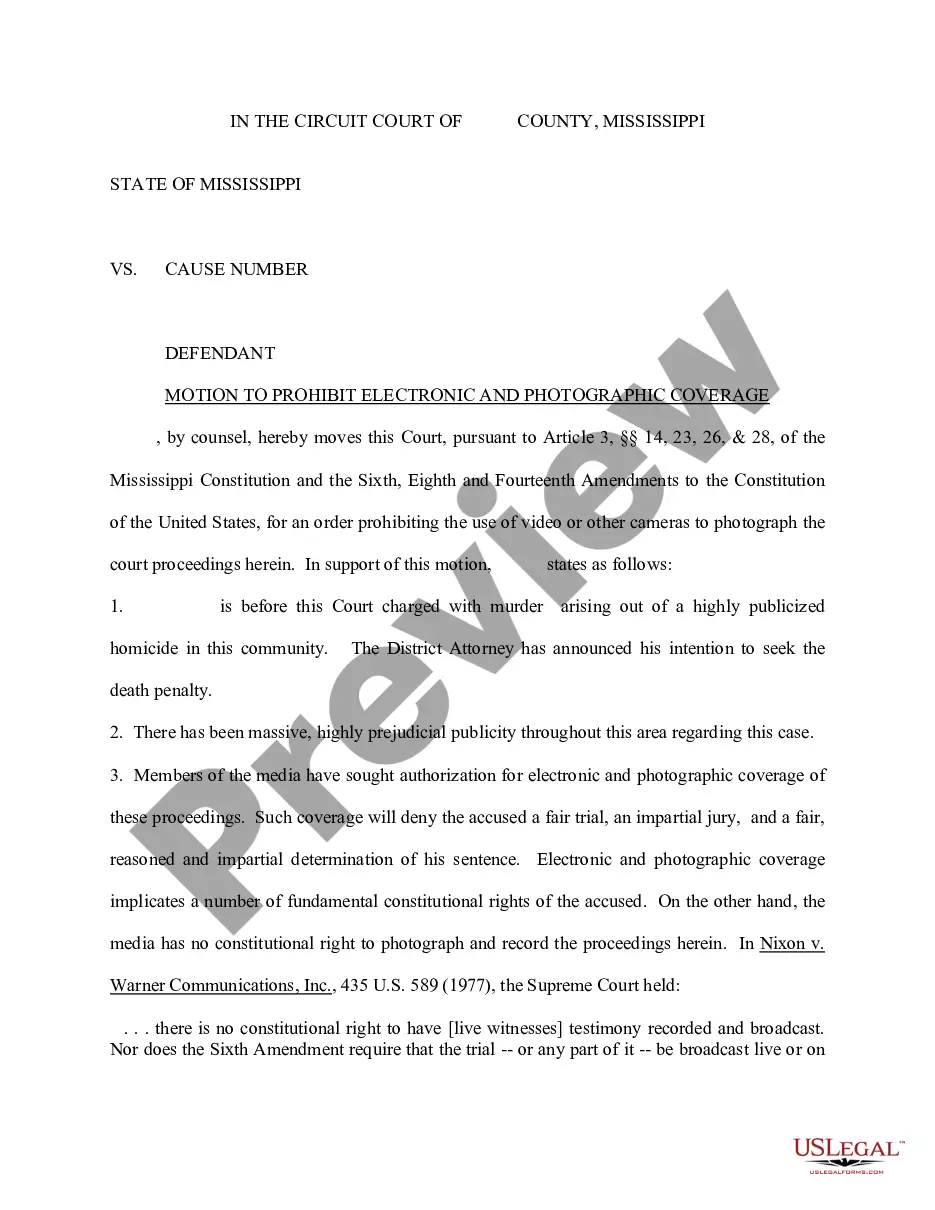
The Motion to Preclude the Sheriff's Department from Bringing Defendant into Court in Shackles, and to Limit the Number of Uniformed Officers in the Courtroom is a legal document that requests the court to take specific actions regarding the treatment of a defendant during court proceedings. This motion aims to ensure a fair trial by protecting the defendantâs presumption of innocence and minimizing the undue influence of visible security measures. This form differs from general motion forms by focusing specifically on shackling and courtroom security issues.
Form components explained
- Identification of the case, including the cause number and the parties involved.
- A clear request to the court to prohibit shackling during the trial.
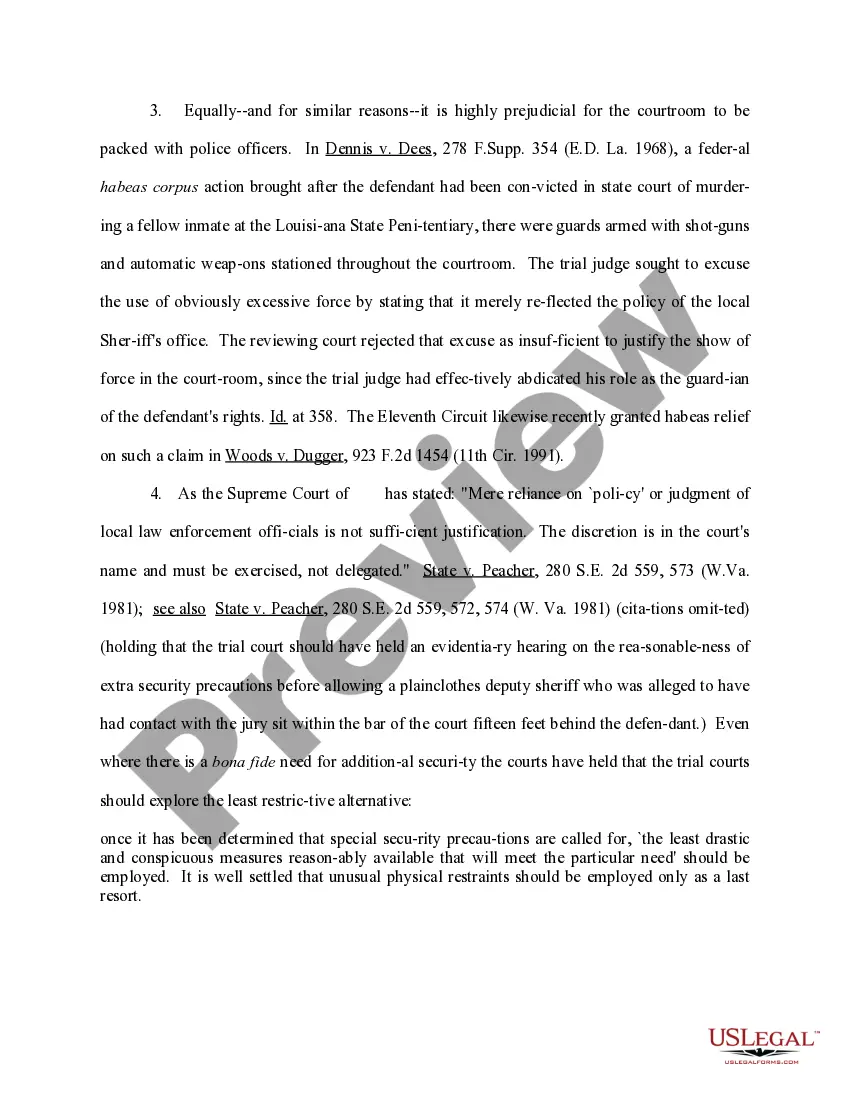
- Argument clauses supporting the request based on constitutional and legal precedents.
- Justification for limiting the number of uniformed officers in the courtroom.
- Signature lines for the attorney and a certificate of delivery to the opposing party.

Situations where this form applies
This motion should be used when a defendant is facing trial and there are concerns that bringing the defendant into court in shackles or having an excessive presence of uniformed officers could prejudice the jury. It is relevant in cases where the defendantâs rights to a fair trial may be compromised due to the visibility of restraints or security forces in the courtroom.
Who can use this document
- Defendants in criminal cases who are concerned about being shackled during court proceedings.
- Defense attorneys representing clients in trials involving potential security issues.
- Legal guardians or representatives of defendants who wish to ensure the defendant's rights are safeguarded.
Instructions for completing this form
- Fill in the case name and cause number at the top of the form.
- Clearly state your motion requesting to prevent shackling during the trial.
- Provide detailed arguments for your request, citing relevant constitutional amendments and legal precedents.
- Justify the necessity of limiting uniformed officers in the courtroom.
- Sign the document where indicated and ensure a certificate of delivery is completed to confirm proper service to all parties.
Does this form need to be notarized?
No, this form does not typically require notarization unless specified by local law.
Get your form ready online
Our built-in tools help you complete, sign, share, and store your documents in one place.
Make edits, fill in missing information, and update formatting in US Legal Forms—just like you would in MS Word.
Download a copy, print it, send it by email, or mail it via USPS—whatever works best for your next step.
Sign and collect signatures with our SignNow integration. Send to multiple recipients, set reminders, and more. Go Premium to unlock E-Sign.
If this form requires notarization, complete it online through a secure video call—no need to meet a notary in person or wait for an appointment.
We protect your documents and personal data by following strict security and privacy standards.

Make edits, fill in missing information, and update formatting in US Legal Forms—just like you would in MS Word.

Download a copy, print it, send it by email, or mail it via USPS—whatever works best for your next step.

Sign and collect signatures with our SignNow integration. Send to multiple recipients, set reminders, and more. Go Premium to unlock E-Sign.

If this form requires notarization, complete it online through a secure video call—no need to meet a notary in person or wait for an appointment.

We protect your documents and personal data by following strict security and privacy standards.
Typical mistakes to avoid
- Failing to include all pertinent case identifiers and contact information.
- Not clearly articulating the reasons for the request, which are critical for the court's consideration.
- Neglecting to serve the motion to all required parties before filing it with the court.
- Overlooking the need for supporting legal citations to enhance the motion's validity.
Why use this form online
- Convenient access allows users to download and complete the form at their own pace.
- Editable format enables customization to fit specific case details and personal circumstances.
- Reliable resources from licensed attorneys ensure accurate and legally sound document preparation.
Legal use & context
- This motion serves to uphold a defendant's rights to a fair trial as protected under the U.S. Constitution.
- It is crucial for minimizing any prejudicial perceptions the jury may have about the defendant based on security measures.
- The motion may impact courtroom etiquette, potentially influencing jury attitudes and trial outcomes.
Summary of main points
- Understanding the necessity of presenting a defendant without shackles in court is crucial for a fair trial.
- This motion helps to safeguard the defendant's rights and maintain courtroom decorum.
- Accurate completion of the form is essential for the court to consider the request effectively.
Looking for another form?
Form popularity
FAQ
Possibly Guaranteed Procedures Notice of the proposed action and the grounds asserted for it. Opportunity to present reasons why the proposed action should not be taken. The right to present evidence, including the right to call witnesses. The right to know opposing evidence.
No person shall be held to answer for a capital, or otherwise infamous crime, unless on a presentment or indictment of a Grand Jury, except in cases arising in the land or naval forces, or in the Militia, when in actual service in time of War or public danger; nor shall any person be subject for the same offence to be
As the examples above suggest, the rights protected under the Fourteenth Amendment can be understood in three categories: (1) procedural due process; (2) the individual rights listed in the Bill of Rights, incorporated against the states; and (3) substantive due process.
Due process is the legal requirement that the state must respect all legal rights that are owed to a person. Due process balances the power of law of the land and protects the individual person from it.Due process developed from clause 39 of Magna Carta in England.
Due process balances the power of law of the land and protects the individual person from it. When a government harms a person without following the exact course of the law, this constitutes a due process violation, which offends the rule of law.
The essence of due process is simply to be heard, or as applied to administrative proceedings, an opportunity to explain one's side, or an opportunity to seek a reconsideration of the action or ruling complained of.
The right to present evidence and have witnesses attend and testify. The right to confront and cross-examine the school's witnesses. The right to a written verbatim recording of the hearing, at no cost. The right to written findings of fact and decision from the hearing officer, at no cost.
An unbiased tribunal. Notice of the proposed action and the grounds asserted for it. The opportunity to present reasons for the proposed action not to be taken. The right to present evidence, including the right to call witnesses. The right to know the opposing evidence. The right to cross-examine adverse witnesses.
It is a violation of due process for a state to enforce a judgment against a party to a proceeding without having given him an opportunity to be heard sometime before final judgment is entered.