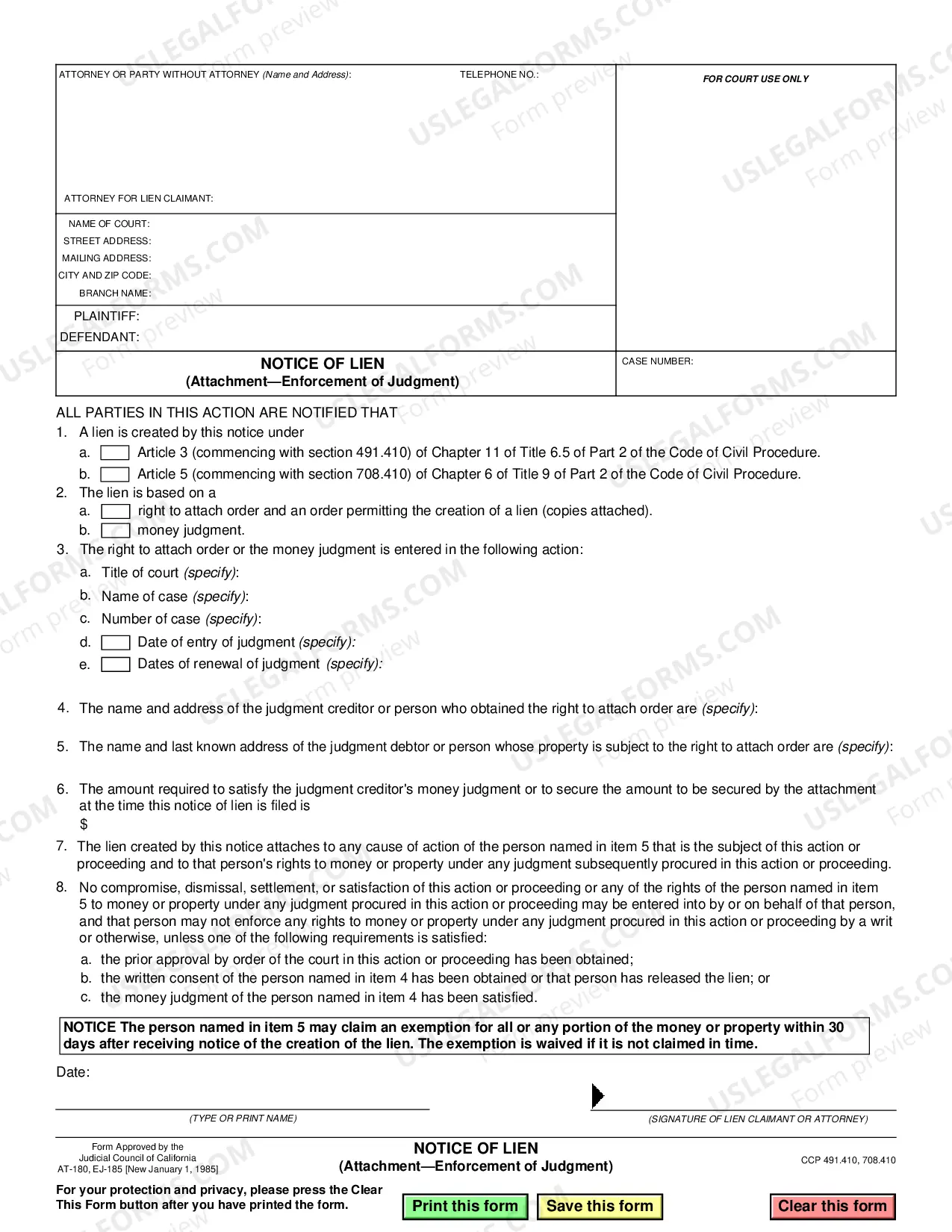
Assignment of Shares
Understanding this form
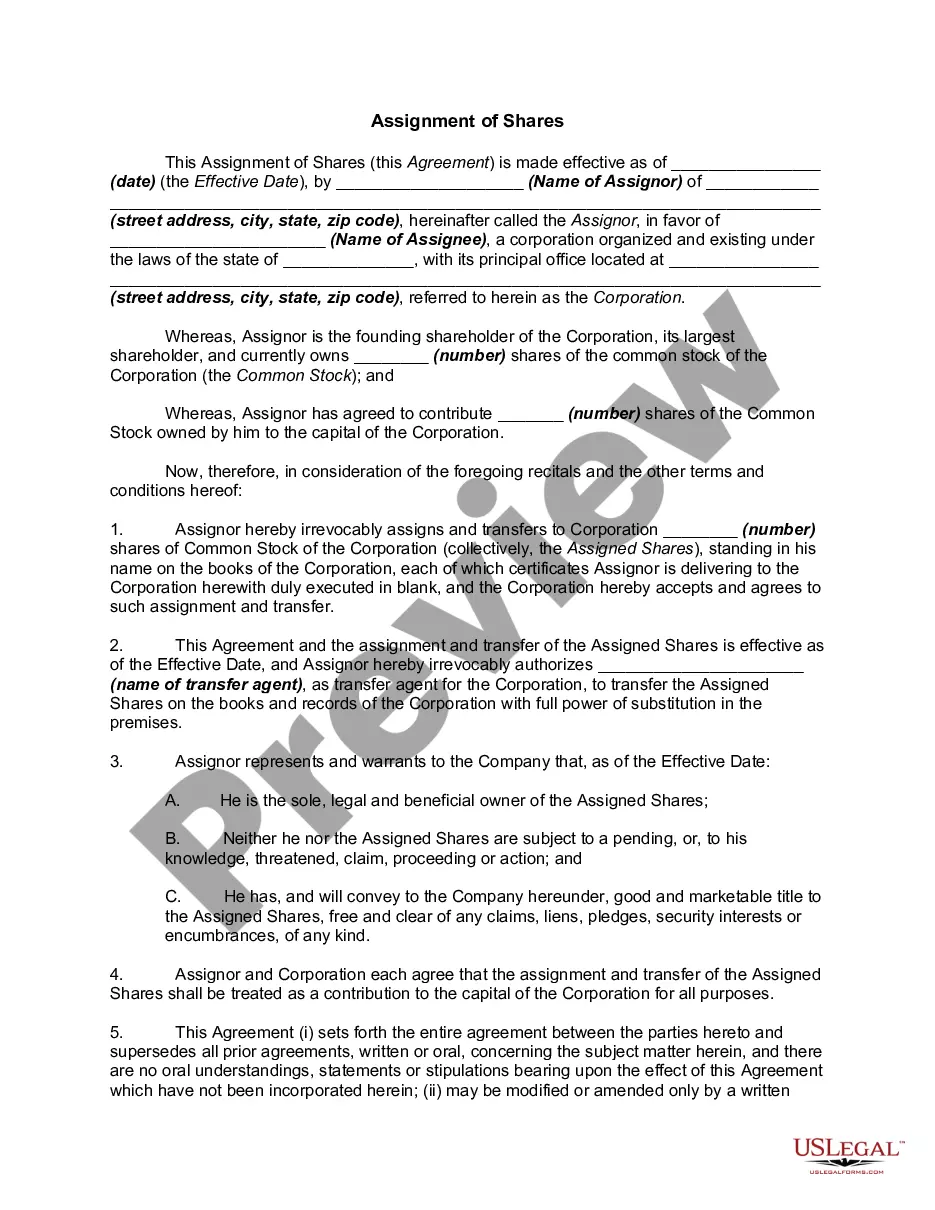
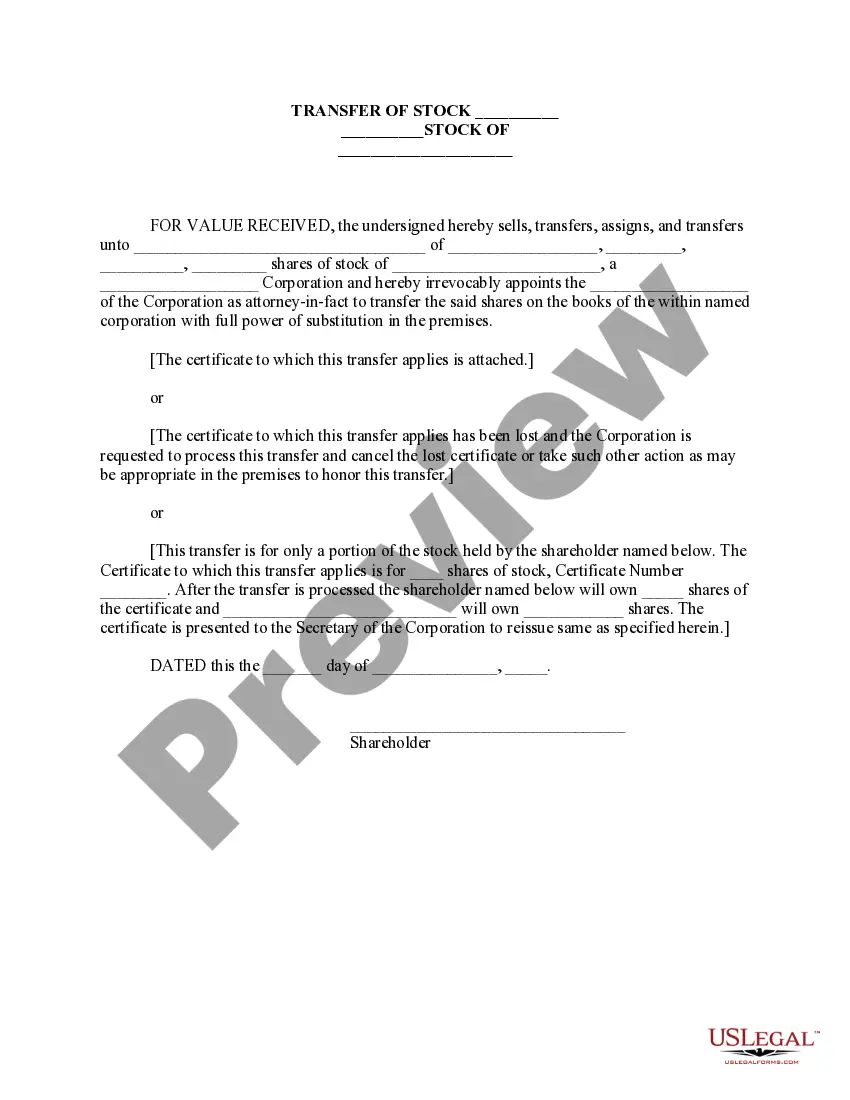
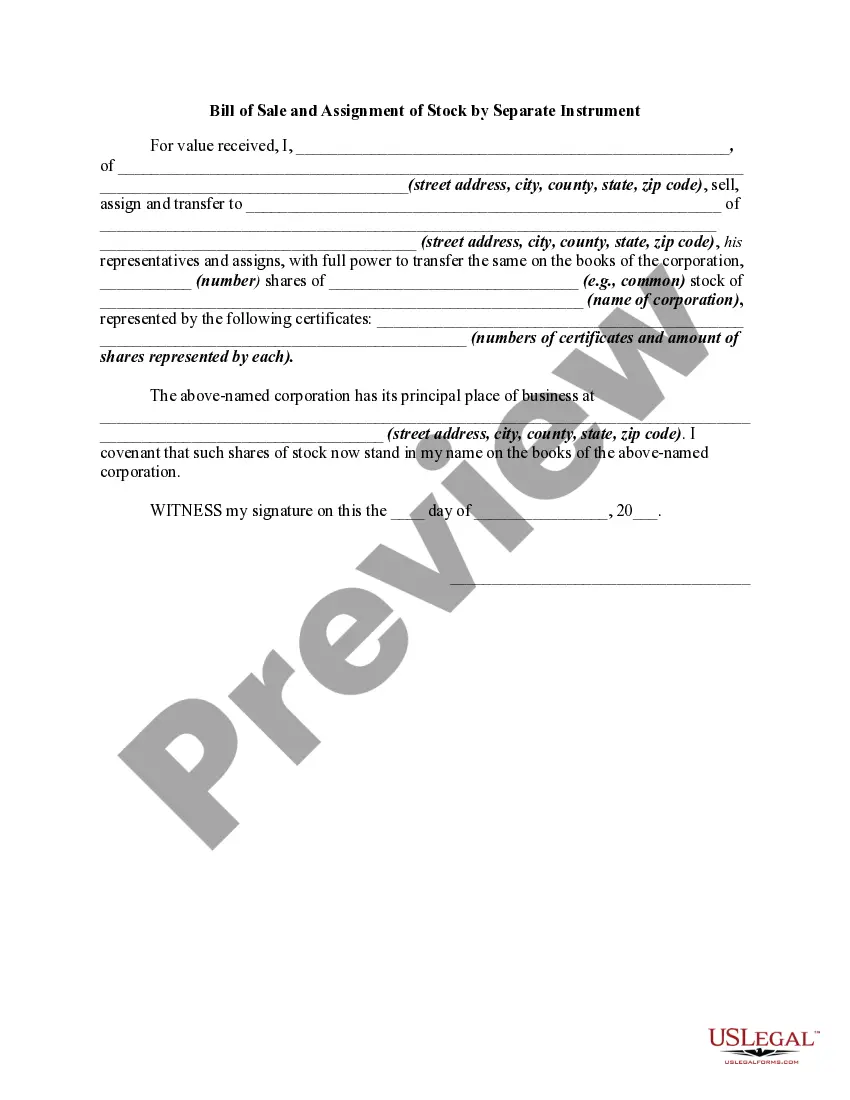
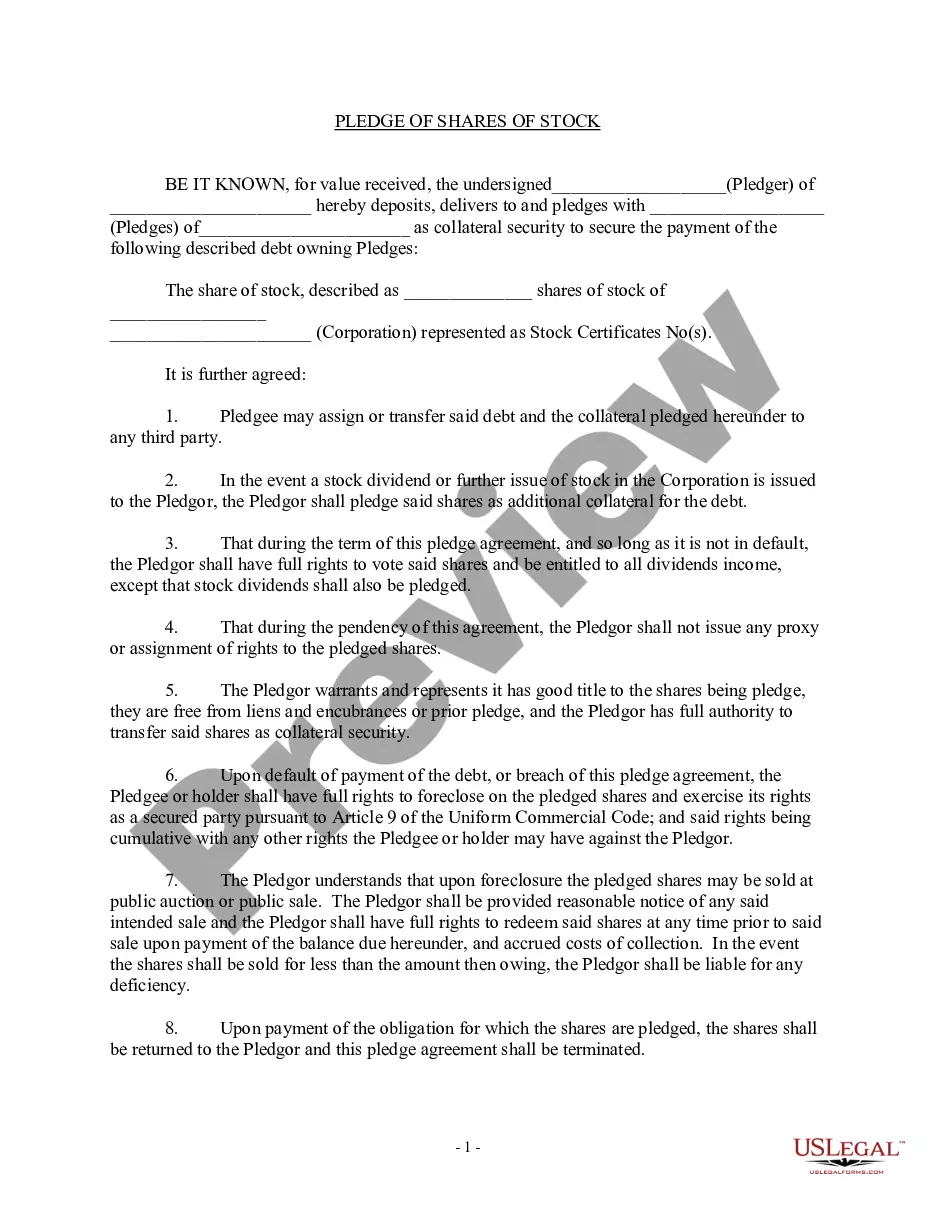
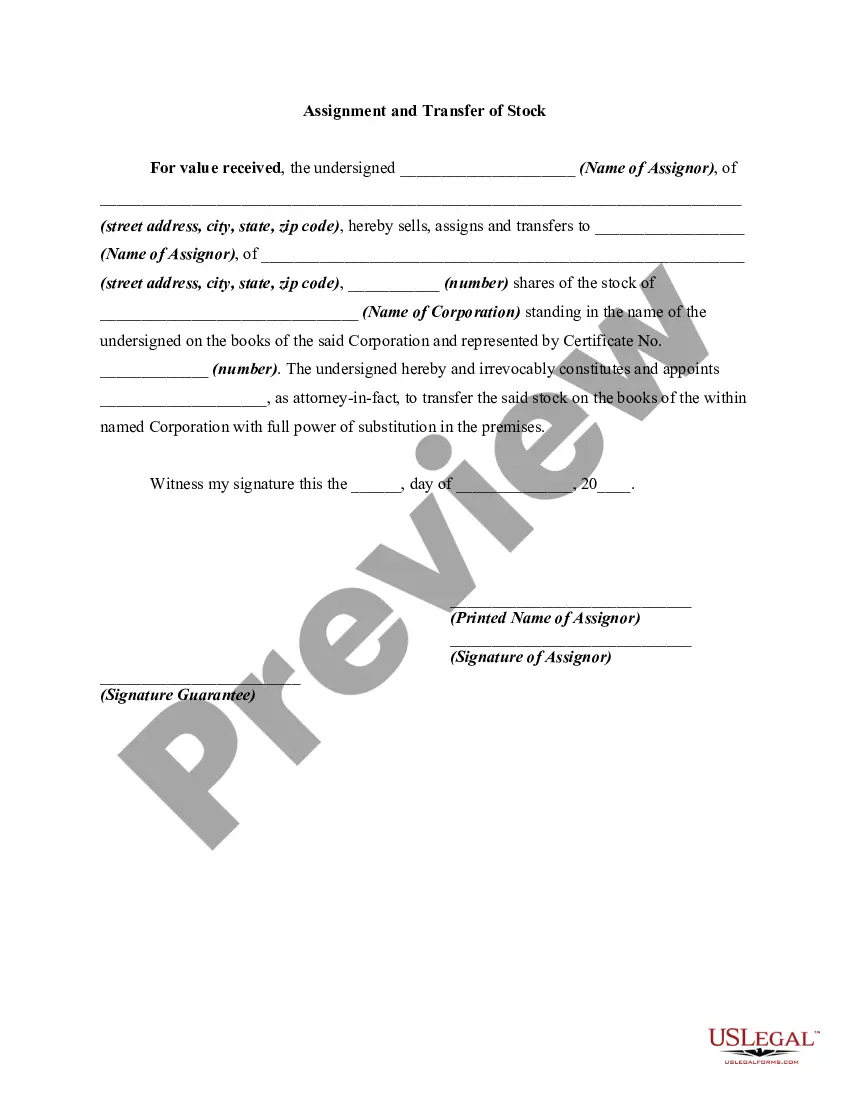
The Assignment of Shares is a legal document used to transfer ownership of shares from one party, known as the Assignor, to another, referred to as the Assignee. This form formalizes the transfer and ensures that the shares are recorded in the corporation's books, making it a critical instrument in corporate management and ownership transitions. Unlike standard transfer agreements, this form specifically focuses on shares in a corporation, detailing the rights and interests associated with them.
Key components of this form
- Effective date of the transfer
- Name and address of the Assignor and Assignee
- Number of shares being transferred
- Representations and warranties by the Assignor
- Recognition of the transfer by the Corporation
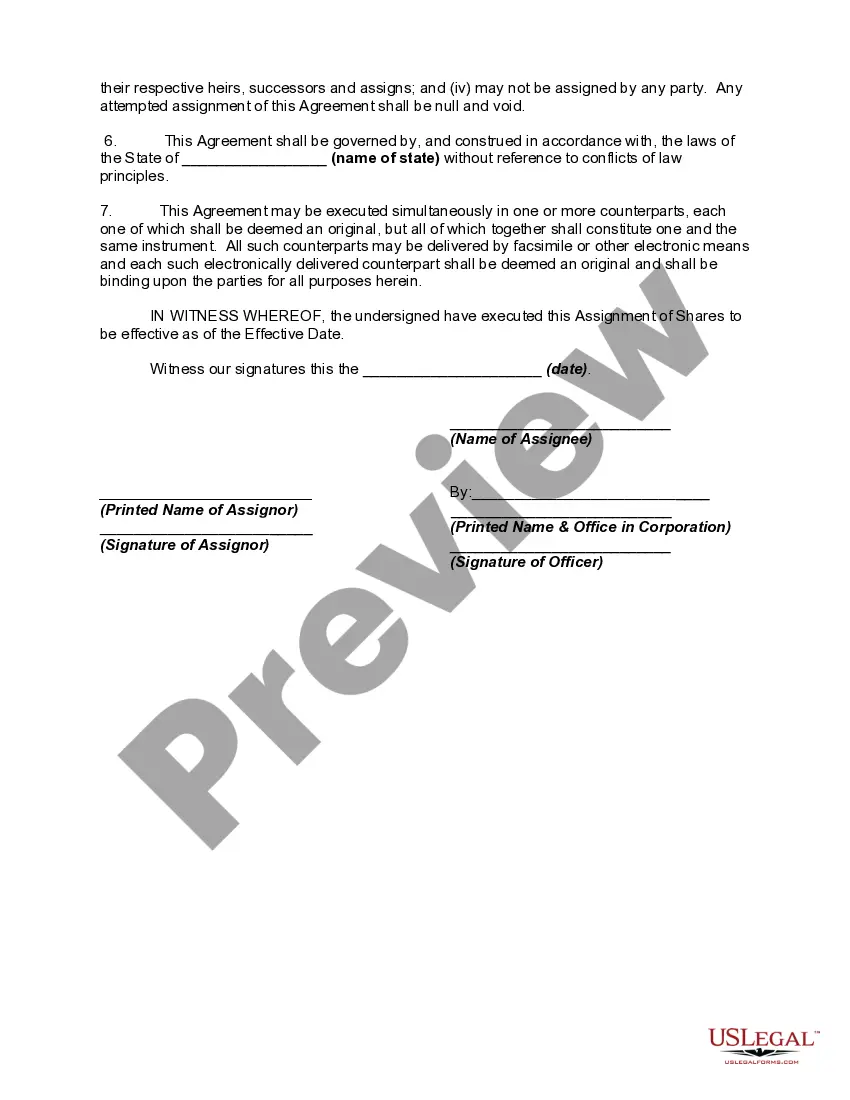
- Governing law and execution details
Situations where this form applies
This form should be used when an individual or entity wishes to transfer ownership of shares in a corporation to another party. Common scenarios include capital contributions to the corporation, selling shares to another investor, or redistributing shares among joint owners. It is essential to have this document to ensure legal clarity and proper record-keeping within the corporation.
Who should use this form
- Shareholders of a corporation looking to transfer their shares
- Corporations needing a formal record of share transfers
- Individuals or entities involved in corporate restructuring or capital contributions
- Investors acquiring shares from existing shareholders
Completing this form step by step
- Enter the effective date of the transfer.
- Provide the names and addresses of both the Assignor and Assignee.
- Specify the number of shares being assigned.
- Have the Assignor sign and date the document.
- Ensure the Corporation acknowledges and accepts the assignment.
Notarization requirements for this form
In most cases, this form does not require notarization. However, some jurisdictions or signing circumstances might. US Legal Forms offers online notarization powered by Notarize, accessible 24/7 for a quick, remote process.
Get your form ready online
Our built-in tools help you complete, sign, share, and store your documents in one place.
Make edits, fill in missing information, and update formatting in US Legal Forms—just like you would in MS Word.
Download a copy, print it, send it by email, or mail it via USPS—whatever works best for your next step.
Sign and collect signatures with our SignNow integration. Send to multiple recipients, set reminders, and more. Go Premium to unlock E-Sign.
If this form requires notarization, complete it online through a secure video call—no need to meet a notary in person or wait for an appointment.
We protect your documents and personal data by following strict security and privacy standards.

Make edits, fill in missing information, and update formatting in US Legal Forms—just like you would in MS Word.

Download a copy, print it, send it by email, or mail it via USPS—whatever works best for your next step.

Sign and collect signatures with our SignNow integration. Send to multiple recipients, set reminders, and more. Go Premium to unlock E-Sign.

If this form requires notarization, complete it online through a secure video call—no need to meet a notary in person or wait for an appointment.

We protect your documents and personal data by following strict security and privacy standards.
Common mistakes
- Failing to date the agreement properly.
- Not providing complete information for the Assignor or Assignee.
- Neglecting to acknowledge the transfer in the corporation's records.
- Omitting the number of shares being transferred.
Benefits of completing this form online
- Instant access to a professionally drafted legal document.
- Convenient editing features to customize the form to your needs.
- Reliable and secure document delivery for peace of mind.
- Ability to store and manage your legal documents digitally.
Looking for another form?
Form popularity
FAQ
If you were assigned shares and don't have the money to cover the shares you were assigned (the term for this is a margin call), you will need to buy/sell back the shares ASAP. If you do not, the broker will do it for you before the end of the trading day.
A unique share certificate number. the company's name and company registration number. the registered office address of the company. the name of the shareholder. the contact address of the shareholder.
Exercise and Assignment When a stock option is exercised, the call holder buys the stock, and the put holder sells stock.Assignment occurs, then the shares are called out. Assignment on a short put means purchasing the stock.
The two types of assignment are Collateral (partial), and Absolute (entire face amount).
Gather the necessary documents. Get an endorsement of the share. Deliver the stock certificate with a Deed showing the proof of transfer. Record the transfer in the books. Learn more about owning and transferring shares of stock in the Philippines.
Name of the shareholder; Complete mailing address of the stock shareholder including contact number; Stock certificate number; The total number of shares outstanding; The date the shares were purchased;
An assignment is a task or piece of work that you are given to do, especially as part of your job or studies.You can refer to someone being given a particular task or job as their assignment to the task or job.
1 Consideration money. 2 Full name of Undertaking. 3 Full description of Security. 4 Number or amount of Shares, Stock or other security. 5 Name(s) and address of registered holder(s) 6 Signature(s) 7 Name(s) and address of person(s) receiving the shares.
A consequence of such a share assignment is that the assignor the person assigning his shares, leaves the company and therefore loses his capacity of shareholder, while the assignee the person who receives the shares continues the activity of the company by acquiring the capacity of shareholder.