Mississippi Motion to Preclude Admission of Gruesome and Highly Prejudicial Color Photographs of Deceased
About this form
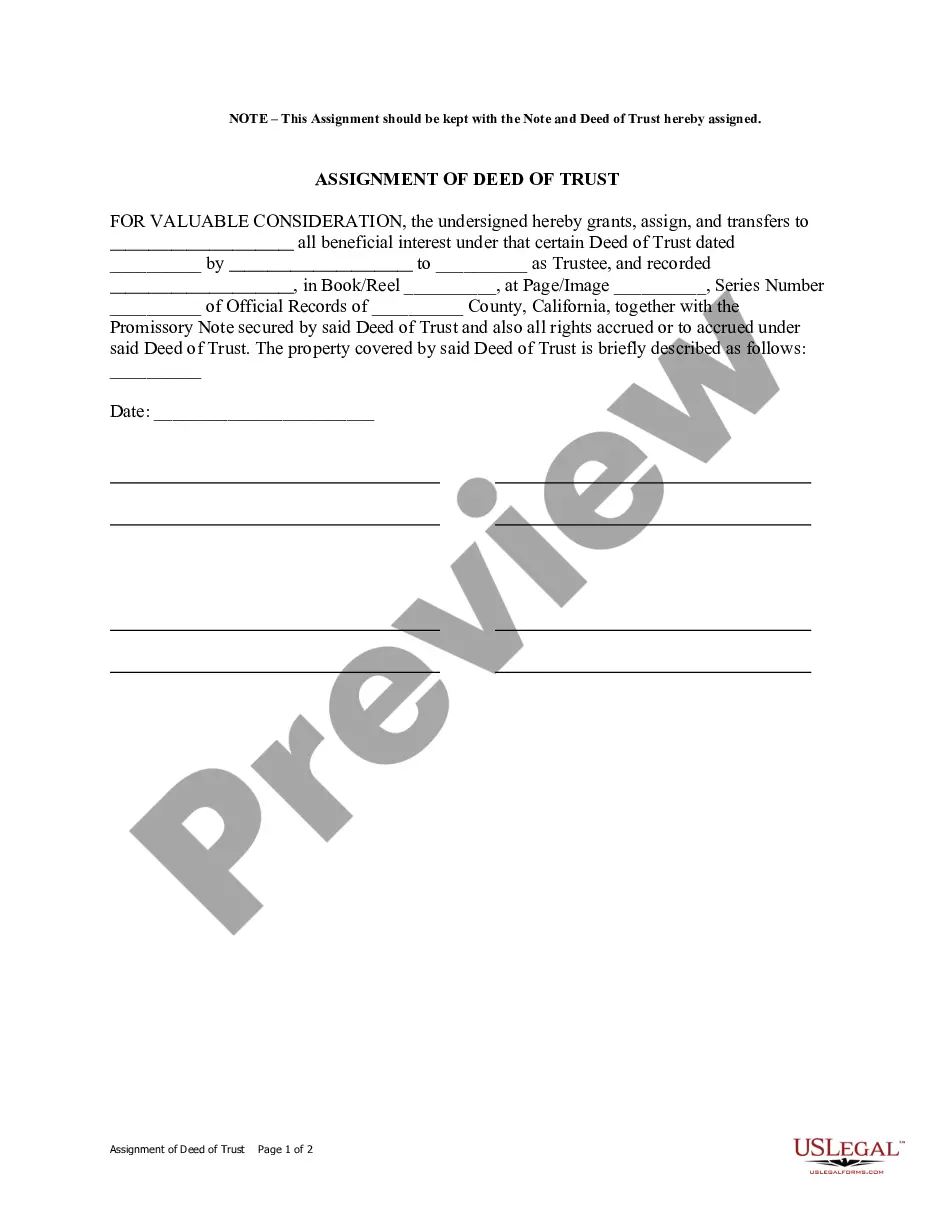
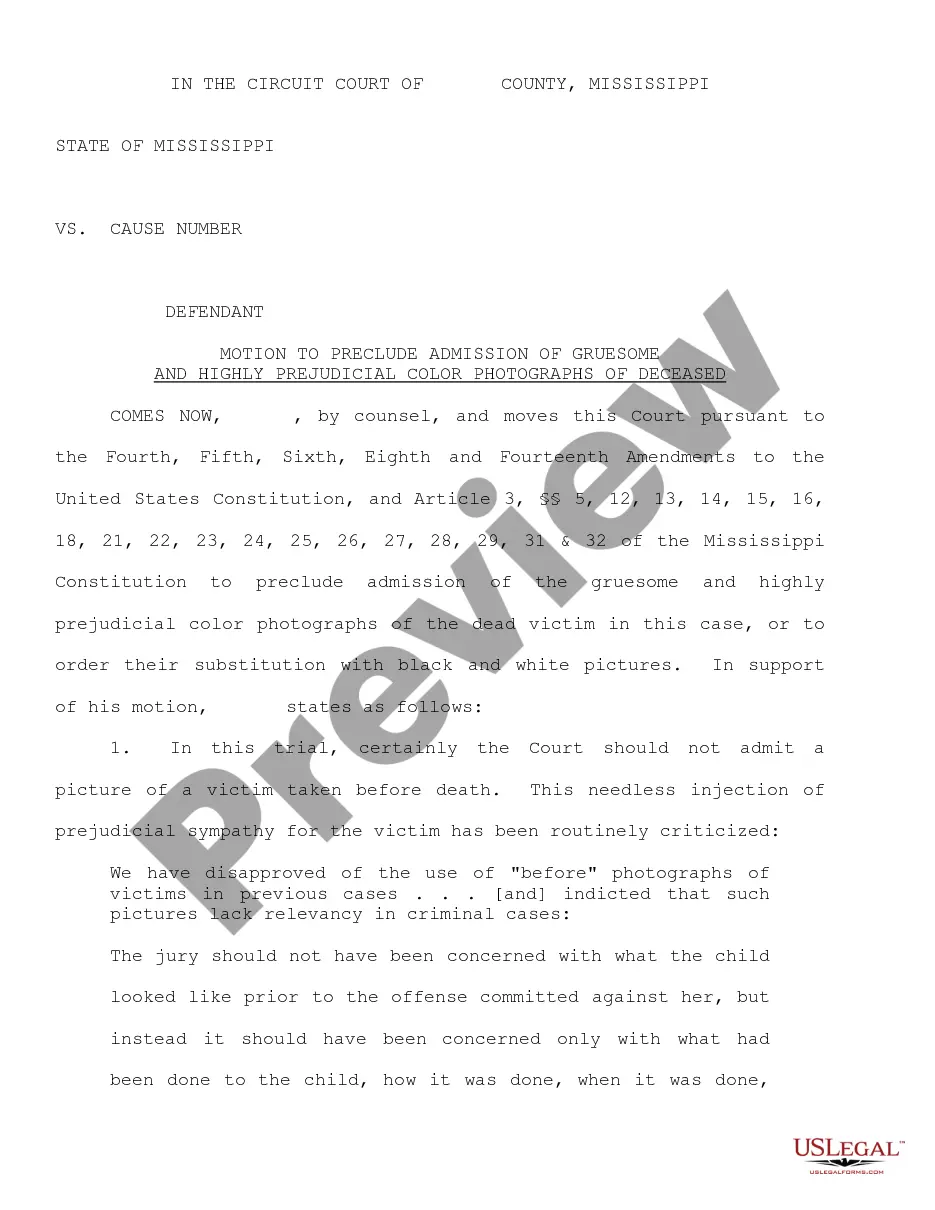
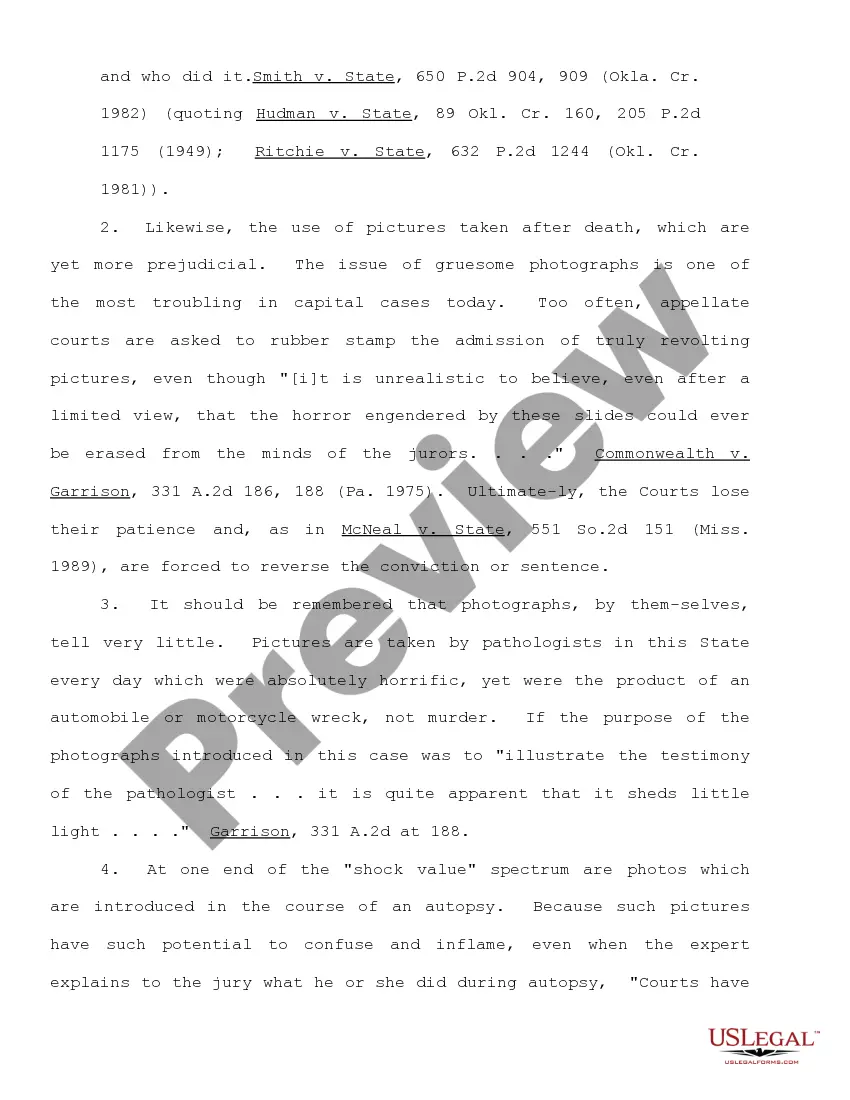
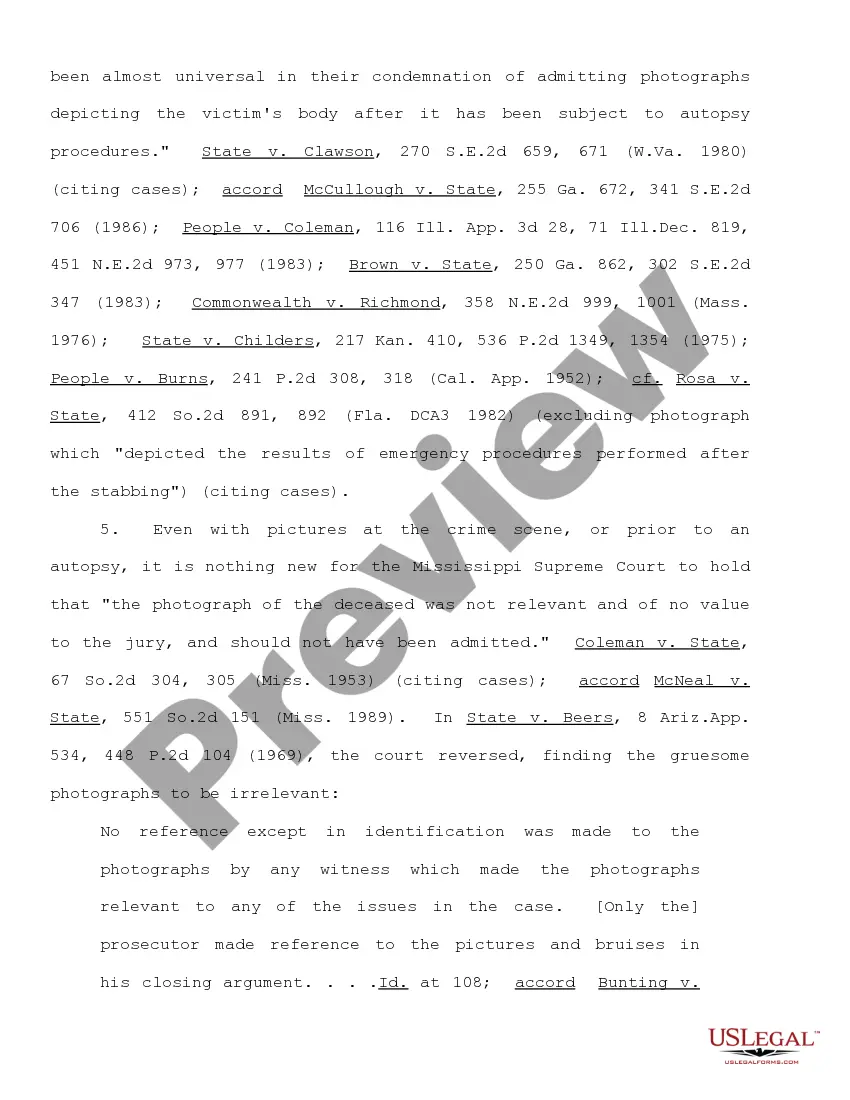
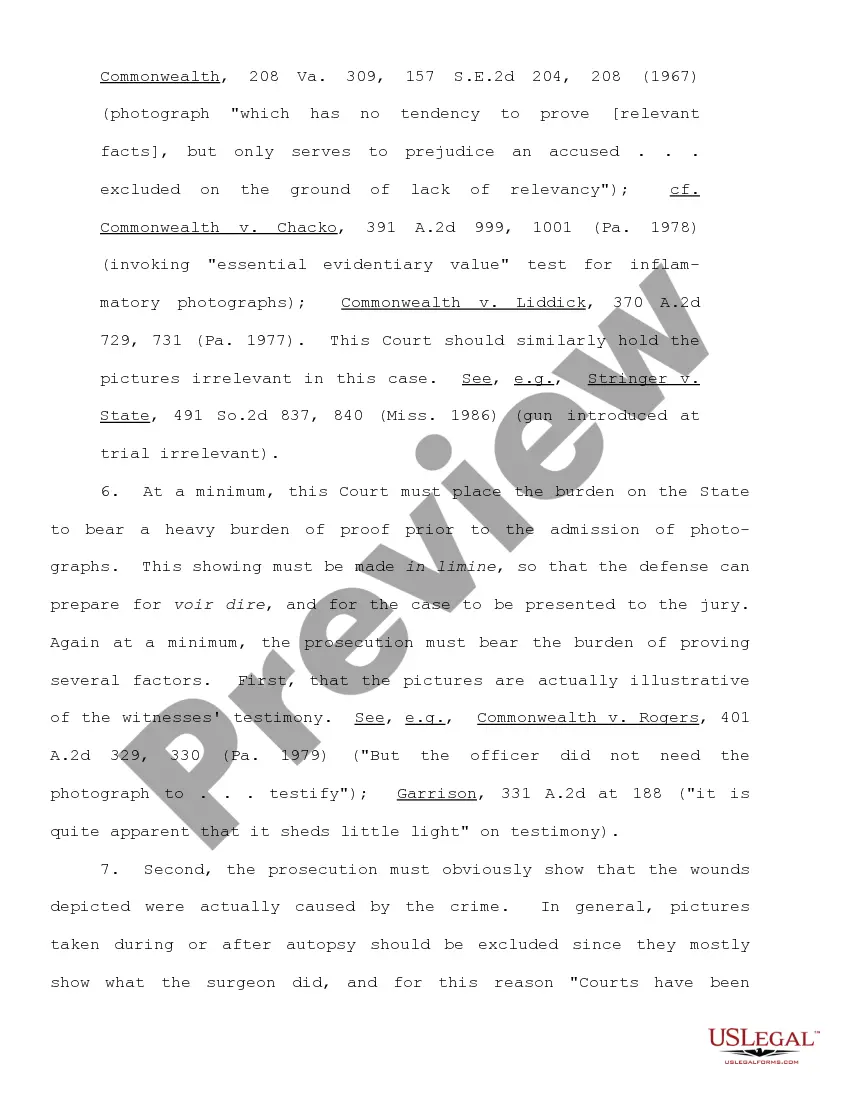
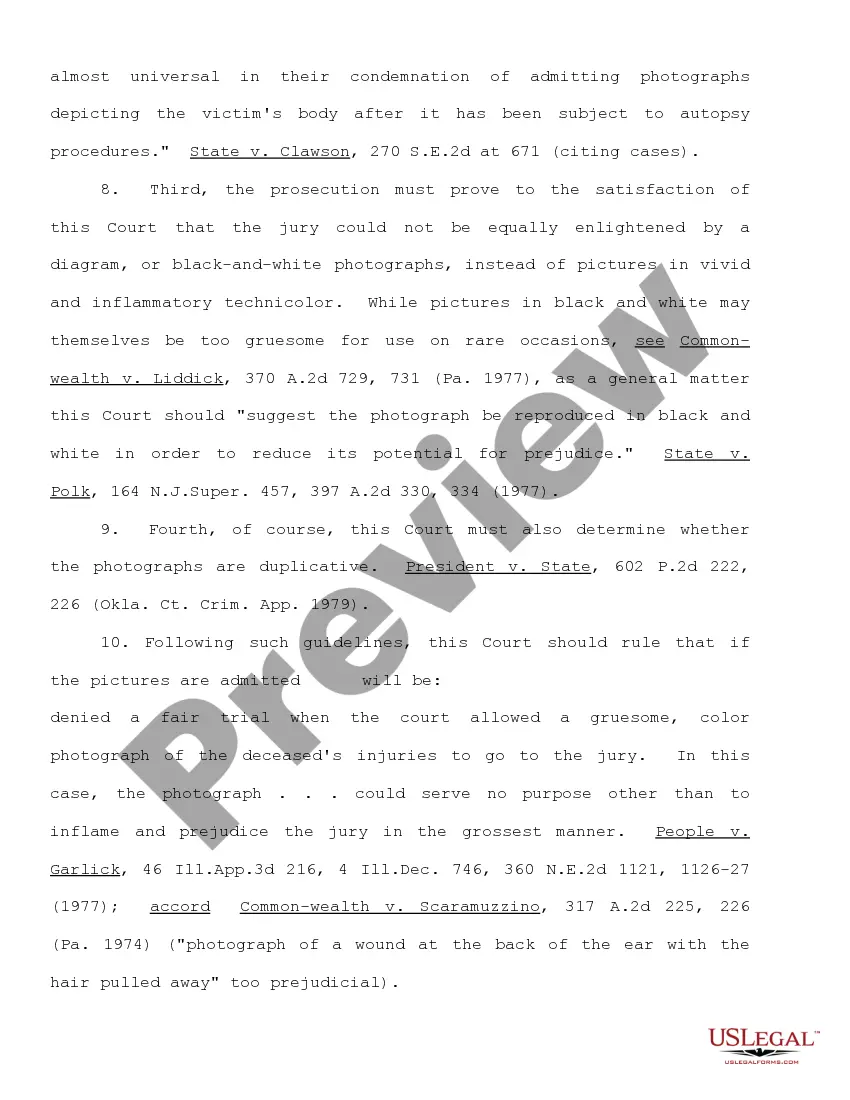
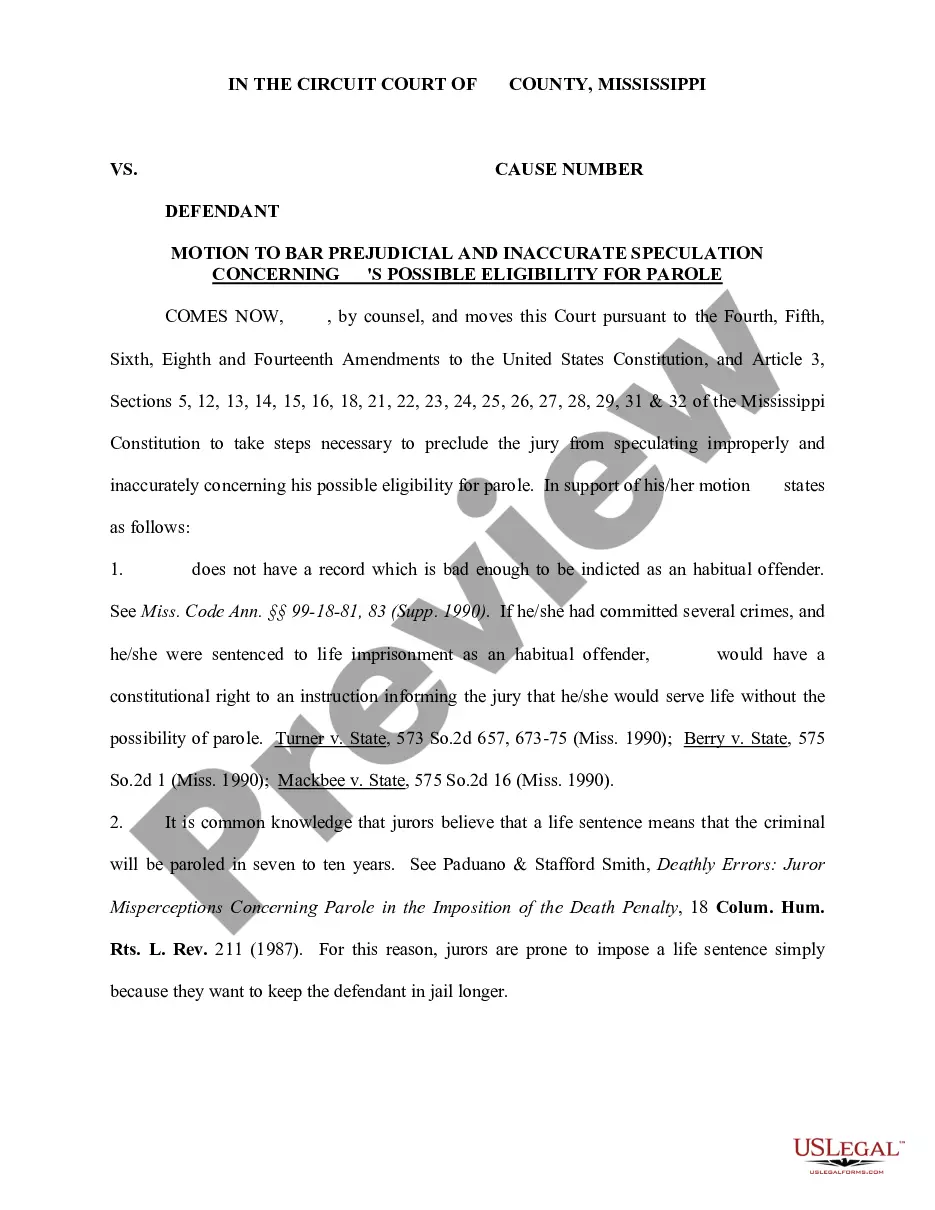
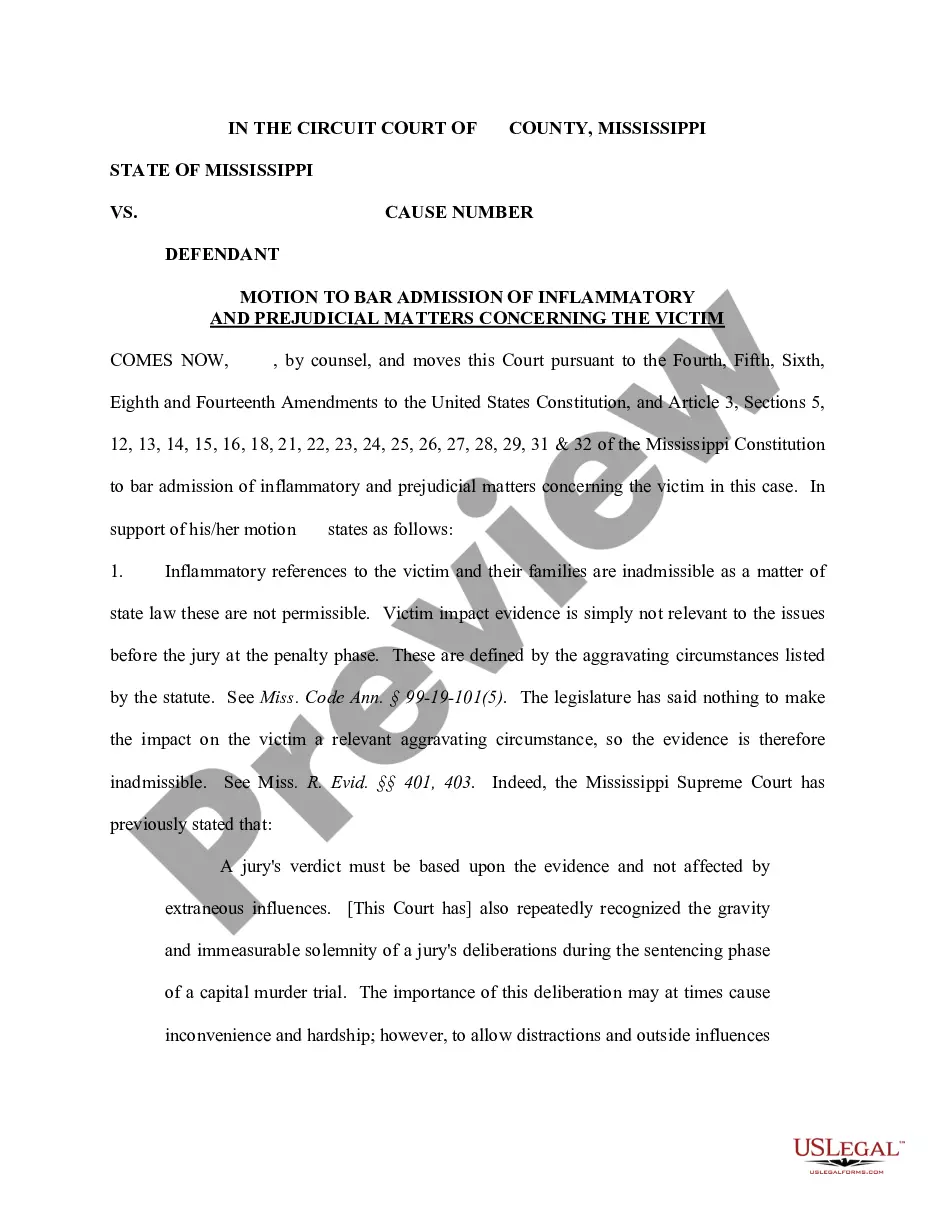
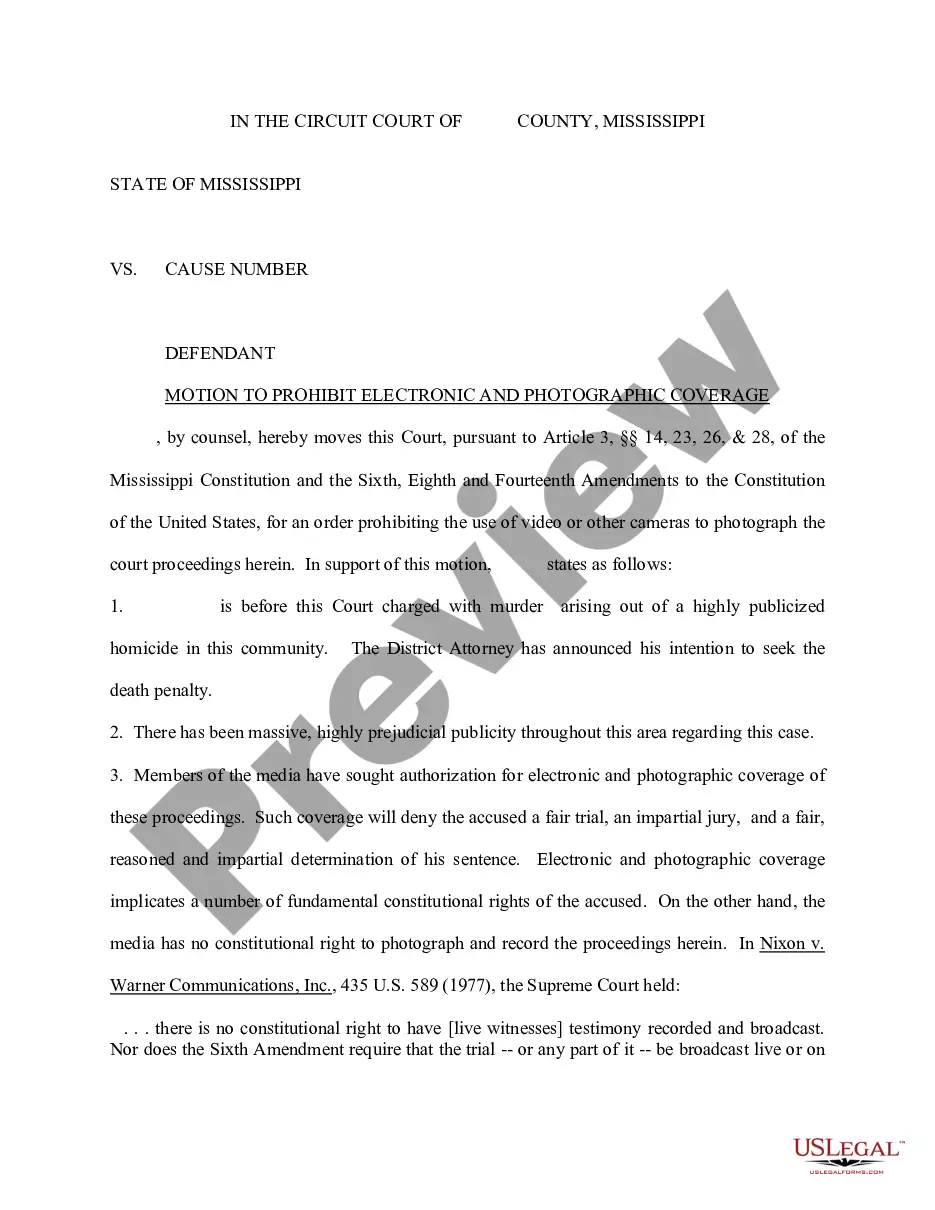
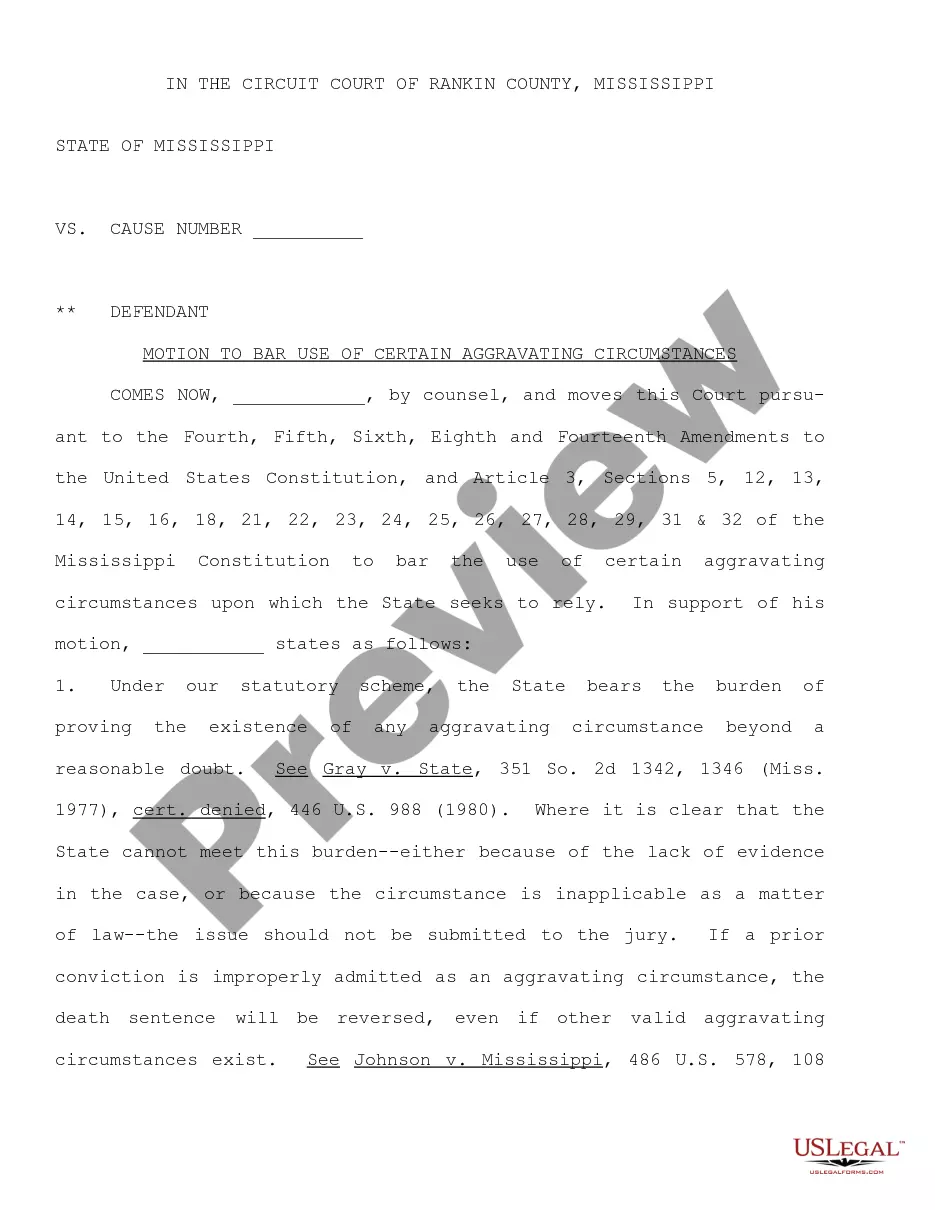
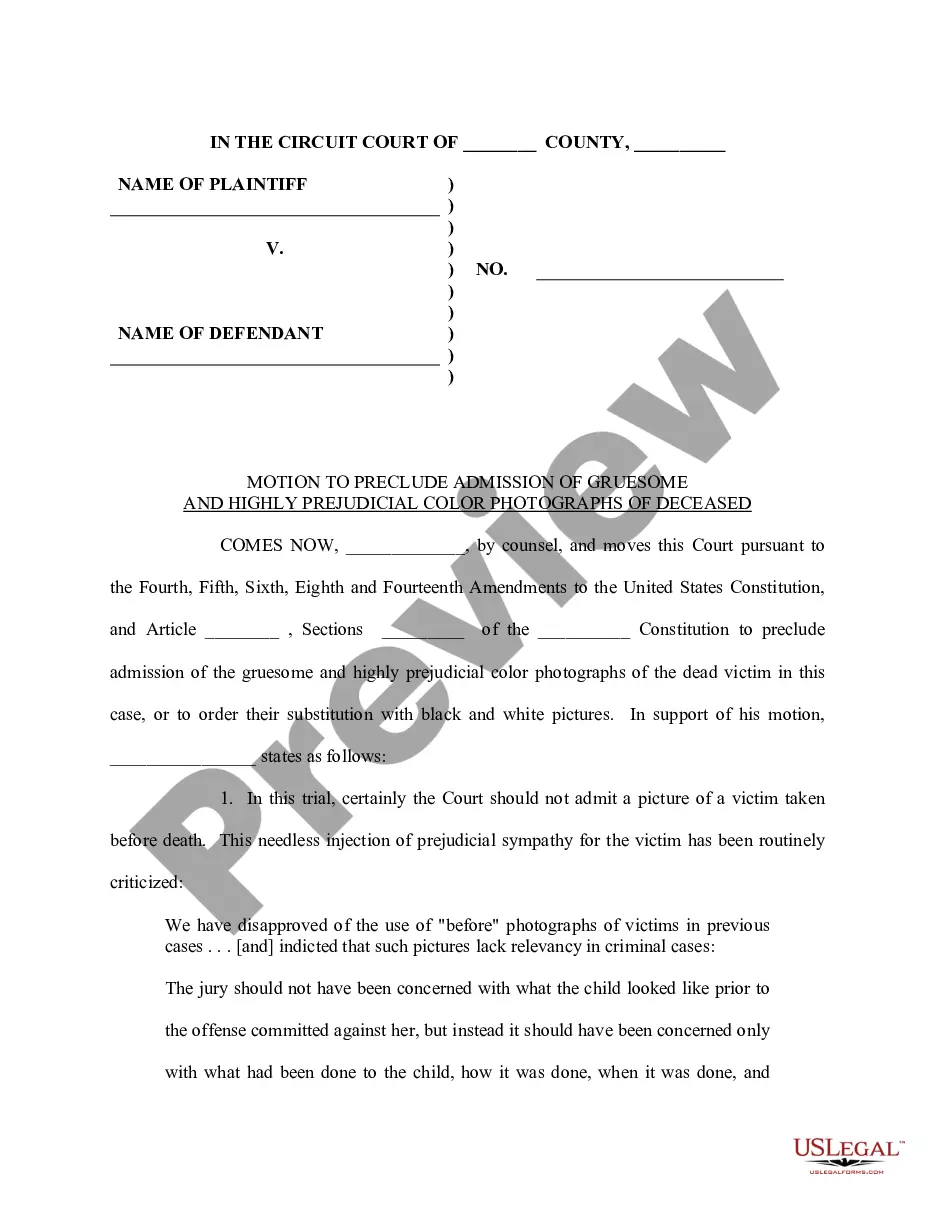
The Motion to Preclude Admission of Gruesome and Highly Prejudicial Color Photographs of Deceased is a legal document used to request that certain photographs not be admitted as evidence in court. This motion is particularly relevant in sensitive cases, such as those involving violent crimes, where such images may unfairly influence a jury's perception. Unlike general motions, this specific form addresses the admissibility of emotionally charged visual evidence, aiming to safeguard the fairness of the trial.
Main sections of this form
- Case caption, identifying the parties involved.
- Statement of facts and circumstances surrounding the case.
- Argument specifying why the photographs should be excluded.
- Legal precedents and case law supporting your request.
- Conclusion requesting that the court deny the admission of photographs.
- Date and signature line for submission.
When to use this document
This form is appropriate when you are involved in a legal case where emotionally or visually disturbing photographs of a deceased person may be presented as evidence. Use this motion if you believe that such images could unduly prejudice the jury or divert their attention from the factual issues of the case. Common scenarios include homicide trials and other criminal cases where the manner of death is under scrutiny.
Who needs this form
- Defense attorneys representing a defendant in a criminal case.
- Prosecutors seeking to prevent the admission of overly prejudicial evidence.
- Individuals acting as pro se litigants in their own legal defense.
- Legal practitioners seeking to protect the integrity of a trial.
Completing this form step by step
- Begin by filling out the case caption, including your name and the court's name.
- Clearly state the facts of your case in the designated section.
- Present your argument as to why the photographs should be excluded, referencing relevant legal precedents.
- Conclude with a formal request for the court to deny the admission of the photographs.
- Review for accuracy, sign the document, and include the date.
Does this form need to be notarized?
This form does not typically require notarization to be legally valid. However, some jurisdictions or document types may still require it. US Legal Forms provides secure online notarization powered by Notarize, available 24/7 for added convenience.
Get your form ready online
Our built-in tools help you complete, sign, share, and store your documents in one place.
Make edits, fill in missing information, and update formatting in US Legal Forms—just like you would in MS Word.
Download a copy, print it, send it by email, or mail it via USPS—whatever works best for your next step.
Sign and collect signatures with our SignNow integration. Send to multiple recipients, set reminders, and more. Go Premium to unlock E-Sign.
If this form requires notarization, complete it online through a secure video call—no need to meet a notary in person or wait for an appointment.
We protect your documents and personal data by following strict security and privacy standards.

Make edits, fill in missing information, and update formatting in US Legal Forms—just like you would in MS Word.

Download a copy, print it, send it by email, or mail it via USPS—whatever works best for your next step.

Sign and collect signatures with our SignNow integration. Send to multiple recipients, set reminders, and more. Go Premium to unlock E-Sign.

If this form requires notarization, complete it online through a secure video call—no need to meet a notary in person or wait for an appointment.

We protect your documents and personal data by following strict security and privacy standards.
Mistakes to watch out for
- Failing to provide sufficient legal justification for the exclusion of photographs.
- Neglecting to reference relevant case law that supports your motion.
- Leaving sections of the form blank, particularly the conclusion and signature.
- Using overly emotional language instead of focusing on legal arguments.
Benefits of completing this form online
- Immediate access to a professionally drafted motion template.
- Ability to customize the form according to your specific case needs.
- Downloadable format that allows for easy printing and filing.
- Time-saving, as it reduces the complexity of legal writing by providing a structured approach.
Legal use & context
- This motion is essential for maintaining the integrity of the legal process by preventing prejudicial evidence from impacting jury decisions.
- Many courts have set precedents regarding the admissibility of graphic evidence, making this motion critical in sensitive cases.
- Understanding the legal standards for admissibility is crucial for effective advocacy in either defense or prosecution roles.
What to keep in mind
- The Motion to Preclude Admission of Gruesome and Highly Prejudicial Color Photographs of Deceased is vital for protecting against bias during a trial.
- Careful completion of the form with relevant legal arguments will enhance its chance of acceptance by the court.
- This document can be adapted to varying state practices, ensuring its relevance across jurisdictions.
Looking for another form?
Form popularity
FAQ
Dispositive motions therefore can accelerate the resolution of a claim or lawsuit, promote efficiency, and conserve judicial resources. For example, motions for default judgment, motions to dismiss, and motions for summary judgment all may result in the disposition of claims without a trial.
In the United States, a motion to suppress is a request made by a criminal defendant in advance of a criminal trial asking the court to exclude certain evidence from the trial.A motion to exclude evidence that is based on rules of evidence, in advance of the trial, is more commonly called a motion in limine.
In the U.S., the most common type of dispositive motions seeking to dispose of the entire lawsuit are those for summary judgment.A dispositive motion may also be used to request that an indictment be dismissed or quashed, or for judgment on pleadings.
A motion in limine is a procedural mechanism that allows litigators to seek to exclude certain evidence from being presented to a jury typically evidence that is irrelevant, unreliable, or more prejudicial than probative.
A motion is an application to the court made by the prosecutor or defense attorney, requesting that the court make a decision on a certain issue before the trial begins. The motion can affect the trial, courtroom, defendants, evidence, or testimony.
Whereas the motion in limine is based on the trial court's inherent discretion to exclude prejudicial evidence, the motion to suppress is based on the court's duty to exclude evidence which has been im- properly Qbtained.
During a civil case, most of your interactions with the judge will be the result of you or the other side filing a written motion. A motion is a written request to the judge that asks for a ruling on some issue in the case.
A motion, in its simplest form is a list of requests that you are asking the Court grant on your behalf. You, or your attorney on your behalf, will file a Notice of Motion which includes a list of requests for the court to rule upon.
Motion to dismiss. Discovery motions. Motion to compel. Motion to strike. Motion for summary judgment. Motion for a directed verdict. Motion for nolle prosequi. Motion in Limine.