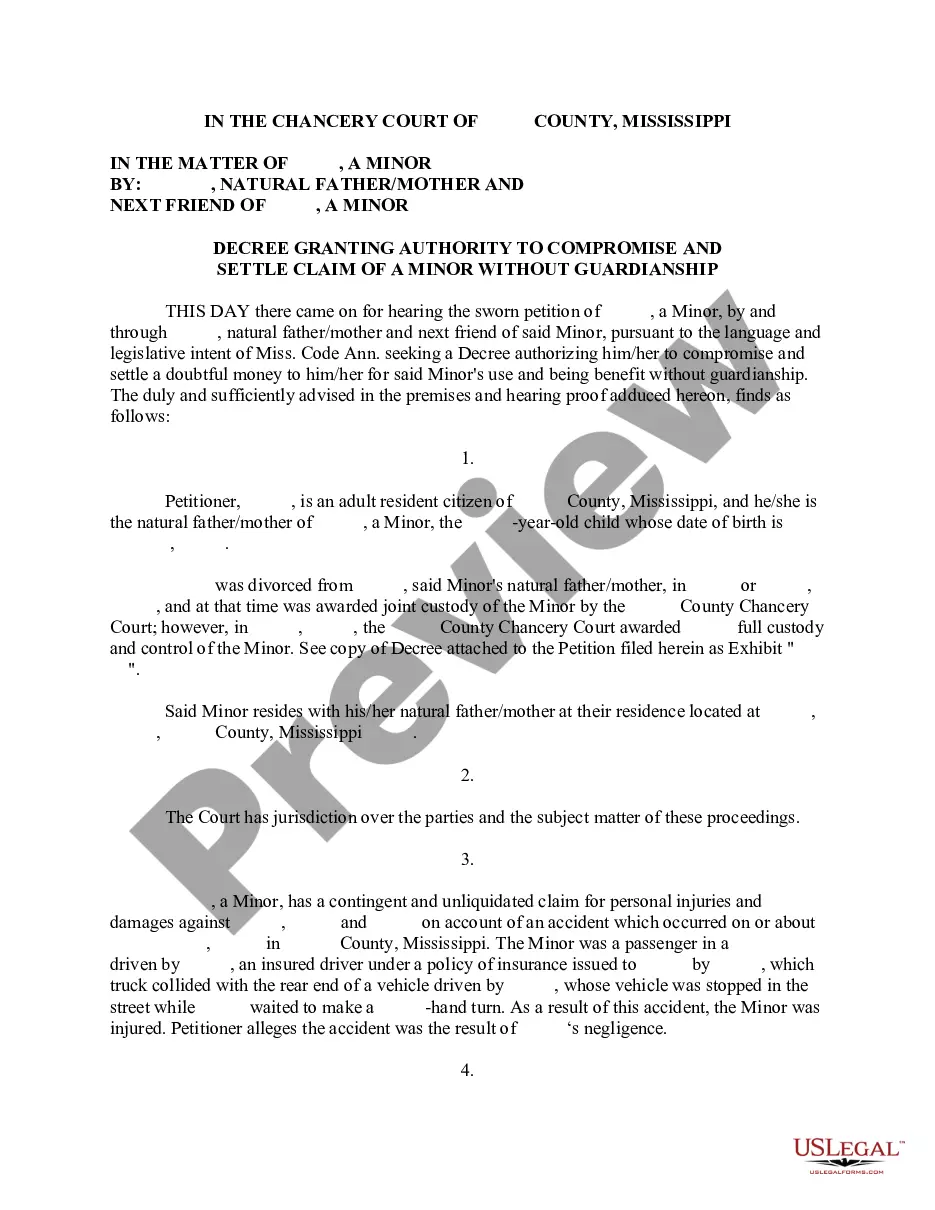
Mississippi Decree Granting Authority to Compromise and Settle Claim of Minor without Guardianship
What this document covers
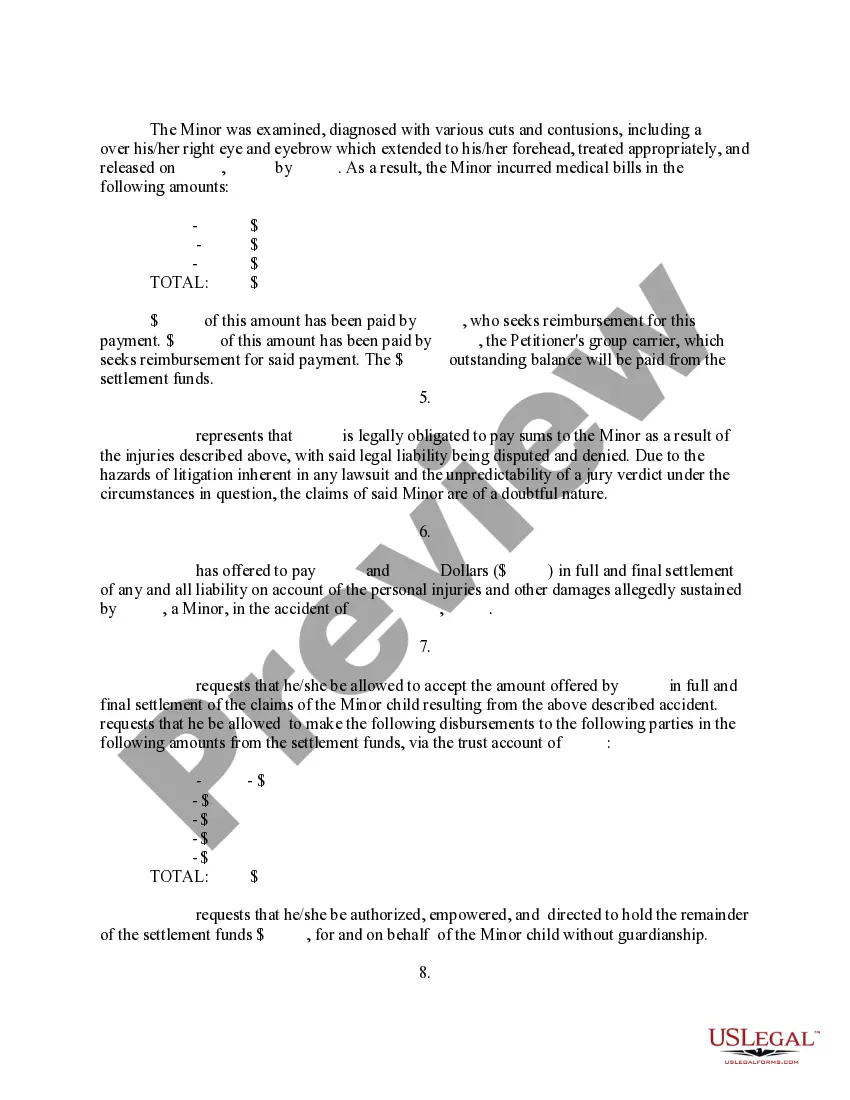
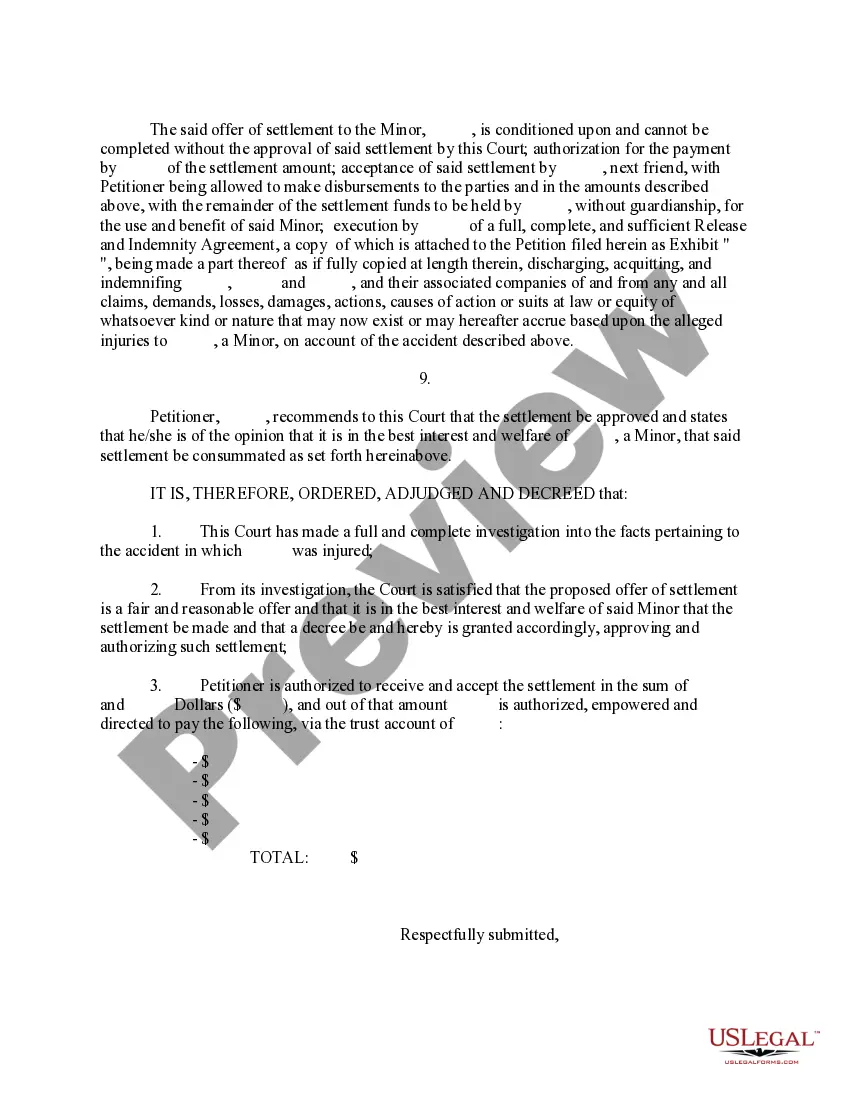
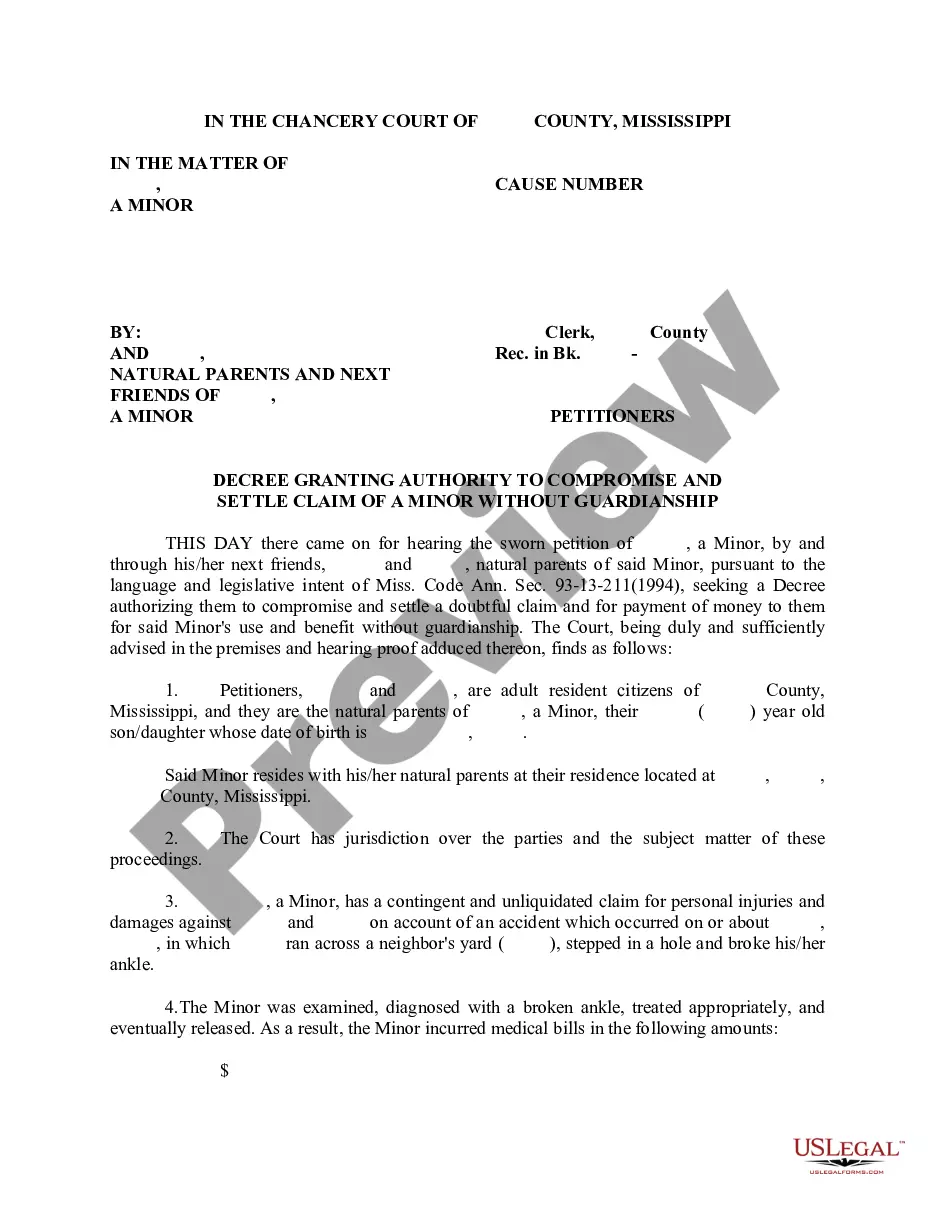
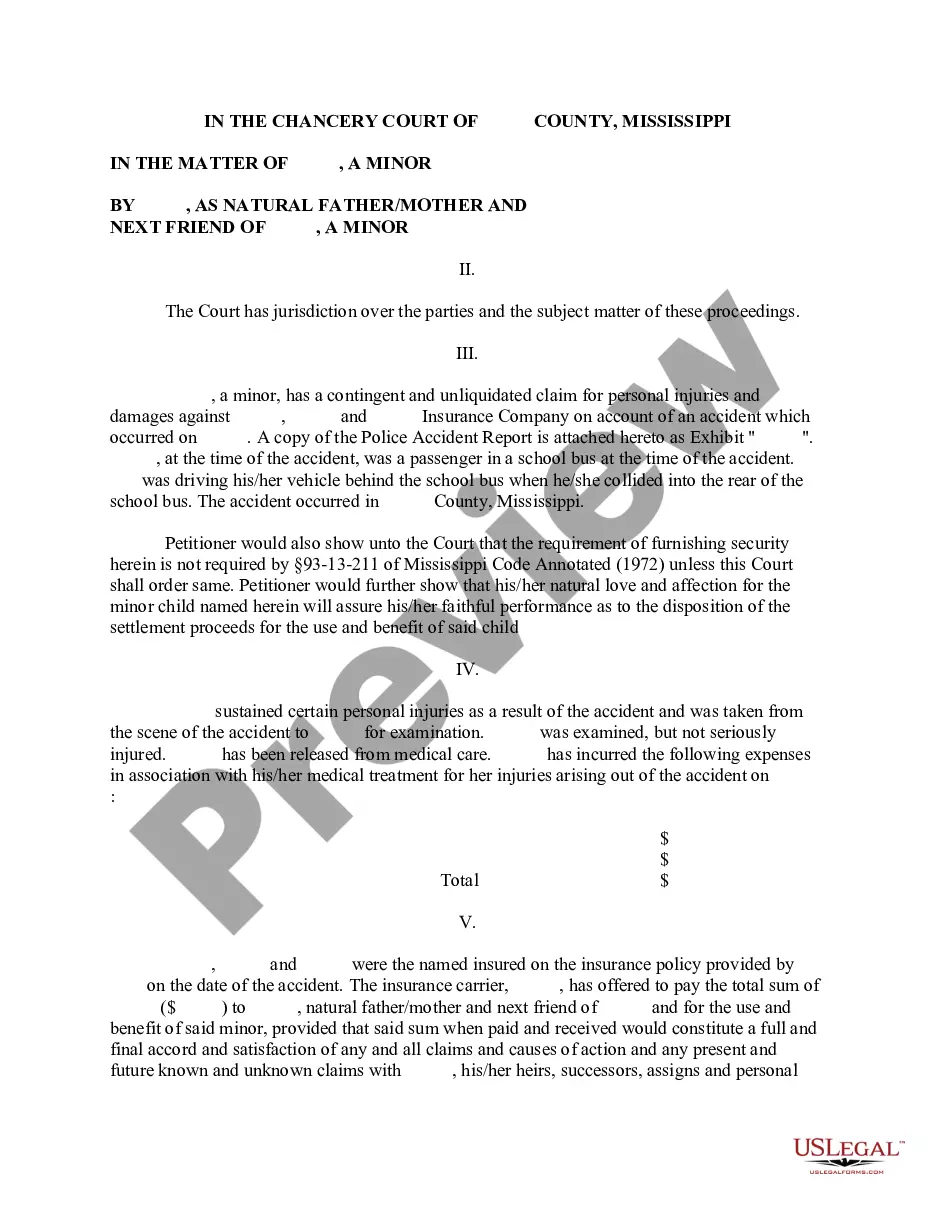
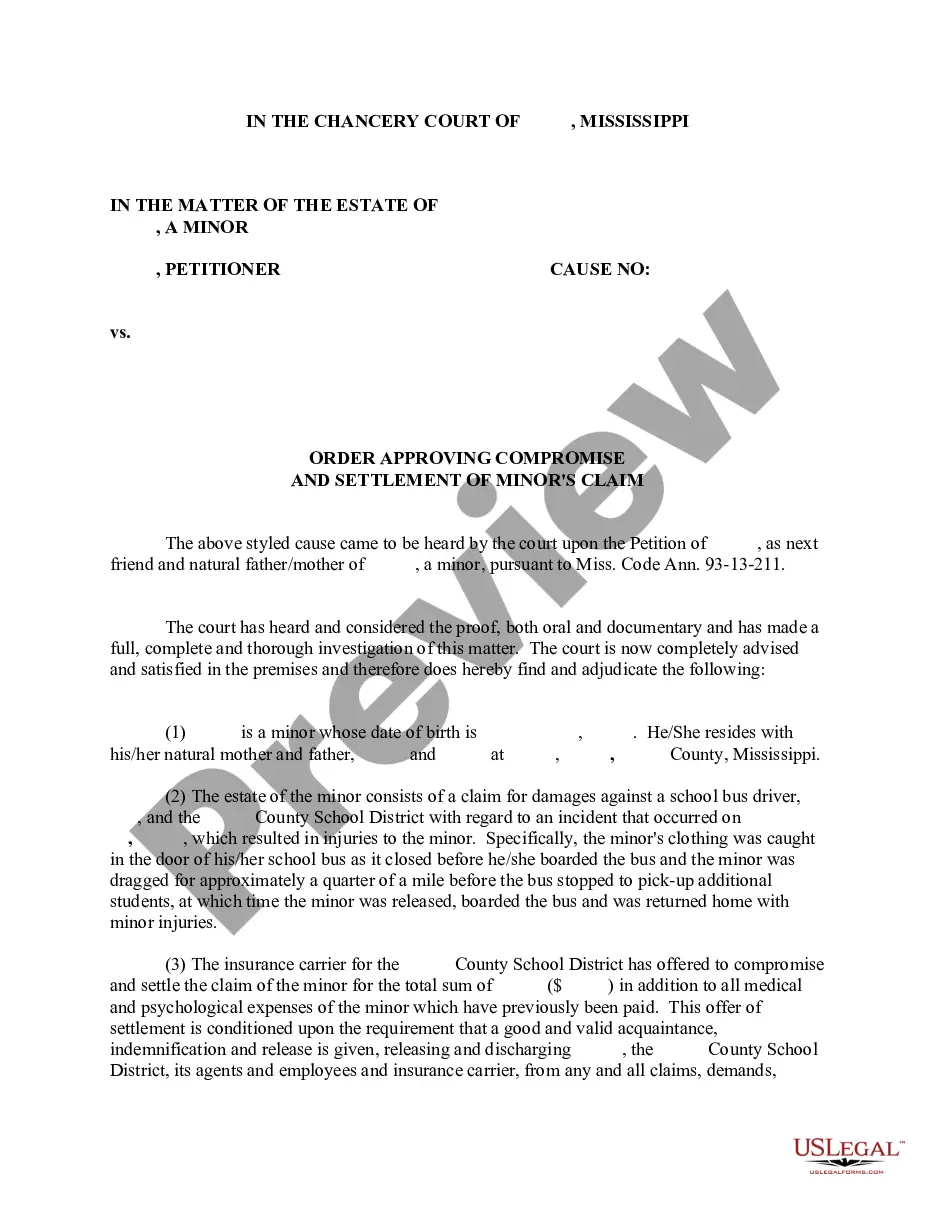
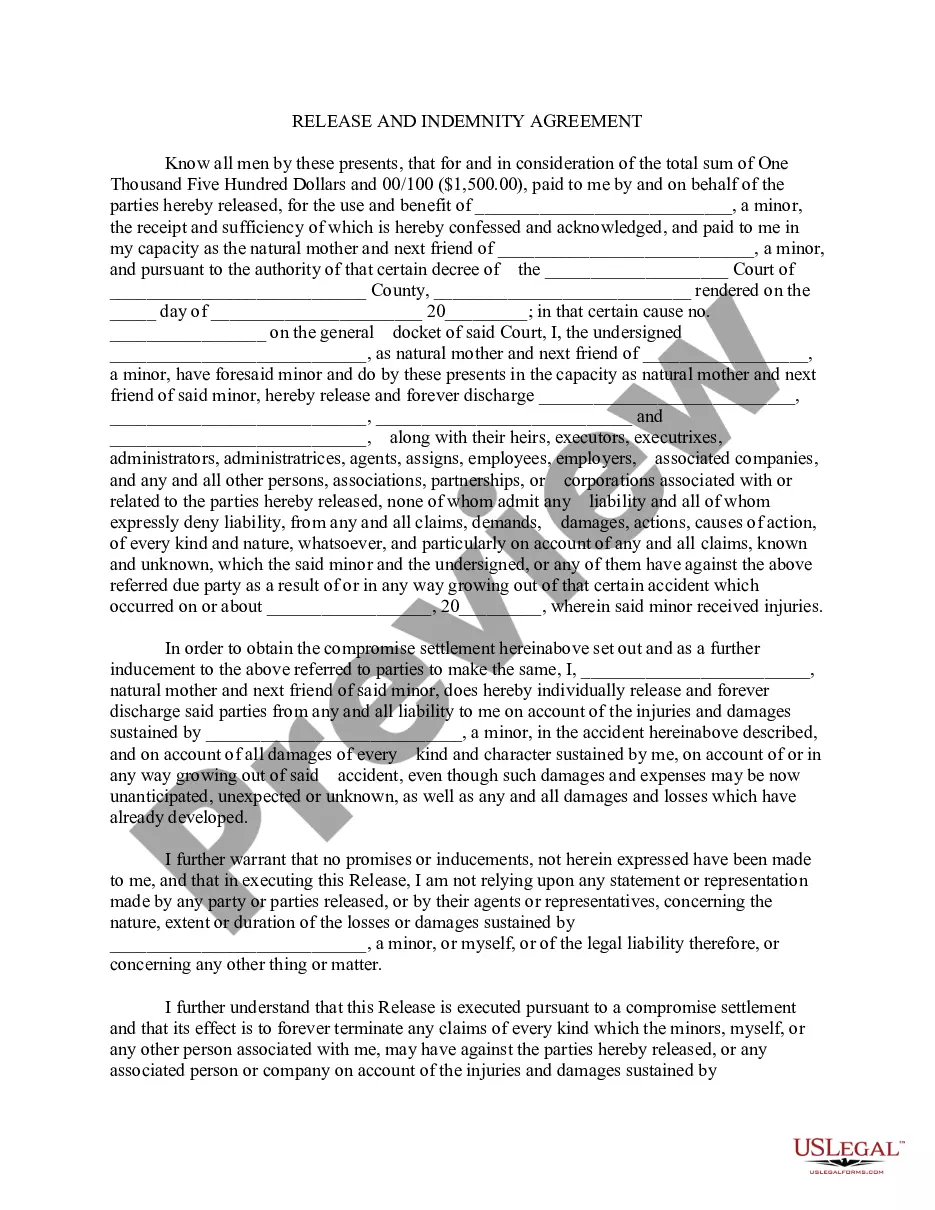
The Decree Granting Authority to Compromise and Settle Claim of Minor without Guardianship is a court order that authorizes the settlement of a claim on behalf of a minor without the need for a guardianship arrangement. This form is particularly useful for parents or legal guardians seeking to resolve legal claims involving their minor children and ensures that the terms meet court approval. Unlike other legal documents that may require guardianship, this decree simplifies the process for settling claims specifically for minors.
Form components explained
- Identification of all parties involved, including the minor claimant.
- Description of the claim being settled.
- Terms of the settlement agreement, including financial compensation.
- Judicial approval section where the judge can sign the decree.
- Mandatory statements ensuring that the settlement is in the best interest of the minor.


When to use this form
This form is needed when a legal claim has been established on behalf of a minor, and there is a desire to settle the claim without proceeding through a full guardianship process. Common scenarios include personal injury claims, accidents resulting in damages, or any other situation where a minor may have a claim for compensation that requires court intervention to settle.
Intended users of this form
This form is intended for:
- Parents or legal guardians of minors with pending claims.
- Attorneys representing minors in legal matters.
- Legal representatives seeking court approval for settlement of claims on behalf of minors.
Instructions for completing this form
- Identify the parties involved, ensuring to include the minor's name.
- Clearly describe the nature of the claim and the circumstances surrounding it.
- Specify the terms of the settlement, including any agreed-upon financial compensation.
- Sign the form where indicated, making sure to leave spaces for the judge's signature.
- File the completed decree with the appropriate court for judicial review and approval.
Is notarization required?
This form does not typically require notarization unless specified by local law. However, it is important to check your local requirements to ensure compliance with any additional legal stipulations regarding the approval of decrees pertaining to minors.
Get your form ready online
Our built-in tools help you complete, sign, share, and store your documents in one place.
Make edits, fill in missing information, and update formatting in US Legal Forms—just like you would in MS Word.
Download a copy, print it, send it by email, or mail it via USPS—whatever works best for your next step.
Sign and collect signatures with our SignNow integration. Send to multiple recipients, set reminders, and more. Go Premium to unlock E-Sign.
If this form requires notarization, complete it online through a secure video call—no need to meet a notary in person or wait for an appointment.
We protect your documents and personal data by following strict security and privacy standards.

Make edits, fill in missing information, and update formatting in US Legal Forms—just like you would in MS Word.

Download a copy, print it, send it by email, or mail it via USPS—whatever works best for your next step.

Sign and collect signatures with our SignNow integration. Send to multiple recipients, set reminders, and more. Go Premium to unlock E-Sign.

If this form requires notarization, complete it online through a secure video call—no need to meet a notary in person or wait for an appointment.

We protect your documents and personal data by following strict security and privacy standards.
Mistakes to watch out for
- Failing to include all necessary parties in the identification section.
- Inadequately describing the claim, leading to potential misunderstandings.
- Omitting or improperly signing the document, which could result in delays.
- Not filing the decree in the appropriate court for approval.
Advantages of online completion
- Convenient access to a legally vetted document that can be downloaded instantly.
- Editability to tailor the form to specific circumstances without the need for starting from scratch.
- Reliable content drafted by licensed attorneys, ensuring compliance with legal standards.
- Availability of guidance and support in completing the form, saving time and reducing errors.
Looking for another form?



Form popularity
FAQ
In addition, refusing to participate in court-ordered mediation is likely to make the judge assigned to your case angry, which could easily work against you. However, if you have not been ordered by the court to try mediation, then there really aren't any definitive legal ramifications to refusing to participate.
You don't have to go to mediation, but if you end up having to go to court to sort out your differences, you normally need to prove you've been to a mediation information and assessment meeting (MIAM). This is an introductory meeting to explain what mediation is and how it might help you.
When a mediation doesn't resolve a case, the impasse will necessitate the case goes to trial to be heard by a judge.If a settlement is offered before trial, it's up to the victim, their family, and at the best advice of their lawyer to either accept the offer of a settlement or proceed with trial.
Settle your dispute using mediation. If your case is not resolved in mediation, you can still have a trial in small claims court. If you choose mediation, an independent person works with you and the other side to find a solution that works for both of you.If you don't settle in mediation, you can still go to court.
If you and the opposing party in a suit reach a settlement agreement in good faith, there is likely very little you can do to get out of the deal. However, if either party (or even your attorney) somehow induced you to agree to the settlement through fraud or misrepresentation, you may be able to void the agreement.
"Settling a case" means ending a dispute before the end of a trial.Each side has to take time to investigate the facts of the case and research the law surrounding the case. Initial papers are filed with the court months before trial can begin.
The mediator is a facilitator who has no power to render a resolution to the conflict. The parties will fashion the solution as the mediator moves through the process. In many jurisdictions the mediator is an attorney but can not give legal advise while in the role of a mediator.
It is possible to back out of a settlement agreement if both parties consent and it has not been incorporated into a court order. However, the issue arises if the other party does not agree.The settlement agreement can be voided if it was formed through fraud or misrepresentation.
If you don't respond or decline mediation without a good reason, you will usually have to explain why you declined mediation to the judge, if your case subsequently goes to court.