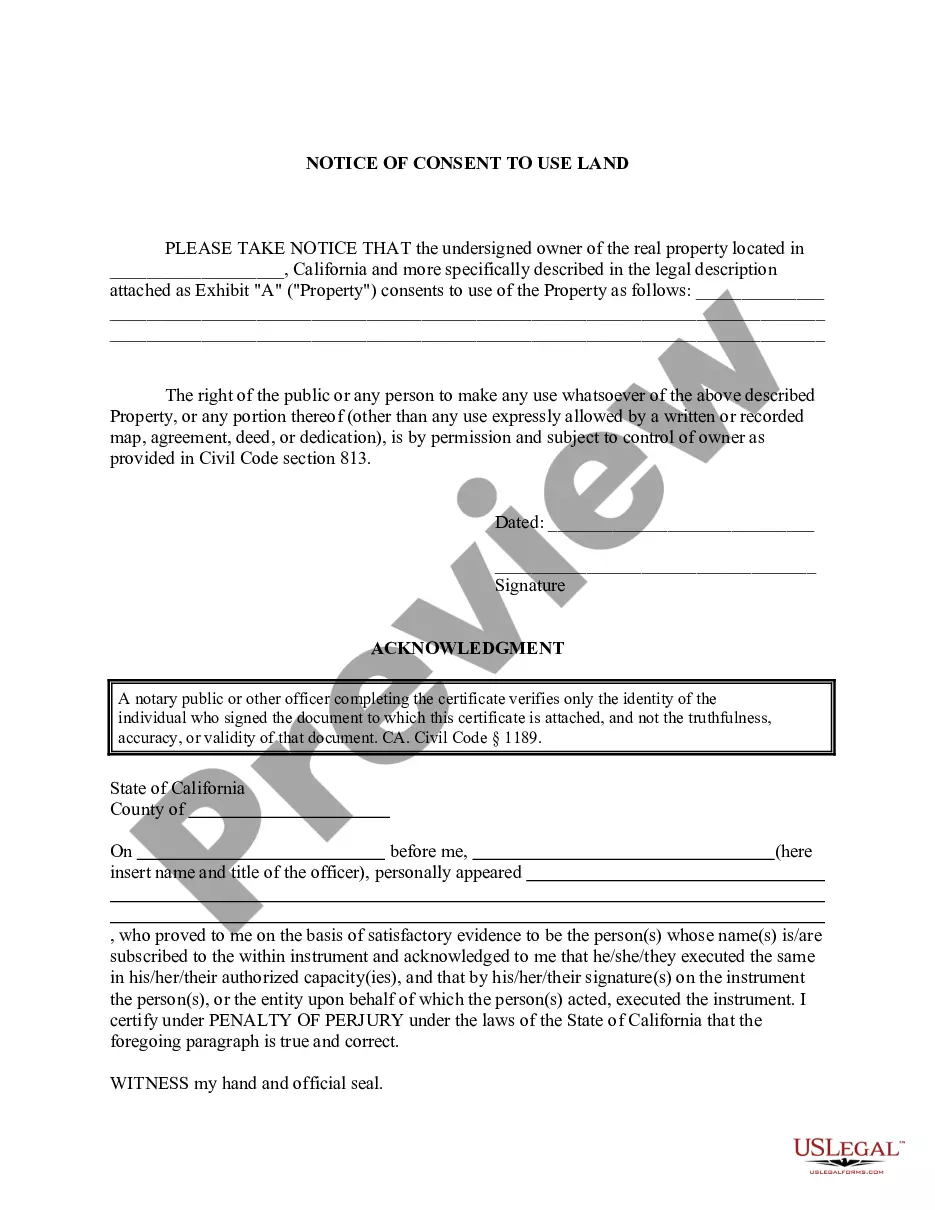
Mississippi Notice Of Removal From State Court
About this form
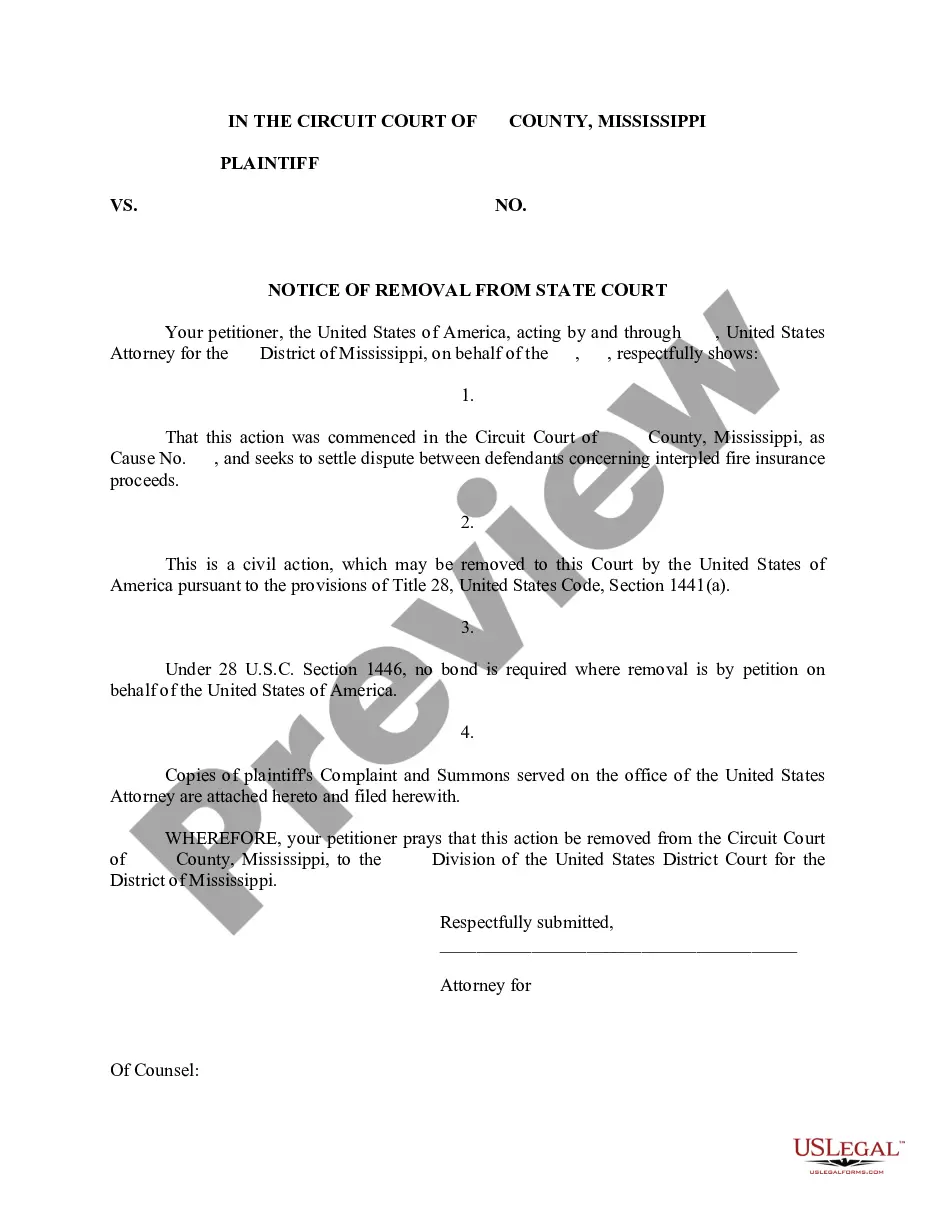
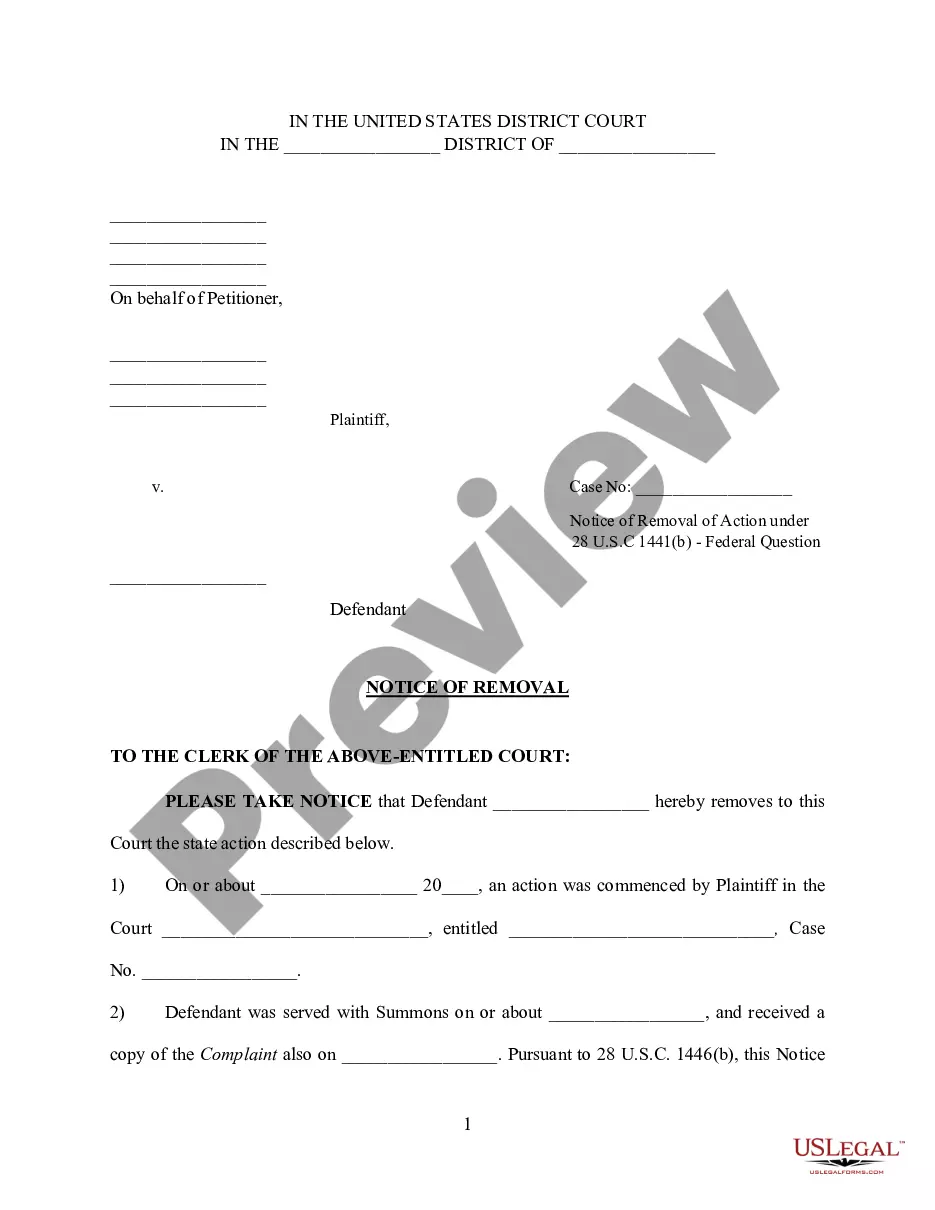
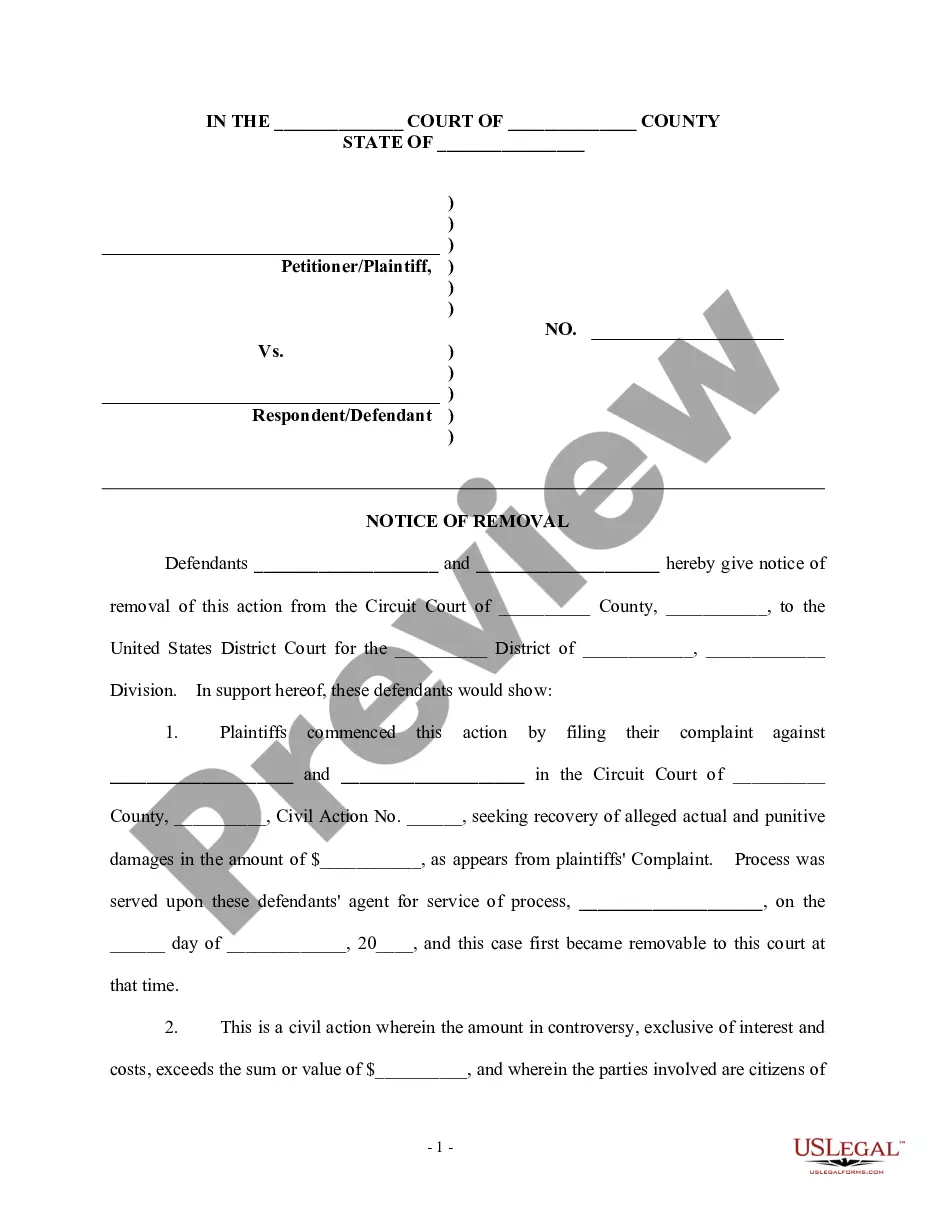
The Notice of Removal from State Court is a legal document used when a case currently being heard in a state court is transferred to a federal court. This form primarily serves the United States of America acting through its attorneys, allowing them to remove a civil action related to disputes, such as those involving insurance proceeds. Unlike other legal forms, this document specifically addresses the procedural rules and requirements for the United States to initiate removal to federal court as mandated under federal law.
What’s included in this form
- Caption detailing the plaintiff and defendant names, along with the case number.
- Statement indicating the original state court where the action commenced.
- Legal basis for removal citing Title 28, United States Code, Section 1441(a).
- Confirmation that no bond is required for removal initiated by the United States.
- Attachment of copies of the original complaint and summons as filed with the notice.
- A request for the action to be moved to a specified United States District Court.

When to use this form
This form should be used when the United States government is a party in a legal action that has been filed in a state court and seeks to transfer the case to a federal court. Scenarios include disputes over matters such as insurance claims or other civil actions where the federal jurisdiction is warranted. It is particularly relevant when the government must settle claims associated with disputes among private parties.
Who this form is for
- Government attorneys representing the United States in civil actions.
- Legal representatives handling disputes involving federal jurisdiction.
- Individuals or entities involved in a case where the government seeks removal to federal court.
Instructions for completing this form
- Identify the parties involved in the legal action and complete the caption section.
- Specify the original state court where the case was filed along with relevant case numbers.
- Include the legal basis for the removal, including references to Title 28 of the United States Code.
- Attach copies of the complaint and summons served to the United States Attorney.
- Sign and date the document, and ensure it is filed with the appropriate federal court.
Does this document require notarization?
This form does not typically require notarization unless specified by local law. You can complete and file it without needing a notarized signature.
Get your form ready online
Our built-in tools help you complete, sign, share, and store your documents in one place.
Make edits, fill in missing information, and update formatting in US Legal Forms—just like you would in MS Word.
Download a copy, print it, send it by email, or mail it via USPS—whatever works best for your next step.
Sign and collect signatures with our SignNow integration. Send to multiple recipients, set reminders, and more. Go Premium to unlock E-Sign.
If this form requires notarization, complete it online through a secure video call—no need to meet a notary in person or wait for an appointment.
We protect your documents and personal data by following strict security and privacy standards.

Make edits, fill in missing information, and update formatting in US Legal Forms—just like you would in MS Word.

Download a copy, print it, send it by email, or mail it via USPS—whatever works best for your next step.

Sign and collect signatures with our SignNow integration. Send to multiple recipients, set reminders, and more. Go Premium to unlock E-Sign.

If this form requires notarization, complete it online through a secure video call—no need to meet a notary in person or wait for an appointment.

We protect your documents and personal data by following strict security and privacy standards.
Mistakes to watch out for
- Failing to attach required documentation, such as the original complaint and summons.
- Incorrectly citing the federal jurisdiction statutes which can lead to dismissal.
- Neglecting to include all relevant case parties in the caption.
Why use this form online
- Convenience: Download and fill the form from any location without the need for physical paperwork.
- Editability: Easily modify details as needed before submission.
- Reliability: Ensures that you are using a form that adheres to current legal standards, drafted by licensed attorneys.
Looking for another form?
Form popularity
FAQ
The transfer of a person or thing from one place to another. The transfer of a case from one court to another. An important exception to this rule is the defendant's right, in some circumstances, to have a case removed from a state court to a federal court.Federal law explains this right of removal in detail.
There is no reverse "removal". That is, if a case originates in a federal court, there is no ability for a defendant to remove a case from federal court into state court. If the federal court lacks jurisdiction, the case is dismissed.
Federal Rule of Civil Procedure (FRCP) 12 governs federal motions to dismiss. A defendant making a motion to dismiss must do so before filing an answer or other responsive pleading, and the motion is generally due when the defendant's answer would have been due (see FRCP 12(b)).
Promptly after the filing of such notice of removal of a civil action the defendant or defendants shall give written notice thereof to all adverse parties and shall file a copy of the notice with the clerk of such State court, which shall effect the removal and the State court shall proceed no further unless and until
So why would a defendant want to remove the case to federal court? Well, removing a case may alleviate certain concerns about prejudice or bias against an out-of-state defendant. Removal also allows the parties to use federal procedural rules instead of state rules.
In order to remove a case to federal court, the federal court must have subject matter jurisdiction over the matter. If there is no federal jurisdiction, the case cannot be removed. Generally speaking, a case can be removed to federal court if it could have been filed in federal court by the plaintiff.
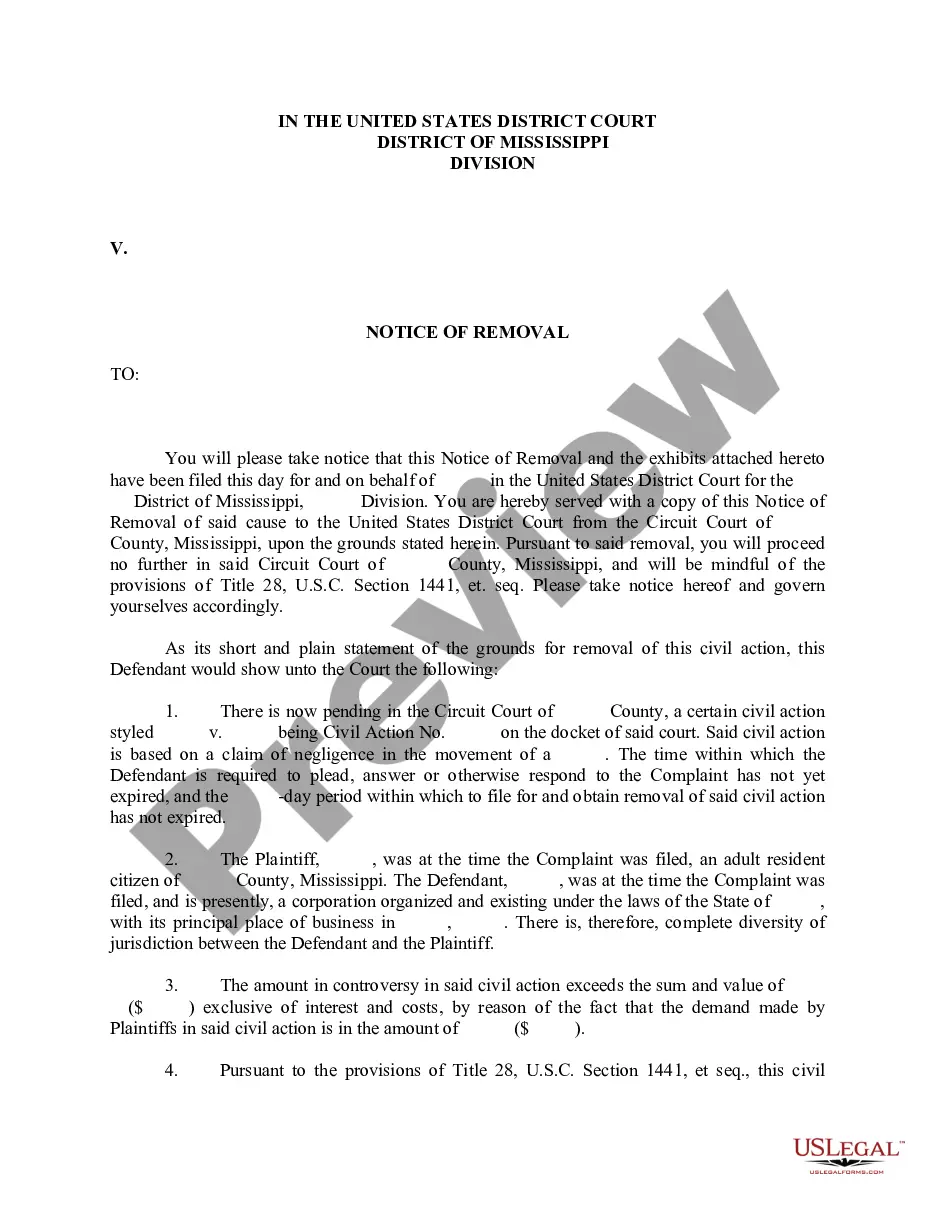
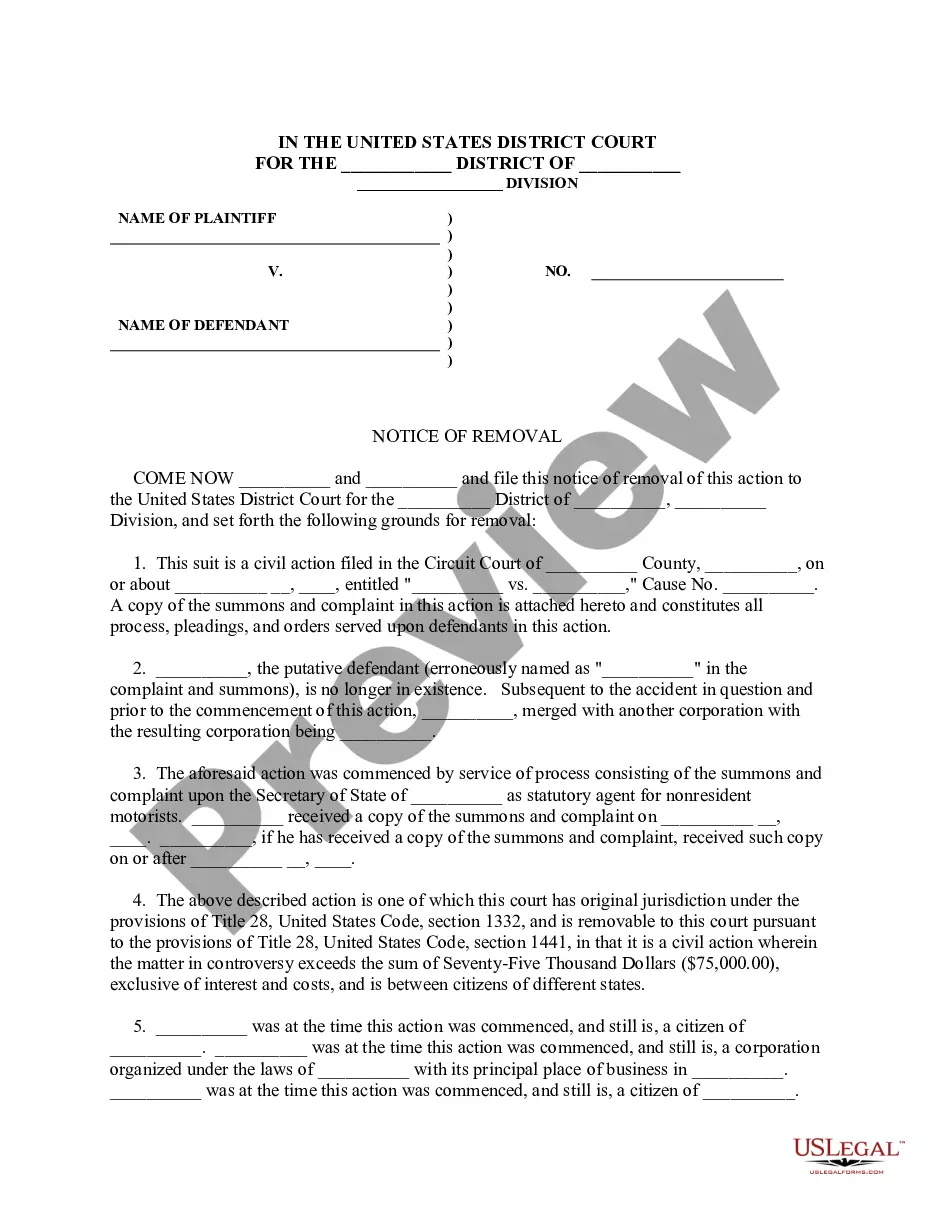
A notice of removal is signed by the defendants and filed in federal court to begin the process of transferring the civil action from state court to federal court.In such a case, the defendant or defendants may remove the case to the federal district court for the district and division in which the action is pending.
Once a case has been removed from state to federal court, the state court no longer has jurisdiction over the matter, though a federal court can remand a case to state court.A plaintiff can also move to have the case remanded to state court if the plaintiff does not believe federal jurisdiction exists.
A defendant has 30 days from the date when they receive the plaintiff's petition or complaint to remove the case to federal court. A case that is not removable when it is first filed can become removable later if the plaintiff adds new claims, joins more defendants, or increases the amount in controversy.