Mississippi Judgment of Dismissal
Understanding this form
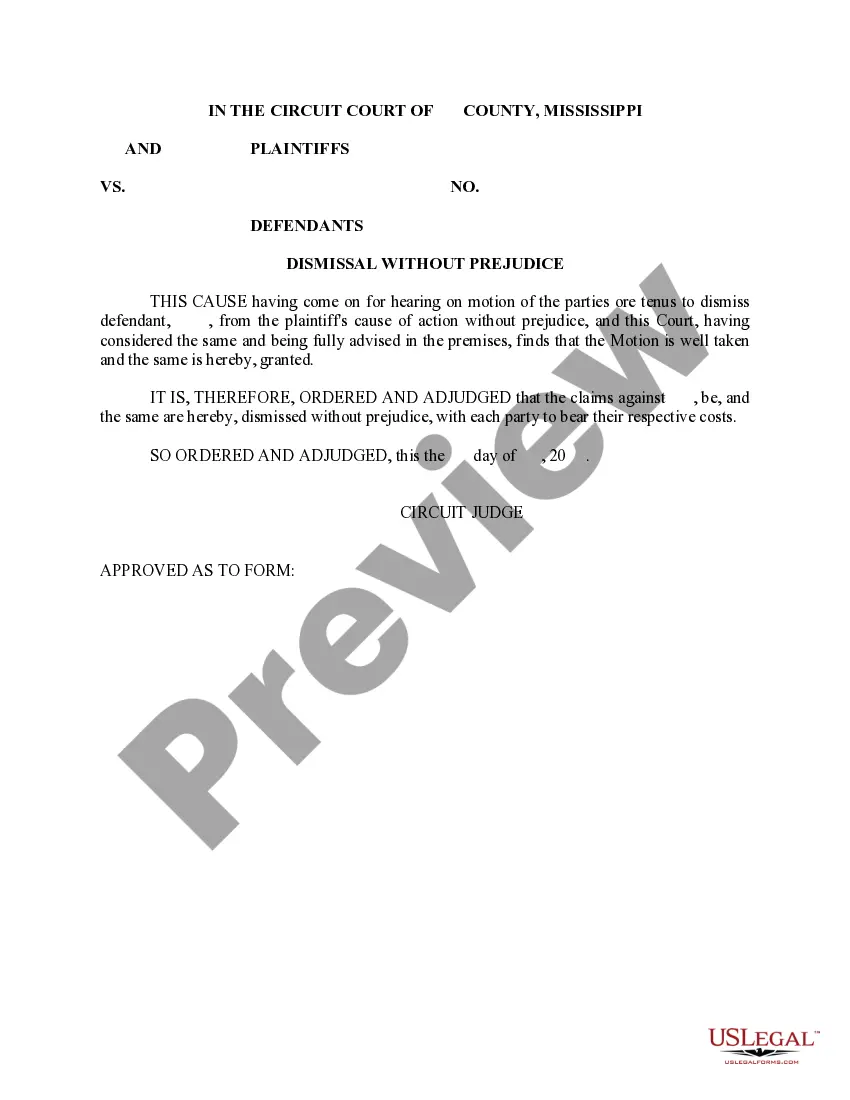
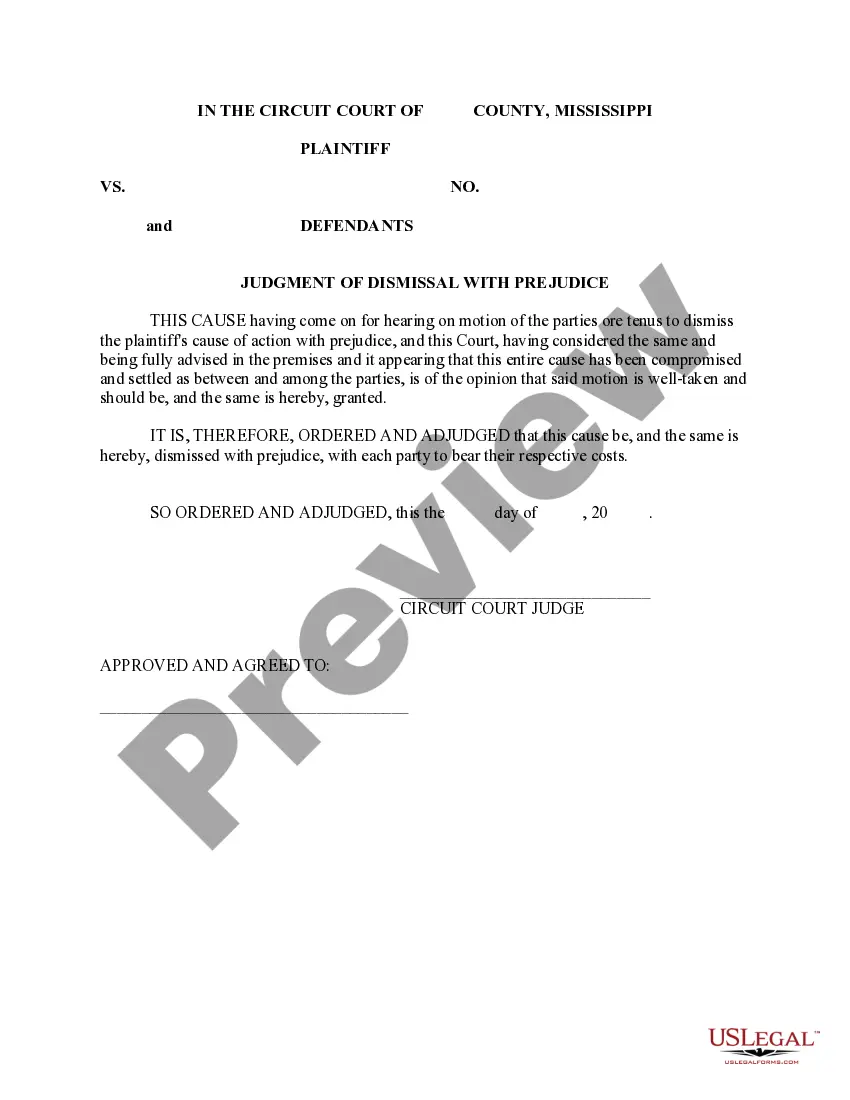
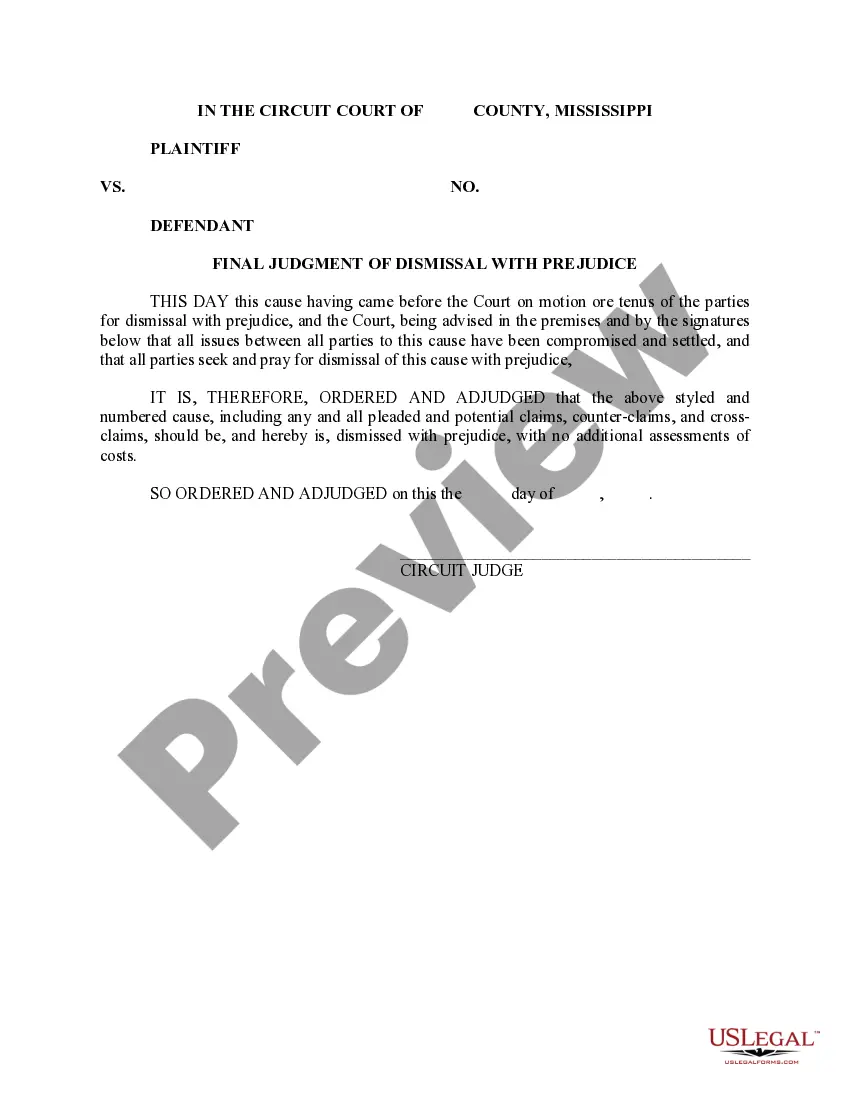
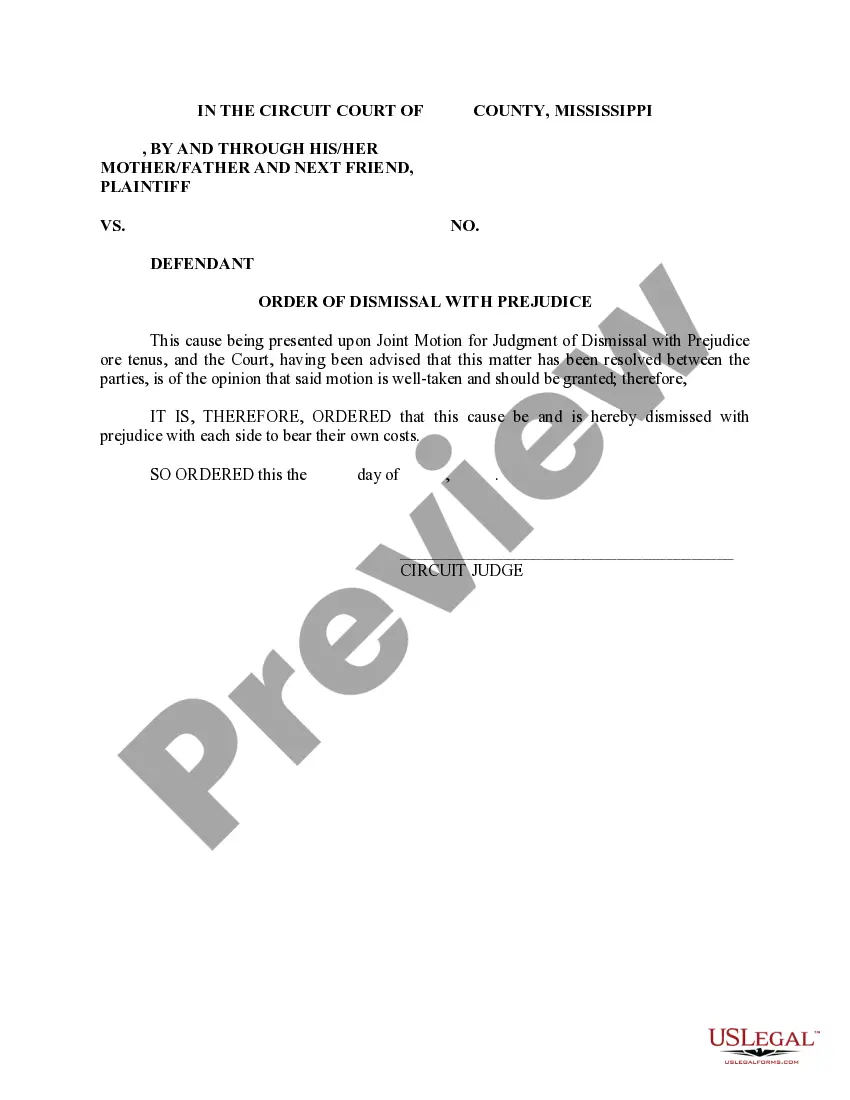
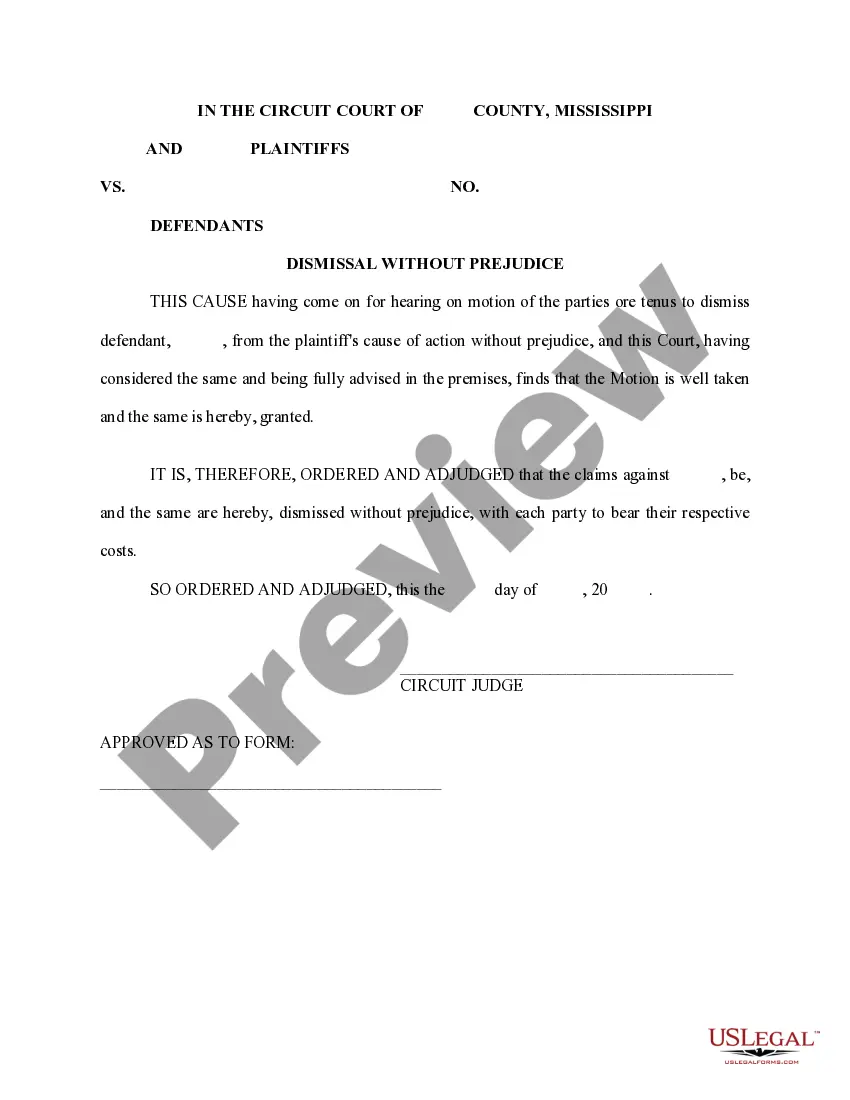
The Judgment of Dismissal is a legal document used in Mississippi that signifies a formal closure of a lawsuit. It is signed by a judge and indicates that all matters of the case have been resolved, thus terminating the cause of action without prejudice. This means that the plaintiff may have the option to refile in the future. Unlike a final judgment that concludes a case with prejudice, a Judgment of Dismissal allows for future claims related to the same issue.
Key parts of this document
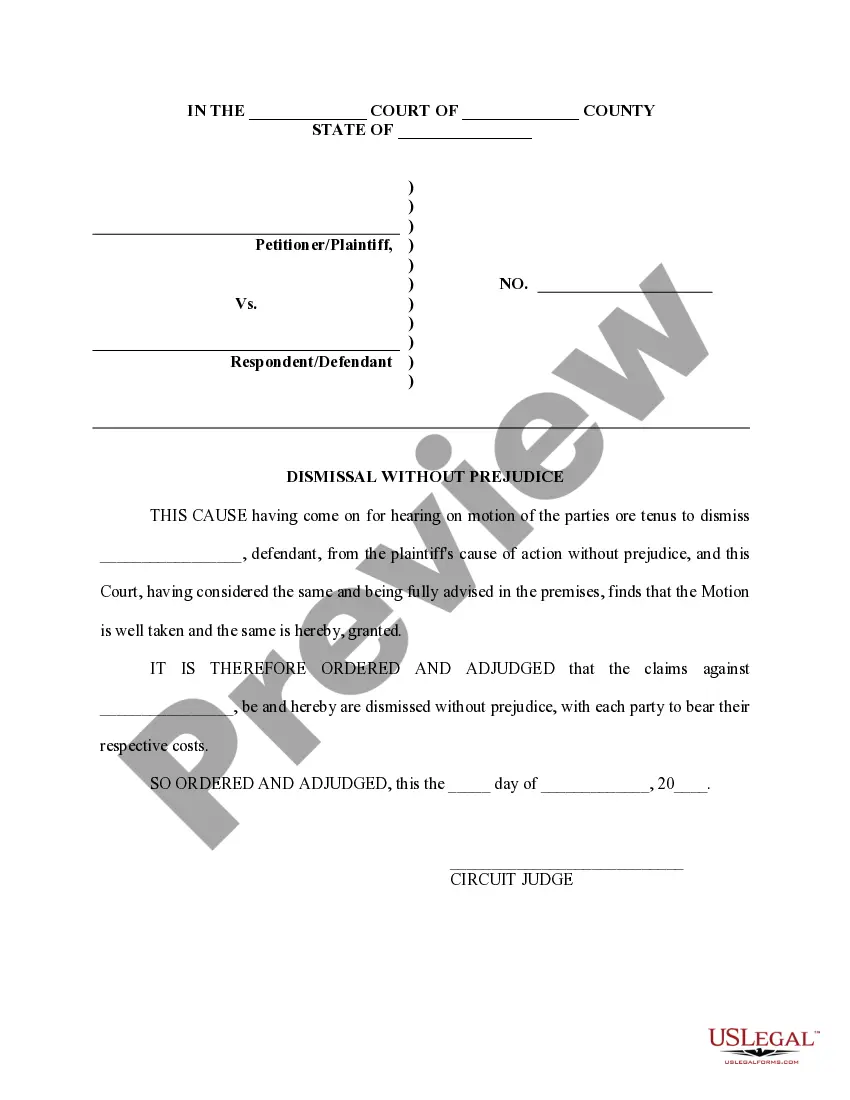
- Parties involved: Identification of the plaintiffs and defendants in the case.
- Case number: Assigned identifier for tracking purposes.
- Order and judgment statement: Declaration that the claims against the defendant are dismissed without prejudice.
- Costs: Specification that each party will bear their own costs.
- Signature lines: Space for the judge's signature and approval as to form.
Situations where this form applies
This form should be used when a party wishes to dismiss a lawsuit in Mississippi without affecting their right to refile it later. Common scenarios include settling the dispute outside of court or deciding not to pursue the case further due to various reasons such as lack of evidence or changed circumstances.
Intended users of this form
- Individuals or entities involved in a lawsuit seeking to dismiss their claims.
- Lawyers representing clients who wish to terminate a lawsuit without prejudice.
- Any party looking to resolve legal matters amicably and maintain the option to refile in the future.
Instructions for completing this form
- Identify the parties: Fill in the names of the plaintiffs and defendants involved in the case.
- Enter the case number: Provide the assigned number for the lawsuit.
- Complete the judge's order statement: Confirm the motion to dismiss and include any necessary details related to the dismissal.
- Specify the current date: Enter the date when the judgment is being signed.
- Include the judge's signature: Ensure the form is signed by the presiding judge to finalize the dismissal.
Notarization guidance
Notarization is generally not required for this form. However, certain states or situations might demand it. You can complete notarization online through US Legal Forms, powered by Notarize, using a verified video call available anytime.
Get your form ready online
Our built-in tools help you complete, sign, share, and store your documents in one place.
Make edits, fill in missing information, and update formatting in US Legal Forms—just like you would in MS Word.
Download a copy, print it, send it by email, or mail it via USPS—whatever works best for your next step.
Sign and collect signatures with our SignNow integration. Send to multiple recipients, set reminders, and more. Go Premium to unlock E-Sign.
If this form requires notarization, complete it online through a secure video call—no need to meet a notary in person or wait for an appointment.
We protect your documents and personal data by following strict security and privacy standards.

Make edits, fill in missing information, and update formatting in US Legal Forms—just like you would in MS Word.

Download a copy, print it, send it by email, or mail it via USPS—whatever works best for your next step.

Sign and collect signatures with our SignNow integration. Send to multiple recipients, set reminders, and more. Go Premium to unlock E-Sign.

If this form requires notarization, complete it online through a secure video call—no need to meet a notary in person or wait for an appointment.

We protect your documents and personal data by following strict security and privacy standards.
Avoid these common issues
- Failing to include the correct case number may result in delays.
- Not specifying that the dismissal is without prejudice could impact future claims.
- Neglecting to obtain the judge's signature renders the form invalid.
Why use this form online
- Convenience: Download and complete the form from anywhere at any time.
- Editability: Easily make changes to the form as needed before finalizing it.
- Reliability: Access forms created by licensed attorneys, ensuring compliance with state laws.
Key takeaways
- A Judgment of Dismissal is used to formally end a lawsuit in Mississippi without prejudice.
- It allows claims to be refiled in the future if necessary.
- Accurate completion of the form is crucial to avoid delays in dismissal.
- The form must be signed by a judge to be valid.
Looking for another form?


Form popularity
FAQ
When a lawsuit is dismissed with prejudice, the court is saying that it has made a final determination on the merits of the case, and that the plaintiff is therefore forbidden from filing another lawsuit based on the same grounds. See also: dismiss, dismissal without prejudice. courts.
Definitions of judgment of dismissal. noun. a judgment disposing of the matter without a trial.
The plaintiff can't refile the case without first asking the court to vacate or set aside (cancel) the dismissal with prejudice. A judge is most likely to dismiss a case with prejudice if the plaintiff doesn't show up in court and doesn't file a written request for postponement before the court date.
There are many reasons for a court to dismiss a case, both procedural and substantive. FRCP 12 provides the list of grounds for dismissal in federal court, which includes a lack of jurisdiction, improper service of process, failure to join a party, and a plaintiff's failure to state a claim for relief.
Dismissal is the act of voluntarily ending a criminal prosecution or a lawsuit or one of its causes of action by one of the parties. Dismissal may occur by the act of a plaintiff upon settling the case.
Dismissal with prejudice is a final judgment and the case becomes res judicata on the claims that were or could have been brought in it; dismissal without prejudice is not.
WHAT IS A DISMISSED CASE? A dismissed criminal case is one in which you were not convicted. When a criminal charge is dismissed, you are not guilty and the case is concluded.
When a small claims case is dismissed, the court terminates the case without a trial and prior to the case's completion. A dismissal, in effect, denies the plaintiff's claim to the money requested in the Small Claims Complaint (or a counterclaim), even though the merits of the case have never been heard by the court.
Yes, it's great to have your case dismissed and you can truthfully claim you have never been convicted of a crime on job applications. However, it will still appear on your criminal record. You should consult with a local criminal attorney for advice on an expungement.