Mississippi Order of Dismissal
What is this form?
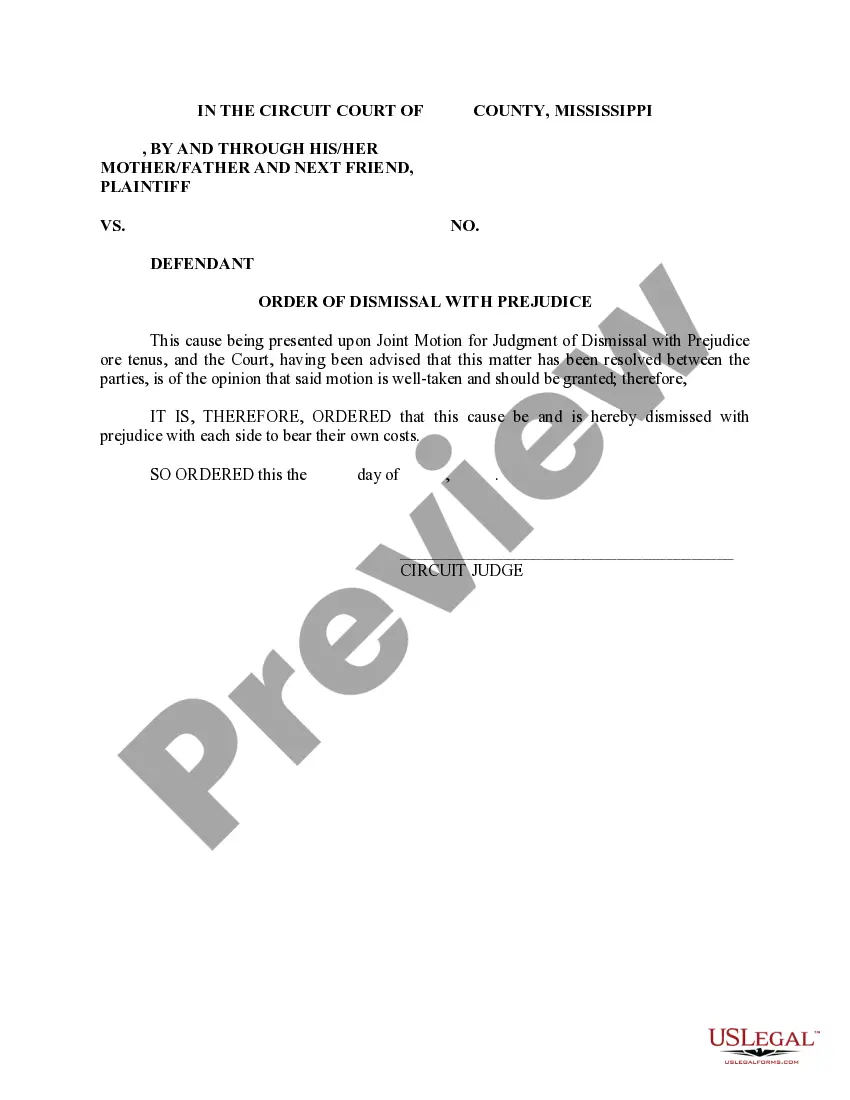
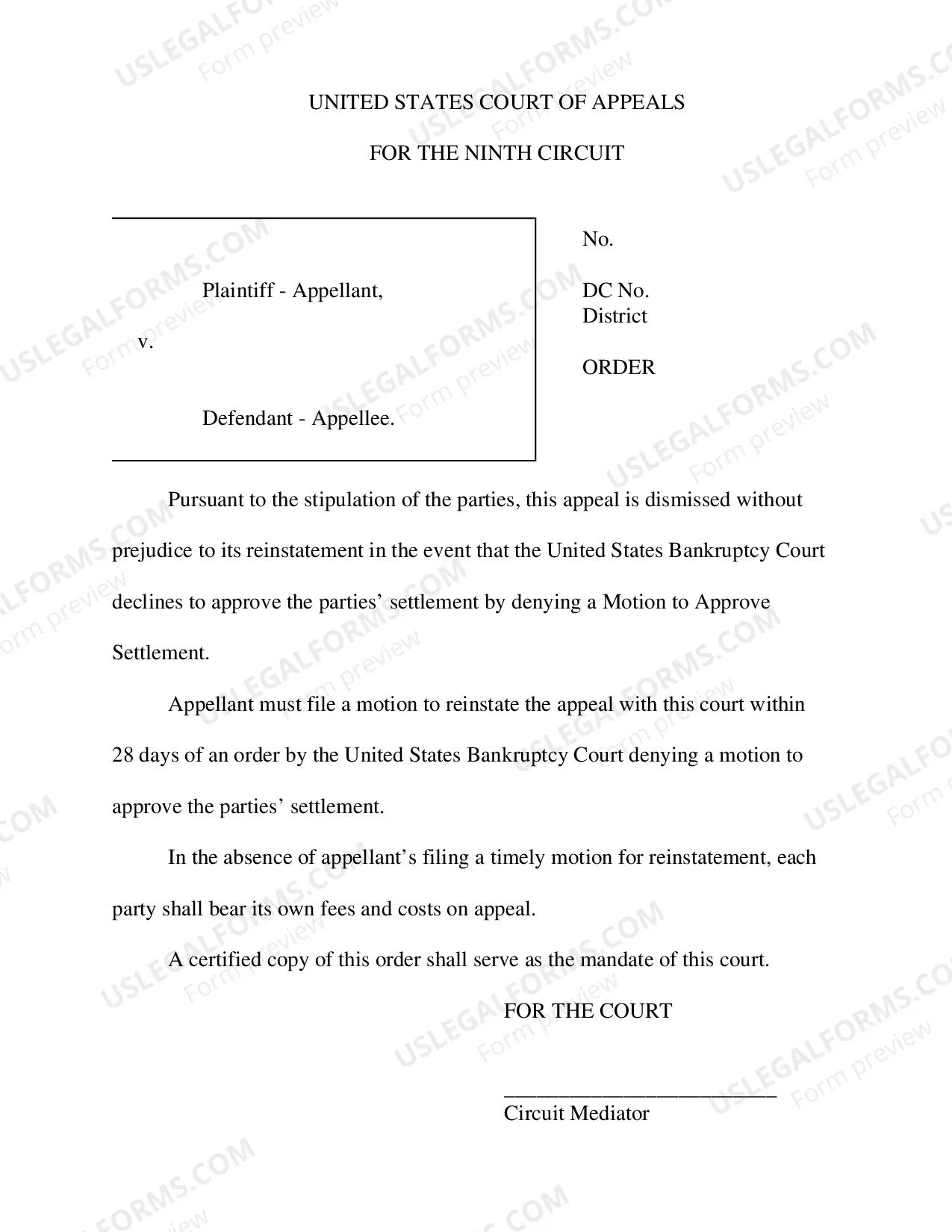
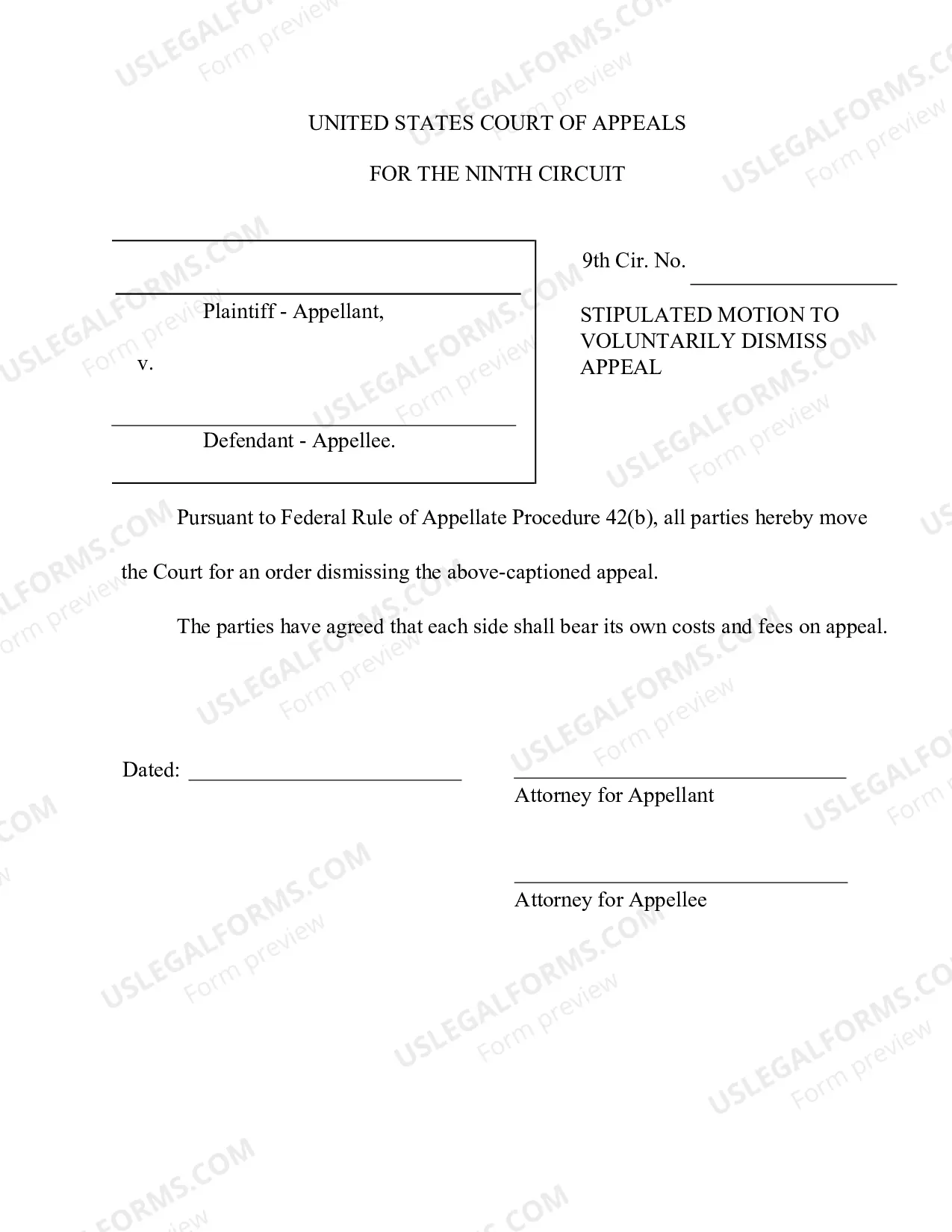
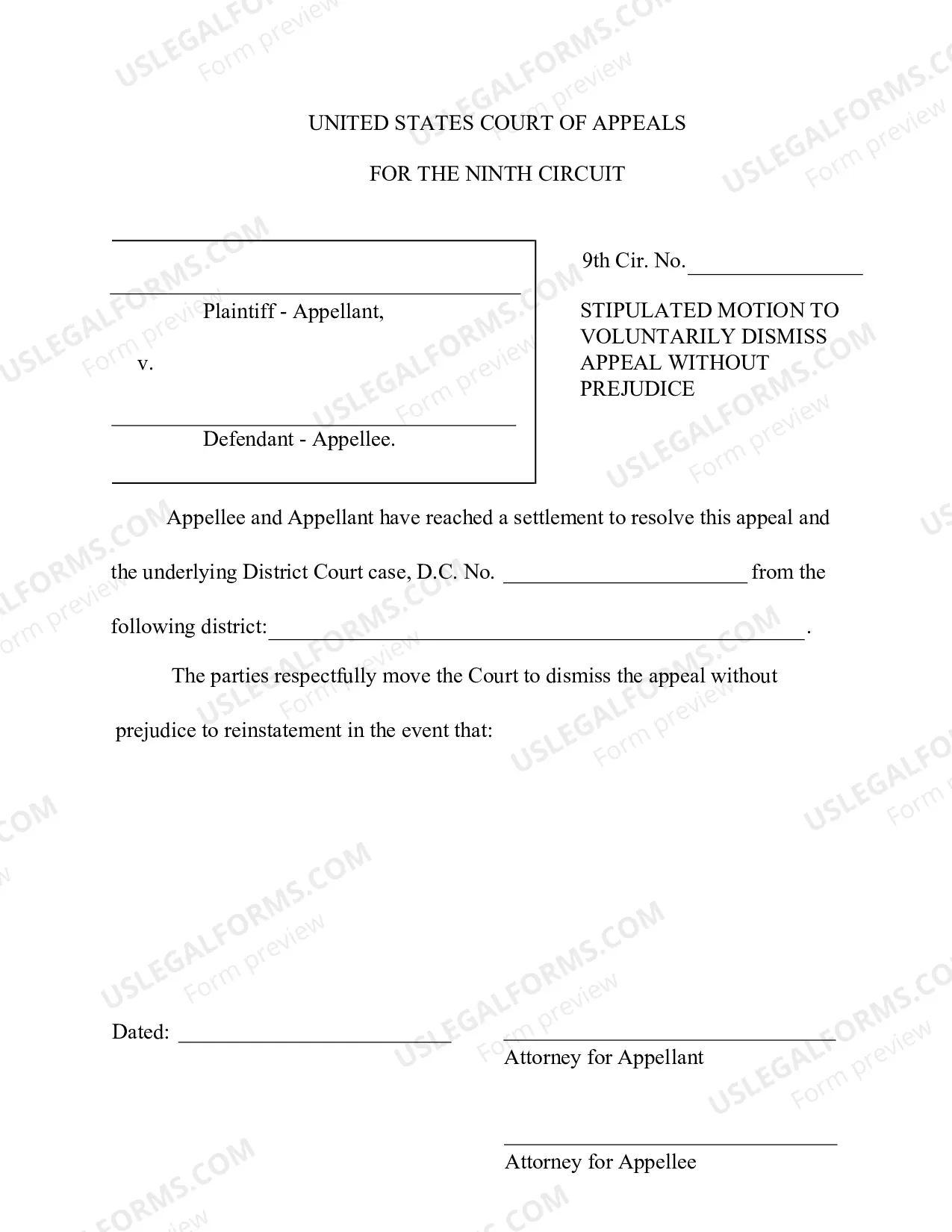
The Order of Dismissal is an official court document signed by a judge that commands the dismissal of a case. Unlike other court orders, this specific form indicates that a matter has been resolved between the parties, with the case being dismissed with prejudice. This means the case cannot be refiled. This form serves as a model for drafting an order requested by the court, allowing parties to adapt the language to fit their circumstances. It is crucial for finalizing legal proceedings and ensuring compliance with court directives.
Main sections of this form
- Joint Motion for Judgment of Dismissal: The request by both parties to dismiss the case.
- Court's Opinion: The judge's view that the motion has merit and should be granted.
- Order of Dismissal: The official directive stating that the cause is dismissed with prejudice.
- Cost Allocation: Specifies that each side bears its own costs related to the case.
When this form is needed
This form is necessary when both parties in a legal dispute have reached a resolution and wish to formally dismiss the case in court. It applies in scenarios such as settlement agreements where no further legal action is intended. Using this order ensures that the court recognizes the conclusion of the case, preventing any possibility of refiling it in the future.
Who this form is for
- Individuals or parties involved in a legal dispute who have come to an agreement.
- Attorneys representing clients looking to finalize a legal matter through dismissal.
- Anyone who has been directed by the court to draft an order of dismissal.
Completing this form step by step
- Identify the parties involved in the case and their respective legal representatives.
- Complete the Joint Motion for Judgment of Dismissal by providing the case details and agreement summary.
- Have the motion presented to the court for the judge's evaluation.
- Upon court approval, fill in the Order of Dismissal with the judgeâs signature and date.
- File the completed Order with the court and provide copies to all parties involved.
Notarization guidance
This form does not typically require notarization unless specified by local law. However, it is advisable to check with your local court's requirements to ensure compliance.
Get your form ready online
Our built-in tools help you complete, sign, share, and store your documents in one place.
Make edits, fill in missing information, and update formatting in US Legal Forms—just like you would in MS Word.
Download a copy, print it, send it by email, or mail it via USPS—whatever works best for your next step.
Sign and collect signatures with our SignNow integration. Send to multiple recipients, set reminders, and more. Go Premium to unlock E-Sign.
If this form requires notarization, complete it online through a secure video call—no need to meet a notary in person or wait for an appointment.
We protect your documents and personal data by following strict security and privacy standards.

Make edits, fill in missing information, and update formatting in US Legal Forms—just like you would in MS Word.

Download a copy, print it, send it by email, or mail it via USPS—whatever works best for your next step.

Sign and collect signatures with our SignNow integration. Send to multiple recipients, set reminders, and more. Go Premium to unlock E-Sign.

If this form requires notarization, complete it online through a secure video call—no need to meet a notary in person or wait for an appointment.

We protect your documents and personal data by following strict security and privacy standards.
Mistakes to watch out for
- Failing to obtain signatures from both parties, which may invalidate the order.
- Not clearly stating the resolution reached, leading to confusion about the dismissal.
- Neglecting to file the order with the court after it is signed, which can delay the case closure.
Why complete this form online
- Convenience: Download the Order of Dismissal anytime from anywhere.
- Editability: Customize the template to reflect the specific details of your case.
- Reliability: Assurance that the form is created by licensed attorneys to meet legal standards.
Legal use & context
- The Order of Dismissal is an enforceable legal document governed by court rules.
- Once signed by a judge, it officially ends the proceeding, preventing future litigation on the same matter.
- It's important to ensure all agreements between parties are clear and documented before submitting the motion.
What to keep in mind
- The Order of Dismissal effectively concludes a legal case, protecting both parties from future claims.
- Ensure all parties agree to the dismissal to avoid complications.
- Download and customize this form to meet your specific legal needs.
Looking for another form?



Form popularity
FAQ
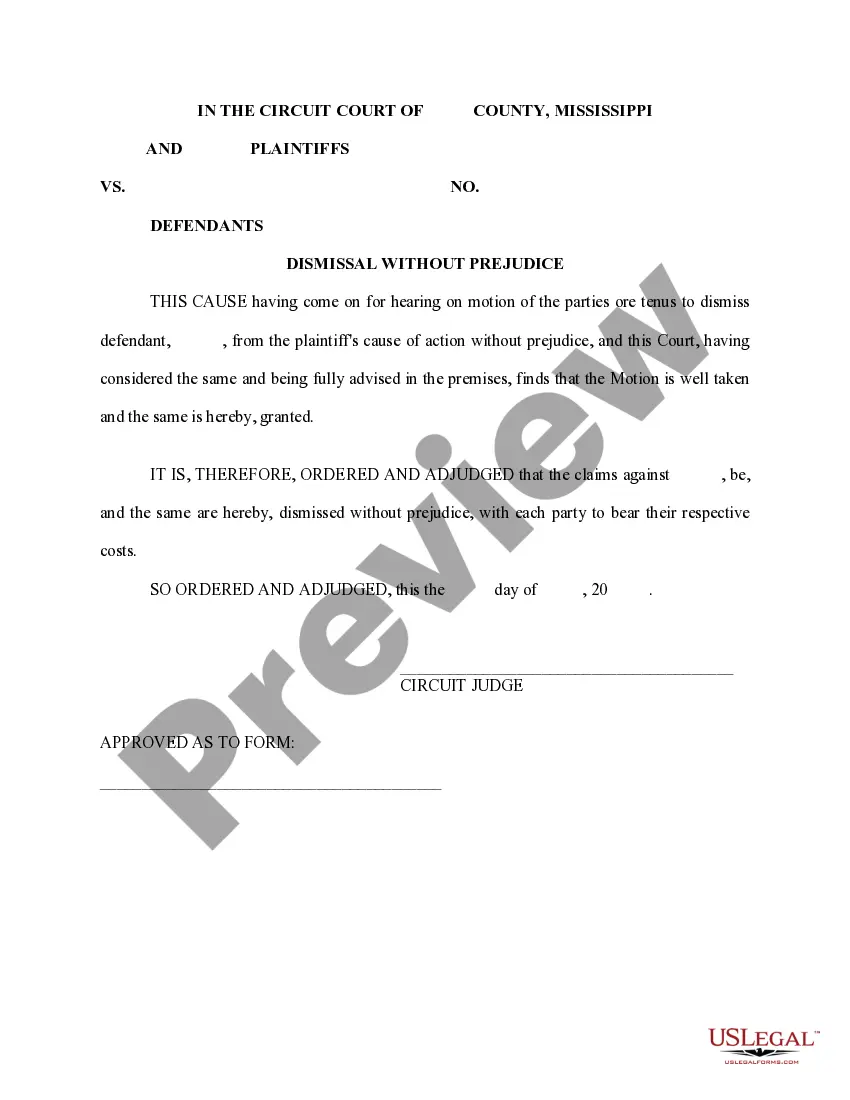
Dismissal with prejudice is a final judgment and the case becomes res judicata on the claims that were or could have been brought in it; dismissal without prejudice is not.
In California, the process of expunging or clearing a criminal record is usually called "dismissal." For legal purposes, if your conviction is dismissed, it is as though you never committed the crime.
A request for involuntary dismissal can be made by a defendant through a motion for dismissal, on grounds that the other party is not prosecuting the case, is not complying with a court order, or to comply with the Federal Rules of Civil Procedure.
It means the case was dismissed, either because plaintiff dismissed it or plaintiff didn't show up for the trial.