Connecticut Commercial Sublease
What this document covers
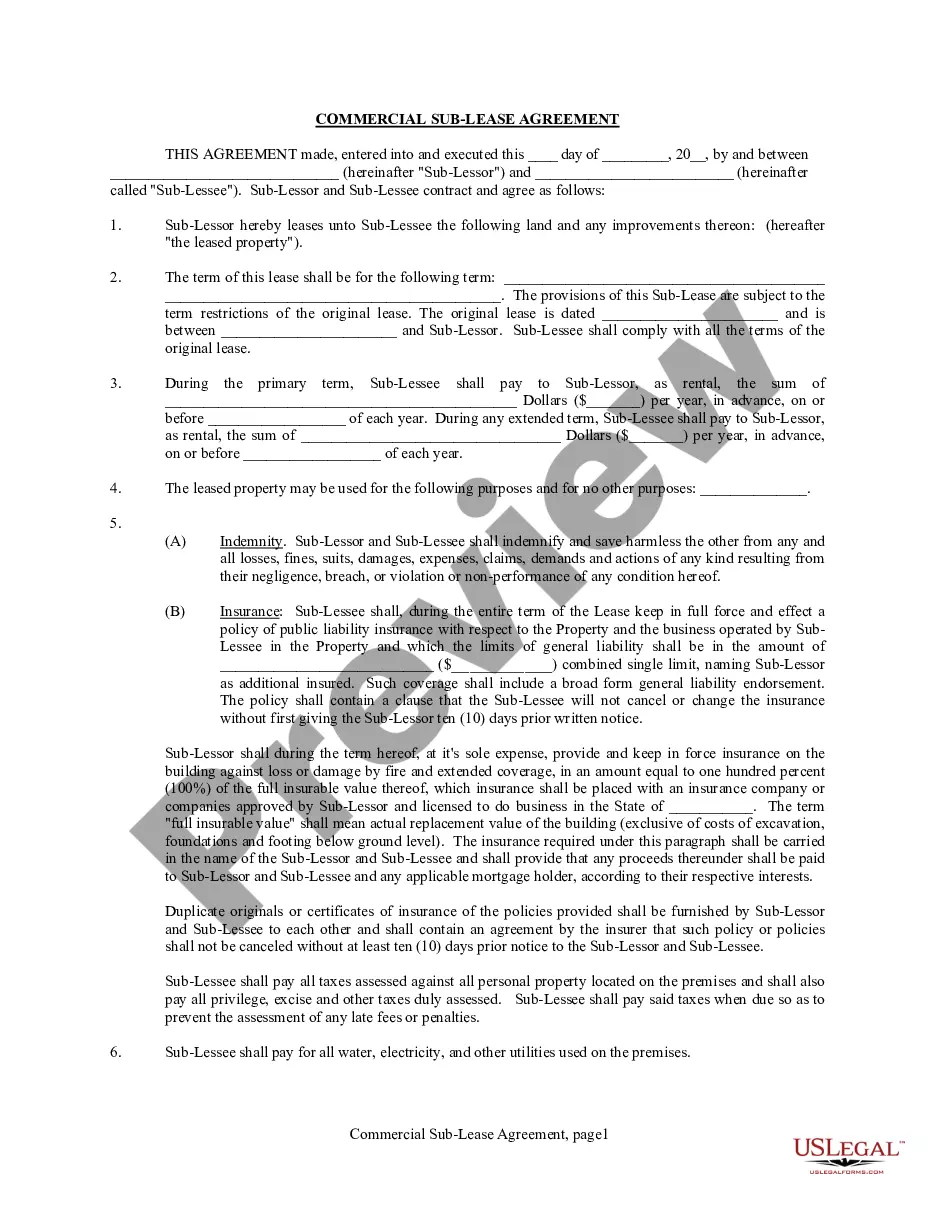
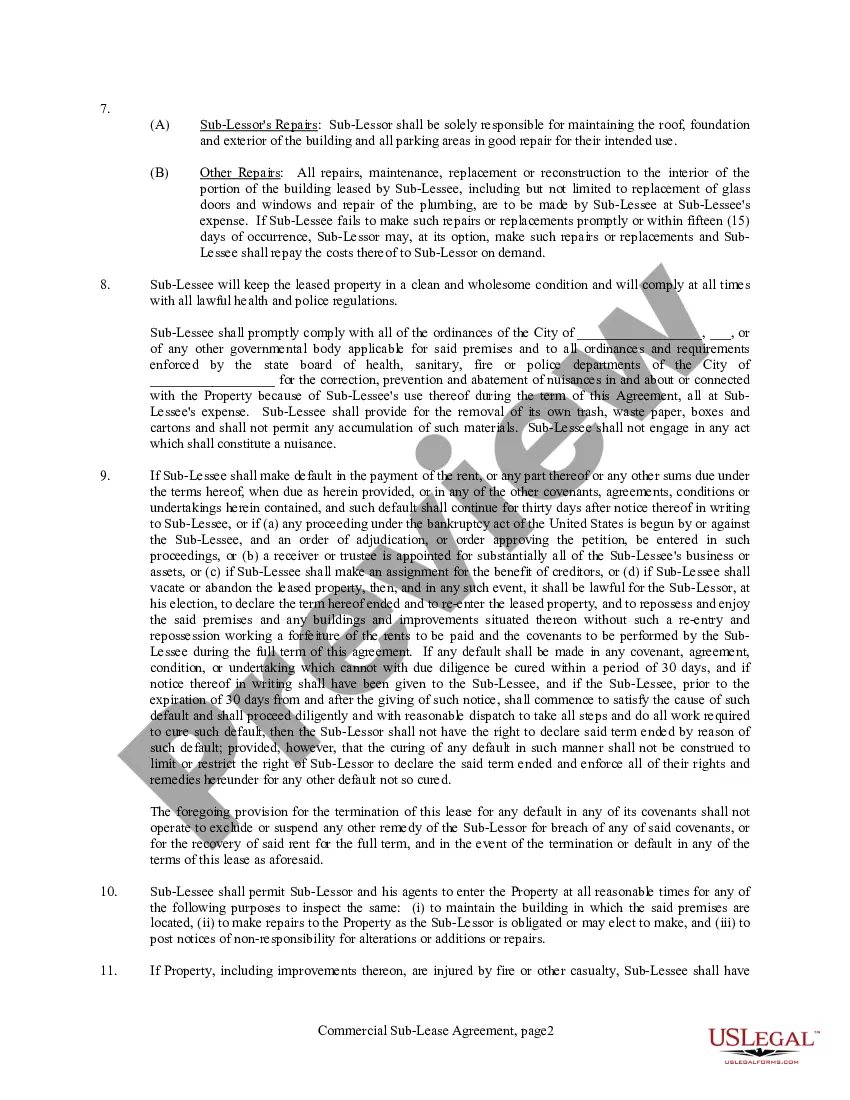
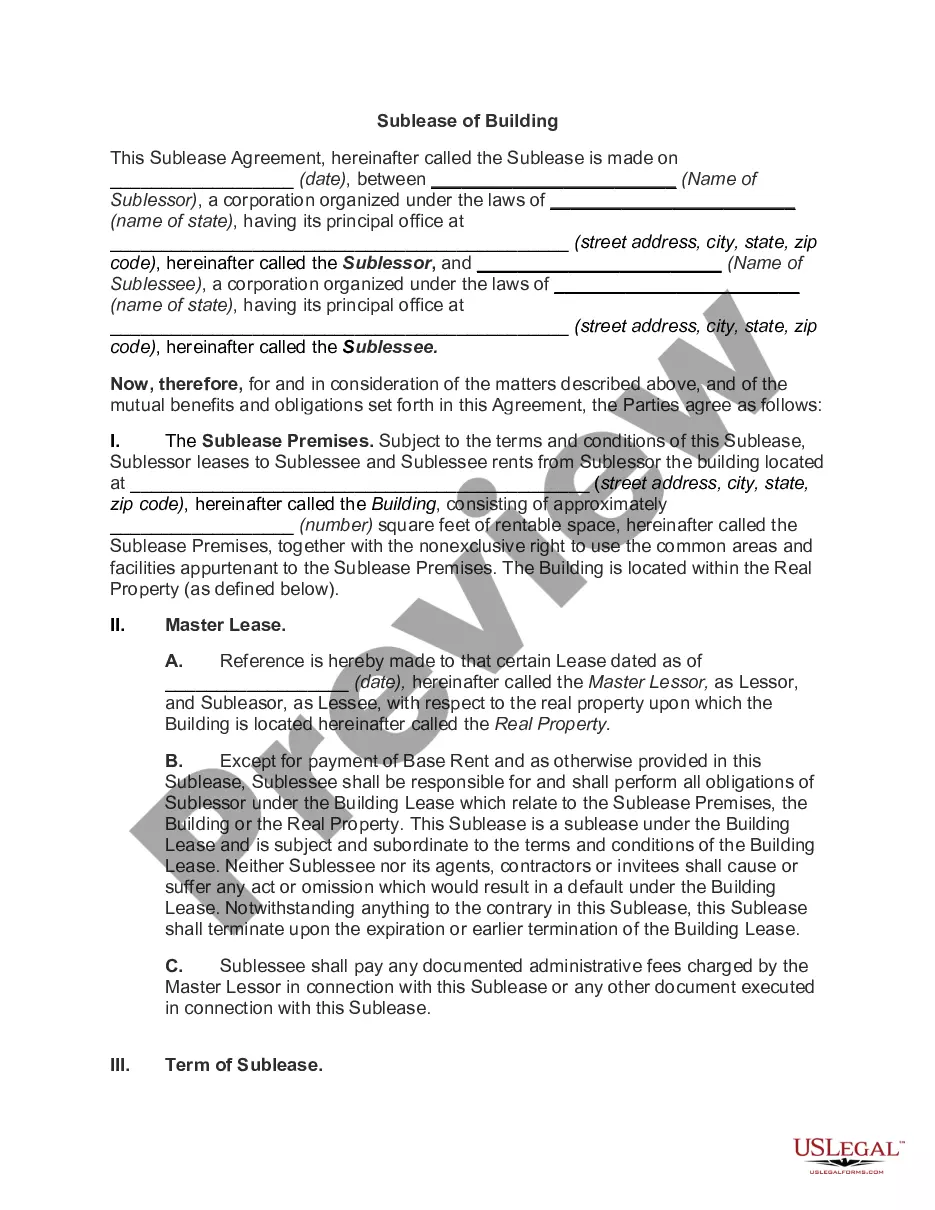
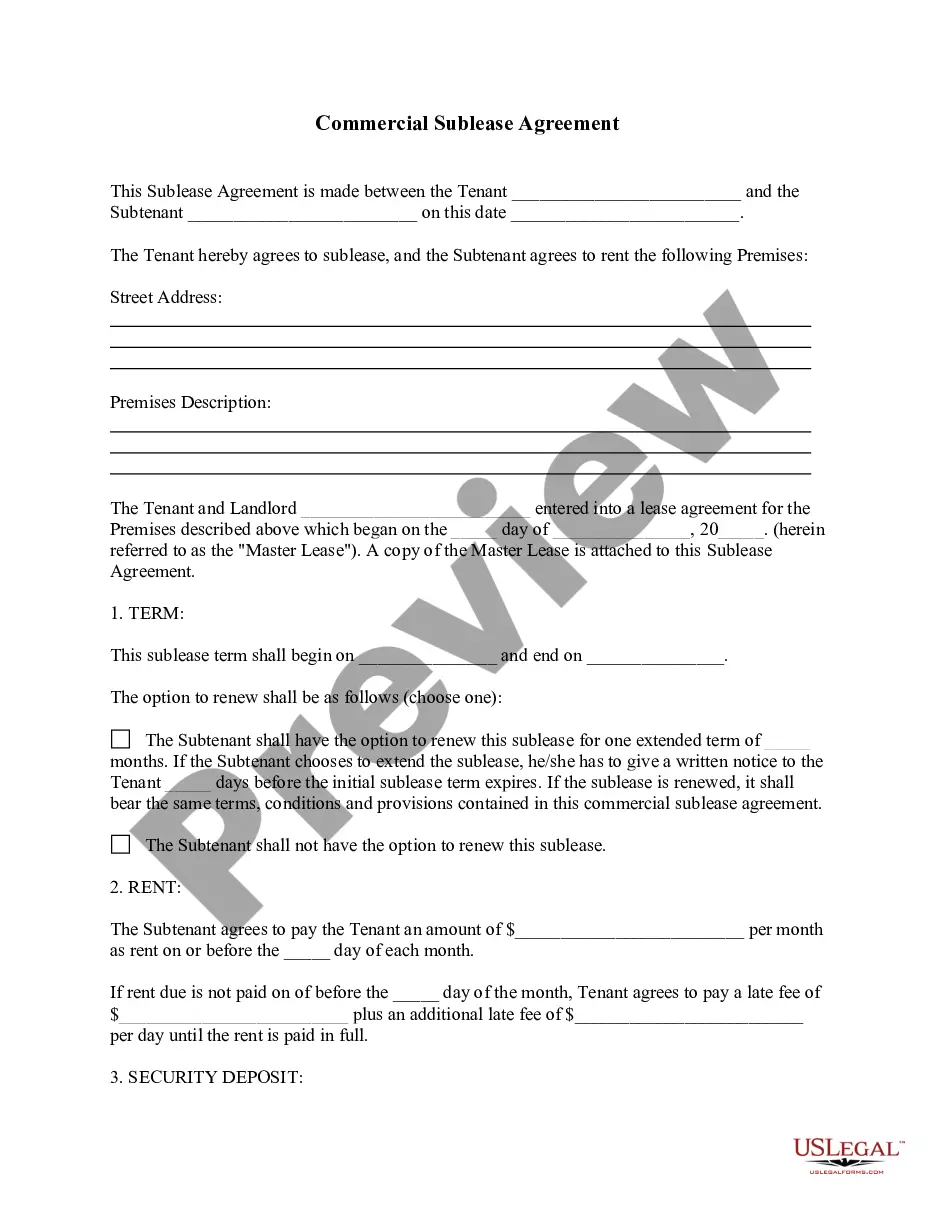
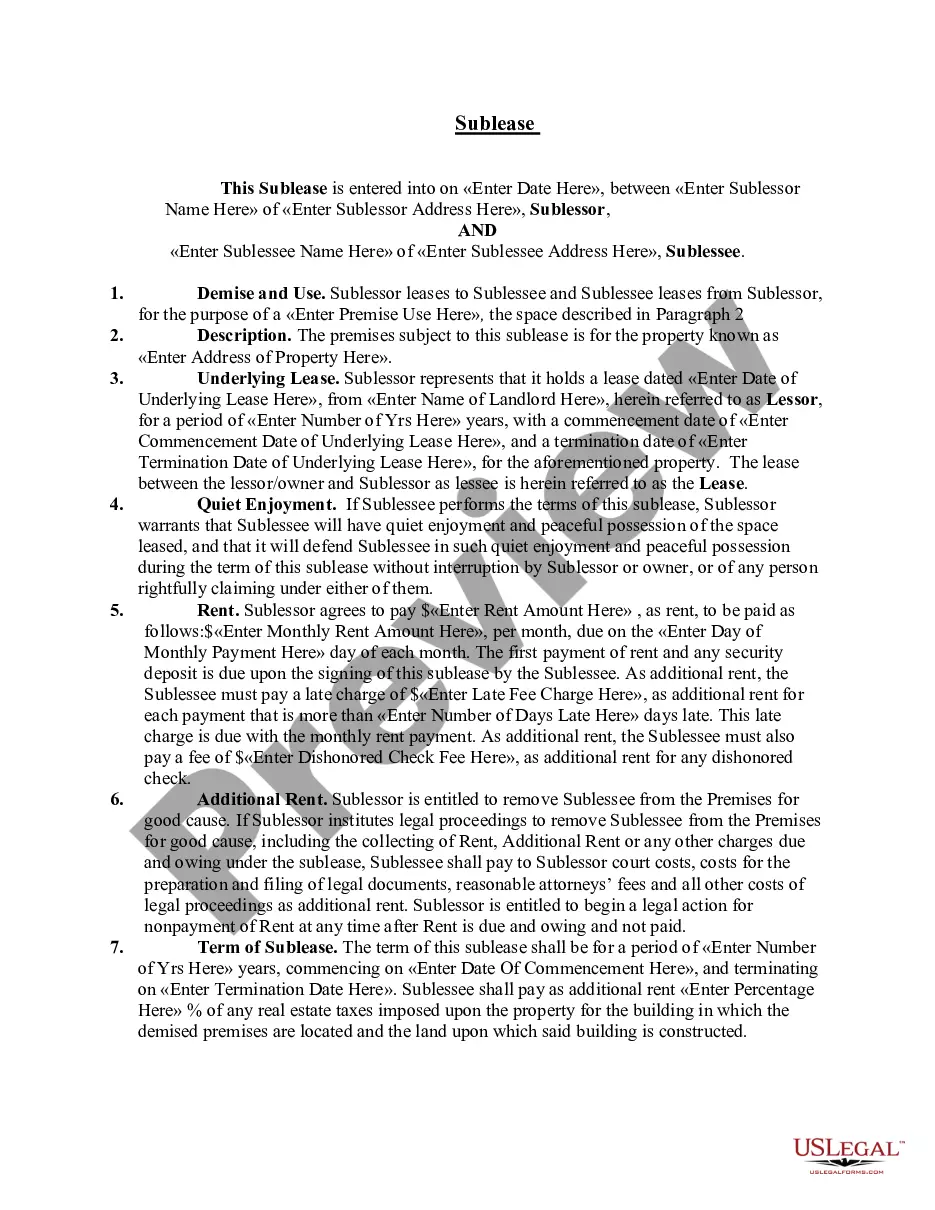
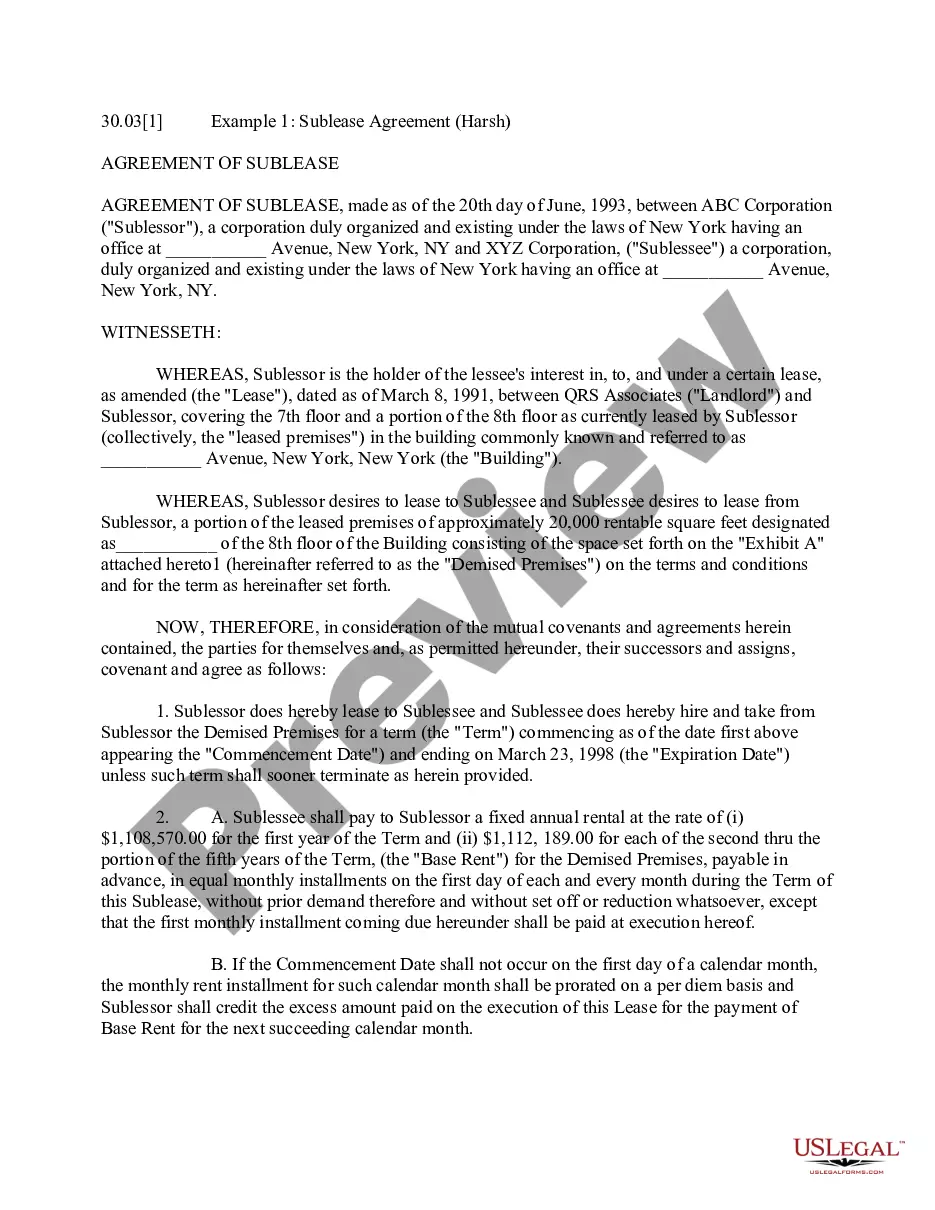
This form is a Commercial Sublease agreement, which facilitates the agreement between a Sub-Lessor and a Sub-Lessee for leasing commercial property. Unlike a direct lease, a sublease allows the original tenant (Sub-Lessor) to lease to a new tenant (Sub-Lessee) while retaining overall obligations to the original landlord. This document ensures that all terms of the original lease are honored and provides clarity on usage, payments, and responsibilities.
What’s included in this form
- Parties involved: Identification of Sub-Lessor and Sub-Lessee.
- Leased property: Description of the land and any improvements included in the lease.
- Term of lease: Details regarding the length of the leasing arrangement.
- Payment terms: Specification of rental amounts and payment schedule.
- Indemnity and insurance: Responsibilities regarding liability insurance and damages.
- Compliance: Sub-Lessee's obligation to follow original lease terms and local regulations.


When to use this document
This Commercial Sublease form is suitable for situations where a commercial tenant needs to lease their space to another party. This may occur when the original tenant wants to move but still has time left on the lease or if they are unable to fully utilize the space due to business changes. Utilizing this form can protect both parties' interests as it aligns with the original rental agreement's conditions.
Who should use this form
- Original tenants who wish to sublease their commercial property.
- New tenants looking for temporary commercial space.
- Business owners needing flexibility in their commercial arrangements.
Instructions for completing this form
- Identify the parties: Fill in the names of the Sub-Lessor and Sub-Lessee.
- Specify the property: Describe the commercial property being leased.
- Enter lease terms: Clearly state the length of the lease and payment details.
- Review obligations: Ensure that all obligations regarding insurance and compliance with the original lease are articulated.
- Sign and date: Both parties must sign and date the agreement to validate it.
Notarization guidance
This form usually doesn’t need to be notarized. However, local laws or specific transactions may require it. Our online notarization service, powered by Notarize, lets you complete it remotely through a secure video session, available 24/7.
Get your form ready online
Our built-in tools help you complete, sign, share, and store your documents in one place.
Make edits, fill in missing information, and update formatting in US Legal Forms—just like you would in MS Word.
Download a copy, print it, send it by email, or mail it via USPS—whatever works best for your next step.
Sign and collect signatures with our SignNow integration. Send to multiple recipients, set reminders, and more. Go Premium to unlock E-Sign.
If this form requires notarization, complete it online through a secure video call—no need to meet a notary in person or wait for an appointment.
We protect your documents and personal data by following strict security and privacy standards.

Make edits, fill in missing information, and update formatting in US Legal Forms—just like you would in MS Word.

Download a copy, print it, send it by email, or mail it via USPS—whatever works best for your next step.

Sign and collect signatures with our SignNow integration. Send to multiple recipients, set reminders, and more. Go Premium to unlock E-Sign.

If this form requires notarization, complete it online through a secure video call—no need to meet a notary in person or wait for an appointment.

We protect your documents and personal data by following strict security and privacy standards.
Avoid these common issues
- Not including all necessary terms from the original lease.
- Failing to specify the duration of the sublease or payment details.
- Neglecting to clarify the intended use of the leased property.
- Forgetting to sign or date the agreement.
Why complete this form online
- Convenient access to professionally drafted forms at any time.
- Edit the document easily to suit your specific needs.
- Assurance of legal accuracy and compliance with local laws.
What to keep in mind
- The Commercial Sublease form is essential for leasing commercial space legally.
- Understanding the obligations and rights of both parties is critical.
- Always verify state-specific rules and obtain necessary approvals.
Looking for another form?
Form popularity
FAQ
An example of a sublease clause would be one that outlines the requirements for obtaining the landlord's consent before a tenant can sublease the premises. This clause ensures that the primary tenant does not transfer their lease rights without approval. Including this type of clause in your Connecticut Commercial Sublease can protect both parties and clarify expectations, making the process smoother and more transparent.
The most common commercial lease agreement in Connecticut is the net lease. In this arrangement, the tenant pays for property taxes, insurance, and maintenance, in addition to the base rent. This type of lease provides owners with a steady income while allowing tenants to have some control over their operating costs. Understanding these standard agreements can help you create a successful Connecticut Commercial Sublease.
Essentially, there is no significant difference between a sublet and a sublease; both terms describe the situation where a tenant rents their space to another person. However, 'sublease' is the more formal term used in legal contexts. It is advisable to use accurate terminology when documenting such agreements. For your Connecticut Commercial Sublease, consider utilizing reputable templates available on US Legal Forms.
Yes, subletting is perfectly legal in Connecticut, as long as you adhere to the lease terms and state laws. A well-structured agreement can protect your rights as a tenant. Ensuring that your sublease is correctly documented not only safeguards you but also the new tenant. Visiting the US Legal Forms platform can help you find the right Connecticut Commercial Sublease form.
Generally, subleasing and subletting mean the same thing, where you rent out your rented space to another person. However, the term 'subleasing' is often used in legal documents. It is beneficial to be clear about these terms when drafting a contract. Use a Connecticut Commercial Sublease template to ensure clarity and compliance.
In Connecticut, it is essential to inform your landlord if you plan to sublet your space. Many leases require tenants to gain approval before subleasing. Notification protects you from potential conflicts and helps maintain a good relationship with your landlord. Following the right process with your Connecticut Commercial Sublease can save you future issues.
Yes, subleasing is legal in Connecticut, provided you follow local laws and your lease agreement. You should always check your lease to ensure that subleasing is allowed. Additionally, obtaining written permission from your landlord can create a smoother process. Understanding the Connecticut Commercial Sublease laws will help you navigate this effectively.
It is generally not advisable to sublet without obtaining permission from the landlord. Doing so can violate the lease agreement and lead to eviction. Always check your lease's terms regarding subleasing and seek permission to ensure compliance with Connecticut Commercial Sublease regulations.
The sublet clause in a commercial lease outlines the conditions under which a tenant can sublease the property. This clause typically includes requirements for obtaining landlord approval, potential fees, and any restrictions on who may sublease. Understanding this clause is essential for any tenant considering a Connecticut Commercial Sublease.
Subleasing a commercial property is not illegal, but it must align with the terms of the original lease. In Connecticut, you should always verify the rules established by the landlord and local laws governing subleases. Failure to comply can result in eviction or legal issues.