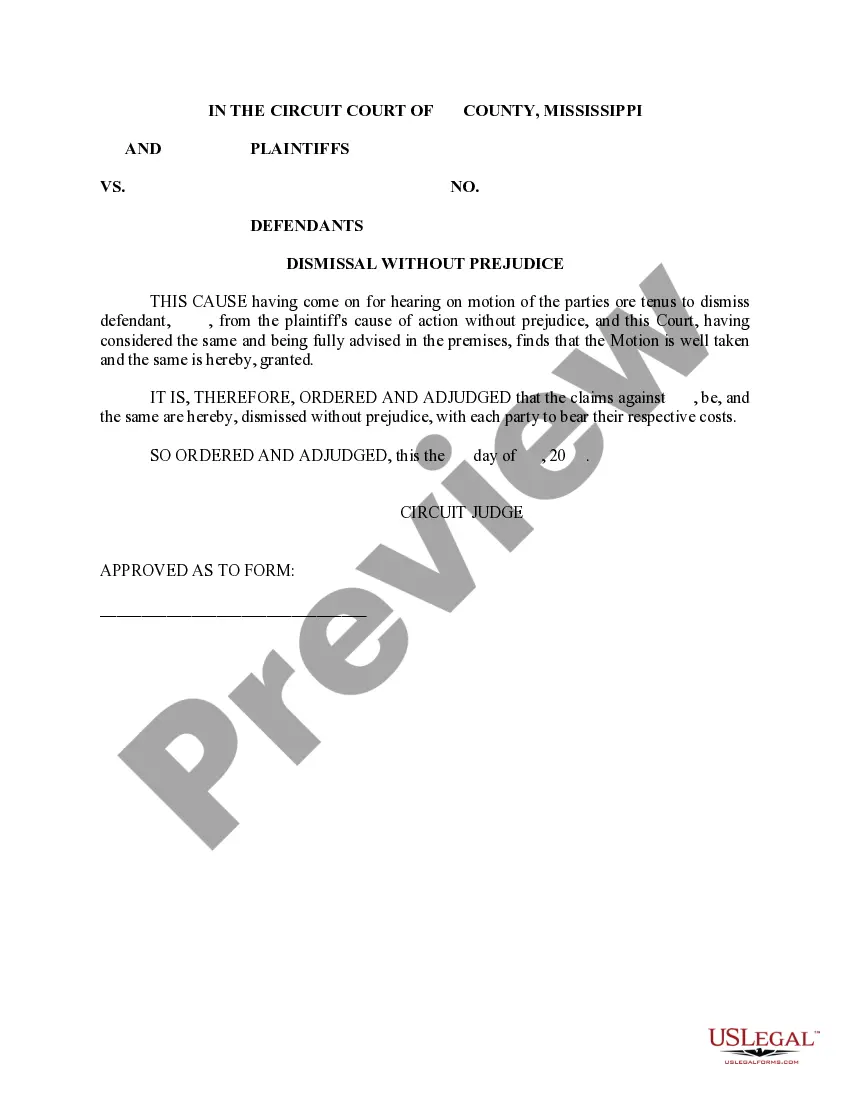
Mississippi Order on Motion for Protection Order
About this form
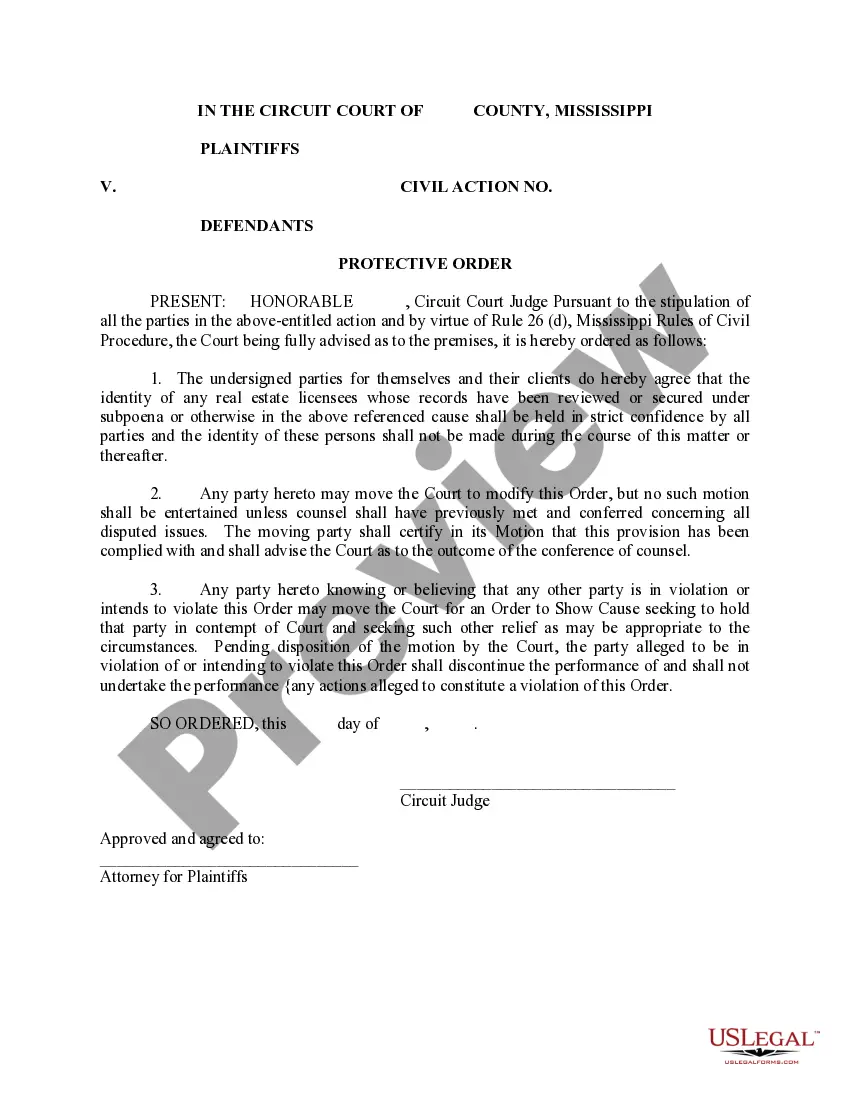
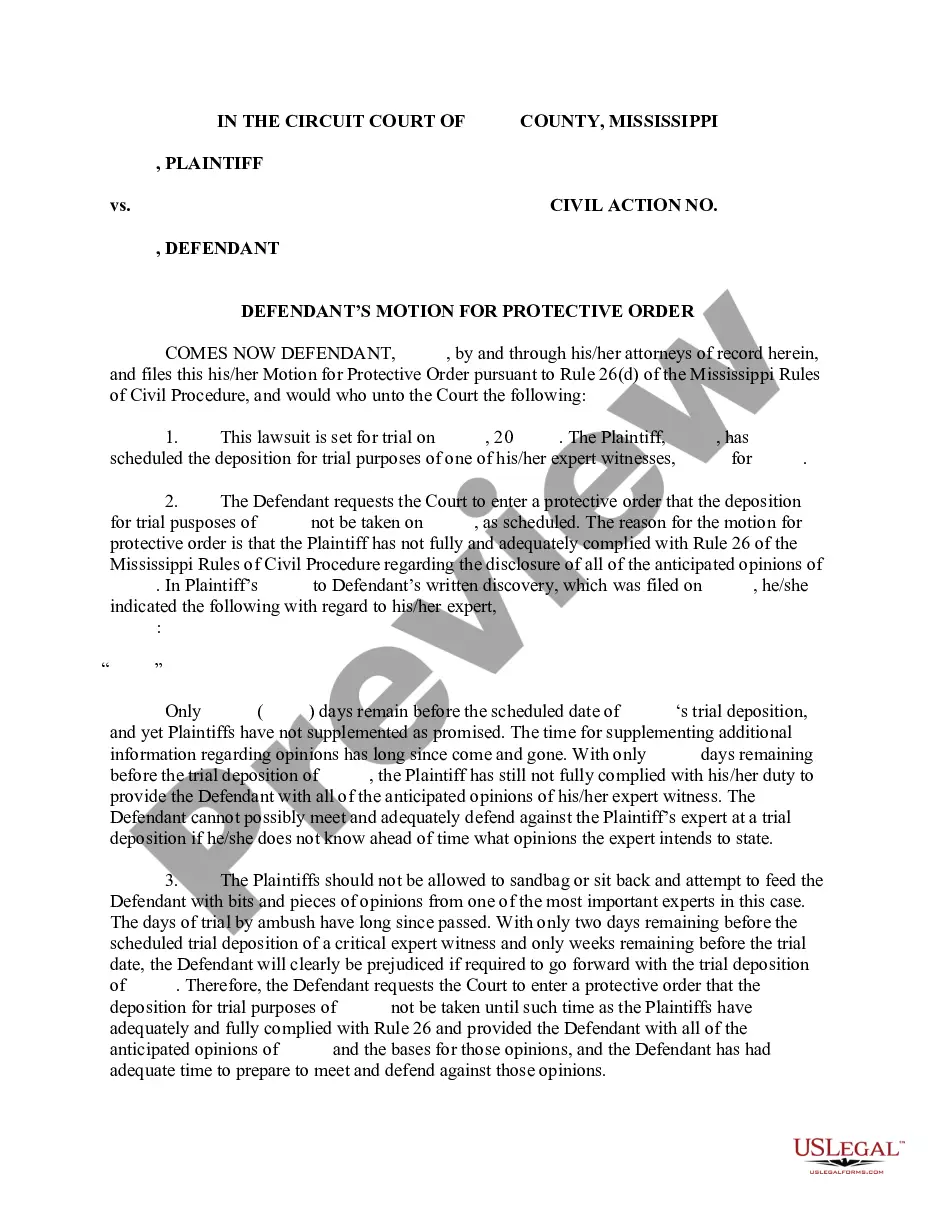
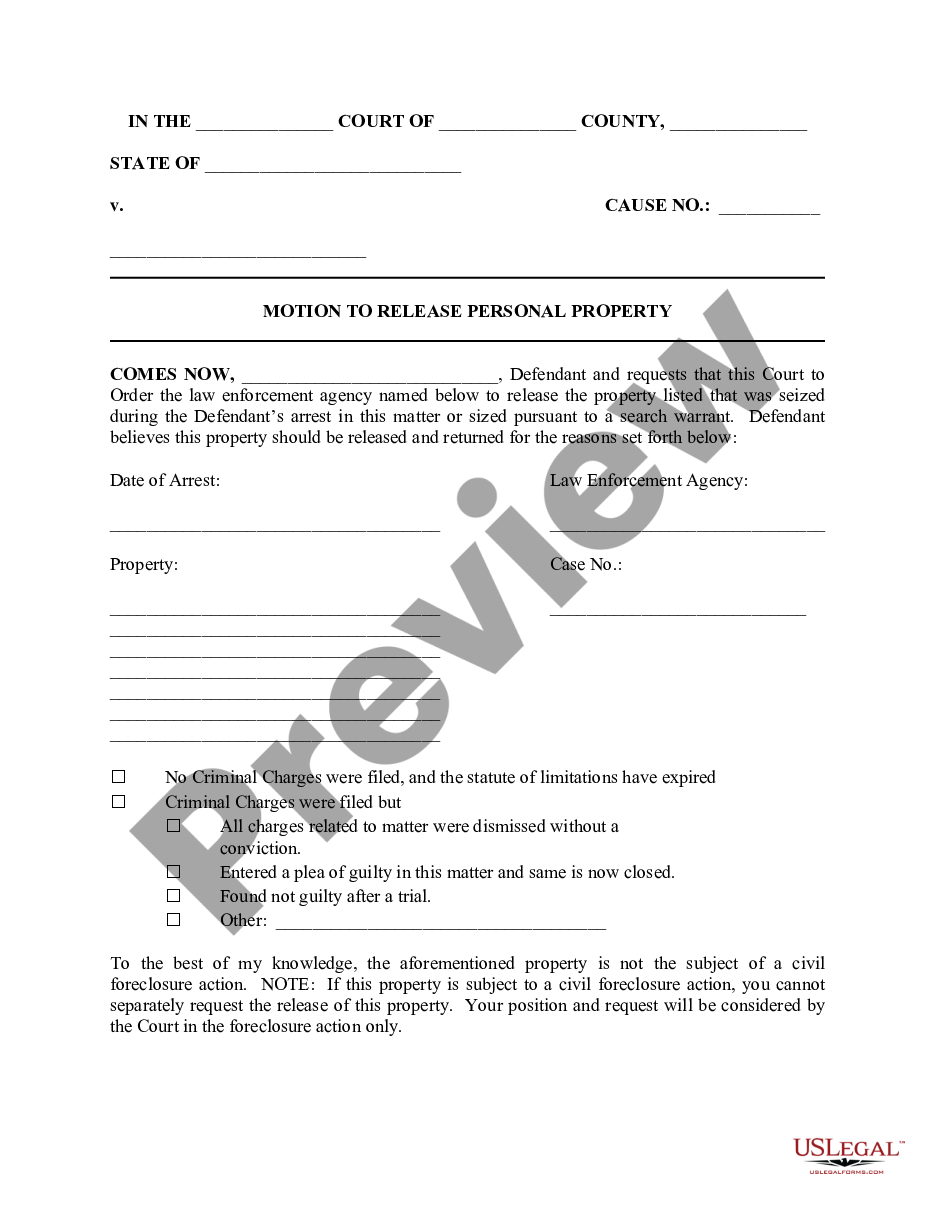
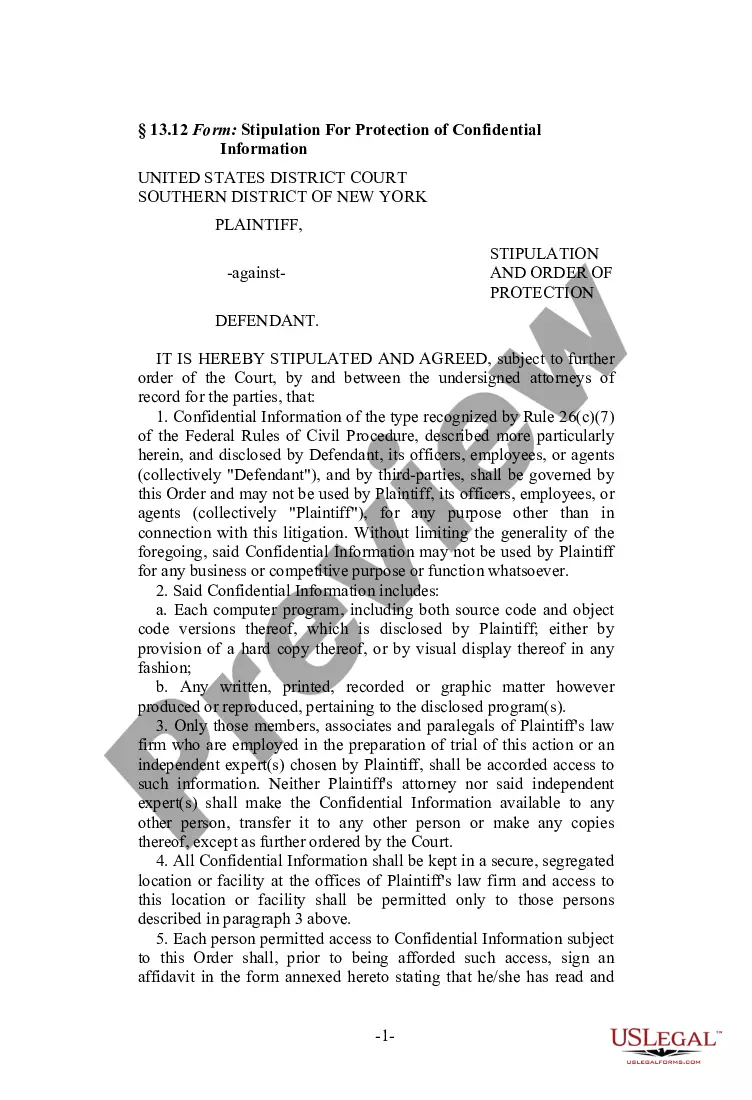
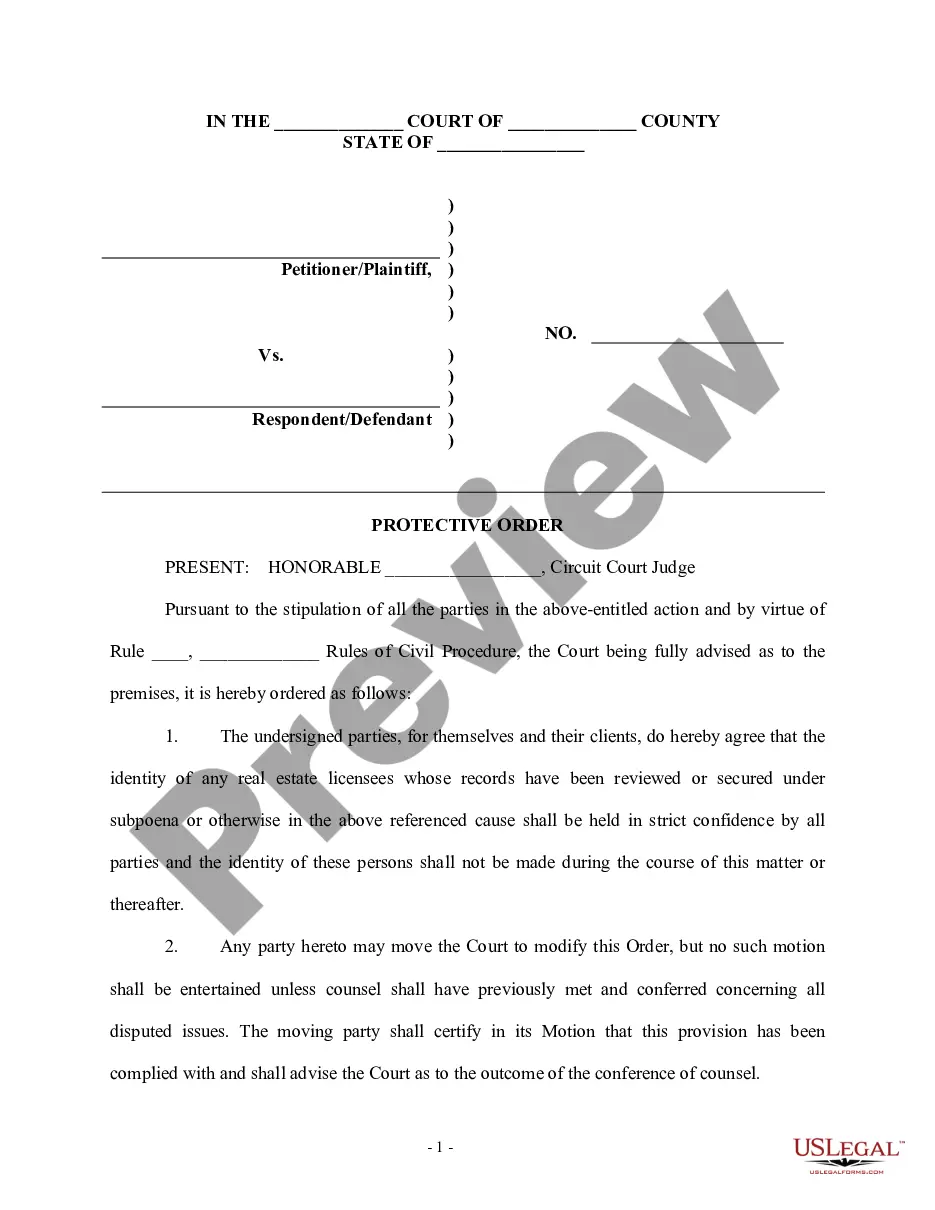
The Order on Motion for Protection Order is a legal document submitted to a court, requesting a protective order against specified parties. This form specifically addresses a request made to the court and outlines the terms under which protection is granted or denied. It varies from similar forms by being tailored for cases that require immediate court intervention for protection in situations such as harassment or threats.
Form components explained
- The caption section identifying the plaintiffs and defendants.
- The case number, which helps locate the court record.
- Details of the motion and the court's decision.
- The order, indicating whether claims against the defendant are dismissed or upheld.
- The judge's signature line, confirming the court's approval.
When to use this form
This form is used when an individual or entity seeks a court's protection against potential harm or harassment. Scenarios include situations where a party feels threatened by another individual and requires urgent legal intervention to establish boundaries and safety measures. This form may also be utilized in divorce or custody cases where protection orders are essential for safety.
Who this form is for
- Individuals who feel threatened or unsafe due to the actions of another party.
- Victims of harassment or domestic abuse seeking legal protection.
- Anyone involved in a legal dispute requiring intervention from the court for safety reasons.
Completing this form step by step
- Identify all parties involved in the case by entering their names in the caption section.
- Fill in the case number to ensure accurate tracking of your request.
- Clearly state the reasons for the protection order in the motion section.
- Sign and date the document where indicated to validate the request for the court.
- Submit the form to the appropriate court and retain a copy for your records.
Notarization guidance
Notarization is generally not required for this form. However, certain states or situations might demand it. You can complete notarization online through US Legal Forms, powered by Notarize, using a verified video call available anytime.
Get your form ready online
Our built-in tools help you complete, sign, share, and store your documents in one place.
Make edits, fill in missing information, and update formatting in US Legal Forms—just like you would in MS Word.
Download a copy, print it, send it by email, or mail it via USPS—whatever works best for your next step.
Sign and collect signatures with our SignNow integration. Send to multiple recipients, set reminders, and more. Go Premium to unlock E-Sign.
If this form requires notarization, complete it online through a secure video call—no need to meet a notary in person or wait for an appointment.
We protect your documents and personal data by following strict security and privacy standards.

Make edits, fill in missing information, and update formatting in US Legal Forms—just like you would in MS Word.

Download a copy, print it, send it by email, or mail it via USPS—whatever works best for your next step.

Sign and collect signatures with our SignNow integration. Send to multiple recipients, set reminders, and more. Go Premium to unlock E-Sign.

If this form requires notarization, complete it online through a secure video call—no need to meet a notary in person or wait for an appointment.

We protect your documents and personal data by following strict security and privacy standards.
Mistakes to watch out for
- Failing to include complete information about all parties involved.
- Not providing sufficient details about the reasons for requesting the protection order.
- Neglecting to sign and date the form before submission.
Benefits of completing this form online
- Easy access to downloadable templates drafted by licensed attorneys.
- The ability to customize the form to fit your unique situation.
- A convenient and quick process that saves time compared to in-office visits.
Looking for another form?

Form popularity
FAQ
Under section 93-21-7(2) of the Mississippi Code, there is no cost to file for a protection order. . temporary restraining order. the clerk will fill out the information for you.
It does not cost anything to file for an order of protection. Many orders of protection cases are handled without a lawyer however it can often be helpful to have one represent you in court.If you are going to be in court without a lawyer, our Preparing for Court By Yourself section may be useful to you.
Under section 93-21-7(2) of the Mississippi Code, there is no cost to file for a protection order. . temporary restraining order. the clerk will fill out the information for you.
If you believe the protection order was granted improperly or that it is no longer needed, you can file a motion asking the court to dissolve (terminate or cancel) the protection order.If the court schedules a hearing and grants the motion, the protection order will become immediately void and unenforceable.
Decide the evidence you want to use.Evidence is what you present in court to prove that the Respondent has harmed or may harm you (and/or your child). Evidence can be your testimony, the testimony of witnesses, documents, photos, or objects such as torn clothing or a weapon.
1Reconciliation. Strangers do not perpetrate DV, someone they love does. When someone you love is the perpetrator, leaving for good is the hardest part.2Children. Kids miss their parents, and parents miss their kids. There is a constant pressure for a parent to return to being a "family."
If you think you need to obtain a restraining order, or have been served with a temporary restraining order, you should reach out to a criminal attorney or family law attorney. You should have legal representation at the hearing where the court will decide whether or not to issue a permanent restraining order.
If the judge is satisfied, he or she will issue a temporary protective order that will last ten days, but which can be extended upon request, up to the maximum length of one year, but can only last 30 days where the victim has minor children with the abuser.