Sample Letter for Agreed Order Substituting Counsel
Understanding this form
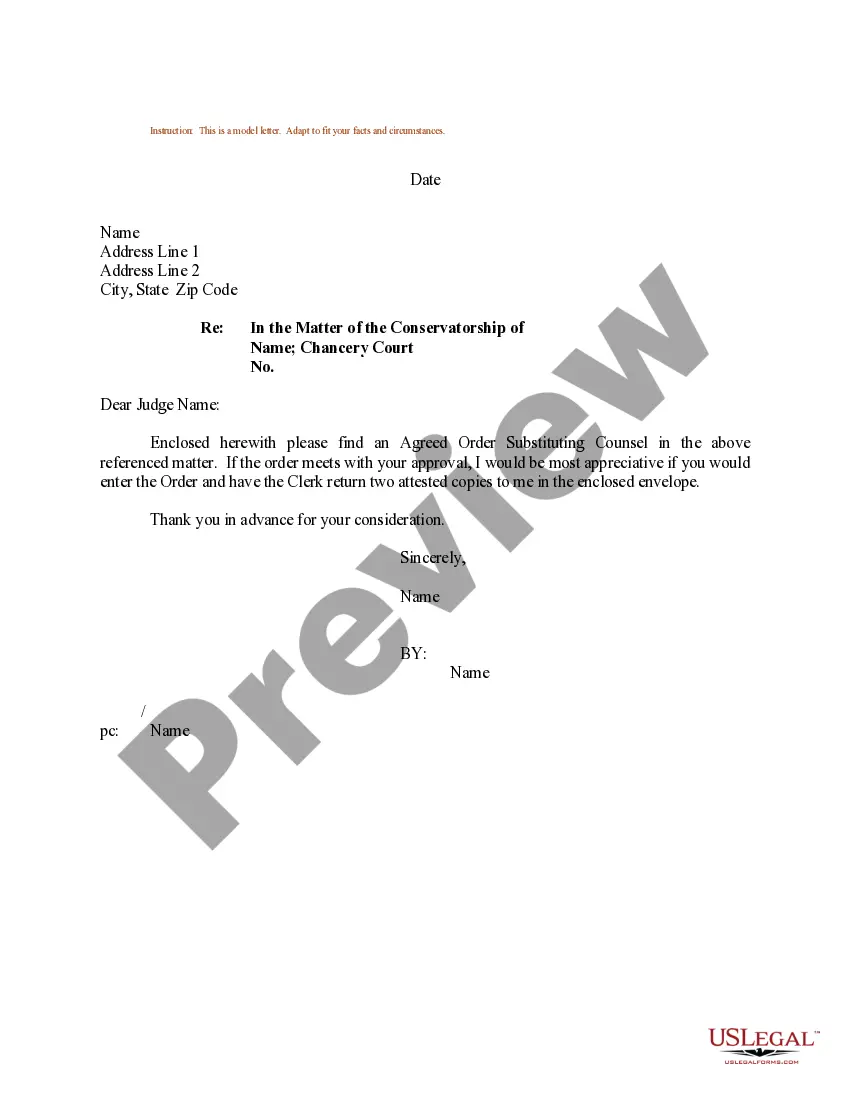
The Sample Letter for Agreed Order Substituting Counsel is a template designed for individuals involved in legal proceedings who need to formally notify the court about a change in legal representation. This letter serves as a model for communicating the agreement between the outgoing and incoming attorneys, ensuring that the transition is clear and officially recognized. Unlike other legal forms, this letter addresses the specific process of substituting counsel in ongoing cases.
Form components explained
- Date of the letter
- Sender's name and address
- Recipient's name and address
- Subject line specifying the conservatorship case
- Details of the agreement between the outgoing and incoming counsel
- Signature line for the outgoing counsel


Common use cases
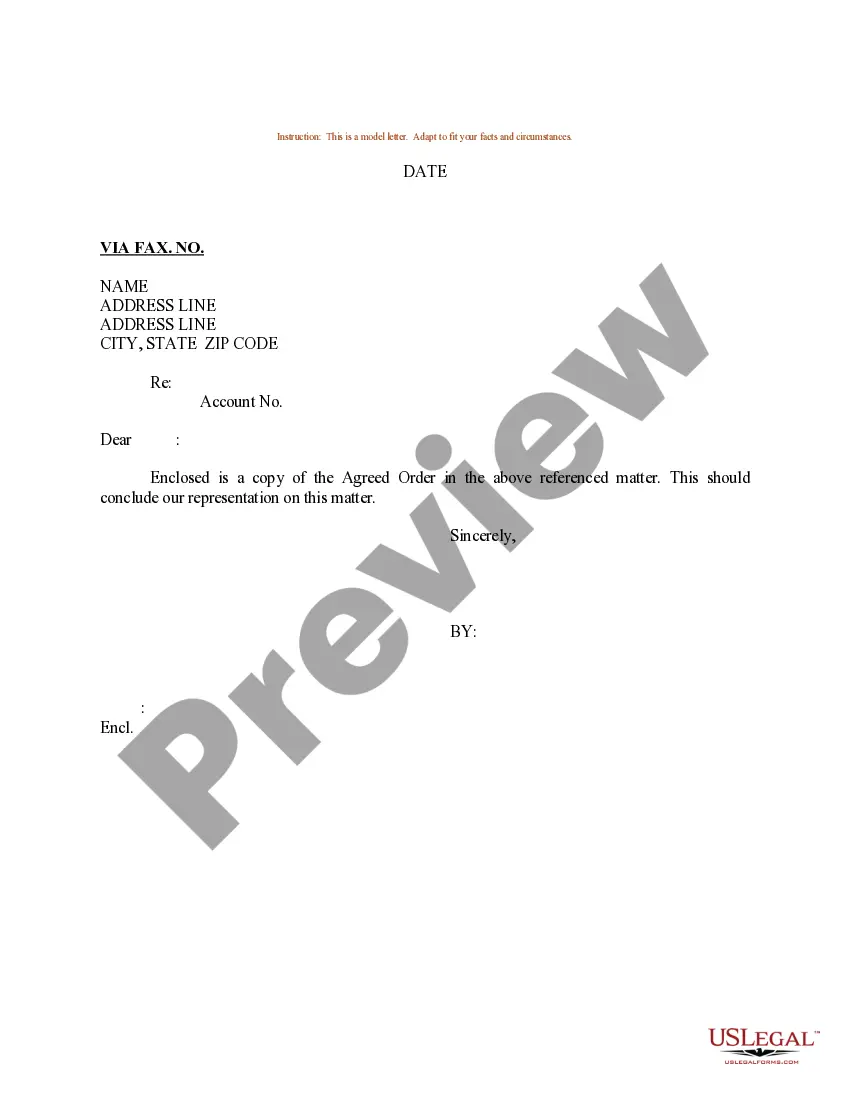
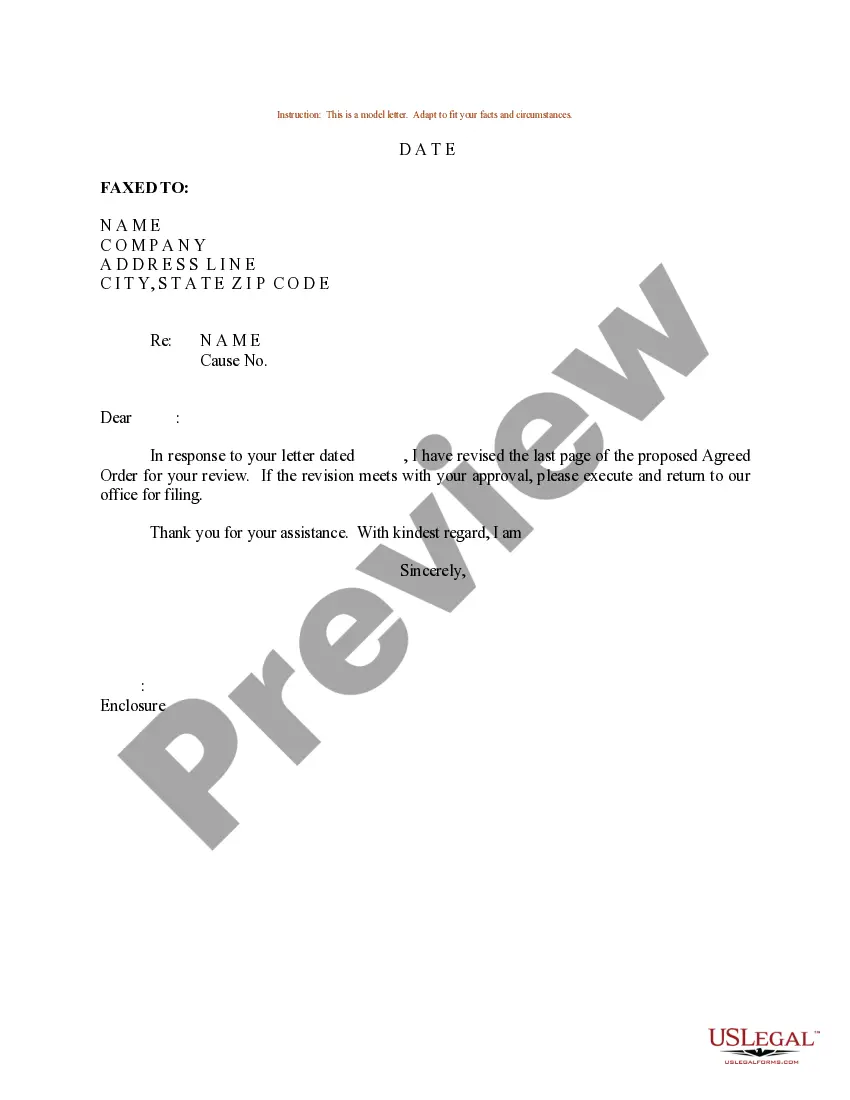
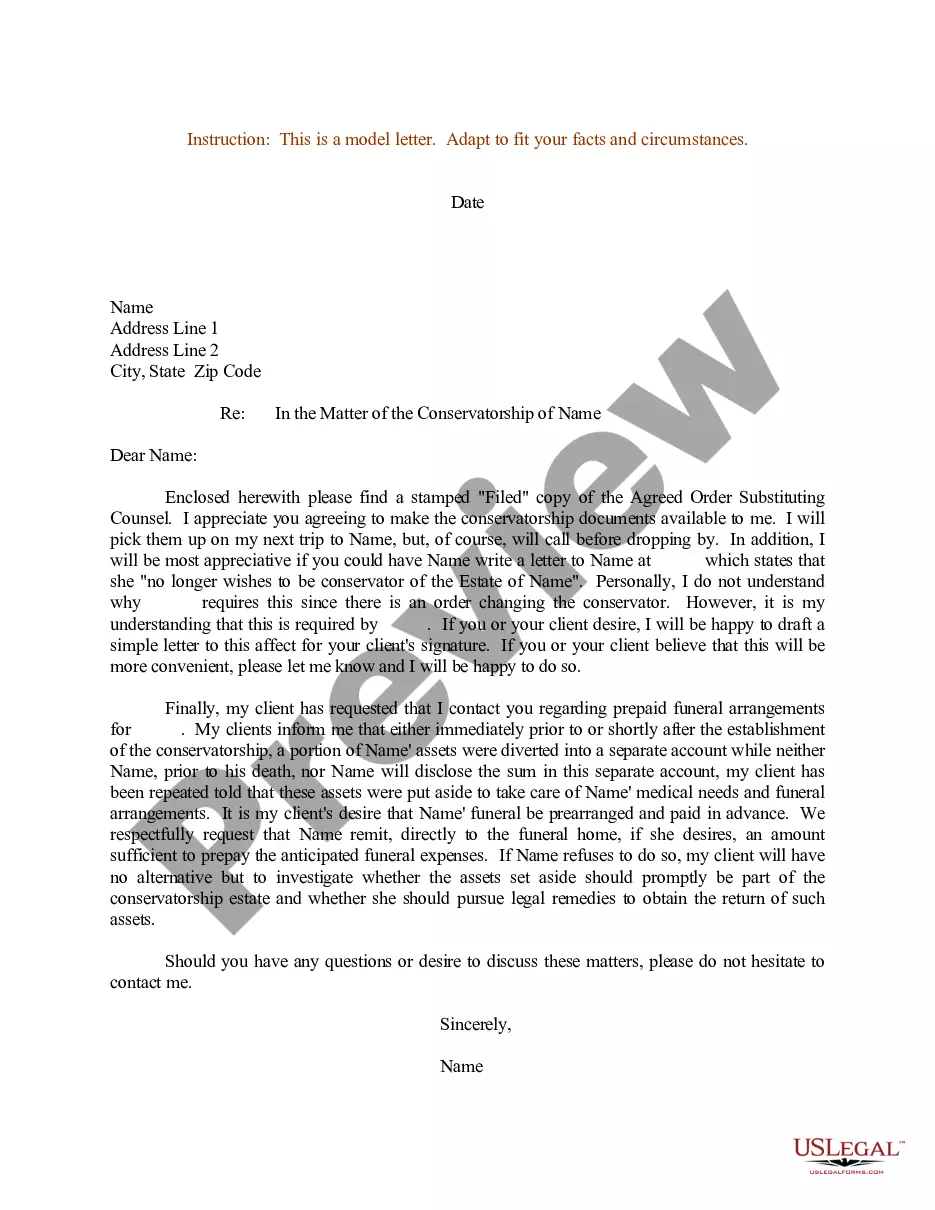
This form should be used when an attorney wishes to withdraw from representing a client in a conservatorship matter and another attorney is stepping in. It is essential for ensuring that the court is informed of the change in representation and that all parties are aware of who will now be handling the case.
Who can use this document
This form is intended for:
- Outgoing attorneys who are discontinuing their representation
- Incoming attorneys who are substituting as counsel
- Clients undergoing a change in legal representation
- Legal professionals involved in conservatorship cases
Steps to complete this form
- Identify the date when the letter is being sent.
- Fill in the sender's name and address at the top of the letter.
- Enter the recipient's name and address.
- Specify the subject line related to the conservatorship case.
- Clearly state the terms of the agreement between the outgoing and incoming counsel.
- Have the outgoing counsel sign the letter to finalize the change.
Notarization requirements for this form
Notarization is generally not required for this form. However, certain states or situations might demand it. You can complete notarization online through US Legal Forms, powered by Notarize, using a verified video call available anytime.
Get your form ready online
Our built-in tools help you complete, sign, share, and store your documents in one place.
Make edits, fill in missing information, and update formatting in US Legal Forms—just like you would in MS Word.
Download a copy, print it, send it by email, or mail it via USPS—whatever works best for your next step.
Sign and collect signatures with our SignNow integration. Send to multiple recipients, set reminders, and more. Go Premium to unlock E-Sign.
If this form requires notarization, complete it online through a secure video call—no need to meet a notary in person or wait for an appointment.
We protect your documents and personal data by following strict security and privacy standards.

Make edits, fill in missing information, and update formatting in US Legal Forms—just like you would in MS Word.

Download a copy, print it, send it by email, or mail it via USPS—whatever works best for your next step.

Sign and collect signatures with our SignNow integration. Send to multiple recipients, set reminders, and more. Go Premium to unlock E-Sign.

If this form requires notarization, complete it online through a secure video call—no need to meet a notary in person or wait for an appointment.

We protect your documents and personal data by following strict security and privacy standards.
Mistakes to watch out for
- Failing to sign the letter before submission.
- Omitting the date or party names.
- Using incorrect terminology that is not recognized by the court.
Benefits of using this form online
- Convenience of immediate access and download.
- Editability allowing you to customize the letter to fit your needs.
- Reliability of forms drafted by licensed attorneys.
Main things to remember
- This form serves as a formal notification of a change in legal counsel.
- It is essential to ensure clarity and official recognition by the court.
- Customization to fit specific legal requirements may be necessary.
Looking for another form?
Form popularity
FAQ
Type your letter. Concisely review the main facts. Be polite. Write with your goal in mind. Ask for exactly what you want. Set a deadline. End the letter by stating you will promptly pursue legal remedies if the other party does not meet your demand. Make and keep copies.
Type your letter. Concisely review the main facts. Be polite. Write with your goal in mind. Ask for exactly what you want. Set a deadline. End the letter by stating you will promptly pursue legal remedies if the other party does not meet your demand. Make and keep copies.
A letter to an attorney should be written in a formal letter format with the attorney's name, law firm and address at the top near the date, addressed using a salutation and signed off with a closing such as "Very Truly Yours" or "Sincerely."
Address an attorney as "Mr." or "Ms." in most contexts. In the salutation for a later or email, address an attorney the same way you would any other respected professional, using "Mr." or "Ms." followed by their surname. Generally, this is the best way to address an attorney if you've never spoken to them before.
Maintain focus throughout the process. Both intended and unintended audiences can read legal letters. Come up with coherent and consistent arguments. Use short sentences and paragraphs in your letter. Make sure your language has precision.
For a practicing attorney, you address them as "Esquire" or "Attorney at Law." For salutations, you can use "Mr.", "Ms." or "Mrs." followed by their last name.
For example: "Dear Mr. Jones" or "Dear Ms. Fisher" Position the greeting on the left side of the page. Follow the greeting with a colon, i.e. "Dear Ms. Fisher:"
How much a lawyer will charge you for writing a legal letter depends on the size of the firm, where you live, and how complicated your case is. According to our database of legal fees, an attorney practicing on their own will charge anywhere between $750 and $1,200 to write and send a demand letter.
Explain precisely what your request is. Mention the reason for the request. Use polite language and a professional tone. Demonstrate respect and gratitude to the reader. The content of the letter should be official. You may provide contact information where you can be reached.