Mississippi Joint Motion for Leave to Propound Additional Discovery
What this document covers
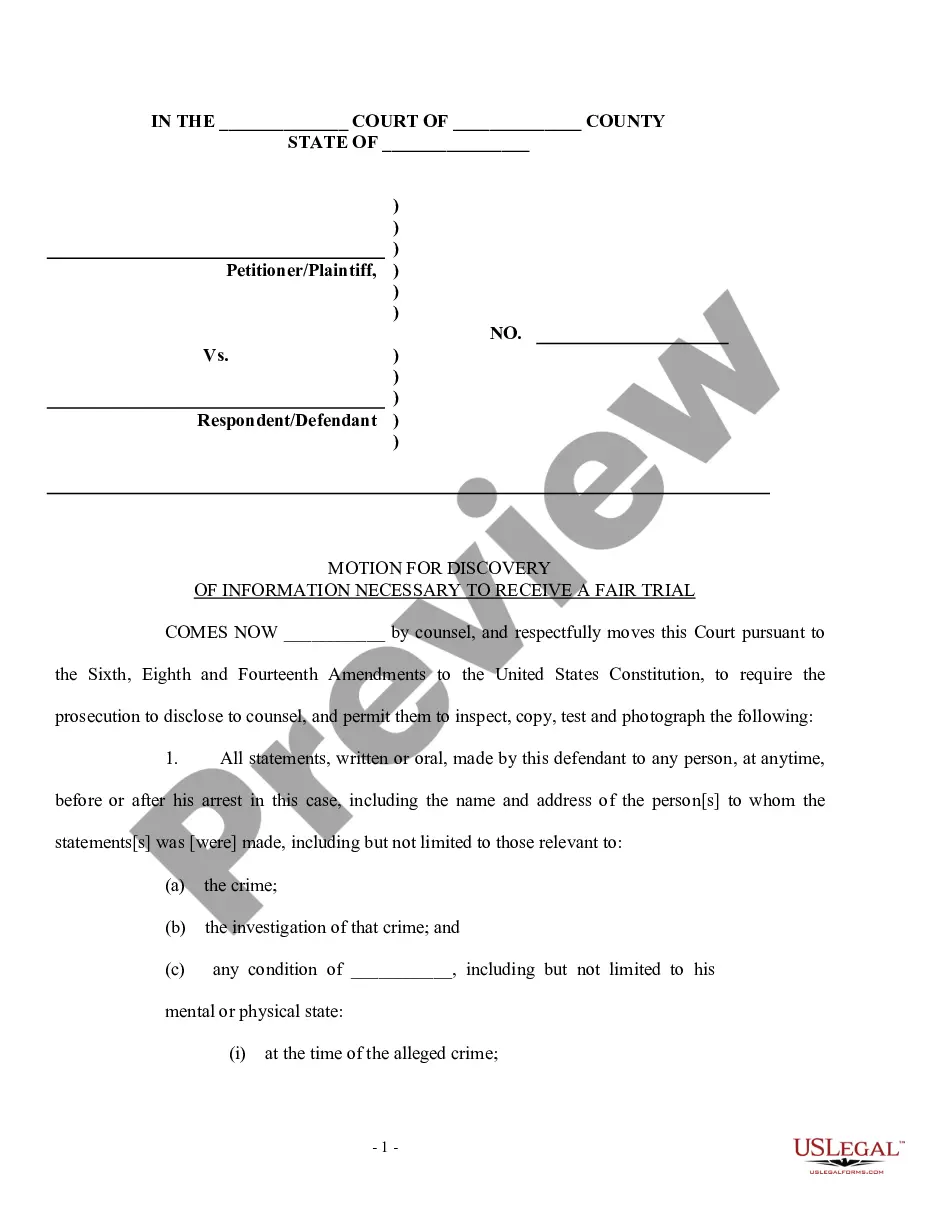
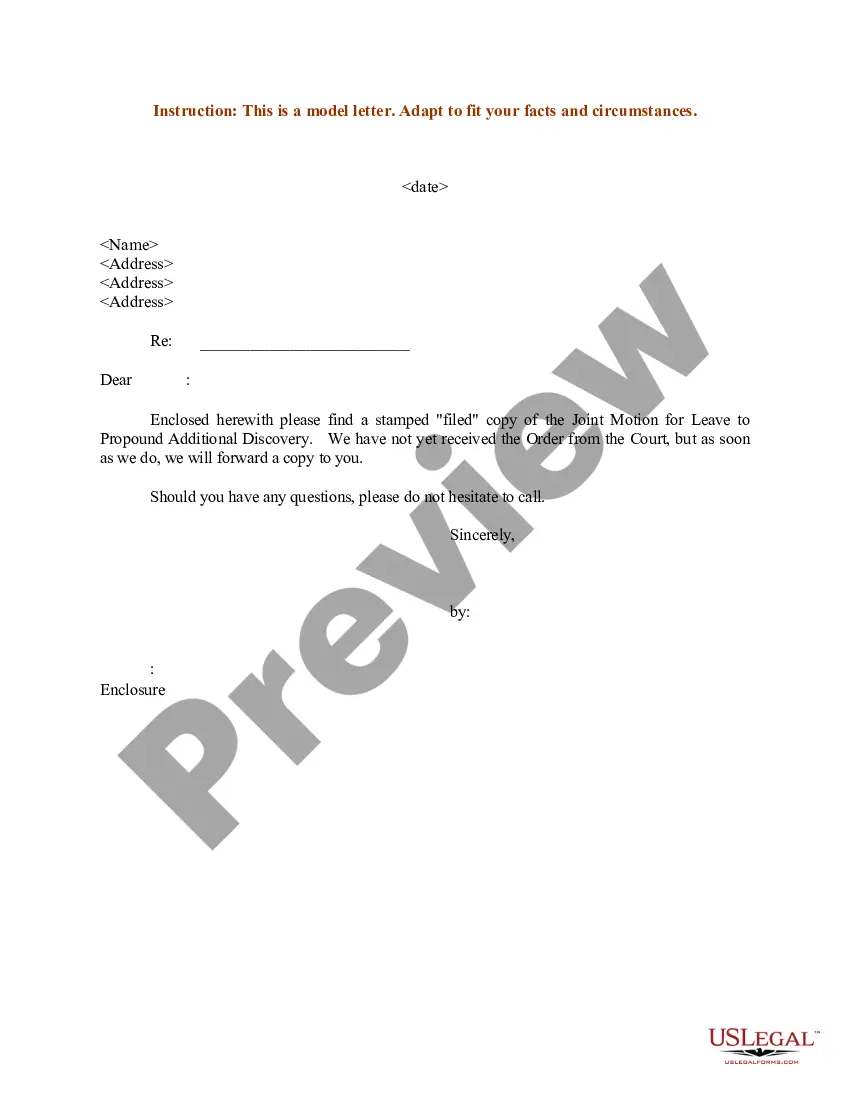
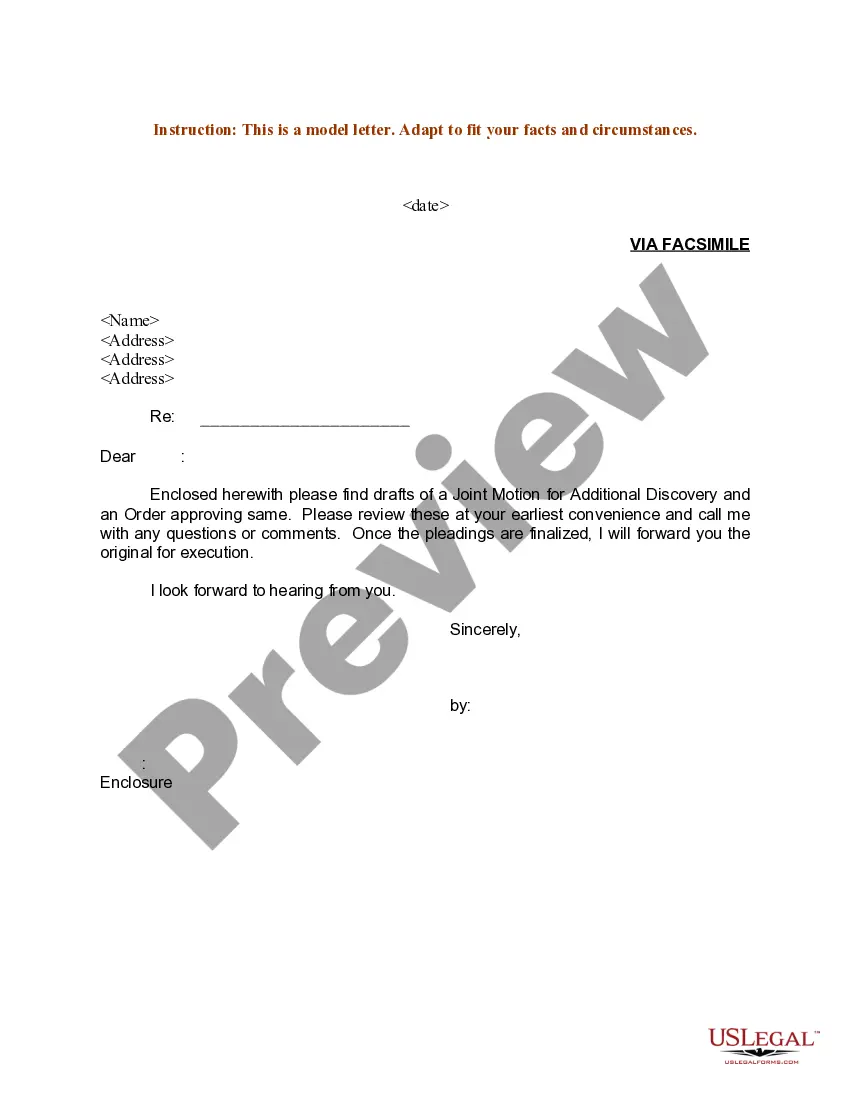
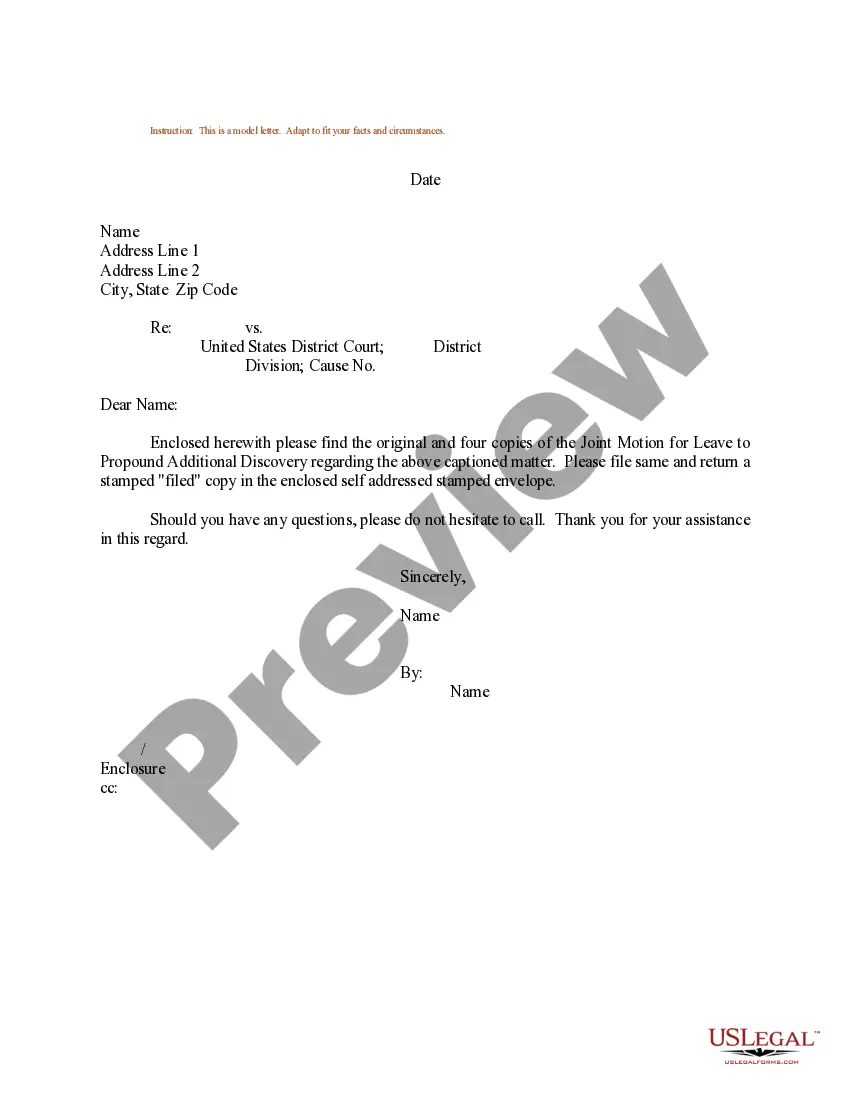
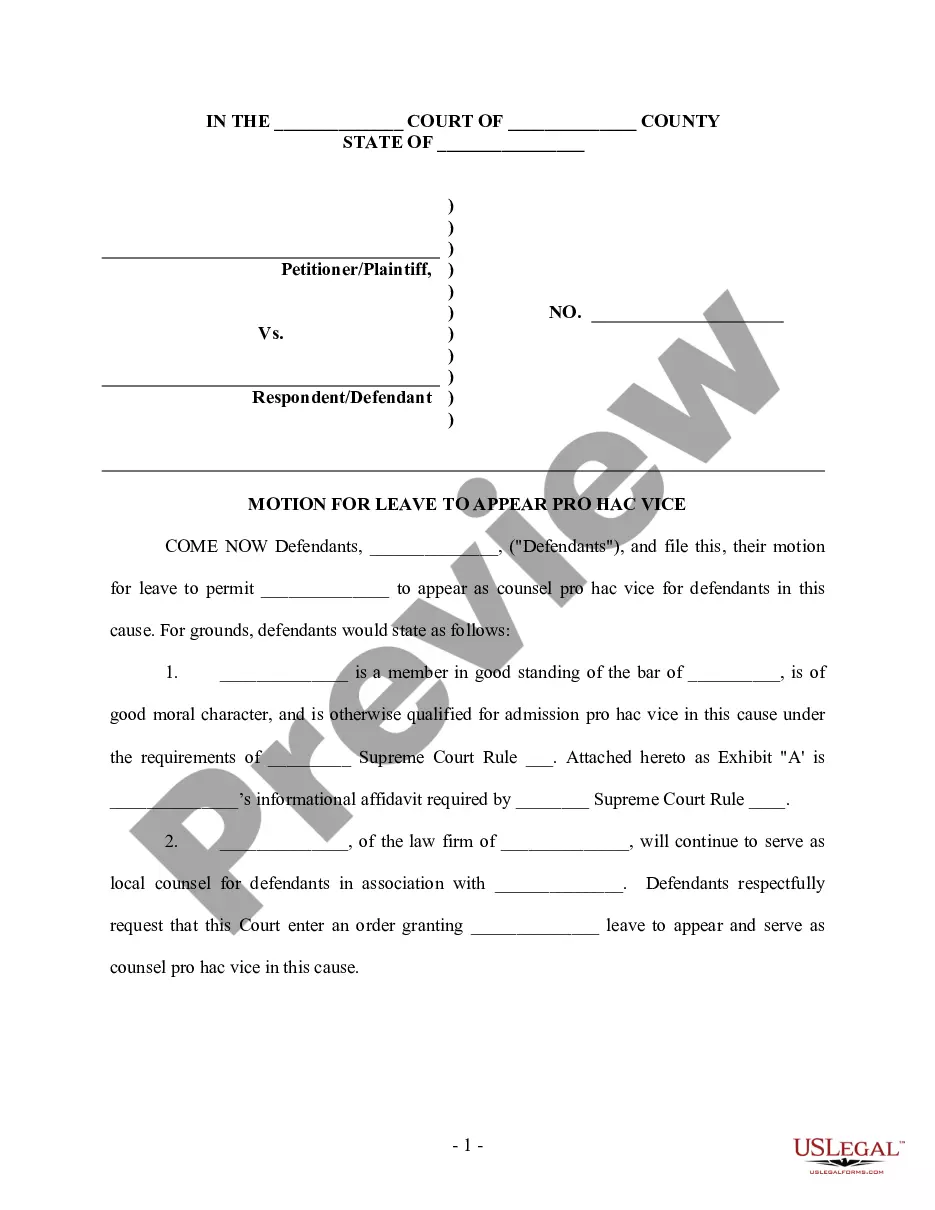
The Joint Motion for Leave to Propound Additional Discovery is a legal document that allows parties in a lawsuit to formally request permission from the court to ask for additional evidence or information from each other. This form is essential when the standard discovery process does not provide sufficient information needed for a case. Unlike regular motions, this specific joint motion emphasizes collaboration between parties seeking the court's approval for additional discovery requests.
Form components explained
- Case caption: Identifies the parties involved and the court where the motion is filed.
- Joint statement: A section where all parties collectively outline their reasons for requesting additional discovery.
- Specific requests: Detailed descriptions of the additional information or documents being sought.
- Proposed order: A section where the court is asked to approve the motion.
- Signature lines: Spaces for all parties to sign the motion, indicating their agreement and consent.
Situations where this form applies
This form is used when parties in a legal dispute realize that the initial discovery process did not uncover all relevant information necessary for preparing their case. It is appropriate in situations where further evidence could significantly impact the outcome of the case and when both parties agree that more discovery is essential before proceeding to trial.
Who this form is for
This form is suitable for:
- Attorneys representing clients in ongoing litigation.
- Litigants in a dispute, working collaboratively to gather more information.
- Legal assistants who are helping attorneys prepare discovery motions.
How to prepare this document
- Identify the parties involved in the case, and complete the case caption at the top of the form.
- Collaboratively draft a joint statement detailing why additional discovery is necessary.
- Clearly specify the documents or information requested in the appropriate section.
- Prepare a proposed order for the court's consideration at the end of the motion.
- Ensure all parties sign the document to confirm their joint request.
Is notarization required?
This form does not typically require notarization unless specified by local law.
Get your form ready online
Our built-in tools help you complete, sign, share, and store your documents in one place.
Make edits, fill in missing information, and update formatting in US Legal Forms—just like you would in MS Word.
Download a copy, print it, send it by email, or mail it via USPS—whatever works best for your next step.
Sign and collect signatures with our SignNow integration. Send to multiple recipients, set reminders, and more. Go Premium to unlock E-Sign.
If this form requires notarization, complete it online through a secure video call—no need to meet a notary in person or wait for an appointment.
We protect your documents and personal data by following strict security and privacy standards.

Make edits, fill in missing information, and update formatting in US Legal Forms—just like you would in MS Word.

Download a copy, print it, send it by email, or mail it via USPS—whatever works best for your next step.

Sign and collect signatures with our SignNow integration. Send to multiple recipients, set reminders, and more. Go Premium to unlock E-Sign.

If this form requires notarization, complete it online through a secure video call—no need to meet a notary in person or wait for an appointment.

We protect your documents and personal data by following strict security and privacy standards.
Avoid these common issues
- Failing to include all partiesâ signatures on the motion.
- Not providing a clear rationale for the additional discovery requests.
- Neglecting to check local court rules for specific requirements.
Benefits of using this form online
- Convenience of downloading and filling out the form at your own pace.
- Editability allows for customization to fit your specific case needs.
- Access to professionally drafted forms ensures accuracy and adherence to legal standards.
Legal use & context
- The motion must comply with local jurisdiction rules regarding discovery procedures.
- Filing this motion does not guarantee approval; the court will review and decide based on legal standards.
- Consider potential implications of requesting additional discovery on case timelines and costs.
Quick recap
- The Joint Motion for Leave to Propound Additional Discovery is used to request extra information in legal proceedings.
- Mutual consent from all parties involved is essential for the motion to be effective.
- Following correct procedures and local rules is crucial for the motionâs acceptance by the court.
Looking for another form?
Form popularity
FAQ
You have 30 days after the form or special interrogatories were served to you (35 days if served by mail from within California) to serve your responses to the interrogatories. Sometimes, rather than answering the interrogatory, you may wish to object to the request on legal grounds.
Step 1: Write Your Interrogatories. There is no Judicial Council form specifically for this procedure. Step 2: Make Photocopies. Make one photocopy of your special interrogatories for each party (other than you) in the case. Step 3: Have Your Requests Served. Step 4: Retain Your Originals for Your Records.
(1) Number. Unless otherwise stipulated or ordered by the court, a party may serve on any other party no more than 25 written interrogatories, including all discrete subparts. Leave to serve additional interrogatories may be granted to the extent consistent with Rule 26(b)(1) and (2).
To garner responses that are usable at trial, propound requests that certain facts be admitted, instead of asking the other side to admit legal conclusions.
As to the method of serving papers upon a party whose address is unknown, see Rule 5(b). The amendment makes clear that all papers relating to discovery which are required to be served on any party must be served on all parties, unless the court orders otherwise.
(b) Except as provided in Section 2030.070, no party shall, as a matter of right, propound to any other party more than 35 specially prepared interrogatories. If the initial set of interrogatories does not exhaust this limit, the balance may be propounded in subsequent sets.
In certain cases, you might be able to write a letter to the other side and request the documents that you need. However, in more formal cases, you will likely have to draft more formal discovery demands. There are usually forms available for this in local law libraries, from the court clerk's office, or online.
In general, routine discovery requires each party to serve exhibits cited in any paper, to make its declarants available for cross examination, and to serve relevant information that is inconsistent with a position advanced by the party. Additional discovery, on the other hand, is available only upon motion, and only
Discovery, in the law of common law jurisdictions, is a pre-trial procedure in a lawsuit in which each party, through the law of civil procedure, can obtain evidence from the other party or parties by means of discovery devices such as interrogatories, requests for production of documents, requests for admissions and