Mississippi Response in Opposition to Motion to Compel
What is this form?
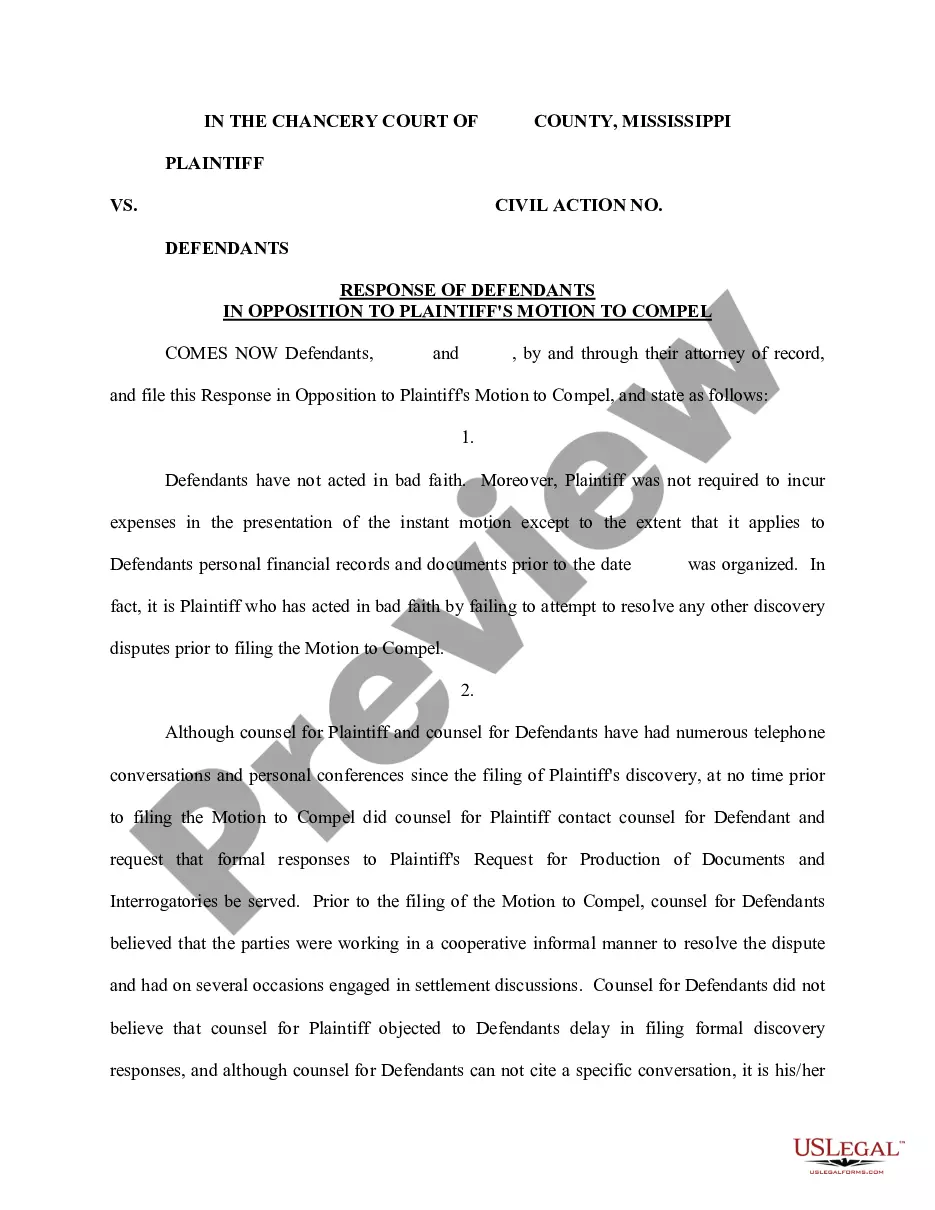
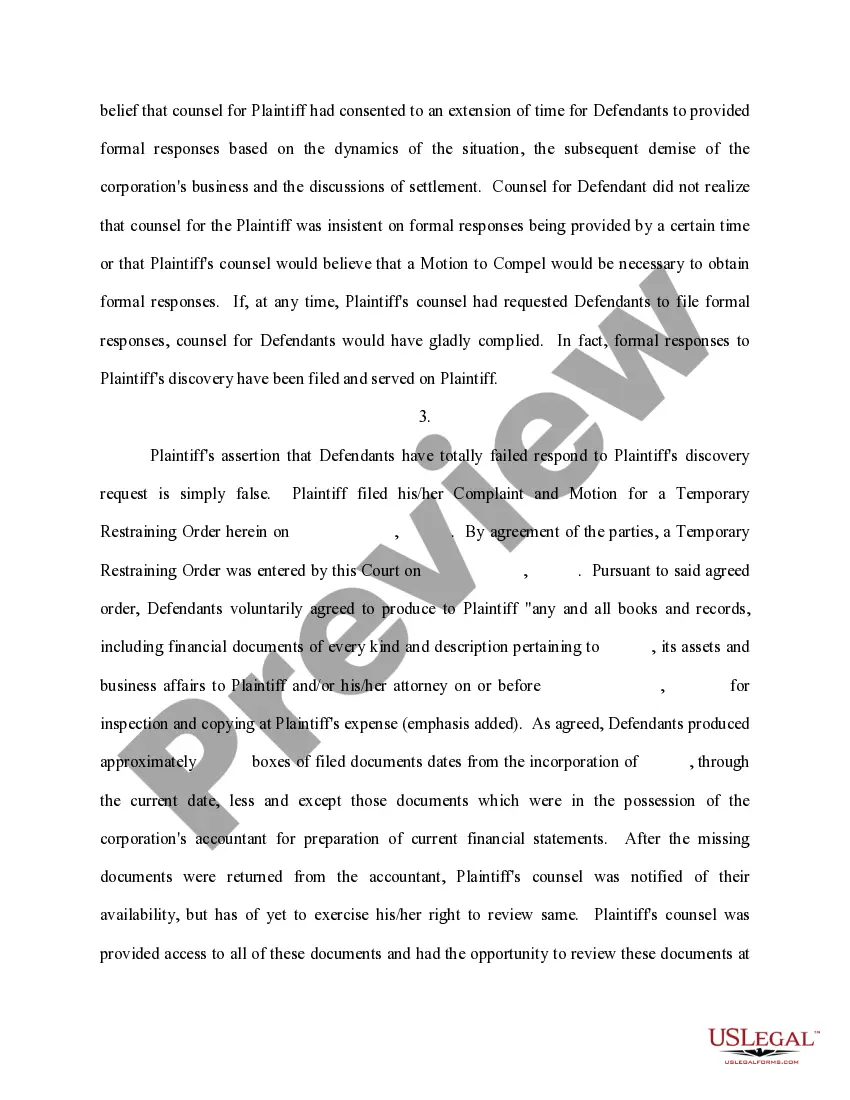
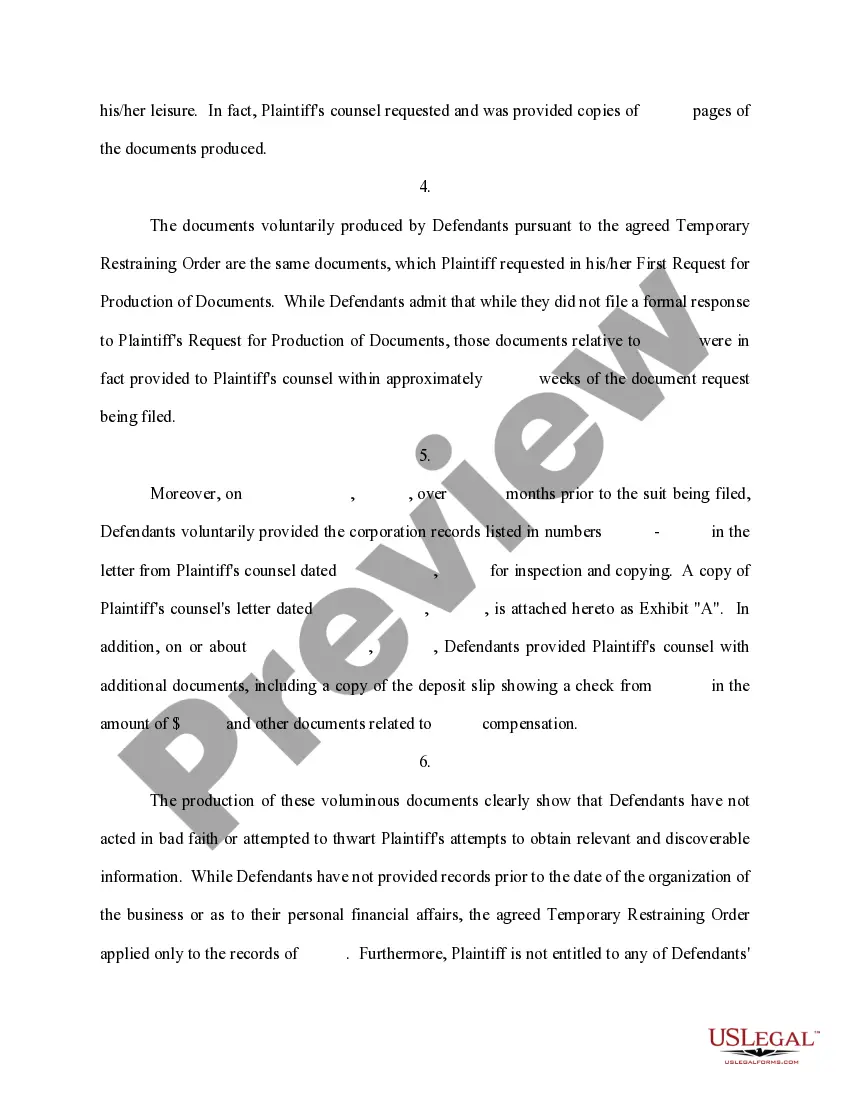
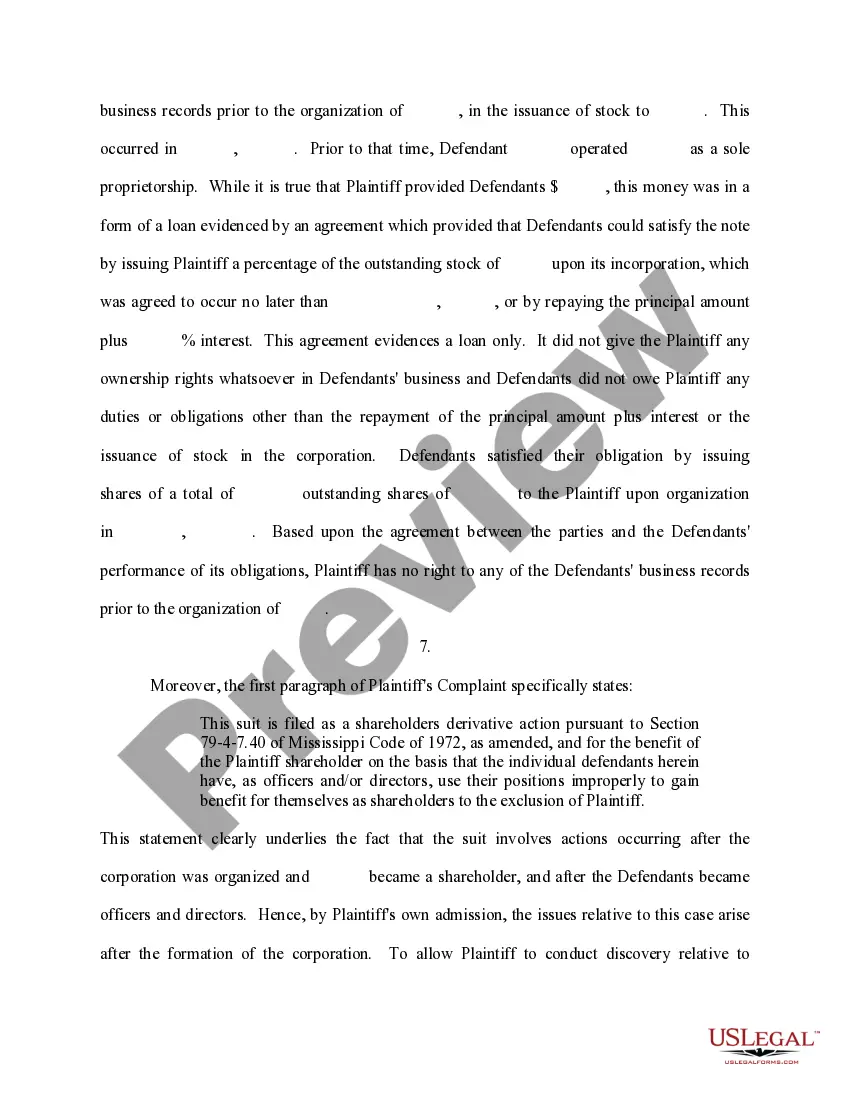
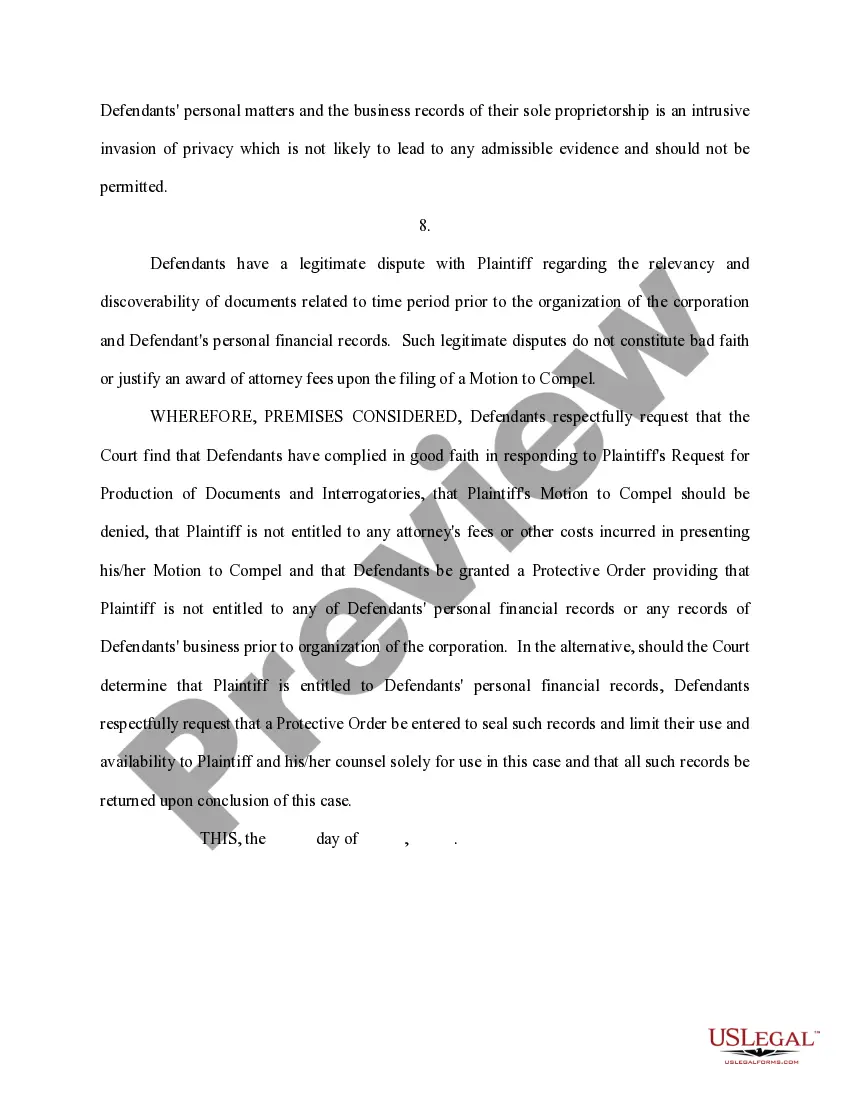
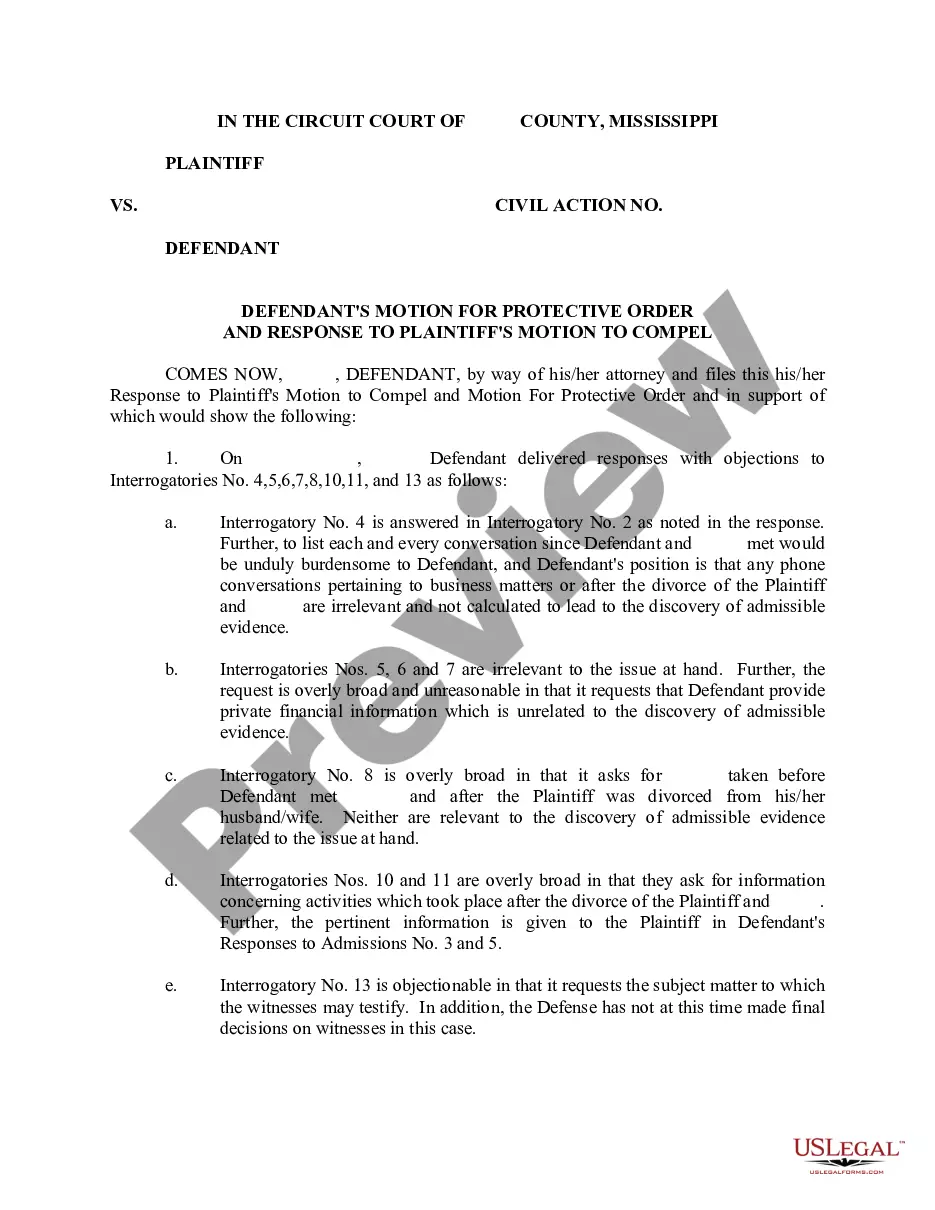
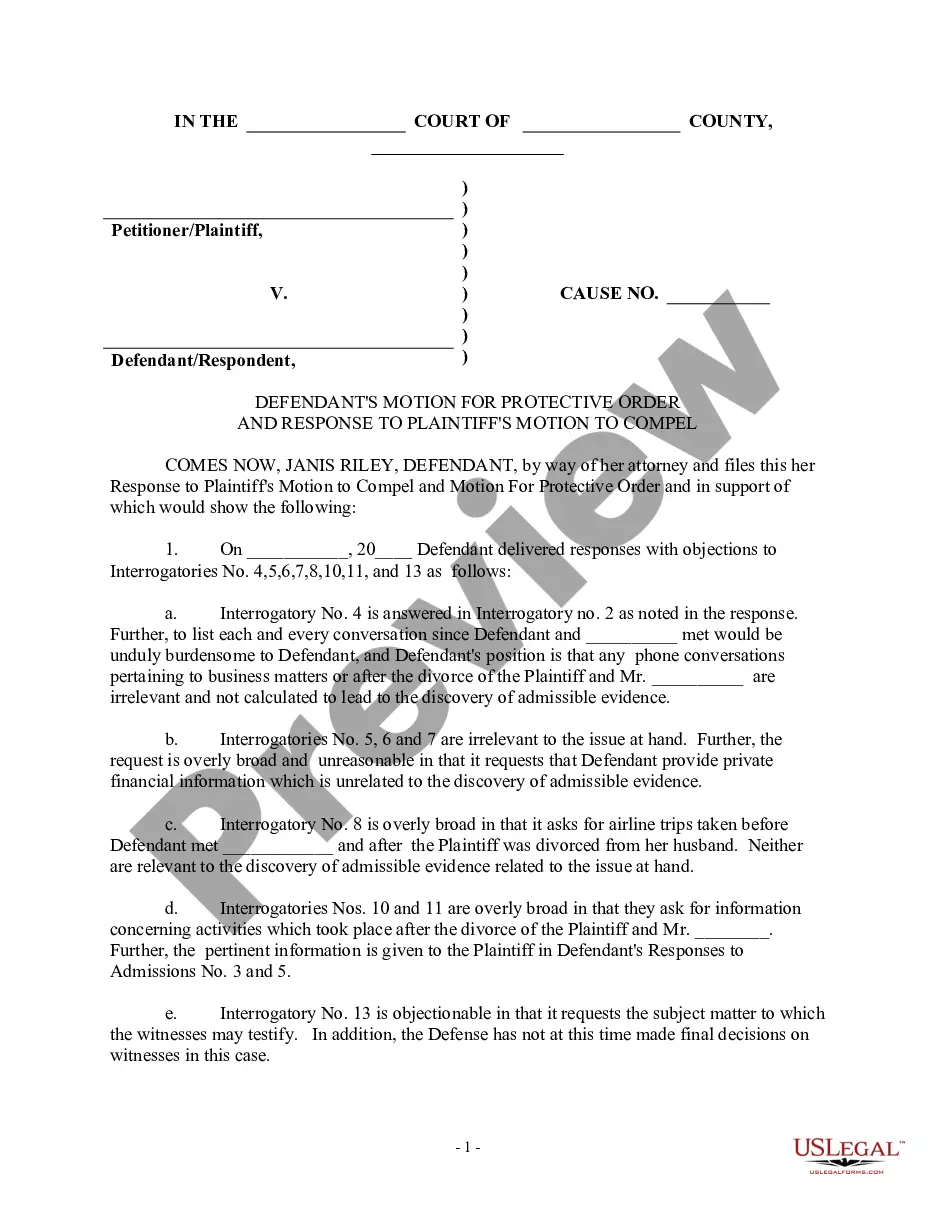
The Response in Opposition to Motion to Compel is a legal document used to formally respond to a motion requesting the court to compel disclosure of certain information or documents. This form is designed to ensure that a defendant can present their reasons for not complying with a previous discovery request, emphasizing the perceived cooperation between parties and disputes related to the relevancy of documents. This form differs from other discovery forms in that it specifically addresses the opposition to a motion rather than merely submitting requested documents or information.
Form components explained
- Section outlining communication between parties prior to the motion.
- Clause detailing the belief of informal resolution efforts and associated agreements.
- Area addressing the relevancy of documents and personal financial records.
- Provisions discussing delays in response and the lack of bad faith.
Situations where this form applies
This form should be used when a defendant needs to respond to a plaintiff's motion to compel, particularly in cases where there has been ongoing communication about discovery requests. It is appropriate when the defendant believes that formal responses were not explicitly required or when there are legitimate disputes regarding the relevancy and discoverability of requested documents.
Who should use this form
- Defendants in legal proceedings facing a motion to compel from a plaintiff.
- Individuals or entities involved in a discovery dispute where they seek to clarify their position.
- Legal representatives advocating on behalf of defendants in civil cases.
Steps to complete this form
- Identify the parties involved in the legal matter.
- Provide details of the previous communications regarding discovery requests.
- Specify the reasons for opposing the motion, focusing on cooperation and relevance.
- Fill in any claims regarding delays or disputes related to discoverable documents.
- Sign and date the completed response before submission to the court.
Is notarization required?
Notarization is not commonly needed for this form. However, certain documents or local rules may make it necessary. Our notarization service, powered by Notarize, allows you to finalize it securely online anytime, day or night.
Get your form ready online
Our built-in tools help you complete, sign, share, and store your documents in one place.
Make edits, fill in missing information, and update formatting in US Legal Forms—just like you would in MS Word.
Download a copy, print it, send it by email, or mail it via USPS—whatever works best for your next step.
Sign and collect signatures with our SignNow integration. Send to multiple recipients, set reminders, and more. Go Premium to unlock E-Sign.
If this form requires notarization, complete it online through a secure video call—no need to meet a notary in person or wait for an appointment.
We protect your documents and personal data by following strict security and privacy standards.

Make edits, fill in missing information, and update formatting in US Legal Forms—just like you would in MS Word.

Download a copy, print it, send it by email, or mail it via USPS—whatever works best for your next step.

Sign and collect signatures with our SignNow integration. Send to multiple recipients, set reminders, and more. Go Premium to unlock E-Sign.

If this form requires notarization, complete it online through a secure video call—no need to meet a notary in person or wait for an appointment.

We protect your documents and personal data by following strict security and privacy standards.
Typical mistakes to avoid
- Failing to document all relevant communications between parties.
- Neglecting to adequately explain the basis for any relevancy disputes.
- Submitting the form without proper signatures or dates.
Advantages of online completion
- Convenient access to legal forms that can be downloaded at any time.
- Editability allows users to tailor the form to their specific circumstances.
- Verified legal content drafted by licensed attorneys ensures reliability and compliance.
Legal use & context
- The form serves as a formal legal response and may be considered by the court when deciding on the Motion to Compel.
- Providing a response can help prevent sanctions or awards of attorney fees against the defendant.
- It is advisable to include clear arguments to reflect good faith and reduce any claims of obstruction in the discovery process.
Quick recap
- The Response in Opposition to Motion to Compel is crucial for defendants facing discovery motions.
- Cooperating with opposing counsel may prevent the need for legal motions.
- Provide clear evidence of attempts to resolve disputes informally.
- Ensure timely and accurate completion of the form to protect your legal rights.
Looking for another form?
Form popularity
FAQ
The response must be filed within 10 days after service of the motion unless the court shortens or extends the time. A motion authorized by Rules 8, 9, 18, or 41 may be granted before the 10-day period runs only if the court gives reasonable notice to the parties that it intends to act sooner.
The motion to compel further responses has to be brought within 45 days of service of the response. (C.C.P.
You need to give the court a reason to deny the other side's motion to compel. There are many different reasons you could give. Take out your Response to the discovery request. You should have identified reasons in your Response for why you weren't turning over certain information.
You need to give the court a reason to deny the other side's motion to compel. There are many different reasons you could give. Take out your Response to the discovery request. You should have identified reasons in your Response for why you weren't turning over certain information.
Motion for Sanctions If the court issues an order compelling discovery, and the party fails to comply with that order, then the court may sanction the party in numerous ways such as refusing to let in the party's evidence at trial, dismissing their lawsuit or striking their defense to a lawsuit, and imposing
Consequences of Refusing to Provide Evidence Requested in a Motion to Compel. If the court issues an order that compels your spouse to produce the discovery you are seeking but your spouse still refuses to provide evidence, the judge may impose further sanctions such as: A verdict in your favor.
Failure to Respond: If a defendant fails to answer the complaint or file a motion to dismiss within the time limit set forth in the summons, the defendant is in default. The plaintiff can ask the court clerk to make a note of that fact in the file, a procedure called entry of default.