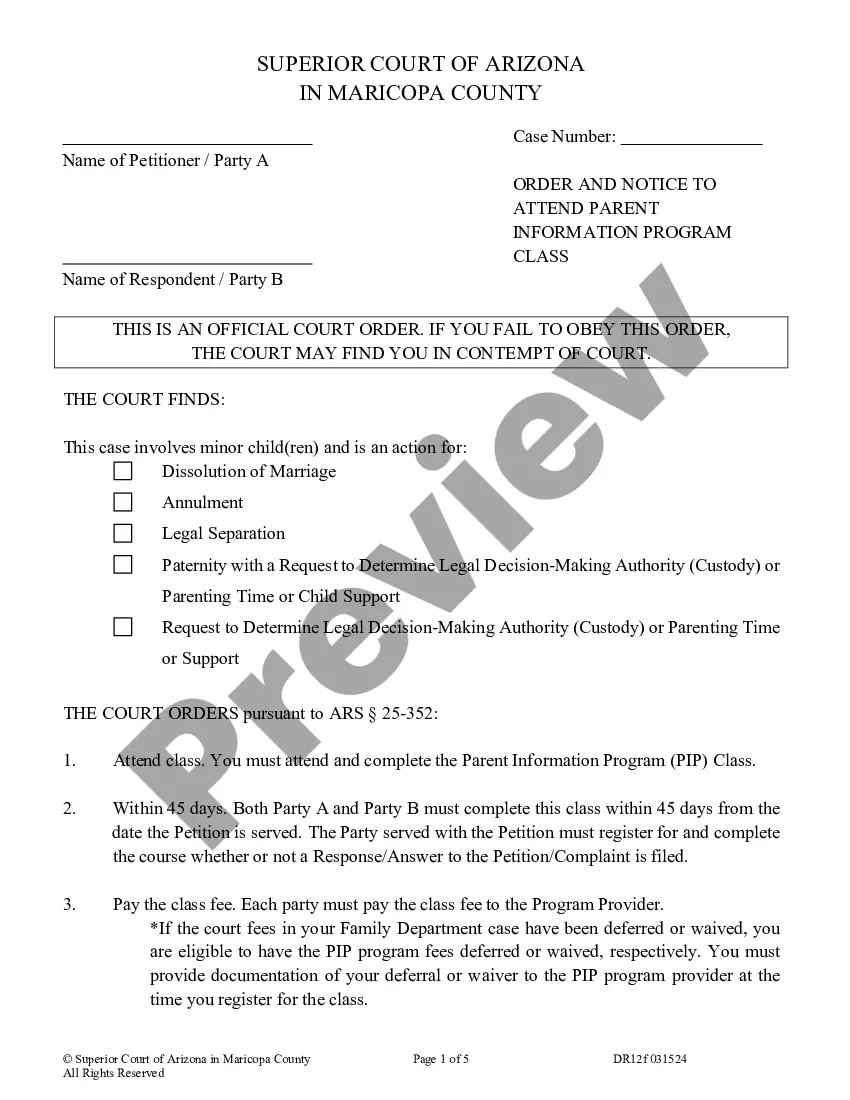
Mississippi Application for Entry of Default Judgment
Understanding this form
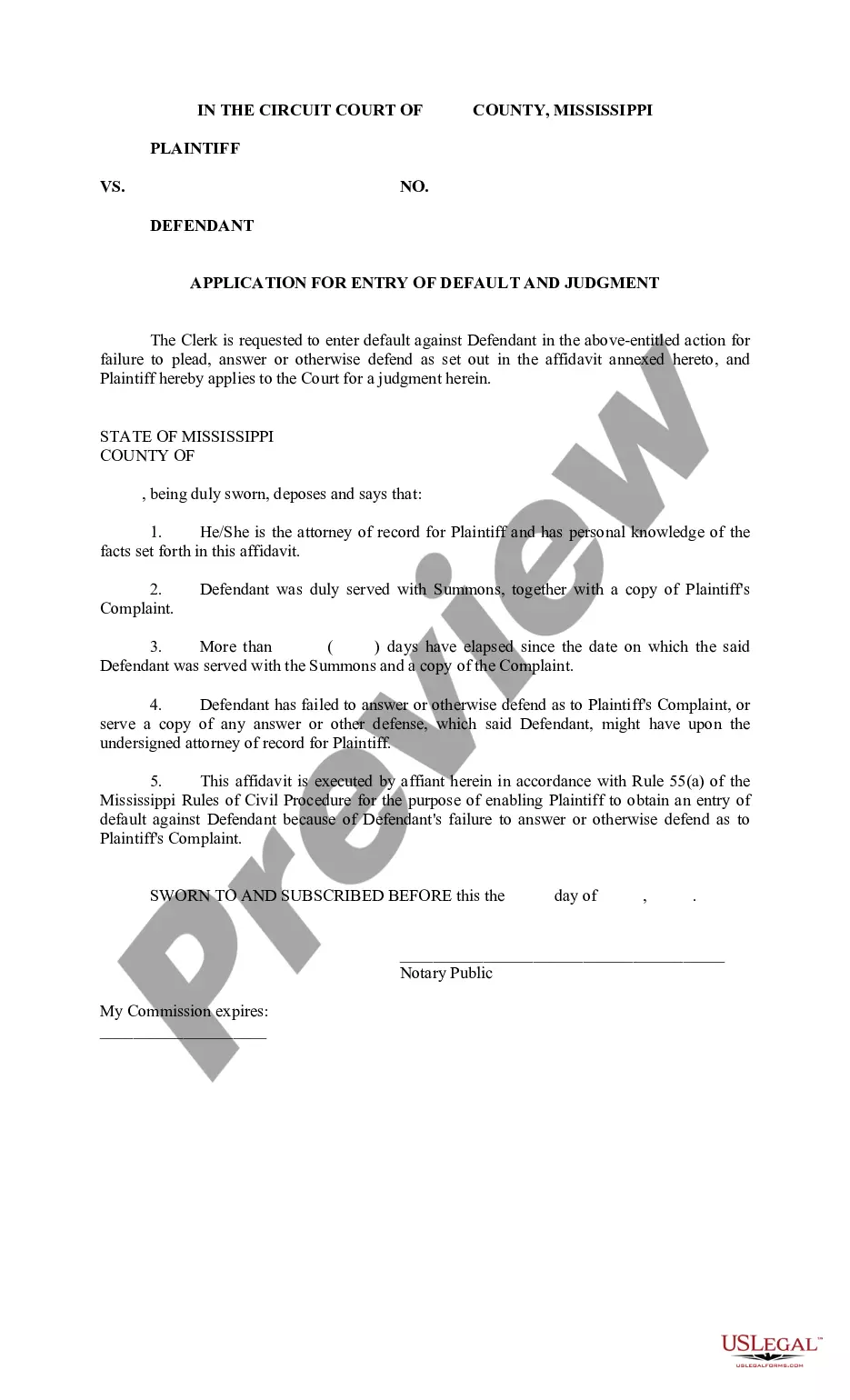
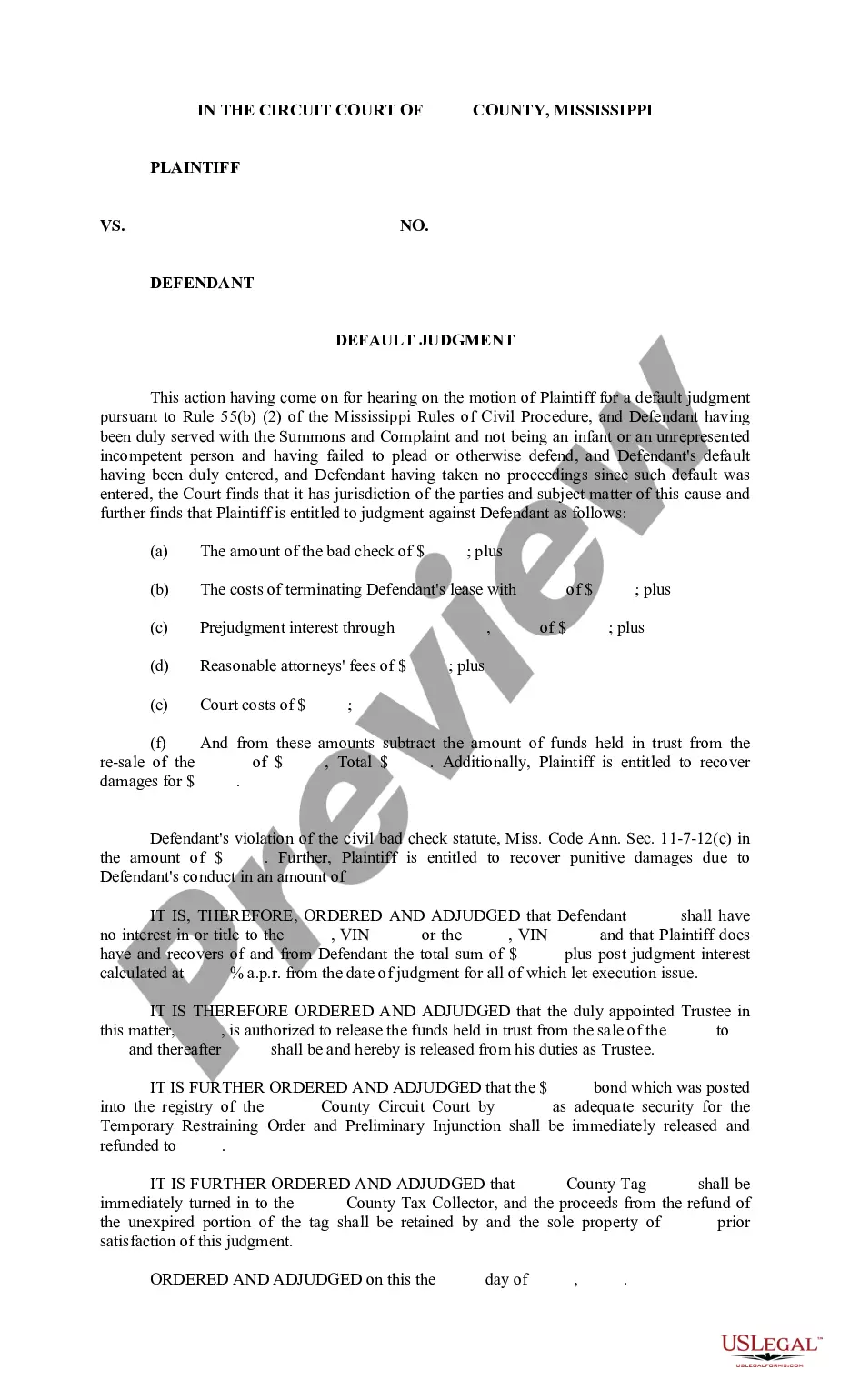
The Application for Entry of Default Judgment is a legal document filed by a party in a civil case when the opposing party has failed to respond to a complaint within a specified time frame. This application requests the court to issue a judgment in favor of the filing party, effectively concluding the litigation process. This form differs from other legal documents, such as a motion for summary judgment, in that it specifically addresses the lack of response from the opposing party.
Form components explained
- Information about the court where the case is filed.
- Details of the plaintiff and defendant, including their addresses.
- A sworn affidavit confirming the defendant's failure to respond.
- A request for the court to enter default judgment against the defendant.
- Signature line for the plaintiff or their attorney.
When this form is needed
This form should be used when a plaintiff has filed a complaint against a defendant, but the defendant has not responded within the required timeframe. It is commonly used in situations such as debt recovery cases, eviction proceedings, or any civil litigation where the absence of a response has hindered the court process.
Who should use this form
This form is intended for:
- Plaintiffs who have filed a lawsuit and are seeking a default judgment due to the defendant's lack of response.
- Individuals or entities involved in civil cases where the other party has failed to make an appearance.
- Legal representatives acting on behalf of plaintiffs in litigation.
How to prepare this document
- Identify the court by entering the name and location at the top of the form.
- Fill in the names and addresses of both the plaintiff and defendant.
- Complete the affidavit section, stating that the defendant has failed to respond.
- Detail the relief sought from the court, specifically requesting default judgment.
- Sign and date the form, ensuring proper completion of all fields.
Is notarization required?
This document requires notarization to meet legal standards. US Legal Forms provides secure online notarization powered by Notarize, allowing you to complete the process through a verified video call, available 24/7.
Get your form ready online
Our built-in tools help you complete, sign, share, and store your documents in one place.
Make edits, fill in missing information, and update formatting in US Legal Forms—just like you would in MS Word.
Download a copy, print it, send it by email, or mail it via USPS—whatever works best for your next step.
Sign and collect signatures with our SignNow integration. Send to multiple recipients, set reminders, and more. Go Premium to unlock E-Sign.
If this form requires notarization, complete it online through a secure video call—no need to meet a notary in person or wait for an appointment.
We protect your documents and personal data by following strict security and privacy standards.

Make edits, fill in missing information, and update formatting in US Legal Forms—just like you would in MS Word.

Download a copy, print it, send it by email, or mail it via USPS—whatever works best for your next step.

Sign and collect signatures with our SignNow integration. Send to multiple recipients, set reminders, and more. Go Premium to unlock E-Sign.

If this form requires notarization, complete it online through a secure video call—no need to meet a notary in person or wait for an appointment.

We protect your documents and personal data by following strict security and privacy standards.
Mistakes to watch out for
- Failing to provide accurate and complete information about the parties involved.
- Neglecting to properly sign or date the application.
- Not adhering to the required timeline for filing the application after the defendant's deadline to respond.
Benefits of using this form online
- Convenience of immediate download after completion.
- Access to editable formats for personalized adjustments.
- Professional quality, ensuring compliance with legal standards.
Legal use & context
- The Application for Entry of Default Judgment must be used in accordance with the Mississippi Rules of Civil Procedure.
- Ensuring proper service of process upon the defendant is crucial for enforceability.
- Default judgments can often be challenged by the defendant if they later respond, emphasizing the importance of using this form correctly.
Summary of main points
- This form is essential for obtaining a default judgment when a defendant fails to respond to a lawsuit.
- Ensure accuracy and adherence to local rules when filling out this application.
- Consider additional steps, such as notarization, to enhance the document's validity.
Looking for another form?


Form popularity
FAQ
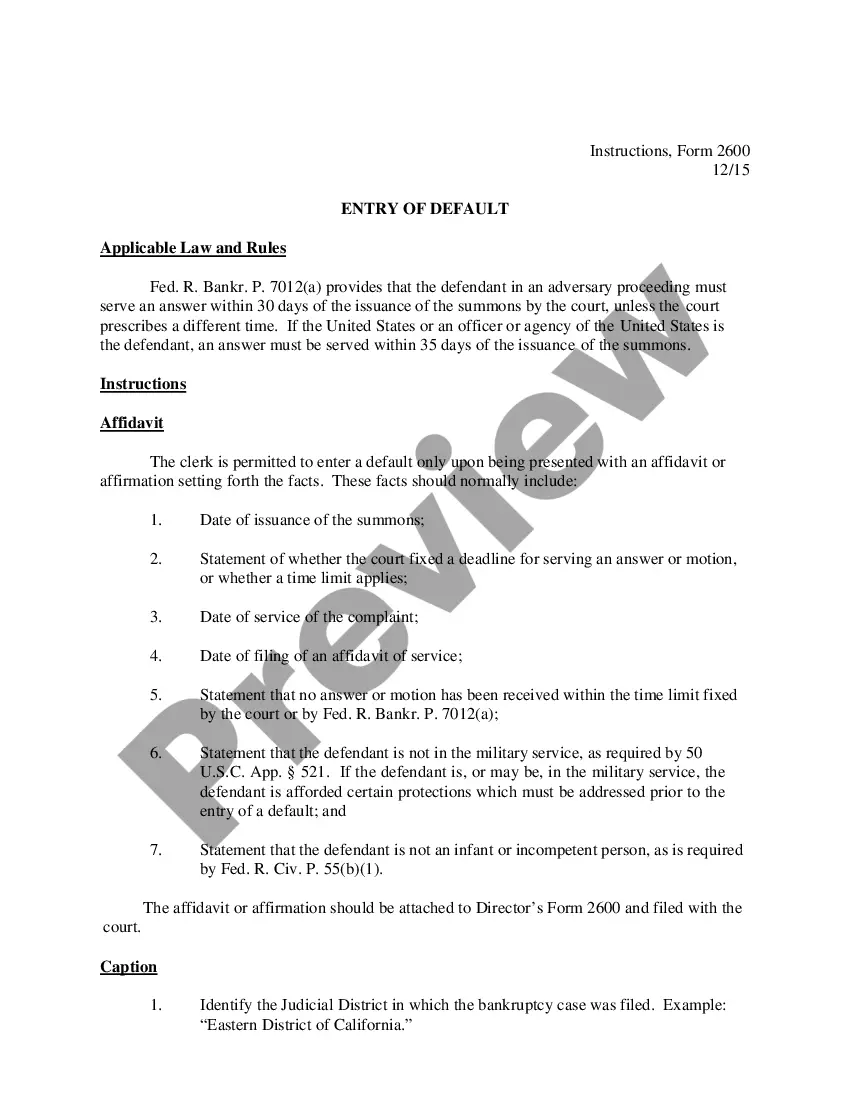
Entry of default refers to the process where the person making a claim in a case makes a request before a court of law stating that the party against whom they have made a claim have failed to furnish any meaningful response to the claimant's pleadings within the time allowed for that.
The danger of allowing a default judgment against you is once this occurs the debt buyer can garnish your wages and your bank accounts.If you don't submit a written answer to the lawsuit the court can enter a default judgment giving the debt buyer everything they are asking for.
Generally, if a defendant fails to respond to a complaint you can get a default judgment after 45 days. However, the court system is very slow these days and it can take several months to get the court to issue the default judgment.
A default judgment means that the court has decided that you owe money. This a result of the person suing you in small claims court and you failed to appear at the hearing.
A default judgment means that the court has decided that you owe money. This a result of the person suing you in small claims court and you failed to appear at the hearing.
Instances in which Default Judgment may be sought or granted: The Defendant failed to serve and file Notice of Intention to Defend. The Defendant delivered the Notice of Intention to Defend but failed to serve and file a Plea. The Defendant has entered into a defective entry of Notice of Intention to Defend.
A simple default doesn't mean you legally owe a certain amount of money. A default judgment identifies the amount you owe the plaintiff. You don't want this to happen because a default judgment makes you a judgment debtor. Plaintiff may use all sorts of legal procedures to legally take your money and property.
When a default is entered, the party who requested the entry of default must obtain a default judgment against the defaulting party within 45 days after the default was entered, unless the court has granted an extension of time.