Mississippi Plaintiff's First Request for Production of Documents - Individual
What is this form?
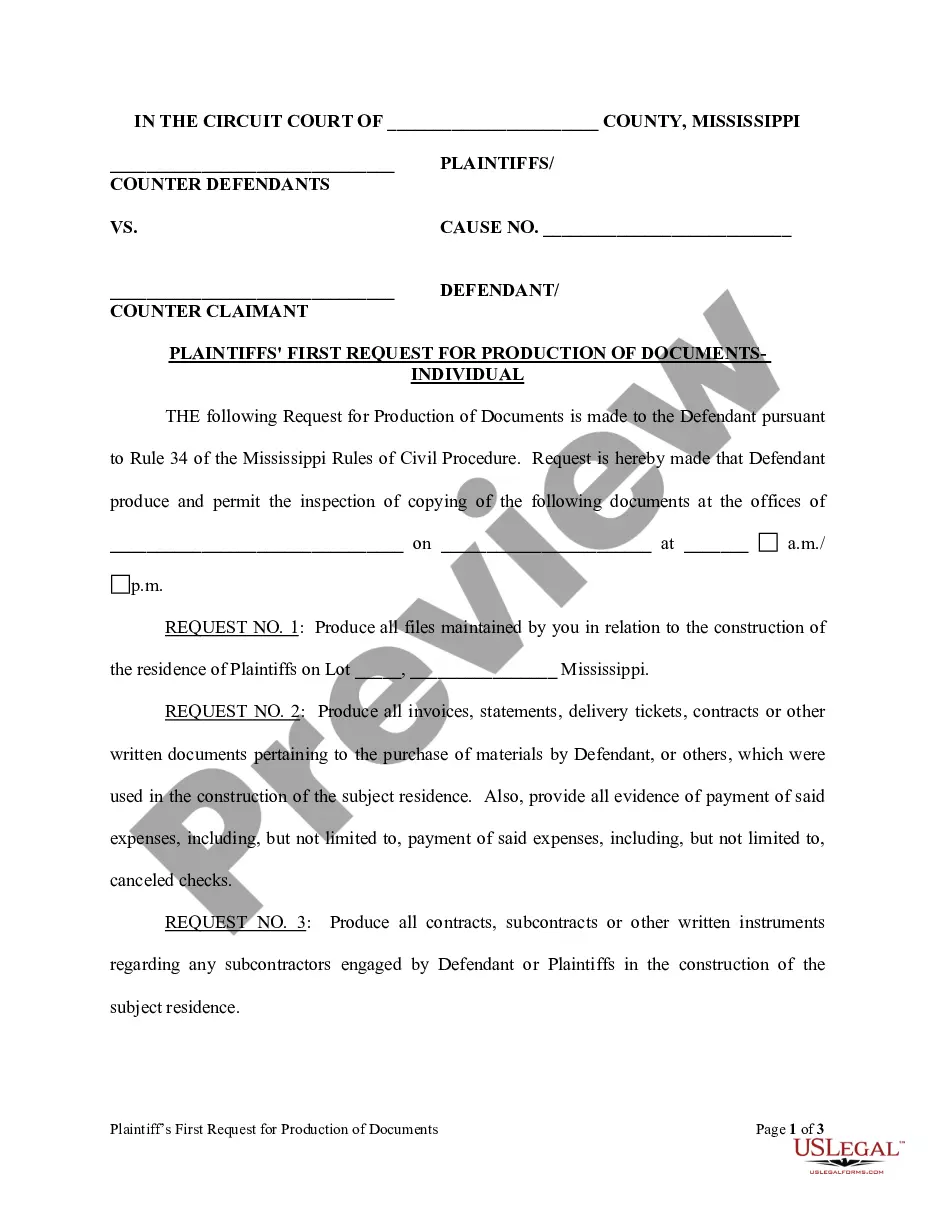
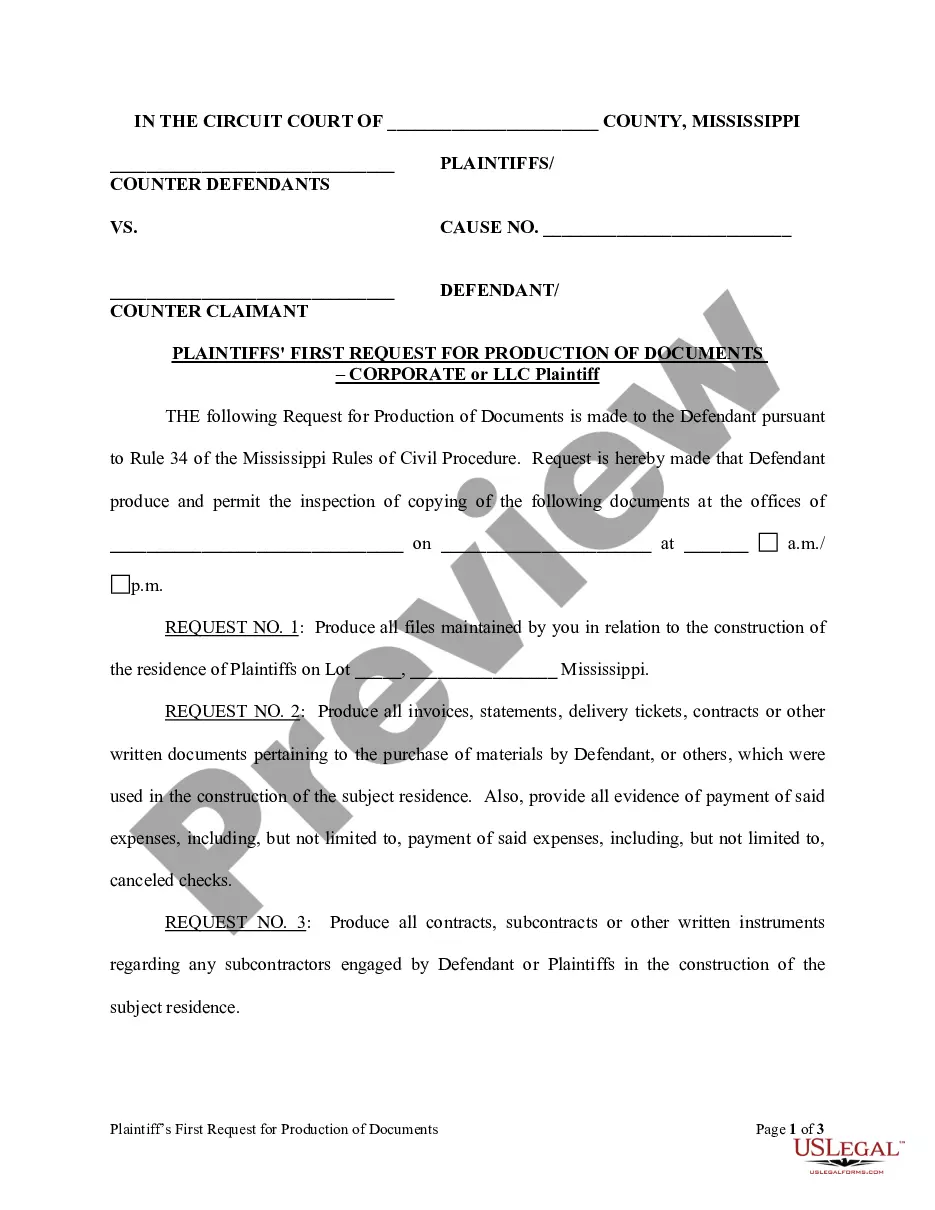
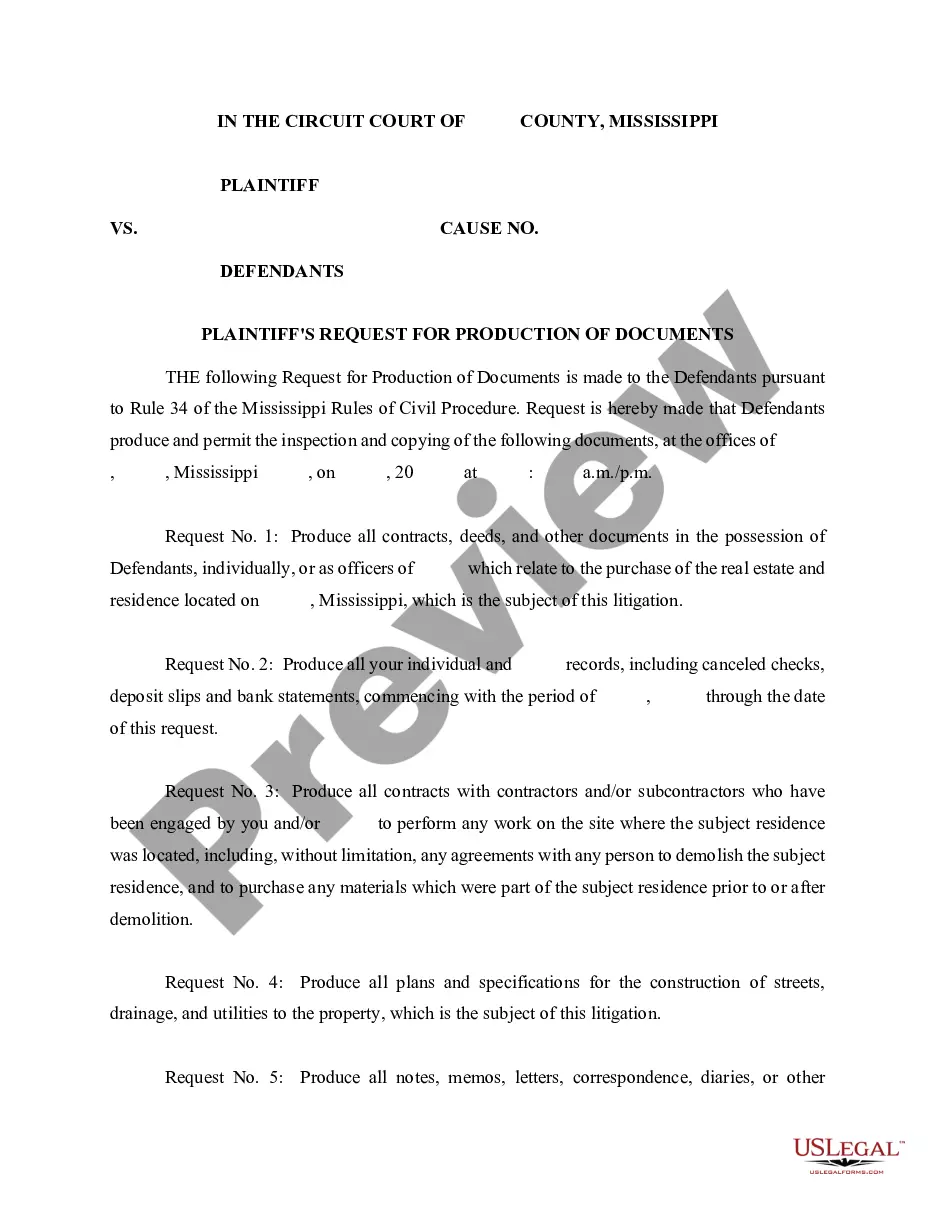
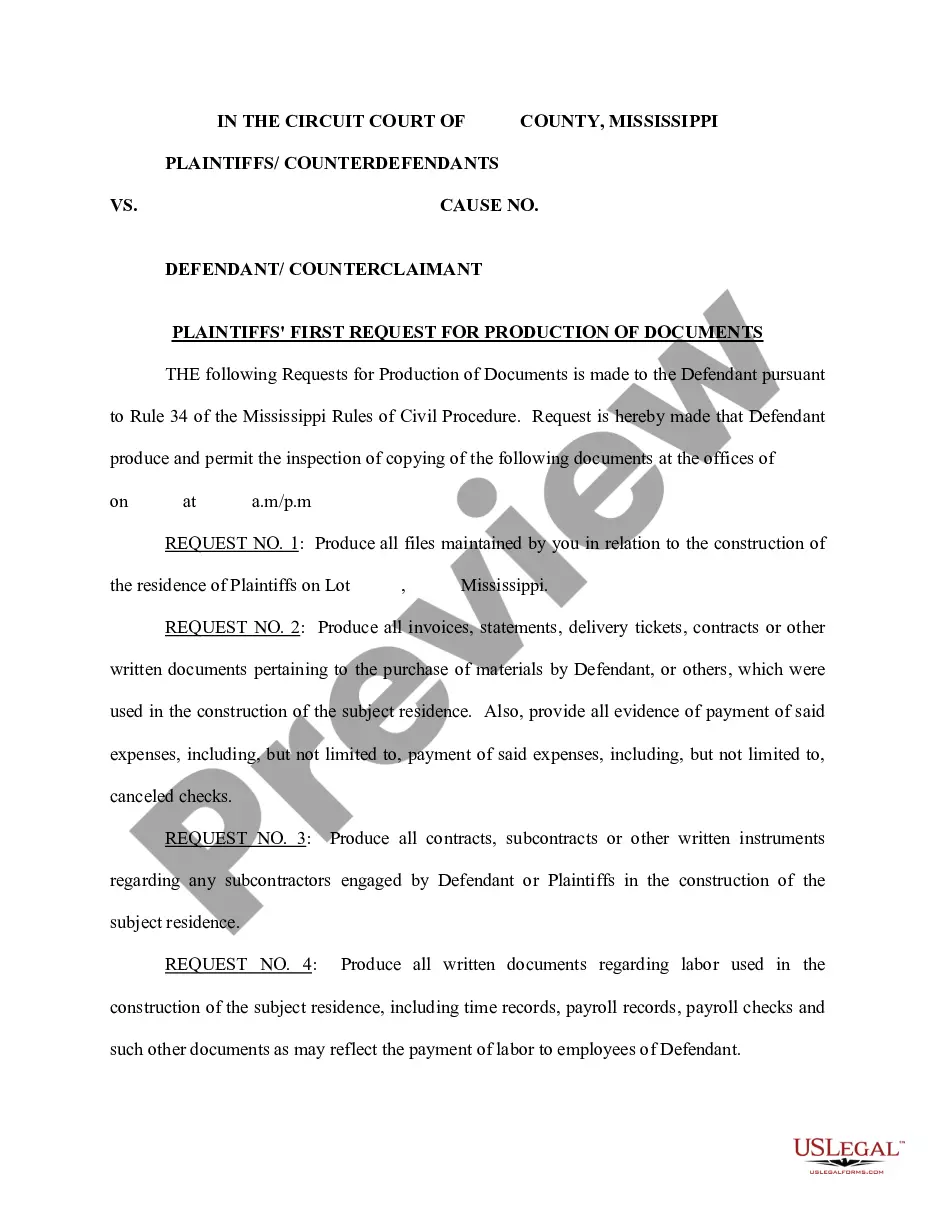
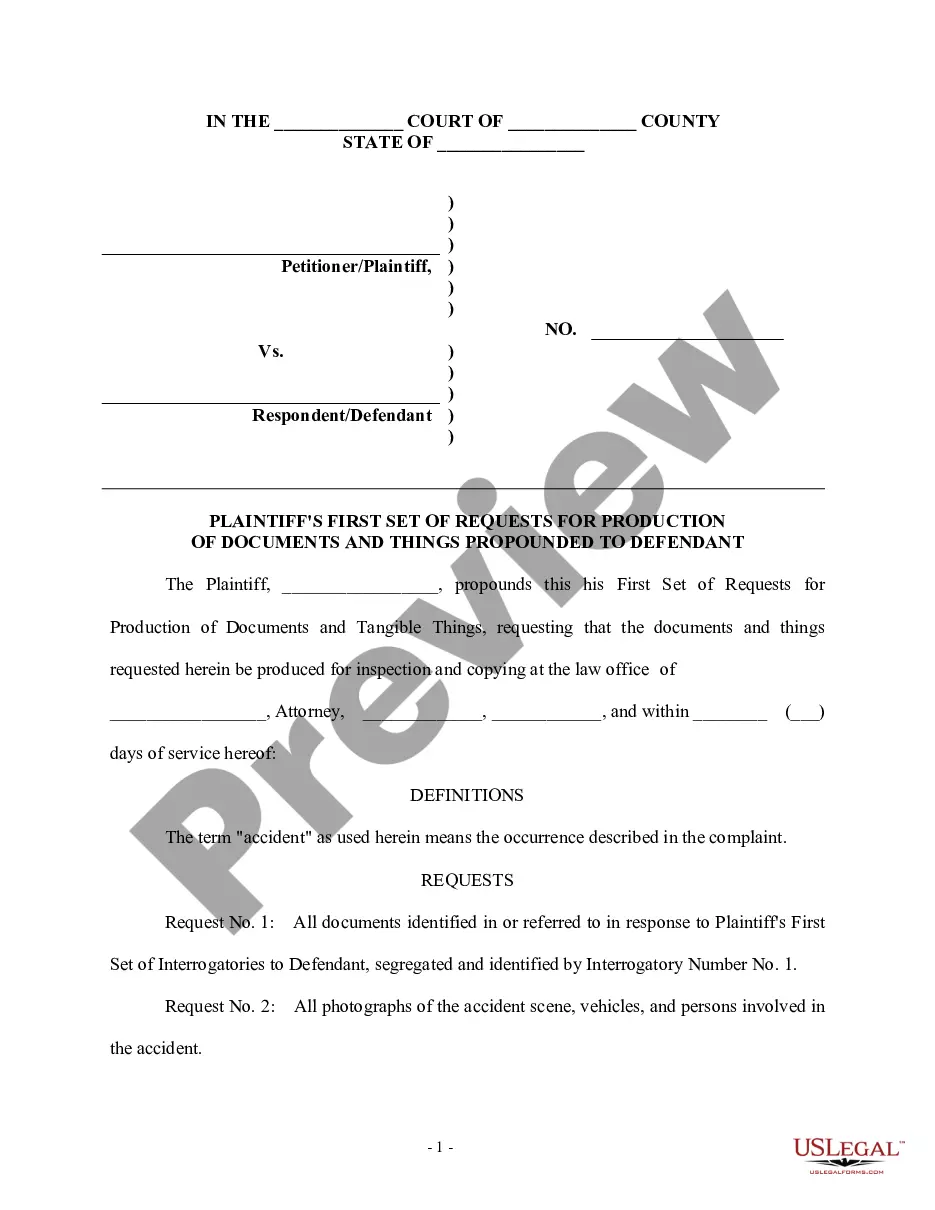
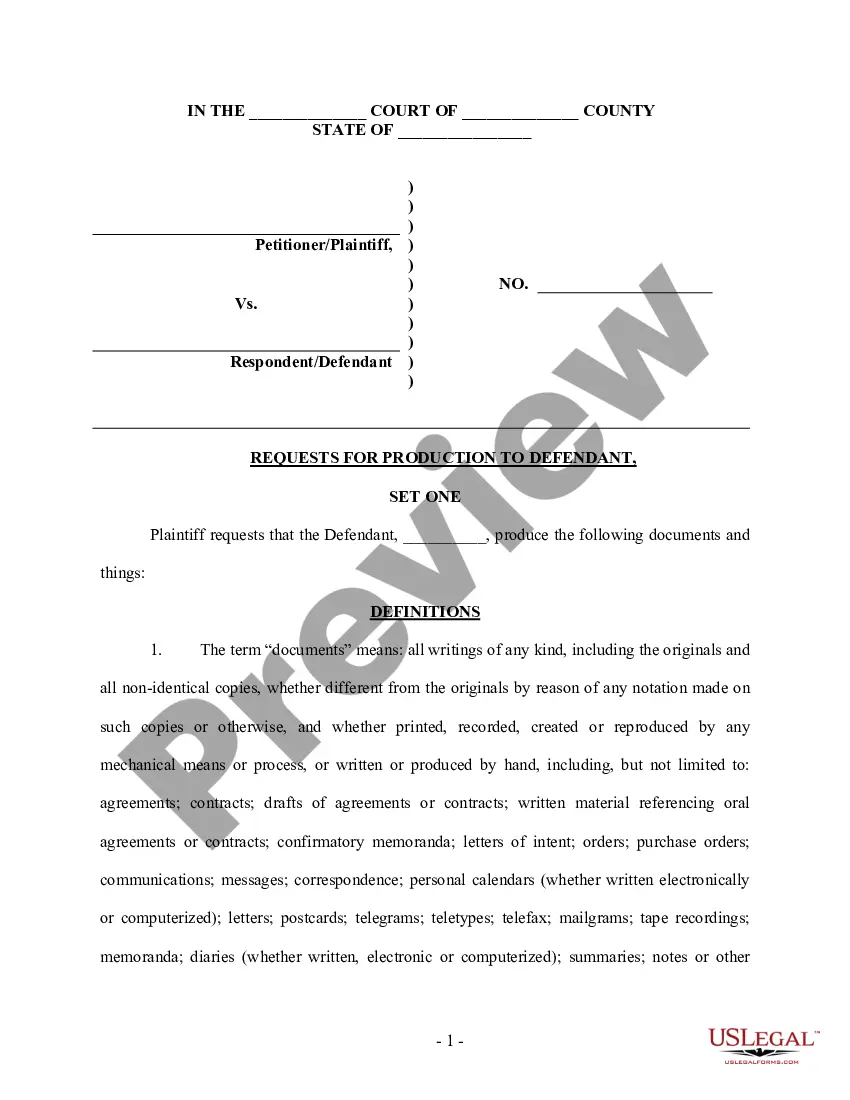
The Plaintiff's First Request for Production of Documents is a legal document used in civil cases. It allows the plaintiff to request specific documents from the defendant for inspection. This form is distinct because it focuses on obtaining relevant materials that may support a plaintiff's claims during litigation. It is essential for gathering evidence that may be crucial for the case.
What’s included in this form
- Case identification: Includes information for the plaintiff, defendant, and cause number.
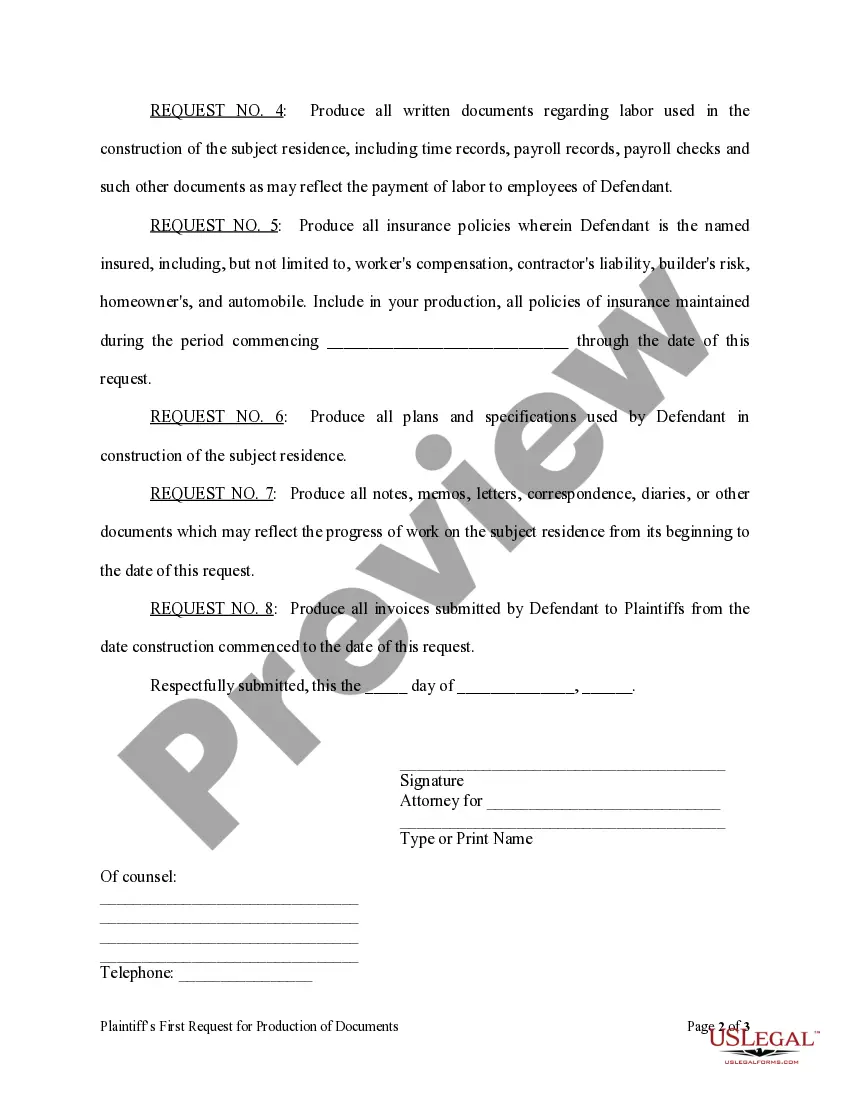
- Requests for production: Specific numbered requests asking for particular documents related to the case.
- Document inspection details: Information on where and when the documents should be made available.
- Signature section: Allows the attorney for the plaintiff to sign and certify the document.
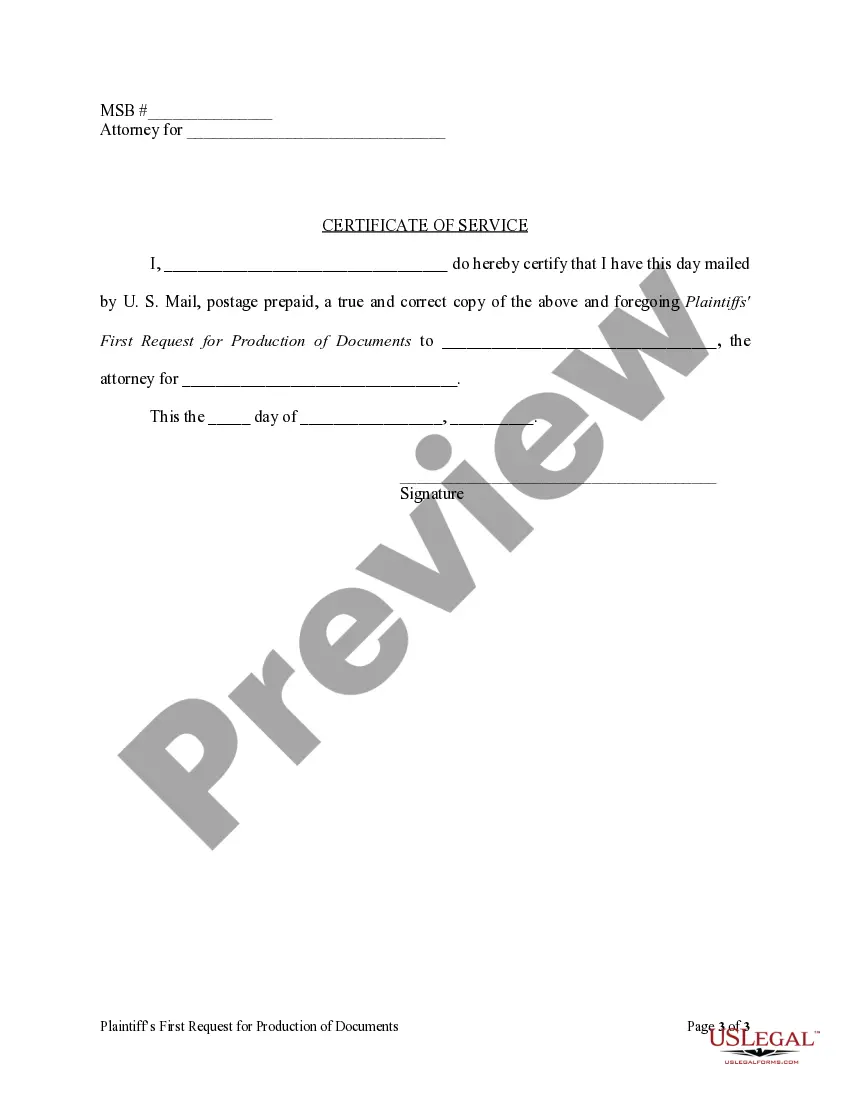
- Certificate of service: Confirms that the request has been mailed to the defendant's attorney.
When to use this form
This form is typically used during the discovery phase of a civil lawsuit. You should use it when you need to collect documents from the defendant that are relevant to your case, such as contracts, invoices, and correspondence relating to the issues at hand. It helps in clarifying facts and building your case with evidence.
Who can use this document
- Plaintiffs in civil lawsuits seeking to gather documents from defendants.
- Individuals or representatives initiating a legal action related to construction disputes or other claims.
- Attorneys representing plaintiffs who require documentation to support their clients' cases.
Instructions for completing this form
- Identify and fill in the names of the parties involved in the case.
- Enter the cause number and the specific requests for production of documents.
- Specify the location and time for the document inspection.
- Sign the form as the plaintiff's attorney, providing name and contact information.
- Complete the certificate of service to confirm the requests were sent to the defendant's attorney.
Does this document require notarization?
In most cases, this form does not require notarization. However, some jurisdictions or signing circumstances might. US Legal Forms offers online notarization powered by Notarize, accessible 24/7 for a quick, remote process.
Get your form ready online
Our built-in tools help you complete, sign, share, and store your documents in one place.
Make edits, fill in missing information, and update formatting in US Legal Forms—just like you would in MS Word.
Download a copy, print it, send it by email, or mail it via USPS—whatever works best for your next step.
Sign and collect signatures with our SignNow integration. Send to multiple recipients, set reminders, and more. Go Premium to unlock E-Sign.
If this form requires notarization, complete it online through a secure video call—no need to meet a notary in person or wait for an appointment.
We protect your documents and personal data by following strict security and privacy standards.

Make edits, fill in missing information, and update formatting in US Legal Forms—just like you would in MS Word.

Download a copy, print it, send it by email, or mail it via USPS—whatever works best for your next step.

Sign and collect signatures with our SignNow integration. Send to multiple recipients, set reminders, and more. Go Premium to unlock E-Sign.

If this form requires notarization, complete it online through a secure video call—no need to meet a notary in person or wait for an appointment.

We protect your documents and personal data by following strict security and privacy standards.
Common mistakes to avoid
- Failing to clearly specify the documents being requested.
- Not including the proper identification for the case.
- Omitting the date, time, and location for document inspection.
- Inaccurately completing the certificate of service, which could delay the process.
Benefits of completing this form online
- Convenience of downloading the form in Word and Rich Text formats.
- Editable fields allow you to tailor the document to your specific case needs.
- Access to professionally drafted materials increases the reliability of your legal documents.
Legal use & context
- This form is a formal legal request and must be completed accurately to be enforceable.
- Failure to provide the requested documents can lead to legal consequences, including court sanctions.
- It is important to reference applicable rules and guidelines for your jurisdiction when using this form.
Looking for another form?
Form popularity
FAQ
Requests for the Production of Documents are a discovery device used by a party to enable the individual to learn the facts that are the basis for, or support, a pleading with which he or she has been served by the opposing party.These documents might also be evidence in a hearing or a trial.
A request for admission cannot contain subparts, or a compound, conjunctive, or disjunctive request.
If a request asks for a document, make a copy of the document; in your response, describe the document and say that a copy is attached; and attach a copy of the document to the responses you send back to the other side.
Each request must be numbered consecutively. The first paragraph immediately shall state he identity of the party requesting the admissions, the set number, and the identity of the responding party. Each request shall be separately set forth and identified by letter or number. C.C.P.
The process of delivering, or making available for review, documents in response to a request for documents, such as a request for production and a subpoena. A request for documents may call for the production of paper (hard copy) documents and electronically stored information (ESI).
A request for production is a legal request for documents, electronically stored information, or other tangible items made in the course of litigation.The responding party is required to furnish copies of any documents that are responsive to the request, except for those that are legally privileged.
All requests for admission must be relevant to the issues in the case. If a request does not lead to the discovery of relevant, admissible evidence, you may object.
Requests for production may be used to inspect and copy documents or tangible items held by another party. Although these requests are most commonly used to obtain copies of documents, they can also be used to test, measure, photograph, etc., any type of physical evidence in the other party's possession or control.
What Is a Request for Production of Documents? A request for production is a discovery device used to gain access to documents, electronic data, and physical items held by an opposing party in a legal matter. The aim is to gain insight into any relevant evidence that the opposing party holds.