Mississippi Renunciation and Disclaimer of Property - IRA, Annuity or Bond
About this form
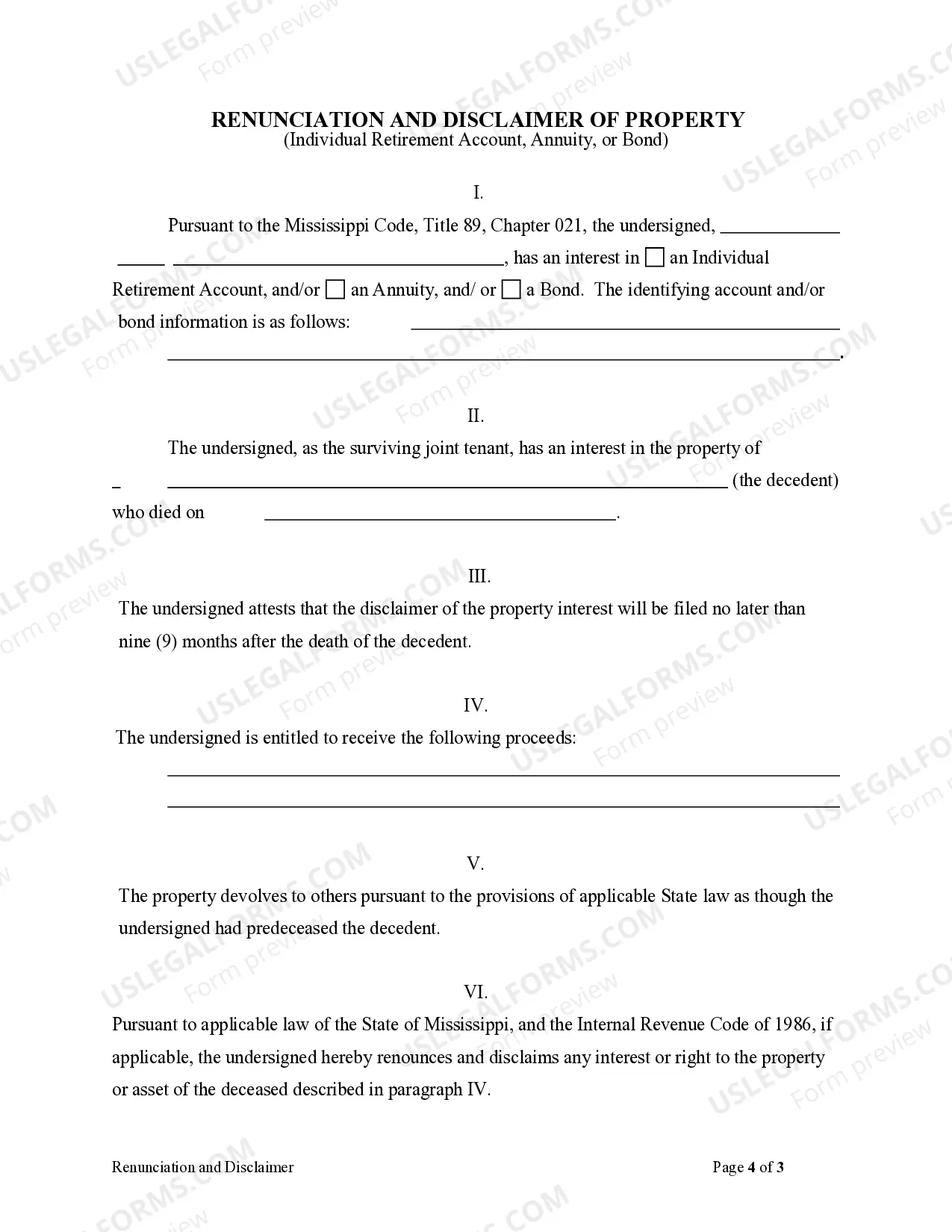
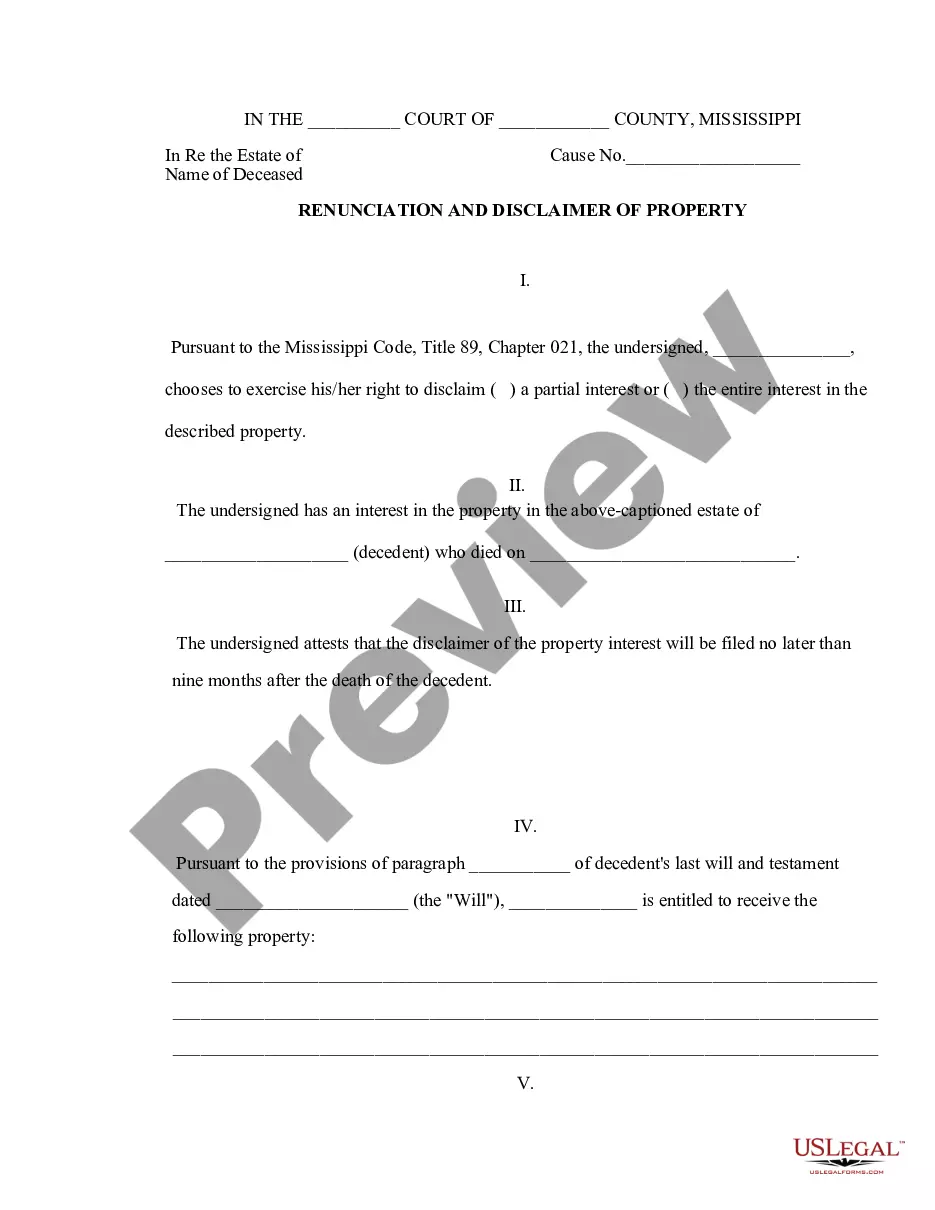
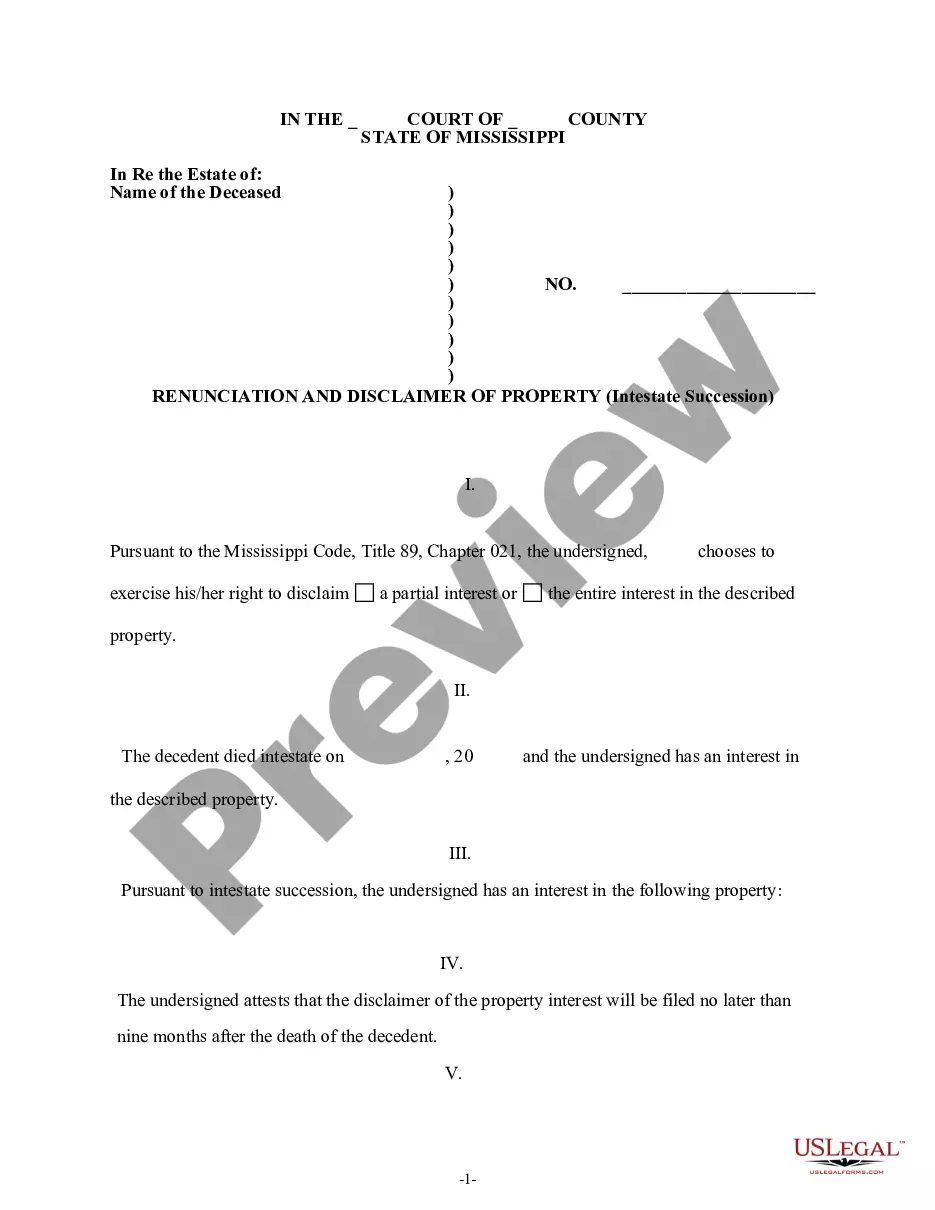
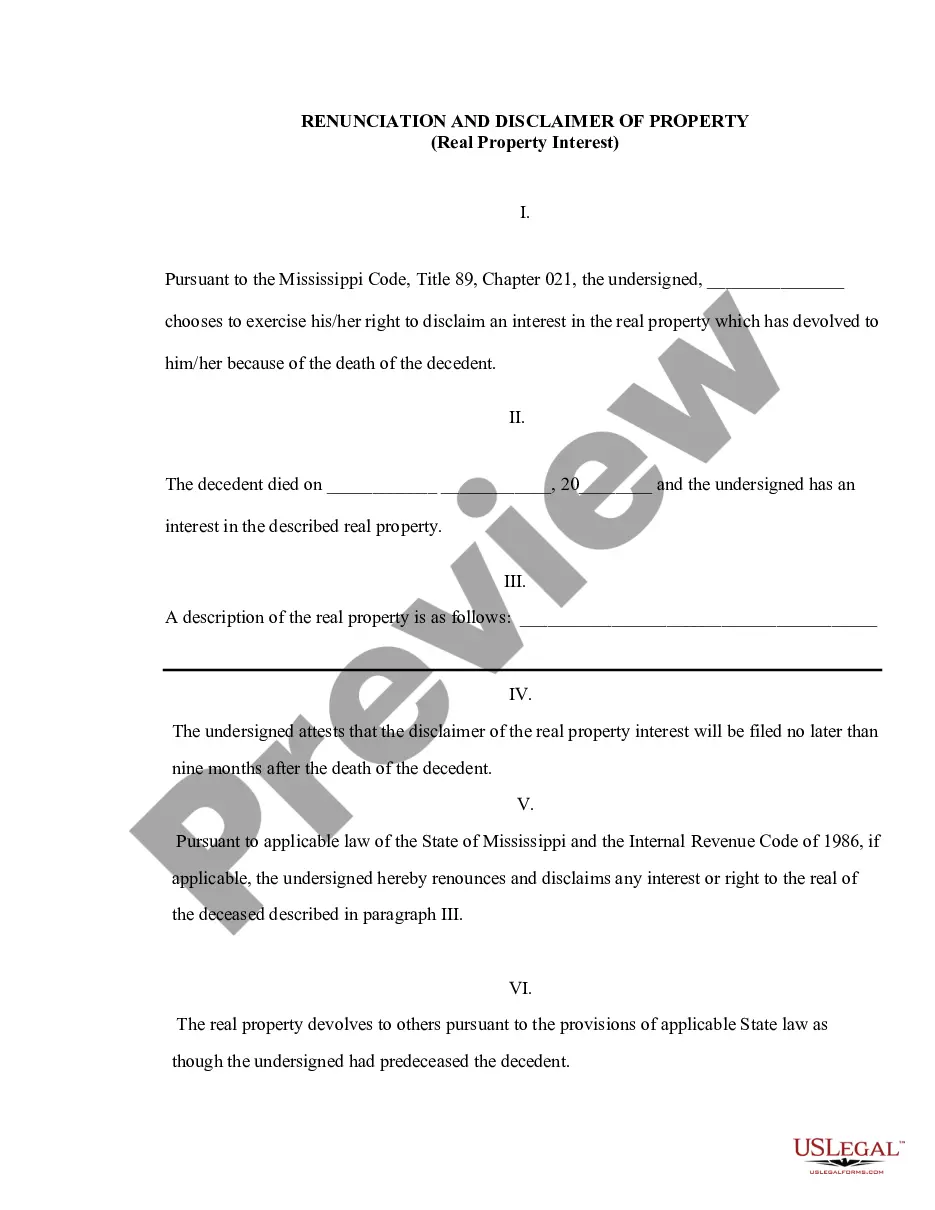
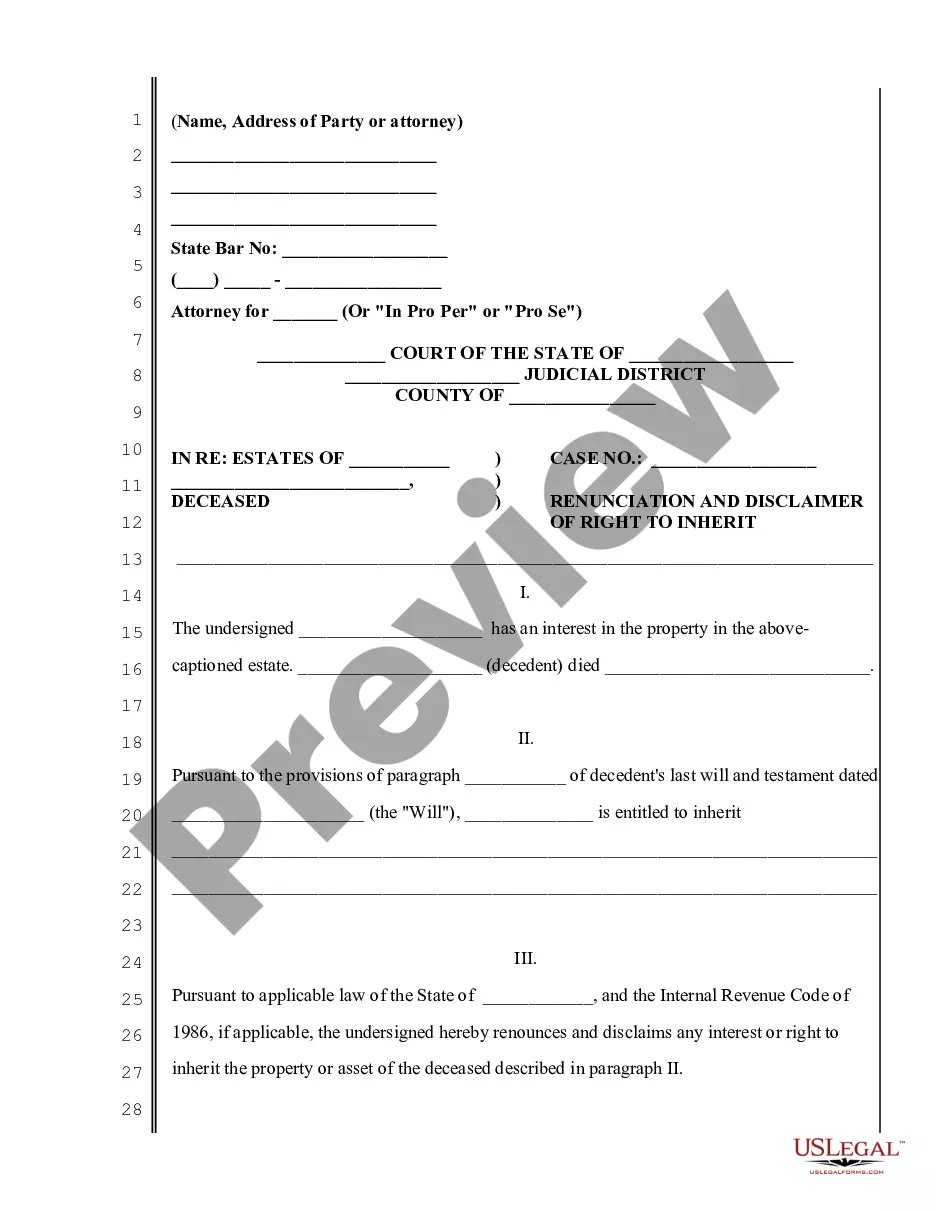
The Mississippi Renunciation and Disclaimer of Property is a legal form that allows a beneficiary to renounce their right to property received through a non-testamentary instrument, such as an IRA, annuity, or bond, upon the death of the decedent. This form is essential for beneficiaries who wish to decline part or all of their interest in the property, which differs from standard inheritance processes. It ensures that the renunciation is legally recognized under Mississippi law, specifically the Mississippi Code, Title 89, Chapter 021.
Main sections of this form
- Identification of the decedent and beneficiary.
- Details of the property being disclaimed.
- Declaration by the beneficiary to disclaim property.
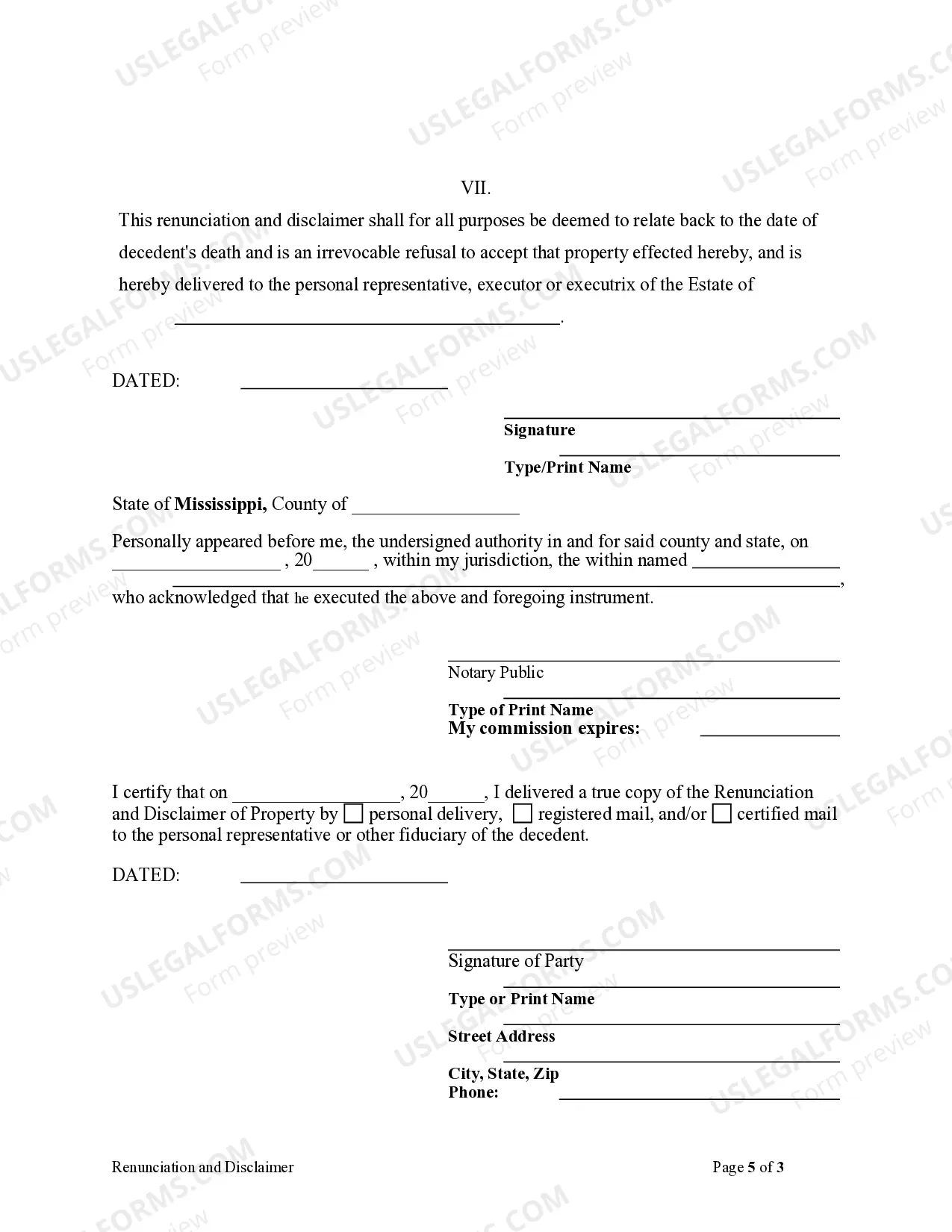
- Certification of timely filing, within nine months of the decedent's death.
- State-specific acknowledgment to validate the disclaimer.
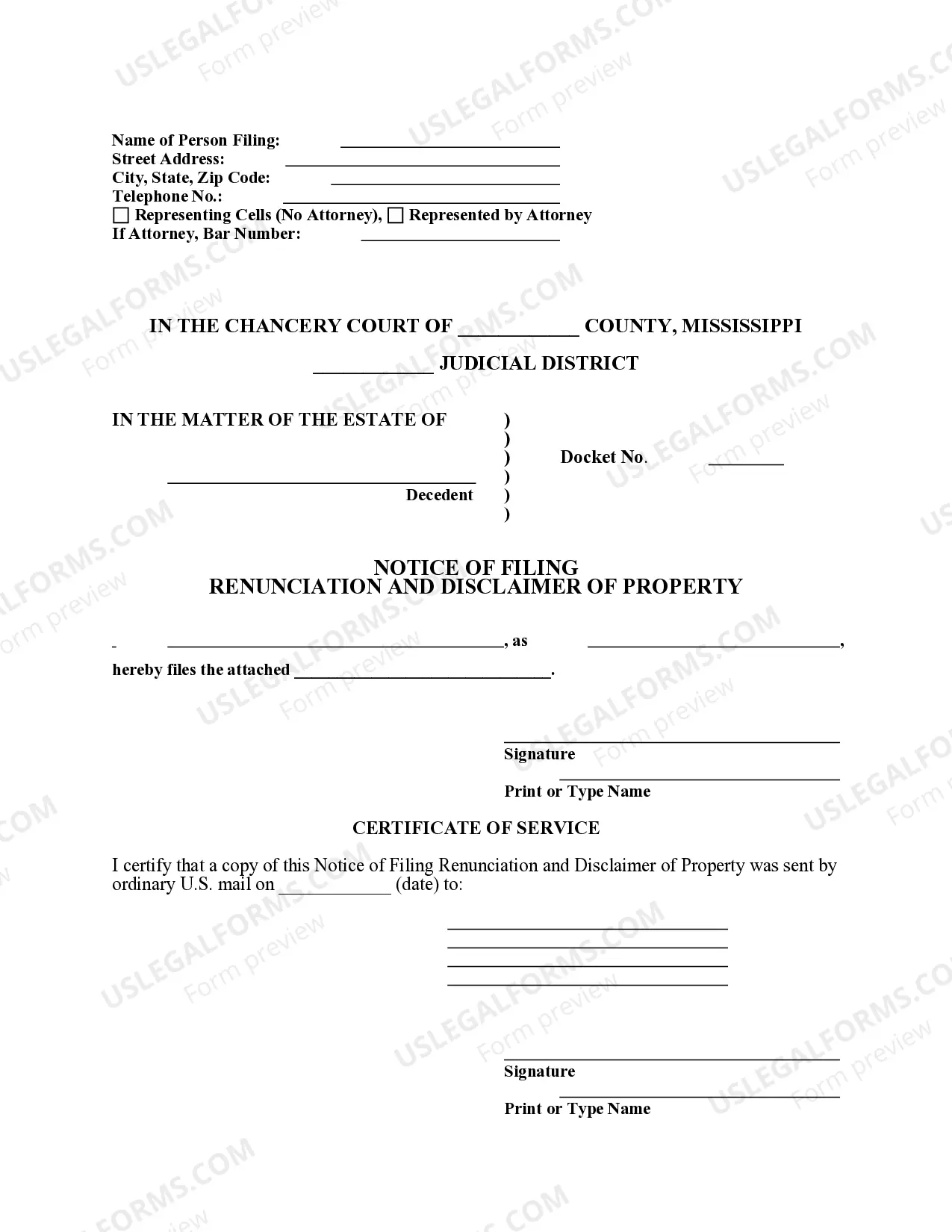
- Certificate of delivery verification.

Situations where this form applies
This form should be used when a beneficiary has inherited property from a decedent but decides to legally refuse that inheritance. For example, if the beneficiary wishes to decline an IRA or bond due to financial or personal reasons, this form must be executed and filed to ensure the disclaimer is valid. Itâs also relevant in situations where a beneficiary seeks to transfer their interest to another party.
Who can use this document
Eligibility for using the Mississippi Renunciation and Disclaimer of Property includes:
- Beneficiaries of IRAs, annuities, or bonds who are considering renouncing their inherited rights.
- Individuals who have received non-testamentary property due to the death of a decedent.
- Legal representatives managing an estate on behalf of a beneficiary.
How to complete this form
- Begin by filling in your information as the beneficiary and the details of the decedent.
- Clearly identify the property that you are disclaiming.
- Complete the declaration section, stating your intention to disclaim the property.
- Sign and date the form, ensuring to do so within nine months of the decedent's death.
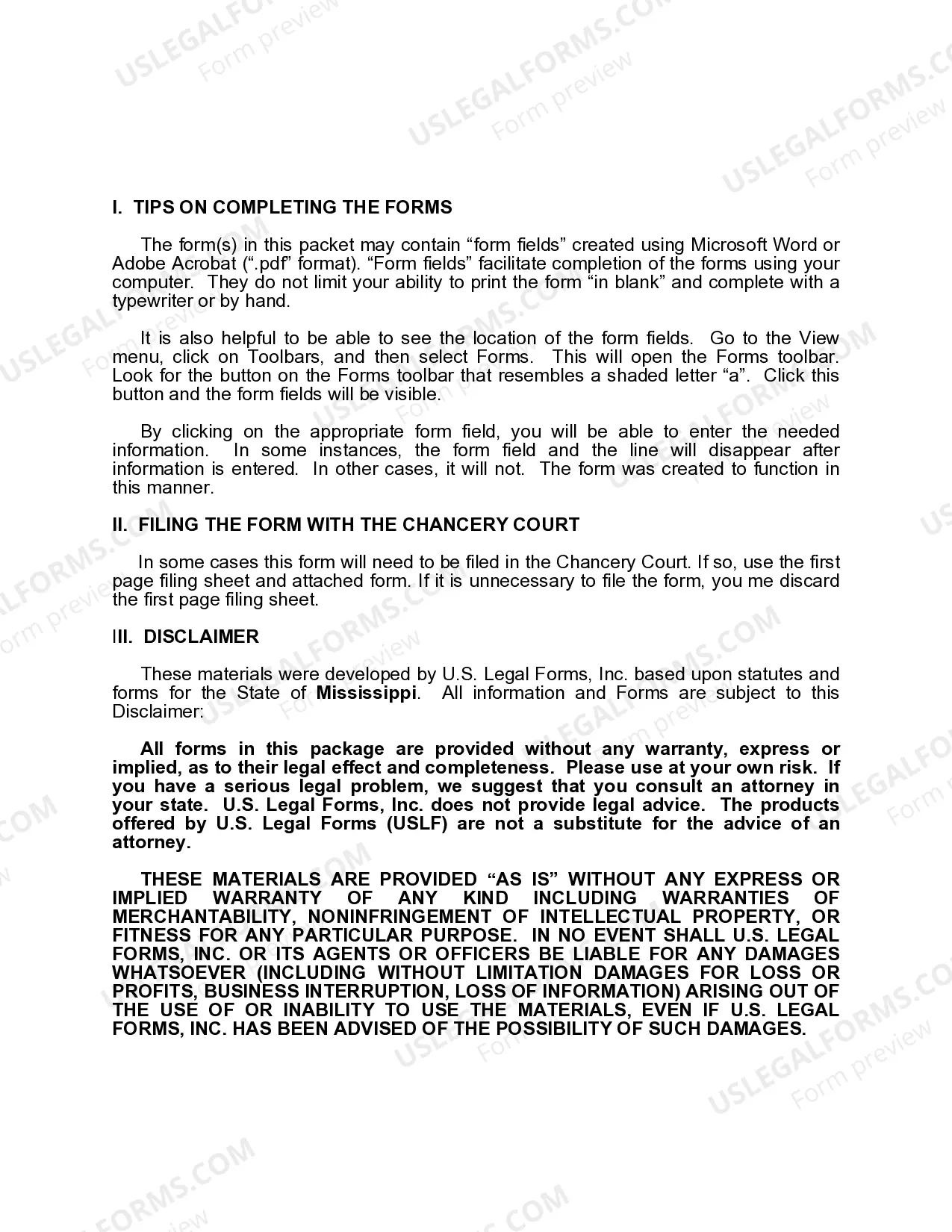
- If necessary, prepare the first page filing sheet for submission to the Chancery Court.
Does this form need to be notarized?
This form does not typically require notarization unless specified by local law. Always check local regulations to confirm requirements.
Get your form ready online
Our built-in tools help you complete, sign, share, and store your documents in one place.
Make edits, fill in missing information, and update formatting in US Legal Forms—just like you would in MS Word.
Download a copy, print it, send it by email, or mail it via USPS—whatever works best for your next step.
Sign and collect signatures with our SignNow integration. Send to multiple recipients, set reminders, and more. Go Premium to unlock E-Sign.
If this form requires notarization, complete it online through a secure video call—no need to meet a notary in person or wait for an appointment.
We protect your documents and personal data by following strict security and privacy standards.

Make edits, fill in missing information, and update formatting in US Legal Forms—just like you would in MS Word.

Download a copy, print it, send it by email, or mail it via USPS—whatever works best for your next step.

Sign and collect signatures with our SignNow integration. Send to multiple recipients, set reminders, and more. Go Premium to unlock E-Sign.

If this form requires notarization, complete it online through a secure video call—no need to meet a notary in person or wait for an appointment.

We protect your documents and personal data by following strict security and privacy standards.
Common mistakes
- Failing to file the disclaimer within the nine-month deadline.
- Not providing complete and accurate information about the property.
- Omitting to include the state-specific acknowledgment.
- Neglecting to sign or date the form.
Why complete this form online
- Convenience of completing the form at your own pace from any location.
- Editability allows for easy updates and corrections before finalizing.
- Access to reliable templates drafted by licensed attorneys ensures legal compliance.
Main things to remember
- The Mississippi Renunciation and Disclaimer of Property allows beneficiaries to formally refuse inherited property.
- It must be filed within nine months of the decedent's death to be valid.
- Eligible users include beneficiaries and personal representatives handling such disclaims.
Looking for another form?
Form popularity
FAQ
Yes, a fiduciary can disclaim an interest in property if the will, trust or power of attorney gives the fiduciary that authority or if the appropriate probate court authorizes the disclaimer.The primary reason an executor or trustee might disclaim property passing to an estate or trust is to save death taxes.
A disclaimer trust is a clause typically included in a person's will that establishes a trust upon their death, subject to certain specifications. This allows certain assets to be moved into the trust by the surviving spouse without being subject to taxation.
It must be in writing. It must be made within 9 months of the date of death of the decedent. The disclaimant cannot receive any benefits from the assets.
A qualified disclaimer is a part of the U.S. tax code that allows estate assets to pass to a beneficiary without being subject to income tax. Legally, the disclaimer portrays the transfer of assets as if the intended beneficiary never actually received them.
Inherited assets can be disclaimed.When one disclaims an asset, the asset passes as though the beneficiary had died prior to the date of the benefactor's passing. For instance, in the case of an IRA it is pretty simple. If you disclaim all or a part of the IRA, the funds pass on based on the beneficiary designation.
1a : a denial or disavowal of legal claim : relinquishment of or formal refusal to accept an interest or estate. b : a writing that embodies a legal disclaimer. 2a : denial, disavowal. b : repudiation.
Yes, a fiduciary can disclaim an interest in property if the will, trust or power of attorney gives the fiduciary that authority or if the appropriate probate court authorizes the disclaimer.The primary reason an executor or trustee might disclaim property passing to an estate or trust is to save death taxes.
Put the disclaimer in writing. Deliver the disclaimer to the person in control of the estate usually the executor or trustee. Complete the disclaimer within nine months of the death of the person leaving the property. Do not accept any benefit from the property you're disclaiming.