Mississippi Memorandum of Tenancy-In-Common Agreement
Understanding this form
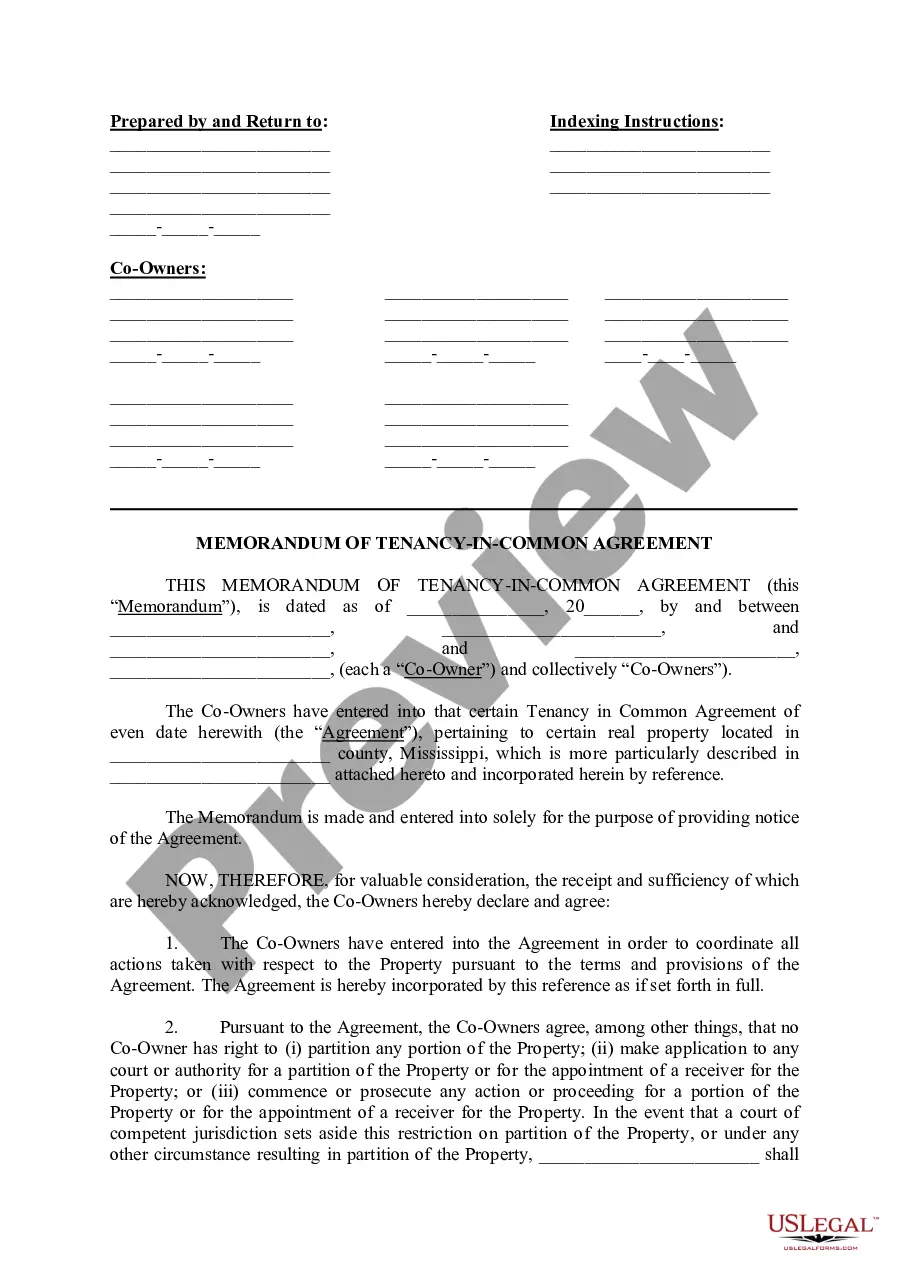
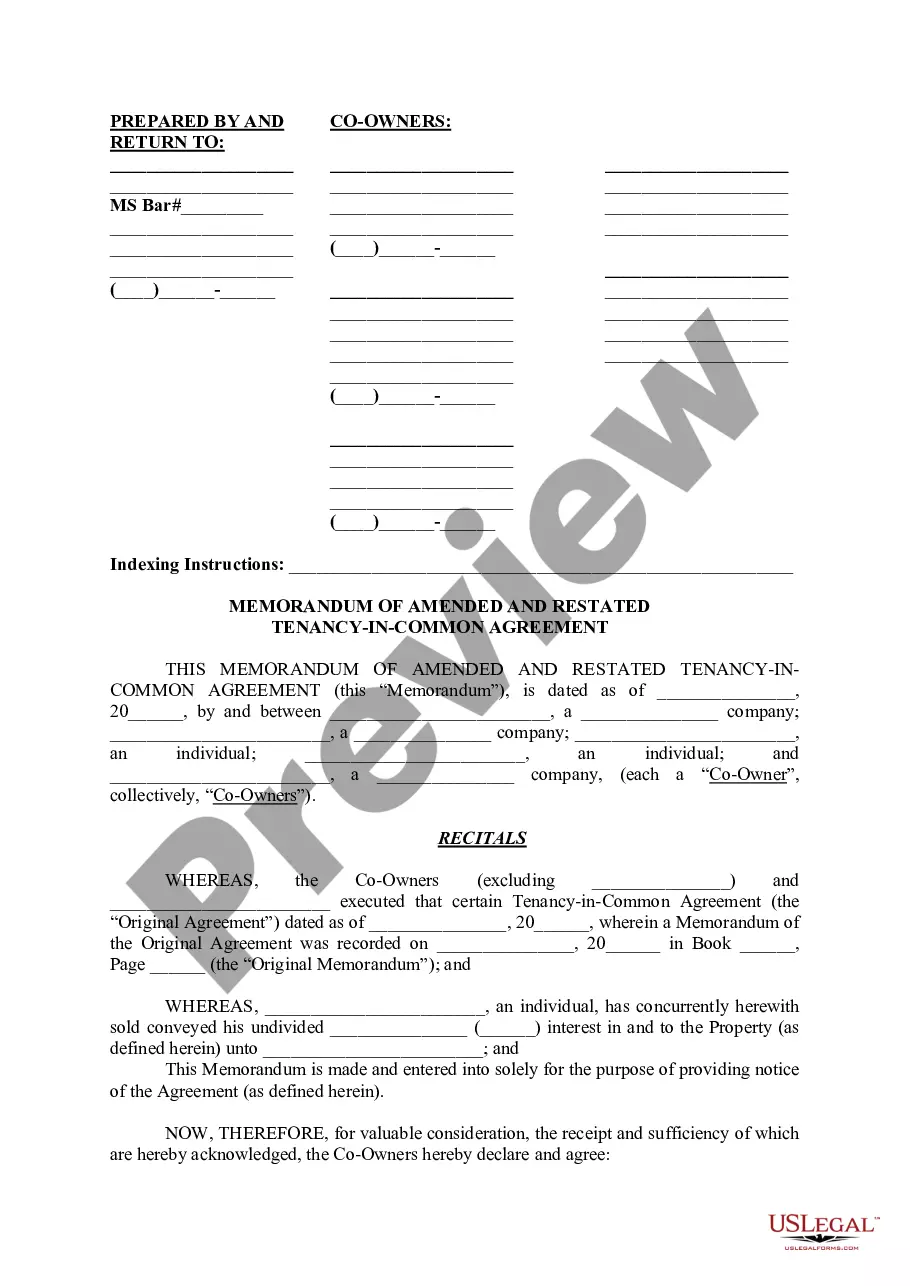
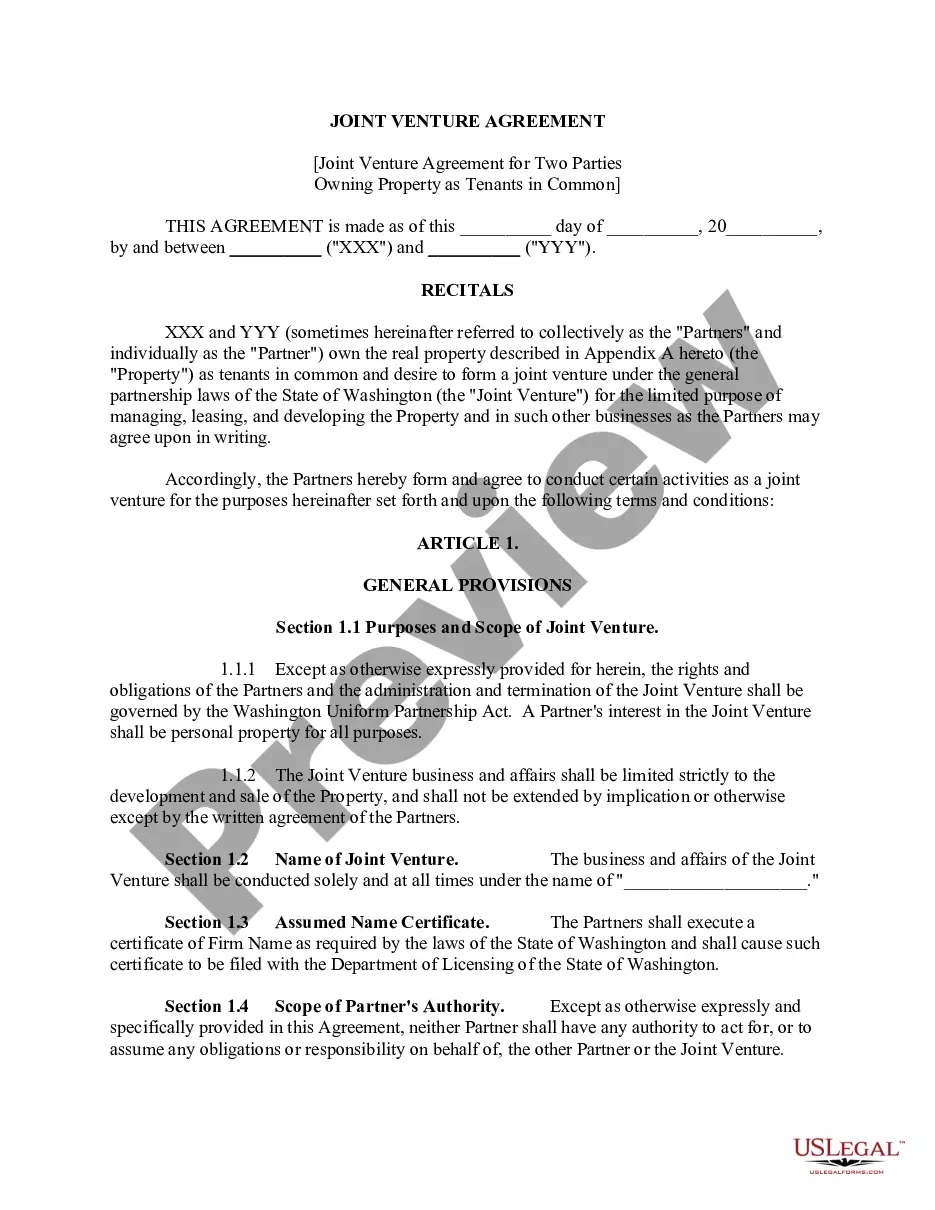
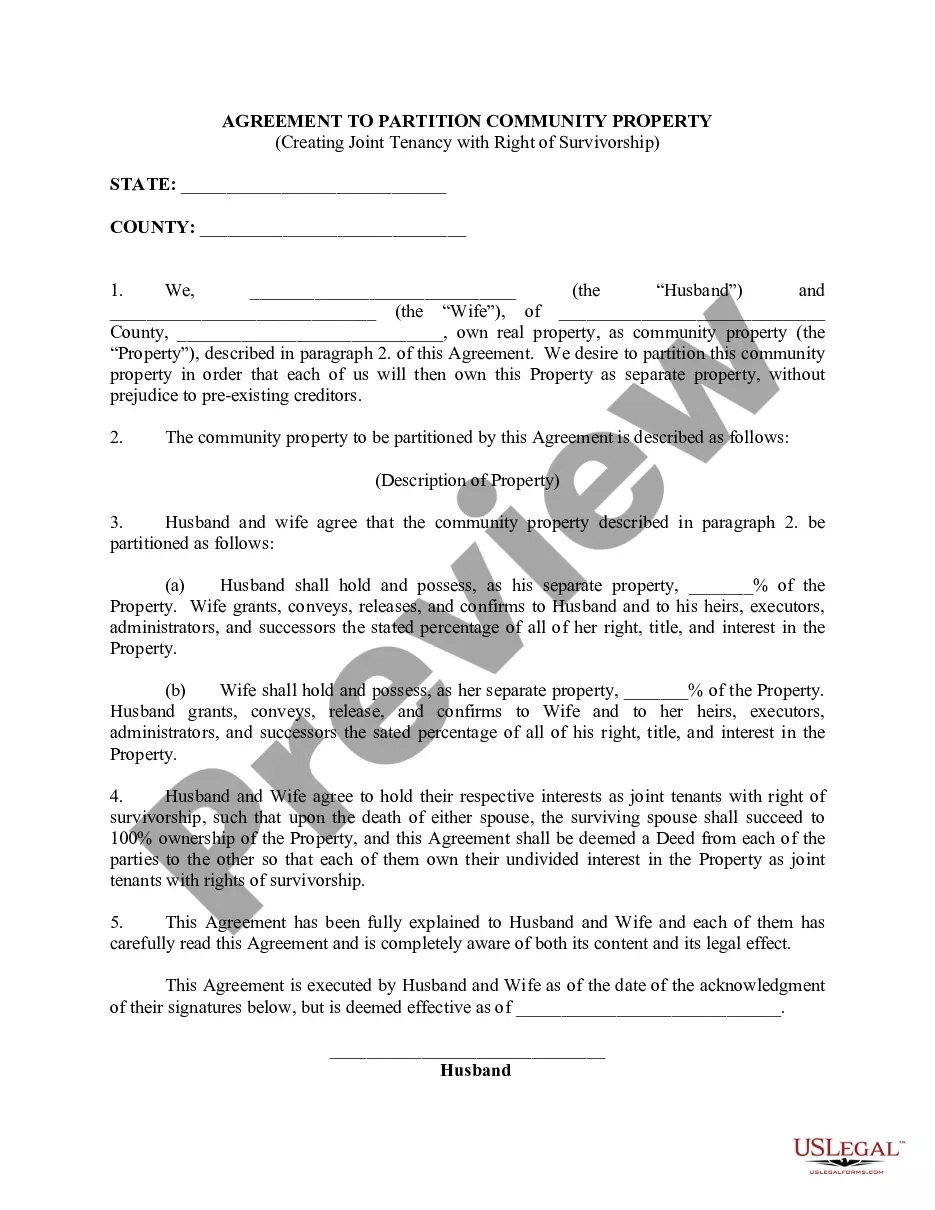
The Memorandum of Tenancy-In-Common Agreement is a legal document that outlines the terms under which multiple individuals, known as co-owners, hold ownership of a property as tenants in common. Unlike joint tenants, tenants in common can own unequal shares and have the option to transfer or will their shares independently. This memorandum serves as a notice of the underlying agreement between co-owners regarding the property, ensuring clarity in ownership rights and responsibilities.
Form components explained
- Identification of the co-owners involved in the agreement.
- Details of the real property being co-owned.
- Incorporation of the Tenancy in Common Agreement.
- Restrictions on partition rights of the property.
- Procedures for handling a defaulting co-owner.
- Notarization sections for legal validation.


When to use this document
This form should be used when individuals co-own property and want to formalize their agreement regarding shared ownership and responsibilities. It is particularly important when ensuring that all co-owners agree on the terms of property use, management, and potential sale or division in the event of a dispute or default. This memorandum is also useful for establishing clear rights among co-owners to prevent misunderstandings in the future.
Who needs this form
- Individuals who are co-owners of real estate property.
- Parties entering into a tenant-in-common agreement.
- Co-owners who want to clarify their ownership rights and responsibilities.
- Real estate investors sharing property ownership.
- Parties looking to avoid future disputes regarding property management or partitioning.
How to complete this form
- Identify all co-owners by full legal names.
- Specify the property address and any legal descriptions necessary.
- Fill in the date of the agreement and any relevant details.
- Incorporate the terms from the Tenancy in Common Agreement, including rights and obligations.
- Prepare for notarization by signing in front of a notary public.
Notarization requirements for this form
Yes, this form must be notarized to be legally valid. Notarization provides an additional layer of authenticity and ensures that the identities of the parties involved are verified. US Legal Forms offers integrated online notarization for your convenience, available 24/7 through secure video calls, eliminating the need for travel.
Get your form ready online
Our built-in tools help you complete, sign, share, and store your documents in one place.
Make edits, fill in missing information, and update formatting in US Legal Forms—just like you would in MS Word.
Download a copy, print it, send it by email, or mail it via USPS—whatever works best for your next step.
Sign and collect signatures with our SignNow integration. Send to multiple recipients, set reminders, and more. Go Premium to unlock E-Sign.
If this form requires notarization, complete it online through a secure video call—no need to meet a notary in person or wait for an appointment.
We protect your documents and personal data by following strict security and privacy standards.

Make edits, fill in missing information, and update formatting in US Legal Forms—just like you would in MS Word.

Download a copy, print it, send it by email, or mail it via USPS—whatever works best for your next step.

Sign and collect signatures with our SignNow integration. Send to multiple recipients, set reminders, and more. Go Premium to unlock E-Sign.

If this form requires notarization, complete it online through a secure video call—no need to meet a notary in person or wait for an appointment.

We protect your documents and personal data by following strict security and privacy standards.
Avoid these common issues
- Failing to include all co-owners' names, which can lead to disputes in ownership.
- Not providing a complete property description, which may render the agreement ineffective.
- Overlooking the requirement for notarization, making the document invalid.
- Neglecting to review the terms of the underlying tenancy in common agreement.
Benefits of completing this form online
- Convenient access to legally drafted templates available for instant download.
- Editability allows for customization to meet your specific needs.
- Reliability of using forms created by licensed attorneys, ensuring legal compliance.
- Time-saving as you can complete and sign documents from the comfort of your home.
Looking for another form?
Form popularity
FAQ
Tenancy in common is a form of ownership of real property in which each co-owner owns a separate, distinct share of the property as a whole.For example, Fred may obtain his interest in the property several years after John. For example: Jessica and Marie purchase a house together for a purchase price of $200,000.
You may agree with your other co-tenant(s) to sever it. If you cannot agree on how to divide the property, you may terminate your tenancy in common by seeking judicial partition of the property.
Tenancy in common is an arrangement where two or more people share ownership rights in a property or parcel of land.When a tenant in common dies, the property passes to that tenant's estate. Each independent owner may control an equal or different percentage of the total property.
If a home is owned by only one person then it is not registered with the Land Registry as either Joint Tenants or Tenants in Common. It is registered as a Sole Owner, you can only be a joint tenant or tenant in common if there is more than one owner of the property.
A tenant without a written contract is still entitled to all the statutory rights a regular tenant with a contract is, including water, heating, a safe environment etc. In a similar vein, the tenant is still obligated to pay rent on time and take reasonable care of the property.
If one person passes away, the home will automatically continue to be owned by the surviving partner, even if there is no will. This is known as the survivorship rule. However, many couples choose to hold their homes as tenants in common.
Rights And Responsibilities All tenants in common have an equal right of access to the property, regardless of their ownership amount. If the property produces an income, co-owners are entitled to a percentage of that income equal to their ownership shares.
The Title Register Document will show the names of the people that own the property and, if you are tenants in common will also have wording similar to: "No disposition by a sole proprietor of the registered estate (except a trust corporation) under which capital money arises is to be registered unless authorised by an
Although tenants in common can make a written agreement specifying their rights and responsibilities in the property, they are not legally required to do so. State law specifies the legal principles that apply to tenants in common when there is no written agreement.