Mississippi Memorandum of Amended and Restated Tenancy-In-Common Agreement
Description
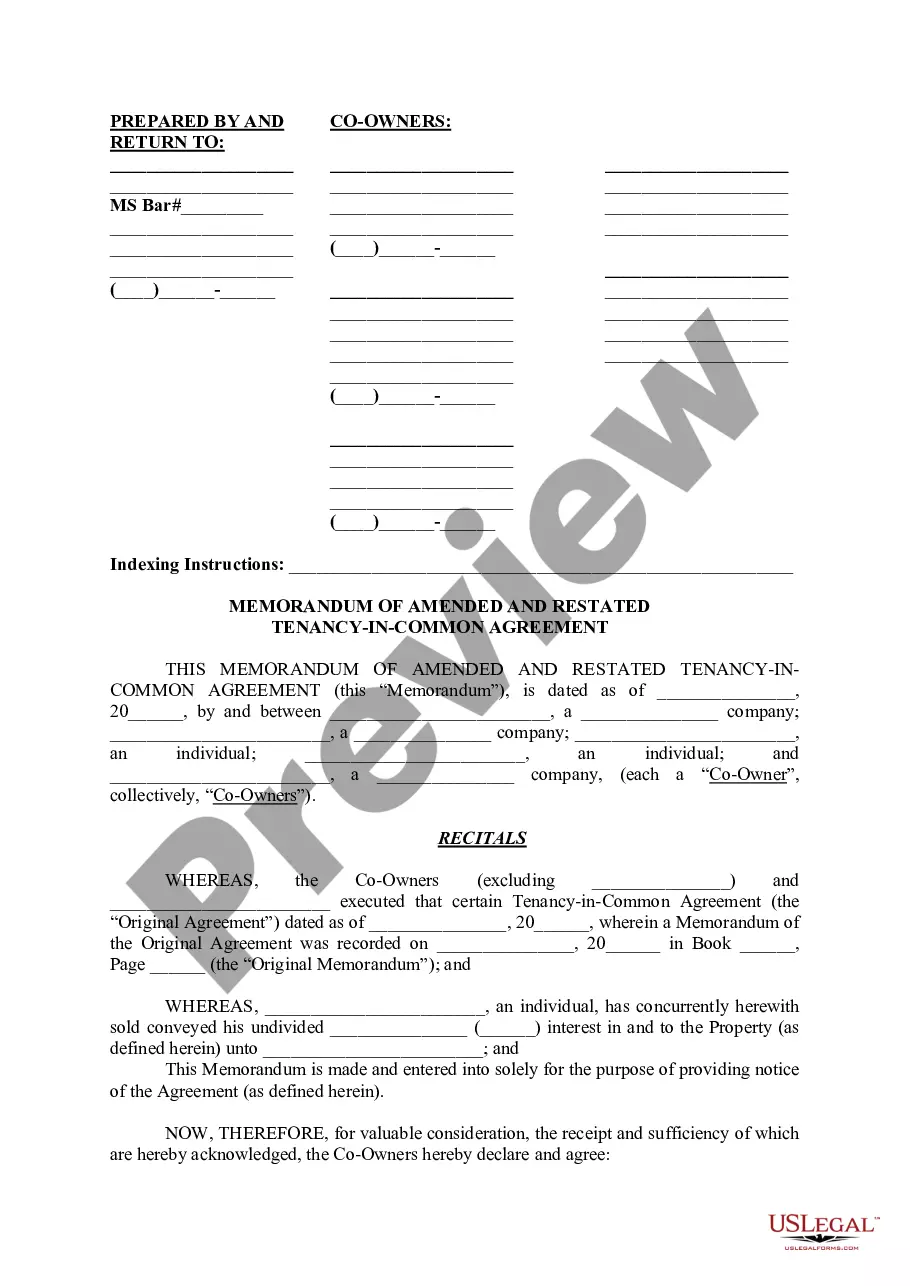
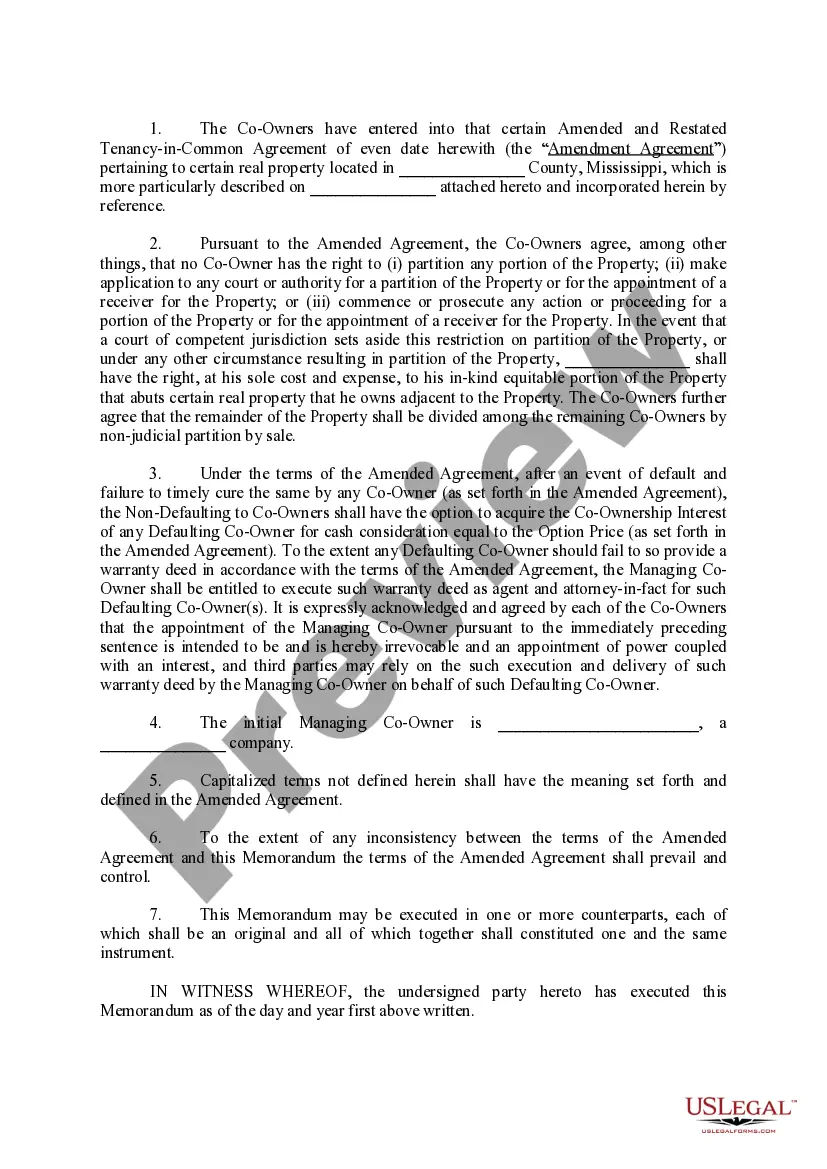
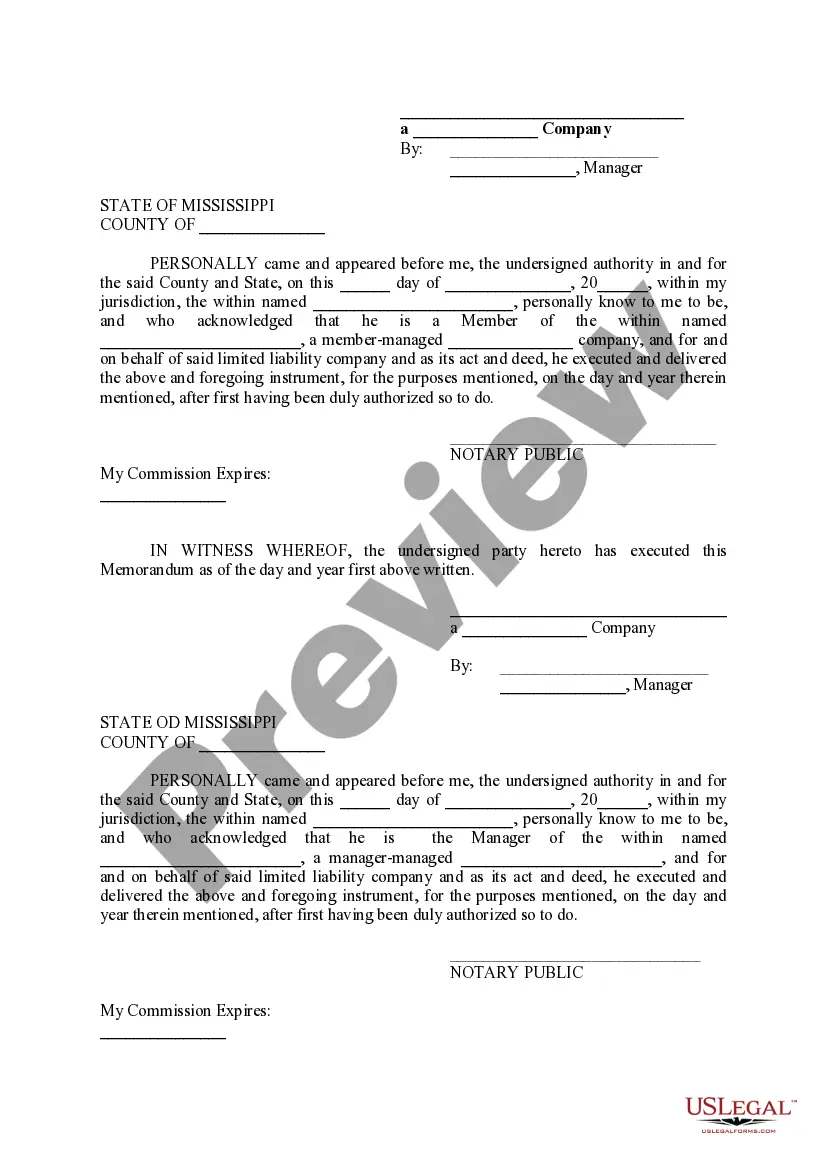
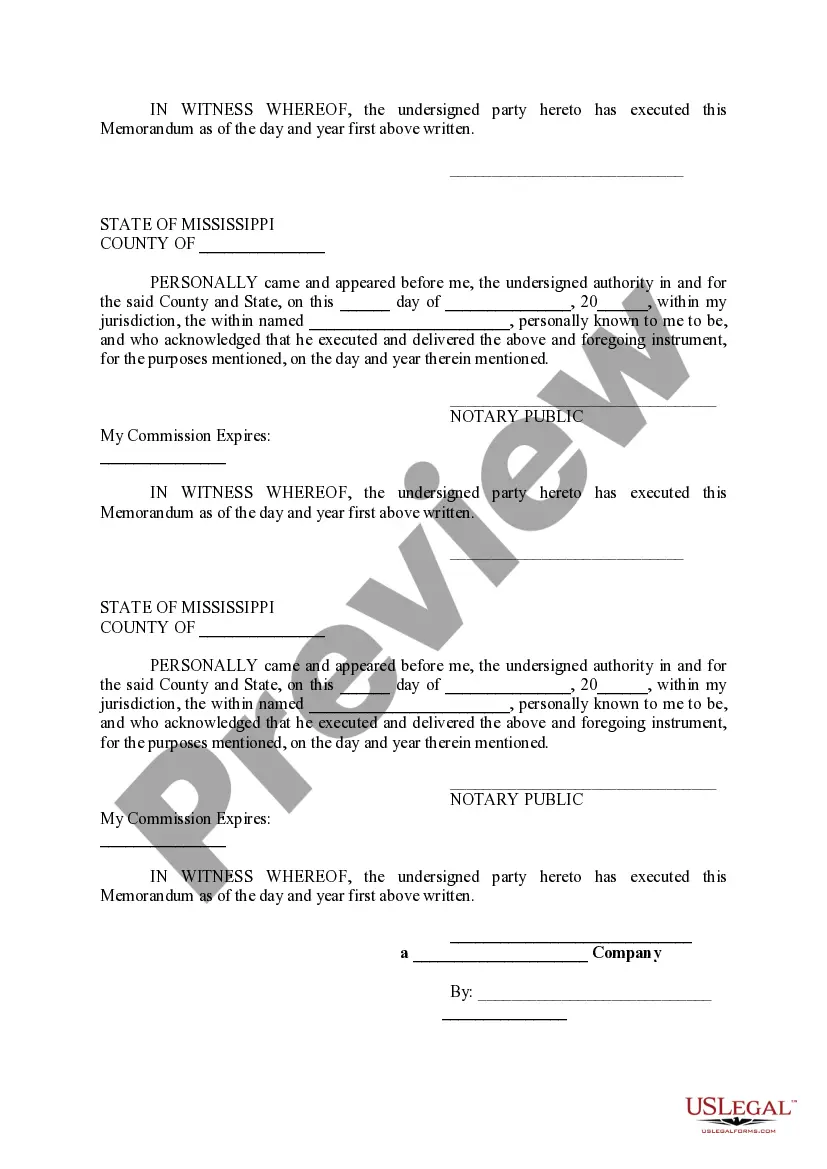
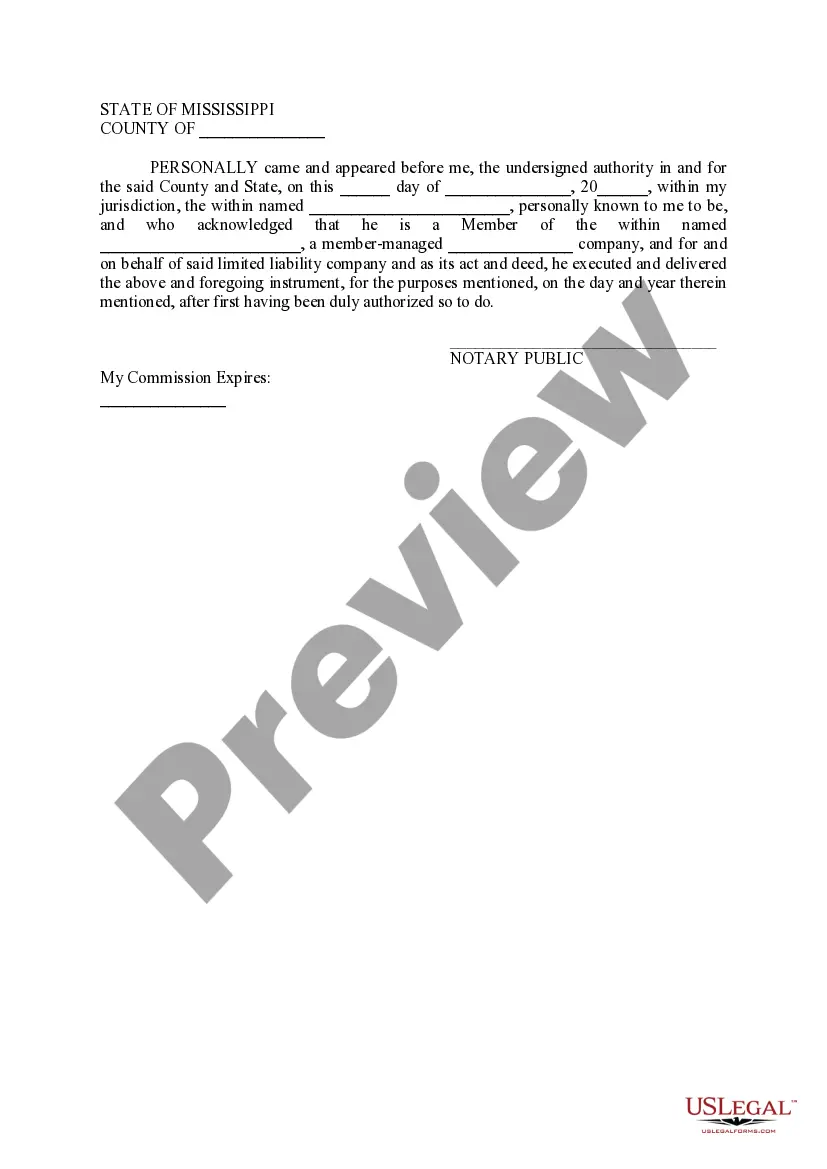
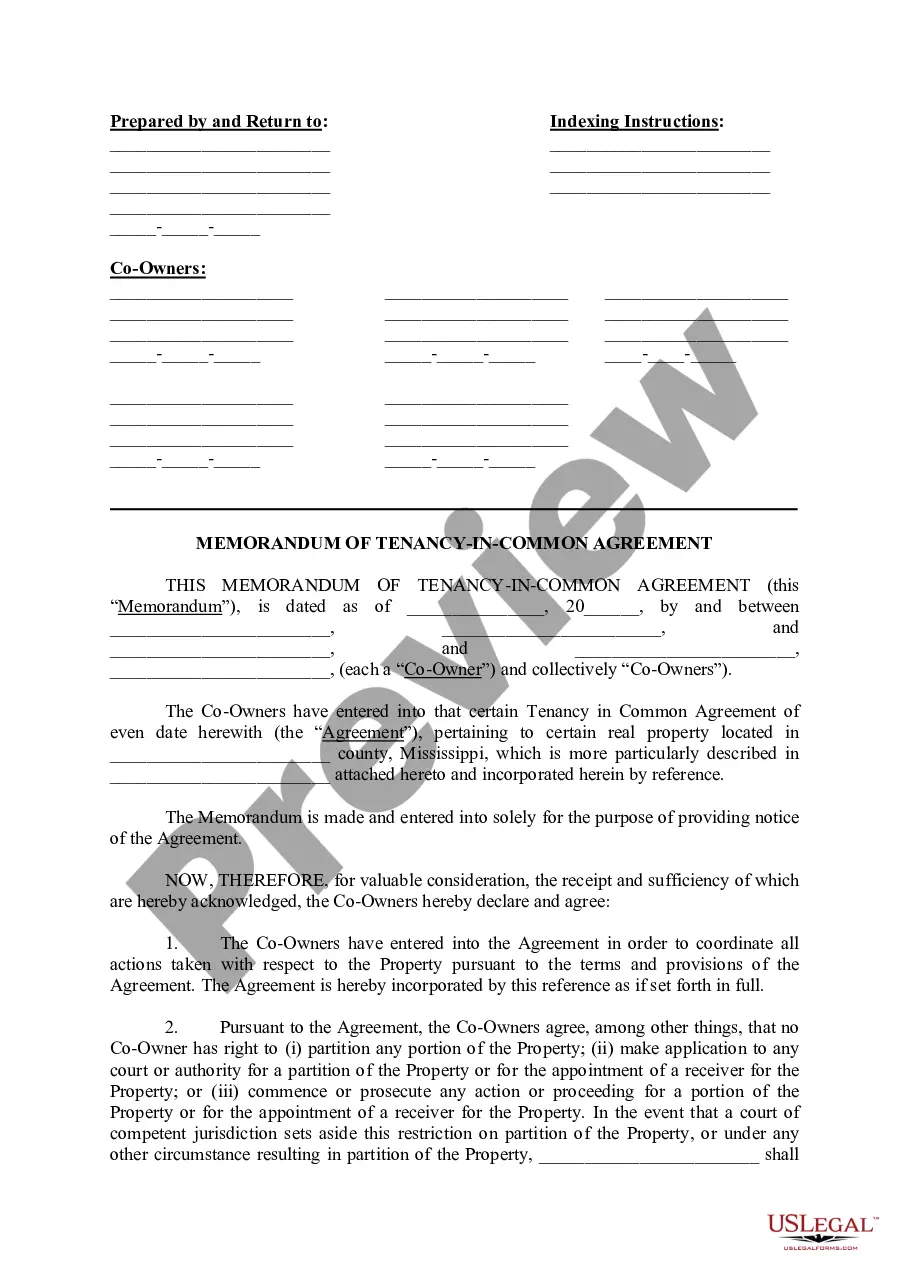

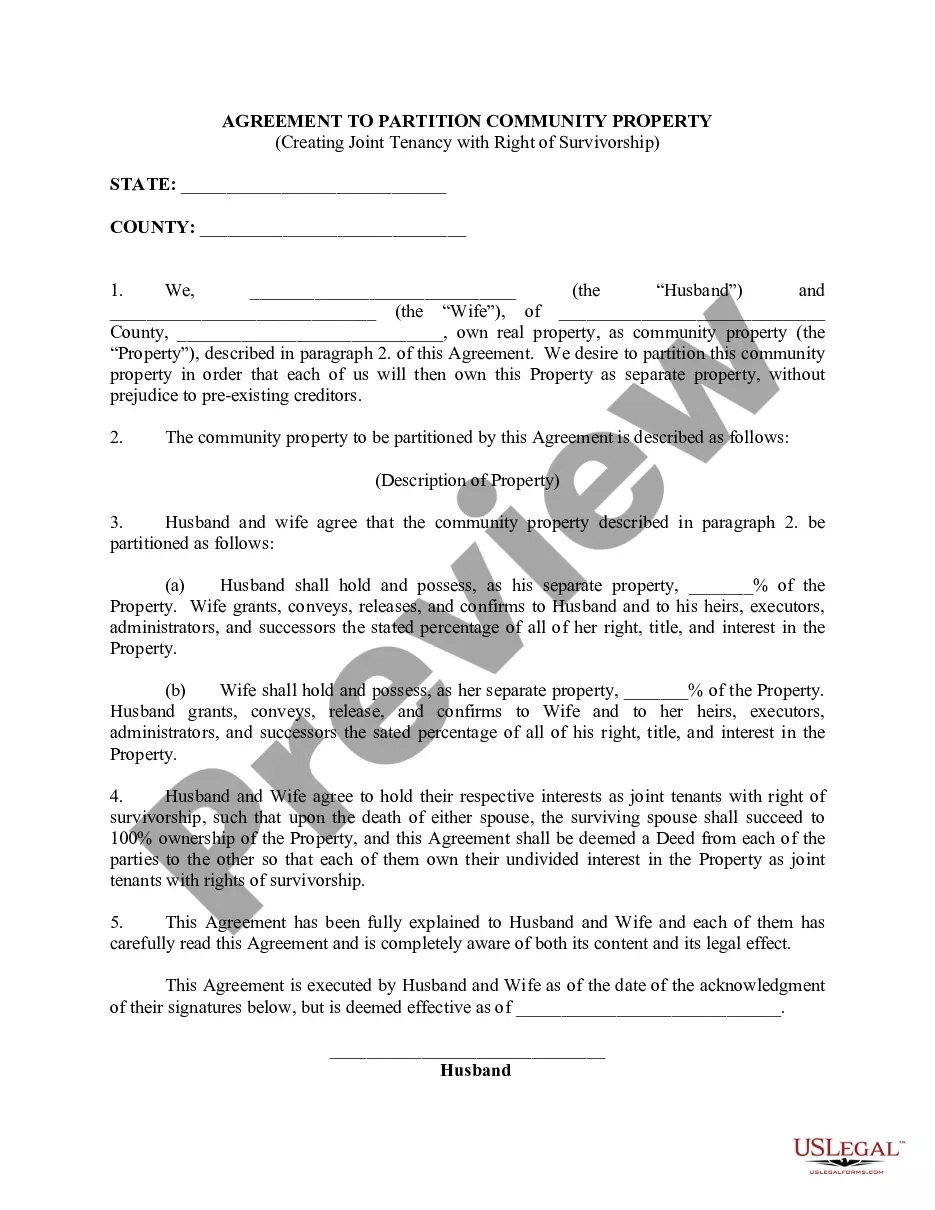
How to fill out Mississippi Memorandum Of Amended And Restated Tenancy-In-Common Agreement?
Acquire a printable Mississippi Memorandum of Amended and Restated Tenancy-In-Common Agreement with just a few clicks from the most comprehensive collection of legal e-forms.
Discover, download, and print out expertly crafted and certified samples on the US Legal Forms website. Since 1997, US Legal Forms has been the leading provider of affordable legal and tax forms for US citizens and residents online.
After you have downloaded your Mississippi Memorandum of Amended and Restated Tenancy-In-Common Agreement, you can either fill it out using any online editor or print it and complete it manually. Utilize US Legal Forms to access 85,000 professionally drafted, state-specific documents.
- Customers with an existing subscription need to Log In to their US Legal Forms account and download the Mississippi Memorandum of Amended and Restated Tenancy-In-Common Agreement found in the My documents section.
- Individuals who do not have a subscription must follow the instructions below.
- Ensure your form complies with your state's regulations.
- If available, read the form’s description for further details.
- If provided, examine the form to find more information.
- Once you are certain the template suits your needs, click on Buy Now.
- Create a personal account.
- Select a subscription plan.
- Make payment via PayPal or credit card.
- Download the form in Word or PDF format.
Form popularity
FAQ
This is called the right of survivorship. But tenants in common have no rights of survivorship. Unless the deceased individual's will specifies that his or her interest in the property is to be divided among the surviving owners, a deceased tenant in common's interest belongs to his or her estate.
With joint tenants, the death of one owner means that owner's share automatically goes to the other owners. When a tenant in common dies, their share is passed to their legal heirs.
For those who are purchasing a property with someone who is not related to them, or for investment purposes, titling as tenants in common is a good choice. When buying a dwelling with your spouse as a primary residence, joint tenancy usually makes more sense.
If you hold your property as tenants in common and wish to sell the property following the death of your partner, as the property's legal owner, you have the right to do this. You can appoint an additional trustee in place of the deceased owner to give good receipt for purchase monies and enable the sale to proceed.
Although tenants in common can make a written agreement specifying their rights and responsibilities in the property, they are not legally required to do so. State law specifies the legal principles that apply to tenants in common when there is no written agreement.
Rights And Responsibilities All tenants in common have an equal right of access to the property, regardless of their ownership amount. If the property produces an income, co-owners are entitled to a percentage of that income equal to their ownership shares.
If one person passes away, the home will automatically continue to be owned by the surviving partner, even if there is no will. This is known as the survivorship rule. However, many couples choose to hold their homes as tenants in common.
In tenancy in common, when one owner dies, the other owner does not take the property; rather, the deceased owner's heirs inherit the deceased owner's share.
For example, joint tenants must all take title simultaneously from the same deed while tenants in common can come into ownership at different times. Another difference is that joint tenants all own equal shares of the property, proportionate to the number of joint tenants involved.