Lease or Rental of Condominium Unit
What this document covers
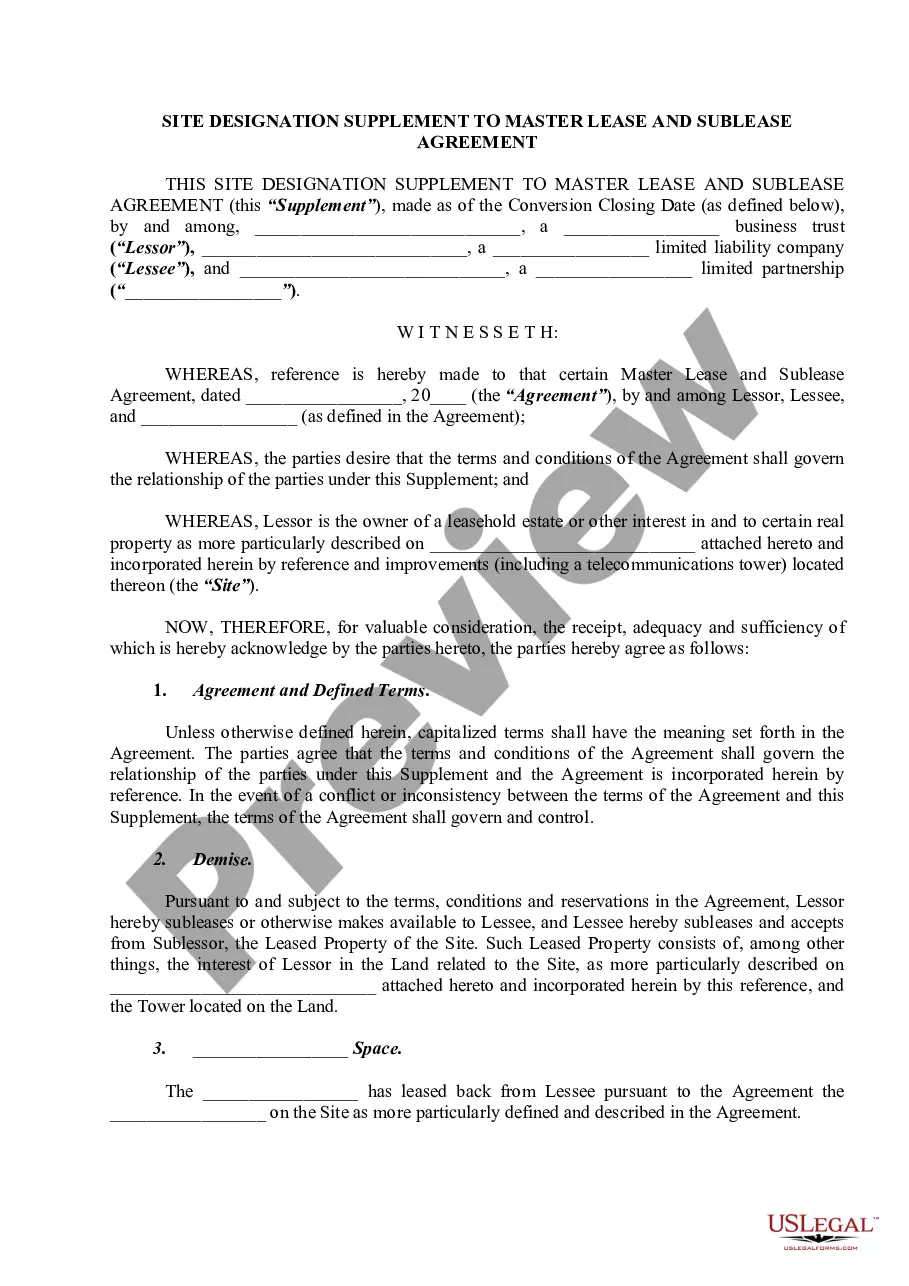
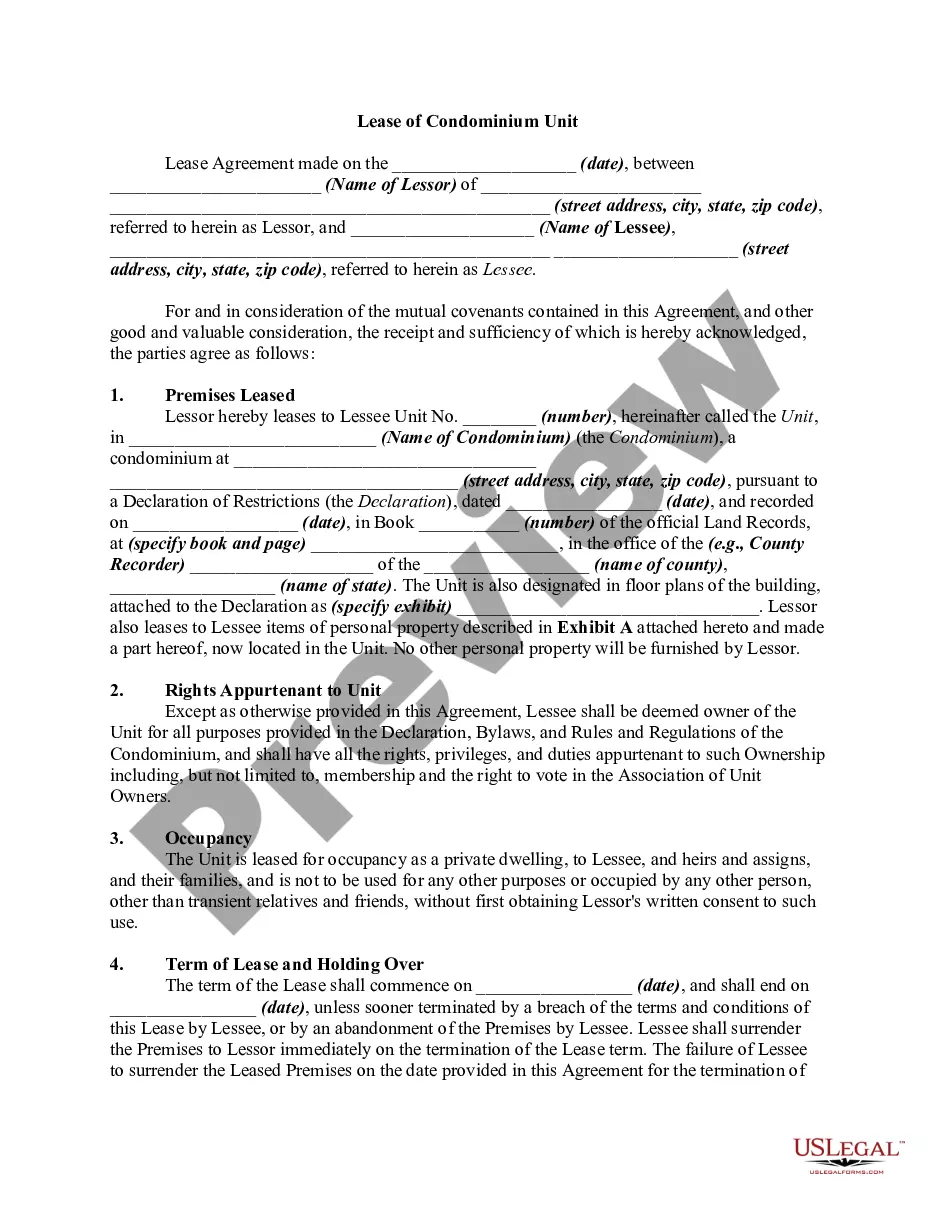
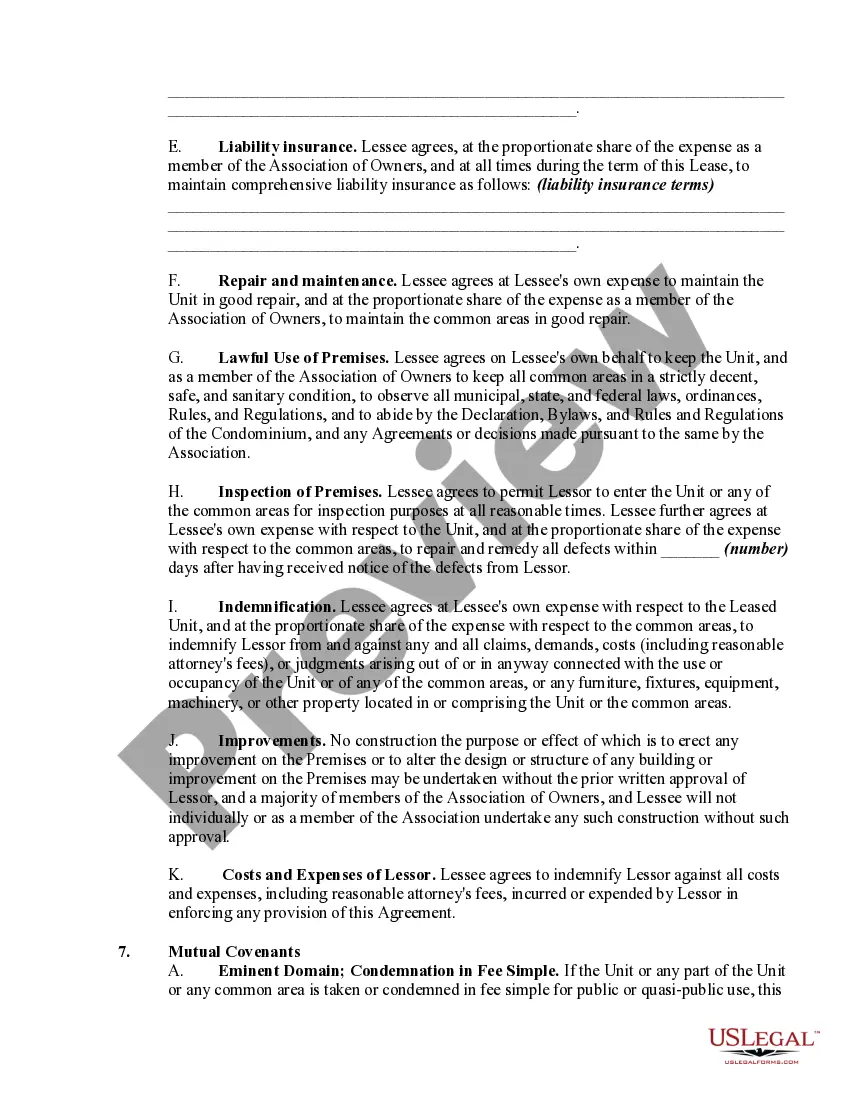
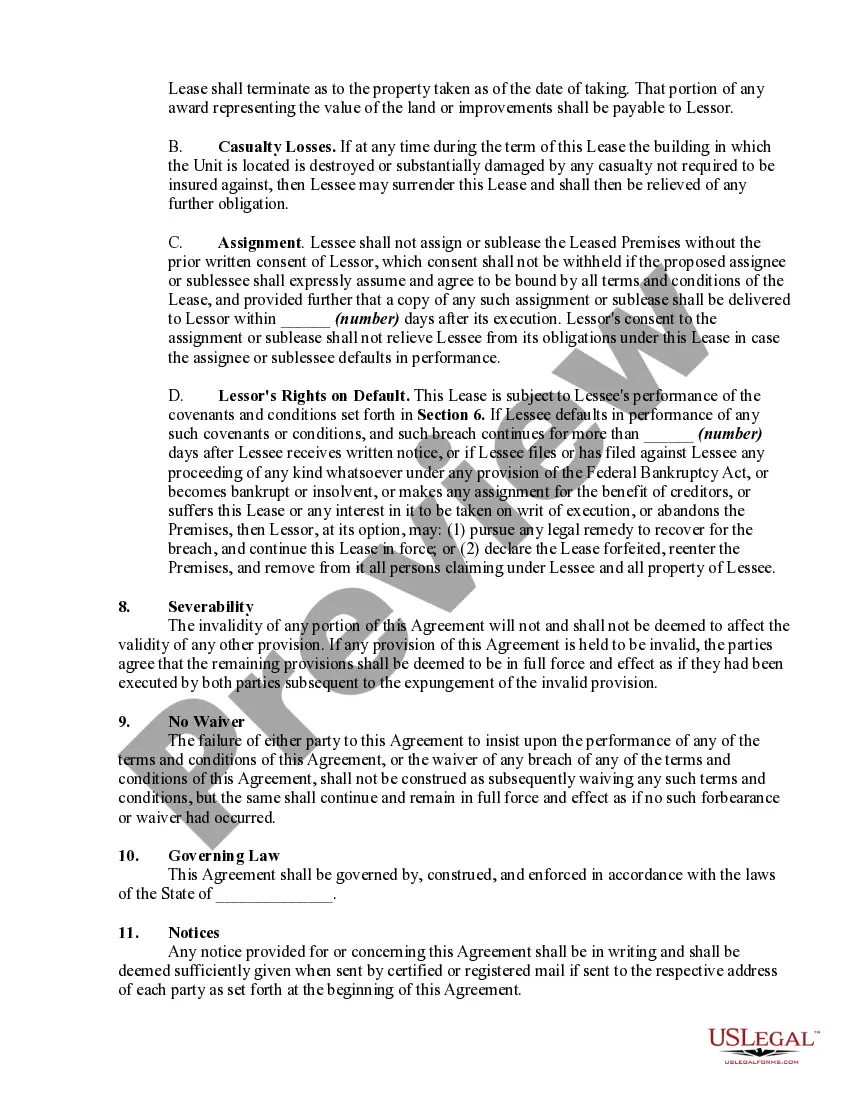
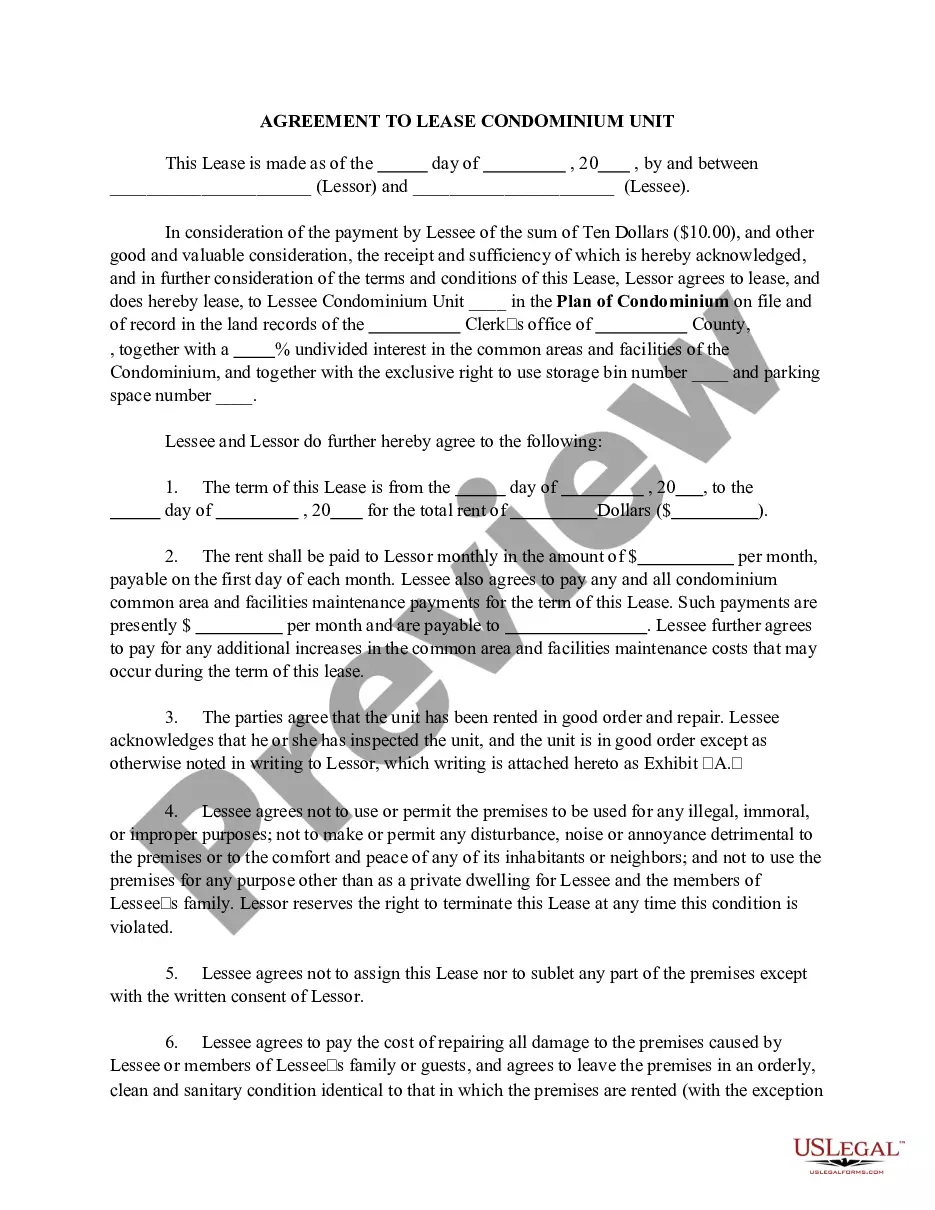
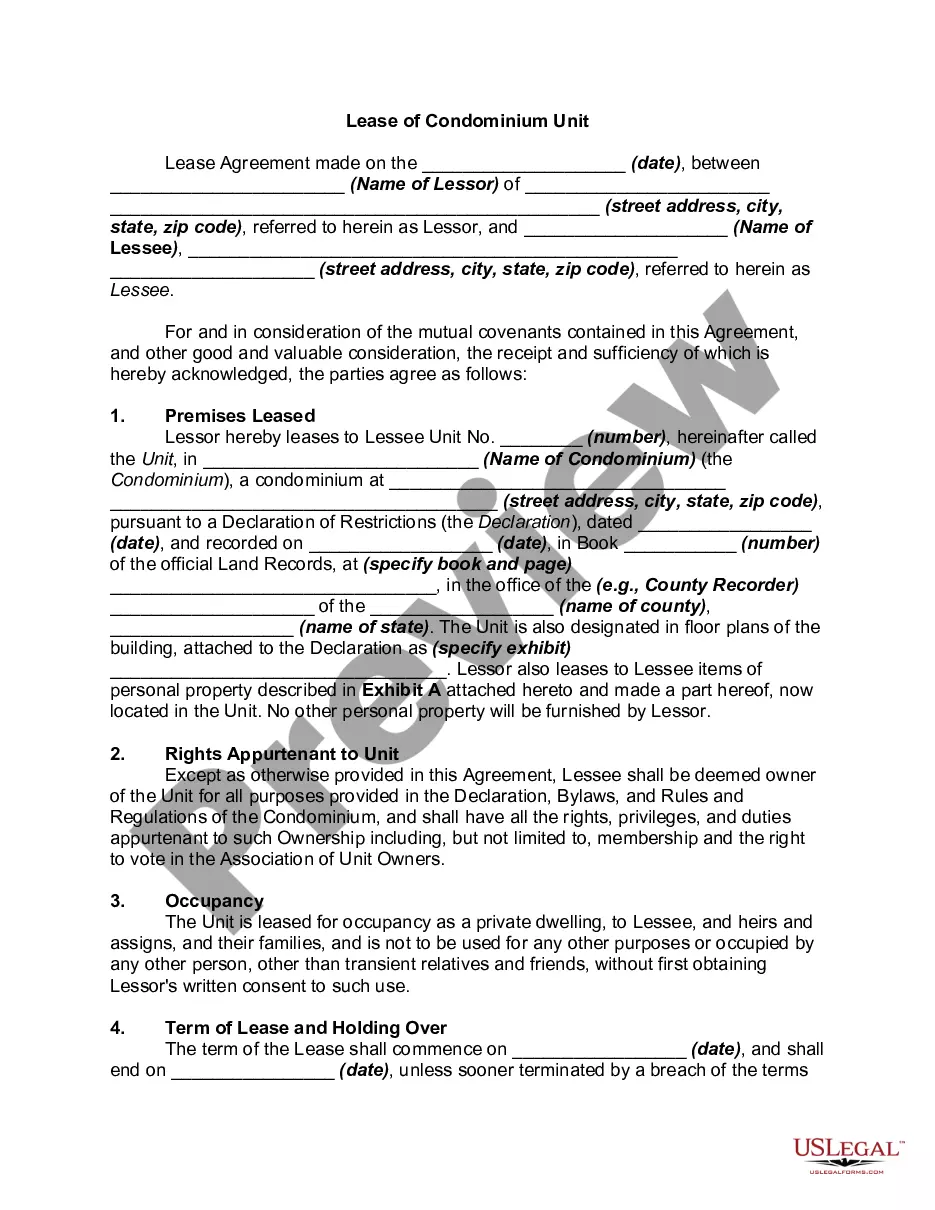
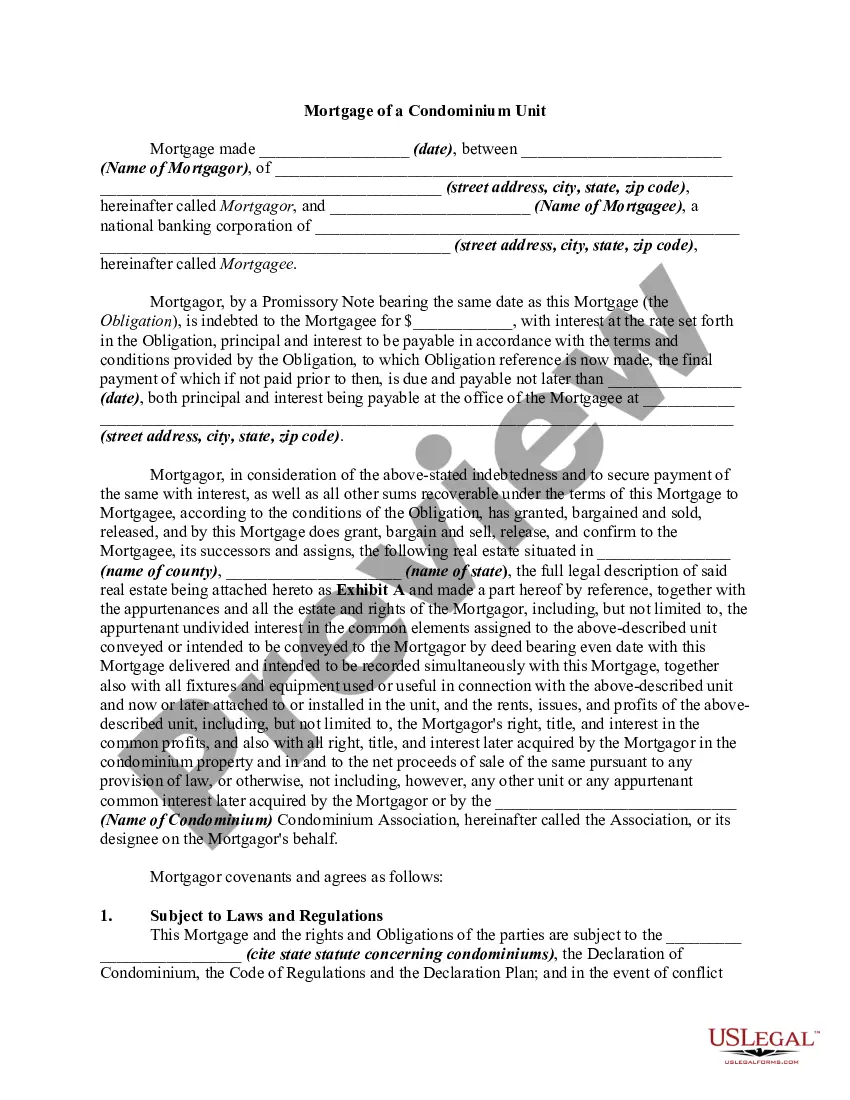
The Lease or Rental of Condominium Unit is a legal document that outlines the agreement between a lessor (owner) and lessee (tenant) for renting a specific condominium unit. This form differs from standard residential lease agreements by including provisions specific to condominiums, such as rights pertaining to shared common areas and association rules. It serves to protect both parties by clearly defining their rights and responsibilities during the lease term.
Key components of this form
- Details of the lessor and lessee, including names and addresses.
- Description of the leased condominium unit and associated common areas.
- Terms of occupancy, including allowed uses of the unit.
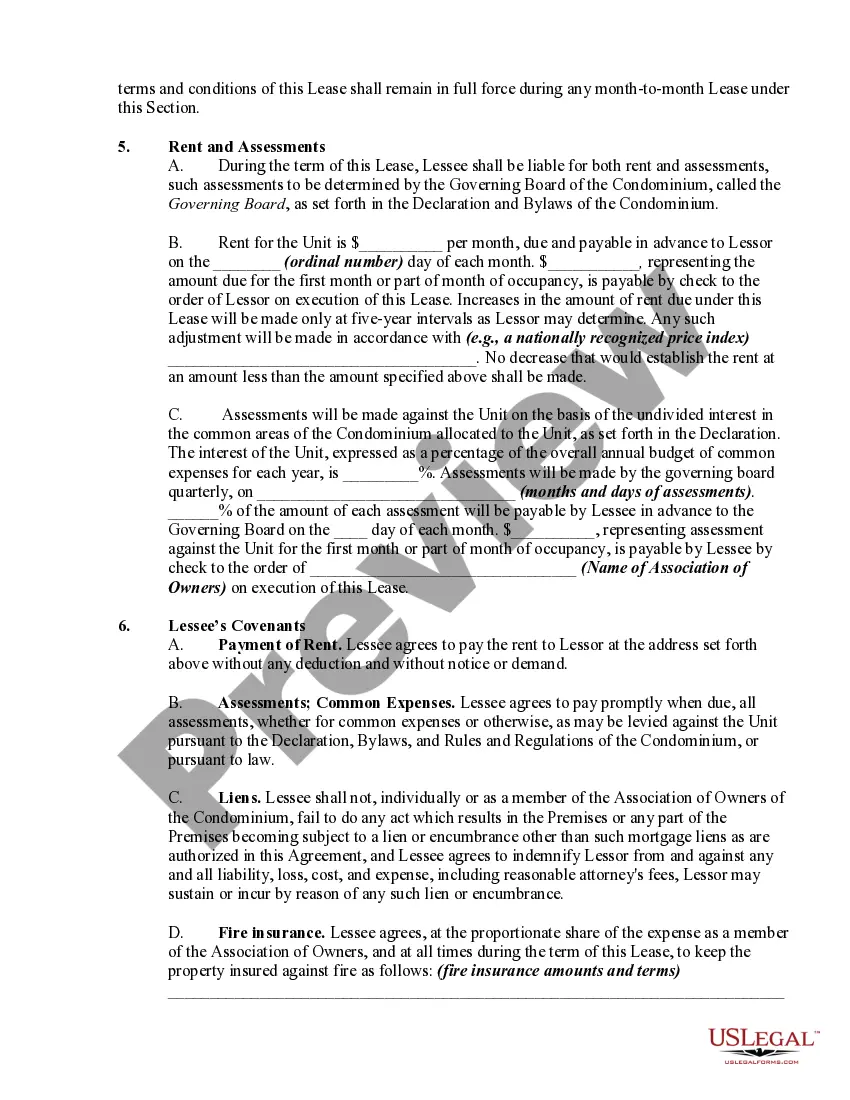
- Rent payment obligations, including amounts and due dates.
- Covenants outlining the responsibilities of the lessee regarding property upkeep and insurance.
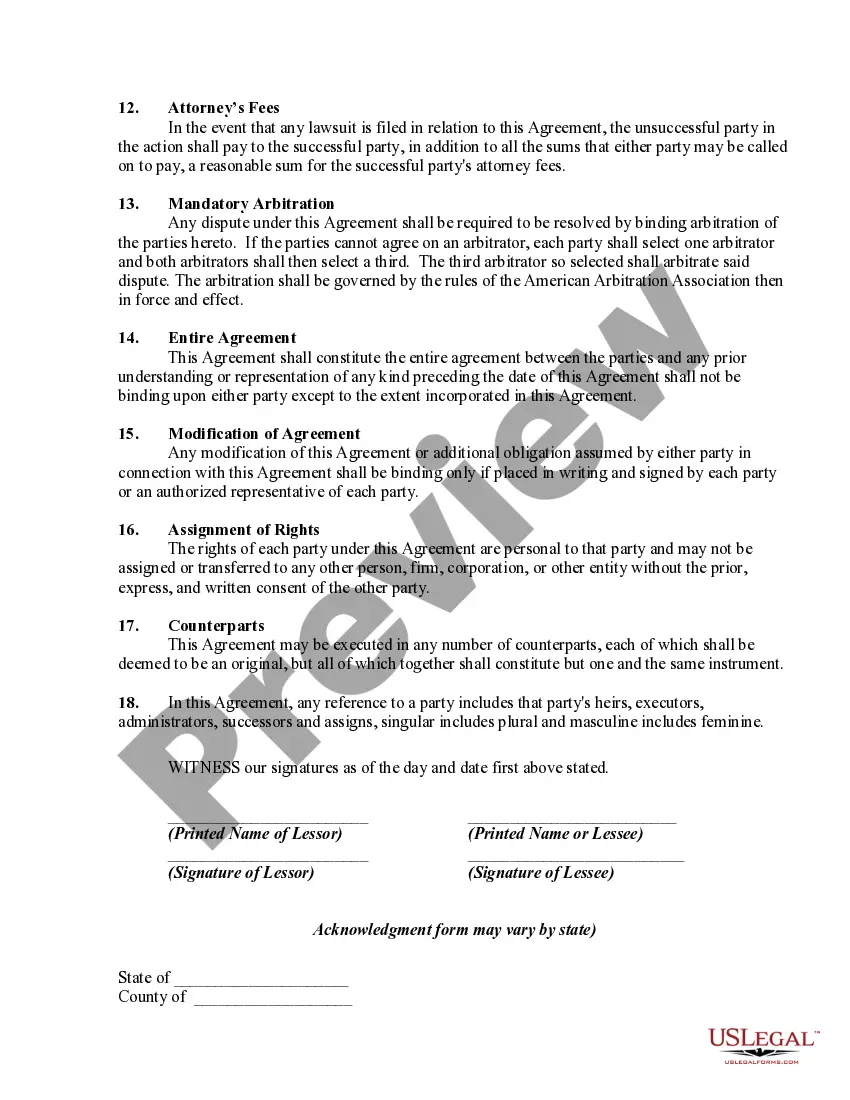
- Clauses on lease termination, assignments, and remedies for defaults.
Situations where this form applies
This form is essential for landlords and tenants entering into a lease agreement for a condominium. It should be used when: the property is a condominium, the lessor wants to specify rules governing the use of shared areas, and both parties require a clear understanding of their rights and obligations. It is particularly useful for first-time landlords or tenants who may need a structured framework for rental terms.
Who this form is for
This lease agreement is intended for:
- Condominium owners who wish to rent out their units.
- Individuals or families looking to rent a condominium unit.
- Real estate professionals managing rental properties on behalf of clients.
- Property management companies overseeing condominium rentals.
How to complete this form
- Identify and enter the names and addresses of the lessor and lessee.
- Specify the condominium unit number and its location details.
- Establish the lease term by filling in the start and end dates.
- Detail the monthly rent amount and any applicable assessments.
- Review and sign the lease agreement, ensuring both parties retain a copy.
Does this document require notarization?
To make this form legally binding, it must be notarized. Our online notarization service, powered by Notarize, lets you verify and sign documents remotely through an encrypted video session.
Get your form ready online
Our built-in tools help you complete, sign, share, and store your documents in one place.
Make edits, fill in missing information, and update formatting in US Legal Forms—just like you would in MS Word.
Download a copy, print it, send it by email, or mail it via USPS—whatever works best for your next step.
Sign and collect signatures with our SignNow integration. Send to multiple recipients, set reminders, and more. Go Premium to unlock E-Sign.
If this form requires notarization, complete it online through a secure video call—no need to meet a notary in person or wait for an appointment.
We protect your documents and personal data by following strict security and privacy standards.

Make edits, fill in missing information, and update formatting in US Legal Forms—just like you would in MS Word.

Download a copy, print it, send it by email, or mail it via USPS—whatever works best for your next step.

Sign and collect signatures with our SignNow integration. Send to multiple recipients, set reminders, and more. Go Premium to unlock E-Sign.

If this form requires notarization, complete it online through a secure video call—no need to meet a notary in person or wait for an appointment.

We protect your documents and personal data by following strict security and privacy standards.
Avoid these common issues
- Failing to specify clear terms regarding shared common areas.
- Not understanding local laws about lease agreements.
- Omitting important clauses, such as those regarding maintenance or repairs.
- Leaving blank spaces in critical sections like rent amount or lease dates.
Benefits of completing this form online
- Convenient access to professionally drafted lease agreements.
- Editability allows customization to meet specific needs.
- Time-saving process with immediate downloadable options.
- Reliability from using templates created by licensed attorneys.
Looking for another form?
Form popularity
FAQ
The main difference comes down to ownership. Condominiums are owned by individuals and rented out privately (this is your typical landlord). In contrast, apartments are generally owned by property management companies who rent and manage all the units, creating a more standard approach and leasing process.
There are many benefits to buying a condo, including their flexible sublet policies, friendliness towards foreign buyers and investors, and their tendency to appreciate in price. Another perk is that NYC condos tend to have lower monthly common charges and maintenance fees than co-ops.
The main difference between an apartment and a condo is ownership; an apartment is generally rented and a condo is owned. If major repairs are needed, condo owners may be assessed a special fee, in addition to their regular fees, to cover such costs.
Fewer maintenance and repair responsibilities. Access to on-site amenities, such as a sauna or swimming pool, which you otherwise might not be able to afford. Enhanced security features in some condominium units. You'll also have peace of mind while you're on vacation knowing that your neighbours are close by.
A condominium (condo) is a single real estate unit in a multi-unit development in which an owner has both of the following: separate (individual) ownership of a unit. undivided interest in the common elements of the building.
The biggest difference between a condo and an apartment is ownership. An apartment is defined as a residence that is rented, often as part of a larger residential building. A condo can be similar in structure to an apartment ? usually a unit within a larger residential building ? but condos are owned instead of rented.
Generally speaking, condominium owners have an individual unit within a larger complex. Townhouse owners, alternatively, may share a wall with their neighbors, but they also own the structure of the home itself and the property's surrounding land.
A condo can be similar in structure to an apartment ? usually a unit within a larger residential building ? but condos are owned instead of rented. The property taxes of a condo are paid by the owner; property taxes for an apartment are paid by landlords, not renters.