Mortgage of Condominium Unit
What this document covers
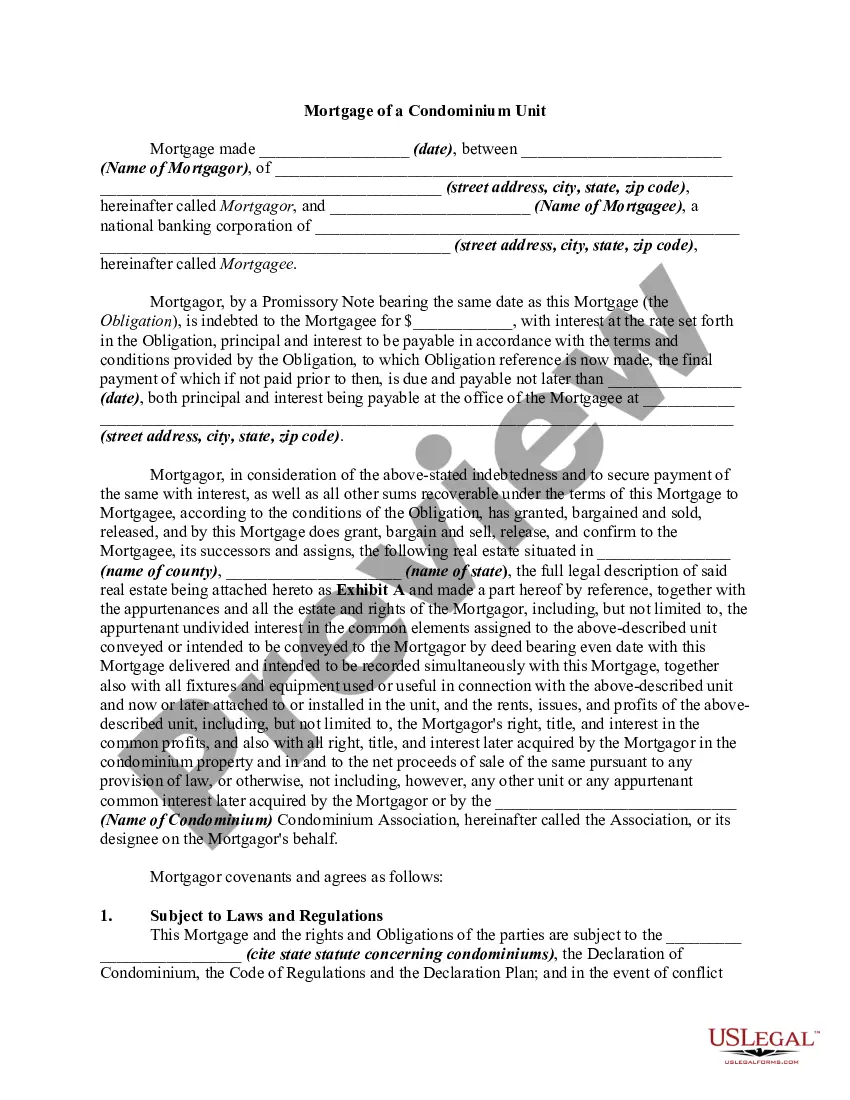
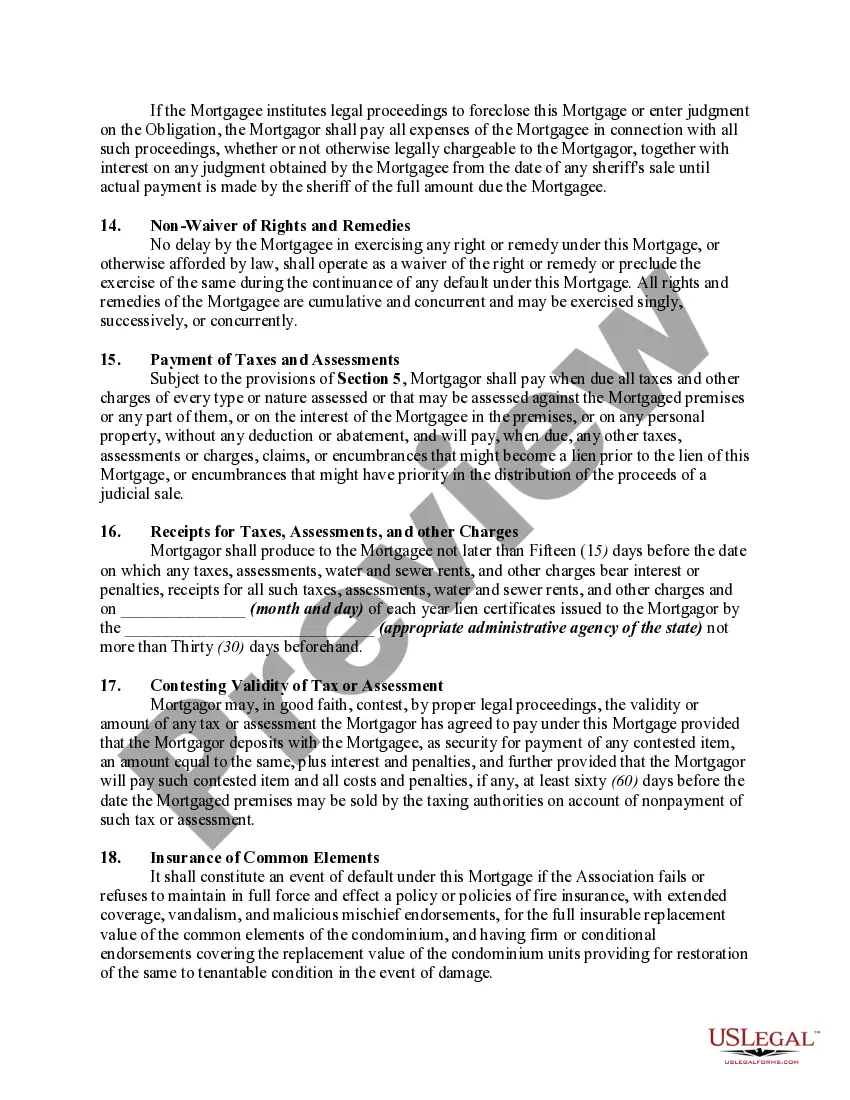
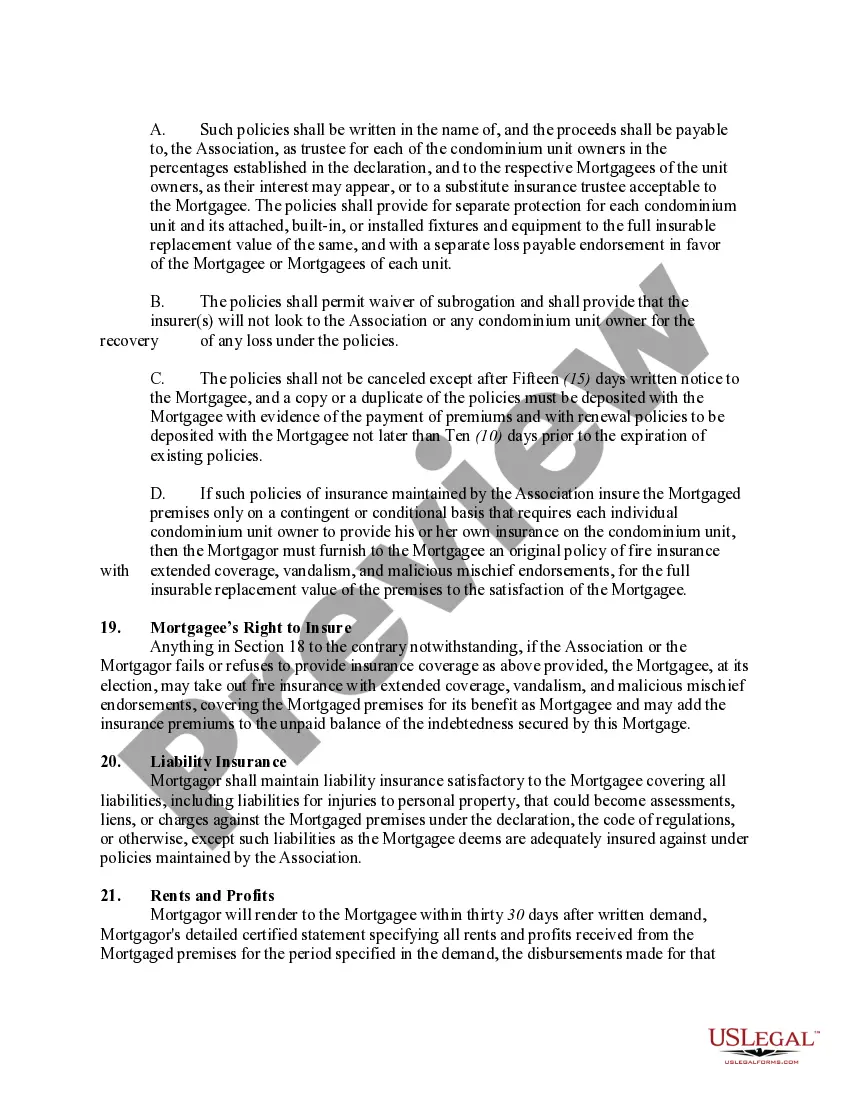
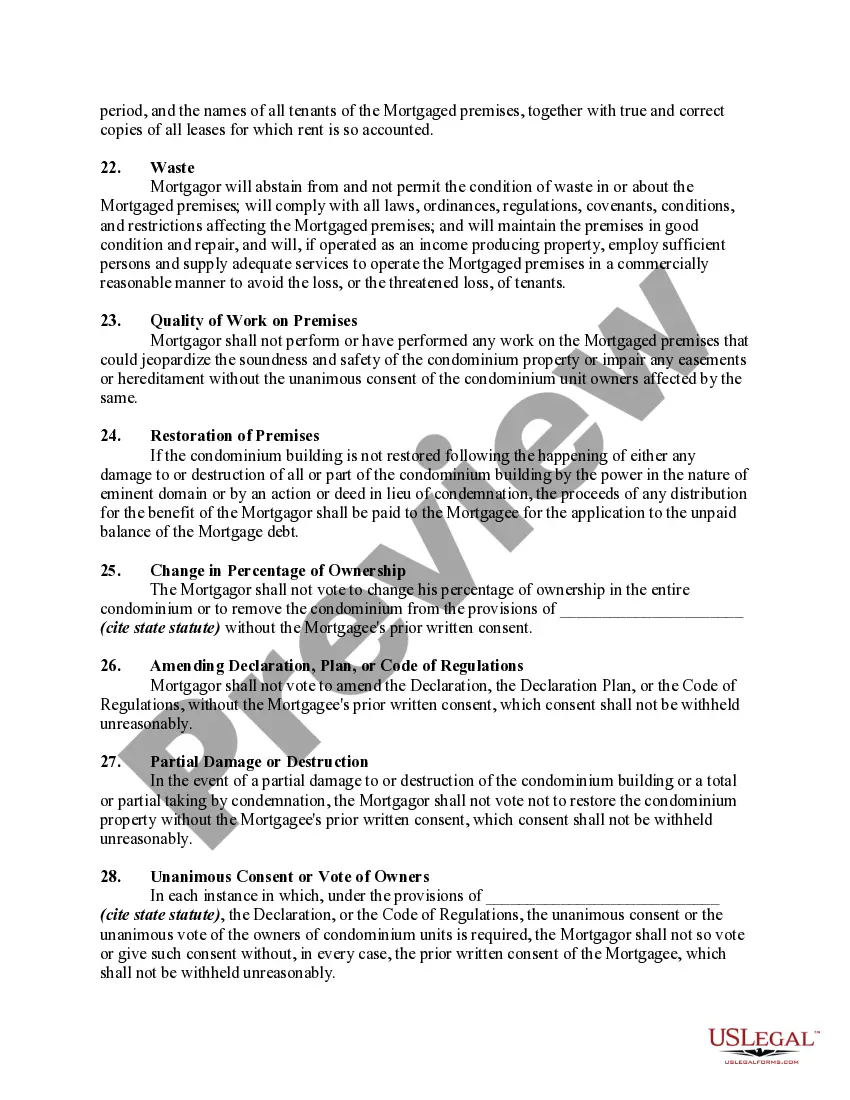
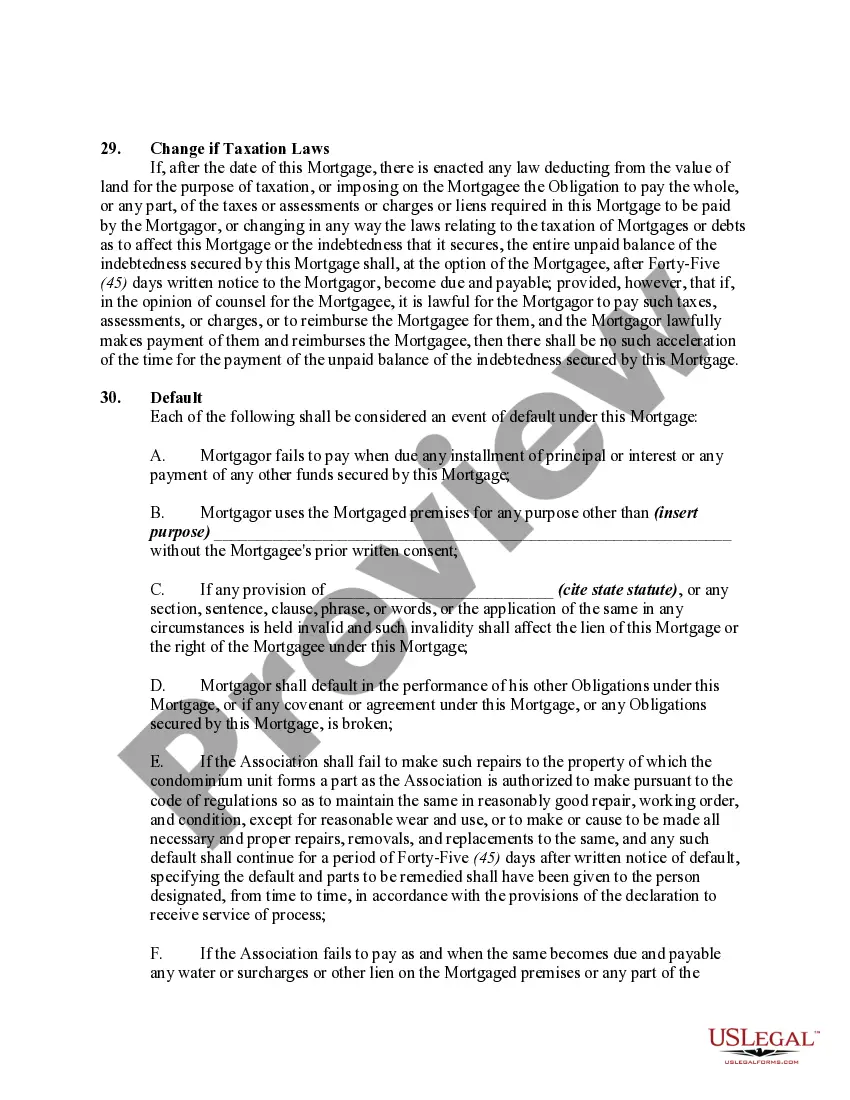
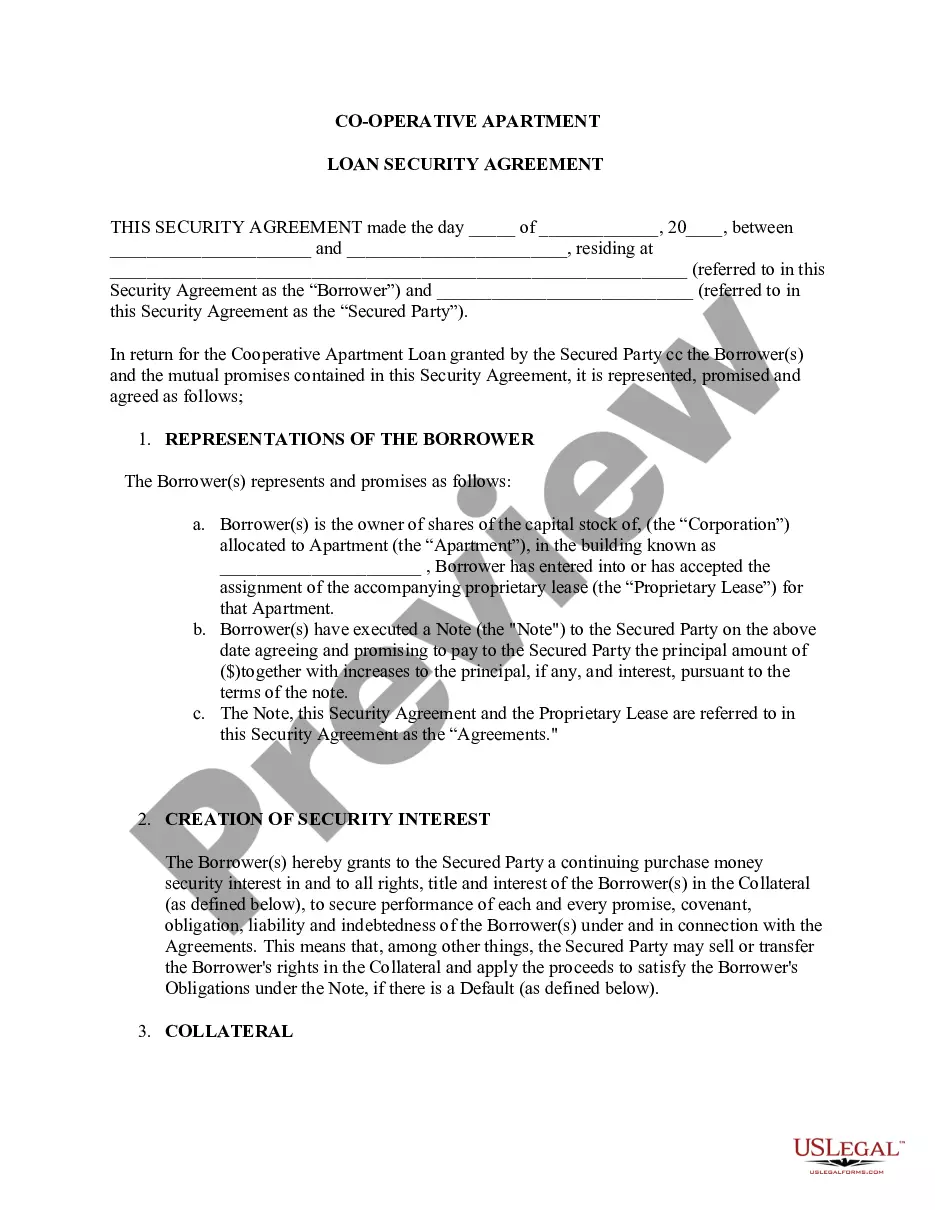
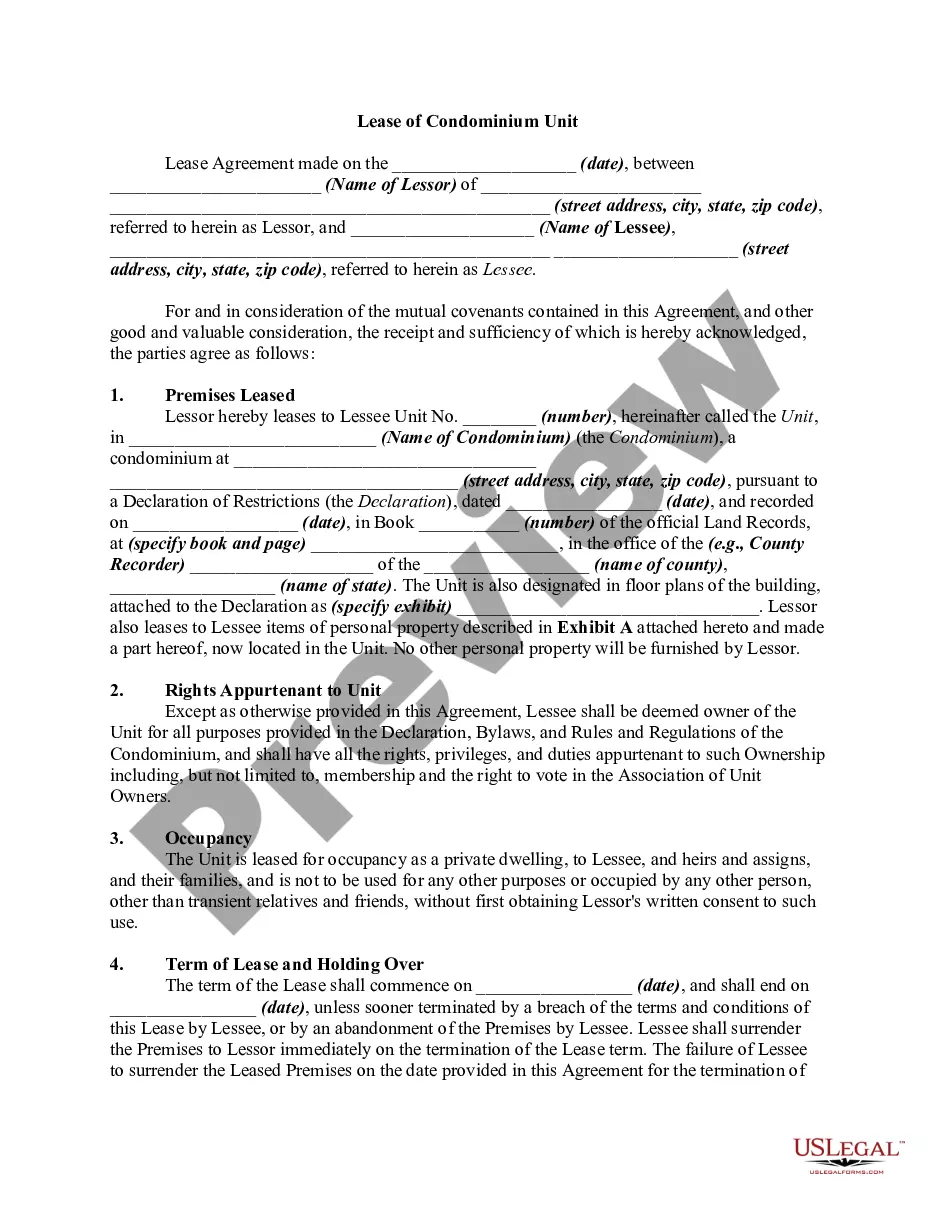
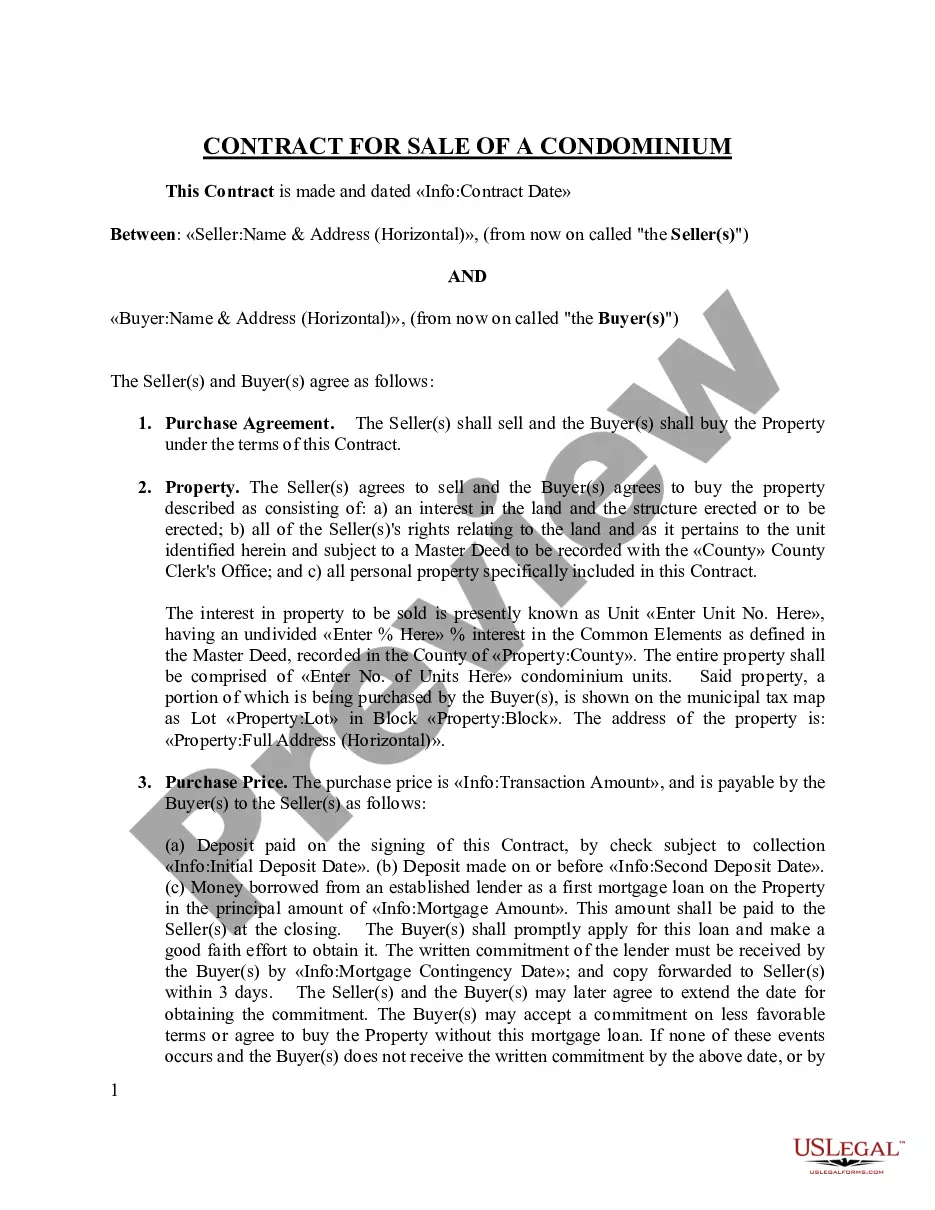
The Mortgage of Condominium Unit is a legal document that establishes a security interest in a condominium property, ensuring repayment of a loan or promissory note. This form creates a binding agreement between the mortgagor (the property owner) and the mortgagee (the lender) and differs from other mortgage forms by its specific applicability to condominium units and the associated shared elements. It outlines obligations, rights, and conditions tailored to the unique structure of condominium ownership.
Main sections of this form
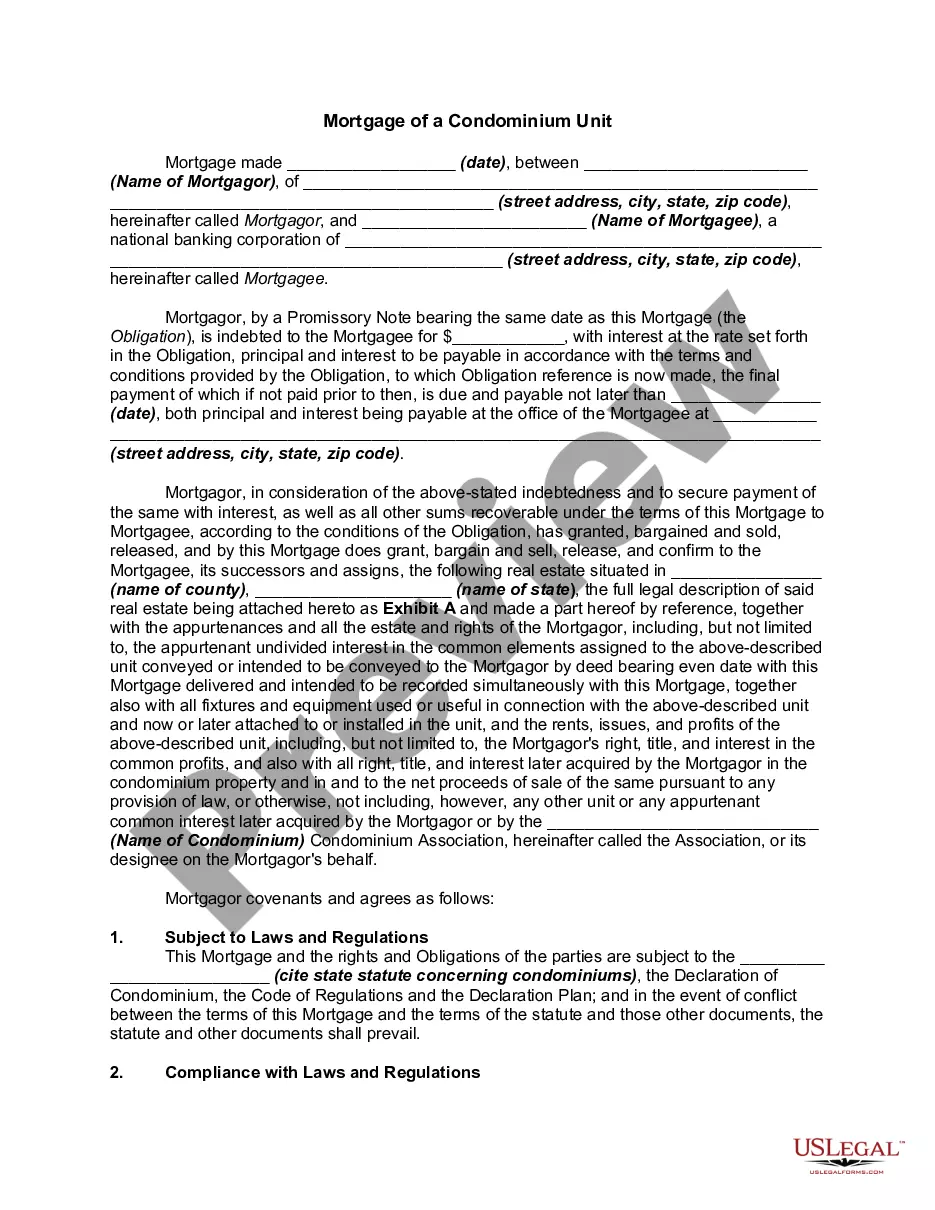
- Date and parties involved: Identification of the mortgagor and mortgagee, including names and addresses.
- Property description: Legal identification of the condominium unit and its common elements.
- Loan details: Amount borrowed, interest rate, and payment terms specified in the related promissory note.
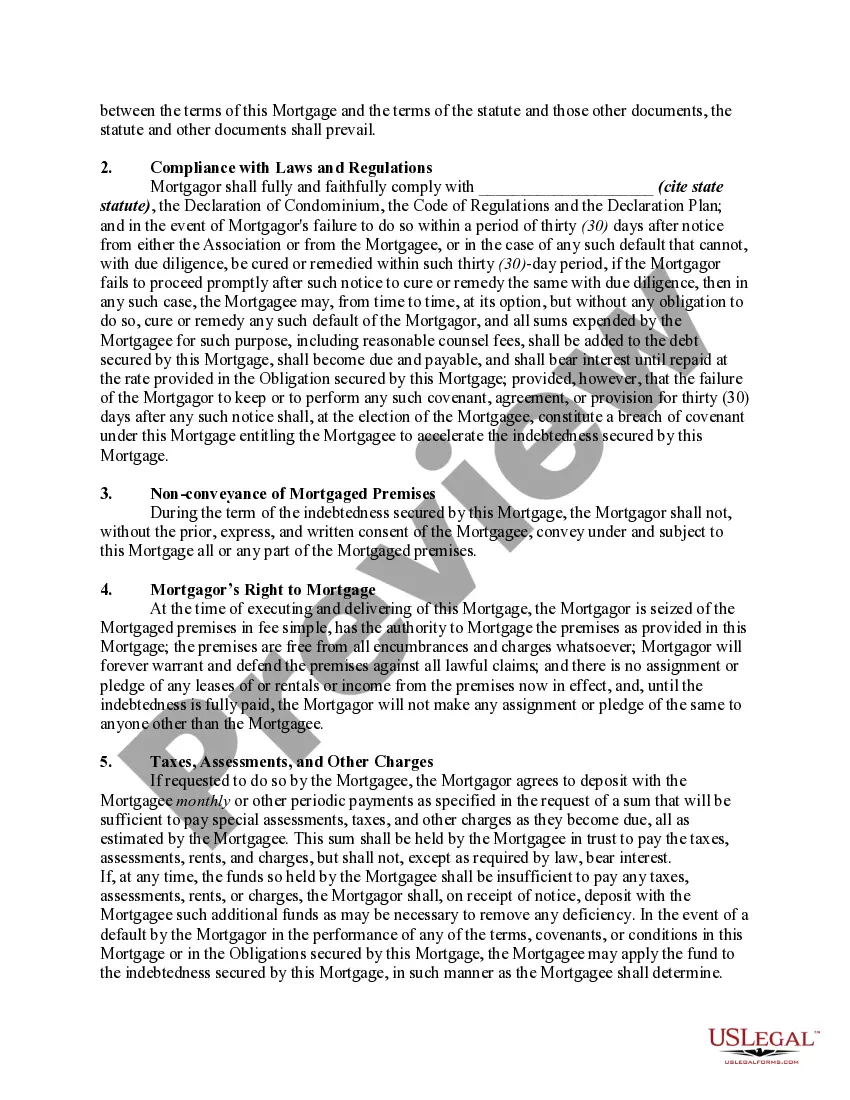
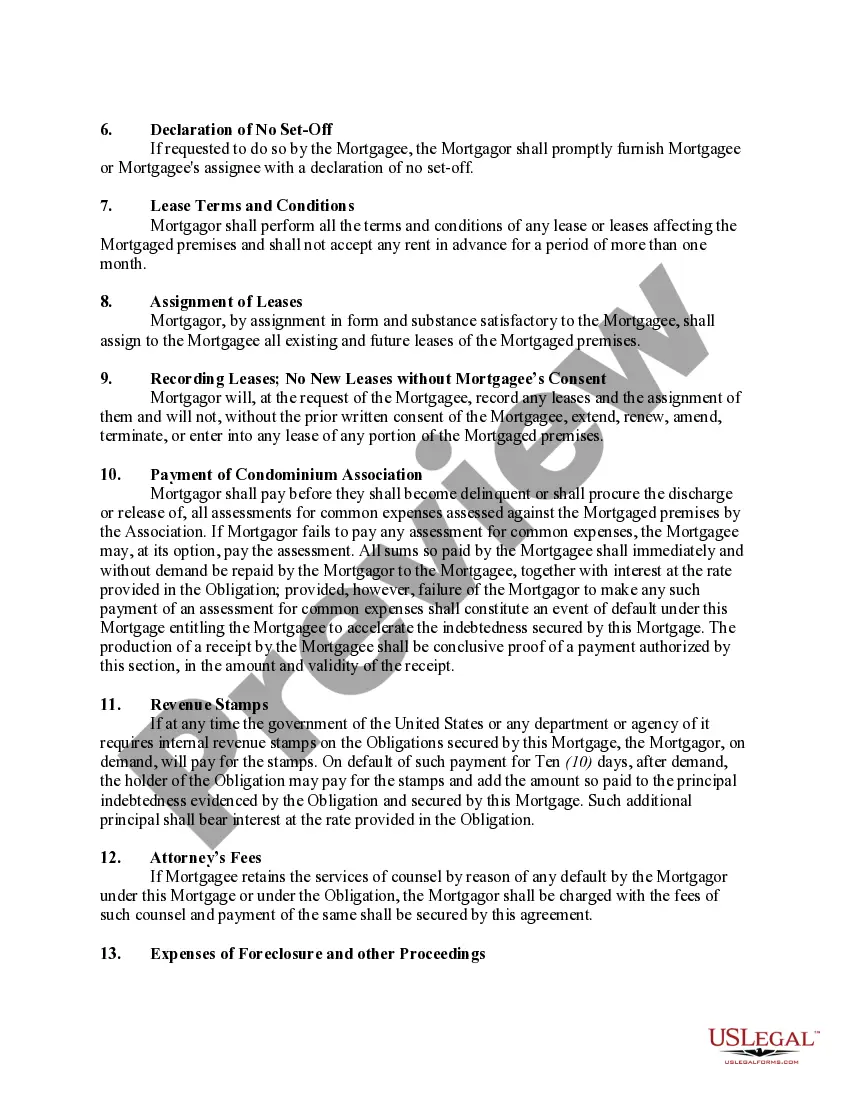
- Legal obligations: Covenants regarding payment of taxes, compliance with condominium regulations, and maintenance responsibilities.
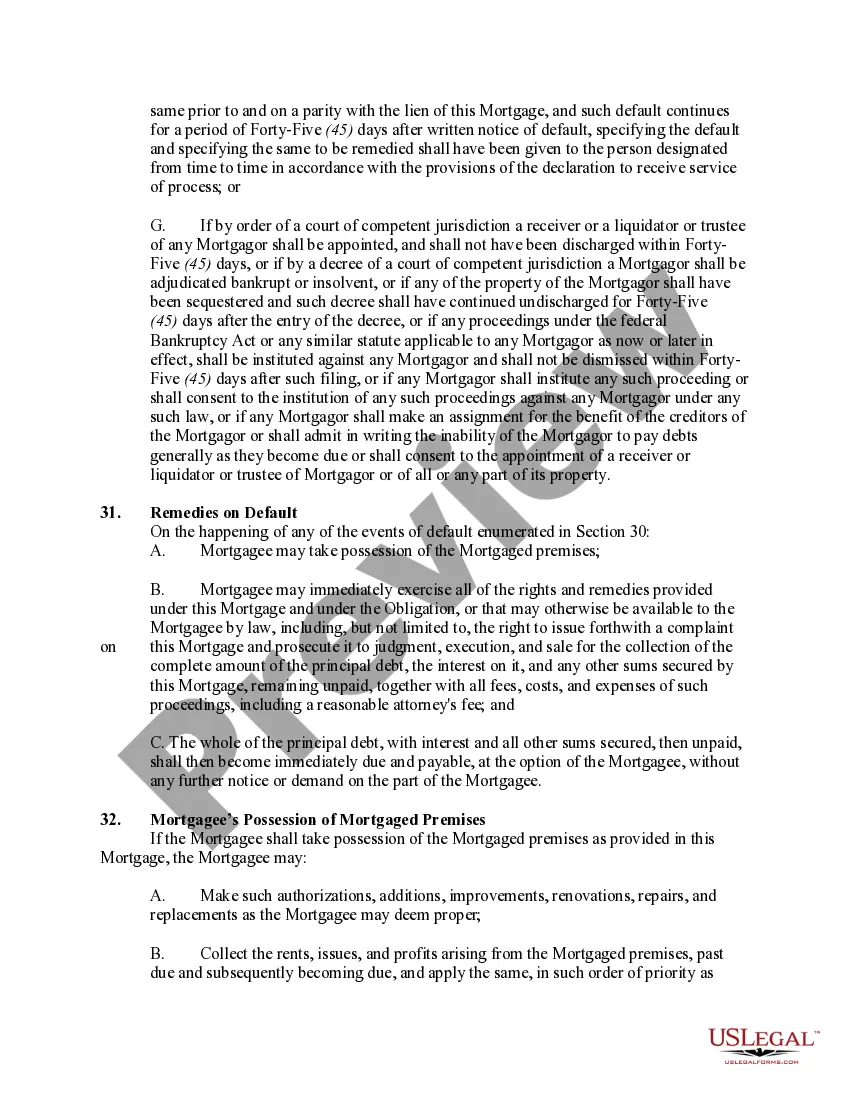
- Events of default: Conditions under which the mortgagee may take action if the mortgagor defaults.
- Governing law: Specifies the state laws applicable to the mortgage agreement.
Situations where this form applies
This Mortgage of Condominium Unit should be used when an owner of a condominium unit is securing a loan against their property. It is necessary to formalize the lender's interest in the unit and ensure that all parties understand their rights and obligations. This form is often used during real estate transactions, refinancing, or when obtaining home equity loans specific to condominium properties.
Who should use this form
This form is suitable for:
- Condominium unit owners seeking to obtain financing secured by their property.
- Lenders or mortgage companies providing loans on condominium units.
- Real estate professionals and attorneys involved in transactions involving condominium properties.
How to complete this form
- Identify and enter the date of the mortgage agreement.
- Fill in the names and addresses of both the mortgagor and mortgagee.
- Specify the amount of the loan and the interest rate in accordance with the promissory note.
- Provide a detailed legal description of the condominium unit and its associated common elements.
- Ensure all parties sign the document, and notarize if required based on state laws.
Does this document require notarization?
Notarization is required for this form to take effect. Our online notarization service, powered by Notarize, lets you verify and sign documents remotely through an encrypted video session, available 24/7.
Get your form ready online
Our built-in tools help you complete, sign, share, and store your documents in one place.
Make edits, fill in missing information, and update formatting in US Legal Forms—just like you would in MS Word.
Download a copy, print it, send it by email, or mail it via USPS—whatever works best for your next step.
Sign and collect signatures with our SignNow integration. Send to multiple recipients, set reminders, and more. Go Premium to unlock E-Sign.
If this form requires notarization, complete it online through a secure video call—no need to meet a notary in person or wait for an appointment.
We protect your documents and personal data by following strict security and privacy standards.

Make edits, fill in missing information, and update formatting in US Legal Forms—just like you would in MS Word.

Download a copy, print it, send it by email, or mail it via USPS—whatever works best for your next step.

Sign and collect signatures with our SignNow integration. Send to multiple recipients, set reminders, and more. Go Premium to unlock E-Sign.

If this form requires notarization, complete it online through a secure video call—no need to meet a notary in person or wait for an appointment.

We protect your documents and personal data by following strict security and privacy standards.
Common mistakes to avoid
- Failing to provide a complete legal description of the condominium unit and its common elements.
- Omitting required signatures or ignoring notarization requirements.
- Neglecting to specify the payment terms clearly, leading to confusion.
- Not reviewing local laws and condominium association rules that may affect the mortgage.
Quick recap
- The Mortgage of Condominium Unit secures a loan with the condominium property as collateral.
- Completing this document properly is essential for protecting the rights of all parties involved.
- Consult state-specific requirements and laws to ensure compliance.
- Notarization is generally required to enforce the agreement legally.
Looking for another form?

Form popularity
FAQ
Condo mortgages tend to have slightly higher interest rates compared to a loan for a single-family home, because lenders need to compensate for the additional risk of financing property in an association.
Half of the 5 million existing condo or co-op units were built within the past 30 years. Not all condos and co-ops are owner occupied; approximately one-quarter of them are rented. Although most are located in the South, the West and Northeast have proportionately more condos and co-ops.
Condo mortgages tend to have slightly higher interest rates compared to a loan for a single-family home, because lenders need to compensate for the additional risk of financing property in an association.
A condominium (also known as a condo) is a privately-owned home within a multi-unit development. Each owner has a shared interest in the common areas of the building?such as elevators, garages, gyms, etc. ?which are typically maintained through monthly homeowners association (HOA) fees.
Getting a mortgage for a condo is generally harder than getting a mortgage for a house. A condo unit is part of a multi-unit development, so the borrower's finances are intertwined with others ? and lenders see this type of home as a riskier investment.
While condos represent about 8-10% of the mortgage market, they play a larger role in many larger urban areas. Condos also present unique risks, as condo owners share financial responsibility for the operation and maintenance of the common areas and shared amenities.
Fannie Mae requires that no more than 35% of a condo or co-op project or 35% of the building in which the project is located be commercial space or allocated to mixed-use.