Mississippi Quit Claim Assignment
About this form
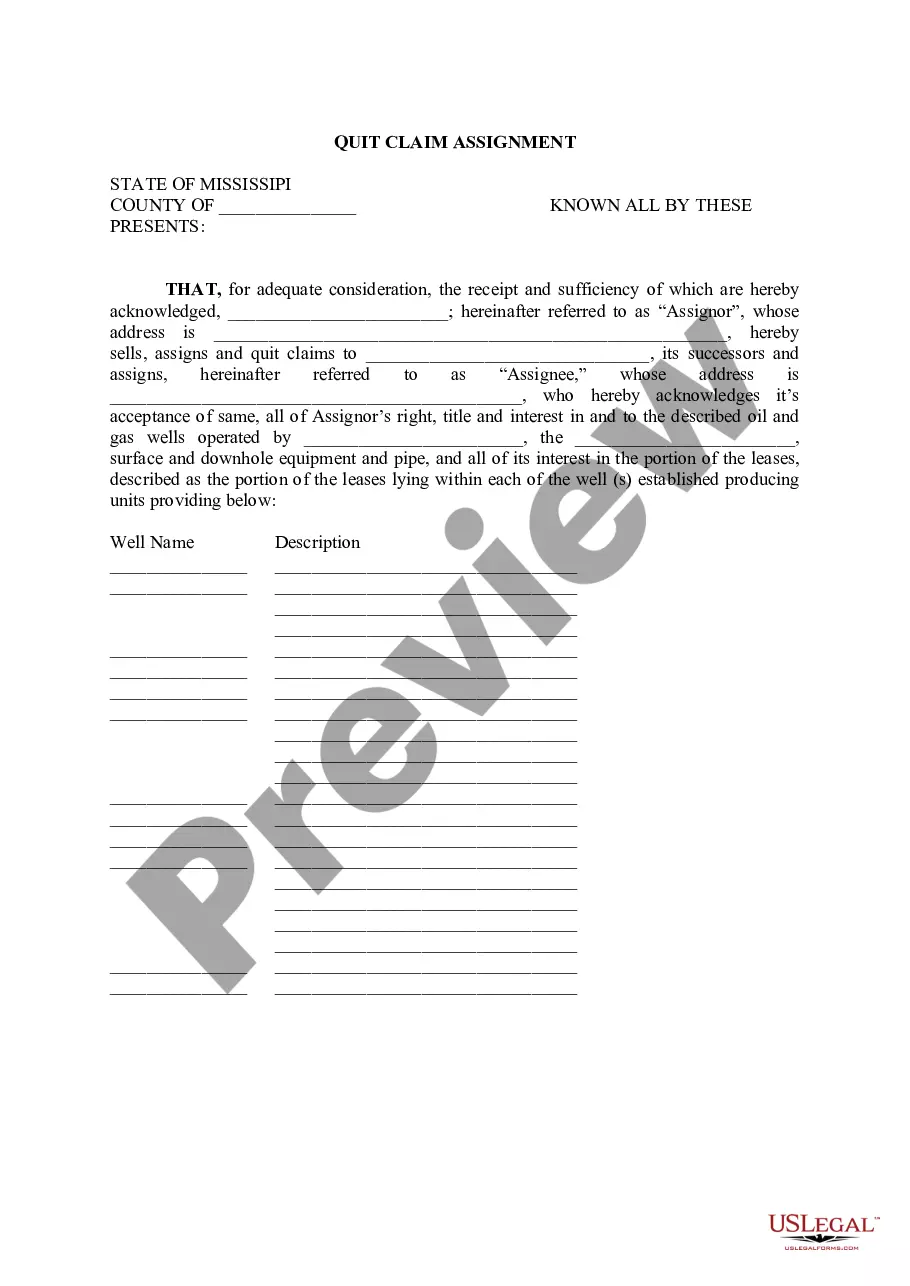
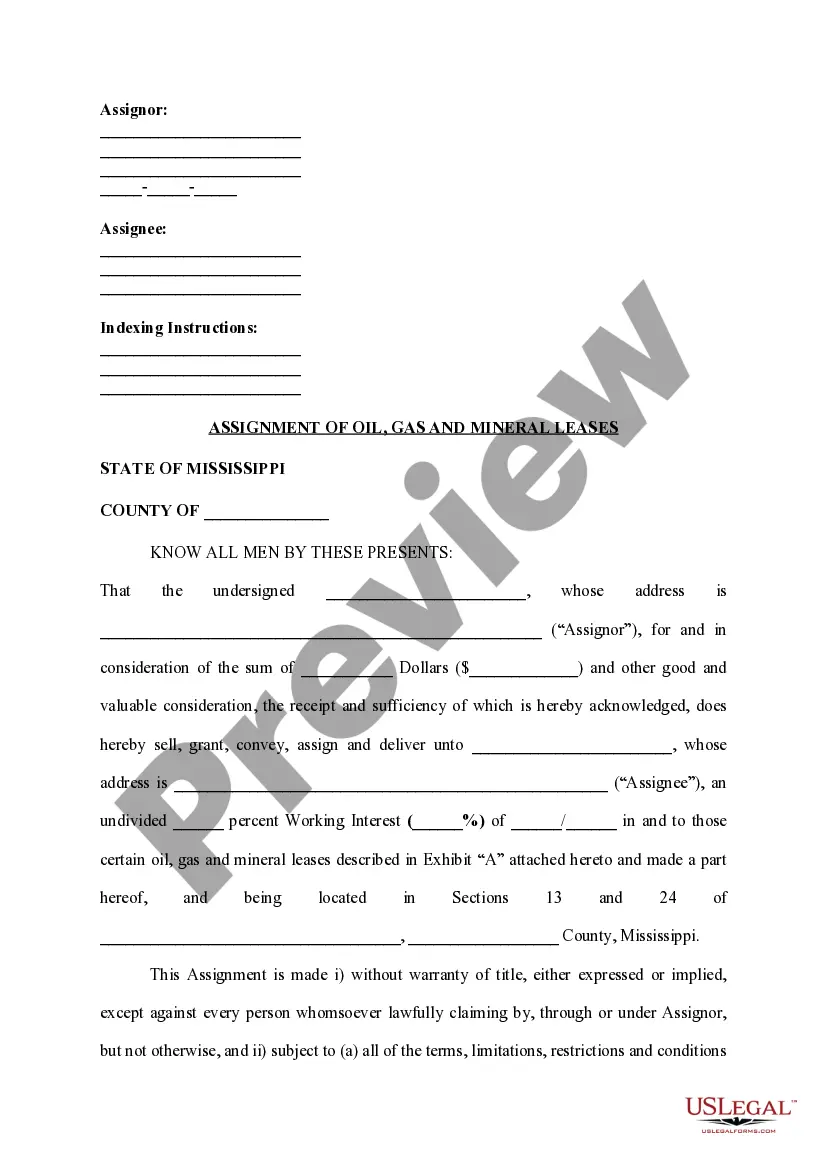
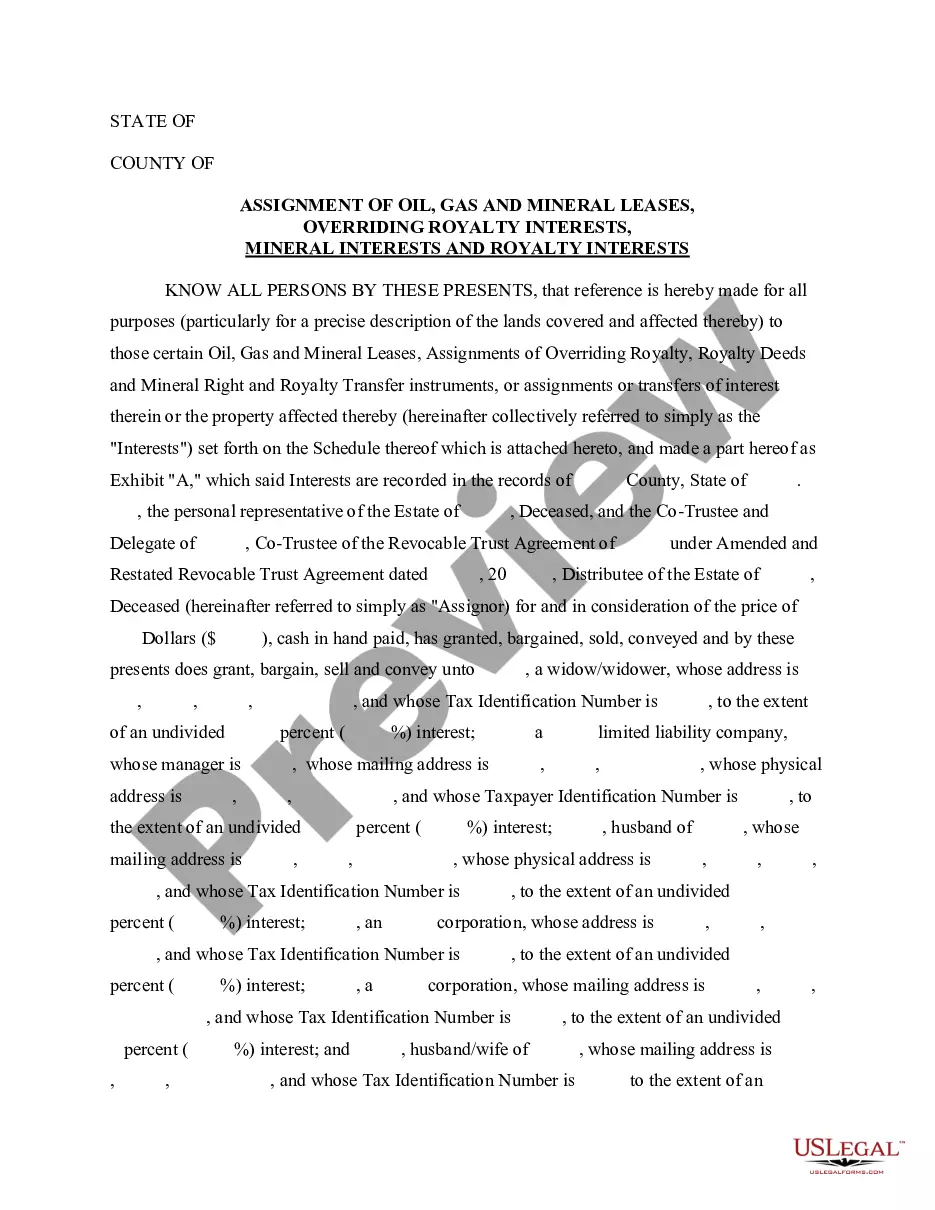
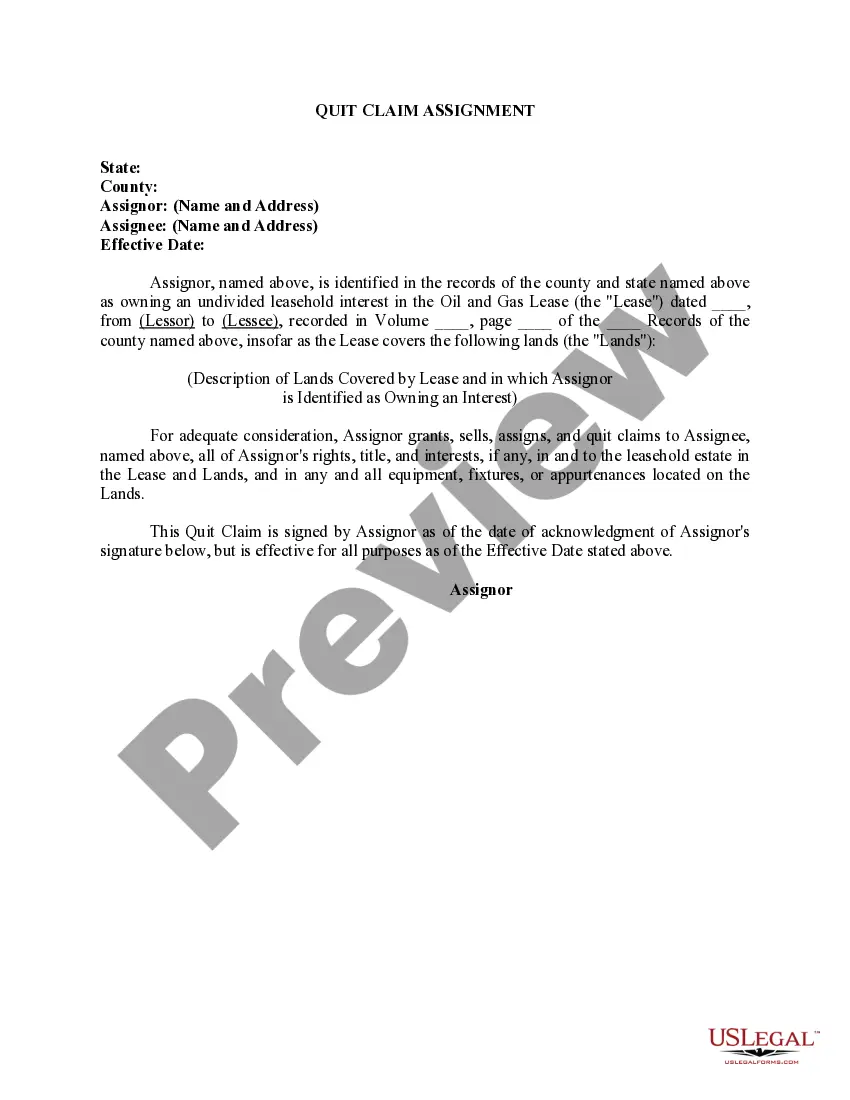
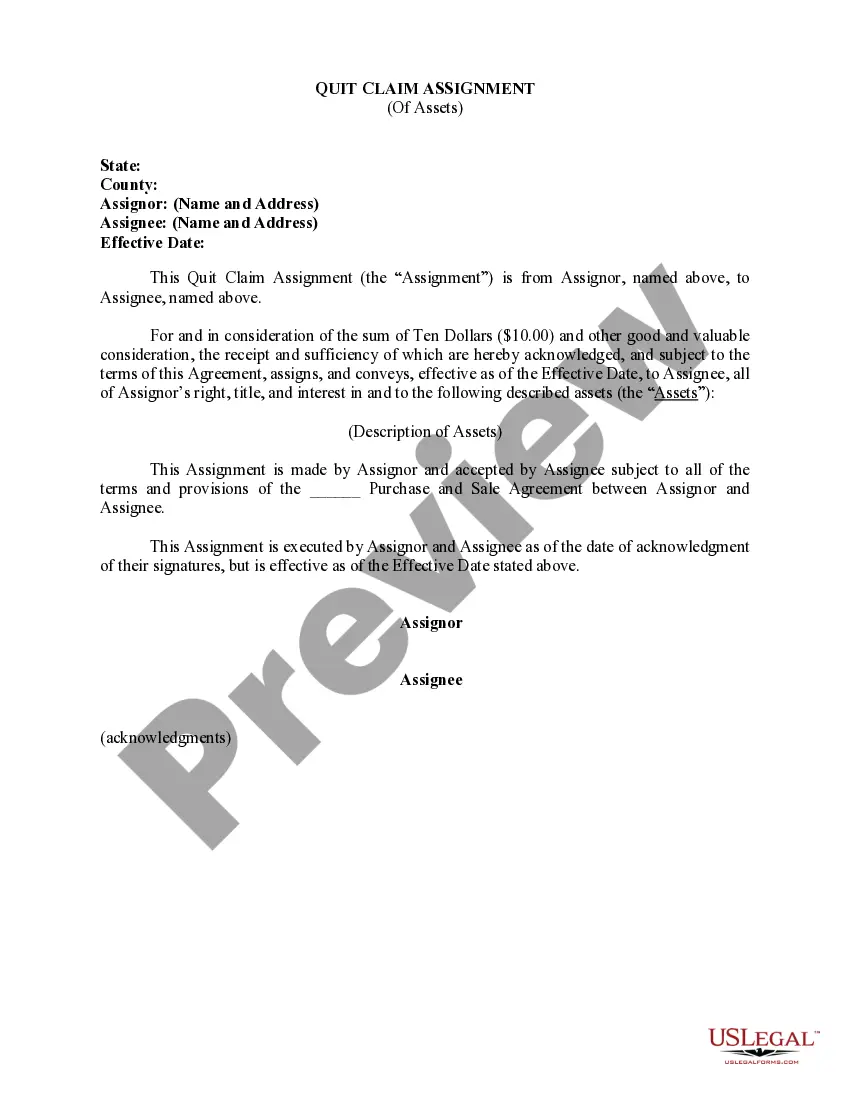
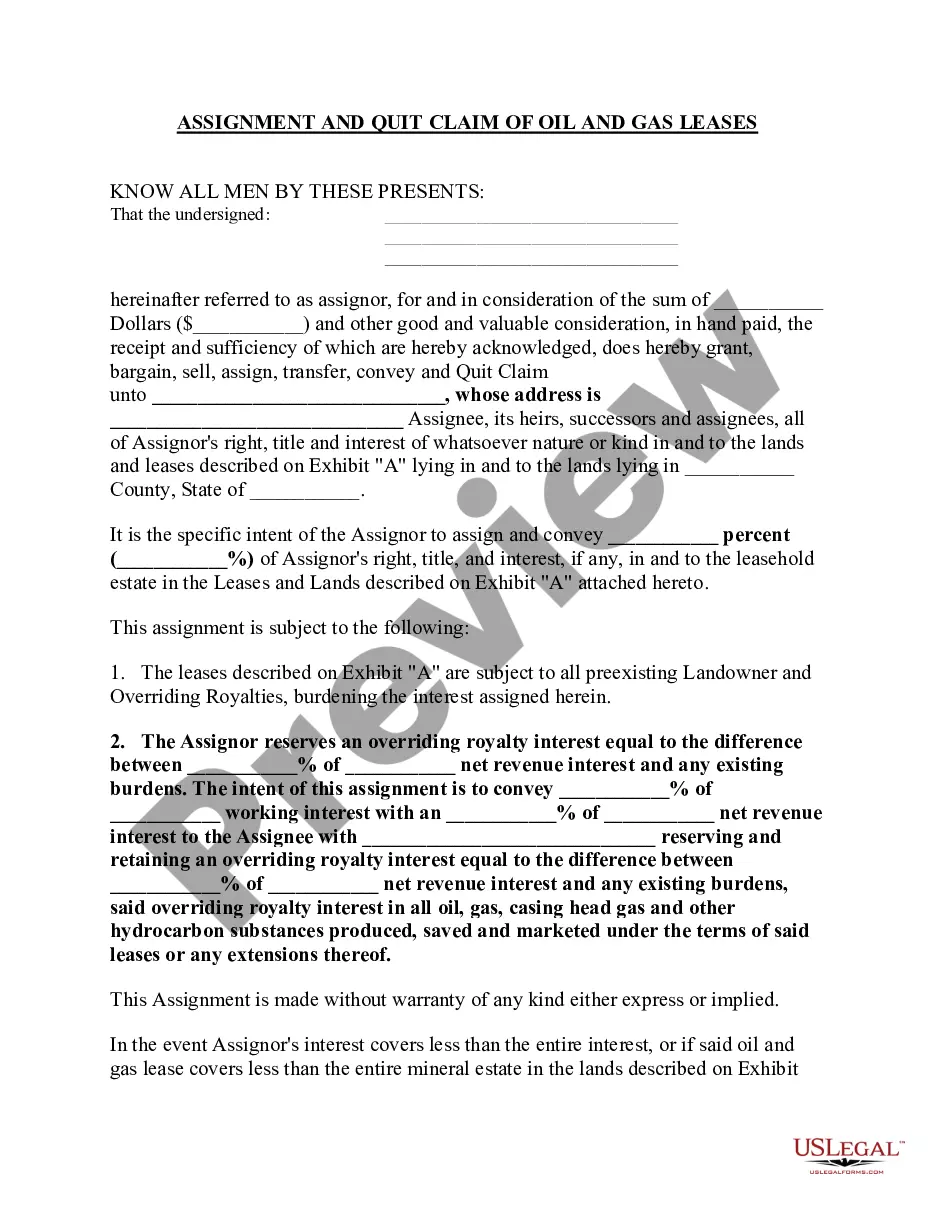
The Quit Claim Assignment form is a legal document that allows the Assignor to sell, assign, and transfer their rights, title, and interest in oil and gas wells and associated leases. This form is distinct from other property transfer forms as it specifically pertains to interests in oil and gas operations, providing a simple and clear way to convey ownership. By using this form, parties can protect their interests and ensure that rights are transferred without ambiguity.
Key components of this form
- Names and addresses of the Assignor and Assignee.
- Statement of the transfer of rights, title, and interest in specified oil and gas wells.
- Description of the wells and any equipment or leases included in the assignment.
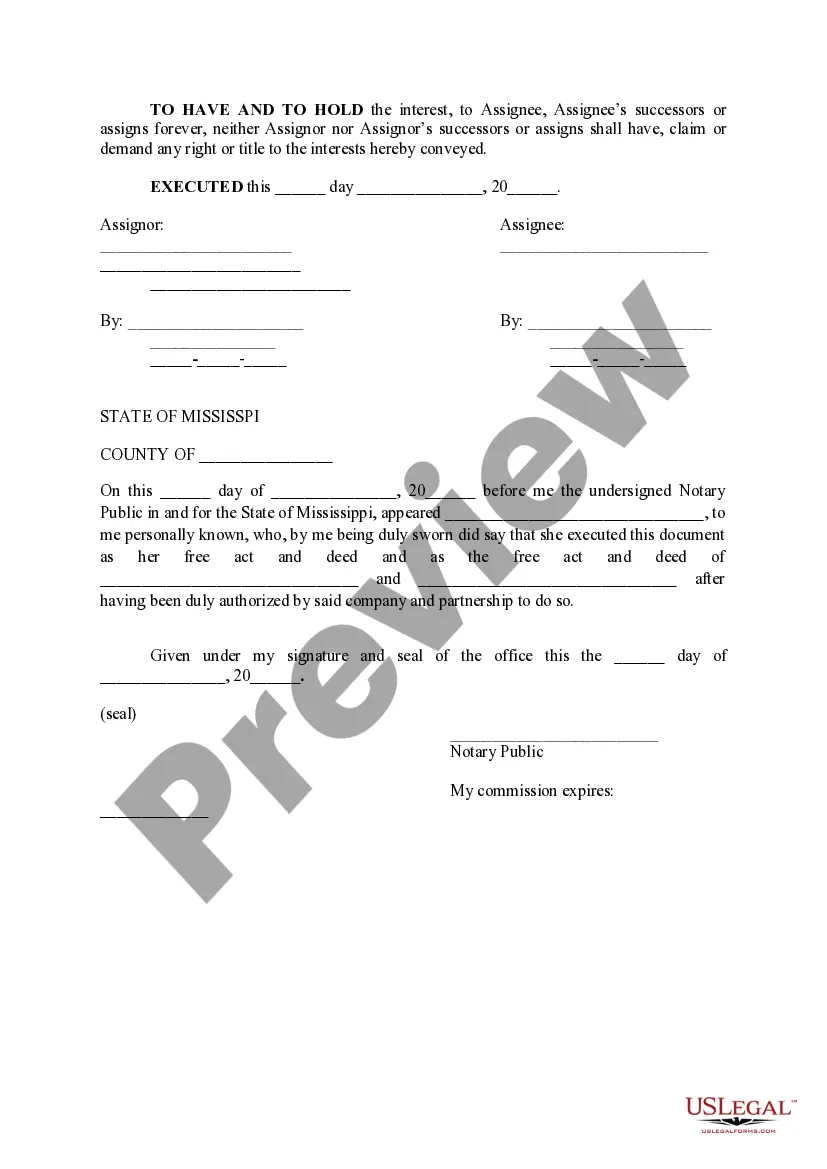
- Signatures of the Assignor and Assignee, confirming the agreement.
- Acknowledgment section for notarization with the notary's information.
When this form is needed
This form should be used when an individual or entity (the Assignor) wants to transfer their ownership rights in oil and gas wells to another party (the Assignee). This may occur in scenarios such as selling property interests, assigning shares in a lease, or when restructuring interests between parties in the oil and gas industry.
Intended users of this form
- Individuals or companies owning rights or interests in oil and gas operations.
- Parties involved in the sale or transfer of oil and gas properties.
- Landowners negotiating lease agreements related to oil and gas wells.
- Investors looking to secure transfer documentation for oil and gas investments.
How to complete this form
- Identify the parties: Fill in the names and addresses of both the Assignor and Assignee.
- Specify the property: Clearly describe the oil and gas wells, including names and relevant details.
- Enter dates: Include the date of execution for the transfer.
- Gather signatures: Both parties must sign the document to validate the assignment.
- Complete notarization: Have the document notarized to verify the signatures, ensuring legal standing.
Notarization requirements for this form
Yes, this form must be notarized to be legally valid. Notarization helps confirm the identity of the parties involved and ensures that the assignment is executed voluntarily. US Legal Forms offers integrated online notarization services for your convenience, available 24/7 through secure video calls, providing a fast and easy way to finalize your document.
Get your form ready online
Our built-in tools help you complete, sign, share, and store your documents in one place.
Make edits, fill in missing information, and update formatting in US Legal Forms—just like you would in MS Word.
Download a copy, print it, send it by email, or mail it via USPS—whatever works best for your next step.
Sign and collect signatures with our SignNow integration. Send to multiple recipients, set reminders, and more. Go Premium to unlock E-Sign.
If this form requires notarization, complete it online through a secure video call—no need to meet a notary in person or wait for an appointment.
We protect your documents and personal data by following strict security and privacy standards.

Make edits, fill in missing information, and update formatting in US Legal Forms—just like you would in MS Word.

Download a copy, print it, send it by email, or mail it via USPS—whatever works best for your next step.

Sign and collect signatures with our SignNow integration. Send to multiple recipients, set reminders, and more. Go Premium to unlock E-Sign.

If this form requires notarization, complete it online through a secure video call—no need to meet a notary in person or wait for an appointment.

We protect your documents and personal data by following strict security and privacy standards.
Mistakes to watch out for
- Failing to provide complete and accurate descriptions of the wells and leases.
- Not obtaining the necessary signatures from both the Assignor and Assignee.
- Leaving the dates blank or misentering the date of execution.
- Neglecting to notarize the document, which may affect its enforceability.
Advantages of online completion
- Convenience: Download and complete the form at your own pace.
- Editability: Easily input information specific to your transaction before printing.
- Reliability: Access forms that are drafted by licensed attorneys to ensure legal compliance.
Legal use & context
- This form serves as a legally binding document transferring interest from one party to another.
- Ensure that both parties understand the implications of the transfer, as it relinquishes any future claims to the assigned interests.
- Review local laws or seek legal counsel if you have questions about compliance and enforceability.
Quick recap
- The Quit Claim Assignment is essential for transferring rights in oil and gas interests.
- Complete all sections accurately to avoid legal complications.
- Notarization is required for the document to be legally enforceable.
Looking for another form?

Form popularity
FAQ
A quitclaim deed transfers title but makes no promises at all about the owner's title.A person who signs a quitclaim deed to transfer property they do not own results in no title at all being transferred since there is no actual ownership interest. The quitclaim deed only transfers the type of title you own.
A quitclaim deed transfers all of the seller's rights to the property, but the quitclaim buyer has no guarantees that the seller has the right to transfer the property to her. If a third party appears and claims the property, the quitclaim buyer will be left to her own resources in defending against that claim.
Before a quitclaim deed can be recorded with a county recorder in Mississippi, the grantor must sign and acknowledge it. The names, addresses, and telephone numbers of the grantors and grantees to the quit claim deed, along with a legal description of the real property should be provided on the first page (89-5-24).
But you might be wondering if an owner can transfer a deed to another person without a real estate lawyer. The answer is yes. Parties to a transaction are always free to prepare their own deeds.A quitclaim deed, for example, is far simpler than a warranty deed.
A Quitclaim Deed must be notarized by a notary public or attorney in order to be valid.Consideration in a Quitclaim Deed is what the Grantee will pay to the Grantor for the interest in the property.
Fill out the quit claim deed form, which can be obtained online, or write your own using the form as a guide. The person giving up the interest in the property is the grantor, and the person receiving the interest is the grantee.
The drawback, quite simply, is that quitclaim deeds offer the grantee/recipient no protection or guarantees whatsoever about the property or their ownership of it. Maybe the grantor did not own the property at all, or maybe they only had partial ownership.
Quitclaim deeds are most often used to transfer property between family members.Examples include when an owner gets married and wants to add a spouse's name to the title or deed, or when the owners divorce and one spouse's name is removed from the title or deed.