Mississippi Petition to Close Estate and Discharge Co-Administrators
What is this form?
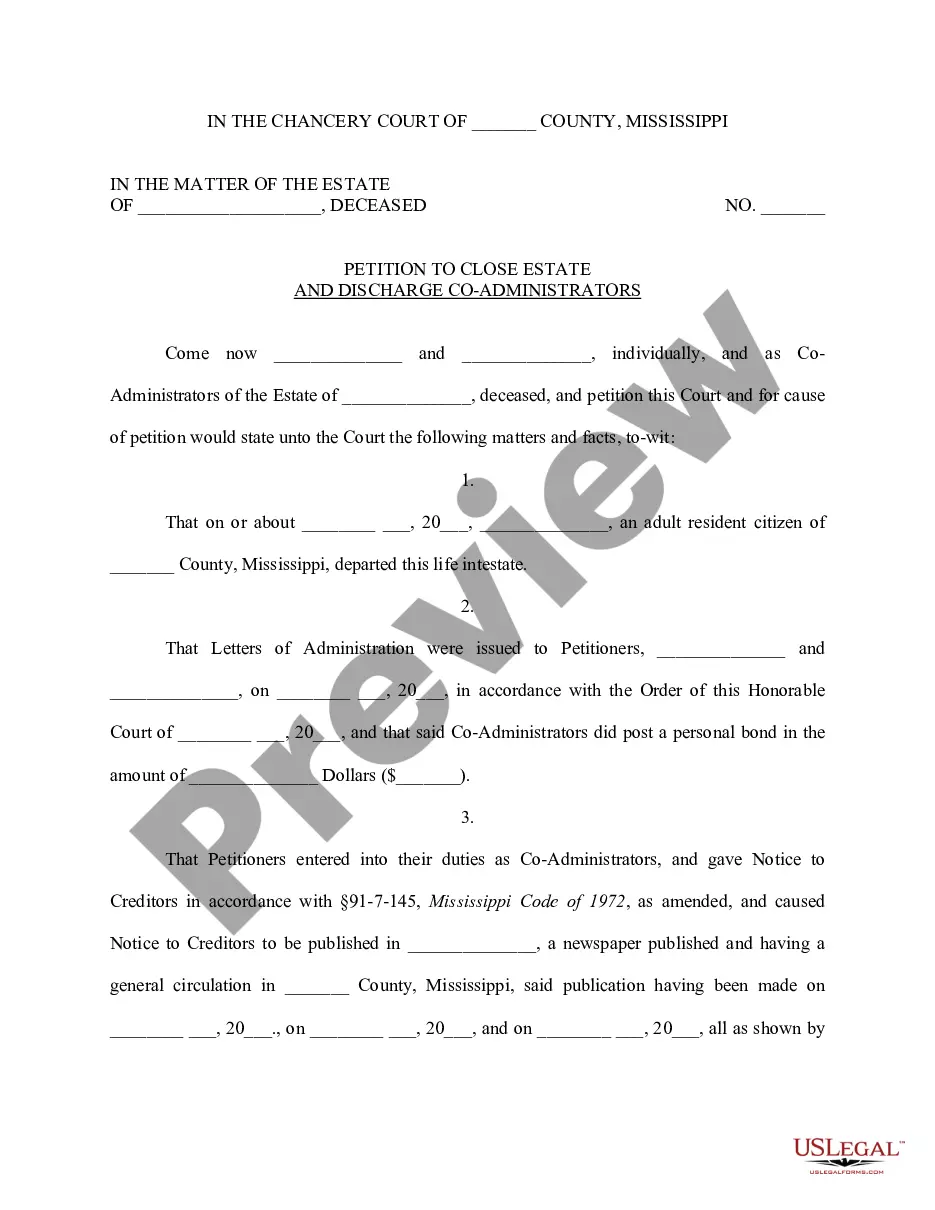
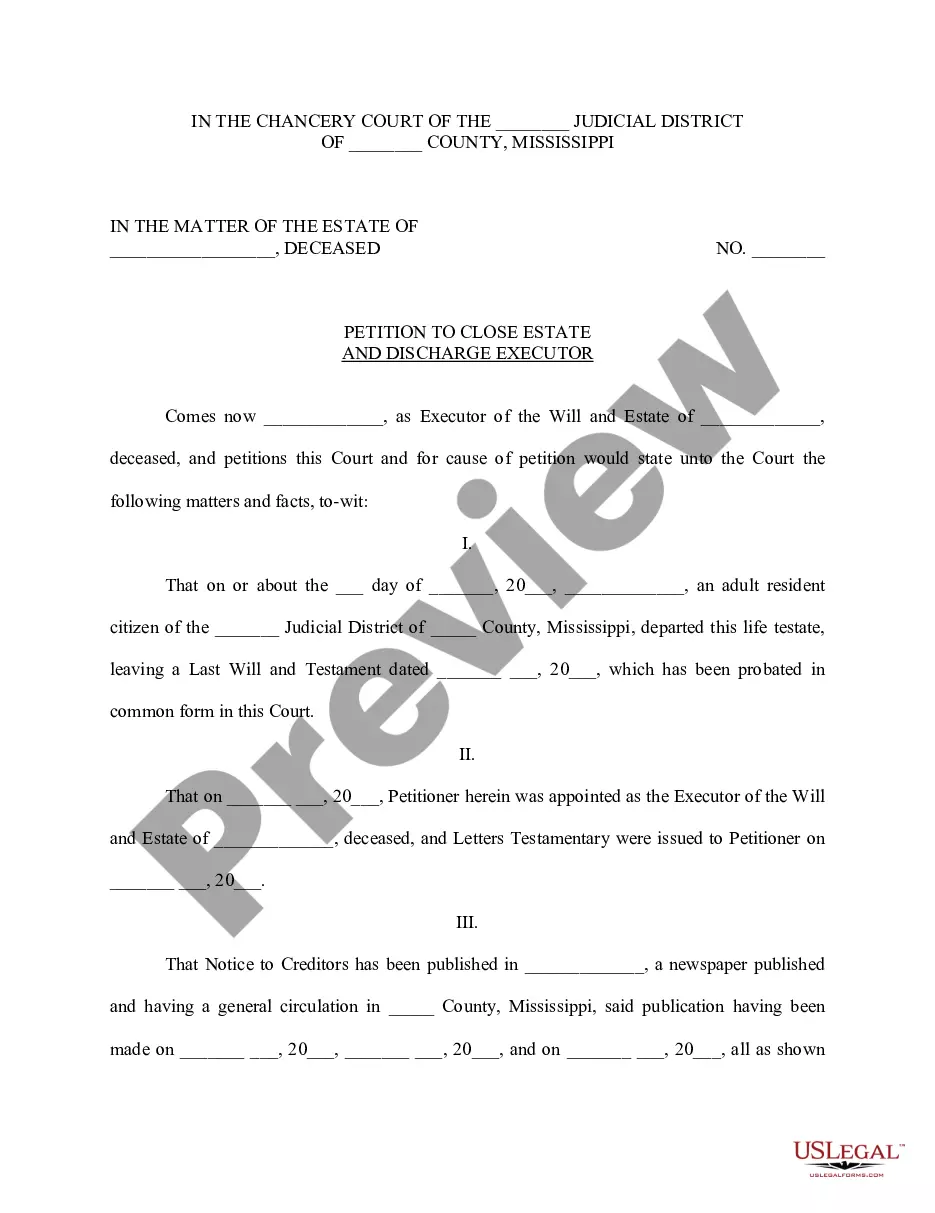
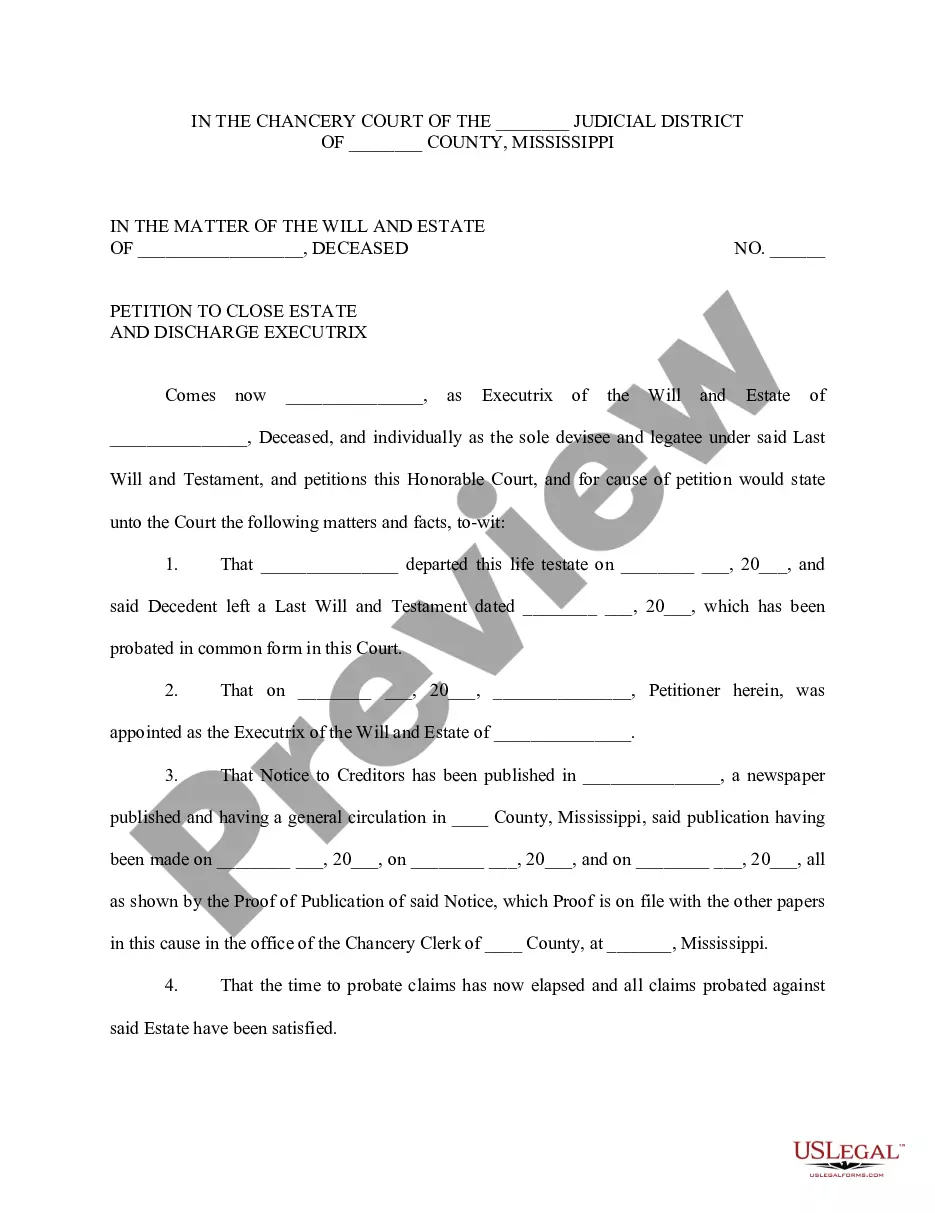
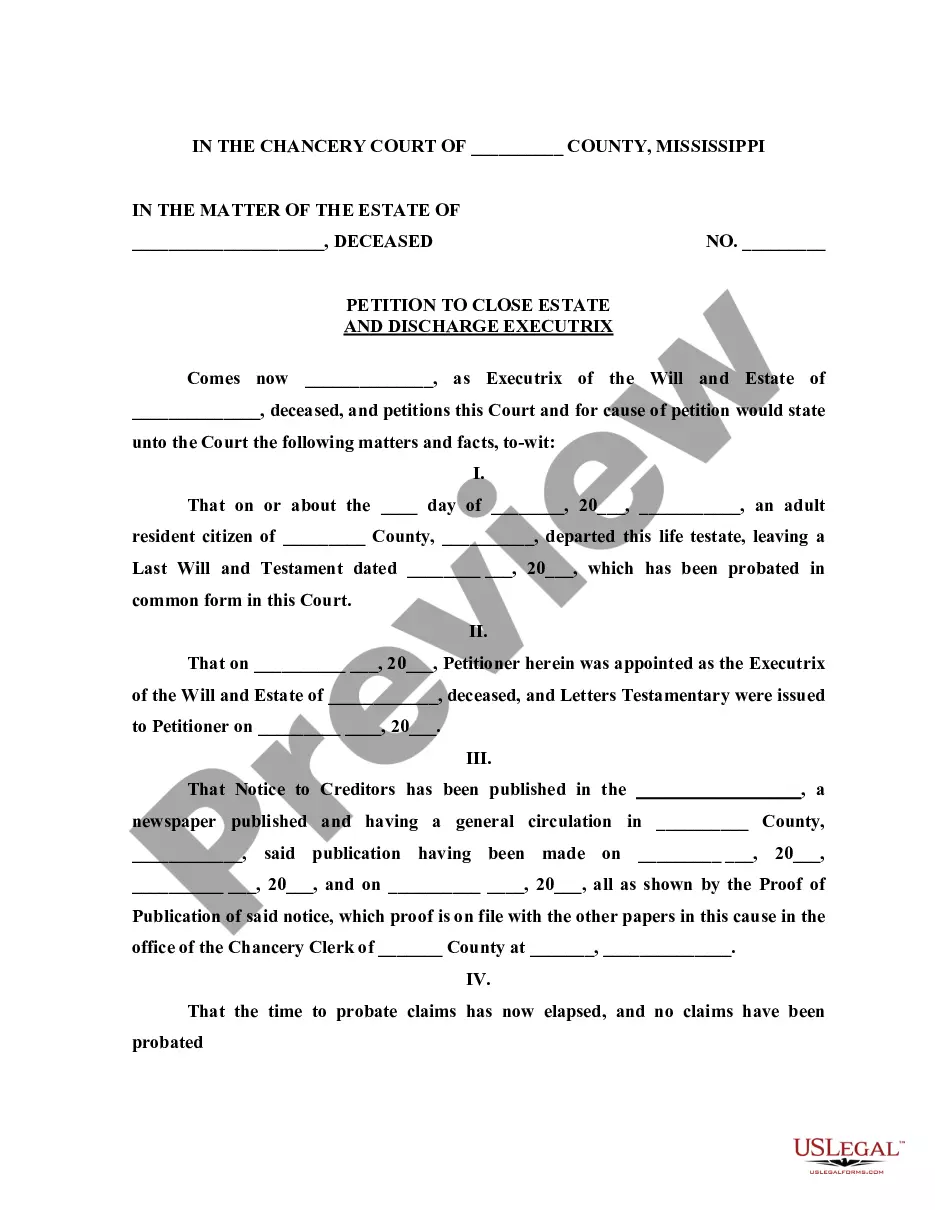
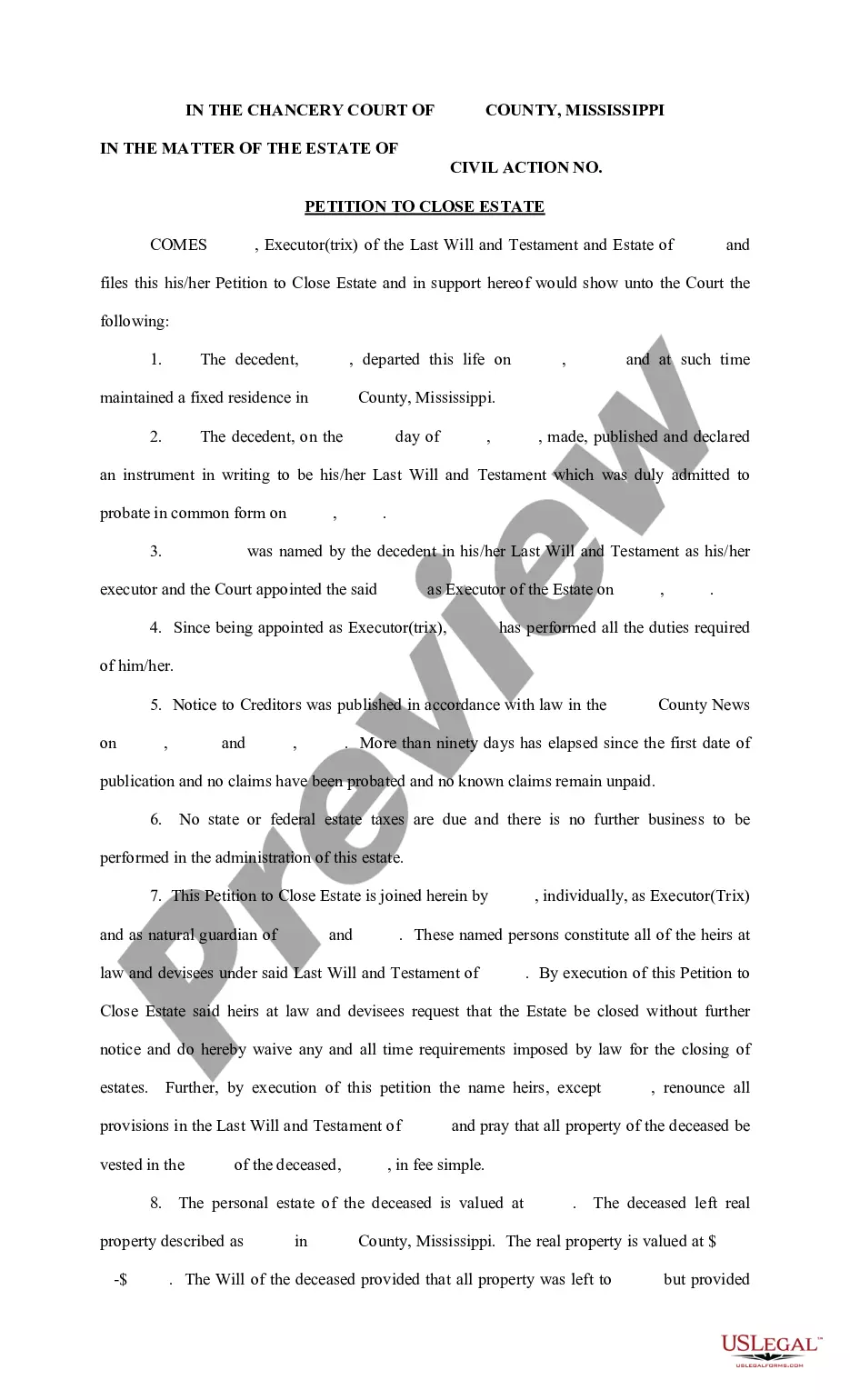
The Petition to Close Estate and Discharge Co-Administrators is a legal document used in Mississippi to formally close a probated estate after all necessary obligations have been fulfilled by the co-administrators. This form ensures that the estate is closed with the court's approval and that the co-administrators are discharged from their duties, distinguishing it from other estate-related forms that may pertain to the initial filing of a will or management of estate assets.
Key parts of this document
- Identification of the decedent and the co-administrators.
- Details regarding the death and relevant dates.
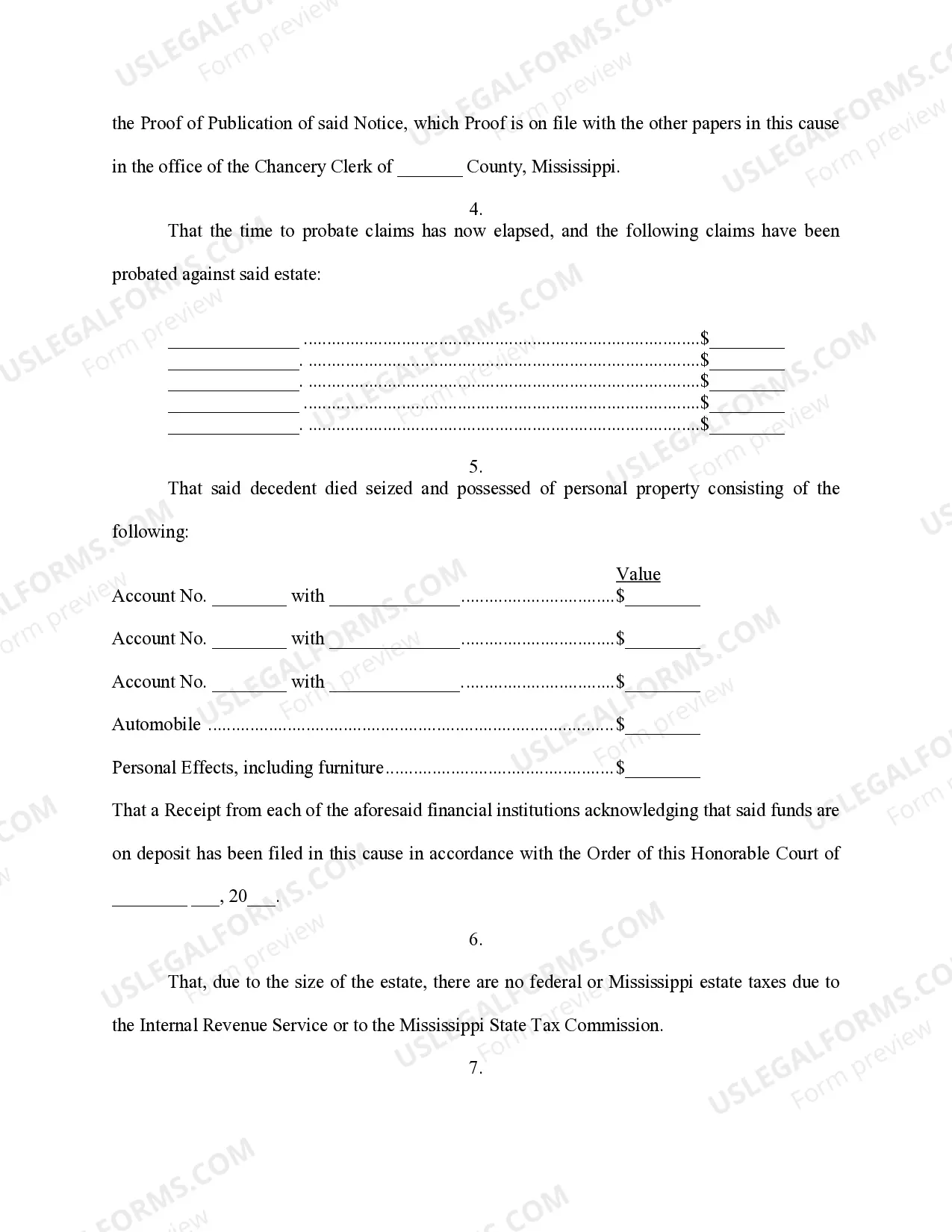
- Notice to creditors and the status of probated claims.
- Inventory of the estate's assets and liabilities.
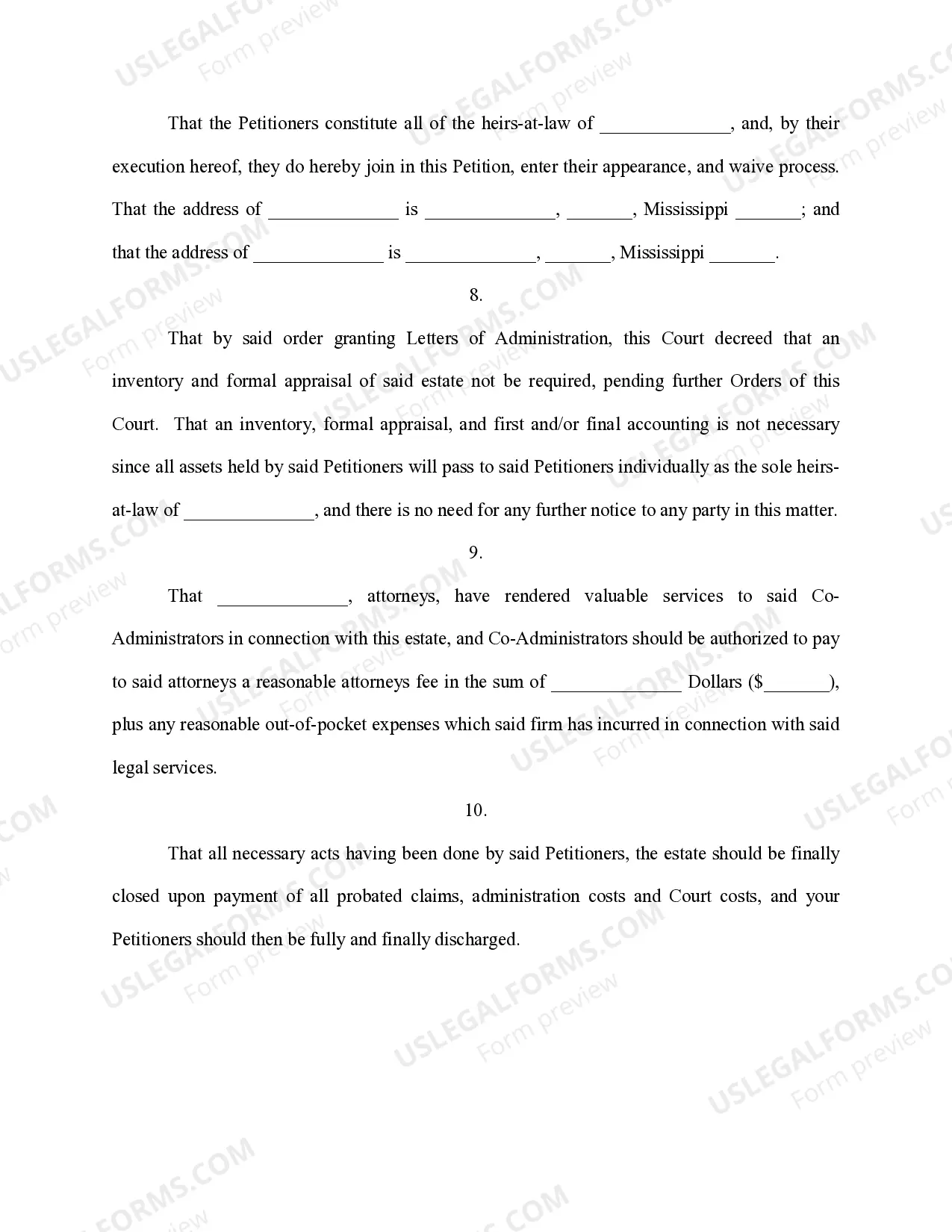
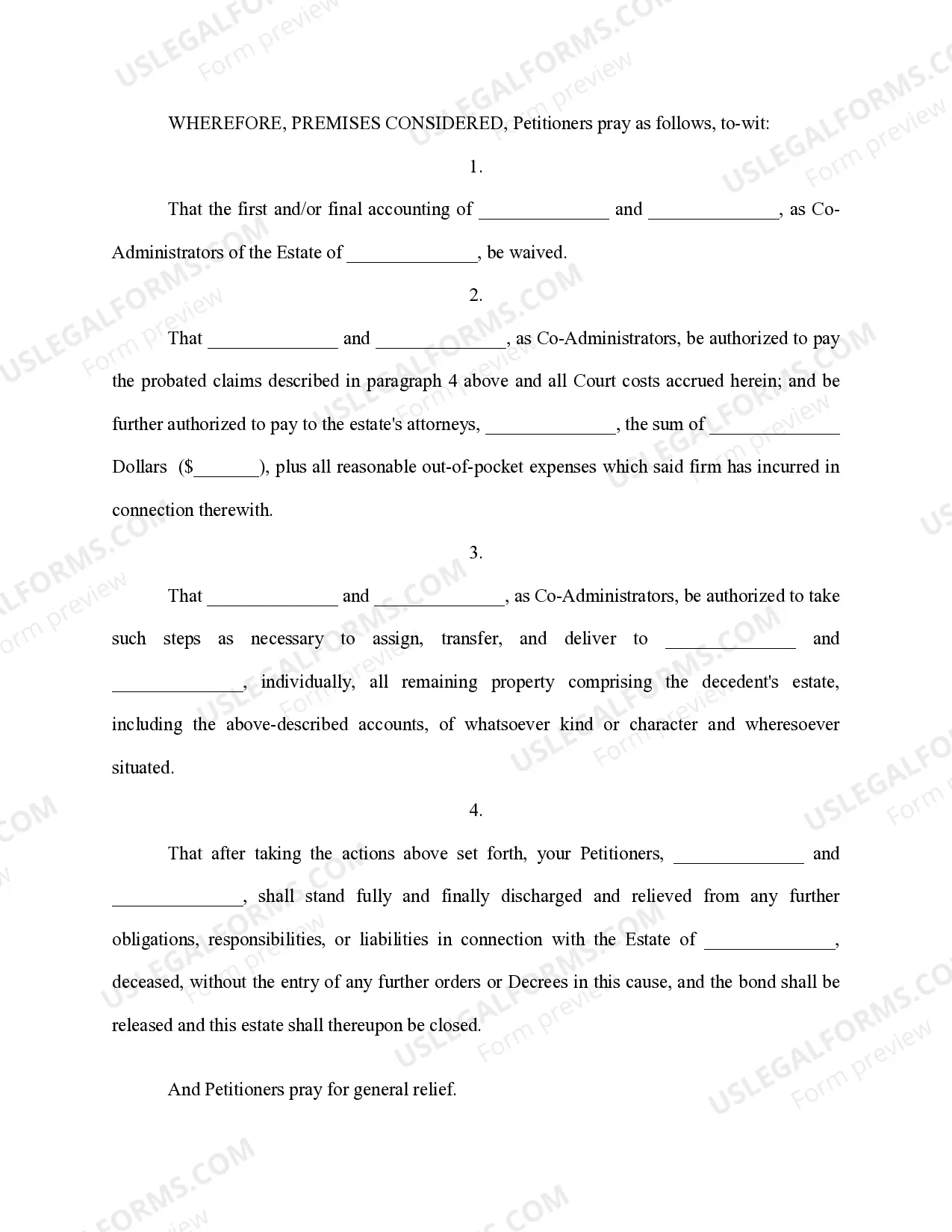
- Authorization for payment of legal fees and other claims.
- Request for the waiver of accounting and final discharge from duties.
When to use this document
This form should be used once the estate has been administered, all debts paid, and no further claims are expected. It is essential for co-administrators who have fulfilled their duties and wish to formally close the estate and be released from any further responsibility. Use this petition when all heirs have been identified and agree to the resolution of the estate.
Intended users of this form
This petition is intended for:
- Co-administrators of an estate in Mississippi.
- Heirs or beneficiaries who have an interest in closing the estate.
- Individuals seeking to officially discharge their responsibilities associated with managing the estate.
Completing this form step by step
- Identify the decedent, co-administrators, and relevant dates in the opening section.
- List all claims against the estate and ensure they have been addressed.
- Detail the assets of the estate, including accounts and property descriptions.
- Include any fees for legal services related to the estate administration.
- Specify the request for waiver of the accounting and authorization for estate distribution.
Does this document require notarization?
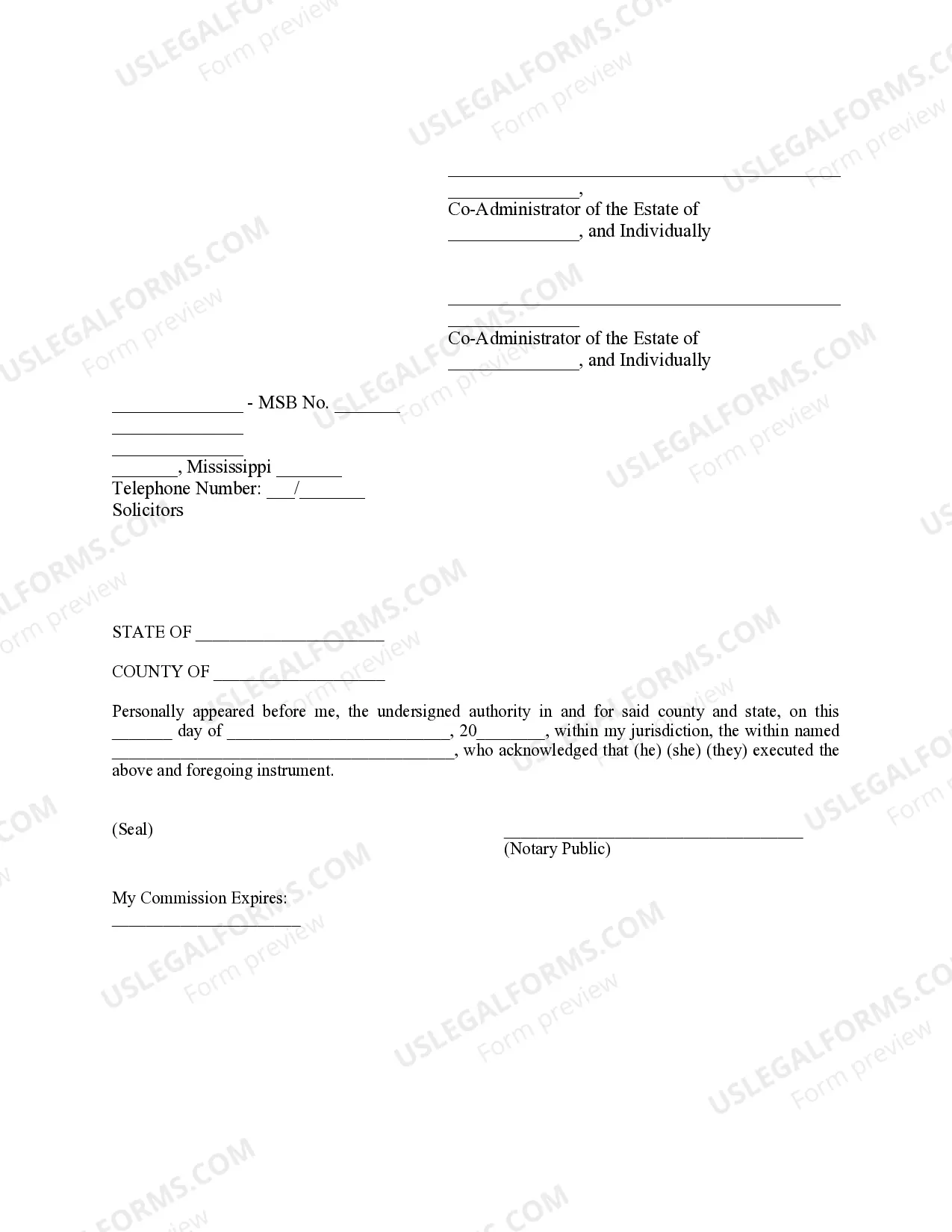
This form needs to be notarized to ensure legal validity. US Legal Forms provides secure online notarization powered by Notarize, allowing you to complete the process through a verified video call, available anytime.
Get your form ready online
Our built-in tools help you complete, sign, share, and store your documents in one place.
Make edits, fill in missing information, and update formatting in US Legal Forms—just like you would in MS Word.
Download a copy, print it, send it by email, or mail it via USPS—whatever works best for your next step.
Sign and collect signatures with our SignNow integration. Send to multiple recipients, set reminders, and more. Go Premium to unlock E-Sign.
If this form requires notarization, complete it online through a secure video call—no need to meet a notary in person or wait for an appointment.
We protect your documents and personal data by following strict security and privacy standards.

Make edits, fill in missing information, and update formatting in US Legal Forms—just like you would in MS Word.

Download a copy, print it, send it by email, or mail it via USPS—whatever works best for your next step.

Sign and collect signatures with our SignNow integration. Send to multiple recipients, set reminders, and more. Go Premium to unlock E-Sign.

If this form requires notarization, complete it online through a secure video call—no need to meet a notary in person or wait for an appointment.

We protect your documents and personal data by following strict security and privacy standards.
Mistakes to watch out for
- Failing to include all necessary claims against the estate.
- Not obtaining proper signatures from all co-administrators.
- Inaccurate listing of asset values.
- Neglecting to provide required proof of publication for notice to creditors.
Benefits of using this form online
- Convenient access allows you to complete the form at your own pace.
- Editable templates ensure you can adapt the form to your specific needs.
- Reliable resources provide guidance throughout the completion process.
Main things to remember
- The Petition to Close Estate is vital for formally concluding estate administration.
- Co-administrators and heirs must agree to close the estate before filing.
- Chris the discharge of responsibilities is crucial for co-administrators.
Looking for another form?
Form popularity
FAQ
In the best of circumstances, the Mississippi probate process usually takes 4 to 6 months. This would only be possible if the estate was fairly simple, all interested parties are agreeable, and documents are signed and returned to the probate attorney in a timely manner.
If an estate is not properly probated and closed in a timely manner, there may be a number of consequences that can jeopardize the estate: The statute of limitations for creditors' claims is extended. Assets may lose value or be lost altogether. The state may claim the assets.
The Executor's Final Act, Closing an Estate The personal representative, now without any estate funds to pay his lawyer, must respond. Even if the charges are baseless, the executor is stuck paying the legal bill. Instead, before making any distribution, the administrator should insist on receiving a release.
Generally, an executor has 12 months from the date of death to distribute the estate. This is known as 'the executor's year'. However, for various reasons the executor may have been delayed and has not distributed the estate within this time frame.
Notify all creditors. File tax returns and pay final taxes. File the final accounting with the probate court. Distribute remaining assets to beneficiaries. File a closing statement with the court.
Generally, an executor has 12 months from the date of death to distribute the estate. This is known as 'the executor's year'. However, for various reasons the executor may have been delayed and has not distributed the estate within this time frame.
1) Petition the court to be the estate representative. 2) Notify heirs and creditors. 3) Change legal ownership of assets. 4) Pay Funeral Expenses, Taxes, Debts and Transfer assets to heirs.
File the Will and Probate Petition. Secure Personal Property. Appraise and Insure Valuable Assets. Cancel Personal Accounts. Determine Cash Needs. Remove Estate Tax Lien. Determine Location of Assets and Secure "Date of Death Values" Submit Probate Inventory.