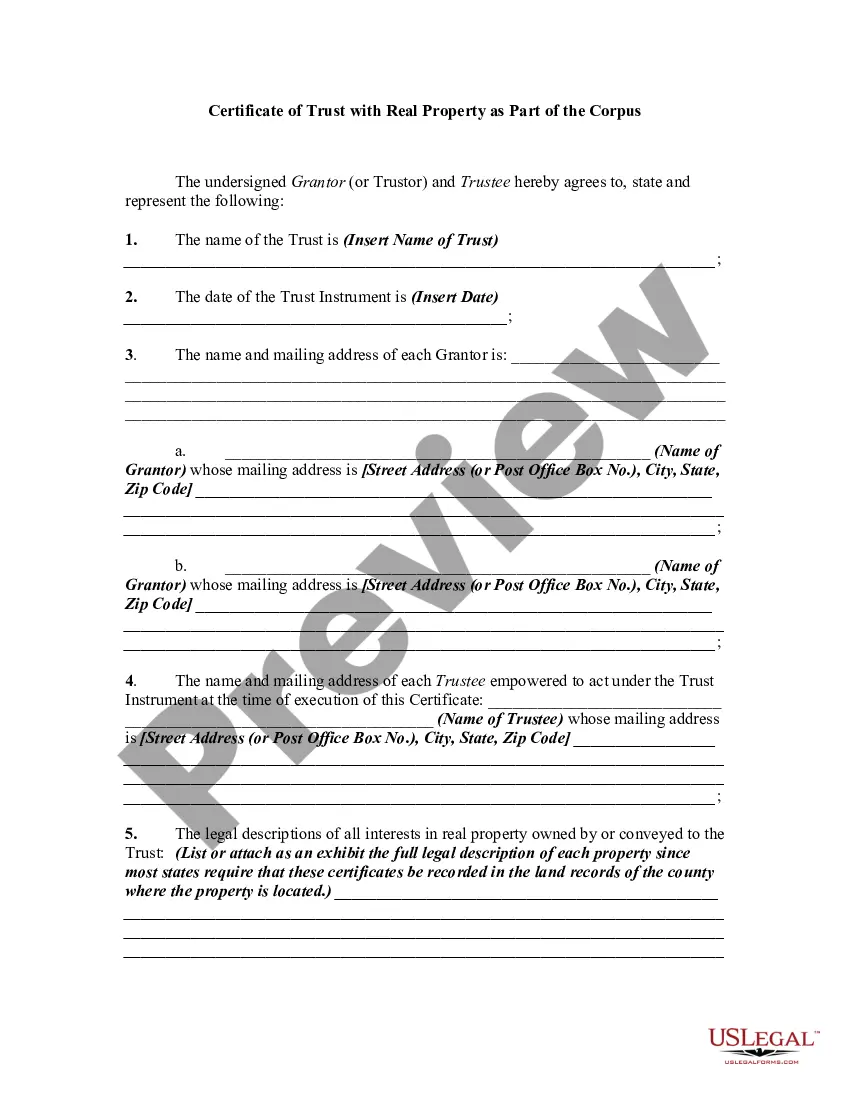
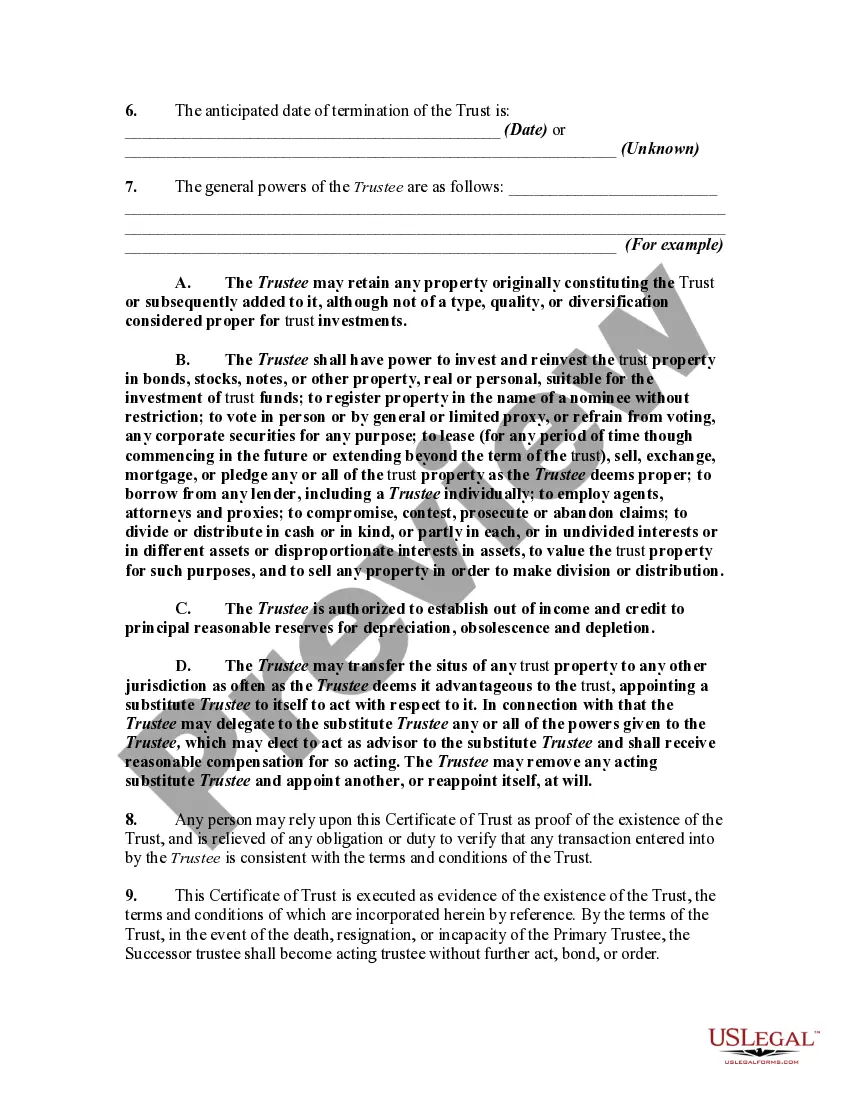
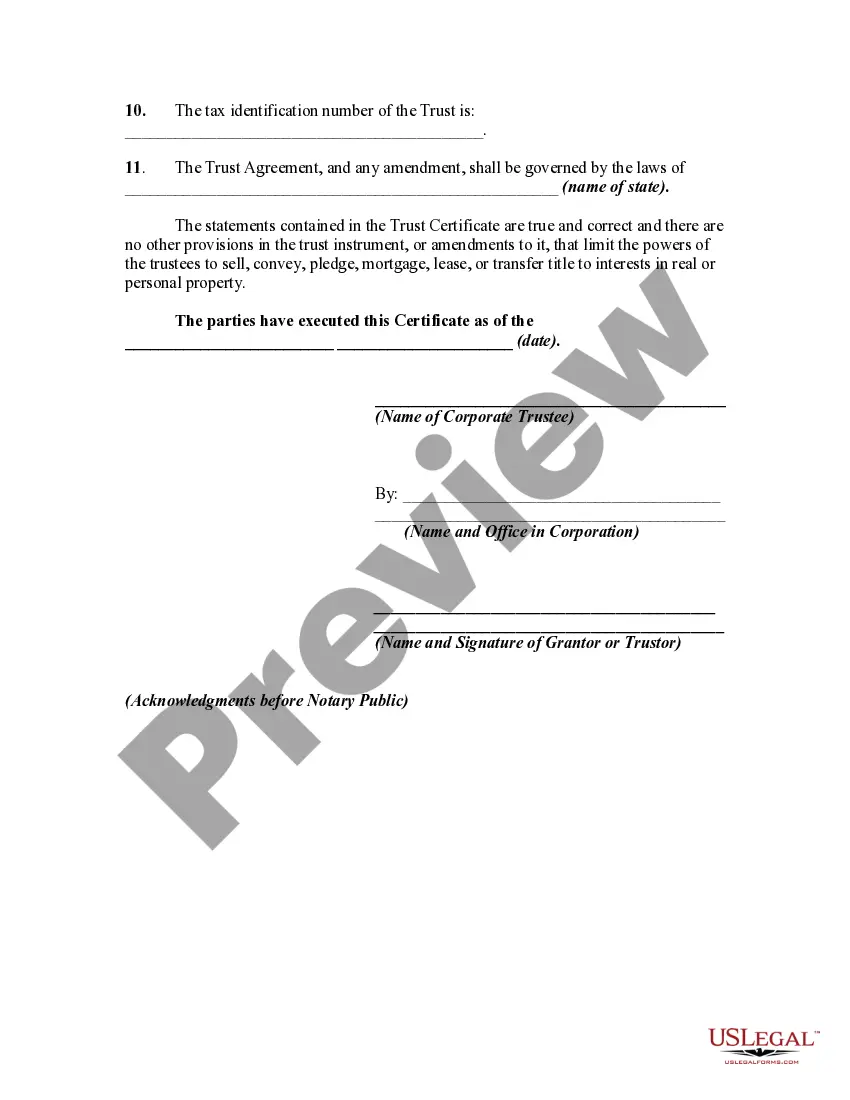
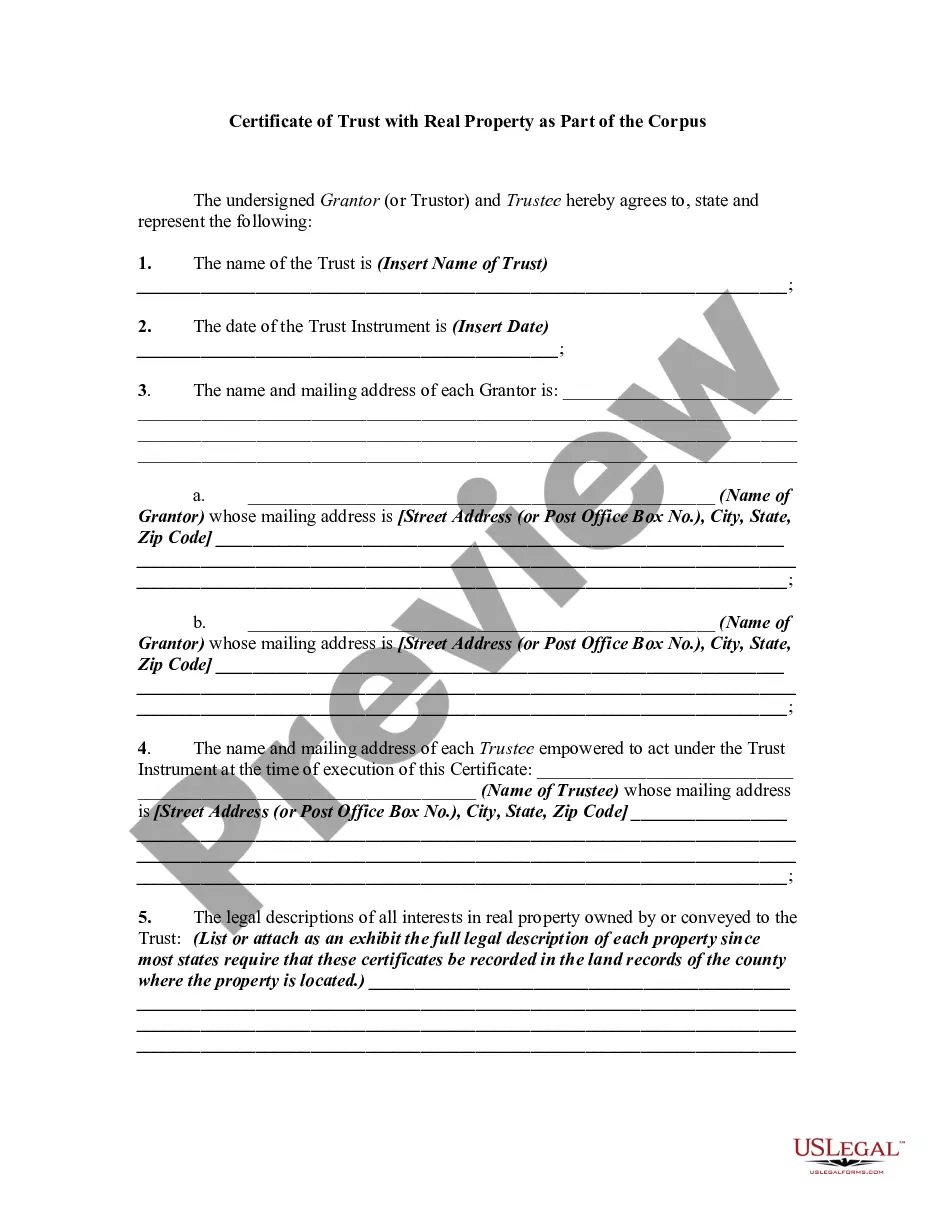
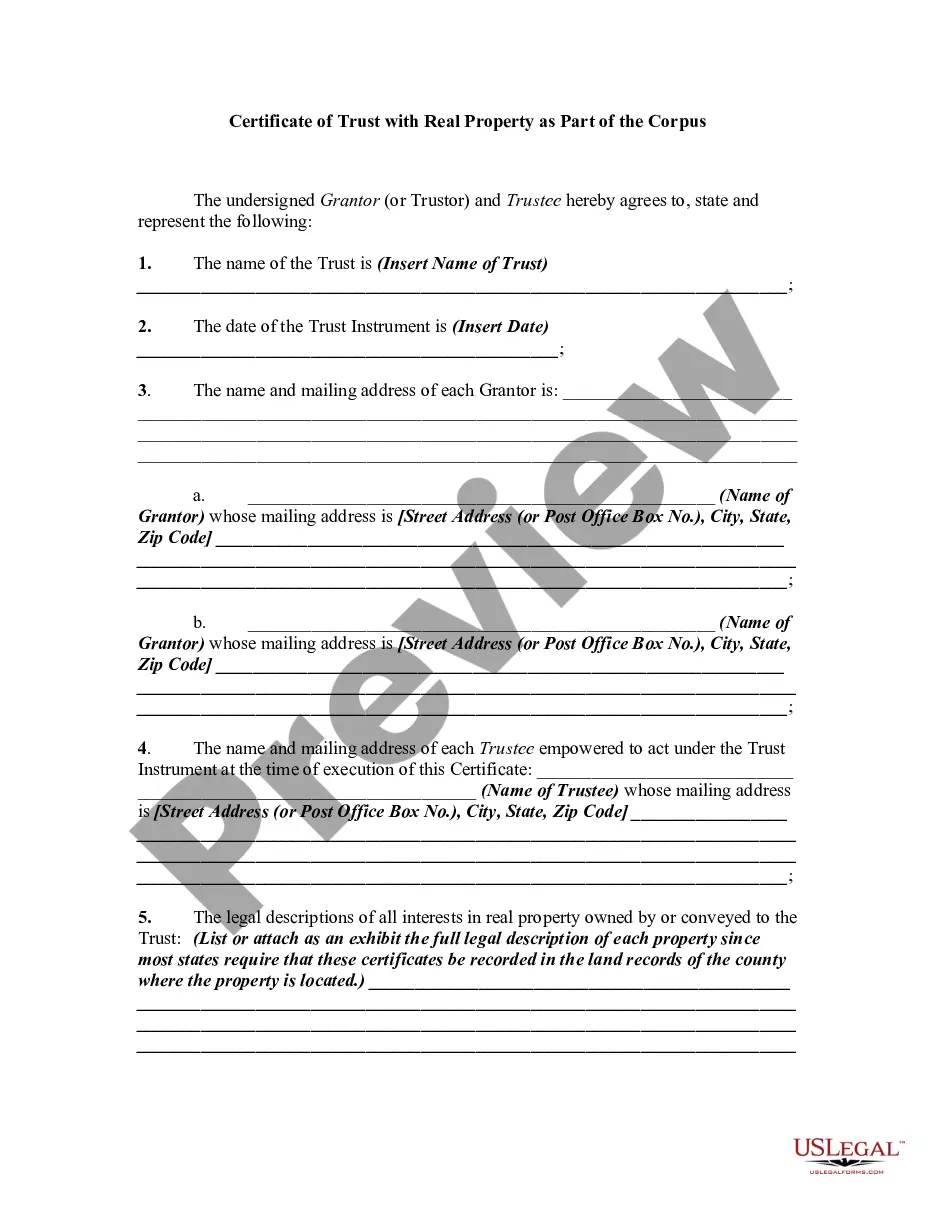
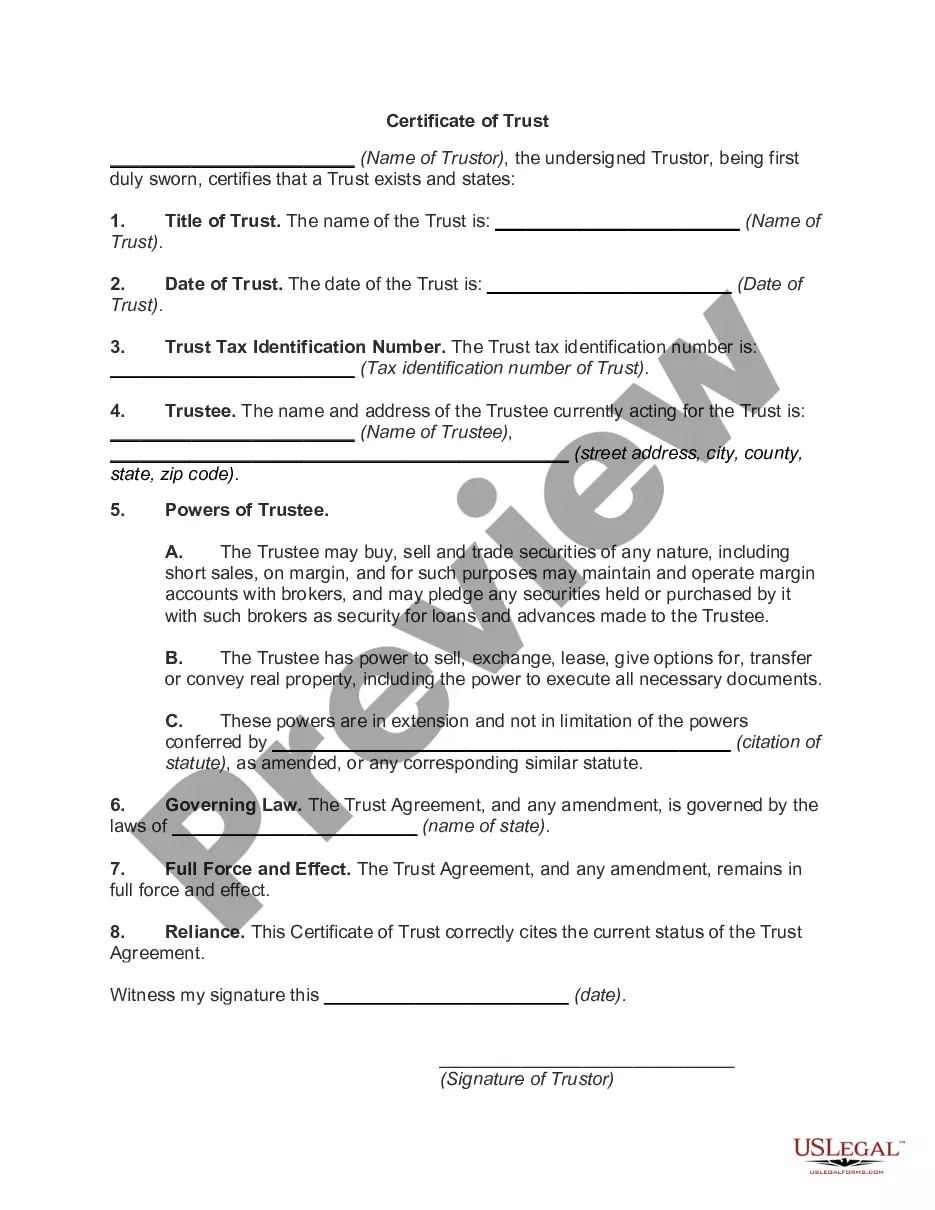
Missouri Certificate of Trust for Successor Trustee
Description
Get your form ready online
Our built-in tools help you complete, sign, share, and store your documents in one place.
Make edits, fill in missing information, and update formatting in US Legal Forms—just like you would in MS Word.
Download a copy, print it, send it by email, or mail it via USPS—whatever works best for your next step.
Sign and collect signatures with our SignNow integration. Send to multiple recipients, set reminders, and more. Go Premium to unlock E-Sign.
If this form requires notarization, complete it online through a secure video call—no need to meet a notary in person or wait for an appointment.
We protect your documents and personal data by following strict security and privacy standards.

Make edits, fill in missing information, and update formatting in US Legal Forms—just like you would in MS Word.

Download a copy, print it, send it by email, or mail it via USPS—whatever works best for your next step.

Sign and collect signatures with our SignNow integration. Send to multiple recipients, set reminders, and more. Go Premium to unlock E-Sign.

If this form requires notarization, complete it online through a secure video call—no need to meet a notary in person or wait for an appointment.

We protect your documents and personal data by following strict security and privacy standards.
Looking for another form?
How to fill out Certificate Of Trust For Successor Trustee?
It is feasible to spend hours online searching for the legal document template that meets the state and federal requirements you seek. US Legal Forms offers thousands of legal documents that can be reviewed by experts.
You can easily download or print the Missouri Certificate of Trust for Successor Trustee from the platform. If you already have a US Legal Forms account, you can Log In and click on the Acquire button. Afterward, you can complete, modify, print, or sign the Missouri Certificate of Trust for Successor Trustee.
Each legal document template you purchase is yours permanently. To obtain another copy of a purchased form, navigate to the My documents section and click on the appropriate button. If you are visiting the US Legal Forms website for the first time, follow the simple instructions below.
Choose the format of the document and download it to your device. Make adjustments to your document if needed. You can complete, modify, sign, and print the Missouri Certificate of Trust for Successor Trustee. Obtain and print thousands of document templates using the US Legal Forms website, which provides the largest collection of legal documents. Utilize professional and state-specific templates to address your business or personal needs.
- First, ensure that you have selected the correct document template for the region/city of your choice.
- Read the document details to confirm you have chosen the right form.
- If available, use the Preview button to review the document template as well.
- If you want to find another version of the form, use the Search field to locate the template that fits your needs.
- Once you have found the template you desire, click Buy now to proceed.
- Select the pricing plan you prefer, enter your details, and register for your account on US Legal Forms.
- Complete the purchase. You can use your Visa or Mastercard or PayPal account to pay for the legal document.
Form popularity
FAQ
A trustee shall send to the permissible distributees of trust income or principal, and to other beneficiaries who request it, at least annually and at the termination of the trust, a report of the trust property, liabilities, receipts, and disbursements, including the source and amount of the trustee's compensation, a ...
A person who acts in reliance upon a certification of trust without knowledge that the representations contained therein are incorrect is not liable to any person for so acting and may assume without inquiry the existence of the facts contained in the certification.
Signing Your Trust Documents Typically a will requires the signature of two witnesses, and a trust must be signed in the presence of a notary public.
How to Get a Copy of a Trust Make a written demand for a copy of the Trust and its amendments, if any; Wait 60 days; and. If you do not receive a copy of the Trust within 60 days of making your written demand, file a petition with the probate court.
Signing Your Trust Documents Typically a will requires the signature of two witnesses, and a trust must be signed in the presence of a notary public.
How much does a Trust cost in Missouri? The cost of setting up a trust in Missouri varies depending on the complexity of the trust and the attorney's fees. A basic Revocable Living Trust generally ranges from $1,000 to $3,000. More complex trusts can cost several thousand dollars more.
A living trust in Missouri offers you and your family privacy since the trust never becomes public record and does not require any court proceeding. The assets you place in the trust, the names of your beneficiaries, and the terms of the distribution remain out of the public eye.