Missouri Plaintiff and Counter-Defendant's
About this form
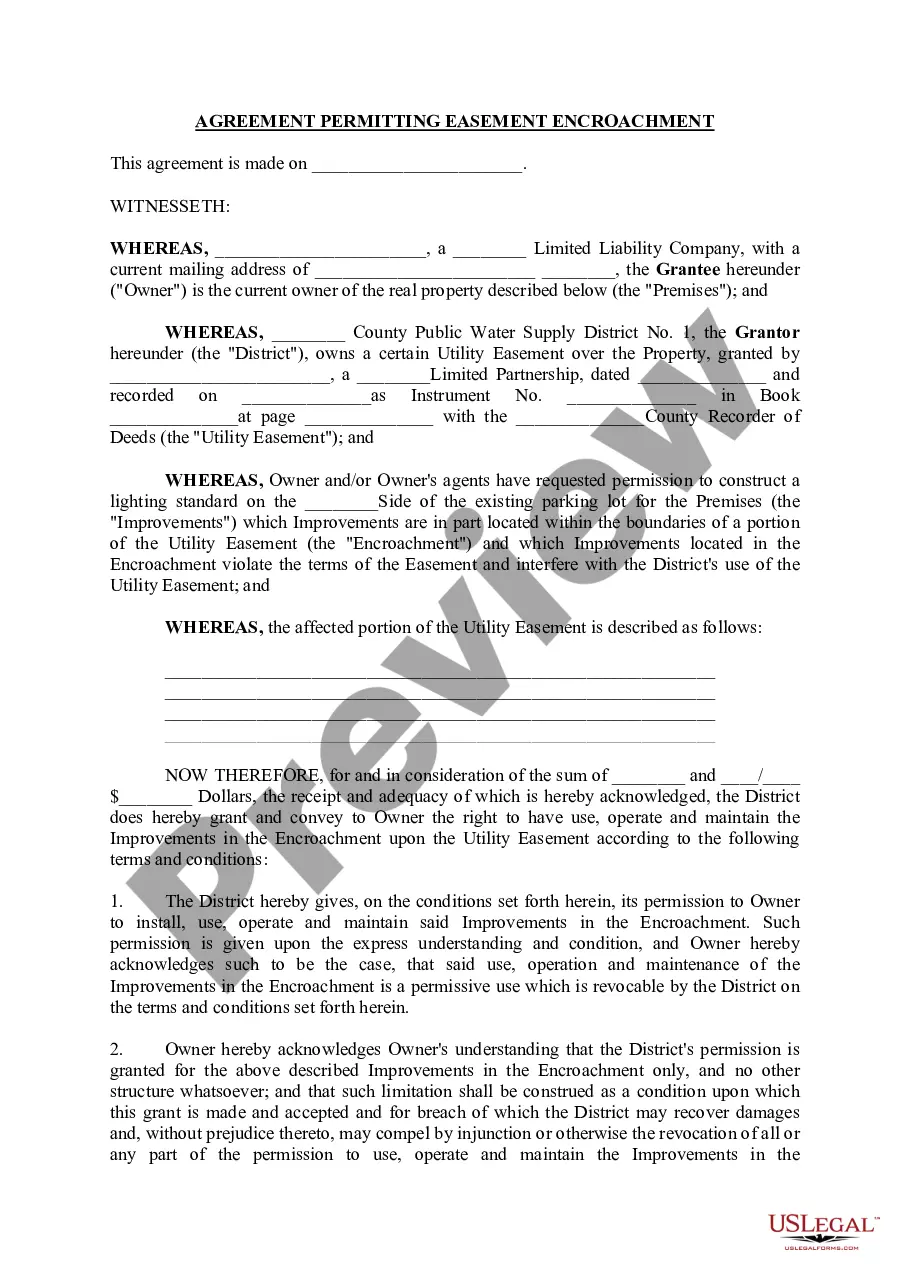
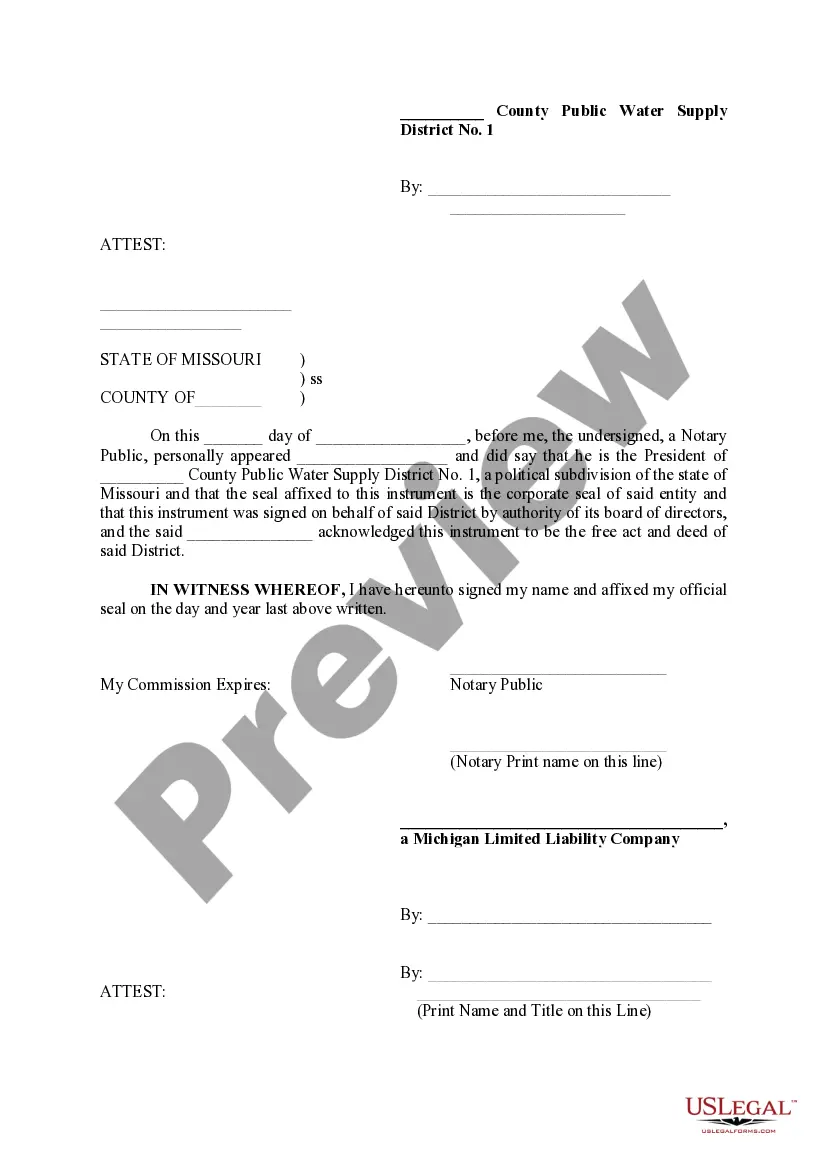
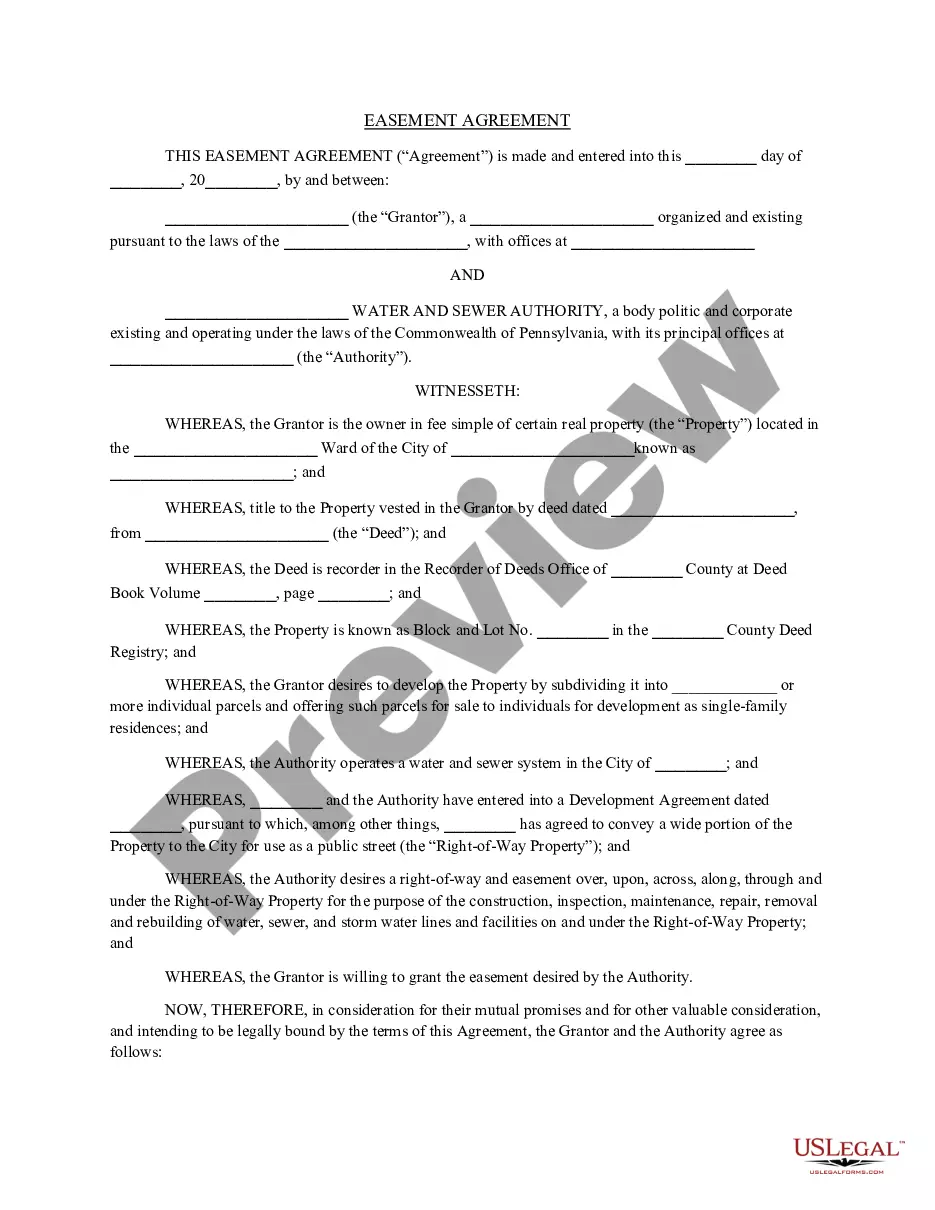
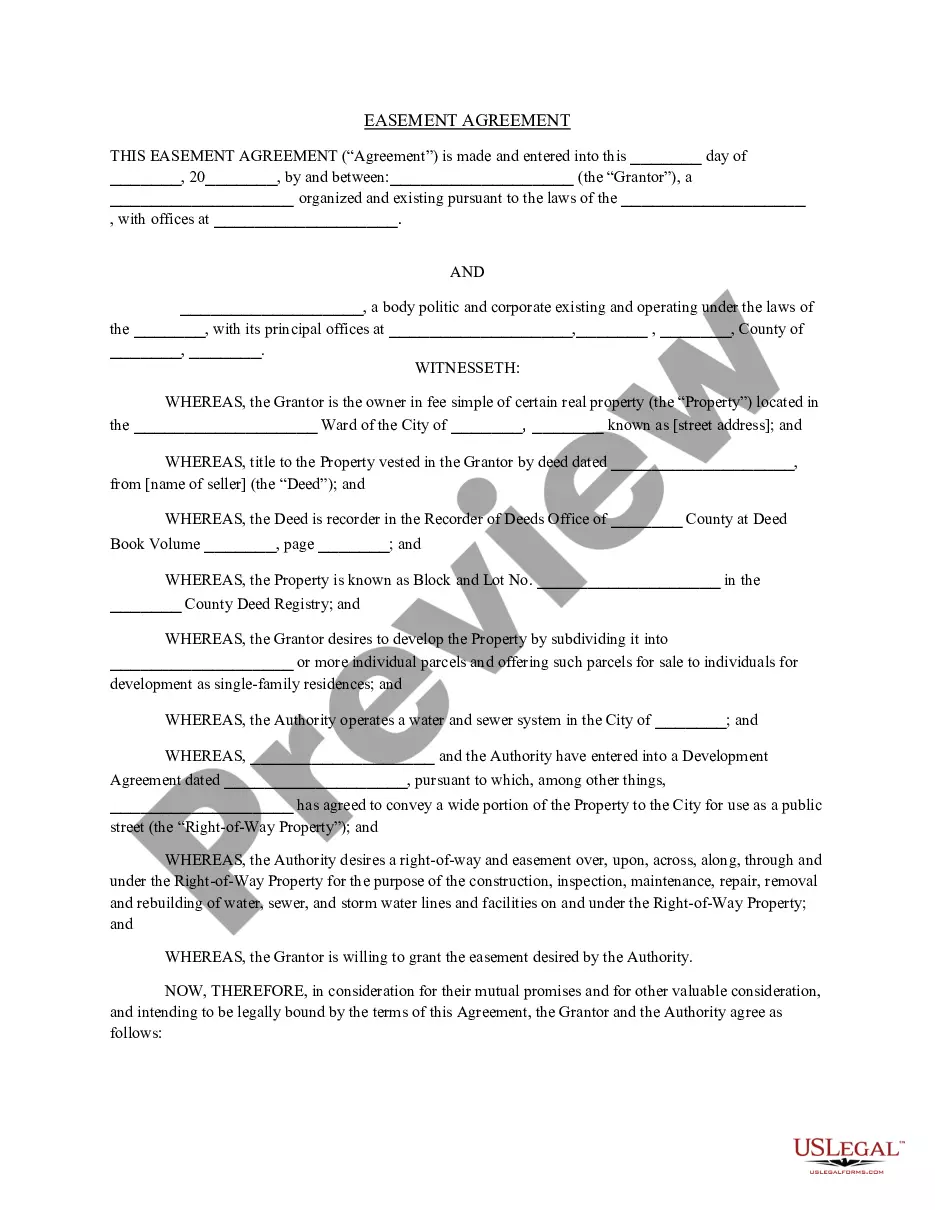
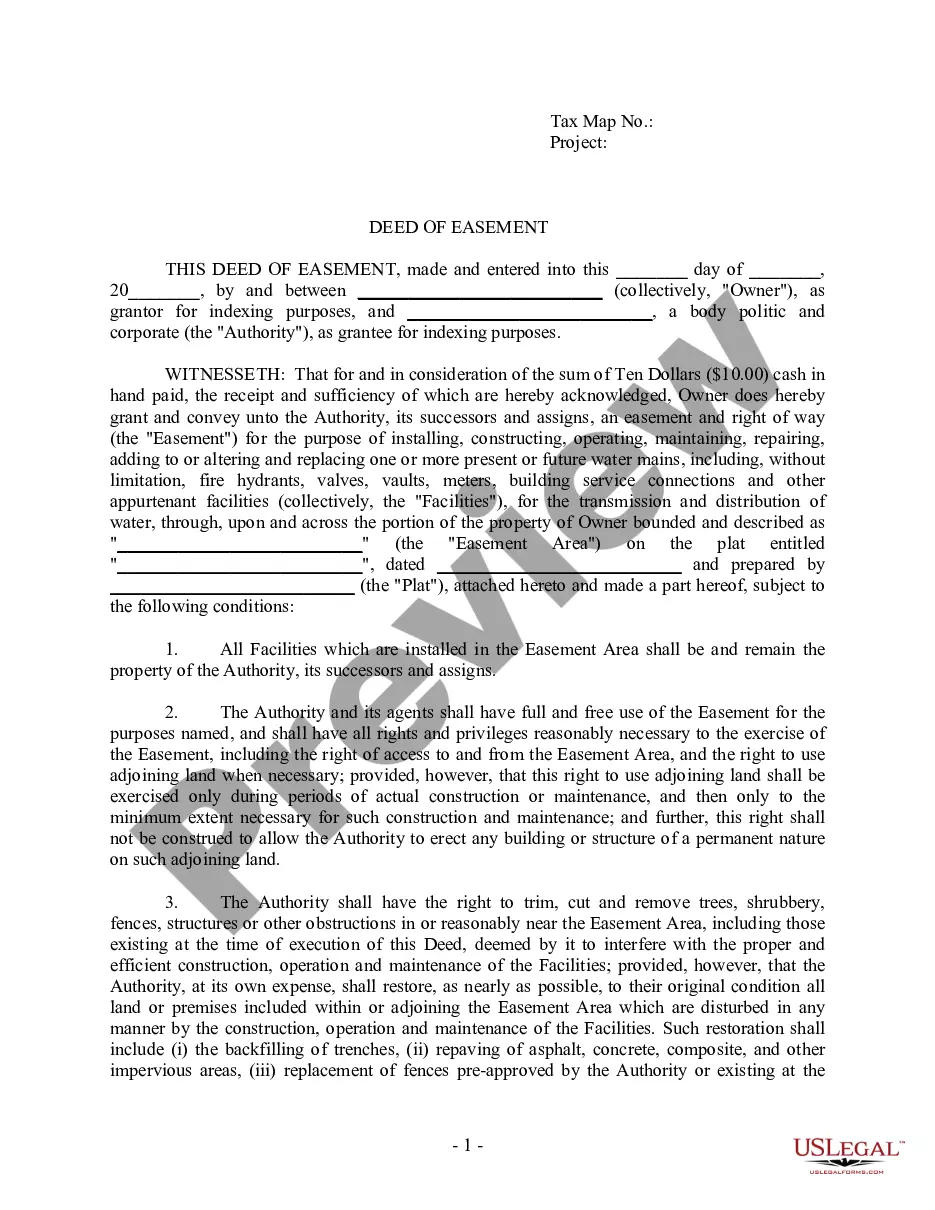
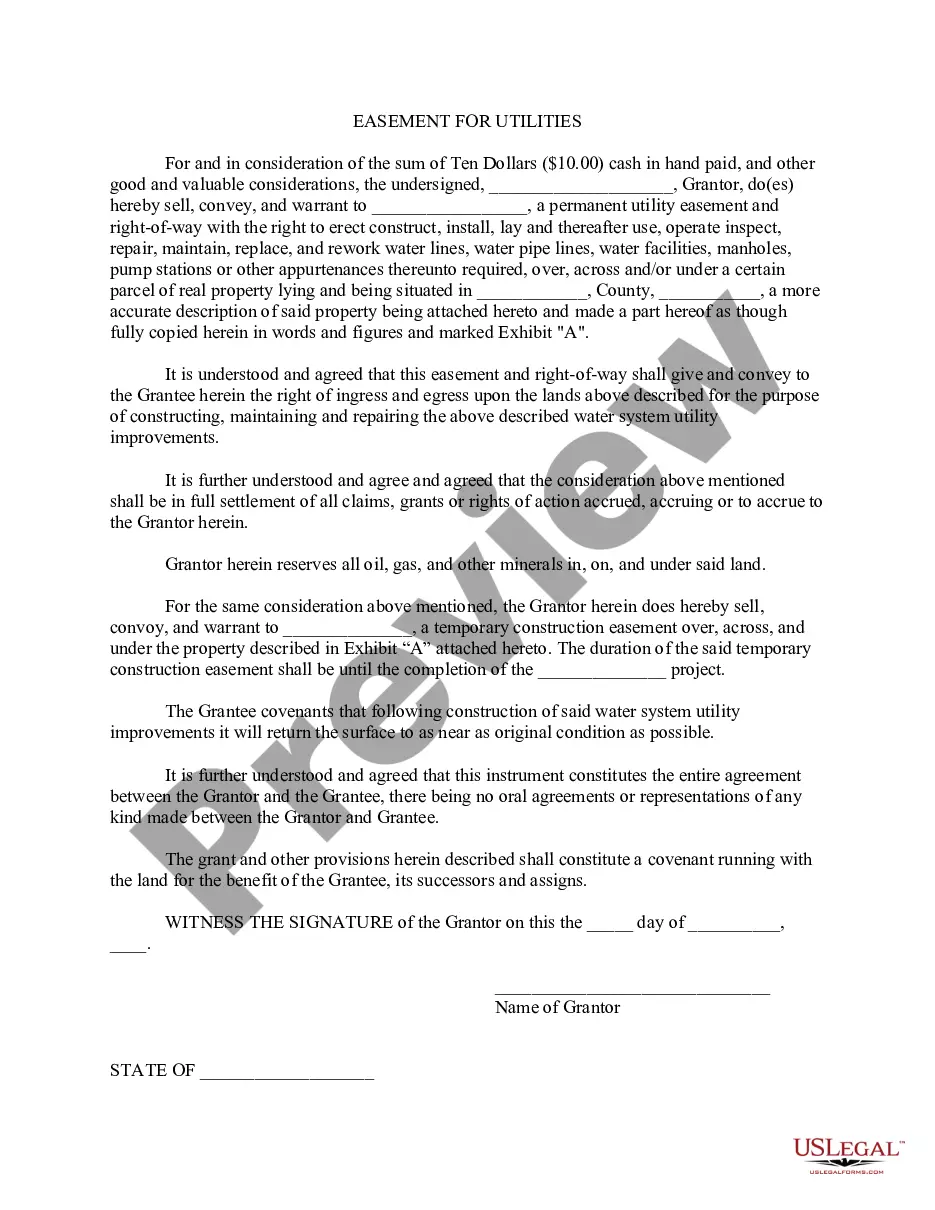
The Plaintiff and Counter-Defendant's form is a legal agreement designed to grant permission for encroachments into an easement, specifically used when a construction project, like a lighting standard, intrudes into the designated utility easement. This form distinguishes itself from standard easement agreements by providing a structured method for addressing encroachments while outlining the rights and responsibilities of both the property owner and the utility district involved.
Form components explained
- Identification of parties involved, including the property owner and utility district.
- Description of the premises and the specific encroachment.
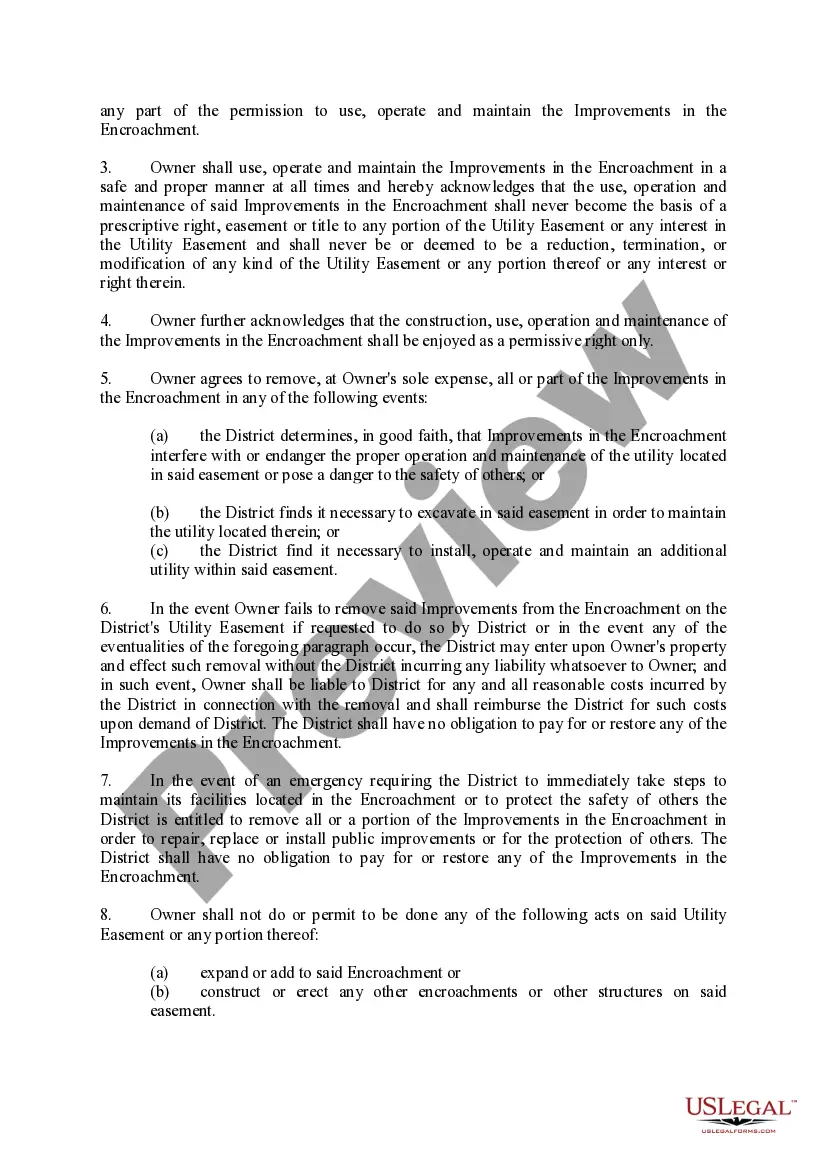
- Terms and conditions under which the encroachment is permitted.
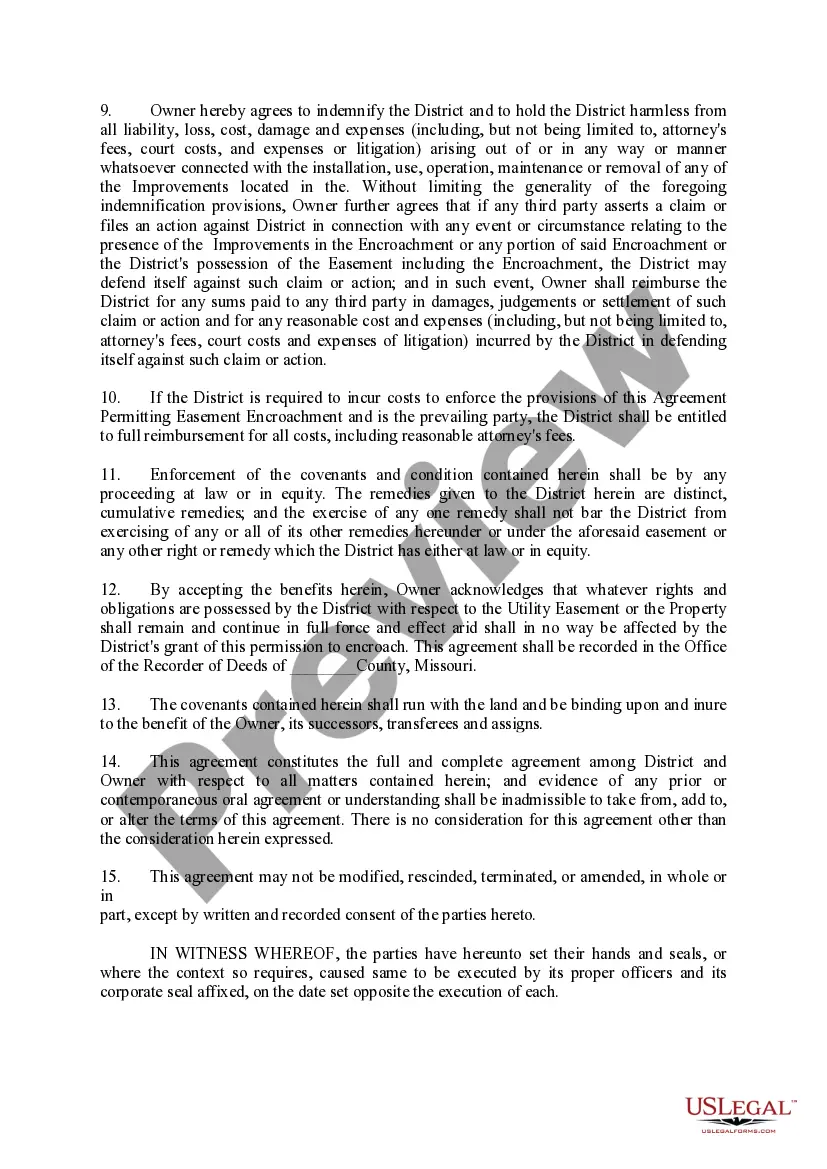
- Indemnification provisions to protect the utility from liabilities.
- Revocation conditions for the granted permission and removal obligations for the owner.
When to use this document
This form is needed when you plan to undertake construction or improvements that may encroach upon a utility easement. Examples include installing power poles, lighting fixtures, or other structures that may overlap with the easement area owned by a utility provider. It formalizes permission for this encroachment and lays out terms that protect both the property owner and the utility service provider.
Who can use this document
- Property owners who wish to build improvements that encroach on a utility easement.
- Contractors working on behalf of property owners.
- Utility districts looking to provide an official agreement regarding encroachment permissions.
How to prepare this document
- Identify the parties: Insert the full names and addresses of the property owner and the utility district.
- Describe the property: Clearly outline the details of the real property and the easement.
- Specify the encroachment: Define the improvements you plan to make that are within the easement boundaries.
- Enter acknowledgment and consent terms: Review and confirm the terms under which the encroachment is permitted.
- Obtain signatures: Ensure all parties sign the document in the presence of a notary public, if required.
Notarization guidance
Yes, this form must be notarized to be legally valid. US Legal Forms provides integrated online notarization services available 24/7, ensuring your document is processed securely and efficiently without the need for in-person meetings.
Get your form ready online
Our built-in tools help you complete, sign, share, and store your documents in one place.
Make edits, fill in missing information, and update formatting in US Legal Forms—just like you would in MS Word.
Download a copy, print it, send it by email, or mail it via USPS—whatever works best for your next step.
Sign and collect signatures with our SignNow integration. Send to multiple recipients, set reminders, and more. Go Premium to unlock E-Sign.
If this form requires notarization, complete it online through a secure video call—no need to meet a notary in person or wait for an appointment.
We protect your documents and personal data by following strict security and privacy standards.

Make edits, fill in missing information, and update formatting in US Legal Forms—just like you would in MS Word.

Download a copy, print it, send it by email, or mail it via USPS—whatever works best for your next step.

Sign and collect signatures with our SignNow integration. Send to multiple recipients, set reminders, and more. Go Premium to unlock E-Sign.

If this form requires notarization, complete it online through a secure video call—no need to meet a notary in person or wait for an appointment.

We protect your documents and personal data by following strict security and privacy standards.
Avoid these common issues
- Failing to provide a clear description of the encroachment may lead to disputes.
- Not obtaining all required signatures and notarization can invalidate the agreement.
- Omitting terms related to the removal of encroachments in case of utility emergencies.
Benefits of completing this form online
- Convenient access to legal forms 24/7 without the need for physical visits.
- The ability to edit and customize forms to fit individual needs.
- Reliable templates drafted by licensed attorneys to ensure legal compliance.
Looking for another form?

Form popularity
FAQ
The owner of the land that has the benefit of the right of way (the user) also has no obligation to maintain and repair but is entitled to maintain and repair the way but if he does so, he has to do so at his own cost.
When one of the owners of either the dominant estate which an easement benefits or the servient estate over which the easement runs becomes the owner of both properties, then there is a unity of the two titles, and since an owner does not need an easement over the owner's own property, according to Florida law, the
SCHORR LAW'S REAL ESTATE BLOG One issue that comes up from time to time is whose responsibility it is to maintain an easement. The short answer is the owner of the easement is responsible for maintaining the easement.
There must be a dominant and a servient tenement; The easement must accommodate the dominant tenement, that is, be connected with its enjoyment and for its benefit; The dominant and servient owners must be different persons; The right claimed must be capable of forming the subject-matter of a grant.
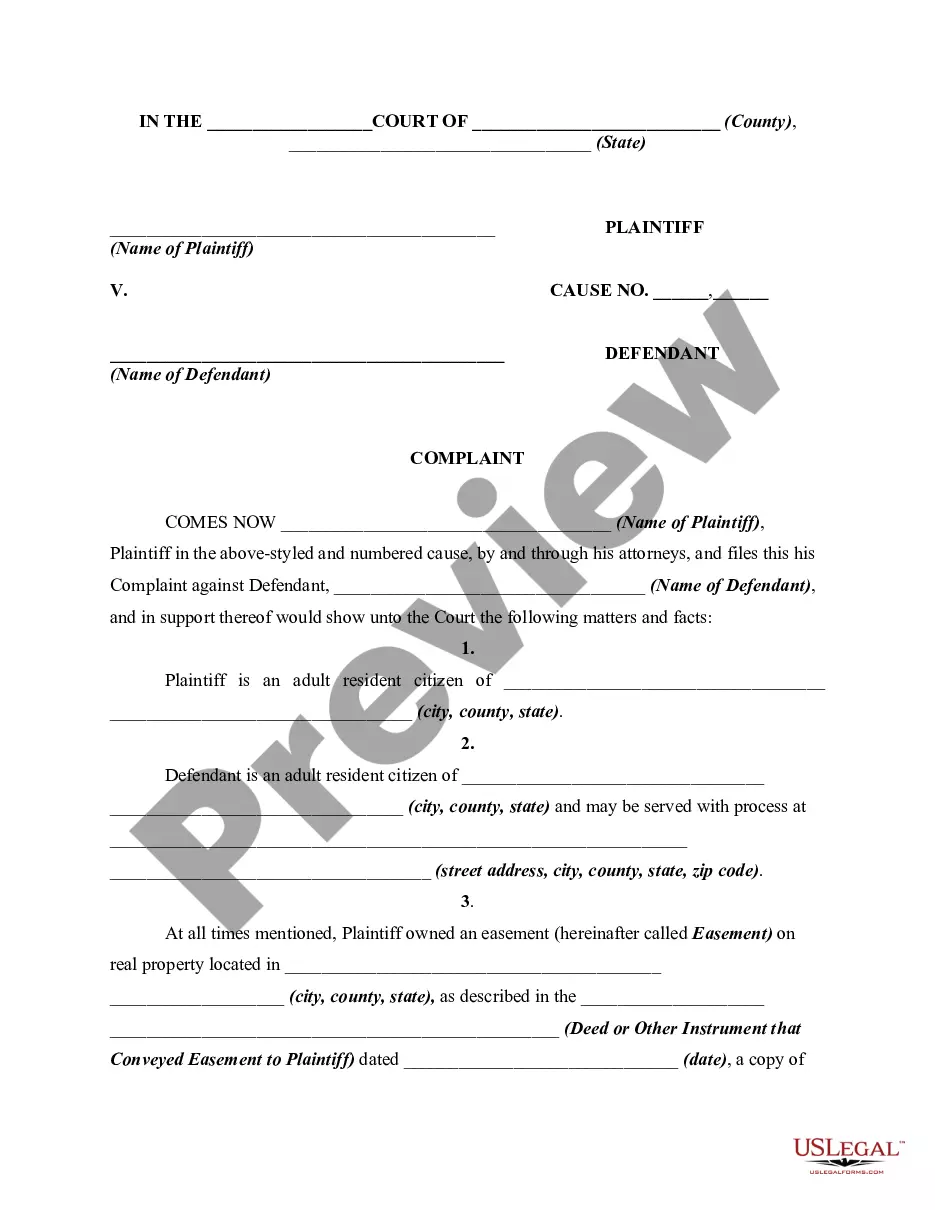
The legal term easement refers to the legal right to use another person's real property, for a specific purpose and a specific amount of time. An easement gives a person the legal right to go through another person's land, as long as the usage is consistent with the specified easement restrictions.
An easement appurtenant is an easement that benefits one parcel of land, known as the dominant tenement, to the detriment of another parcel of land, known as the servient tenement.Similarly, if Landowner B sells his property to another landowner, that landowner will be able to use the easement. Easement in Gross.
Maintenance easement means a binding agreement between the city and the person or persons holding title to a property served by a stormwater facility where the property owner promises to maintain certain stormwater facilities; grants the city the right to enter the subject property to inspect and make certain repairs,
The party gaining the benefit of the easement is the dominant estate (or dominant tenement), while the party granting the benefit or suffering the burden is the servient estate (or servient tenement). For example, the owner of parcel A holds an easement to use a driveway on parcel B to gain access to A's house.
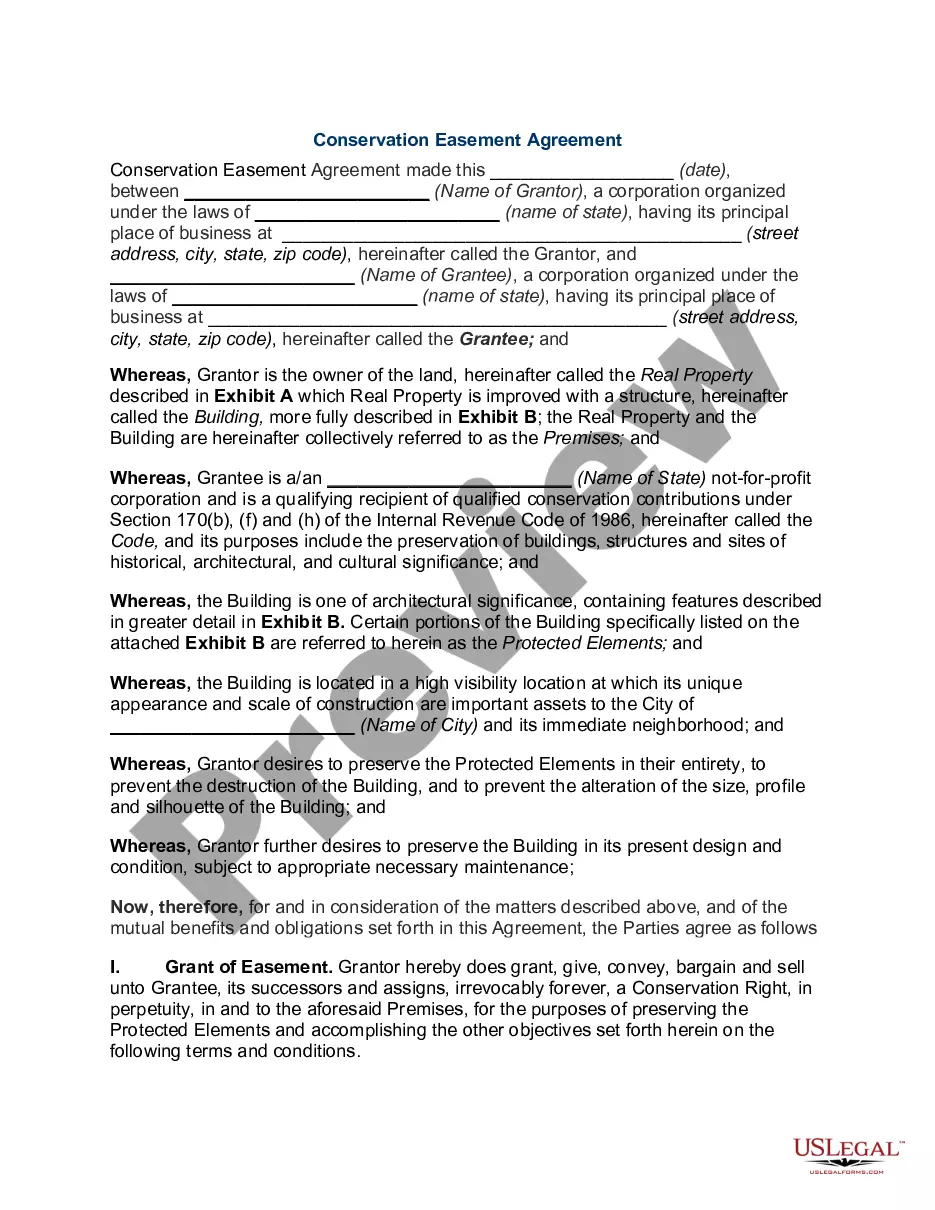
Easement deeds provide a valuable tool to grant or restrict land use by a non-owner. They are legal contracts enforceable by law.